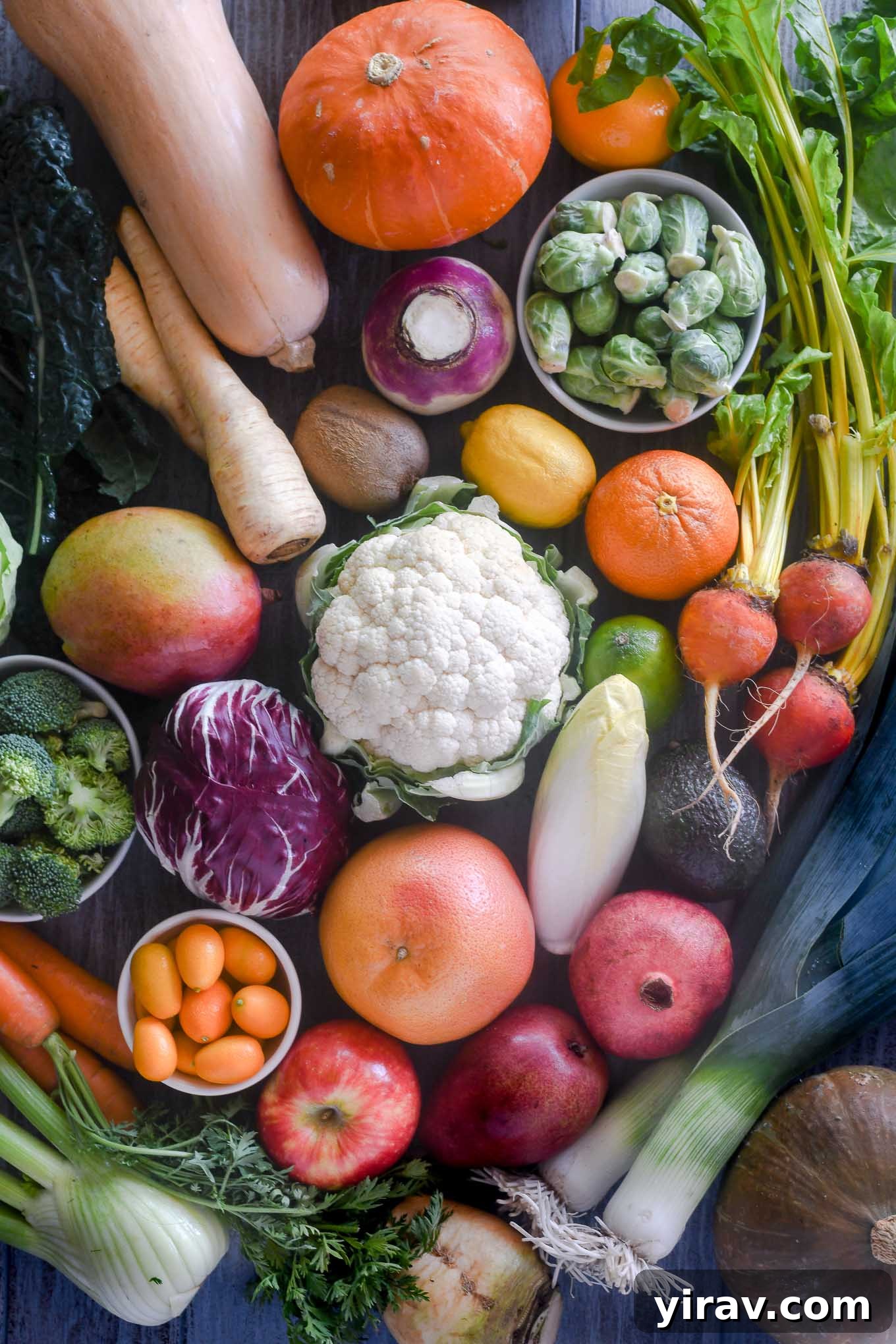
Embrace the vibrant flavors and incredible versatility of nature’s winter harvest! Far from a barren culinary landscape, the colder months offer a rich bounty of delicious and nutritious produce. From the robust root vegetables and hearty greens to the refreshing citrus fruits and sweet apples, winter provides an abundance of ingredients to inspire countless healthy and delicious meals. This comprehensive guide unveils the best winter fruits and vegetables, detailing their unique characteristics, how to select and store them, and a wealth of recipe ideas to help you incorporate them into your kitchen all season long.
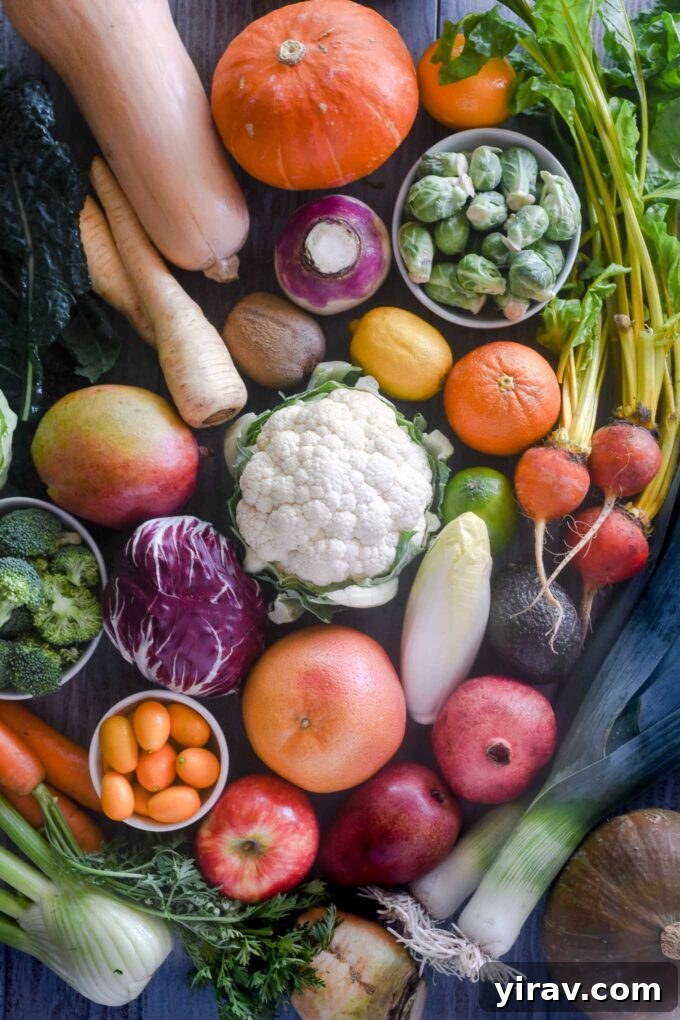
Many assume summer is the peak season for fresh produce, but winter proudly offers its own spectacular array of colorful and delicious options that are often overlooked. This guide is your ultimate resource for discovering the hidden gems of the cold season, helping you make the most of what’s available at its freshest and most flavorful. We’ll explore everything from earthy beets and crunchy broccoli to a dazzling variety of citrus and sweet winter fruits, showing you how to transform these ingredients into delightful dishes.
Years ago, I made the conscious decision to embrace seasonal eating, and it completely transformed my approach to food. I quickly realized that when I consumed what was truly in season, I was not only getting the freshest produce available, often sourced locally, but also experiencing superior flavor and more affordable prices. This shift in mindset also motivated me to experiment with new fruits and vegetables that I might have previously ignored in favor of my familiar, out-of-season favorites. Now, I eagerly anticipate the beginning of each new season, excited to integrate a fresh palette of ingredients into my daily meals and culinary explorations.
Seasonal eating isn’t just about taste and cost; it’s also about supporting local farmers, reducing your carbon footprint, and enjoying produce at its nutritional peak. Fruits and vegetables harvested in season are typically riper, meaning they’ve had more time to develop essential vitamins, minerals, and antioxidants. This guide aims to empower you to enjoy these benefits throughout the winter, making healthy eating both easy and exciting.
For more specific seasonal insights, be sure to explore these month-by-month produce guides:
- December Seasonal Produce Guide
- January Seasonal Produce Guide
- March Seasonal Produce Guide
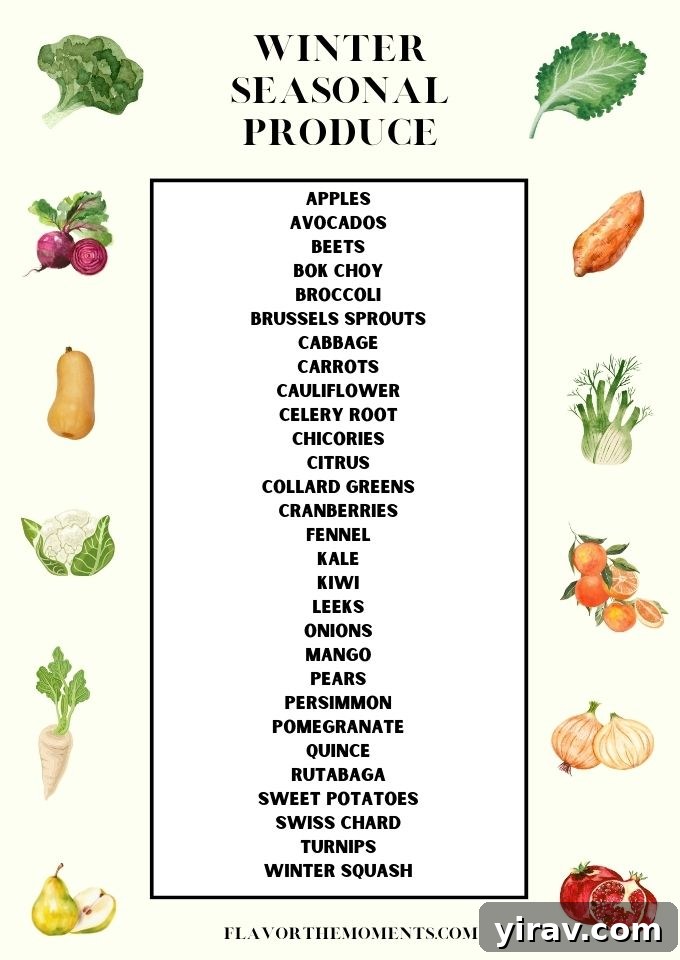
List of Seasonal Winter Foods
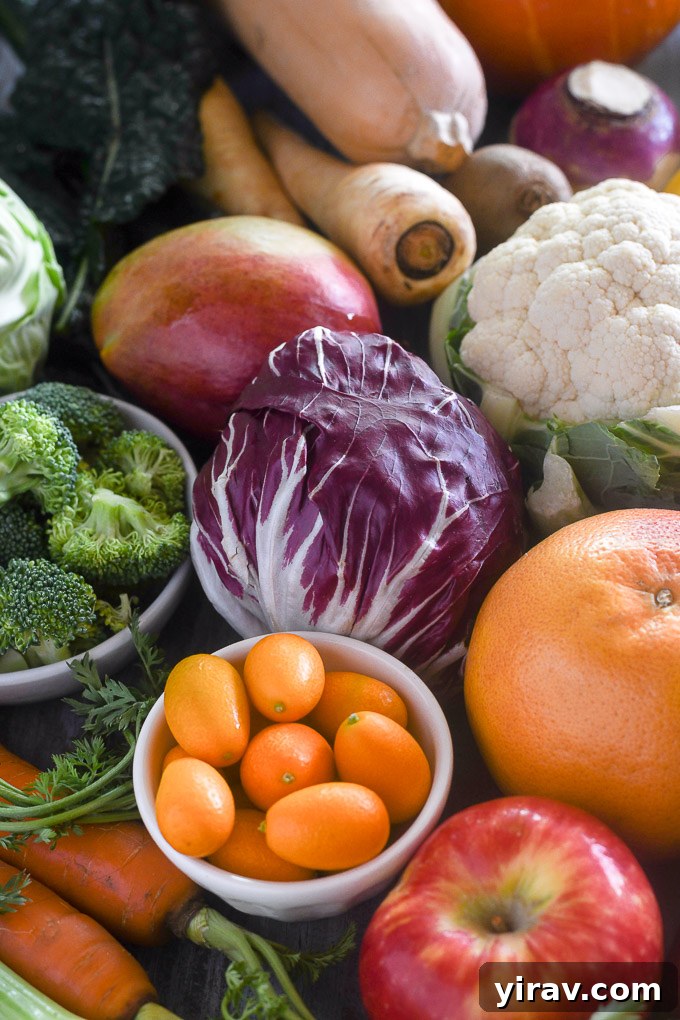
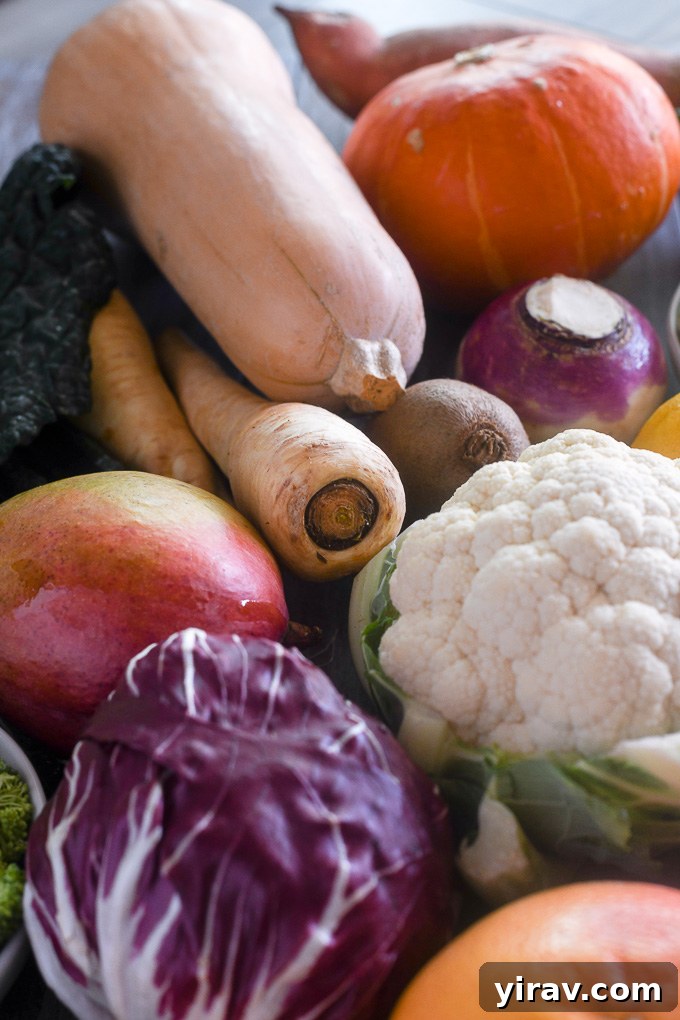
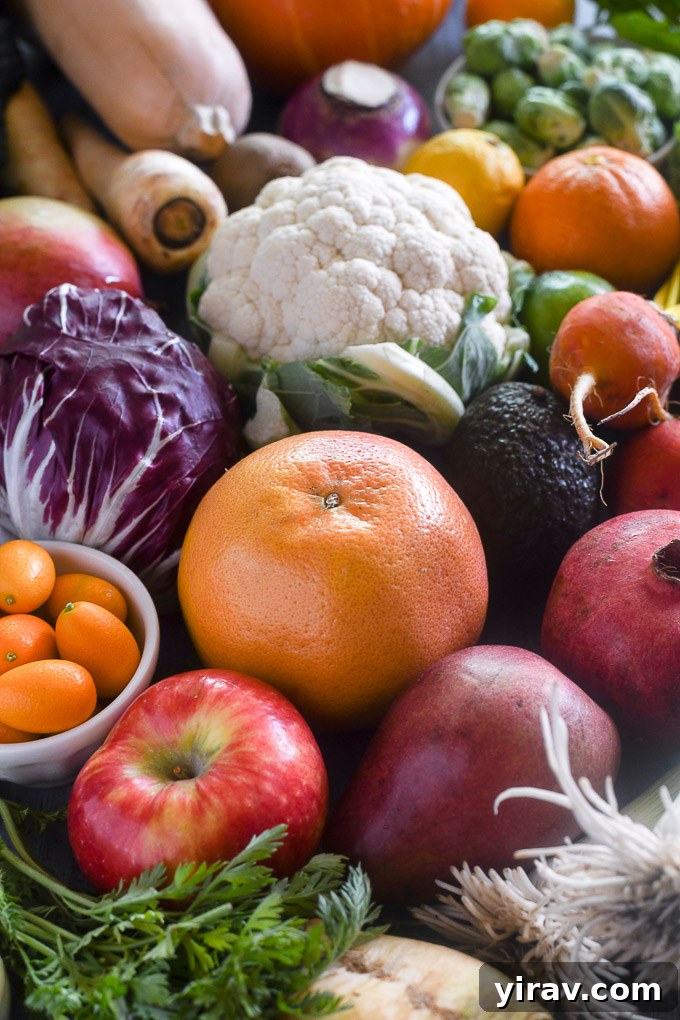
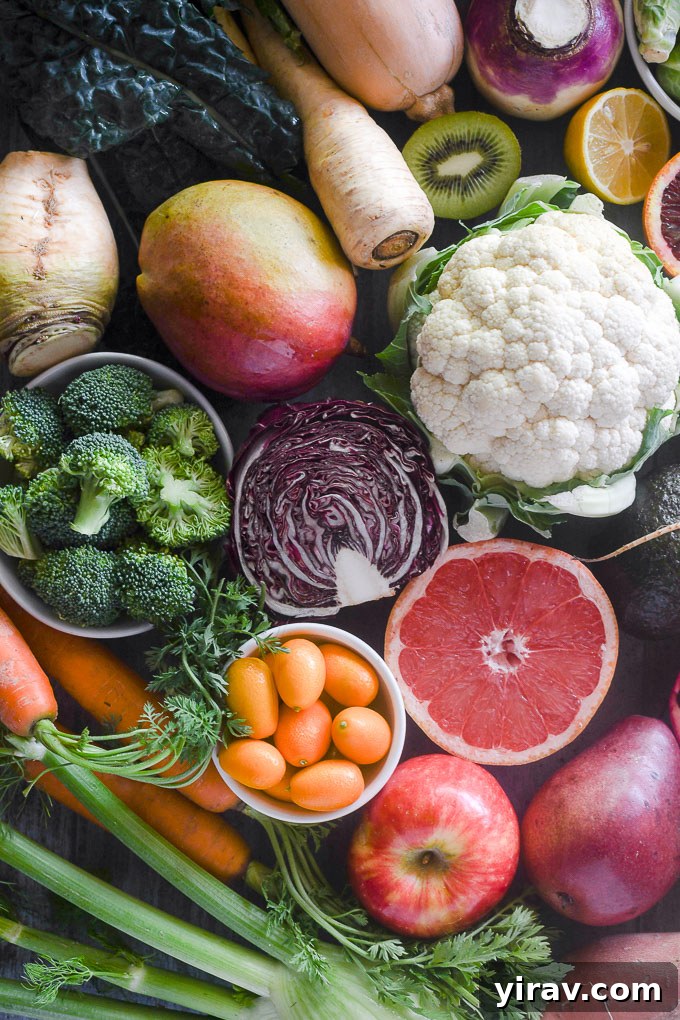
Below is a handy list of seasonal winter foods that you can quickly refer to before you head to the market. This overview will give you a snapshot of the delicious produce available. Be sure to check out the detailed sections on winter vegetables and winter fruits below to discover more about each item, including their nutritional benefits, versatile uses, and access some tasty recipes!
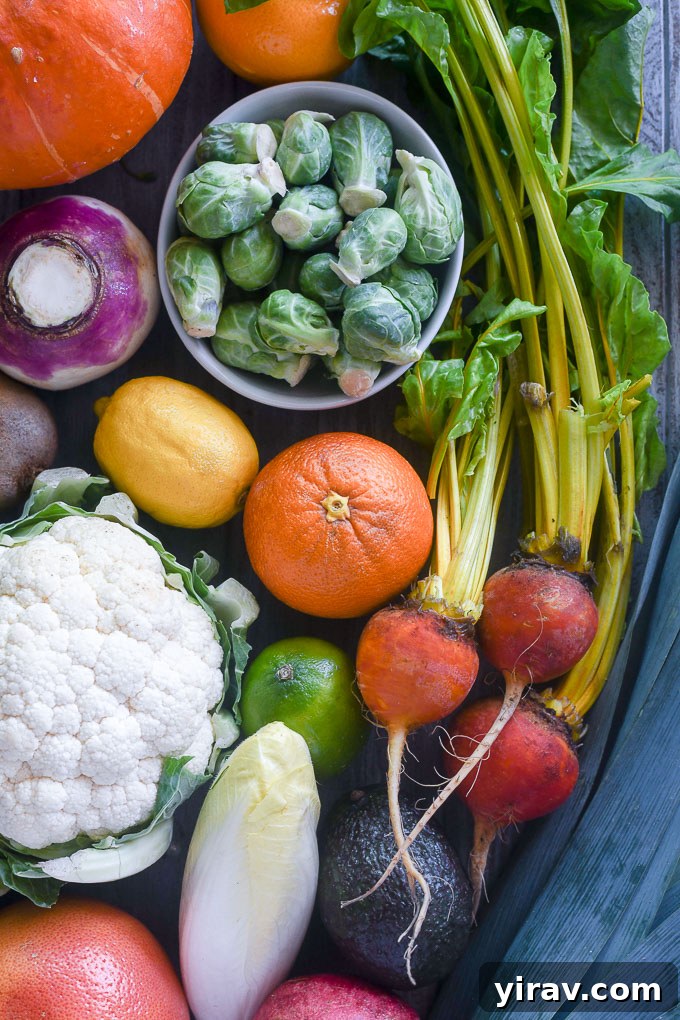
Choosing and Storing Winter Produce
Knowing how to select and properly store fresh produce makes a significant difference in its longevity, flavor, and cooking quality. Winter produce, often hardy and robust, can last for extended periods with the right care, minimizing food waste and maximizing your culinary enjoyment. Look for vegetables and fruits that feel firm, heavy for their size, and free from significant blemishes or soft spots. The skin should be vibrant and unwrinkled, indicating freshness.
While specific storage tips vary, many root vegetables like carrots, parsnips, and beets thrive in a cool, dark, and humid environment, often best stored in your refrigerator’s crisper drawer. Leafy greens, such as kale and Swiss chard, benefit from being washed, dried, and then wrapped in a paper towel before being placed in a plastic bag in the fridge to maintain their crispness. Hardier fruits like apples and pears can be stored in a cool pantry or refrigerator, while delicate citrus fruits are best kept in the fridge. For a comprehensive guide with simple tips for choosing and storing all types of fruits and vegetables, refer to my produce storage guide – it’s an invaluable reference to bookmark!
Winter Vegetables
The winter season is a fantastic time for fresh vegetables, offering an abundance of options that are both nourishing and versatile. There’s truly no excuse not to enjoy your veggies during these months! You’ll find a wide variety of cruciferous vegetables, robust root vegetables, hardy greens, and much more, all packed with essential nutrients and flavor. Keep in mind that the peak season for some of these winter vegetables may be shorter depending on your geographical location, and availability can vary by region. Always check with your local farmers’ markets or grocery stores for the freshest selections.
Avocado
While botanically classified as a fruit, avocados are overwhelmingly utilized in savory culinary applications. They boast a uniquely mild flavor and a smooth, incredibly buttery texture that feels wonderfully luxurious on the palate. Beyond their delightful taste and texture, avocados are nutritional powerhouses. Despite being high in calories and fat, they are rich in healthy monounsaturated fats, which are beneficial for heart health, and are naturally cholesterol-free. They are also abundantly packed with essential vitamins (like K, C, B6, and E), minerals (potassium and folate), and dietary fiber, making them a fantastic addition to a balanced diet.
Uses: Avocados are incredibly versatile. They are perfect for creamy avocado toast, adding richness to salads, blending into dressings and dips like guacamole, or serving as a flavorful topping for burgers and sandwiches. For the more adventurous, their creamy texture can even be cleverly incorporated into surprising desserts such as chocolate mousse or brownies, adding richness without an overpowering flavor.
Seasonal Swaps: Due to its unique creamy texture and healthy fat profile, there is truly no direct substitute for avocado that replicates its exact qualities in a dish. Its role is often irreplaceable, especially in its raw form.
Try it in:
- Butter Lettuce Salad
- Homemade Guacamole
- Shrimp Ceviche with Mango Avocado Salsa
Beets
Often referred to as beetroot or garden beet, beets are a fascinating taproot vegetable celebrated for their vibrant colors and distinctive flavor. They can be found in a stunning array of hues, including deep red, sunny golden, and the visually striking chiogga (also known as candy-cane striped) variety. Beets offer a sweet and earthy flavor profile, which deepens with cooking. They are an excellent source of essential vitamins, minerals, and dietary fiber, particularly rich in folate, manganese, and potassium. Crucially, don’t overlook the beet greens! These leafy tops are completely edible and packed with even more nutrition than the roots themselves, offering a peppery, spinach-like flavor.
Uses: Beets can be enjoyed raw, finely grated into salads for a pop of color and crunch, or cooked to bring out their sweetness. They are truly amazing when roasted, which caramelizes their natural sugars, and are also excellent pickled for a tangy treat. The nutritious greens can be sautéed with garlic, added to stir-fries, or incorporated into hearty soups, providing a delightful textural and flavor contrast.
Seasonal Swaps: For a similar sweetness, consider sweet potatoes, butternut squash, or parsnips. If you’re seeking that earthy flavor, rutabagas, turnips, or celery root can offer comparable depth.
Try them in:
- Oven Roasted Beets
- Refrigerator Pickled Beets by Belly Full
- Roasted Beet Salad with Goat Cheese
Bok Choy
Bok choy, a delightful variety of Chinese cabbage, features crisp, white stalks and tender, dark green leaves. It presents a mildly sweet flavor with a delicate peppery undertone, making it a versatile ingredient in many Asian-inspired dishes. Nutritionally, bok choy is a powerhouse, offering an excellent source of Vitamins A, C, and K, along with dietary fiber and calcium. Both the stalks and leaves are edible and contribute unique textures to meals.
Uses: Bok choy is incredibly versatile and can be enjoyed both raw and cooked. The tender leaves are great in salads, while the crisp stalks add satisfying crunch. It truly shines in stir-fries, where its mild flavor absorbs other seasonings beautifully, and it’s a fantastic addition to warming soups, wilting slightly to release its subtle sweetness.
Seasonal Swaps: Green cabbage makes a great substitute for the crisp, white bulb of bok choy in terms of texture and mild flavor. For the greens, you can easily substitute with other favorite winter greens such as kale, Swiss chard, or collard greens, keeping in mind they might have a slightly stronger flavor profile.
Try them in:
- Sauté it in my Shrimp Fried Rice or Chicken Vegetable Stir Fry.
- Ramen Bowl by Foolproof Living
Broccoli
A beloved member of the brassica family, broccoli is characterized by its vibrant green florets and sturdy stalk. It possesses a slightly earthy and distinct cabbage-like flavor that mellows and sweetens considerably when cooked. Broccoli can be enjoyed raw for a crisp crunch or cooked to a tender-crisp perfection. Importantly, the stalks are entirely edible and highly nutritious, though they may require a slightly longer cooking time than the florets due to their denser texture. This versatile vegetable is an excellent source of Vitamin C, Vitamin K, fiber, and various antioxidants.
Uses: Broccoli is wonderfully versatile. It’s excellent eaten raw in vibrant salads or served with your favorite dips and dressings for a healthy snack. When cooked, it excels roasted to bring out its nutty notes, steamed lightly, or incorporated into comforting dishes like quiches, hearty soups, and quick stir-fries. Don’t discard the stalks; they can be shaved for slaws or added to stocks.
Seasonal Swaps: Cauliflower is the closest substitute for broccoli in both raw and cooked applications, offering a similar texture although with a slightly milder flavor. For raw applications, Brussels sprouts or finely shredded cabbage can also be good alternatives, providing a similar crunch and brassica notes.
Try them in:
- Broccoli Kale Salad
- Broccoli Slaw Salad with Creamy No-Mayo Dressing
- Mini Crustless Broccoli Quiche
Brussels Sprouts
Brussels sprouts, another delightful member of the brassica family, are often described as miniature cabbages that grow in charming clusters along a large central stalk. These small, firm, and tightly packed vegetables possess a distinct, slightly bitter cabbage flavor when raw, which beautifully transforms into a sweet and nutty profile once cooked. They are packed with nutritional value, being an excellent source of Vitamin K, Vitamin C, fiber, and various antioxidants, making them a fantastic addition to any healthy winter diet.
Uses: Brussels sprouts are incredibly versatile. They can be shaved thinly and enjoyed raw in refreshing salads for a crisp texture. However, they truly shine when cooked, becoming tender and deeply flavorful when fried until crispy, roasted to caramelization, or sautéed with complementary ingredients. Their hearty nature makes them a perfect side dish or a robust addition to mains.
Seasonal Swaps: Green cabbage is the closest substitute in terms of both taste and color profile, especially when finely shredded. Broccoli or cauliflower can also serve as good alternatives, particularly in cooked dishes, offering a similar cruciferous texture and flavor base.
Try them in:
- Air Fryer Brussels Sprouts
- Kale and Brussels Sprout Salad
- Roasted Brussels Sprouts with Carrots and Parsnips
Cabbage
Cabbage, a staple winter vegetable and a prominent member of the brassica family, is available in numerous varieties, including vibrant green, rich red, crinkly savoy, and delicate Napa cabbage, among others. Each variety offers a slightly different nuance, but generally, cabbage presents a sweet, peppery flavor that varies in intensity depending on the type. This humble vegetable is a nutritional powerhouse, providing a good source of Vitamin K, Vitamin C, and dietary fiber, along with essential minerals and antioxidants. Its robust structure and long shelf life make it an ideal choice for winter cooking.
Uses: Cabbage is remarkably versatile. It’s fantastic eaten raw in crisp salads and vibrant slaws, offering a refreshing crunch. When cooked, it transforms into a tender, flavorful addition to roasted vegetable medleys, comforting sautés, and hearty soups and stews. For a deep dive into its culinary potential, refer to my handy cabbage produce guide and a complete collection of cabbage recipes for more detailed information and inspiration.
Seasonal Swaps: Brussels sprouts are an excellent substitute for cabbage in both raw (when shaved) and cooked forms, offering a similar flavor profile. Bok choy can also be a great alternative when cooked, providing a milder, sweeter taste. For different textures and flavors, consider leeks or other root vegetables such as turnips, rutabaga, and parsnips, depending on the desired outcome of your dish.
Try it in:
- Corned Beef and Cabbage
- Egg Roll in a Bowl
- Vinegar Coleslaw
Carrots
Carrots are globally recognized, crunchy, and naturally sweet root vegetables, known for their iconic bright orange hue, though they also come in fascinating varieties of white, yellow, and purple. Each color offers subtle variations in flavor profile. Their crisp texture and inherent sweetness make them a culinary favorite. Nutritionally, carrots are a stellar source of Vitamin A (in the form of beta-carotene, crucial for vision and skin health), Vitamin C, and Vitamin K, in addition to being rich in dietary fiber. Their mild, earthy flavor deepens upon cooking, making them suitable for a vast range of dishes.
Uses: Carrots are exceptionally versatile. They serve as a perfect raw snack, whether eaten plain or paired with dips like hummus, and add a refreshing crunch to salads. In French cuisine, carrots form the essential foundation of mirepoix, contributing immense flavor to stocks, soups, and stews. They are also wonderful when roasted, which caramelizes their sugars, or when added to stir-fries. Furthermore, their natural sweetness lends itself beautifully to desserts such as carrot cake and muffins.
Seasonal Swaps: Parsnips are arguably the best substitute for carrots, offering a similar texture when cooked and a comparable sweetness, albeit with a slightly earthier note. Beets can also work in certain applications where a root vegetable’s sweetness and color are desired. For lower-carb alternatives in soups, stews, or roasting, consider rutabaga, turnips, or celery root, which provide a different but still complementary flavor and texture.
Try them in:
- Carrot Oatmeal Muffins
- Carrot Ginger Soup
- Carrot Top Pesto
Cauliflower
Cauliflower is a highly adaptable cruciferous vegetable, known for its dense head of compact white florets. While white is most common, varieties like purple, green (broccoflower), and orange also exist. Its florets have a mild, subtly sweet, and slightly nutty flavor, making it an excellent canvas for various seasonings and cooking methods. Nutritionally, cauliflower is a good source of Vitamin C, Vitamin K, folate, and potassium, alongside a healthy dose of dietary fiber. Its low-calorie and low-carb profile has also made it incredibly popular in health-conscious cooking.
Uses: Cauliflower’s versatility is truly remarkable. It can be enjoyed raw as crudités with dips or added to salads for a delicate crunch. When cooked, it can be steamed, roasted until caramelized and tender, mashed into a creamy, low-carb alternative to potatoes, or sautéed as a quick side. “Riced” cauliflower has become a widely used low-carb substitute for traditional white or brown rice, fitting seamlessly into many dietary plans.
Seasonal Swaps: Broccoli is the best substitute for cauliflower in terms of texture and cooking applications, although it will introduce a slightly stronger, more distinct flavor to your dish.
Try it in:
- Cauliflower Rice Stuffing
- Garlic Mashed Cauliflower
- Roasted Cauliflower
Chicories
Chicories belong to the Asteraceae family, sharing a close botanical relationship with lettuces, yet offering a distinct flavor profile. They are characterized by a pleasant bitter taste that adds complexity to dishes, and come in several intriguing varieties, including the delicate frisée, crisp Belgian endive, broad-leaved escarole, and vibrant radicchio. Each type brings its own visual appeal and textural nuance, from tender leaves to hearty, firm heads. Chicories are rich in vitamins, especially K and A, and minerals, and their unique bitterness is often associated with digestive benefits.
Uses: Chicories are incredibly versatile. They can be eaten raw, just like lettuce, forming the base of sophisticated salads where their bitterness provides a delightful contrast to sweet or creamy dressings. Hardier varieties like escarole and radicchio can be incorporated into warming soups or quickly sautéed, which helps to mellow their bitterness. Radicchio, with its robust structure, also stands up well to roasting or grilling, developing a sweeter, more nuanced flavor. For an in-depth exploration, consult my comprehensive collection of chicory recipes, which includes a produce guide outlining a multitude of information on these fabulous vegetables.
Seasonal Swaps: Good substitutes for chicories are other bitter greens such as kale, Swiss chard, collard greens, or dandelion greens, depending on the intensity of bitterness you seek. Green or purple cabbage can also work in certain applications where a crisp, slightly bitter leafy texture is desired, especially in slaws or cooked dishes.
Try them in:
- Endive Salad Bites with Pears, Blue Cheese and Pecans
- Escarole and Bean Soup
- Winter Radicchio Salad
- Salade Lyonnaise
- Tricolore Salad
Fennel
Fennel is a bulbous, flowering plant belonging to the carrot family, known for its distinctive appearance and aromatic qualities. This hardy, perennial herb features a pale green or white bulb, feathery green fronds (leaves), and delicate yellow flowers, all of which are entirely edible. Fennel offers a unique crisp, crunchy texture and a mild, sweet anise-like flavor, often described as a subtle licorice note. It’s a nutritional powerhouse, providing a good source of vitamins and minerals, including iron, magnesium, zinc, niacin, calcium, potassium, Vitamin K, and Vitamin C, making it a valuable addition to your winter diet.
Uses: Fennel is wonderfully refreshing when eaten raw, thinly sliced and tossed into crisp salads and slaws, where its crunch and delicate flavor truly shine. When roasted, the bulb transforms, becoming tender and sweeter with a mellowed anise taste, making it an excellent side dish. For an extensive guide, including diverse recipe ideas and detailed information about this fabulous vegetable, explore my comprehensive collection of fennel recipes.
Seasonal Swaps: Depending on the application, celery can provide a similar crisp texture. Leeks or bok choy can offer a mild, slightly sweet flavor profile suitable for cooked dishes where fennel’s texture is desired without the strong anise note.
Try it in:
- Citrus Salad with Fennel and Avocado
- Fennel and Apple Slaw
- Italian Chopped Salad
Kale
Kale is a remarkably hardy leafy green vegetable, a proud member of the robust cabbage family, cherished for its nutritional density and versatility. It comes in a beautiful spectrum of colors, from deep forest green to striking purple and even white-streaked varieties, with leaf textures ranging from smooth and tender to ruffled and curly. Popular varieties include lacinato kale (also known as dinosaur or Tuscan kale), curly kale, and red Russian kale, each offering a distinct, slightly bitter flavor that mellows with cooking. Kale is widely celebrated for its profound health benefits, being an exceptional source of Vitamins A, C, and K, as well as essential fiber, calcium, and iron.
Uses: Kale’s robust nature makes it ideal for salads, as its hardy leaves hold up well against dressings without wilting quickly. For a softer texture and milder flavor when eating raw, simply massage the leaves with a little olive oil. It is also wonderful when cooked, adding depth and nutrition to hearty soups, stews, and quick sautés. Its earthy flavor pairs well with garlic, lemon, and a touch of heat.
Seasonal Swaps: You can easily substitute kale with other sturdy greens such as Swiss chard, mustard greens, dandelion greens, or peppery arugula, depending on the intensity of flavor you prefer and the dish’s requirements. Each offers a distinct but compatible leafy green experience.
- Italian Sausage Kale Soup
- Kale Apple Salad
- Tropical Kale Smoothie
Leeks
Leeks are elegant vegetables belonging to the Allium ampeloprasum family, a lineage that also includes familiar kitchen staples like onions and garlic. Unlike their bulb-forming relatives, leeks grow in long, cylindrical shapes, composed of tightly bundled leaf sheaths. They offer a wonderfully mild onion aroma and a delicate, subtly sweet flavor that is gentler than typical onions, making them a sophisticated ingredient. Nutritionally, leeks are highly beneficial, being rich in Vitamins A, C, and K, and providing good sources of iron, calcium, and other essential minerals, contributing to overall wellness during the colder months.
Uses: The white and light green sections of leeks are the most commonly used. They can be finely sliced and added raw to salads for a gentle crunch and mild onion flavor, or cooked to perfection. Leeks shine when roasted, caramelized, or incorporated into creamy risottos, comforting soups, hearty stews, and elegant pasta dishes. An important tip: do not discard the dark green tops! While tougher, they are phenomenal for adding depth and flavor to homemade vegetable stocks, preventing food waste. For a wealth of useful information and delicious recipes, be sure to check out my comprehensive collection of leek recipes.
Seasonal Swaps: For a mild onion flavor in your dishes, shallots make an excellent substitute, offering a similar delicate sweetness. Pearl onions can also be a good swap, particularly in applications where small, whole onions are desired for their texture and flavor.
Try them in:
- Instant Pot Wild Mushroom Leek Risotto
- 30-Minute Skillet Pasta Primavera
- Spinach Feta Frittata
Parsnips
Parsnips are versatile root vegetables closely related to carrots, fennel, and parsley, all members of the flowering plant family Apiaceae. Visually similar to white carrots, parsnips offer a unique flavor profile that is distinctively sweeter and more aromatic than their orange counterparts, with subtle earthy and woody undertones that deepen with cooking. Their texture, when cooked, mirrors that of tender carrots. Nutritionally, parsnips are an excellent source of potassium, crucial for heart health, and provide substantial amounts of Vitamins C and K, and folate. They are also a good source of B vitamins (like B6 and riboflavin) and other essential minerals, making them a nourishing addition to your winter diet.
Uses: Parsnips possess a crisp, crunchy texture when raw, allowing them to be finely grated into slaws or salads. However, their true culinary magic often emerges when cooked. They are fabulous roasted, which caramelizes their natural sugars, lending a rich, sweet depth. Parsnips can also be puréed into smooth soups, added to hearty stews, or even surprisingly incorporated into baked desserts, where their sweetness shines. For more detailed information and inspiring recipes featuring this delicious root vegetable, explore my collection of parsnip recipes.
Seasonal Swaps: Parsnips can be effectively substituted with other root vegetables, depending on the desired outcome. Carrots are a good choice for similar texture and sweetness. Rutabaga or turnips can also work, especially in savory stews or roasts, though they offer a different flavor profile and are generally less sweet than parsnips.
Try them in:
- Parsnip Purée
- Parsnip Soup
- Roasted Carrots and Parsnips
Potatoes
Potatoes, a staple in countless cuisines worldwide, truly need no introduction. This incredibly versatile starchy root vegetable is one of the most popular and comforting foods globally. Available in a vast array of varieties, including creamy Yukon Golds, vibrant Red Potatoes, delicate Fingerlings, and classic Russets, each type offers distinct characteristics suitable for different culinary uses. Potatoes boast a comforting, soft texture that can range from fluffy and floury to waxy and firm, depending on the variety and cooking method. They are a good source of Vitamin C, potassium (essential for blood pressure), and dietary fiber, contributing significantly to a balanced diet.
Uses: While potatoes are not typically eaten raw, their culinary applications are virtually endless when cooked. They can be deliciously baked until tender, fried to a golden crisp, mashed into a creamy side dish, roasted to perfection, or incorporated into hearty soups and stews. And let’s not forget the irresistible appeal of potato skins, often loaded with toppings for a savory treat!
Seasonal Swaps: Sweet potatoes can be a good substitute for regular potatoes, especially in mashes or roasts, though their distinct sweet flavor will significantly alter the dish’s profile. For lower-carb alternatives, parsnips, rutabaga, turnips, and celery root offer different textures and flavors but can fill a similar role in savory dishes, providing a satisfying root vegetable element.
Try them in:
- Crispy Smashed Potatoes
- Dill Pickle Potato Salad
- Yukon Gold Mashed Potatoes
Rutabaga
Rutabagas are charming root vegetables, often mistaken for large turnips, though they are a distinct hybrid of cabbage and turnip. They typically feature a green or purple upper skin with a creamy yellow or orange flesh inside, offering a wonderfully sweet yet slightly bitter flavor profile that becomes more pronounced and earthy when cooked. These robust vegetables are a good source of essential Vitamins A and C, along with a significant amount of dietary fiber, making them a nutritious choice for winter meals. Their dense texture makes them ideal for hearty dishes.
Uses: Rutabagas are surprisingly versatile and can be enjoyed both raw (finely grated into salads) or cooked. They are fantastic when roasted, developing a sweet, earthy flavor, or mashed into a comforting purée. Their sturdy nature makes them a wonderful addition to hearty soups and stews, and they can often be used almost anywhere you would traditionally use potatoes, providing a lower-carb and flavorful alternative.
Seasonal Swaps: Turnips are a very good substitute for rutabagas in terms of texture and general cooking applications, though their flavor is typically much milder. Potatoes and parsnips can also serve as swaps, especially if you’re looking for a similar comforting root vegetable feel, but be mindful that they are starchier and higher in carbohydrates.
- Add them to my Chicken Stew in place of potatoes for an interesting flavor twist.
Turnips
Turnips are classic root vegetables belonging to the brassica family, known for their distinctive globe shape, often with a white bottom and a striking purple top. Their flesh can be either white or yellow, with the white-fleshed varieties typically offering a milder flavor, while the yellow-fleshed ones tend to be slightly sweeter and more robust. Turnips provide a slightly peppery and earthy taste when raw, which mellows beautifully upon cooking. They are a good source of Vitamin C, dietary fiber, and various antioxidants, contributing to a healthy winter diet.
Uses: Turnips are versatile and can be enjoyed raw, thinly sliced into salads for a peppery crunch, or cooked. They are excellent when roasted, transforming into tender, sweet morsels, or mashed into a comforting side dish. Their hearty texture also makes them a wonderful and nutritious addition to warming soups and stews, absorbing flavors beautifully.
Seasonal Swaps: Rutabaga is the best substitute for turnips, offering a very similar texture and a comparable, though often slightly sweeter, flavor profile. Parsnips and potatoes can also be considered as starchier, higher carbohydrate substitutes if the goal is to replace a root vegetable in a hearty dish, keeping in mind their different flavor contributions.
- Add them to my Instant Pot Irish Beef Stew in place of parsnips for a subtle change.
Sweet Potatoes
Sweet potatoes are remarkably versatile and beloved root vegetables, celebrated for their natural sweetness and comforting texture. They come in a captivating variety of shapes, sizes, and colors, typically elongated with flesh that can range from vibrant orange to sunny yellow, creamy white, or even striking purple. Popular varieties like Beauregard, Japanese, Jewel, Garnet, Hannah, and Purple Stokes each offer a distinct flavor profile, generally characterized by a rich sweetness with subtle nutty undertones. Sweet potatoes are nutritional powerhouses, providing an excellent source of Vitamins A (beta-carotene), C, and E, as well as significant amounts of dietary fiber and potassium, making them a cornerstone of healthy winter eating.
Uses: Sweet potatoes excel in both sweet and savory applications. They can be baked whole, boiled until tender, cut into fries and fried until crisp, mashed to a velvety consistency, or roasted to caramelization. They are a fantastic addition to hearty soups and stews, can be puréed into casseroles, or transformed into delicious pies, cakes, and muffins, showcasing their incredible versatility and natural sweetness.
Seasonal Swaps: Regular potatoes can be a good substitute for sweet potatoes in terms of texture and starchy bulk, but their flavor is much milder and lacks the characteristic sweetness. Carrots, however, offer a closer flavor match, particularly in dishes where sweetness and color are desired, though their texture is considerably different.
Try them in:
- Black Bean Sweet Potato Enchiladas
- Mashed Sweet Potatoes
- Vegetarian Tortilla Soup with Sweet Potato
Swiss Chard
Swiss chard is a magnificent leafy green vegetable, a close relative of beets, and a vibrant addition to any winter plate. It is distinguished by its large, dark green, often crinkly leaves and beautifully colored stalks, which can vary from pristine white to sunny yellow, delicate pink, or striking ruby red, adding a visual appeal that hints at its robust flavor. The flavor of raw chard is slightly bitter and earthy, reminiscent of beets, but it mellows and sweetens considerably once cooked, developing a subtle, metallic undertone. Chard is an excellent source of Vitamins A, C, and K, along with significant amounts of dietary fiber, iron, and other essential minerals, solidifying its status as a nutrient-dense superfood.
Uses: Swiss chard is incredibly versatile. Its tender young leaves can be enjoyed raw in salads, while mature leaves are excellent when quickly sautéed with garlic and olive oil, adding depth to pasta dishes or served as a flavorful side. It’s also a fantastic addition to warming soups and hearty stews, where its leaves wilt and contribute both texture and nutrition. For a comprehensive collection of Swiss chard recipes, along with a multitude of other useful information, explore my dedicated guide.
Seasonal Swaps: Kale, collard greens, and mustard greens are excellent swaps for Swiss chard, offering similar hardy textures and robust, slightly bitter flavors that stand up well to cooking. In a pinch, spinach or arugula can also be used, though they are much more delicate and will wilt down significantly quicker.
Try them in:
- How to Make Pesto Sauce (using any greens, including chard)
- Sautéed Swiss Chard
- White Bean and Chard Stew
Winter Squash
Winter squash encompasses a delightful variety of gourds that, despite their name, are typically harvested in the fall and boast an impressive shelf life, often available for months into the winter. These robust vegetables come in numerous shapes, sizes, and colors, each offering its own unique flavor and culinary potential. All types of winter squash are excellent sources of vitamins (especially A and C), minerals (like potassium), and dietary fiber, making them highly nutritious additions to your winter diet. Here are some popular varieties:
- Acorn Squash: Small to medium in size, with dark green, ridged skin. When roasted, it develops a mildly sweet, nutty flavor and tender flesh, perfect for stuffing.
- Butternut Squash: Recognizable by its long, bell-like shape and smooth, beige skin. Its bright orange flesh is incredibly sweet, velvety, and intensely flavored, making it a favorite for soups and purées. For an extensive collection of butternut squash recipes, dive into my guide.
- Delicata Squash: Small and oblong, with a beautiful striped skin ranging from white, yellow, and orange with dark green streaks. Its light orange flesh is wonderfully sweet and nutty, and its skin is thin enough to be edible when cooked. Explore my collection of delicata squash recipes for more inspiration.
- Kabocha Squash: Resembles a small, dark green pumpkin with a firm, bright orange flesh. It offers a rich, sweet, and nutty flavor with a velvety texture, often compared to a cross between sweet potato and pumpkin. Discover more in my collection of kabocha squash recipes.
- Spaghetti Squash: This unique winter squash is distinctly different from its counterparts. When cooked, its flesh naturally shreds into long, noodle-like strands, making it an excellent low-carb alternative to traditional spaghetti or pasta. Its flavor is mild, slightly sweet, and earthy, making it a versatile base for many sauces.
Uses: Acorn and delicata squash are fantastic when halved, roasted, and then stuffed with savory fillings. Butternut and kabocha squash are incredibly versatile, ideal for roasting, mashing, puréeing into creamy soups, or adding to stews. Spaghetti squash, due to its unique texture, is primarily used as a healthy, low-carb replacement for pasta, pairing beautifully with a variety of sauces and toppings.
Seasonal Swaps: Acorn, butternut, delicata, and kabocha squash can generally be used interchangeably in most recipes, as they offer similar sweet and nutty flavor profiles and textures. However, for spaghetti squash, there isn’t an adequate direct substitute that replicates its unique shredded, noodle-like quality.
Try them in:
- Creamy Kabocha Squash Mash
- Fall Harvest Salad (use any roasted squash!)
- Mashed Butternut Squash
- Maple Roasted Delicata Squash
- Spaghetti Squash Lasagna
Winter Fruits
As the days grow shorter and colder, the winter season surprisingly unveils an impressive selection of amazing fruits that can brighten even the dreariest of days. From the dazzling variety of vibrant citrus that infuses cheer with its zesty aromas to the unique sweetness of persimmons, the jewel-like arils of pomegranates, and the tropical allure of mango, there’s a fantastic array of flavors and textures to explore. These fruits not only offer delightful taste but are also packed with essential vitamins and antioxidants to support your health through the colder months. Similar to vegetables, the peak season for these winter fruits may vary depending on your location, so always check local availability to enjoy them at their freshest.
Apples
Apples are undeniably one of the most popular fruits worldwide, and for good reason. The timeless adage “an apple a day keeps the doctor away” speaks to their recognized health benefits, but it’s their addictively crisp texture, juicy sweetness, and remarkable versatility that truly set them apart. Apples come in an astonishing array of varieties, each with its own unique balance of sweet and tart flavors. Popular choices include the sweet Fuji, the mild Golden Delicious, the tart Granny Smith, the crunchy Honeycrisp, the balanced Pink Lady, and the classic Red Delicious. Nutritionally, apples are a fantastic source of dietary fiber, Vitamin C, and potassium, along with numerous minerals and beneficial antioxidants. Their long shelf life also makes them a perfect winter fruit.
Uses: Apples are wonderful eaten simply raw as a healthy snack, or sliced and dipped in nut butter for added protein. They can be transformed into indulgent caramel apples or add a refreshing crunch to salads. When cooked, their versatility truly shines: they can be mashed into homemade applesauce, baked into comforting pies, crumbles, and crisps, or incorporated into muffins and other baked goods, offering a natural sweetness and delightful texture. For a deep dive into different apple varieties and their uses, explore my comprehensive collection of apple recipes and produce guide.
Seasonal Swaps: Pears are the best and most comparable substitute for apples in most culinary applications, offering a similar sweetness and texture, particularly when cooked.
Try them in:
- Apple Crisp
- Apple Crockpot Steel Cut Oats
- Homemade Applesauce
Citrus
Citrus fruits are a true beacon of light during the chilly winter months, instantly brightening up the dreariest days with their vibrant colors, invigorating aromas, and wonderfully zesty flavors. This diverse family of fruits offers a wide spectrum of tastes, ranging from intensely tart to delightfully sweet, ensuring there’s a citrus for every preference and culinary need. All varieties are an exceptional source of Vitamin C, a vital immune-boosting nutrient, and also provide good amounts of dietary fiber, potassium, and other essential minerals, making them a refreshing and healthy choice for the winter season.
- Clementines, Mandarins, and Tangerines: These small, orange fruits are known for being incredibly easy to peel, making them perfect grab-and-go snacks. They are typically sweet and juicy, with a pleasant tangy finish.
- Grapefruit: Large and round, grapefruit offers a unique balance of tartness and sweetness. They come in various shades, from pale yellow to rosy pink or reddish-pink, with varieties like Pink, Ruby Red, and White (the tartest) offering different flavor nuances.
- Kumquats: These tiny, ornamental citrus fruits are light orange and uniquely edible whole, including the rind. They deliver a surprising burst of tart-sweet flavor; the sweet, floral notes come from the peel, while the inner flesh provides the tartness, creating a delightful sensation.
- Lemons: Medium-sized and oblong with bright yellow skin, lemons are famously tart and indispensable in countless recipes for their bright acidity. Meyer lemons, a cross between a lemon and an orange, are rounder, have an orange-yellow hue, and offer a sweeter, less acidic flavor.
- Limes: Small and round with dark green skin, limes are known for their sharp, tart flavor. Key limes are even smaller, presenting a delicate, floral tartness that is particularly prized in desserts.
- Oranges: Larger than clementines and mandarins, and slightly more challenging to peel, oranges are typically bright orange with sweet, juicy flesh. Blood oranges are a captivating variety, smaller in size with a striking orange-red interior and a distinctive berry-like flavor.
- Pomelo: The largest citrus fruit in the world, resembling an oversized grapefruit. It features a very thick, white pith, but its flesh is wonderfully sweet, juicy, and remarkably mild in acidic flavor, making it a delightful, gentle citrus experience.
Uses: Citrus fruits are incredibly versatile. They can be enjoyed fresh out of hand, juiced for refreshing beverages or smoothies, or used extensively in both sweet and savory dishes. Their bright, acidic flavor adds a crucial lift to everything from salads and marinades to desserts and cocktails, cutting through richness and enhancing other ingredients.
Seasonal Swaps: While each variety of citrus has its unique charm, they can often be used interchangeably in recipes. However, be mindful that the specific flavor profile (e.g., tartness of lime versus sweetness of orange) will impact the overall taste of your dish, so choose accordingly based on the desired outcome.
Try them in:
- Citrus Salad with Fennel and Avocado
- Easy Classic Key Lime Pie
- Easy Baked Lemon Dijon Salmon
- Pico de Gallo
Cranberries
Cranberries are small, firm, and strikingly deep red berries, renowned for their incredibly tart flavor. These vibrant berries are a powerhouse of nutrition, offering an excellent source of Vitamin C, which is crucial for immune health, and are exceptionally rich in beneficial antioxidants. They also provide a good amount of dietary fiber, contributing to digestive wellness. Their tartness is a defining characteristic, making them an exciting ingredient for balancing richer flavors in both sweet and savory winter dishes.
Uses: While cranberries can be eaten raw, their intense tartness means they are typically enjoyed cooked or processed. They are fantastic when incorporated into fresh salsas and relishes, providing a zesty kick. Dried cranberries are a popular addition to salads, oatmeal, and trail mixes, offering a sweet-tart chewiness. They can also be candied for a festive treat. Cranberries are perfect for juicing, simmering into delicious sauces (like the classic holiday cranberry sauce), or baking into pies, muffins, cakes, and other desserts, where their tartness beautifully complements sweet elements. They are truly versatile in both sweet and savory culinary creations.
Seasonal Swaps: Pomegranate arils make a good substitute for cranberries in salads, offering a similar tart-sweet burst and vibrant color. For baking applications where fresh cranberries are specified, raspberries or tart cherries are the best substitutes, though since they are not in season during winter, using frozen versions is often the most practical option.
Try them in:
- Apple Cranberry Pie
- Cranberry Orange Muffins
- Fresh Cranberry Orange Sauce
Kiwi
Kiwi, or kiwifruit, are delightful small, oval fruits known for their fuzzy brown exterior and strikingly vibrant green flesh, dotted with tiny, edible black seeds. This tropical-tasting fruit offers a unique sweet-tangy flavor that is incredibly refreshing. Kiwis are an excellent source of Vitamins C (even more than oranges!) and K, both crucial for overall health, and also provide a good amount of dietary fiber, supporting digestion. Their bright color and refreshing taste make them a fantastic way to add a burst of sunshine to winter meals.
Uses: Kiwis are phenomenal when added to a refreshing winter fruit salad, contributing both color and flavor. They blend beautifully into smoothies for a vibrant, nutritious boost, or can be used as a delicious and visually appealing topping for quinoa oatmeal or breakfast fruit tarts. Their natural sweetness and acidity can also tenderize meats, making them a surprising ingredient in marinades.
Seasonal Swaps: While no fruit perfectly replicates kiwi’s unique flavor and texture, clementines, mango, or oranges can serve as good swaps for a sweet and juicy component in fruit salads or smoothies. However, be prepared for a considerable variation in the overall flavor profile.
Mango
Mangoes, often hailed as the “king of fruits,” bring a taste of the tropics to the winter months. Generally oval in shape, their skin color can vary widely from dark yellow to a captivating blend of orange, green, and red hues, indicating ripeness. Mangoes are celebrated for their intensely sweet and juicy flesh, bursting with exotic, tropical, and floral flavors that are incredibly aromatic. They are a fantastic source of Vitamins A, C, and K, all essential for various bodily functions, and are also rich in beneficial antioxidants, making them a wonderfully healthy and flavorful winter treat.
Uses: Mangoes are absolutely delicious eaten raw, either simply sliced or diced. They are a superb addition to smoothies, adding natural sweetness and creaminess, or can be juiced for a refreshing beverage. Their vibrant flavor also makes them perfect for sweet and savory applications alike, such as in zesty salsas, refreshing salads, and a variety of desserts, where they add a tropical flair.
Seasonal Swaps: The best winter substitutes for mango, depending on the specific application, would be oranges (for sweetness and juiciness) or persimmons (for a unique, sweet-floral flavor, particularly Fuyu varieties). Keep in mind that these will not replicate the exact tropical essence of mango.
- Mango Salsa
- Peach Mango Smoothie
- Shrimp Ceviche with Mango Avocado Salsa
- Tropical Fruit Salad with Coconut Lime Dressing
- Tropical Mango Pineapple Smoothie
Pears
Pears are elegant and juicy fruits, proud members of the Rosaceae family, sharing kinship with popular fruits like apples and plums. They boast a wide variety of cultivars, each differing in shape, skin color (from green to red, yellow, and brown), and texture (from gritty to buttery smooth). Popular varieties include the bell-shaped Anjou, the unique Asian pear, the sweet Comice, the classic Bartlett (both yellow and red), the firm Bosc, and the delicate Packham. All pears are inherently sweet and incredibly juicy when ripe, and they provide an excellent source of vitamins, minerals, and particularly dietary fiber, making them a healthy and satisfying winter fruit.
Uses: Pears are remarkably versatile and can be used in much the same way as apples. They are delicious eaten fresh out of hand as a wholesome snack or sliced into vibrant salads for a touch of sweetness and crispness. Pears can also be cooked down into a luscious sauce, or baked into comforting crisps, pies, muffins, and other desserts, where their natural sugars caramelize beautifully and their flesh softens to a delectable consistency.
Seasonal Swaps: Apples are the most suitable substitute for pears in nearly all culinary applications, offering a similar sweet-tart balance and texture, especially when cooked. The choice between them often comes down to personal preference or the subtle nuances desired in a dish.
Try them in:
- Easy Apple Pear Crisp
- Cranberry Pear Salad with Fresh Pear Vinaigrette
- Roasted Butternut Squash and Pear Soup
Persimmons
Persimmons are captivating small, orange fruits that bring a unique sweetness to the winter fruit selection. Two widely used varieties dominate the market: the Fuyu and the Hachiya. Fuyu persimmons are small, round, and can be enjoyed crisp like an apple, offering a sweet, mild, and subtly floral flavor even when firm. Hachiya persimmons, on the other hand, are oblong and notably astringent when unripe or firm; they must be fully ripened to a very soft, almost squishy consistency to be palatable. Once perfectly ripe, Hachiyas develop the same delightful sweet and floral flavor as Fuyus. Persimmons are a good source of vitamins, minerals, and antioxidants, contributing to overall health and wellness.
Uses: Persimmons are incredibly versatile! Fuyu persimmons, with their crisp texture, are excellent eaten raw, sliced into salads, or enjoyed as a simple snack. When both Fuyu and Hachiya persimmons are very soft and ripe, their pulp is perfect for making flavorful jams, sauces, and smoothies. They can also be puréed and incorporated into baked goods like muffins, breads, and cakes, lending a unique sweetness and moist texture. For a deep dive into this special fruit, including useful tips and inspiring recipes, explore my collection of persimmon recipes and produce guide.
Seasonal Swaps: Depending on the application, apples, oranges, or pears can serve as the best substitutes for persimmons, particularly when seeking a sweet and crisp or sweet and soft fruit component. However, the unique floral notes of persimmons are hard to replicate.
Try them in:
- Sweet Persimmon Bars with Brown Butter Orange Frosting
- Persimmon Cookies
- Persimmon and Spinach Salad
Pomegranates
Pomegranates are truly one of winter’s most enchanting fruits, with their deep red, leathery skin hiding a treasure trove of crunchy, tart-sweet arils. These small, jewel-like seeds resemble glistening rubies and add a stunning visual and textual element to any dish they grace, instantly elevating its festive appeal. Beyond their aesthetic charm, pomegranates are nutritional powerhouses. They are a good source of Vitamin C, potassium, folate, and numerous other minerals, alongside a high concentration of beneficial antioxidants, making them a fantastic addition to support health during the colder months.
Uses: Pomegranate arils are wonderfully versatile. They are perfect eaten fresh, scattered over salads and salsas for a burst of flavor and crunch, or used as a vibrant topping for yogurt and oatmeal. Their festive appearance also makes them an ideal garnish for desserts and cocktails. Additionally, pomegranates can be juiced, and their juice can be reduced to make a delicious and tangy molasses, adding depth to savory dishes. For more recipe inspiration and invaluable information on choosing, storing, and deseeding pomegranates, explore my comprehensive collection of pomegranate recipes and produce guide.
Seasonal Swaps: Pomegranates are incredibly unique in their combination of crunch, tartness, and sweetness, and there isn’t a single fresh fruit that serves as a perfect substitute. For a similar tart and juicy burst in salads, cranberries or tart cherries (if available fresh or frozen) could be considered, but they lack the distinct texture of the arils.
Try them in:
- Arugula Orange Pomegranate Salad
- Holiday Salad
- Easy Vodka Spritzers
Quince
Quince is a fascinating fruit, often resembling a large, firm, and bright yellow pear. While visually similar to a pear, its texture is notably hard and dense when raw. In its uncooked state, quince is intensely tart and astringent, making it unsuitable for eating fresh. However, its true magic is revealed through cooking. When baked, stewed, or poached, quince transforms, developing a beautifully sweet flavor reminiscent of apples and pears, accompanied by subtle floral and tropical notes that are truly captivating. It’s an excellent source of dietary fiber and a good source of Vitamin C, offering unique nutritional benefits.
Uses: Due to its raw astringency, quince is almost exclusively consumed cooked. It excels when poached, baked, or stewed, releasing its fragrant aroma and sweetening considerably. Quince is a prized ingredient in jams, jellies, marmalades, and pies, where its pectin-rich flesh helps to create a lovely set. It can also be roasted alongside meats or made into a delicious paste (membrillo) to accompany cheeses.
Seasonal Swaps: Apples and pears are the best substitutes for quince in cooked applications, as they offer similar sweet and tender results when prepared in the same ways. However, they will lack quince’s distinct floral and tropical undertones, so adjusting other flavorings may be necessary.
- 10 Quince Recipes by Martha Stewart
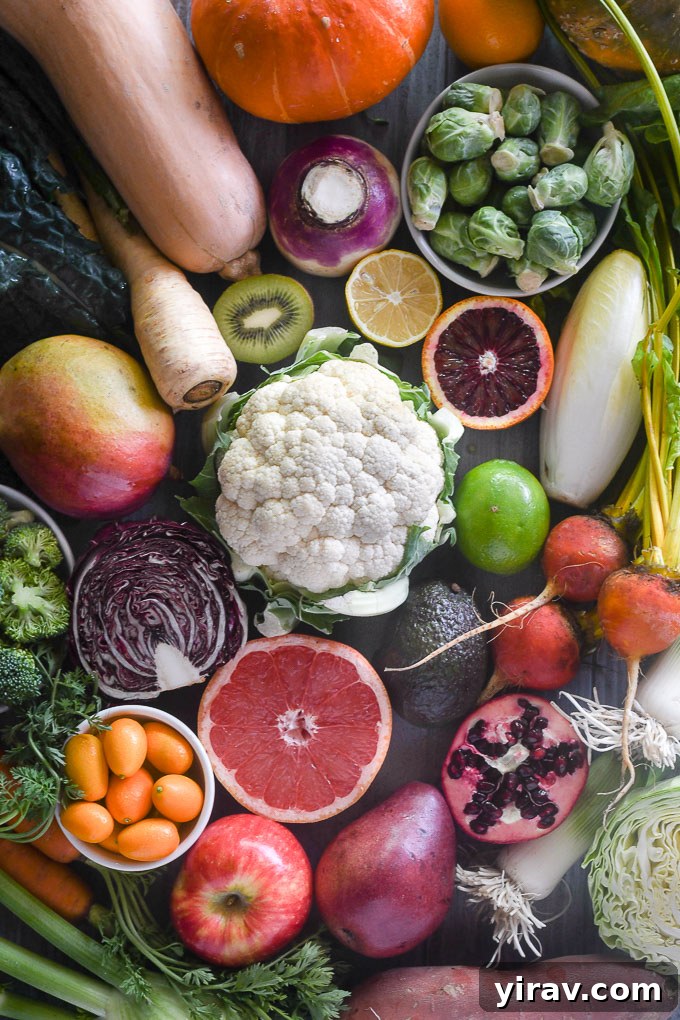
As you can see, the winter season is far from a culinary lull. It’s a vibrant period offering a remarkable diversity of fruits and vegetables, each with its own unique charm, flavor, and nutritional benefits. Embracing seasonal produce not only guarantees the freshest and most flavorful ingredients for your meals but also supports sustainable practices and often reduces your grocery bill. We hope this comprehensive guide inspires you to explore the rich bounty of winter produce, experiment with new recipes, and savor the delicious flavors that this season has to offer. Happy cooking!