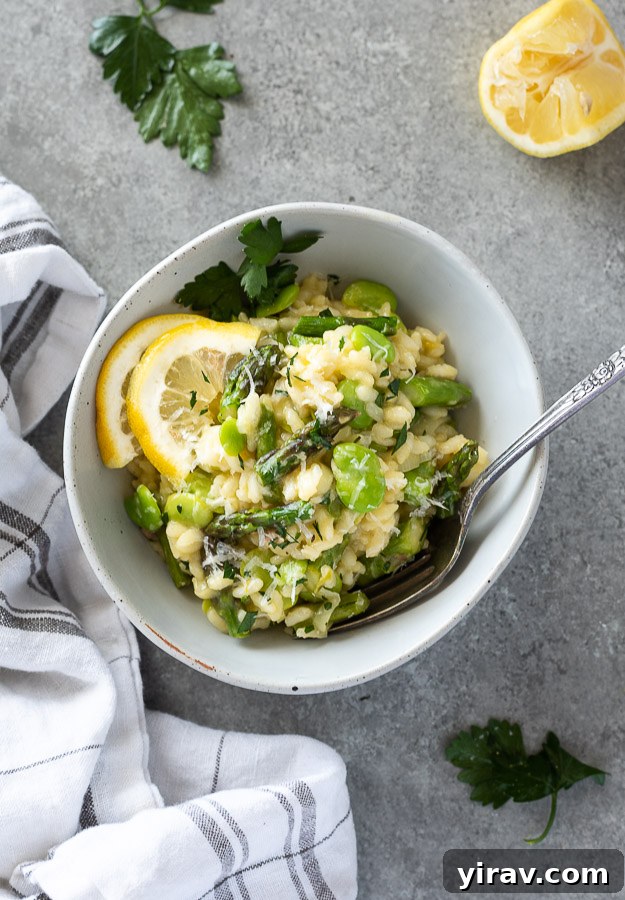
Creamy Spring Vegetable Risotto: A Vibrant & Flavorful Dish
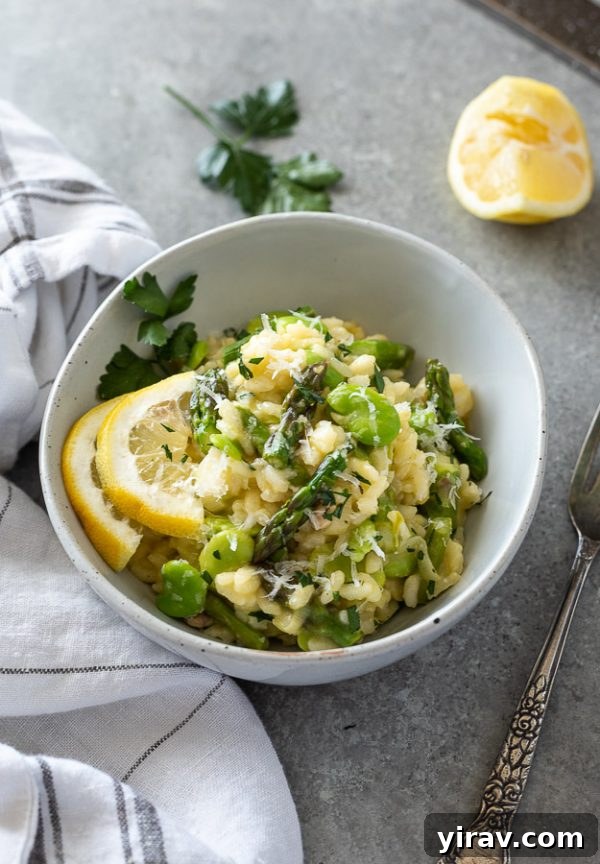
Embrace the freshness of the season with this exquisite Spring Vegetable Risotto. Combining the luxurious creaminess of traditional Parmesan risotto with the crisp, tender bite of seasonal vegetables like vibrant asparagus, delicate leeks, and sweet fava beans, this dish is a celebration of spring produce. It stands beautifully as a satisfying vegetarian main course or serves as an elegant, flavorful side dish alongside your favorite protein. Prepare to be delighted by a dish that tastes complex yet is surprisingly simple to master.
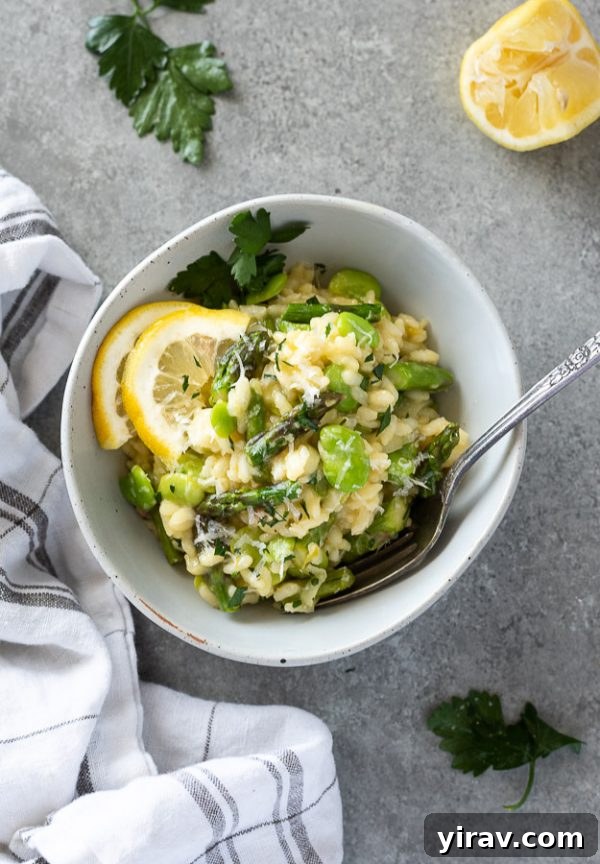
The Allure of Risotto: A Culinary Journey
Risotto, often mistaken for a pasta dish, is in fact a beloved Italian rice preparation, renowned for its unparalleled creamy texture and rich flavor. At its heart lies arborio rice, a short-grain variety with a high starch content. This starch is the secret to risotto’s signature creaminess; as warm broth is gradually added and continuously stirred, the rice slowly releases its starches, transforming into a velvety, luscious dish without the need for heavy cream.
While the idea of making homemade risotto might seem daunting to some, often associated with constant stirring and meticulous timing, I assure you it’s a culinary journey worth taking. With the right techniques and a bit of patience, you can achieve perfect, restaurant-quality risotto every single time. This recipe is designed to guide you through each step, debunking the myth that risotto is overly complicated.
If you’re eager to explore alternative, even simpler cooking methods for risotto, consider my recipes for Instant Pot Mushroom Risotto or Baked Butternut Squash Risotto. These variations minimize the stirring, offering a hands-off approach to this comforting classic.
Enter your email address to receive updates. You can unsubscribe at any time.
Why You’ll Adore This Spring Risotto Recipe
- Irresistibly Creamy and Flavorful: This risotto delivers a wonderfully creamy texture without a drop of heavy cream, relying instead on the natural starch of arborio rice. Each spoonful is packed with the bright, zesty notes of fresh lemon, the aromatic depth of garlic and leeks, and the savory richness of Parmesan cheese. The result is a comforting yet sophisticated dish that truly awakens the palate.
- Packed with Seasonal Freshness: Celebrate the bounty of spring with an abundance of vibrant vegetables. Asparagus, leeks, and fava beans lend their distinct textures and sweet, earthy flavors, making this risotto a truly seasonal delight. It’s a fantastic way to incorporate more fresh, wholesome produce into your diet.
- A Delightful One-Pot Vegetarian Meal: Ideal for weeknight dinners or special occasions, this recipe is incredibly convenient as it all comes together in a single pot. It’s a naturally vegetarian option that’s hearty enough to satisfy as a main course, yet elegant enough to impress guests. For those following a gluten-free diet, risotto is naturally gluten-free, making it a wonderful choice.
- Versatile and Adaptable: One of the best aspects of this spring risotto is its flexibility. Feel free to customize it with your favorite seasonal produce—fresh or frozen peas, spinach, or even wild mushrooms make excellent additions. Serve it as a stand-alone dish or as a luxurious accompaniment to grilled chicken, pan-seared fish, or roasted lamb.
Gather Your Ingredients for a Perfect Spring Risotto
Crafting a memorable risotto begins with a selection of fresh, high-quality ingredients. This recipe features a concise list, allowing the natural flavors to shine through. Most components are easily adaptable based on your pantry or seasonal availability.
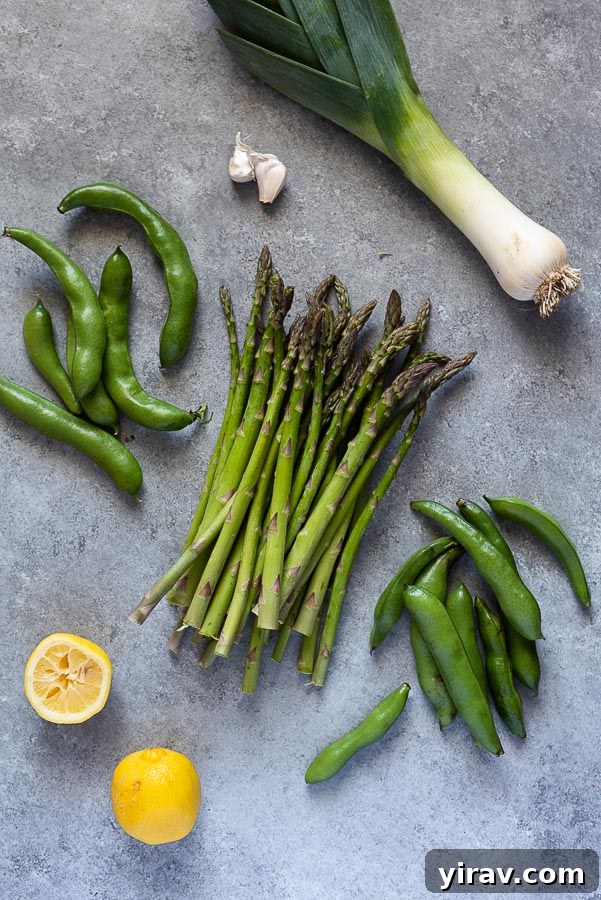
- Arborio Rice: This is the star of our risotto! Arborio is an Italian short-grain rice, specifically chosen for its high amylolopectin (starch) content. As it cooks and is slowly stirred, it releases this starch, creating the rich, creamy texture characteristic of a perfect risotto while remaining delightfully firm to the bite (al dente). Do not substitute with long-grain rice, as it will not yield the same creamy consistency.
- Fresh Asparagus: Look for firm, bright green spears with tightly closed tips. Asparagus adds a wonderful crisp-tender texture and a distinct earthy-sweet flavor that signifies spring. If fresh asparagus isn’t available, or if you prefer a different vegetable, mushrooms or blanched broccoli florets make excellent alternatives.
- Fava Beans: These delicate, buttery beans are a hallmark of spring. I highly recommend preparing them in advance by blanching and peeling them according to my How To Cook Fava Beans guide. This extra step ensures a tender, vibrant addition to your risotto. If fava beans are hard to find, fresh or frozen peas can be substituted for a similar burst of sweetness and color.
- Leeks: Offering a milder, sweeter onion flavor than traditional onions, leeks complement the delicate spring vegetables beautifully. Make sure to clean them thoroughly, as soil often gets trapped between their layers. The light green and white parts are typically used. Shallots or white onion can be used as a substitute if leeks are unavailable.
- Garlic: A few cloves of freshly minced garlic are indispensable for building a fragrant, flavorful base for the risotto. Always opt for fresh garlic over pre-minced for the best aroma and taste.
- Lemon Zest and Juice: The bright, citrusy notes from fresh lemon zest and juice are crucial for balancing the richness of the risotto. They provide a wonderful acidity that cuts through the creaminess, lifting all the flavors and adding a refreshing finish. Don’t skip this!
- Vegetable Stock: This is the primary cooking liquid for risotto. I’ve used a combination of 4 cups of my flavorful Homemade Vegetable Stock and 2 cups of water for optimal flavor without overwhelming sodium. It’s essential to keep the stock warm throughout the cooking process. Unlike some risotto recipes, I’ve opted not to include white wine here, as the lemon provides ample acidity. However, instructions for adding wine are provided in the recipe notes if you prefer the classic approach.
- Butter: A small amount of softened unsalted butter stirred in at the end contributes to the luxurious, velvety mouthfeel and richness of the risotto. For a dairy-free or vegan version, this can be easily omitted.
- Parmesan Cheese: Freshly grated Parmesan cheese adds a deeply savory, umami flavor that is characteristic of Italian risotto. Choose a good quality Parmesan for the best results. Like butter, it can be omitted to make the risotto dairy-free or vegan.
For precise measurements and quantities, please refer to the comprehensive recipe card below.
Mastering Spring Vegetable Risotto: Step-by-Step Guide
Making a truly exceptional risotto is a rewarding experience, and this spring vegetable version is surprisingly straightforward to prepare. Follow these steps for a consistently perfect result.
Chef’s Tip: A great way to know your risotto is ready for the next ladle of stock is when you can draw a clear line through the rice with a wooden spoon, and the liquid remains separated without immediately filling the gap. This indicates most of the liquid has been absorbed.
The full, detailed instructions are provided in the recipe card at the end of this article.
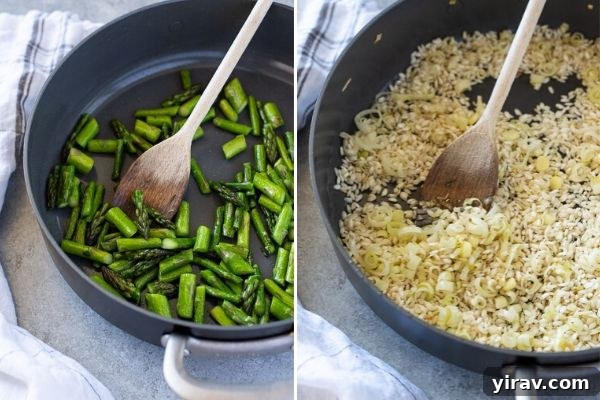
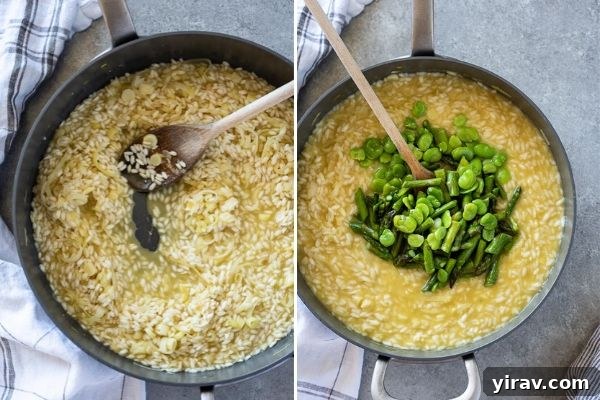
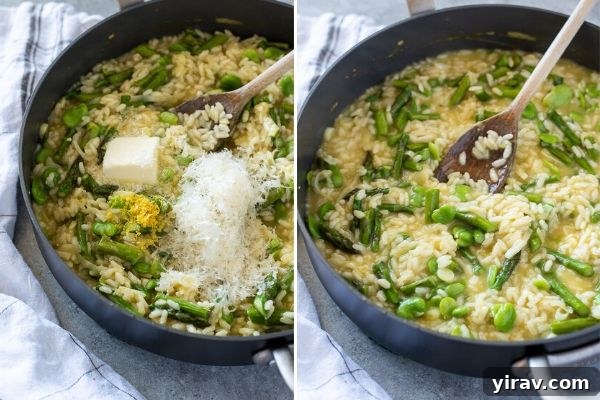
- Prepare the Stock and Asparagus: Begin by heating your vegetable stock and water in a separate saucepan, bringing it to a gentle boil before reducing the heat to a low simmer. This ensures the stock is warm when added, preventing temperature shock that can hinder starch release. Simultaneously, in a large sauté pan or Dutch oven, cook the trimmed and sliced asparagus with 1 tablespoon of olive oil for 2-3 minutes until it’s crisp-tender. Remove the cooked asparagus and set it aside in a bowl.
- Sauté Aromatics and Toast Rice: In the same pan, add the remaining 2 tablespoons of olive oil. Sauté the thinly sliced leeks for 3-4 minutes until they are softened and translucent. Add the minced garlic and cook for another 30 seconds until fragrant, being careful not to burn it. Introduce the arborio rice to the pan and toast it for 1-2 minutes, stirring constantly, until the edges of the grains become translucent and they emit a slightly nutty aroma. This toasting step is crucial for flavor and preventing the rice from becoming mushy.
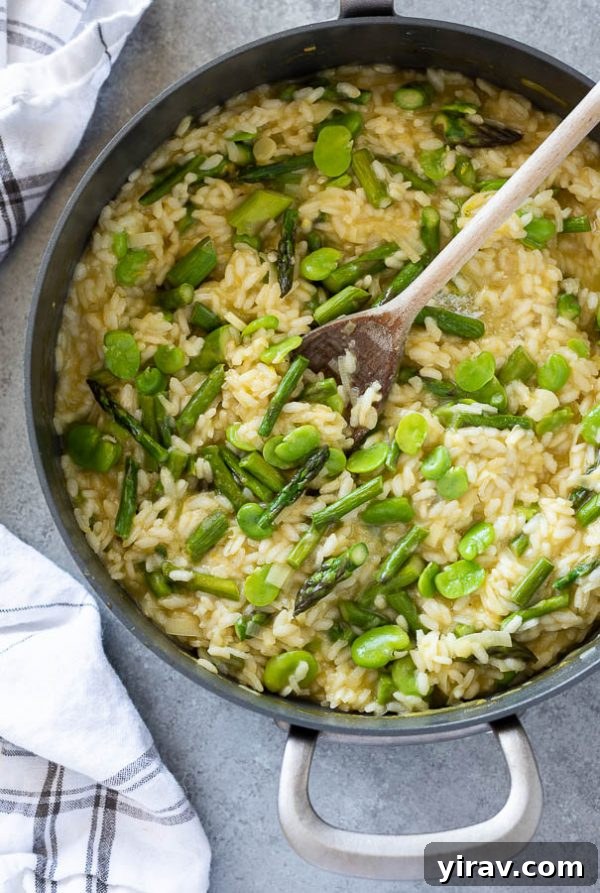
- The Risotto Method (Gradual Stock Addition): This is where the magic happens! Add the warm stock one ladleful at a time (approximately 1/2 cup), stirring frequently with a wooden spoon. Allow each addition of liquid to be almost completely absorbed by the rice before adding the next. Continue this process for about 20-25 minutes. The risotto is done when it’s beautifully creamy but still has a slight bite (al dente) in the center of the rice grains. This consistent stirring helps release the starch and develop the desired creamy texture.
- Incorporate Spring Vegetables: During the very last minute of cooking, stir in the reserved crisp-tender asparagus and the cooked fava beans. This ensures they remain vibrant and retain their desirable texture, preventing them from becoming overcooked.
- Finish with Richness and Zest: Remove the pan from the heat. This is important to stop the cooking process and prevent overcooked risotto. Stir in the fresh lemon zest, lemon juice, softened unsalted butter, and grated Parmesan cheese.
- Season and Serve: Stir everything together until well combined and the butter and cheese have melted into the creamy rice. Taste the risotto and adjust the seasoning with salt and freshly ground black pepper as needed. Serve immediately and savor every spoonful!
Frequently Asked Questions (FAQs) About Risotto
Perfect risotto is characterized by two key qualities: it should be incredibly creamy and luscious, yet the rice grains themselves should remain “al dente” – firm to the bite with a slight chew in the center. It should not be mushy or soupy. This ideal texture is achieved through the traditional risotto method of gradually adding warm stock and frequent stirring, which coaxes the starch out of the arborio rice.
Absolutely! While fava beans offer a unique, buttery flavor, they can be easily substituted. Fresh or frozen peas are an excellent alternative, providing a similar pop of sweetness and vibrant green color. You could also try blanched green beans or even spinach stirred in at the very end.
Using warm broth is critical for maintaining the consistent temperature of the risotto. Adding cold broth would repeatedly cool down the rice, disrupting the cooking process and preventing the starch from releasing properly. This results in a longer cooking time and a less creamy, often unevenly cooked risotto. My first attempt at risotto with cold stock was disastrous – a mistake I never repeated!
A general guideline is to use approximately 4 cups of liquid for every cup of arborio rice. However, this can vary slightly depending on your rice, the pan you’re using, and desired consistency. For this recipe, which uses 1.5 cups of arborio rice, I combined 4 cups of vegetable stock with 2 cups of water, totaling 6 cups of liquid. Always add liquid gradually, as described in the instructions, and only use as much as needed to reach the al dente stage. Using stock instead of just water will impart much more flavor to your final dish.
Yes, you certainly can! While this recipe uses lemon for acidity, if you prefer the classic approach with white wine, add about 1/2 cup of dry white wine (such as Pinot Grigio or Sauvignon Blanc) immediately after toasting the arborio rice. Stir continuously until the wine has almost completely evaporated and reduced to about 2 tablespoons. Then, proceed with adding the warm stock as instructed.
Risotto is best enjoyed fresh, but leftovers can be stored in an airtight container in the refrigerator for up to 3 days. To reheat, gently warm it in a saucepan over medium-low heat, adding a splash of extra vegetable stock or water to restore its creamy texture, as it tends to thicken in the fridge. Stir frequently until heated through. Avoid microwaving if possible, as it can make the rice gummy.
The most common pitfalls include using cold stock, not stirring enough (or stirring too much without allowing absorption), and overcooking the rice. Overcooked risotto becomes mushy, while under-stirring can lead to uneven cooking and less creaminess. Patience and adherence to the gradual stirring method with warm stock are key.
Perfect Pairings: What to Serve with Spring Vegetable Risotto
Spring Vegetable Risotto is a versatile dish that pairs beautifully with a variety of accompaniments, whether you’re aiming for a light meal or a more substantial feast.
- Crusty Bread or Focaccia: A hunk of warm, crusty bread or a slice of our savory 1-Hour Rosemary Focaccia Bread is perfect for soaking up every last bit of the creamy risotto. The contrast in texture is simply delightful.
- Light, Fresh Salads: Complement the richness of the risotto with a bright, crisp salad. An Italian Tricolore Salad with its peppery arugula, radicchio, and endive, or a refreshing Strawberry Spinach Salad, adds a burst of freshness and a welcome tang to the meal.
- Lean Proteins: For those who enjoy adding a protein, this risotto is a fantastic partner. Consider serving it alongside perfectly cooked Air Fryer Chicken Thighs, flaky Blackened Salmon with Pineapple Salsa, or even grilled shrimp. The mild yet flavorful risotto allows the protein to shine while offering a harmonious base.
Essential Tips for Risotto Success
- Mise en Place (Prep Ahead): Risotto cooking requires continuous attention. Have all your vegetables chopped, stock warmed, and other ingredients measured and ready before you start cooking. This will make the process much smoother and more enjoyable!
- Quality Ingredients: The fewer ingredients, the more each one counts. Use fresh, seasonal vegetables and good quality vegetable stock, butter, and Parmesan for the best flavor.
- The Right Pan: A wide, heavy-bottomed pan (like a Dutch oven or a large sauté pan) is ideal. Its surface area allows the liquid to evaporate evenly and the rice to cook uniformly.
- Patience with the Stirring: Resist the urge to rush. The gradual addition of warm stock and consistent, gentle stirring is what liberates the starch from the rice, creating that signature creamy texture. It’s a labor of love, but it’s worth it!
- Taste as You Go: Always taste your risotto throughout the cooking process. This allows you to adjust seasoning, assess the rice’s doneness (aim for al dente!), and determine if more liquid is needed.
- Serve Immediately: Risotto is best enjoyed fresh off the stove. It loses its ideal creamy texture quickly as it cools and continues to absorb liquid. Have your plates ready!
- Make it Vegan: To transform this into a delicious vegan risotto, simply omit the butter and Parmesan cheese. The natural creaminess from the arborio rice and the vibrant flavors of the vegetables will still make it incredibly satisfying.
More Risotto Recipes You’ll Love
- Pumpkin Risotto with Bacon: A comforting autumn favorite with rich, savory notes.
- Short Rib Risotto with Mushrooms: Indulgently hearty and full of umami flavors, perfect for a special meal.
Did you try this delightful recipe? If so, please consider leaving a review below and don’t forget to tag me @flavorthemoments on Facebook and Instagram when you share your delicious creations!
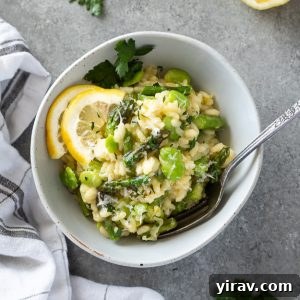
Spring Vegetable Risotto
Leave a Review »
Ingredients
- 4 cups low sodium vegetable stock
- 2 cups water*
- 3 tablespoons olive oil divided
- 1 bunch asparagus trimmed and sliced on the bias into 1″ pieces
- 1 large leek light green and white parts, halved and sliced thinly into half moons
- 2 cloves garlic minced
- 1 1/2 cups arborio rice
- 1 cup cooked fava beans*
- 1 lemon zested and juiced
- 1/4 cup freshly grated parmesan
- 1 tablespoon softened unsalted butter
Instructions
-
Place the stock and water in a sauce pan and bring to a boil over medium heat. Reduce heat to low and continue to simmer.
-
Heat 1 tablespoon olive oil in a large sauté pan over medium heat. Add the asparagus and cook until crisp tender, 3-4 minutes. Remove from pan and set aside.
-
Add the remaining 2 tablespoons of olive oil. Add the leek and cook until softened, about 2 minutes. Add the garlic and cook for 30 seconds longer. Add the arborio rice and toast in the pan, stirring constantly until toasted, 1-2 minutes.
-
Slowly add one ladleful (about 1/2 cup) of the warm stock, stirring the risotto frequently. Add an additional ladle full of stock each time the liquid has been absorbed, until all of the stock has been added and the risotto is al dente. The rice is ready for more stock when you can draw a line through the risotto with a wooden spoon and the liquid stays put.
-
Add the asparagus and fava beans to the risotto during the last minute of cooking.
-
Remove the risotto from heat and add the lemon zest, juice, parmesan cheese and butter, and season with salt and pepper to taste. Serve immediately and enjoy!
Notes
- Pro tip: Prep your vegetables in advance to make this recipe go even more quickly!
- Fava beans may be cooked in advance following my recipe How To Cook Fava Beans. The fava beans may be substituted with fresh or frozen peas.
- If you would like to go the classic route and add white wine to your risotto, add 1/2 cup dry white wine immediately after toasting the arborio rice and reduce it down to about 2 tablespoons.
- Omit the butter and parmesan cheese to make this a vegan risotto.
- While risotto is best the day that it’s made, store leftovers in the refrigerator for up to 3 days.
Nutrition
Nutrition is estimated using a food database and is only intended to be used as a guideline for informational purposes.
Be sure to tag @flavorthemoments with the hashtag #flavorthemoments on Instagram so I can see what you made!
**This recipe was originally published in April 2016. It has been thoroughly updated with enhanced step-by-step photos, comprehensive instructions, and additional recipe tips to ensure your ultimate success and enjoyment.