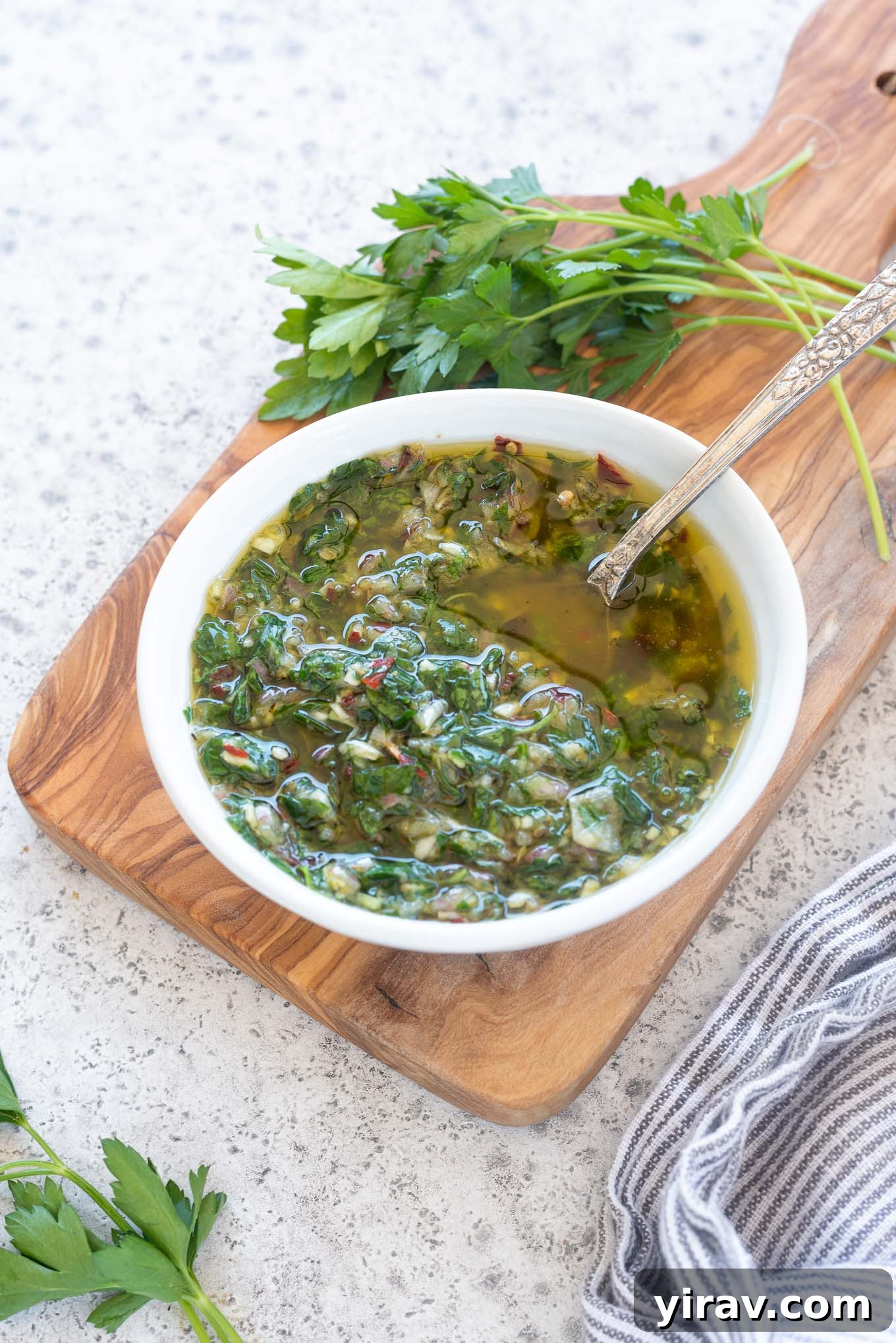
Prepare to be amazed by how a handful of fresh ingredients can unite to form something truly spectacular: a vibrant, flavorful, and wonderfully versatile Chimichurri Sauce. This isn’t just a condiment; it’s a culinary revelation, brimming with bright, herbaceous notes, a savory depth, and a delightful whisper of heat. Perfect for elevating everything from succulent grilled meats and roasted vegetables to wholesome grain bowls and even as a zesty marinade, this homemade chimichurri is an essential recipe for anyone who loves bold flavors. The best part? It comes together in a mere 10 minutes of prep time, transforming ordinary meals into extraordinary dining experiences with effortless grace.
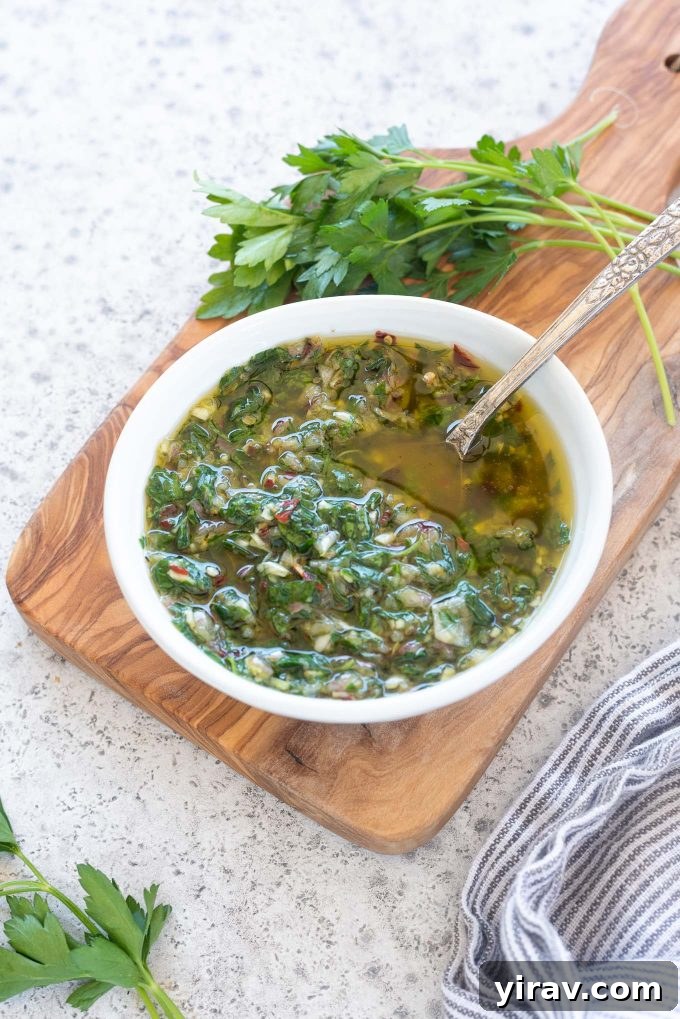
A phenomenal sauce has the power to elevate any dish from good to gourmet, and this magic is amplified when it’s crafted right in your own kitchen. Much like a cherished homemade marinara or a luscious basil pesto, this Chimichurri Sauce is liquid gold. It’s an indispensable component for crafting unforgettable meals, offering a burst of freshness and a complex flavor profile that tantalizes the taste buds. Whether you’re looking for a vibrant accompaniment, a lively condiment, or an impactful marinade, chimichurri rises to the occasion.
Originating from the sun-drenched plains of Argentina and Uruguay, chimichurri is more than just a sauce; it’s a staple of South American cuisine, deeply intertwined with the region’s famous asados (barbecues). Traditionally, this uncooked, herbaceous sauce is used to complement grilled meats, offering a fresh, tangy counterpoint to rich, smoky flavors. But its versatility knows no bounds, making it a beloved addition to kitchens worldwide.
Crafting this vibrant green sauce is surprisingly simple. A bit of chopping, a quick pulse in a food processor, and about 10 minutes are all it takes. Once prepared, it’s ready to transform your culinary creations. It’s particularly a summer essential for me, as it beautifully enhances anything grilled, from a robust tomahawk steak to an assortment of tender grilled vegetables. Beyond the grill, it brightens up grain bowls, adds zest to seafood, and can even be swirled into scrambled eggs for an unexpected morning treat. Truly, there’s no dish this remarkable sauce can’t make more exciting!
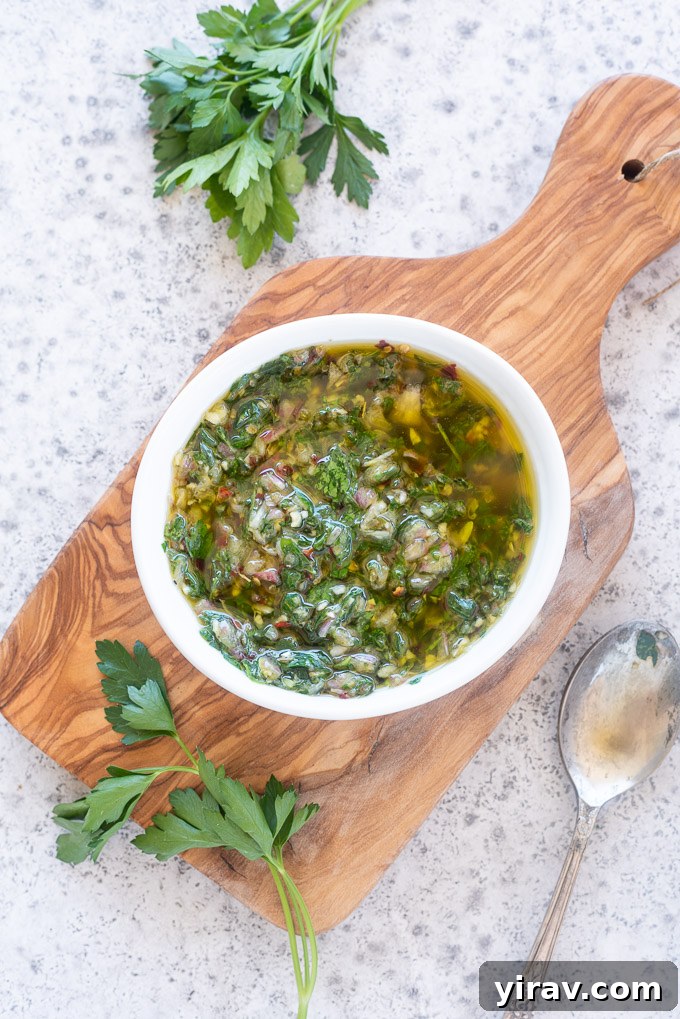
Why You’ll Love This Chimichurri Sauce
There are countless reasons why this homemade chimichurri sauce will quickly become a favorite in your kitchen:
- Explosion of Flavor: This sauce is a symphony of bright, herbaceous notes, combined with a savory depth and an adjustable kick of heat, creating the ultimate flavor booster for any dish.
- Effortlessly Simple: Requiring just a few readily available ingredients, this recipe comes together in a mere 10 minutes of active prep, proving that gourmet flavors don’t have to be complicated.
- Unmatched Versatility: Whether you use it as a vibrant condiment for grilled or roasted meats, a refreshing drizzle over fish and vegetables, a flavorful addition to grain bowls, or a tenderizing marinade, its applications are endless.
- Diet-Friendly: Naturally dairy-free, gluten-free, vegan, and low-carb, this chimichurri is an excellent choice for a variety of dietary preferences and health-conscious eaters without compromising on taste.
- Fresher Than Store-Bought: Making chimichurri at home guarantees you the freshest ingredients and purest flavors, far superior to anything you might find on a supermarket shelf. You control the quality and intensity of every component.
- Perfect Make-Ahead Option: The flavors actually meld and deepen over time, making it an ideal sauce to prepare a day or two in advance, freeing up your time when you’re ready to serve.
The Story Behind Chimichurri: A Brief History
To truly appreciate chimichurri, it’s worth delving into its vibrant past. This uncooked green sauce is a culinary cornerstone of Argentinian and Uruguayan cuisine, deeply rooted in the gaucho (cowboy) culture of the Pampas. The origins of its name are debated, with several charming anecdotes. One popular theory attributes it to “Jimmy McCurry,” an Irish immigrant or perhaps a British meat merchant, who allegedly created the sauce or whose name was phonetically adapted by locals. Another story suggests it comes from the Basque word “tximitxurri,” loosely translating to “a mixture of various things” or “hodgepodge,” which accurately describes its blend of herbs and spices.
Regardless of its etymological roots, chimichurri’s role has remained consistent for generations: to complement the rich, smoky flavors of grilled meats, particularly beef, which is central to Argentinian asados. It provides a much-needed burst of freshness and acidity, cutting through the richness of the meat and awakening the palate. Traditionally, it was prepared in a mortar and pestle, allowing for a rustic texture where the herbs were crushed rather than finely pureed. This method yielded a more robust and textured sauce, a characteristic still cherished today.
While the classic green chimichurri (chimichurri verde) is the most well-known, a red version (chimichurri rojo) also exists, often incorporating smoked paprika or dried red peppers for a deeper, earthier flavor and a richer color. Both versions share the fundamental elements of fresh herbs, garlic, vinegar, and olive oil, a testament to the simplicity and power of these core ingredients. Today, chimichurri has transcended its South American origins, becoming a global favorite, celebrated for its bold flavor and incredible versatility in diverse culinary contexts.
Essential Ingredients for Perfect Chimichurri
This exquisite chimichurri sauce relies on a handful of simple yet potent ingredients, many of which you likely already have. While the recipe offers a classic approach, feel free to consider the suggested substitutions outlined below to tailor it to your preference.
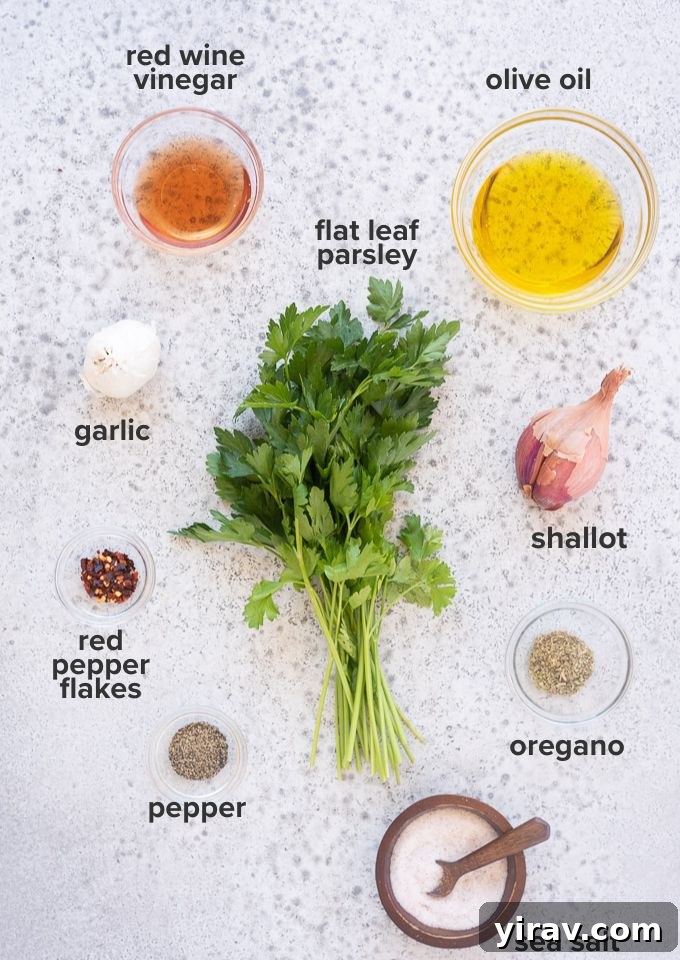
- Fresh Parsley: The undisputed star of the show. For an authentic and superior flavor, Italian flat-leaf parsley is highly recommended over its curly counterpart. Its vibrant, slightly peppery notes form the backbone of the sauce. For a subtle twist, you can experiment with a combination of half parsley and half fresh cilantro, which adds another layer of bright, aromatic complexity.
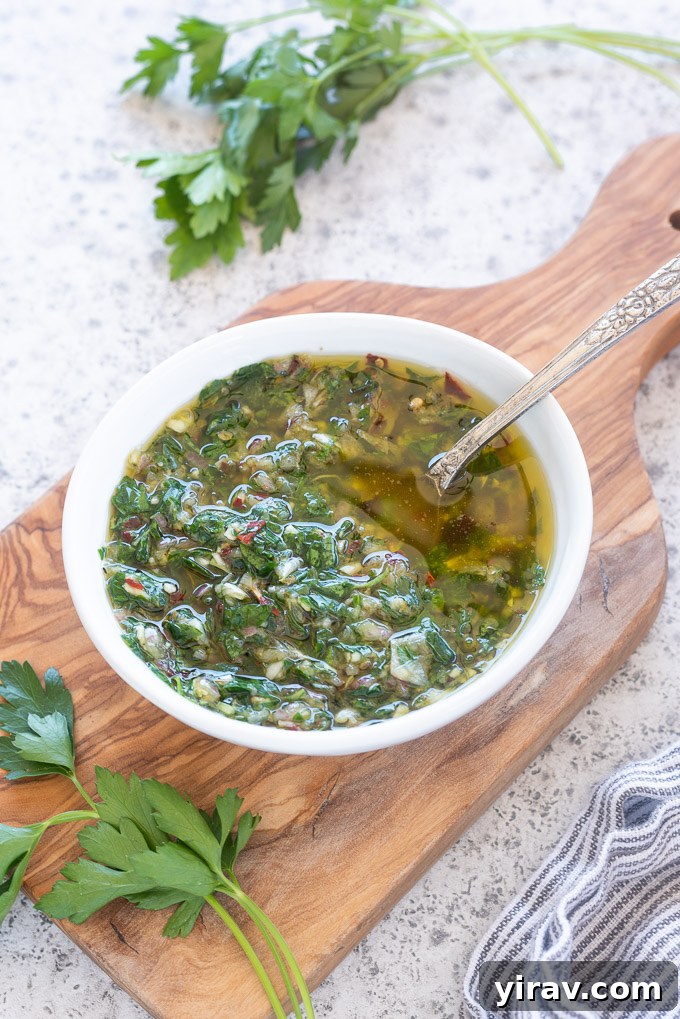
- High-Quality Olive Oil: As one of the primary liquid components, the quality of your olive oil genuinely shines through. Opt for a good extra virgin olive oil with a pleasant, fruity, or peppery flavor. It binds all the ingredients together and contributes to the sauce’s luxurious texture.
- Shallot and Garlic: These aromatic powerhouses provide a foundational savory kick. When raw, their flavors are sharp and pungent, but they mellow beautifully as the sauce rests, infusing the oil with their distinct character without being overwhelming. Shallots are preferred over stronger onions for their milder, sweeter oniony essence, which harmonizes perfectly with the fresh herbs.
- Red Wine Vinegar: Crucial for balancing the richness of the olive oil and the intensity of the herbs and garlic. Red wine vinegar provides that essential bright, tangy acidity that defines chimichurri. Its specific flavor profile is key, and I highly advise against substituting it with other types of vinegar, as it dramatically alters the sauce’s authentic taste.
- Oregano: Whether fresh or dried, oregano adds a distinct earthy and slightly bitter note that complements the other herbs. If using dried oregano, one teaspoon is usually sufficient, while fresh oregano requires a more generous tablespoon to achieve similar intensity. Both work wonderfully, so use what you have on hand.
- Red Pepper Flakes: A traditional chimichurri is known for its spicy kick. Red pepper flakes offer a moderate heat level, which is perfect for families with varying spice tolerances. However, if you crave a more intense heat, feel free to substitute or supplement with your favorite finely chopped fresh chili pepper, such as a serrano or a small jalapeño, adjusting the quantity to your preferred fiery level.
- Sea Salt and Freshly Ground Black Pepper: These aren’t just for seasoning; they’re vital for enhancing and tying together all the other flavors, ensuring a well-rounded and balanced sauce. Taste and adjust as needed to bring out the best in your chimichurri.
For precise measurements and quantities, please refer to the comprehensive recipe card below.
Step-by-Step Guide: How to Make Chimichurri
Crafting this chimichurri sauce is remarkably straightforward, requiring minimal effort for maximum flavor. With just about 10 minutes of active prep, you’ll have a vibrant condiment ready to go. The magic truly happens as the ingredients mingle and meld while the sauce rests at room temperature, allowing the flavors to deepen and harmonize.
Pro Tip: For the absolute best flavor, consider making your chimichurri a day or even a few days in advance. Like a fine wine, this sauce only improves with time, becoming more complex and delicious as the ingredients infuse.
Detailed instructions and exact ingredient quantities can be found in the recipe card at the end of this article.
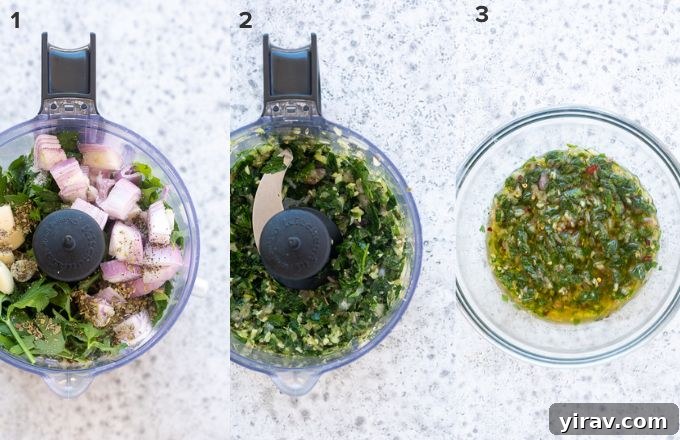
- Prepare the Aromatics and Herbs: Begin by gathering your fresh parsley, peeled shallot, garlic cloves, and oregano. Place all these ingredients into the bowl of a food processor. If you don’t have a food processor, don’t worry! This sauce can be just as easily prepared by meticulously chopping all these ingredients by hand, aiming for a fine but not mushy consistency.
- Pulse to Perfection: Secure the lid on your food processor and pulse the mixture until the herbs and aromatics are coarsely chopped. Avoid over-processing; you want a textured sauce, not a smooth paste. Scrape down the sides of the bowl as needed to ensure even chopping.
- Combine and Season: Transfer the coarsely chopped parsley mixture from the food processor to a medium-sized mixing bowl. Now, add the extra virgin olive oil, red wine vinegar, red pepper flakes, sea salt, and black pepper. Stir all the ingredients thoroughly with a spoon or whisk until everything is well combined and coated.
- Rest and Enjoy: Once mixed, allow the chimichurri sauce to stand at room temperature for at least 5-10 minutes (or ideally longer, as per our pro tip!) to let the flavors fully meld and develop. This resting period is crucial for achieving that signature harmonious taste. Serve and savor!
Frequently Asked Questions About Chimichurri
Here are some common questions about chimichurri to help you master this incredible sauce:
Chimichurri is a traditional uncooked sauce originating from Argentinian and Uruguayan cuisines. It’s typically made with finely chopped fresh parsley, minced garlic, olive oil, oregano, and red wine vinegar. It serves as a flavorful condiment for grilled meats, a vibrant marinade, or a versatile sauce for various dishes, and can be found in both green (verde) and red (rojo) varieties.
Our recipe for chimichurri sauce features fresh Italian flat-leaf parsley, finely chopped shallot, minced garlic, dried (or fresh) oregano, robust extra virgin olive oil, tangy red wine vinegar, a touch of sea salt, black pepper, and a pinch of red pepper flakes for a subtle heat. Each ingredient plays a crucial role in creating its balanced and bold flavor.
Chimichurri boasts a wonderfully bright, fresh, and herbaceous flavor profile. It has a pronounced tang from the red wine vinegar, a pungent warmth from garlic and shallots, and an aromatic depth from oregano. The red pepper flakes add a pleasant, zesty kick, making it a perfectly balanced sauce that is savory, fresh, and subtly spicy – truly an ultimate condiment or marinade.
Chimichurri sauce is incredibly versatile! It’s fantastic as a condiment for almost any grilled or roasted meat (especially beef, chicken, and pork) and fish. It also shines when drizzled over roasted vegetables, mixed into grain bowls, spread on sandwiches, or used as a marinade to tenderize and flavor poultry, seafood, or even firm tofu before cooking. Its vibrant flavor can instantly uplift a wide array of dishes.
While a food processor is ideal for achieving the desired coarse texture, a blender can be used. However, be careful not to over-blend, as it can turn the sauce into a smooth puree rather than the rustic, chunky consistency typical of chimichurri. Pulse in short bursts and scrape down the sides frequently.
When stored in an airtight container in the refrigerator, homemade chimichurri sauce can last for up to 2 weeks. The flavors often deepen and improve after the first day, but always ensure it smells fresh before serving.
Yes, chimichurri freezes beautifully! Pour it into an ice cube tray, freeze until solid, then transfer the cubes to a freezer-safe bag or container. It can be stored for up to 3-4 months. Thaw cubes in the refrigerator or at room temperature as needed. This is a great way to always have fresh chimichurri on hand.
Elevate Your Meals: Serving Suggestions
The beauty of chimichurri lies in its incredible versatility. This vibrant sauce can instantly transform a simple meal into something extraordinary. Here are numerous ways to incorporate it into your cooking:
- Grilled and Roasted Meats: The classic pairing! Drizzle generously over juicy grilled tri-tip roast, succulent steak, pork chops, or roasted chicken. It cuts through the richness and adds a burst of freshness.
- Seafood Sensation: A fantastic companion for fish. Spoon it over flaky air fryer salmon, grilled shrimp, pan-seared scallops, or baked white fish for a bright, zesty lift.
- Vegetable Enhancer: Brighten up your vegetables! It’s delicious drizzled over oven-roasted asparagus, air fryer carrots, grilled corn on the cob, roasted broccoli, or sautéed mushrooms.
- Potato Perfection: Elevate your potato dishes. Serve it alongside crispy air fryer sweet potato fries, fluffy air fryer potatoes, or even mixed into mashed potatoes for an herbaceous twist.
- Marinade Marvel: Use it as a tenderizing and flavorful marinade for air fryer chicken breast, flank steak, shrimp, or firm tofu. Allow your chosen protein to soak in the chimichurri for at least 30 minutes, or up to several hours for deeper flavor.
- Grain Bowl Booster: Swirl a spoonful into your favorite grain bowls with quinoa, farro, or rice for an instant flavor upgrade. Add roasted vegetables, a protein, and your chimichurri for a complete, healthy meal.
- Eggs and Breakfast: A surprising but delightful addition! Drizzle over scrambled eggs, fried eggs, or an omelet for a fresh, savory start to your day.
- Sandwiches and Wraps: Spread it on your sandwiches, wraps, or tacos instead of mayonnaise or other condiments for a burst of fresh flavor.
- Bread Dipper: Serve it simply with crusty bread for a flavorful appetizer or snack.
- Salad Dressing: Thin it out slightly with a little more olive oil or water and use it as a vibrant dressing for green salads or pasta salads.
Pro Tips and Recipe Notes
- Advance Preparation is Key: For the most robust and harmonious flavor, prepare your chimichurri sauce at least a few hours, or ideally a full day, before you plan to serve it. This allows the ingredients to fully meld and deepen.
- Bring to Room Temperature: Before serving, always let the sauce stand at room temperature for 15-20 minutes. This helps the olive oil soften and the flavors to become more vibrant and aromatic.
- Yield: This recipe typically yields about 1/2 cup of exquisitely flavorful chimichurri sauce, enough to generously serve 8 people as a condiment.
- Storage: Store any leftover chimichurri in an airtight container in the refrigerator. It will stay fresh and delicious for up to 2 weeks.
- Customize the Heat: The recipe calls for red pepper flakes for a mild spice. If you prefer a fiery kick, feel free to substitute or add finely chopped fresh chili peppers, such as serrano or jalapeño, to taste.
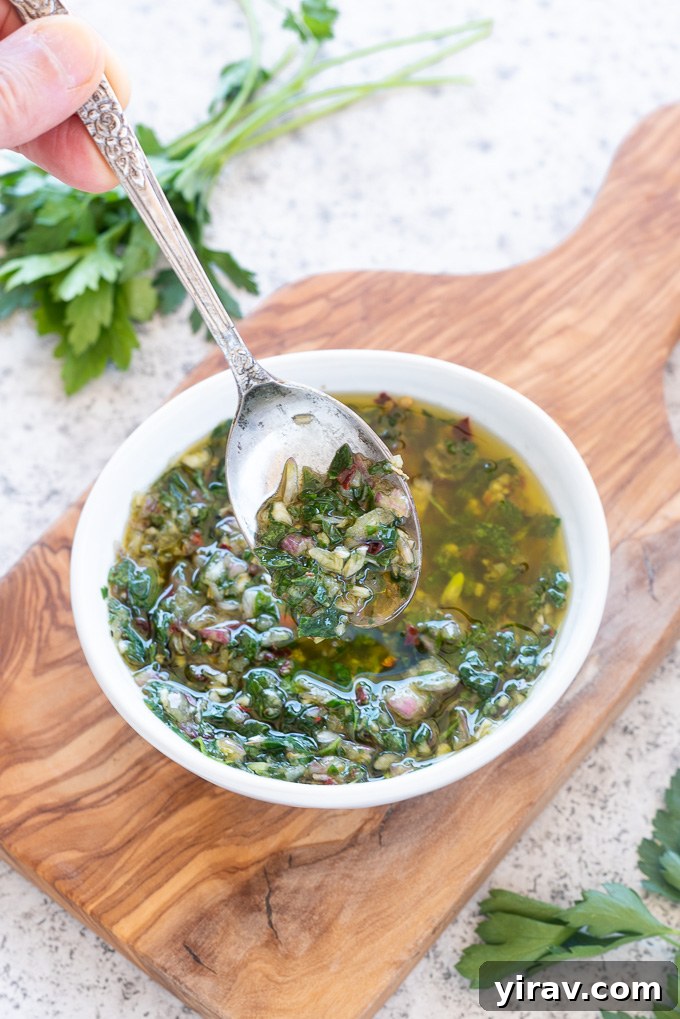
- Texture Preference: While a food processor makes quick work of chopping, remember to pulse rather than blend continuously. The ideal chimichurri has a coarse, slightly chunky texture, not a smooth puree. If chopping by hand, aim for a consistent fine dice.
- Parsley Quality: Always use fresh, bright green Italian flat-leaf parsley. Avoid any wilted or yellowing leaves, as they can impart an off-flavor.
- Vinegar Adjustment: Start with the recommended amount of red wine vinegar and taste. You can always add an additional tablespoon for an extra tangy boost if desired.
More Delicious Sauce Recipes to Explore
If you loved creating this chimichurri, you’ll surely enjoy these other homemade sauce recipes designed to add flavor and flair to your meals:
- Vibrant Carrot Top Pesto
- Refreshing Greek Tzatziki Sauce
- Authentic Homemade Green Enchilada Sauce
- Sweet and Smoky Homemade Bourbon BBQ Sauce
- Quick Homemade Red Enchilada Sauce
- Hearty Homemade Meat Sauce with Red Wine & Mushrooms
- Nutty Spinach Walnut Pesto Recipe
Did you try this recipe? If so, be sure to leave a review below and tag me @flavorthemoments on Facebook and Instagram!
Chimichurri Sauce Recipe
Servings: 8 servings
Prep Time: 10 mins
Cook Time: 0 mins
Resting Time: 10 mins
Total Time: 20 mins
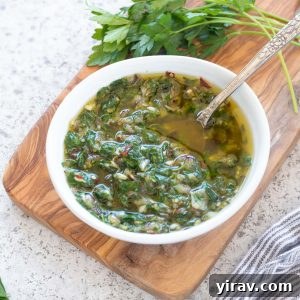
This homemade Chimichurri Sauce is a vibrant, herbaceous, and savory condiment with a perfect hint of spice. It’s incredibly versatile, adding a burst of bright flavor to grilled meats, roasted vegetables, grain bowls, and more, all prepared in just 10 minutes!
Equipment
- Food Processor (e.g., Kitchen Aid 7 cup Food Processor) or cutting board and knife
- Medium mixing bowl
- Spoon or whisk
Ingredients
- 3/4 cup Italian flat leaf parsley leaves
- 1 small shallot, peeled and coarsely chopped
- 2 cloves garlic, minced
- 1 teaspoon dried oregano (or 1 tablespoon fresh oregano, finely chopped)
- 1/2 cup extra virgin olive oil
- 2-3 tablespoons red wine vinegar (Start with 2 tablespoons, add more to taste for desired tanginess)
- 1/2 teaspoon sea salt
- 1/4 teaspoon black pepper, freshly ground
- 1/4 teaspoon red pepper flakes (adjust to your spice preference)
Instructions
- Place the parsley leaves, shallot, garlic, and oregano in the bowl of a food processor. Pulse until coarsely chopped, or until it reaches your desired consistency. Be sure to scrape down the sides as necessary to ensure even chopping. If you prefer, you can also finely chop all these ingredients by hand for a more rustic texture.
- Transfer the chopped mixture to a medium bowl. Add the olive oil, red wine vinegar, sea salt, black pepper, and red pepper flakes. Stir thoroughly to combine all ingredients.
- Allow the chimichurri sauce to rest at room temperature for at least 5-10 minutes. This crucial resting period allows the flavors to meld beautifully and deepen. Serve immediately and enjoy the fresh, vibrant taste!
Notes
- Pro Tip: For the most intense and complex flavors, make the sauce a day or two in advance. Store it in an airtight container in the refrigerator. Before serving, let it come to room temperature for 15-20 minutes.
- This recipe yields approximately 1/2 cup of chimichurri sauce.
- Store any unused sauce in an airtight container in the refrigerator for up to 2 weeks.
- For those who love extra spice, feel free to increase the red pepper flakes or substitute them with finely minced fresh chili peppers, like jalapeño or serrano.
- This versatile sauce can be served over roasted or grilled meats and vegetables, drizzled into grain bowls, or used as a marinade for your favorite proteins.
Nutrition
Nutrition information is an estimate based on a food database and is intended for informational purposes only.
Course: Sauces
Cuisine: Argentinian
Author: Marcie
All recipes and images © Flavor the Moments.
Did you try this recipe? Be sure to tag @flavorthemoments with the hashtag #flavorthemoments on Instagram so I can see what you made!