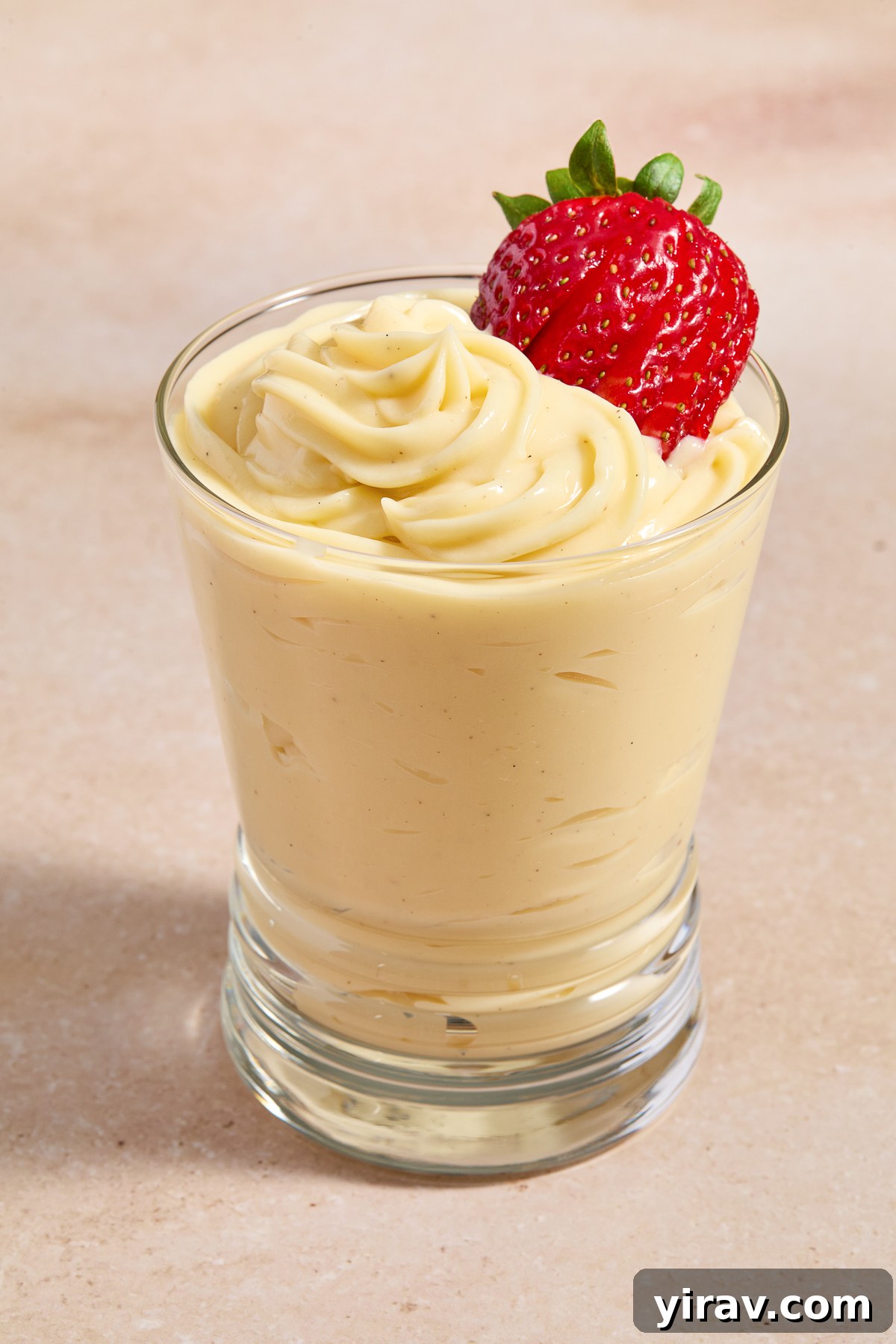
Unlock the secrets to crafting the perfect Homemade Pastry Cream, famously known as Crème Pâtissière in France. This exquisite, velvety custard is a staple in French patisseries, celebrated for its rich texture and irresistible vanilla flavor. Unlike many traditional custards, our recipe uses cornstarch for thickening, making it naturally gluten-free without compromising on its luxurious consistency. Whether you’re filling delicate tarts, elegant eclairs, fluffy cakes, or simply enjoying it by the spoonful, this versatile cream is guaranteed to elevate your dessert game.
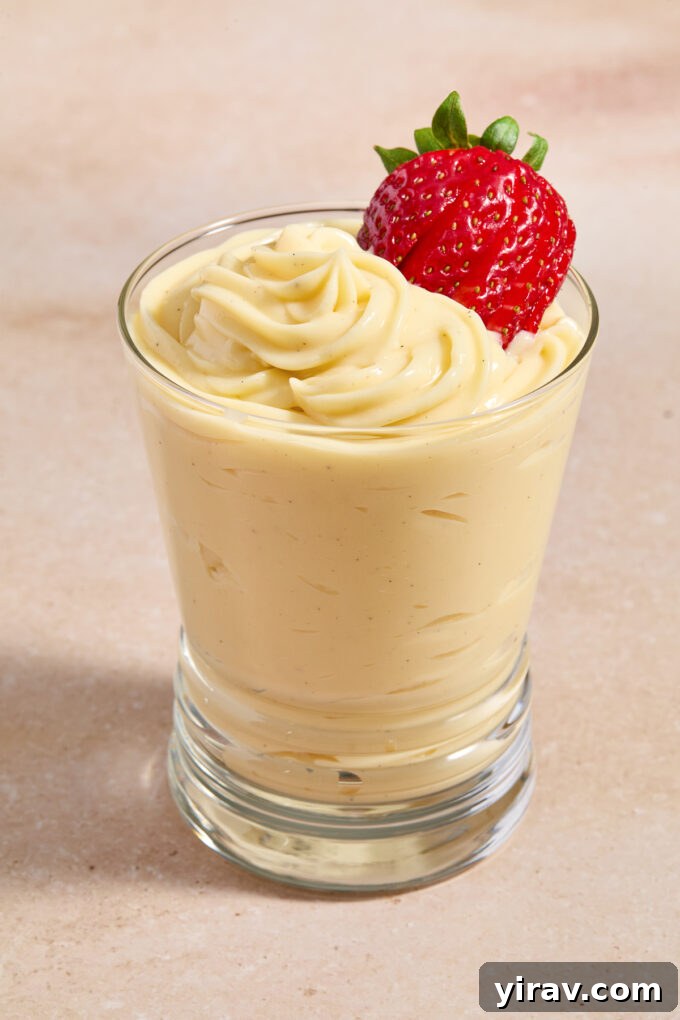
Having honed this Homemade Pastry Cream Recipe (or crème pâtissière) years ago during my culinary training, it has remained a constant in my dessert repertoire. This French custard isn’t just a basic filling; it’s a foundation for countless decadent creations, imparting a gourmet touch to everything it graces.
It plays a starring role in beloved desserts like my banana cream pie with a crisp graham cracker crust and adds a sweet, creamy surprise to my fruit tart vanilla cupcakes. Its seemingly complex name belies its true nature: an incredibly easy-to-make dessert component that requires only a handful of common ingredients and straightforward steps.
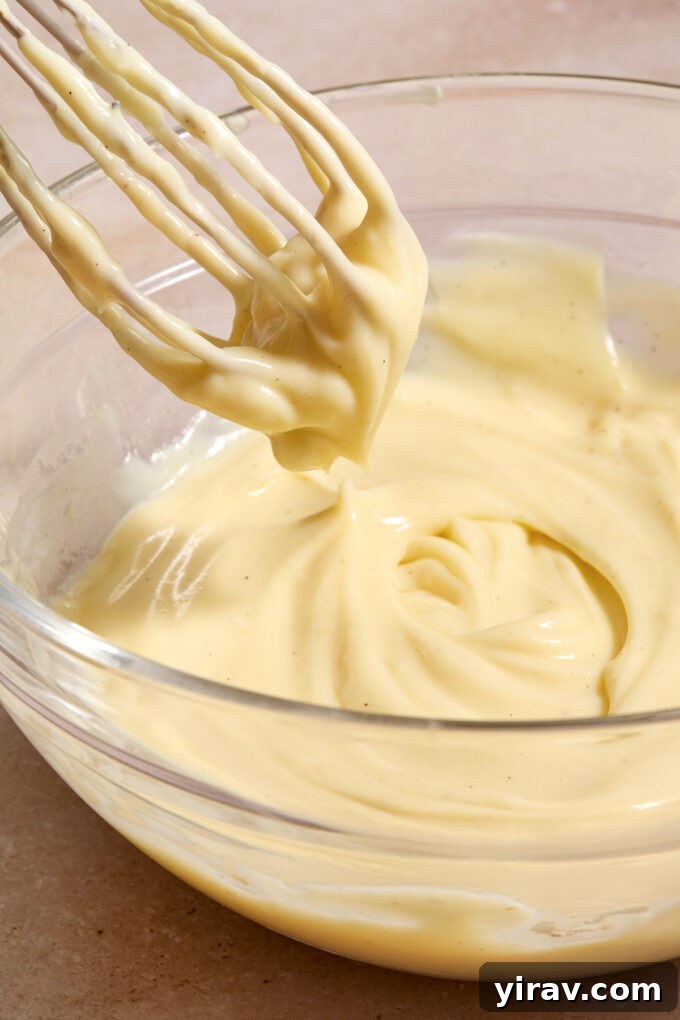
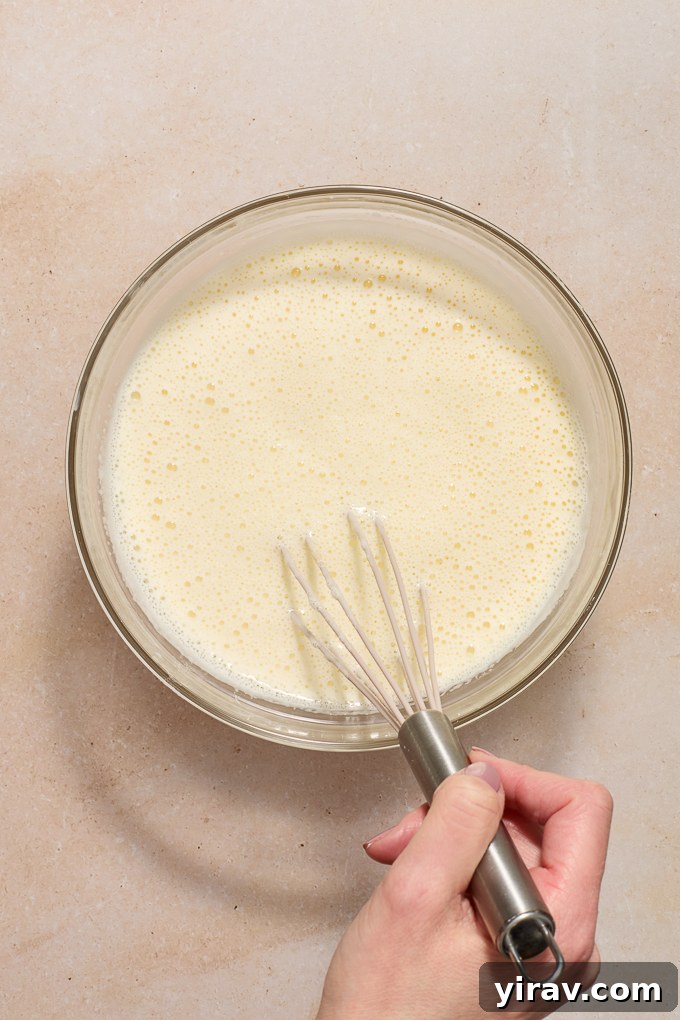
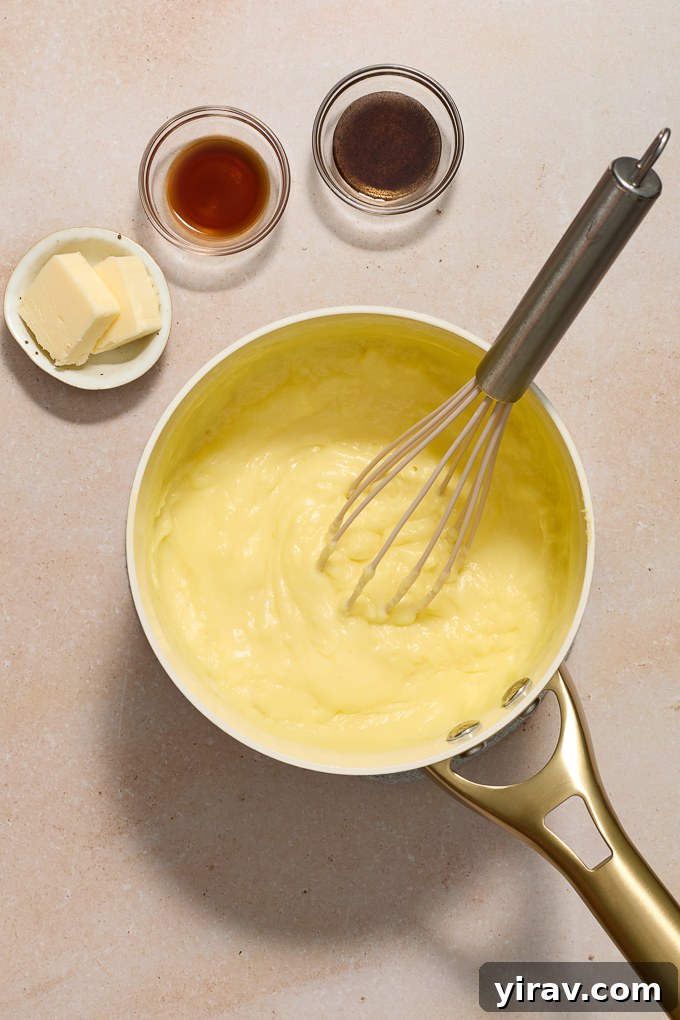
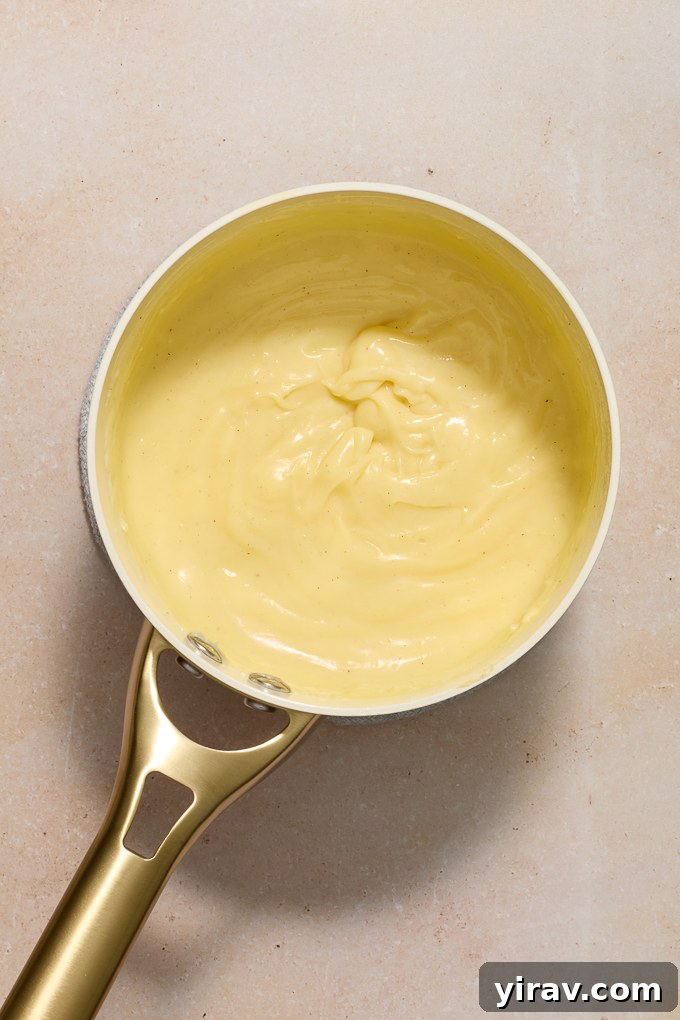
The process begins with gently tempering egg yolks and sugar with hot milk, a technique that ensures a silky-smooth base without scrambling the eggs. This mixture is then cooked over medium heat until it transforms into a thick, glossy custard. For an extra touch of refinement, the cream is strained through a fine-mesh sieve, removing any potential minuscule lumps and ensuring an impeccably smooth finish. Finally, the vibrant essence of vanilla and a hint of butter are folded in, infusing the cream with its signature aroma and enhancing its rich mouthfeel. Once cooled, it’s ready to be transformed into an array of delightful fillings, whether for flaky pie crusts, delicate cakes, or layered trifles. Or, as many confess, it’s perfectly acceptable – and utterly delicious – to enjoy it straight from the bowl with a spoon!
Why You’ll Love This Pastry Cream Recipe
- Irresistibly Rich & Creamy: This vanilla pastry cream is decadently rich, incredibly smooth, and bursting with authentic vanilla flavor. Each spoonful offers a luxurious experience that is both comforting and sophisticated, making it a favorite for discerning palates.
- Quick & Effortless Preparation: Don’t let its gourmet status intimidate you! This impressive custard comes together in just about 15 minutes of active cooking time, using only a few basic ingredients that you likely already have in your pantry. It’s perfect for when you want a homemade treat without spending hours in the kitchen.
- Incredibly Versatile for Any Dessert: From elegant tarts and delicate eclairs to layered cakes and comforting trifles, this pastry cream is an ultimate multipurpose filling. It pairs beautifully with fresh fruits in parfaits, making it an essential component for a wide range of desserts and baked goods.
- Naturally Gluten-Free: Thanks to the use of cornstarch as its thickening agent, this pastry cream is entirely gluten-free. This makes it a fantastic option for those with dietary restrictions, allowing everyone to enjoy its delightful taste and texture.
Essential Pastry Cream Ingredients
Crafting this classic French pastry cream requires just a few simple, high-quality ingredients, most of which are probably already in your kitchen.
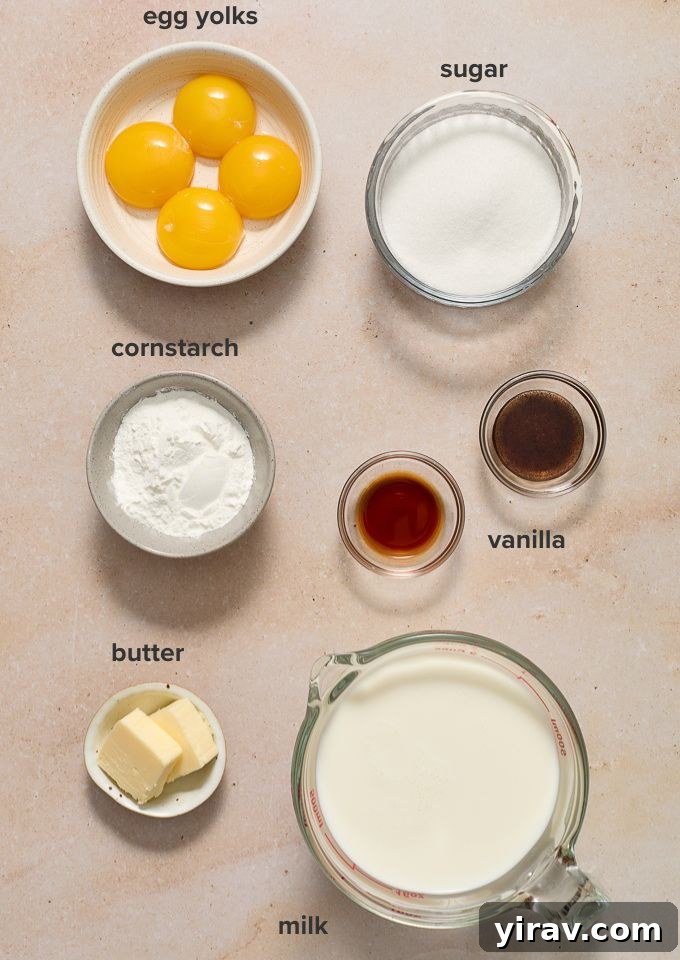
- Milk: For the richest and most authentic flavor profile, we recommend using whole milk. Its higher fat content contributes significantly to the creamy texture and velvety mouthfeel of the custard. For those seeking a dairy-free alternative, full-fat canned coconut milk can be used as a fantastic substitute, offering a subtle tropical hint that complements the vanilla beautifully.
- Egg Yolks: The heart of any classic custard, large egg yolks are essential for creating the incredibly rich, smooth, and cohesive texture that defines pastry cream. You’ll need four yolks for this recipe, leaving you with leftover egg whites – perfect for whipping up delightful treats like fluffy coconut macaroons or a light meringue.
- Granulated Sugar: A modest amount of granulated sugar is used to sweeten the custard, balancing the richness of the egg yolks and butter while allowing the vanilla to shine. It also plays a role in tempering the egg yolks, preventing them from curdling.
- Cornstarch: This is our preferred thickening agent for pastry cream, as it results in a wonderfully smooth, light, and glossy custard. Cornstarch yields a different texture compared to flour, providing a more delicate and elegant finish.
- For a thicker custard, ideal for fillings in pies, cakes, and eclairs, use 4 tablespoons of cornstarch. This consistency holds its shape well when sliced.
- For a creamier, looser, pudding-like consistency, perfect for parfaits or eating straight from a bowl, reduce the cornstarch to 3 tablespoons.
- Substitution Tip: If you wish to substitute cornstarch with all-purpose flour, remember that flour has less thickening power. You will need to use twice the amount of flour compared to cornstarch (e.g., 4 tablespoons of cornstarch is equivalent to 8 tablespoons of flour). Keep in mind that flour can also slightly dull the glossiness and lighten the texture differently.
- Vanilla: The soul of this pastry cream. For the most intense and visually appealing vanilla flavor, we highly recommend using 1/2 a vanilla bean, with its seeds scraped directly into the milk, or 1 teaspoon of high-quality vanilla bean paste. These options will impart those beautiful, characteristic black flecks throughout the custard. If those aren’t readily available, 1 teaspoon of pure vanilla extract is also a great option that will still deliver excellent vanilla flavor.
- Unsalted Butter: Added at the very end of the cooking process, a couple of tablespoons of unsalted butter melts into the warm custard, enriching its flavor, enhancing its luxurious texture, and adding a beautiful sheen. For a dairy-free version, simply omit the butter or use a high-quality vegan butter substitute.
For precise measurements and detailed instructions, please refer to the comprehensive recipe card below.
Step-by-Step: How to Make Pastry Cream
This delightful pastry cream, a cornerstone of French baking, comes together in approximately 10 minutes of active cooking time, using just a few basic ingredients. The result is a truly impressive dessert component that will captivate anyone who tastes it!
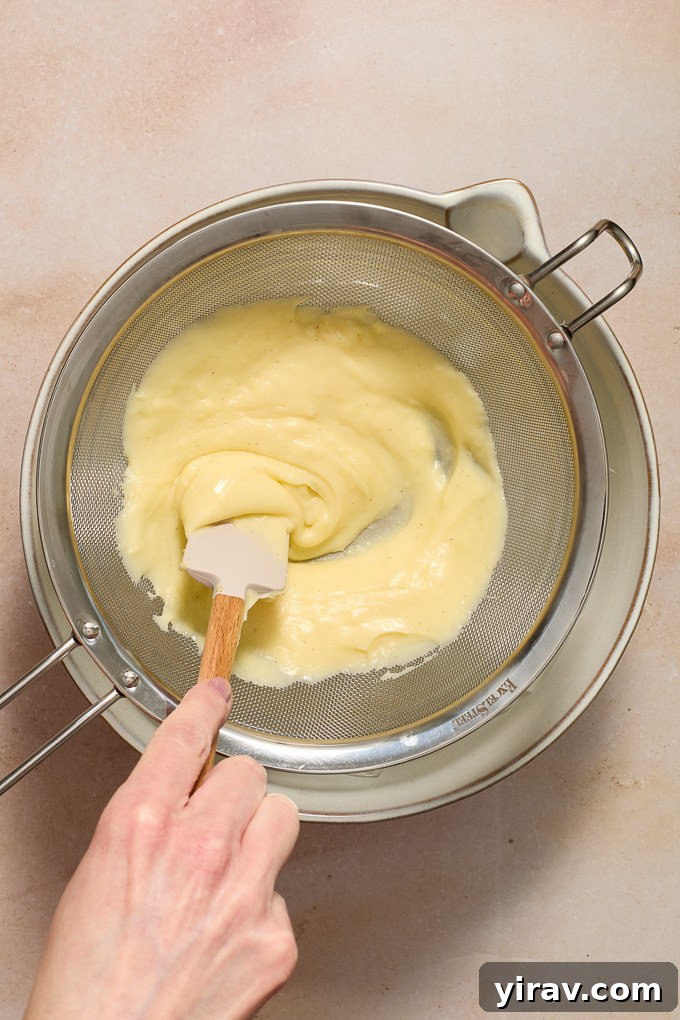
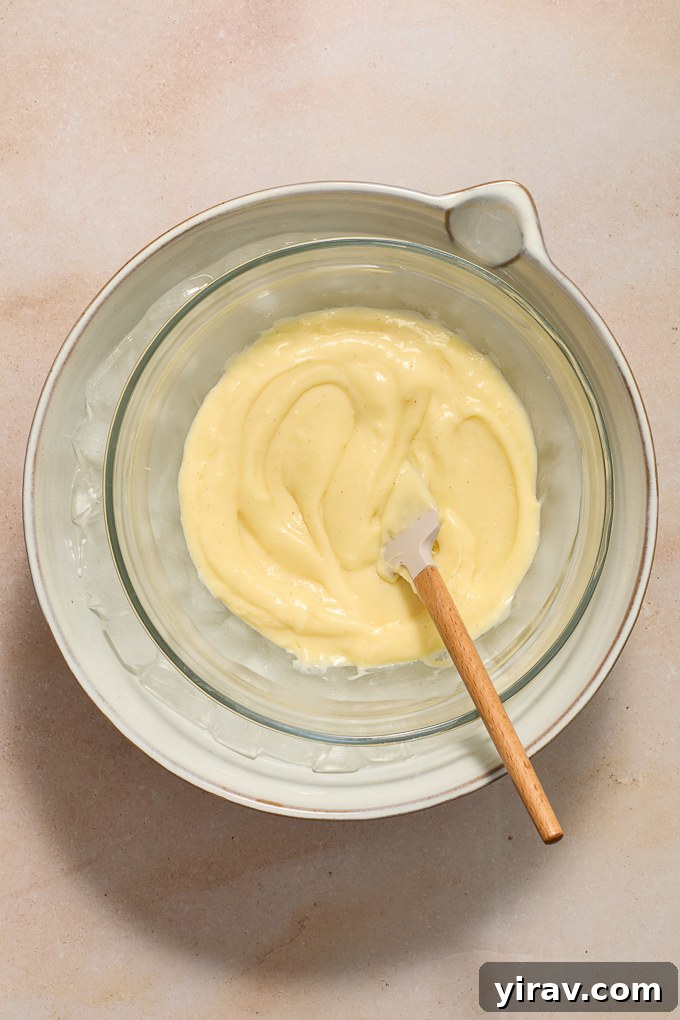
Pro Tip for Optimal Texture: For the silkiest texture imaginable, always strain your finished pastry cream through a fine-mesh sieve immediately after cooking. This step removes any minuscule lumps or bits of cooked egg, ensuring a perfectly smooth result. Ideally, strain it directly into a bowl set over an ice bath. Rapid cooling is crucial as it prevents a skin from forming and halts the cooking process, preserving the cream’s ideal consistency and freshness for refrigeration.
Detailed full instructions can be found in the recipe card at the bottom of this page.
Pastry Cream FAQs
Absolutely! Pastry cream is an excellent component to prepare in advance. For the best flavor development and ideal set, it’s highly recommended to make this custard at least a day before you plan to use it. This allows ample time for it to chill thoroughly and firm up to the perfect consistency. Once properly chilled, it will be ready to use as a luxurious filling for cake layers, pies, tarts, and more.
French pastry cream is traditionally thickened using either cornstarch or all-purpose flour. The choice of thickener significantly impacts the final texture of the custard.
I personally prefer using cornstarch because it consistently yields a smooth, light, and beautifully glossy texture. Cornstarch creates a delicate gel that melts in your mouth. In contrast, flour tends to produce a thicker, denser, and more opaque finished product. While still delicious, flour-thickened pastry cream can sometimes have a slightly heavier mouthfeel.
If you choose to substitute the cornstarch in this recipe with all-purpose flour, you’ll need to double the amount of flour due to its lower thickening power. For example, if the recipe calls for 4 tablespoons of cornstarch, you would use 8 tablespoons of flour to achieve a similar (though not identical) consistency.
Yes, it certainly can! To adapt this recipe for a dairy-free diet, simply substitute the whole milk with full-fat canned coconut milk. The coconut milk will impart a slight, delicious tropical flavor that complements the vanilla beautifully. For the butter, you can either omit it entirely or use a high-quality vegan butter substitute to maintain the richness and sheen. Ensure all other ingredients, like vanilla bean paste or extract, are also dairy-free if that is a concern.
When stored properly in an airtight container with plastic wrap pressed directly onto its surface (to prevent a skin from forming), vanilla pastry cream will remain fresh and delicious in the refrigerator for up to 5 days. It’s important to keep it well-sealed to prevent it from absorbing odors from other foods. I do not recommend freezing pastry cream, as the freezing and thawing process can adversely affect its smooth, creamy texture, often leading to a grainy or watery consistency.
Creative Serving Suggestions for Crème Pâtissière
While enjoying this creamy vanilla pastry cream by the spoonful is a perfectly valid (and highly recommended!) pleasure, it truly shines when incorporated into a variety of delectable desserts. Here are some of our favorite ways to utilize this versatile French custard:
- As an Exquisite Pie Filling: Elevate your pie game by using crème pâtissière as a luscious filling. Start with a perfectly baked flaky pie crust or a sweet graham cracker crust. Once cooled, fill it generously with the chilled pastry cream and crown it with your favorite fresh fruits – berries, sliced bananas, or kiwi create stunning contrasts in flavor and color.
- A Decadent Cake & Cupcake Filling: Transform ordinary cakes and cupcakes into extraordinary treats. Spread this rich custard between layers of your favorite vanilla, chocolate, or fruit-flavored cakes. It also makes an incredible surprise filling for cupcakes, like my fruit tart vanilla cupcakes, adding an extra layer of moisture and indulgence.
- The Classic Eclair Filling: Crème pâtissière and eclairs are a match made in heaven! This is the traditional filling for those iconic choux pastry delights. If you’re feeling ambitious, try this classic eclair recipe by Natasha’s Kitchen to pair with your homemade cream.
- Layered in Trifles and Parfaits: Create elegant individual desserts by layering the pastry cream with fresh berries, crumbled cookies or cake, and a dollop of fluffy homemade whipped cream. This builds beautiful, multi-textured parfaits and impressive trifles that are perfect for entertaining.
- With Fresh Fruit Tarts: A classic French fruit tart relies on a base of pastry cream. Fill a pre-baked sweet pastry shell with the cream, then artfully arrange an assortment of vibrant, seasonal fresh fruits on top for a dessert that’s as visually stunning as it is delicious.
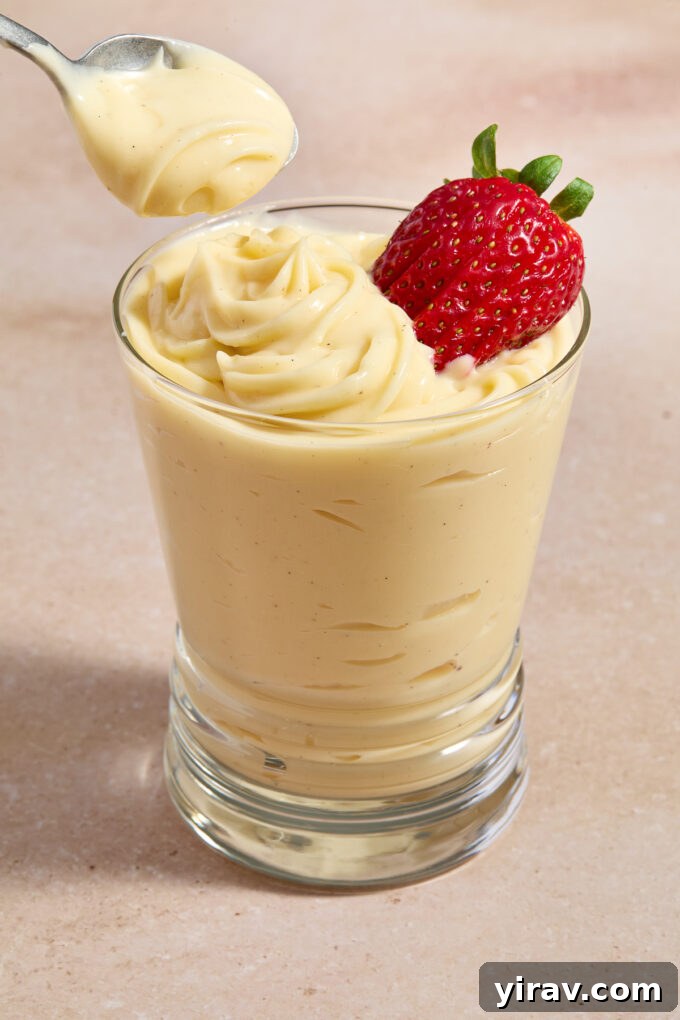
- As a Simple Pudding: Sometimes, the simplest pleasures are the best. Serve the pastry cream in individual bowls, perhaps with a sprinkle of cinnamon, a few fresh berries, or a drizzle of caramel sauce for a sophisticated yet comforting dessert.
Expert Recipe Notes and Tips for Perfect Pastry Cream
- The Essential Sieve & Ice Bath: To achieve an ultra-smooth texture, always pass your freshly cooked pastry cream through a fine-mesh sieve. This removes any tiny lumps or pieces of cooked egg that may have formed. For rapid cooling and to prevent a skin from forming, immediately transfer the strained cream into a bowl set over an ice bath. This quickly reduces its temperature, ensuring freshness and optimal consistency before refrigeration.
- Preventing Scorched Milk: When heating the milk, keep a close eye on it. Heat it over medium-low heat until you see small bubbles forming around the edges and light steam, but never allow it to come to a rolling boil. Scorched milk can impart an unpleasant burnt flavor to your delicate custard, ruining the entire batch.
- Adjusting Thickness with Cornstarch:
- 4 tablespoons of cornstarch: This amount will yield a relatively firm crème pâtissière, which is ideal for fillings that need to hold their shape, such as inside pies, cakes, or éclairs.
- 3 tablespoons of cornstarch: If you prefer a creamier, slightly looser consistency—more akin to a rich pudding, perfect for parfaits or enjoying on its own—reduce the cornstarch to 3 tablespoons.
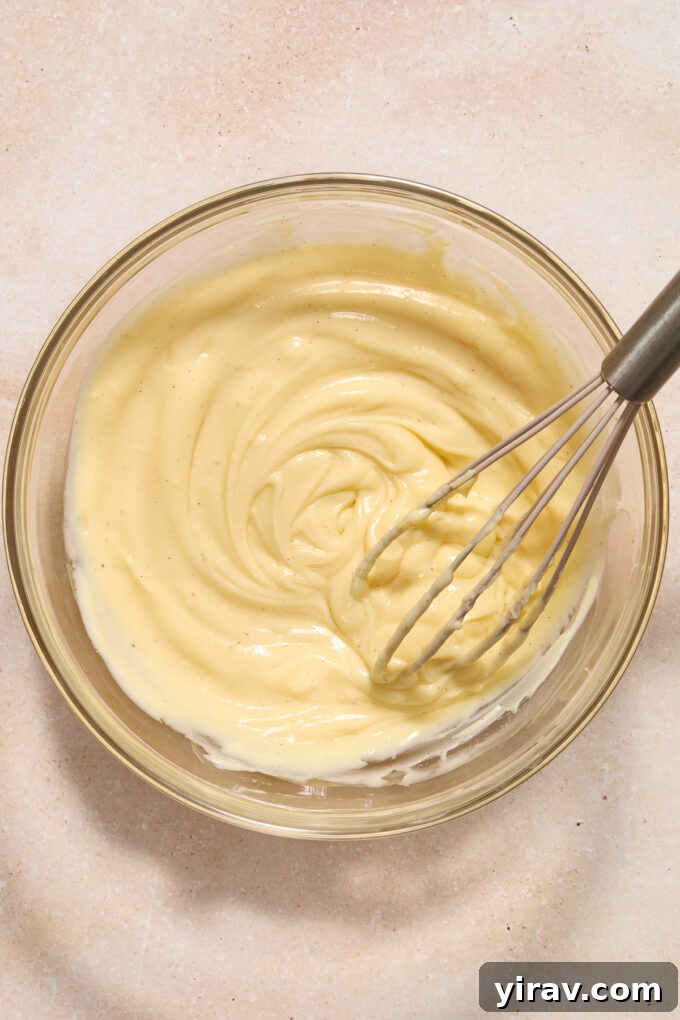
- Reactivating Chilled Pastry Cream: When pastry cream is chilled for a while, especially overnight, it will solidify and become quite firm. Before using it as a filling or spreading, simply whisk it vigorously for a minute or two until it loosens up and becomes smooth and workable again. This won’t affect its quality or texture.
- Storage Best Practices: Store homemade pastry cream in an airtight container in the refrigerator for up to 5 days. For best results, press a piece of plastic wrap directly onto the surface of the cream before sealing the container. This prevents a “skin” from forming and keeps the cream fresh. Freezing is not recommended, as it can significantly alter the texture upon thawing, often making it grainy or watery.
More No-Bake Desserts to Discover
If you love the ease and deliciousness of no-bake treats, explore these other fantastic recipes that require no oven time:
- Creamy Chia Seed Pudding
- Decadent Chocolate Mousse
- Mini No-Bake Cheesecakes
Did you try this recipe? If so, be sure to leave a review below and tag me @flavorthemoments on Facebook and Instagram so I can see your delicious creations!
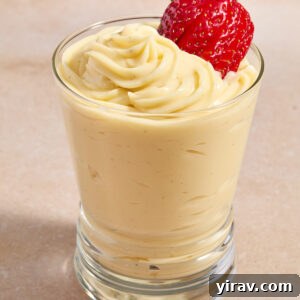
Homemade Pastry Cream Recipe
Pin Recipe
Equipment
- Winco Fine Mesh Strainer
- OXO 9″ Wire Whisk
- Parchment Paper
- Pyrex Glass Mixing Bowls
Ingredients
- 2 cups whole milk (substitute with full-fat canned coconut milk for dairy-free)
- 1/3 cup granulated sugar
- 4 large egg yolks
- 4 tablespoons cornstarch (see notes 1 and 2)
- 1/2 vanilla bean, seeds scraped (or use 1 teaspoon vanilla bean paste or vanilla extract)
- 2 tablespoons unsalted butter (substitute with vegan butter for dairy-free)
Instructions
- Fill a large bowl with ice, and add enough water to fill the bowl halfway. Place a medium bowl in it with a fine mesh strainer nearby, along with a piece of buttered wax paper. Set aside.
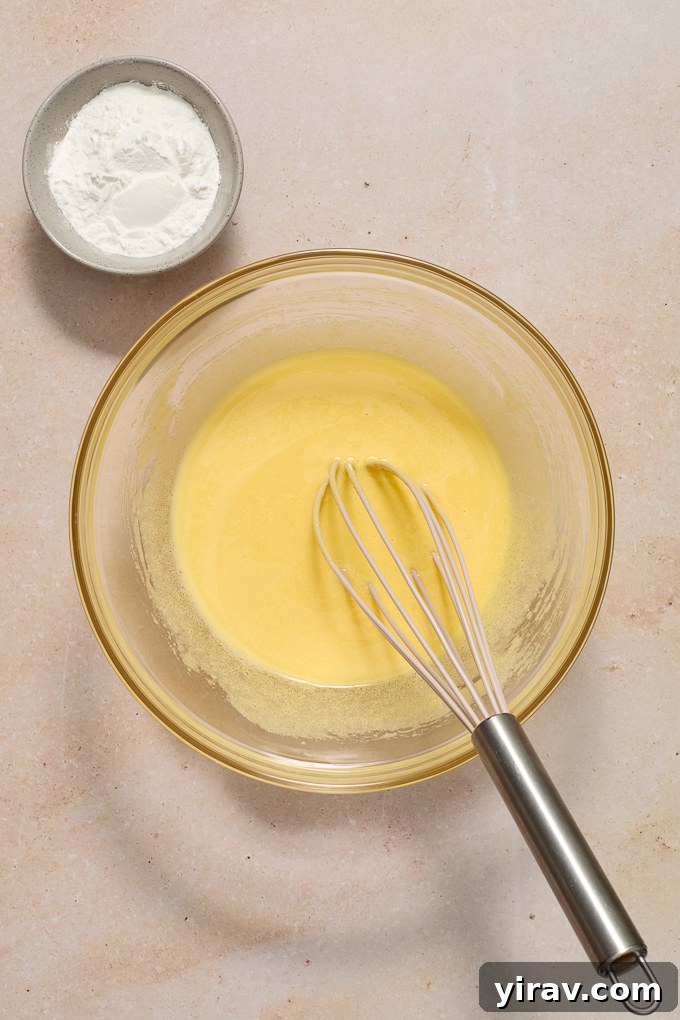
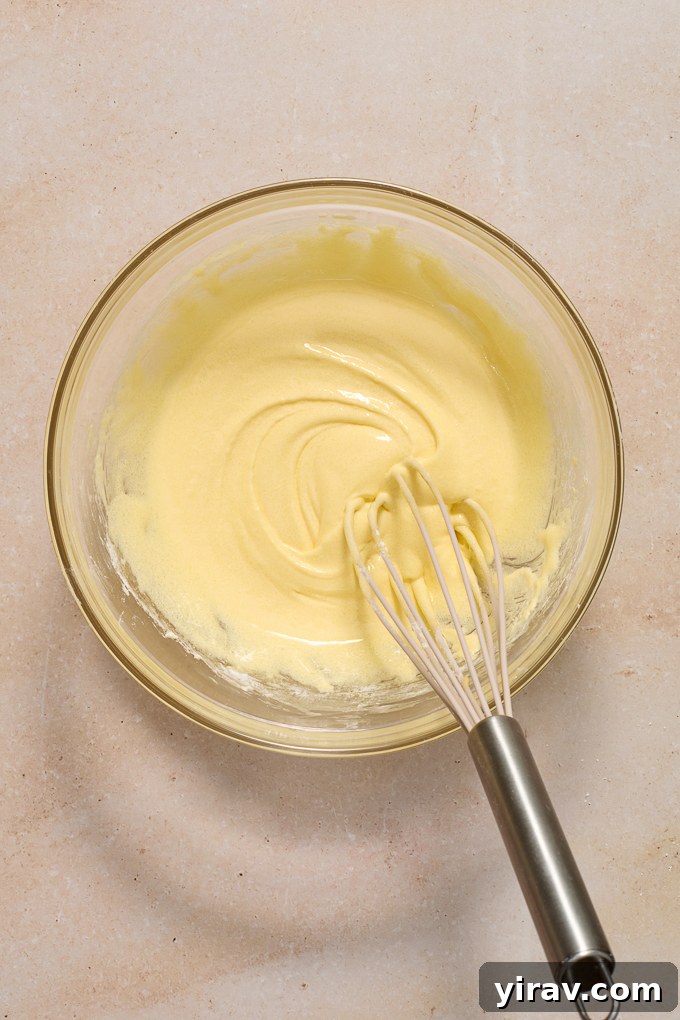
- Place the sugar and egg yolks in a medium bowl and whisk until well incorporated. Add the cornstarch and a pinch of salt, then whisk vigorously until smooth.
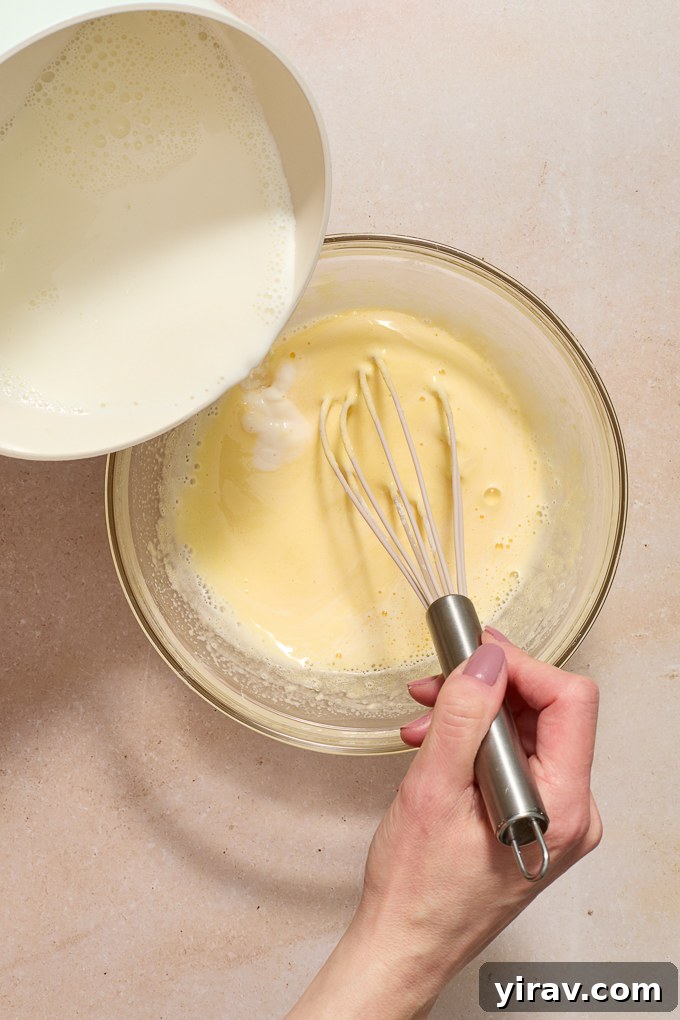
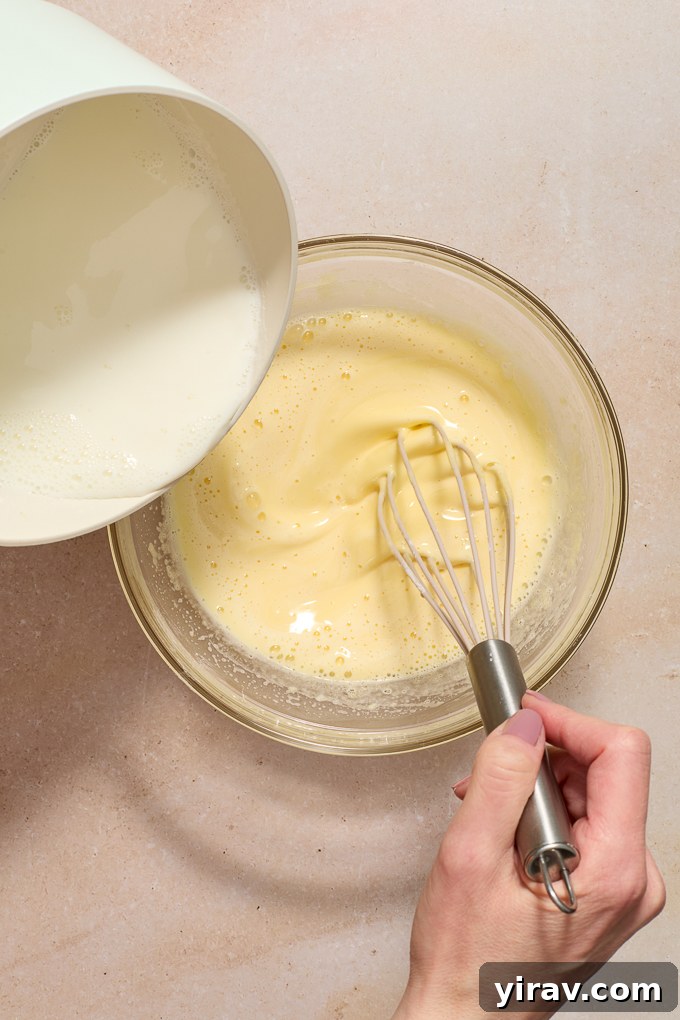
- Place the milk in a medium saucepan and heat over medium-low heat until just before it begins to boil (it will start to steam and bubble around the edges). When the milk is hot enough, slowly pour about one-third of it into the egg mixture while whisking constantly to temper the eggs. Once one-third has been added, continue adding the rest while whisking constantly until combined.
- Place the mixture back into the saucepan and cook over medium heat, whisking constantly to prevent lumps, until the mixture begins to boil. Continue to cook for another minute until it is very thick, whisking constantly. Remove from heat and whisk in the vanilla and softened butter until thoroughly combined.
- Strain the pastry cream through the sieve into the bowl over the ice bath, using a rubber scraper to gently press it through as needed to remove any lumps.
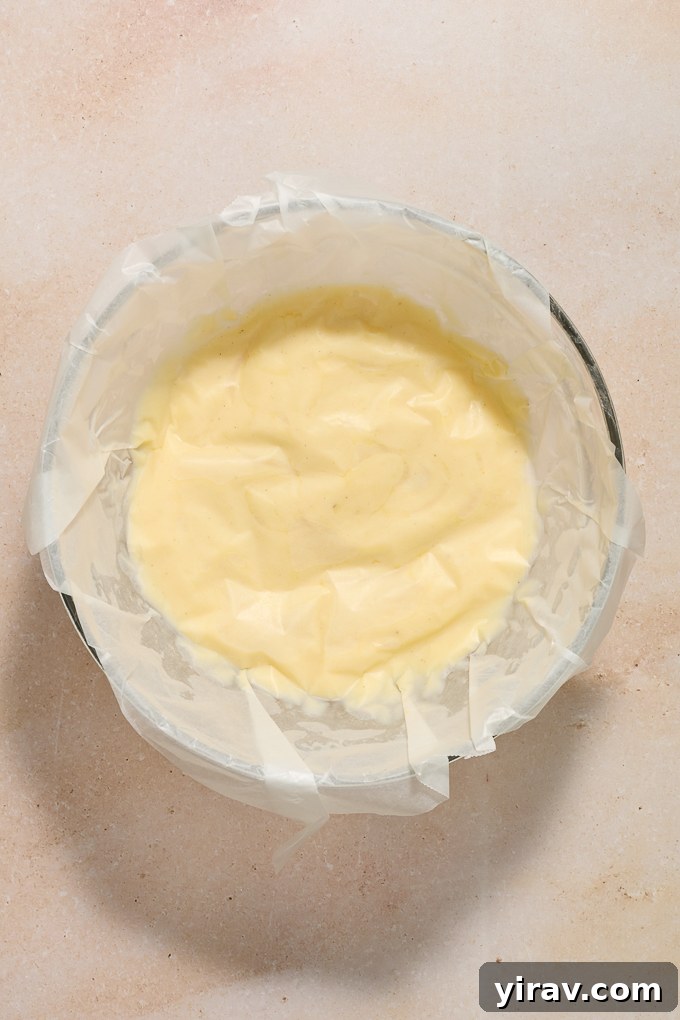
- Cover the surface of the pastry cream directly with the buttered wax paper to prevent a skin from forming. Allow it to cool at room temperature, then place it in the refrigerator for a minimum of 1 hour, and up to 2 days in advance, to chill and set properly.
Notes
- Cornstarch for Consistency: 4 tablespoons of cornstarch will result in a fairly firm crème pâtissière, ideal for fillings in pies, cakes, and éclairs. If you prefer a creamier, more pudding-like consistency, reduce the cornstarch to 3 tablespoons.
- Flour Substitution: If you wish to use all-purpose flour instead of cornstarch, you must use TWICE the amount of flour. For example, 8 tablespoons of flour would be equivalent to 4 tablespoons of cornstarch. Note that the texture may vary slightly.
- Refrigeration and Re-whisking: The pastry cream will solidify significantly once it has been chilled in the refrigerator. Before using, simply whisk it well until it becomes smooth and pliable again.
- Storage: Store the pastry cream in an airtight container in the refrigerator for up to 5 days. Freezing is not recommended as it can negatively impact the texture.
Nutrition
Nutrition is estimated using a food database and is only intended to be used as a guideline for informational purposes.
Did you try this recipe?Be sure to tag @flavorthemoments with the hashtag #flavorthemoments on Instagram so I can see what you made!