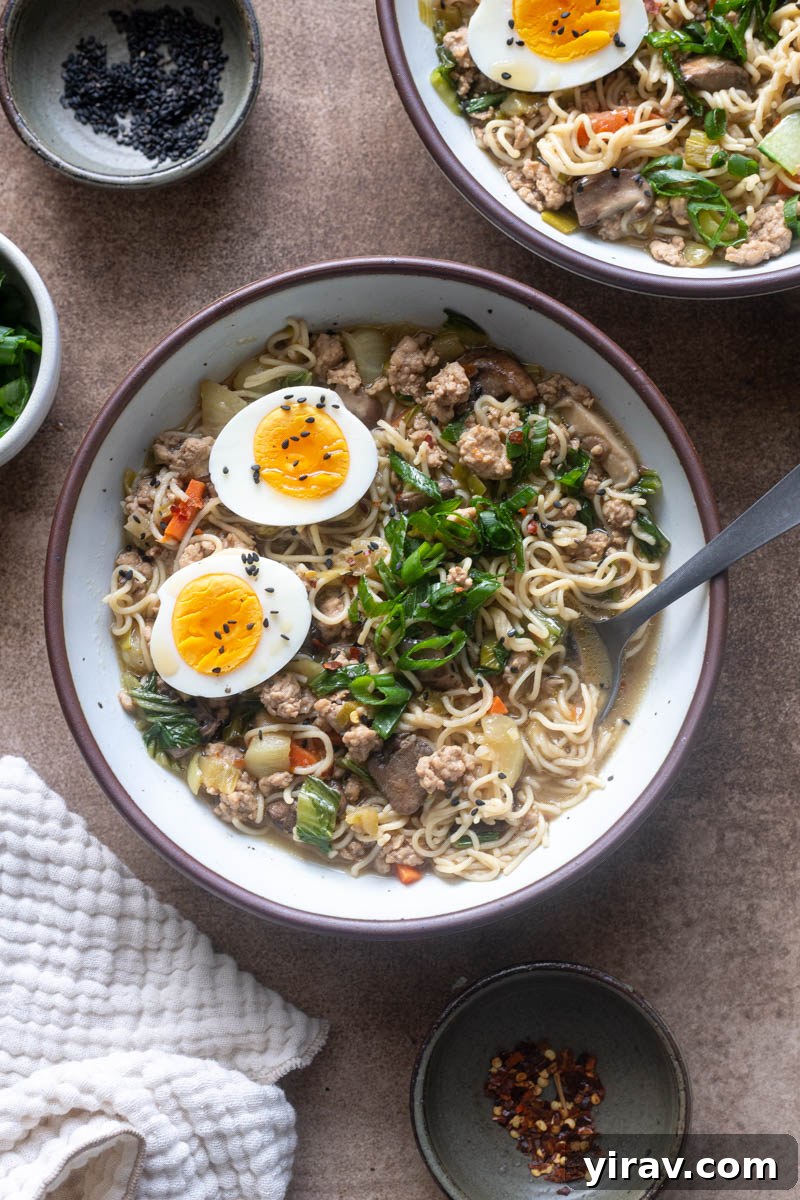
Welcome to the ultimate guide for crafting a truly exceptional Ground Pork Ramen right in your kitchen! This recipe transcends the instant noodle experience of your past, delivering a vibrant, clean, and deeply flavorful noodle bowl that’s ready in approximately 30 minutes. Imagine savory, perfectly seasoned ground pork mingling with fresh ginger, crisp bok choy, earthy shiitake mushrooms, and wholesome brown rice ramen noodles, all bathed in an aromatic, brothy base. It’s a comforting, wholesome meal that truly rivals your favorite takeout, offering a gourmet experience without the fuss or the long wait.
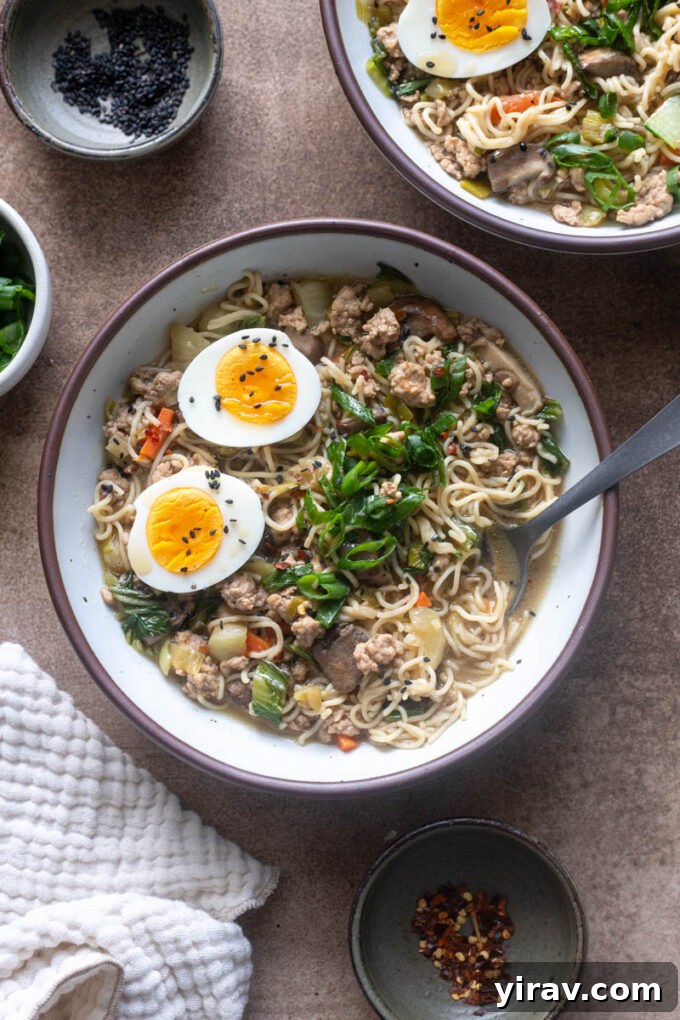
For many of us, ramen conjures memories of quick, convenient instant noodles from our youth. While those certainly had their charm, our palates evolve, and so too should our ramen experience. This Ground Pork Ramen recipe represents that evolution – a journey from packet to pantry, embracing fresh, high-quality ingredients to create a deeply satisfying, yet surprisingly light and quick weeknight dinner.
Unlike traditional Japanese ramen, which often involves hours of simmering rich broths, this version is designed for efficiency without compromising on authentic-inspired flavors. It’s a quick, vegetable-forward noodle bowl that takes inspiration from classic ramen profiles, focusing on a clean, brothy texture rather than a heavy, stew-like consistency. The goal is to provide a nourishing, flavorful meal that satisfies those intense ramen cravings on even the busiest evenings.
The foundation of this incredible ramen bowl starts with lean ground pork, which caramelizes beautifully, infusing the broth with rich, umami notes. Earthy shiitake mushrooms add another layer of depth, while vibrant carrots, crisp green onions, and tender bok choy ensure every spoonful is packed with fresh, wholesome vegetables. It’s a balanced blend of protein and greens that makes this ramen both delicious and incredibly nutritious.
Forget the artificial seasoning packets! Our clean, savory broth is built from scratch with robust chicken stock, brightened by the zesty warmth of fresh garlic and ginger, a hint of spice from red pepper flakes, and a harmonious balance of umami and tang from coconut aminos, toasted sesame oil, and rice wine vinegar. This combination creates a truly dynamic and incredibly satisfying base that perfectly complements the rich pork and fresh vegetables.
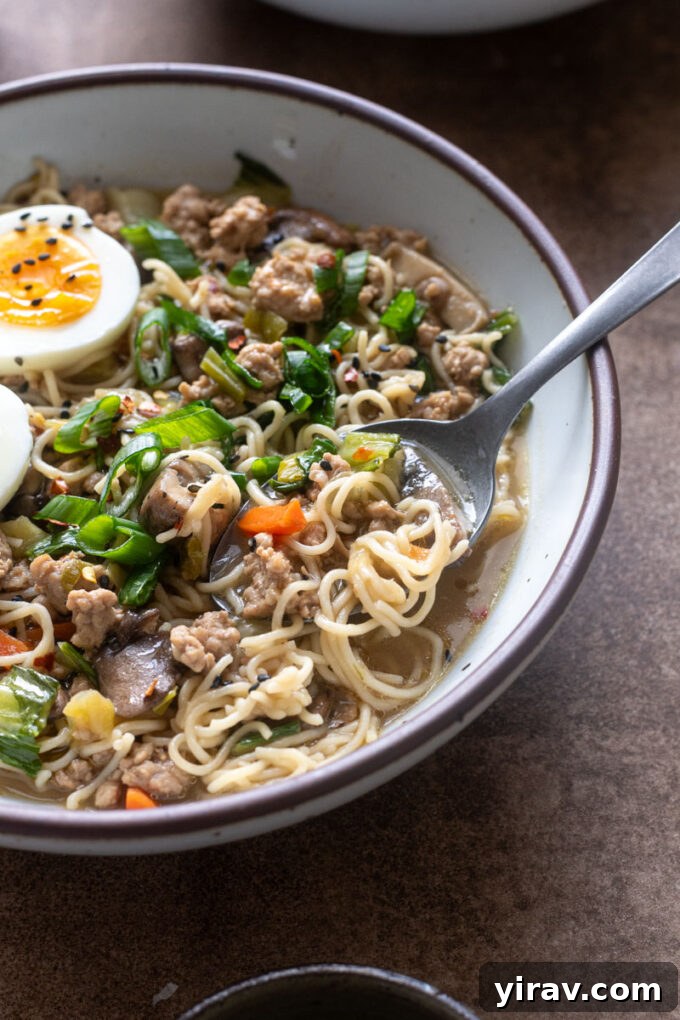
For the noodles, we opt for brown rice ramen, offering a fantastic whole-grain and gluten-free alternative that still delivers that beloved chewy texture. However, feel free to use your preferred ramen noodle variety. The crowning glory of any ramen bowl lies in its toppings, and here, creativity knows no bounds. Jammy soft-boiled eggs add a luxurious creaminess, while a sprinkle of fresh scallions and black sesame seeds provides a delightful crunch and visual appeal. This quick and easy ramen recipe proves that a special, nourishing meal doesn’t have to be complicated or time-consuming. It’s the perfect answer to those takeout cravings when you want something homemade and truly spectacular.
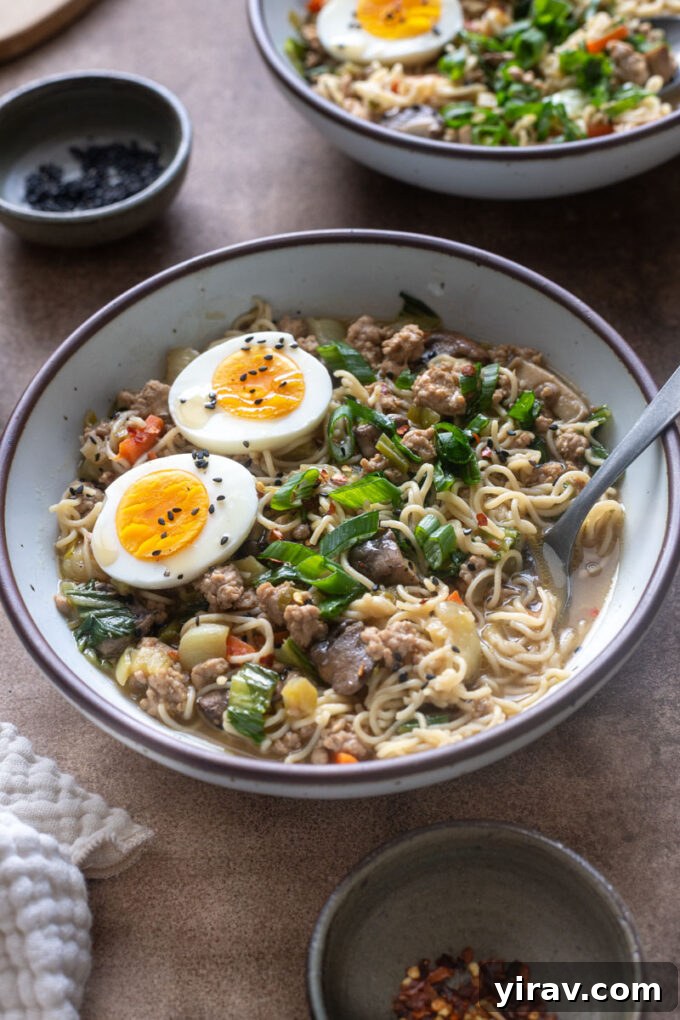
Want to save this amazing recipe for later? Bookmark this page or pin it to your favorite recipe board!
Why You’ll Love This Easy Ground Pork Ramen Recipe
This Ground Pork Ramen is more than just a meal; it’s a culinary revelation that brings restaurant-quality flavors into your home with minimal effort. Here’s why this recipe will quickly become a weeknight favorite:
- Effortlessly Delicious & Better-Than-Takeout Flavor: Experience the rich, complex flavors you crave from your favorite ramen spot, made fresh in your own kitchen. This recipe delivers authentic-inspired taste without the hefty price tag or the wait. It truly embodies the spirit of an “easy homemade ramen” that rivals any delivery service.
- Pure, Brothy Goodness: Say goodbye to thick, heavy broths. Our recipe features a light yet incredibly flavorful broth, built with layers of aromatic ginger, savory sesame oil, bright rice wine vinegar, and umami-rich coconut aminos. It’s a clean base that lets the fresh ingredients shine.
- No Artificial Seasoning Packets: This recipe relies solely on real, wholesome ingredients to build its incredible flavor profile. You’ll appreciate the natural taste and feel good about what you’re eating.
- Abundantly Vegetable-Forward: Packed with nourishing shiitake mushrooms for earthy depth, crunchy carrots, vibrant green onions, and tender bok choy, this ramen ensures you get a generous dose of fresh vegetables in every bowl. It’s a truly “healthy ramen bowl” option.
- High-Protein & Incredibly Satisfying: With the substantial ground pork and the optional addition of a jammy or soft-boiled egg, this ramen is a powerhouse of protein, keeping you full and satisfied long after your meal.
- Naturally Gluten-Free Friendly: Many excellent gluten-free ramen noodles are readily available, such as brown rice and millet varieties. Simply choose a certified gluten-free brand and ensure your coconut aminos (or tamari) are also gluten-free for a perfectly safe and delicious meal.
- Highly Customizable & Flexible: This is a framework for culinary creativity! Easily swap proteins, add different vegetables, adjust the spice level, or experiment with various toppings to make it uniquely yours. It’s a versatile “quick ramen noodles” recipe that adapts to your preferences.
Essential Ingredients for Your Homemade Ramen
Crafting a truly memorable bowl of homemade ramen begins with selecting fresh, high-quality ingredients. Here’s a detailed look at what you’ll need and some clever substitutions:
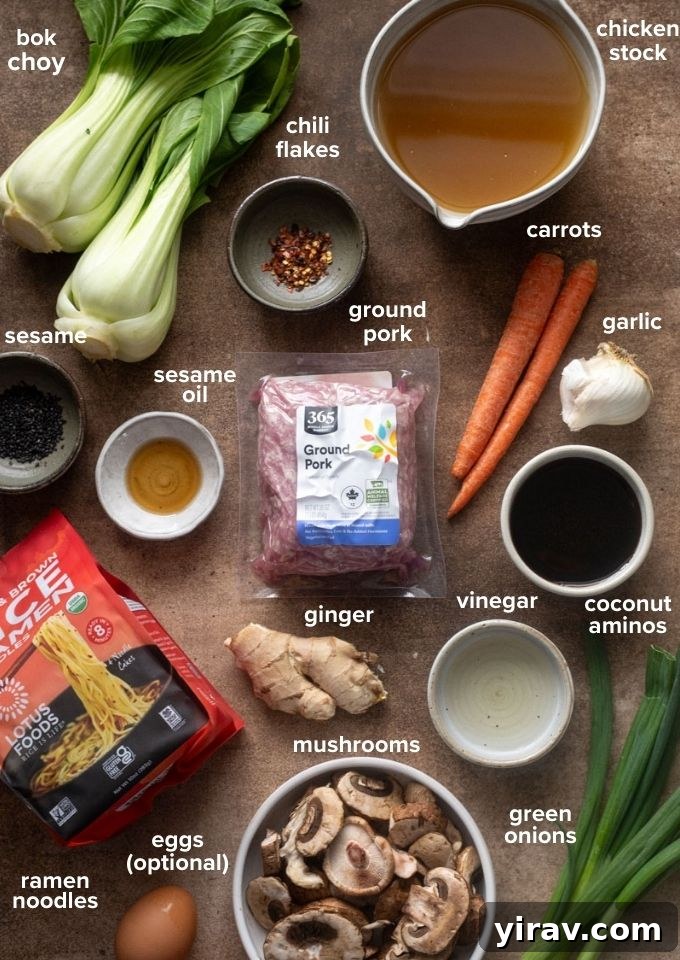
- Ground Pork: The star of our savory ramen. Ground pork delivers a rich, fatty flavor that perfectly seasons the broth as it cooks. For a lighter alternative, feel free to substitute with ground turkey or chicken, adjusting cooking time slightly.
- Fresh Garlic & Ginger: These aromatic powerhouses form the backbone of the ramen broth’s fresh, vibrant flavor. Always opt for fresh over powdered for the best results; minced garlic and freshly grated ginger will make a significant difference.
- Green Onions (Scallions): We use both parts of the green onion strategically. The white and light green sections are sautéed early to infuse the broth with a mild oniony sweetness, while the vibrant dark green tops are reserved for a fresh, crisp garnish. If needed, a small shallot or half a yellow onion can be used in the broth.
- Shiitake Mushrooms: These mushrooms contribute a deep, earthy, and naturally umami flavor that is characteristic of authentic ramen. If shiitake are unavailable, cremini or baby bella mushrooms make excellent substitutes, though the flavor will be slightly milder.
- Carrot: Adds a touch of natural sweetness and a beautiful pop of color to the bowl. Dice or cut them into thin matchsticks so they cook quickly and integrate well. Shredded cabbage or thinly sliced red or yellow bell pepper can be used if carrots aren’t on hand.
- Bok Choy: This tender, leafy green vegetable provides essential texture and a boost of nutrition. Its mild flavor perfectly complements the savory broth. Napa cabbage or baby spinach are great alternatives; spinach should be added right at the end as it wilts very quickly.
- Chicken Stock: The base of our incredible broth. Choose a good quality low-sodium chicken stock to control the saltiness of your ramen, or consider making your own homemade chicken stock for an even richer flavor. Vegetable broth is an excellent vegetarian or vegan substitute.
- Coconut Aminos: This gluten-free and soy-free alternative to soy sauce adds a deep, savory depth with a subtle hint of sweetness. Tamari (a gluten-free soy sauce) or regular low-sodium soy sauce can be used as a direct substitute, though you might start with slightly less soy sauce and adjust to taste due to its stronger flavor.
- Rice Wine Vinegar: A crucial ingredient that brightens the entire broth with its delicate acidity, balancing the rich, savory notes. If you don’t have rice wine vinegar, a splash of fresh lime juice can provide a similar tang.
- Toasted Sesame Oil: Essential for its nutty aroma and rich flavor. It’s best added towards the end of cooking or as a drizzle over the finished bowl to preserve its delicate notes.
- Red Pepper Flakes: For those who enjoy a little heat! A quarter teaspoon will provide a mild warmth, while half a teaspoon or more will give it a noticeable kick. Adjust according to your preference.
- Ramen Noodles: The soul of the bowl. While traditional wheat ramen noodles are classic, feel free to choose any variety you love. For a whole-grain and gluten-free option, we highly recommend Lotus Foods Brown Rice and Millet noodles, which have a wonderful nutty flavor and great texture.
- Eggs (Optional but Highly Recommended): A jammy soft-boiled egg adds incredible richness and makes the ramen even more satisfying. Prepare them to your liking; a 6-minute soft boil is ideal for a runny yolk. These can easily be made in advance.
- Black Sesame Seeds & Scallion Greens: Simple yet effective garnishes that add visual appeal, a slight crunch, and a burst of freshness.
Optional Flavor Boost: White Miso Paste
For an extra layer of umami depth and a subtle creamy richness, whisk 1-2 tablespoons of white miso paste into a small amount of hot broth before stirring it into the main pot at the very end. It enhances the complexity of the soup without making it heavy. Miso is a fermented soybean paste, so ensure it’s gluten-free if needed.
Refer to the full recipe card below for exact quantities and detailed instructions.
Step-by-Step Guide to Making Ground Pork Ramen
Creating this homemade ground pork ramen is much simpler than you might imagine, bringing the delightful flavors of your favorite takeout dish right to your dining table. This recipe streamlines the process for a speedy and delicious weeknight meal without compromising on taste or quality.
While some ramen recipes advocate for crisping pork separately or cooking noodles in a different pot, our method simplifies these steps for efficiency. You can absolutely follow those traditional approaches if you prefer, but this guide focuses on a one-pot (or nearly one-pot) solution for maximum convenience.
Pro Tip for Meal Prep: Ramen noodles tend to absorb broth over time, becoming softer and reducing the liquid in your bowl. If you’re planning for leftovers or meal prepping, it’s highly recommended to cook and store the noodles separately from the broth. This ensures your noodles remain al dente and your broth stays perfectly brothy for each serving.
Find the complete, detailed instructions in the recipe card below.
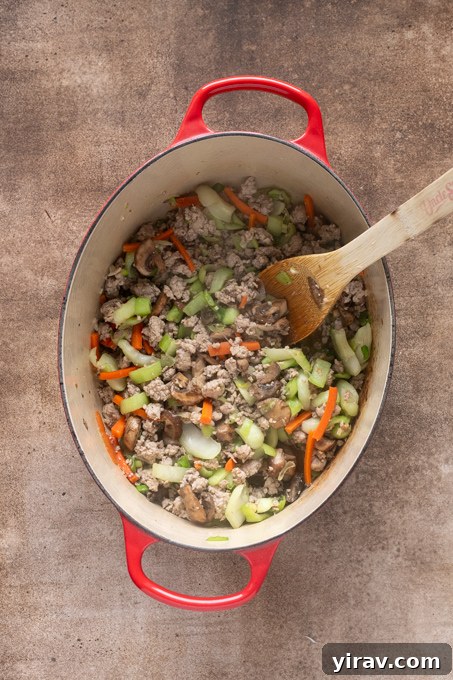
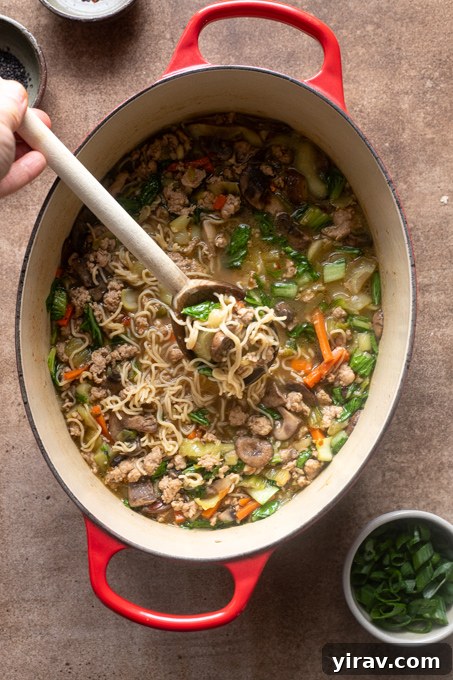
Expert Tips for the Perfect Ramen Bowl
Achieving a truly outstanding bowl of homemade ramen is all about paying attention to a few key details. Follow these tips to elevate your Ground Pork Ramen from good to absolutely glorious:
- Thoroughly Brown the Pork: Don’t rush this step! Allowing the ground pork to brown deeply in the sesame oil develops rich, complex flavors through caramelization, which then infuses into your broth. This is crucial for building a robust flavor base for your “savory pork noodles.”
- Sauté Vegetables Until Tender-Crisp: Cook the shiitake mushrooms, carrots, and bok choy (white and light green parts) until they are tender but still have a slight bite. This ensures they add texture without becoming mushy. Browning the mushrooms is also key for umami.
- Simmer Gently, Don’t Boil Vigorously: Once the broth comes to a boil, reduce the heat to a gentle simmer. A rapid boil can over-reduce the broth and dull the delicate flavors of the aromatics. Gentle simmering maintains a clean, clear broth.
- Adjust Broth Consistency: If your broth reduces more than desired during cooking, don’t hesitate to add a little extra chicken stock or water to reach your preferred brothy consistency. Ramen should be generous with its liquid.
- Add Vinegar Last for Vibrant Flavor: Rice wine vinegar is best stirred in at the very end, just before serving. This preserves its bright, acidic notes, which are essential for balancing the richness of the pork and cutting through the savory umami. Adding it too early can cause its delicate flavors to cook off.
- Perfect Your Eggs: If adding soft-boiled or jammy eggs, make sure they are cooked just right. A perfectly runny or jammy yolk adds an incredible layer of richness and texture to the ramen.
Creative Recipe Variations and Substitutions
One of the joys of cooking this homemade ramen is its incredible versatility. Feel free to experiment with these variations to tailor the dish to your taste, dietary needs, or what you have on hand:
- Protein Power Swaps:
- Ground Turkey or Chicken: Easily substitute ground pork with ground turkey or chicken for a leaner protein option. Brown it thoroughly to develop flavor.
- Shrimp or Sliced Chicken Breast: For a different texture, you could quickly cook shrimp or thinly sliced chicken breast separately and add it to the bowls just before serving.
- Vegetable Enhancements:
- Baby Spinach: Instead of bok choy, stir in a few handfuls of fresh baby spinach at the very end; it will wilt beautifully in the hot broth.
- Mushrooms Galore: Add a variety of mushrooms like enoki, oyster, or beech mushrooms for more complex flavors and textures.
- Leafy Greens: Napa cabbage, kale (massaged briefly), or even thinly sliced collard greens can add a delightful chew and nutrients.
- Corn or Edamame: For a touch of sweetness and extra protein, stir in some frozen corn kernels or shelled edamame during the last few minutes of cooking.
- Flavor Boosters:
- Fish Sauce: For an extra layer of savory umami and depth, stir in a teaspoon of fish sauce along with the coconut aminos. It adds a wonderful complexity.
- Chili Oil or Sriracha: If you love a spicier kick, drizzle chili oil over your finished bowl, or stir in a bit of Sriracha sauce to taste.
- White Miso Paste: As mentioned, whisking 1-2 tablespoons of white miso into a small amount of hot broth and stirring it in at the end adds a delightful umami depth and a subtle creamy texture.
- Citrus Zest: A little lime or lemon zest grated over the top before serving can brighten the flavors even further.
- Making it Vegetarian or Vegan:
- Omit Pork and Egg: For a vegetarian version, simply omit the ground pork and use vegetable broth instead of chicken stock.
- Boost Veggies: To bulk up the soup, add extra shiitake mushrooms, cremini mushrooms, or other vegetables like bell peppers, zucchini, or snap peas.
- Tofu or Tempeh: For a fully vegan and protein-rich meal, omit the egg and consider adding pan-fried or baked cubed tofu, crumbled tempeh, or shelled edamame as a protein source. Ensure all your sauces (like coconut aminos/tamari) are vegan.
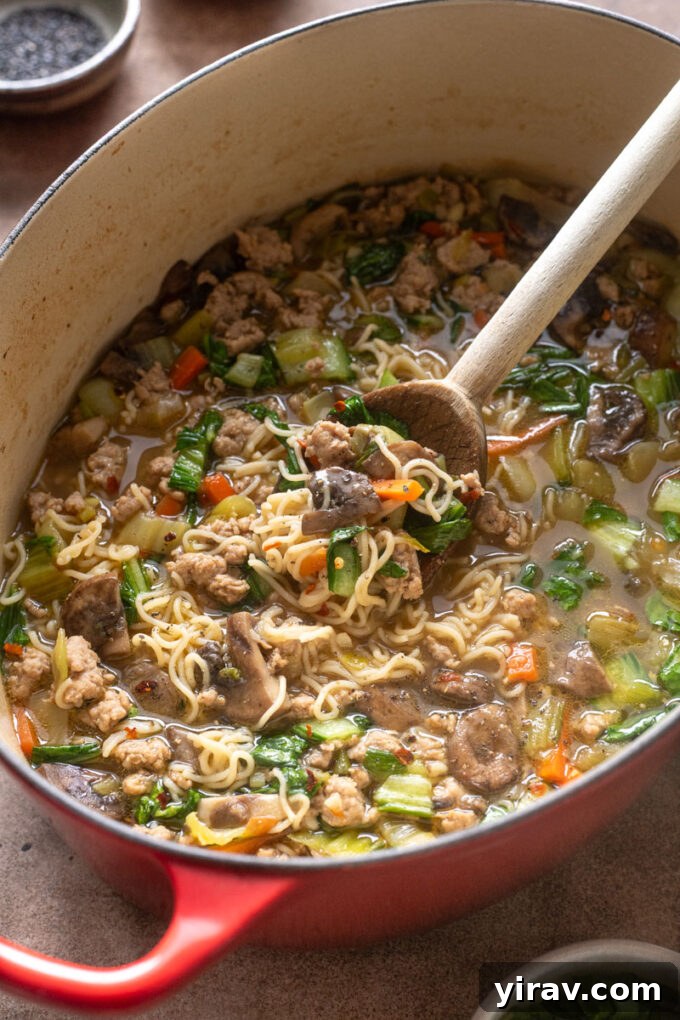
Frequently Asked Questions About Ground Pork Ramen
Yes, you can absolutely prepare the components of this ground pork ramen in advance, which makes for quick assembly on busy weeknights. However, it’s crucial to consider the noodles. Ramen noodles are very absorbent and will soak up the broth and become overly soft or mushy if stored together for an extended period. This can vary based on the specific brand and type of noodles you use.
Therefore, if you plan to make this recipe for meal prep or expect to have leftovers, I highly recommend cooking and storing the ramen noodles separately from the broth and pork mixture. When you’re ready to eat, simply reheat the broth, cook a fresh batch of noodles (which only takes a few minutes), and combine them for the best texture and flavor.
This ground pork ramen recipe can easily be made gluten-free with a few mindful substitutions. The key components to check are the noodles and the sauces. Opt for brown rice and millet ramen noodles, or any other certified gluten-free ramen noodles available on the market. Additionally, ensure that your coconut aminos (which is naturally gluten-free) or tamari (a gluten-free soy sauce alternative) are explicitly labeled as gluten-free. With these simple swaps, you can enjoy a delicious and worry-free gluten-free ramen bowl.
The broth component of this ground pork ramen freezes remarkably well! Its rich flavors only deepen upon thawing and reheating. Simply allow the cooked broth and pork mixture to cool completely, then transfer it to freezer-safe containers or bags. It can be frozen for up to 2-3 months. However, the ramen noodles do not freeze well; they tend to become mushy and lose their desirable texture once thawed. For best results, freeze only the broth and pork, and cook fresh noodles when you’re ready to serve.
Absolutely! Adding miso paste is a fantastic way to introduce an additional layer of rich umami and complexity to your ramen broth. White miso, with its milder and sweeter flavor, is typically preferred for this type of ramen, but red miso can also be used for a more robust taste. To incorporate it, whisk 1-2 tablespoons (or more, to taste) of miso paste with a small amount of hot broth in a separate bowl until smooth. Then, stir this mixture back into the main pot of ramen broth at the very end of cooking, just before serving. Avoid boiling the broth once miso has been added, as high heat can diminish its beneficial probiotics and delicate flavor.
Transforming this ground pork ramen into a vegetarian or vegan delight is quite simple! For a vegetarian version, omit the ground pork and use vegetable broth instead of chicken stock. To make it fully vegan, additionally omit the egg topping. You can bulk up the soup by adding more mushrooms (like shiitake, cremini, or oyster mushrooms) and a wider array of vegetables such as bell peppers, zucchini, or snow peas. For a plant-based protein boost, consider adding pan-fried or baked cubed tofu, crumbled tempeh, or shelled edamame. Ensure all your ingredients, especially any sauces, align with vegetarian or vegan dietary guidelines.
Storage and Meal Prep Tips
Proper storage is key to enjoying your delicious Ground Pork Ramen for multiple meals. To maintain the best texture and prevent the noodles from becoming overly soft or mushy, it is highly recommended to store the broth (with the pork and vegetables) and the cooked ramen noodles separately in airtight containers. This way, you can reheat the broth gently and add freshly cooked or separately stored noodles just before serving. Stored separately, both components will keep well in the refrigerator for up to 3 days. For longer storage, see the FAQ section on freezing the broth.
More Take-Out Inspired Recipes to Explore
If you loved the ease and flavor of this Ground Pork Ramen, you’re in for a treat! We have a collection of other “better-than-takeout” recipes that bring global flavors and homemade goodness to your table. These dishes are perfect for satisfying those cravings for your favorite restaurant meals, all made fresh in your kitchen.
- Easy Egg Roll in a Bowl
- Baked Teriyaki Salmon Bowls
- Quick Chicken Vegetable Stir-Fry
- Honey Pineapple Teriyaki Chicken Skillet
- Flavorful Shrimp Fried Rice
- Spicy Thai Pumpkin Curry with Chicken
Did you try this delicious Ground Pork Ramen recipe? If so, we’d love to hear from you! Be sure to leave a review below and tag us @flavorthemoments on Facebook and Instagram. Your feedback helps us and other home cooks!
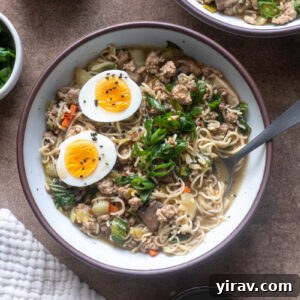
Ground Pork Ramen
Pin Recipe
reviews
Leave a Review »
Ingredients
- 2 tablespoons sesame oil divided
- 1 lb. ground pork sub with ground chicken or turkey
- 8 ounces sliced shiitake mushrooms sub with cremini mushrooms
- 1 large carrot chopped or cut into thick matchsticks
- 2 heads bok choy halved and sliced; reserve dark green tops for the end of cooking
- 3 green onions sliced thinly on the bias; reserve dark green scallions for serving
- 3 cloves garlic minced
- 1 tablespoon freshly grated ginger
- 1/4 teaspoon red pepper flakes
- 4 cups low sodium chicken stock
- 3 tablespoons coconut aminos sub with tamari or low sodium soy sauce; see note 2
- 2 tablespoons rice wine vinegar substitute with mirin; see note 3
Ramen toppings, optional
- soft boiled eggs, black sesame seeds, fresh scallion greens
Instructions
-
Heat 1 tablespoon of sesame oil in a Dutch oven or large pot over medium heat. Add ground pork, break into chunks, and cook for 3 minutes until lightly browned. Add the remaining tablespoon of sesame oil along with the sliced shiitake mushrooms, chopped carrot, and the white and light green parts of the bok choy and green onion. Cook for 5-6 minutes until mushrooms are browned and have released their liquid, and vegetables begin to soften. Remember to reserve the dark green leaves of the bok choy for the end of cooking, and the dark green scallions for topping. Stir in the minced garlic, freshly grated ginger, and red pepper flakes and cook for 30 seconds longer until fragrant.2 tablespoons sesame oil, 1 lb. ground pork, 8 ounces sliced shiitake mushrooms, 1 large carrot, 2 heads bok choy, 3 green onions, 3 cloves garlic, 1 tablespoon freshly grated ginger, 1/4 teaspoon red pepper flakes
-
Add the chicken stock and coconut aminos to the pot and bring the mixture to a gentle boil. Once boiling, add the ramen noodles and cook according to package instructions, typically about 3-5 minutes depending on your noodle type. Remove the pot from heat immediately after noodles are cooked to prevent them from becoming overly soft. Stir in the rice wine vinegar and the reserved dark green bok choy leaves until they are wilted. Taste and adjust the seasoning as desired, adding more coconut aminos, vinegar, or red pepper flakes to achieve your perfect balance. Note: If you intend to use this recipe for meal prep or foresee leftovers, cook and store the noodles separately to maintain their texture and keep the broth clear.4 cups low sodium chicken stock, 3 tablespoons coconut aminos, 2 tablespoons rice wine vinegar
-
Ladle the hot ramen into individual bowls. Serve topped with your desired garnishes: jammy 6-minute soft-boiled eggs, a sprinkle of black sesame seeds, and the reserved dark green scallions. Enjoy your homemade, better-than-takeout Ground Pork Ramen!soft boiled eggs, black sesame seeds, fresh scallion greens
Notes
- Meal Prep for Best Results: As noted in the instructions, for optimal texture and to prevent soggy noodles, always cook and store the ramen noodles separately from the broth if you are making this recipe for future meals or anticipate leftovers. Noodles will rapidly absorb liquid and become overly soft when left in the broth.
- Coconut Aminos vs. Soy Sauce: Coconut aminos are generally milder and slightly sweeter than traditional soy sauce. If you choose to substitute with tamari (gluten-free soy sauce) or regular low-sodium soy sauce, start with 2 tablespoons and taste before adding more, as soy sauce has a more intense, saltier flavor.
- Rice Wine Vinegar Alternatives: If you don’t have rice wine vinegar or mirin (a sweet Japanese rice wine often used interchangeably), 1-2 tablespoons of fresh lime juice can provide a similar brightening acidity to the broth.
- Storage: Store the cooled broth and noodles separately in airtight containers in the refrigerator for up to 3 days. Reheat the broth gently and add freshly prepared or separately stored noodles when serving.
Nutrition
Nutrition is estimated using a food database and is only intended to be used as a guideline for informational purposes.