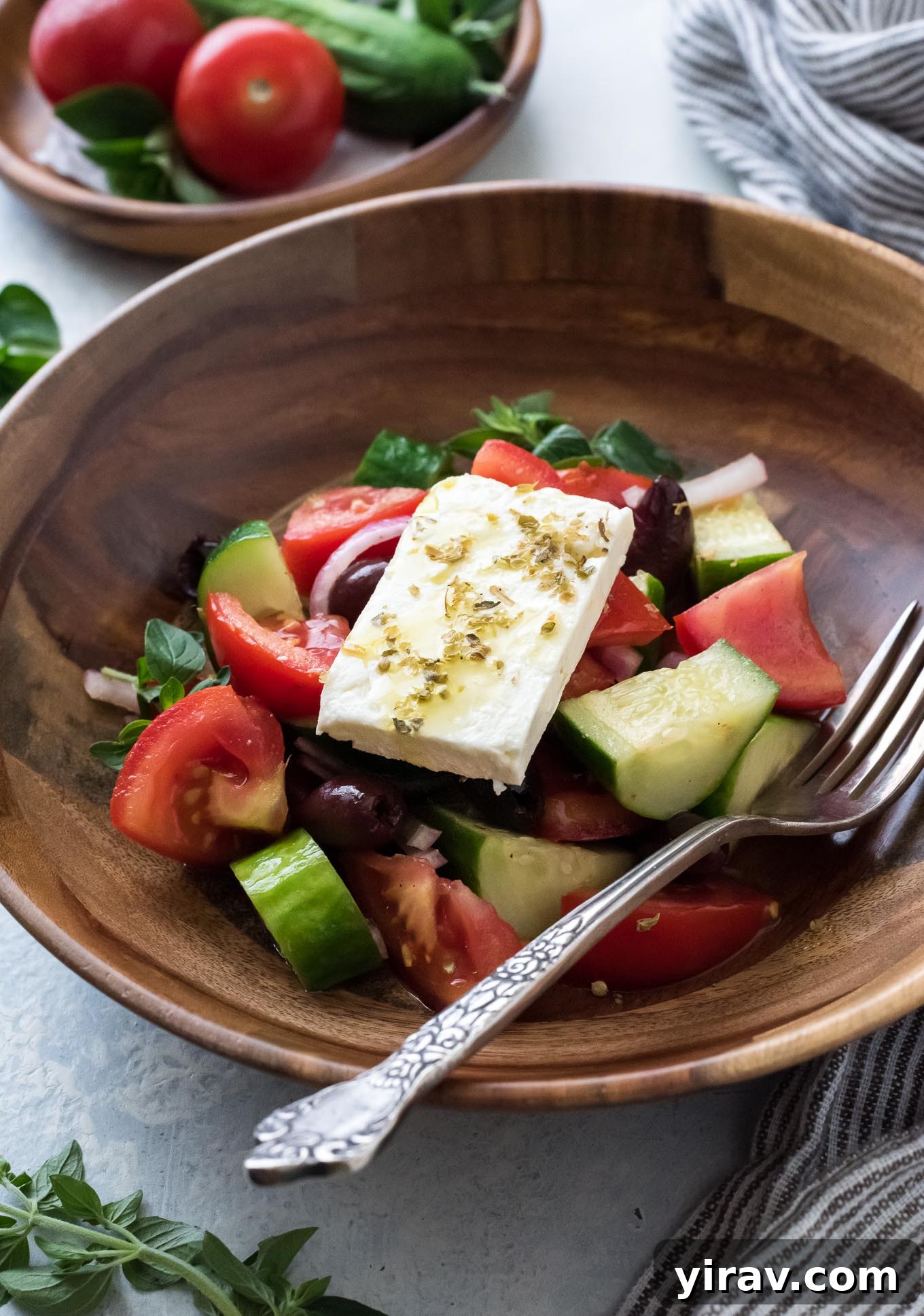
Transport yourself straight to the sun-drenched shores of the Greek islands with this incredibly authentic Horiatiki Salad! Often hailed as the “Greek Village Salad,” this classic recipe is a celebration of simplicity, packed with the freshest, chunky vegetables, briny Kalamata olives, and a generous slice of creamy feta cheese. It’s all brought together with a light, yet profoundly flavorful, dressing of quality red wine vinegar and extra virgin olive oil. This salad isn’t just a dish; it’s an experience – fresh, vibrant, and ready to enjoy in mere minutes, embodying the true spirit of Mediterranean cuisine.
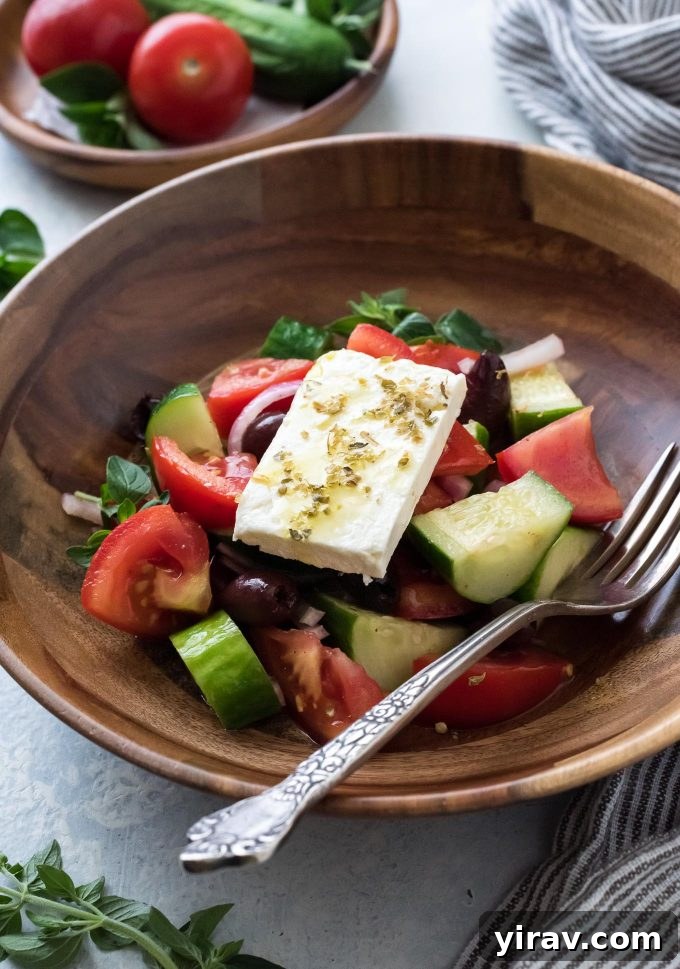
The Authentic Taste of Greece in Your Kitchen
My journey to Greece many years ago was a culinary awakening. I devoured an incredible array of dishes, from succulent Greek chicken souvlaki and refreshing Greek tzatziki to rich Greek yogurt with fresh fruit and honey, alongside pastries that redefined my understanding of dessert. Yet, amidst all these exquisite flavors, it was the Horiatiki Salad that truly captivated my palate and left an indelible impression.
Also known as the Greek village salad, its power lay in its deceptive simplicity. The ingredients were basic, unpretentious, but their freshness was extraordinary, allowing each flavor to shine and create an explosion on the tongue. This profound experience taught me that sometimes, the most unforgettable dishes are those that honor their core components with minimal intervention.
For this reason, I’m quite particular about when I make this salad. I reserve it exclusively for the summer months, a time when tomatoes and cucumbers are at their absolute peak – ripe, juicy, and bursting with natural sweetness. This seasonality is crucial, transforming a simple mix of vegetables into something truly magical. The salad features plump, ripe tomatoes, crisp cucumbers, thinly sliced red onion, intensely briny Kalamata olives, and a generous block of creamy feta cheese. The “dressing” is nothing more than a drizzle of the finest dried oregano, rich red wine vinegar, and robust extra virgin olive oil. When crafted with quality ingredients, this Horiatiki Salad genuinely rivals the authentic flavors I savored on the Greek islands.
Never Miss a Recipe!
Sign up to receive delicious recipes directly in your inbox. Discover new favorites and meal ideas every week!
Why This Horiatiki Salad Will Become a Favorite
- Authentic Rustic Charm: Horiatiki, meaning “village” salad, is renowned for its rustic, chunky cut vegetables and bold, uncomplicated flavors – a true taste of the Mediterranean.
- Peak Season Perfection: It’s the ultimate recipe for showcasing the vibrant flavors of market-fresh or garden-grown tomatoes and cucumbers during the summer.
- Effortless Preparation: This delightful salad comes together in mere minutes and can be prepped up to an hour in advance, making it ideal for busy weekdays or impromptu gatherings.
- Versatile & Wholesome: Perfect as a refreshing summer side dish or a satisfying vegetarian lunch, offering a burst of healthy, delicious goodness.
- A Staple of Healthy Eating: Rich in fresh produce, healthy fats from olive oil, and the goodness of feta, it aligns perfectly with the renowned health benefits of the Mediterranean diet.
Essential Ingredients for an Unforgettable Horiatiki
With so few components in this traditional Greek Horiatiki salad, the quality of each ingredient truly makes all the difference. Investing in the best produce and pantry staples will elevate your salad from good to absolutely glorious.
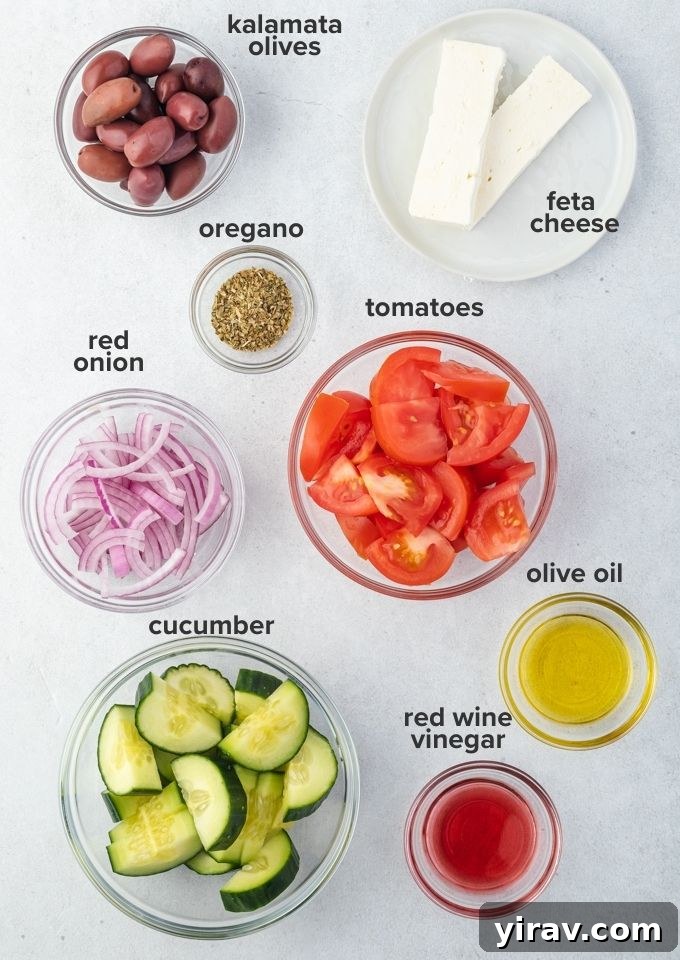
- Vibrant Veggies: The core of this Greek village salad comprises ripe tomatoes, crisp cucumbers, and pungent red onion. While often included, chopped green bell pepper is also a popular addition in many Greek homes, offering an extra layer of crunch and subtle bitterness. Feel free to use your favorite variety of tomatoes, whether heirlooms for varied color or beefsteaks for their hearty texture.
- Kalamata Olives: These dark, almond-shaped olives are a signature of Greek cuisine, bringing a unique briny, slightly fruity, and robust flavor to the salad. If their intense flavor is too strong for your preference, you can substitute with a milder black olive variety or even green olives for a different profile.
- Creamy Feta Cheese: For the most authentic and fresh taste, a block of feta stored in brine is highly recommended. Its rich, tangy, and salty notes are incomparable. However, feel free to use pre-crumbled feta if that’s what’s most convenient or available. The key is to get a good quality feta that melts in your mouth.
- Vinegar and Oil: The “dressing” is famously minimalistic. High-quality red wine vinegar provides a sharp, tangy counterpoint to the fresh vegetables, while a robust extra virgin olive oil binds the flavors together, adding a silky richness and fruity undertones. Don’t skimp on the olive oil here – it’s a primary flavor component.
- Aromatic Oregano: Both freshly chopped oregano or dried oregano work wonderfully. Dried Greek oregano, in particular, offers a potent, earthy aroma that is quintessential to the Horiatiki experience. Sprinkle generously!
For a detailed list of ingredients and precise quantities, please refer to the recipe card below.
Crafting Your Greek Village Salad: A Simple Guide
One of the many beauties of Greek Village Salad is its incredible ease of preparation. It doesn’t demand intricate chopping skills or complex dressing concoctions, allowing the natural flavors of the ingredients to shine through with minimal effort.
Chef’s Insight: The secret to an outstanding Horiatiki lies in sourcing the freshest vegetables you can find and pairing them with a premium quality extra virgin olive oil and red wine vinegar. These foundational elements are non-negotiable for maximum, authentic flavor.
Follow these straightforward steps, and consult the recipe card below for the full, detailed instructions.
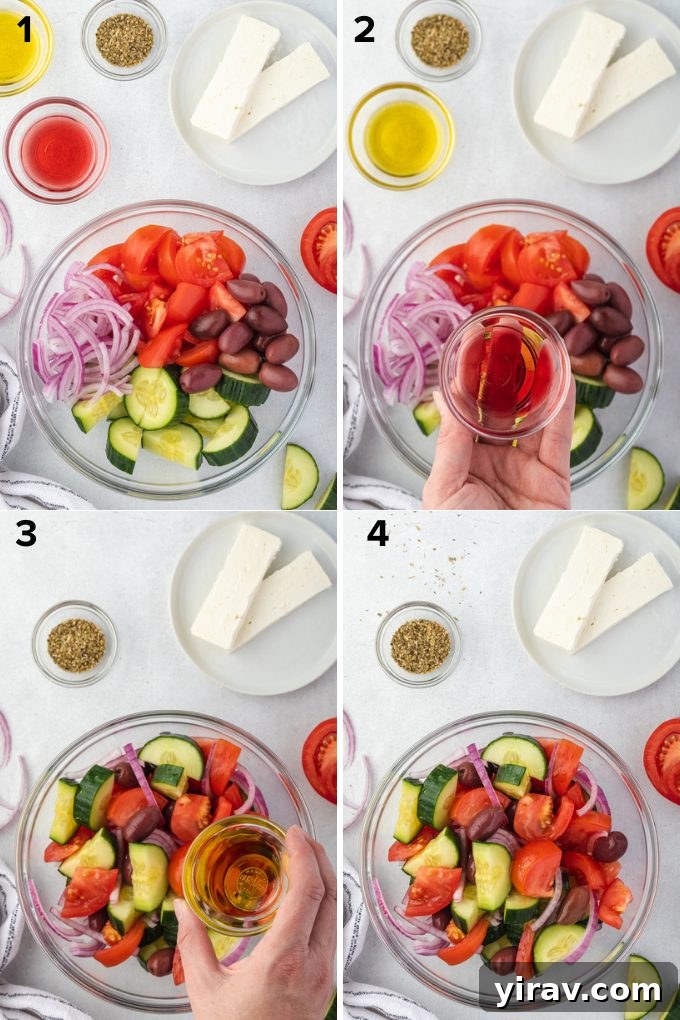
- Prepare the Vegetables: Begin by washing and roughly chopping your fresh tomatoes, cucumbers, and red onion. Remember, this is a “village” salad, so rustic, chunky cuts are preferred over fine dicing. Add your Kalamata olives to a spacious mixing bowl. If you’re using cubed or crumbled feta instead of a solid block, add it now.
- First Seasoning: Pour the red wine vinegar over the chopped vegetables. Gently toss them together. This crucial step allows the vegetables to absorb the bright acidity of the vinegar, infusing them with flavor from within.
- Dress and Combine: Next, add the extra virgin olive oil, a pinch of salt, and freshly ground black pepper to taste. Stir everything thoroughly until all the ingredients are well coated and gleaming.
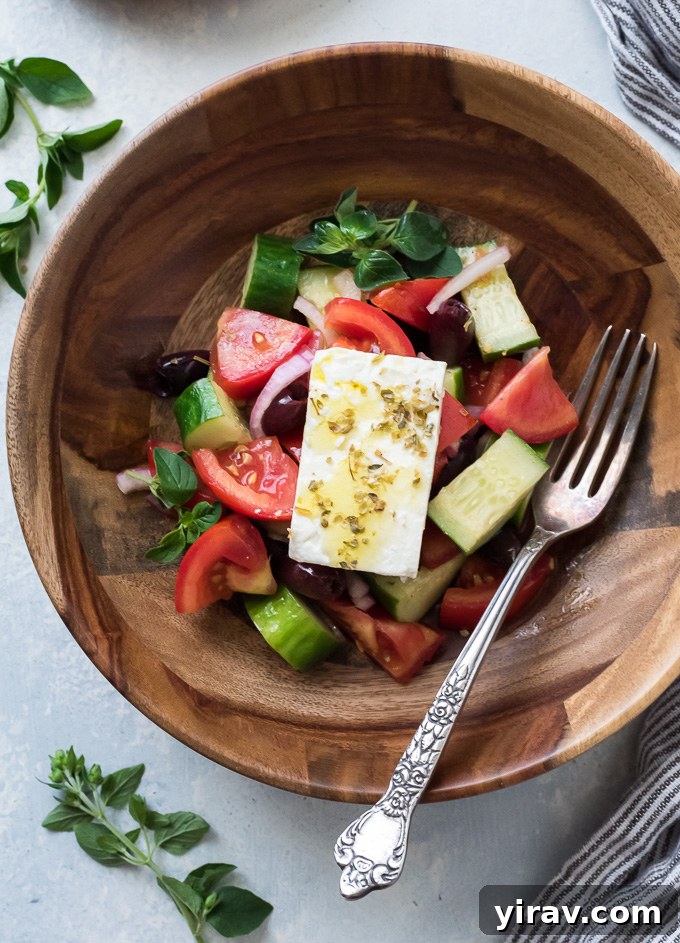
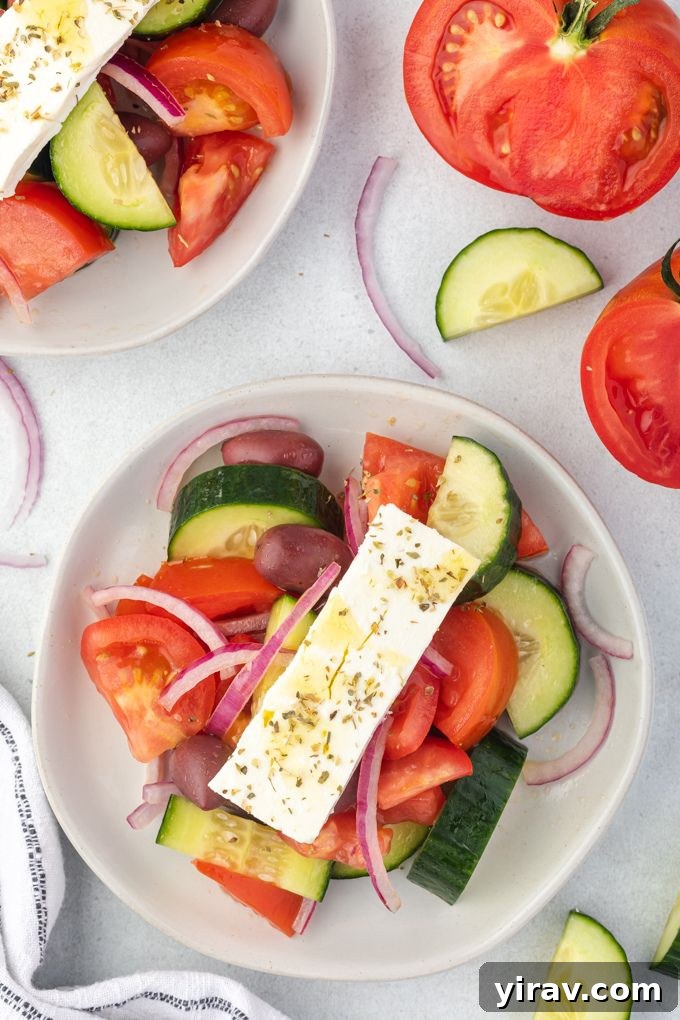
- Final Presentation: When ready to serve, divide the salad onto individual plates or a large platter. Top each serving with a thick, elegant rectangle of feta cheese (if not already mixed in). Finish with a generous sprinkle of dried oregano and a final delicate drizzle of extra virgin olive oil. Serve immediately and savor the authentic Greek experience!
Horiatiki vs. Greek Salad: Understanding the Difference
What’s the distinction between Horiatiki and other “Greek” salads?
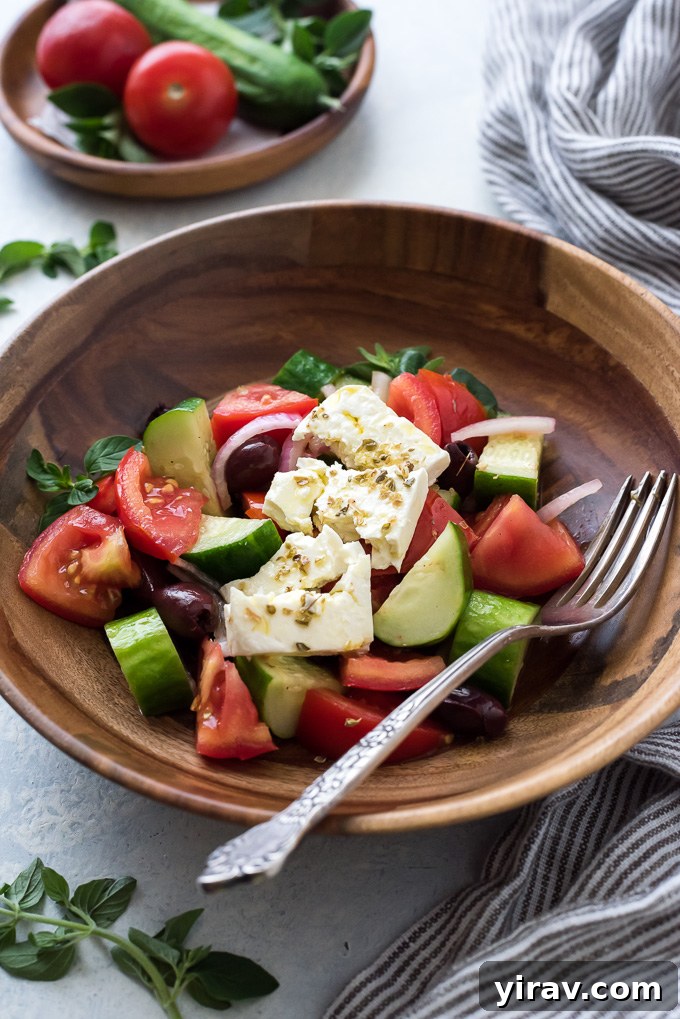
When you order a Horiatiki salad in Greece, you’ll be presented with a rustic assembly of chunky-cut tomatoes, cucumbers, and onions, intertwined with briny Kalamata olives, a creamy, often whole, block of feta cheese, and a fragrant sprinkle of dried oregano. It’s dressed simply with good quality red wine vinegar and olive oil. This seemingly basic approach works perfectly because every ingredient is incredibly fresh and bursting with flavor.
In contrast, what is often marketed as a “Greek salad” outside of Greece (sometimes called a Greek chopped salad) is typically a composed salad. This means it often includes lettuce (a major difference!), the vegetables are usually chopped into smaller, more uniform pieces, and the feta cheese is crumbled throughout the salad. Furthermore, it’s often tossed in a more elaborate, prepared dressing, such as my Easy Greek Salad Dressing, rather than the simple oil and vinegar mix.
What does Horiatiki mean?
The word “Horiatiki” directly translates to “village” in Greek, which is precisely why it’s lovingly referred to as Greek village salad. It’s a reflection of the simple, fresh produce readily available in any Greek village, combined to create a wholesome and delicious meal.
Horiatiki pronunciation
For those curious about how to say it correctly, Horiatiki is pronounced hor-ya-tee-kee. Practice it a few times and impress your friends!
Serving Your Authentic Greek Salad
The versatility of this Greek Horiatiki Salad makes it a perfect accompaniment to a wide range of meals, or even a satisfying dish on its own:
- Ideal Weeknight Dinner: Pair this vibrant salad with a flavorful protein like blackened salmon or a perfectly cooked air fryer chicken breast for a balanced and delicious meal.
- BBQ & Cookout Companion: Elevate your next cookout by serving Horiatiki alongside hearty mains such as a juicy tomahawk steak, zesty grilled shrimp, or savory grilled lamb kofta kebabs. Its freshness cuts through richer flavors beautifully.
- Wholesome Vegetarian Lunch: Enjoy it as a light yet fulfilling vegetarian lunch. For an extra nutritional boost and increased satiety, consider adding a handful of white beans or chickpeas.
- Mezze Platter Addition: Serve it as part of a larger mezze platter with hummus, pita bread, tzatziki, and other Greek appetizers for a delightful communal dining experience.
- Summer Brunch: A refreshing option for a casual summer brunch, perhaps alongside some scrambled eggs or a frittata.
Tips for Horiatiki Salad Perfection
- Quality is King: This cannot be stressed enough – the success of your Horiatiki truly depends on the freshness and quality of your ingredients. Seek out ripe, in-season tomatoes, firm cucumbers, and a good quality block of feta cheese, ideally packed in brine. Use the best extra virgin olive oil and red wine vinegar you can afford; their flavors are prominent.
- Timing for Toss: For optimal texture and flavor, it’s best to toss the salad with the vinegar, olive oil, salt, and pepper no more than 1 hour before serving. This prevents the vegetables from becoming overly soft or watery. Add the feta cheese right before serving to maintain its creamy texture and distinct shape.
- Customize to Your Liking: While the classic ingredients are listed, feel free to personalize your Horiatiki salad. Experiment with different heirloom tomato varieties for a colorful twist, or incorporate finely chopped green or yellow bell pepper for added crunch and a hint of sweetness. Some enjoy adding capers for an extra salty punch.
- Scaling for Any Occasion: This recipe is incredibly easy to scale up or down. Whether you’re preparing a small individual serving or feeding a large gathering, simply adjust the quantities of the ingredients to suit your needs. The proportions of vinegar and oil can also be adjusted slightly to your taste preference.
- Chill Briefly: While the vegetables should be fresh, a brief chill (15-30 minutes) after dressing can sometimes help the flavors meld beautifully without making the salad soggy.
More Mediterranean-Inspired Salad Recipes
If you love the fresh, vibrant flavors of the Mediterranean, you’ll definitely want to try these other delightful salad recipes:
- Greek Orzo Pasta Salad
- Insalata Mista (Mixed Italian Salad)
- Italian Tricolore Salad
- Mediterranean Three-Bean Salad
- Mediterranean Chopped Salad
- Refreshing Spring Mix Salad
Did you try this recipe? If so, be sure to leave a review below and tag me @flavorthemoments on Facebook and Instagram!
Horiatiki (Greek Village Salad) – Full Recipe
Pin Recipe
reviews
Leave a Review »
Ingredients
- 2 medium tomatoes cut into wedges then halved
- 1 medium cucumber I used seedless
- 1/4 cup thinly sliced red onion
- 12 kalamata olives
- 2 ounces feta cheese cut into thick slices or cubes
- 2 tablespoons red wine vinegar or to taste
- 2 tablespoons extra virgin olive oil plus more for drizzling
- dried oregano for serving
- salt and freshly ground black pepper to taste
Instructions
-
Place the chopped tomato, cucumber, red onion, and Kalamata olives in a medium bowl. If you are using cubed or crumbled feta instead of a thick slice for garnish, add it now as well.
-
Add the red wine vinegar and gently stir to combine, ensuring the vegetables absorb its bright flavor. Then, add the extra virgin olive oil, along with salt and freshly ground black pepper to taste, and stir until all ingredients are well incorporated.
-
Divide the salad between two plates. Top each serving with a slice of feta cheese (if not already mixed in), a quick drizzle of additional extra virgin olive oil, and a sprinkle of dried oregano. Serve immediately and enjoy the authentic taste of Greece!
Video
Notes
- Quality Ingredients are Key: Always use the freshest vegetables possible, along with high-quality olive oil and vinegar for the most impactful flavor.
- Serve Promptly: For the best results, toss the salad with the vinegar and oil no more than 1 hour before serving, and add the feta cheese just before you’re ready to eat.
- Customization Options: Feel free to customize this Horiatiki salad with your favorite varieties of tomatoes, or add chopped green or yellow bell pepper for extra crunch and color.
- Scale as Needed: This recipe is easily scaled up or down to accommodate any number of guests or servings.
Nutrition Information
Nutrition is estimated using a food database and is only intended to be used as a guideline for informational purposes.
This recipe was originally published in July 2018. Step-by-step photos have been added, and the text has been significantly expanded and modified to provide more comprehensive recipe information and enhance readability for a wider audience.