Mastering Pumpkin Prep: A Step-by-Step Guide to Cutting and Peeling Pumpkin for Cooking
Unlock the incredible flavor and silky texture of fresh pumpkin with this comprehensive, step-by-step tutorial! Forget the daunting task; we’ll guide you through how to safely cut a pumpkin in half, effortlessly remove its seeds, easily peel it, and prepare it into versatile wedges or cubes perfect for all your culinary creations. Elevate your autumn dishes with the unmatched taste of home-prepped pumpkin.
When the vibrant orange of autumn pumpkins appears, many immediately think of spooky Halloween carvings and decorative displays. While crafting a Jack-O-Lantern is a cherished tradition, there’s a whole other world of culinary delight waiting inside those pumpkins. This guide is dedicated to unlocking that potential, focusing purely on preparing pumpkins for delicious meals and seasonal recipes.
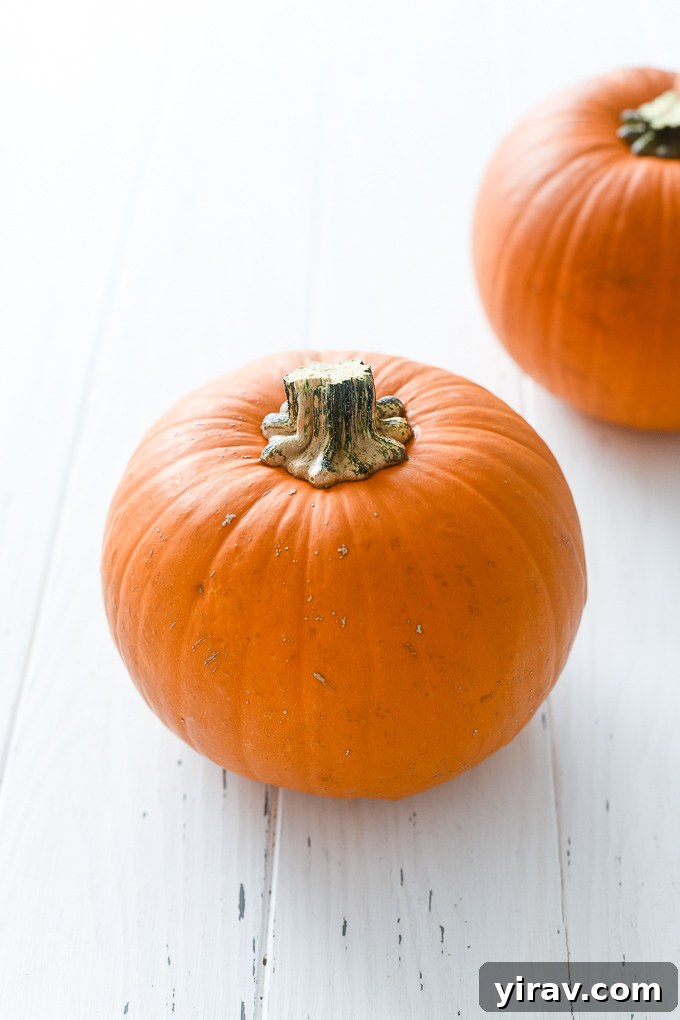
Unlike the large, often watery carving pumpkins, specific varieties like sugar pie pumpkins (also known as “pie pumpkins” or “sweet pumpkins”) are bred for their rich flavor, dense flesh, and smoother texture, making them ideal for cooking. Preparing fresh pumpkin at home might seem intimidating at first, but with the right techniques, it’s a straightforward process that yields far superior results compared to canned pumpkin puree. The depth of flavor, natural sweetness, and velvety texture of freshly cooked pumpkin truly are unmatched, transforming everyday dishes into gourmet experiences.
Last year, we demystified the process of peeling and cutting butternut squash, and the overwhelming positive feedback highlighted a common need: a clear, confidence-building guide for similar winter squashes, including pumpkin. Many people find the thick skin and irregular shape of a whole pumpkin a barrier to using it in their cooking. Our goal with these detailed instructions is to empower you to embrace fresh pumpkin more often, enhancing your autumn and winter recipes with its wholesome goodness.
Imagine flavorful pumpkin soups, hearty stews, delectable baked goods, and nutritious side dishes, all made with pumpkin prepped by your own hands. This tutorial will break down each step, ensuring you gain the skills to confidently tackle any pumpkin that comes your way, making it a staple in your healthy and delicious kitchen adventures.
Table of Contents
- Why Choose Fresh Pumpkin for Cooking?
- Selecting the Perfect Pumpkin for Your Recipes
- Essential Tools for Pumpkin Prep
- Why You’ll Love This Step-by-Step Guide
- How to Cut, Peel, and Prepare a Pumpkin for Cooking
- Step 1: Prepare Your Workspace and Soften the Pumpkin
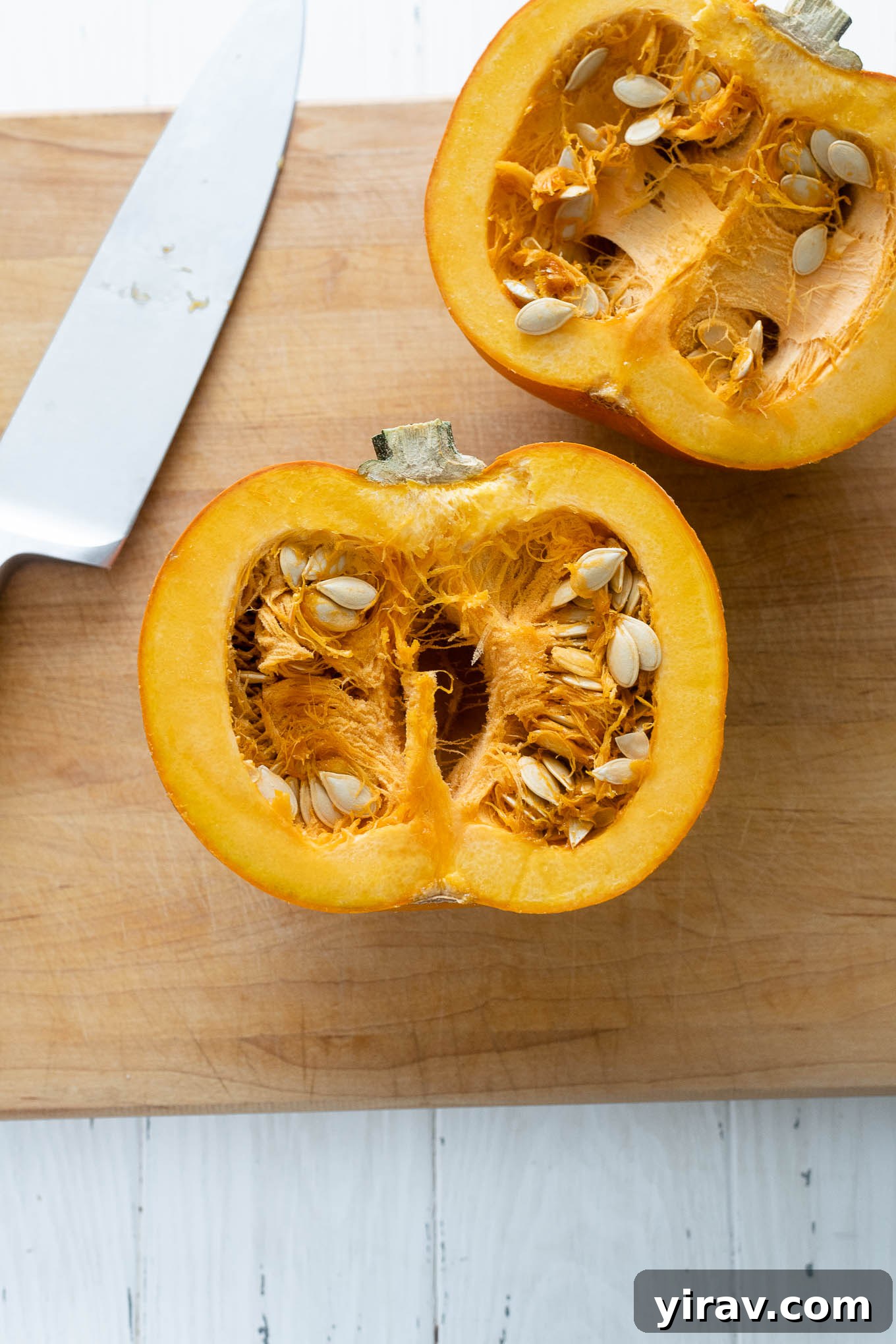
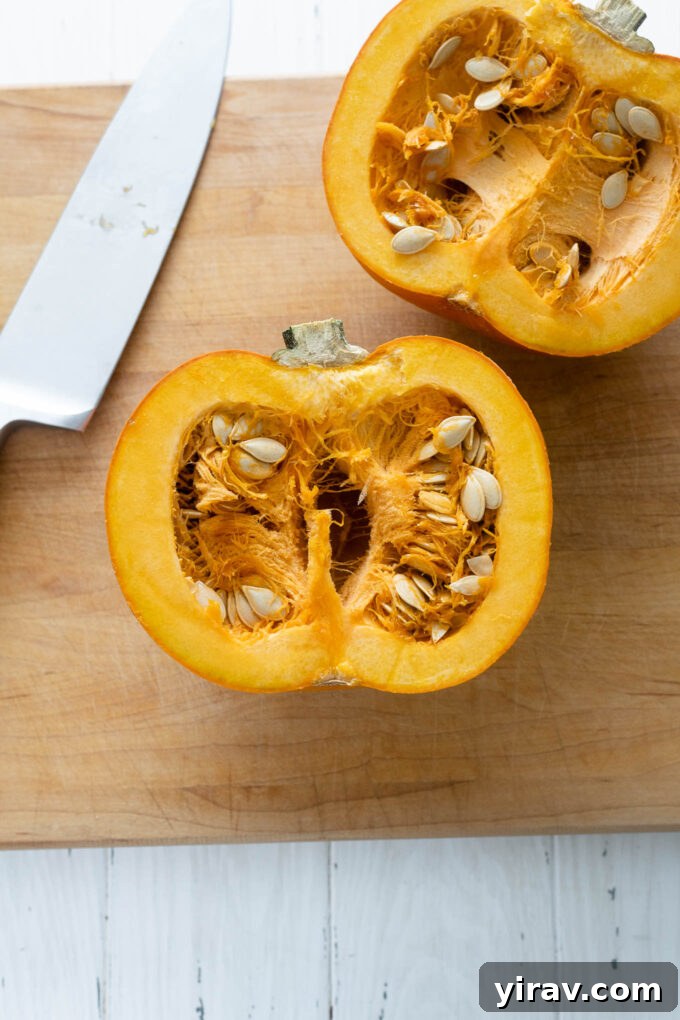
- Step 2: Cut the Pumpkin in Half and Remove the Seeds
- Step 3: Peel the Pumpkin Expertly
- Step 4: Cut into Versatile Wedges or Cubes
- Storage and Prep-Ahead Tips
- Frequently Asked Questions (FAQs)
- Delicious Ways to Use Fresh Pumpkin in Recipes
- More Pumpkin Recipes to Inspire You
Why Choose Fresh Pumpkin for Cooking?
While canned pumpkin puree offers convenience, preparing fresh pumpkin provides an unparalleled culinary experience. Here’s why you should consider making the switch:
- Superior Flavor Profile: Fresh pumpkin boasts a naturally sweeter, richer, and more nuanced flavor than its canned counterpart. Canned pumpkin can sometimes have a slightly metallic or bland taste, whereas fresh pumpkin delivers a vibrant, earthy sweetness that truly shines in both savory and sweet dishes.
- Silky Smooth Texture: When roasted and pureed, fresh pumpkin achieves an incredibly smooth, creamy, and luxurious texture that’s difficult to replicate with canned options. This makes a noticeable difference in soups, pies, and custards.
- Nutritional Powerhouse: Pumpkins are packed with essential vitamins and minerals, including a high amount of Vitamin A (beta-carotene), Vitamin C, potassium, and fiber. Cooking fresh means you’re consuming the most natural form of these nutrients, free from any potential additives or preservatives found in some canned products.
- Cost-Effective: Whole pumpkins, especially during peak season, are often more economical per pound than buying multiple cans of pumpkin puree, making it a budget-friendly choice for healthy eating.
- Control Over Ingredients: When you prepare pumpkin from scratch, you have complete control over what goes into your food. No hidden sugars, salts, or thickeners – just pure, natural pumpkin goodness.
Selecting the Perfect Pumpkin for Your Recipes
Not all pumpkins are created equal when it comes to cooking. For the best culinary results, opt for varieties specifically grown for eating, rather than carving. Here’s what to look for:
- Sugar Pie Pumpkins (or Pie Pumpkins): These are your best bet. They are typically small (2-5 pounds), round, and have a dense, sweet, and non-fibrous flesh perfect for pureeing, roasting, and baking. Their skin is usually a deep orange.
- Kabocha Squash or Red Kuri Squash: While technically a type of squash, these are excellent substitutes for pumpkin in most recipes, offering similar flavor and texture. They are often easier to cut and their skin can even be eaten in some preparations.
- Avoid Carving Pumpkins: The large pumpkins sold for Halloween decorations (often labeled “Jack-O-Lantern pumpkins”) are typically stringy, watery, and bland. While edible, they won’t yield the rich flavor and smooth texture desired for cooking.
- Check for Quality: Choose a pumpkin that feels heavy for its size, indicating dense flesh. The skin should be firm, free of soft spots, blemishes, or mold. A sturdy stem is also a good sign of freshness.
Essential Tools for Pumpkin Prep
Preparing a pumpkin for cooking requires only a few basic kitchen tools, but having the right ones can make a significant difference in ease and safety. Here’s what you’ll need:
- Sturdy Cutting Board: A large, stable cutting board is crucial for safety. It provides a non-slip surface and enough space to maneuver the pumpkin. A wooden or thick plastic board works best.
- Sharp Chef’s Knife: This is arguably the most important tool. A sharp, heavy-duty chef’s knife will allow you to cut through the tough pumpkin skin with less effort and more control, significantly reducing the risk of accidents. Dull knives are actually more dangerous as they require more force, increasing the chance of slipping.
- Large, Sturdy Spoon or Ice Cream Scoop: Essential for scraping out the fibrous strands and seeds from the pumpkin’s interior. A metal spoon with a slightly sharpened edge or a dedicated ice cream scoop works wonderfully for this task.
- Vegetable Peeler (Optional but Recommended): While a knife can be used to peel the pumpkin, a sturdy Y-peeler or swivel peeler can make the process faster, safer, and more efficient, especially for smaller pumpkins or after the pumpkin has been cut into smaller pieces.
- Microwave (Optional): A microwave can be a game-changer for softening particularly tough pumpkins before cutting, making the initial cuts much easier and safer.
Why You’ll Love This Step-by-Step Guide
Our detailed pumpkin prep tutorial is designed to make your cooking experience seamless and enjoyable:
- You’ll gain confidence in cutting pumpkins of all sizes, learning how to halve, deseed, peel, and dice them into perfect wedges or cubes with speed and ease.
- Discover how much more cost-effective and flavorful fresh pumpkin is compared to its canned alternative, offering a gourmet taste at a fraction of the price.
- Elevate your culinary creations to the next level. Freshly prepared pumpkin adds a depth of flavor and a luxurious silky texture that canned versions simply cannot replicate, making it a superior substitute for various winter squash varieties in your recipes.
- Learn efficient storage methods to maximize freshness. Once prepped, cut pumpkin can be stored in an airtight container in the refrigerator for 3-5 days or frozen for up to 3 months, ensuring you always have fresh pumpkin on hand.
- Incorporate valuable pro tips and safety measures that will simplify the entire process and minimize any potential kitchen hazards.
How to Cut, Peel, and Prepare a Pumpkin for Cooking
Cutting a pumpkin for cooking might seem like a challenging task, but by following these clear, step-by-step instructions, you’ll find it incredibly easy and rewarding. You can choose to simply halve and roast the pumpkin, or continue to peel and cut it into versatile wedges or cubes for a wider range of recipes.
Pro Tip: For exceptionally tough pumpkins, soften the entire pumpkin in the microwave for 2-3 minutes on high power. This makes the initial cuts significantly easier and safer to perform.
Step 1: Prepare Your Workspace and Soften the Pumpkin
- Ensure your cutting board is stable and ideally placed on a damp cloth or non-slip mat to prevent it from sliding.
- Have your sharp chef’s knife and a sturdy spoon or ice cream scoop readily available.
- If your pumpkin feels particularly hard or difficult to cut, carefully place the whole pumpkin in the microwave. Heat on high for 2 to 3 minutes. This will slightly soften the skin and flesh, making it much easier and safer to slice through. Be cautious when handling the pumpkin immediately after microwaving, as it may be hot.
Step 2: Cut the Pumpkin in Half and Remove the Seeds
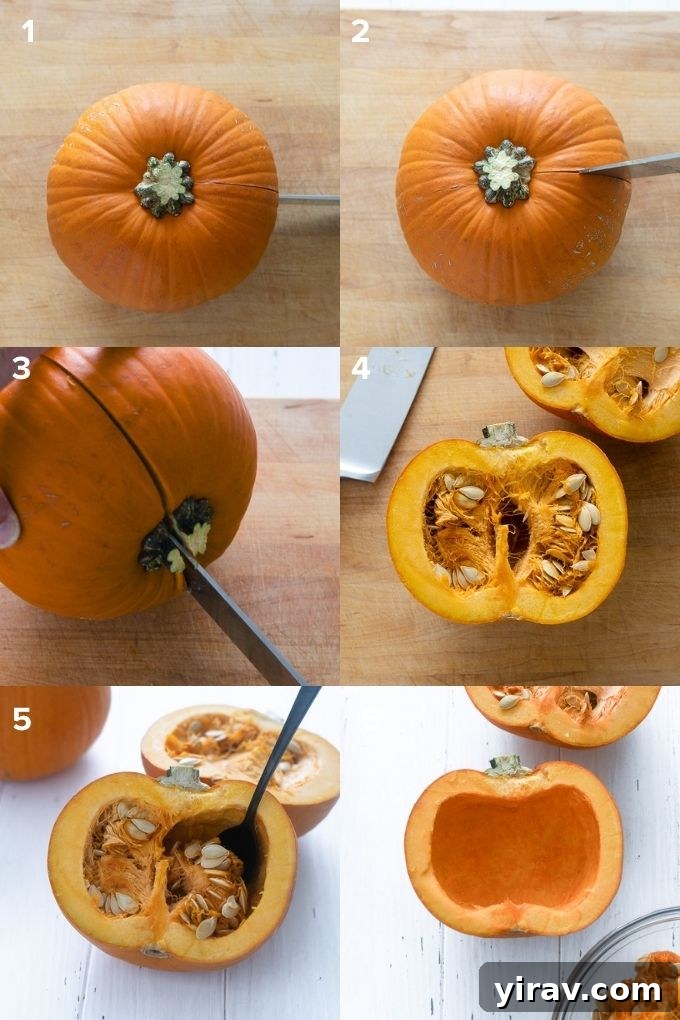
- Stabilize the Pumpkin: Place the pumpkin upright on your cutting board. If it wobbles, carefully slice a thin piece off the bottom to create a flat, stable base.
- Initial Cut: Using your sharp chef’s knife, carefully cut from the top (stem end) down through the center, lengthwise. You may need to apply firm, steady pressure. Repeat this cut on the opposite side, working your way around the pumpkin.
- Finish the Halving: Turn the pumpkin on its side and cut through the stem if you haven’t already. Gently rock the knife through the remaining uncut portions until the pumpkin splits cleanly into two halves. If needed, a slight twist can help crack it open.
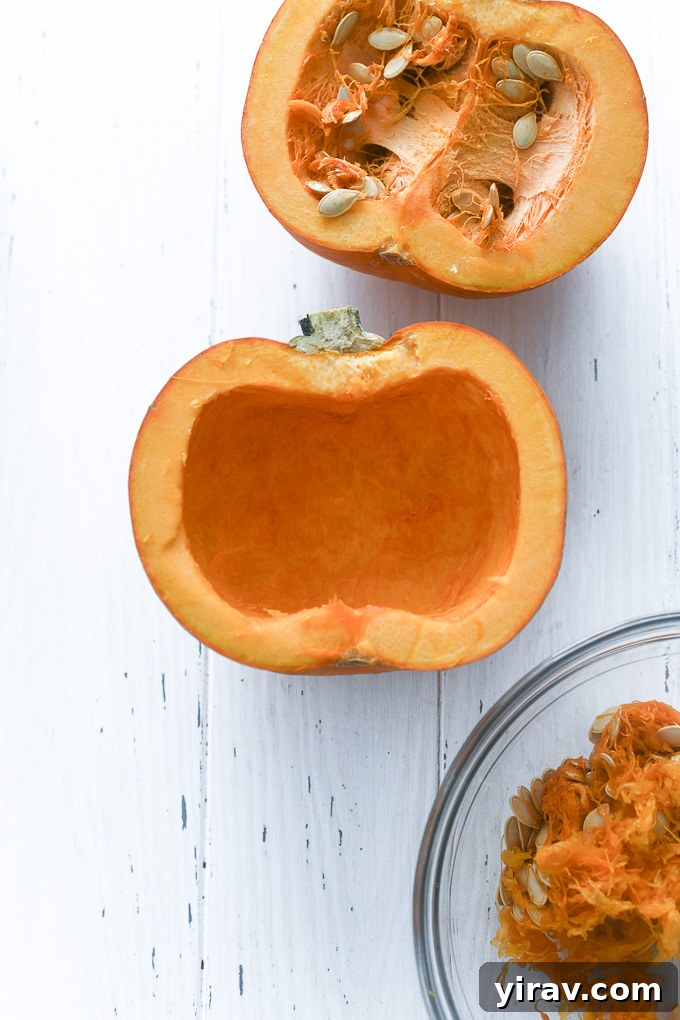
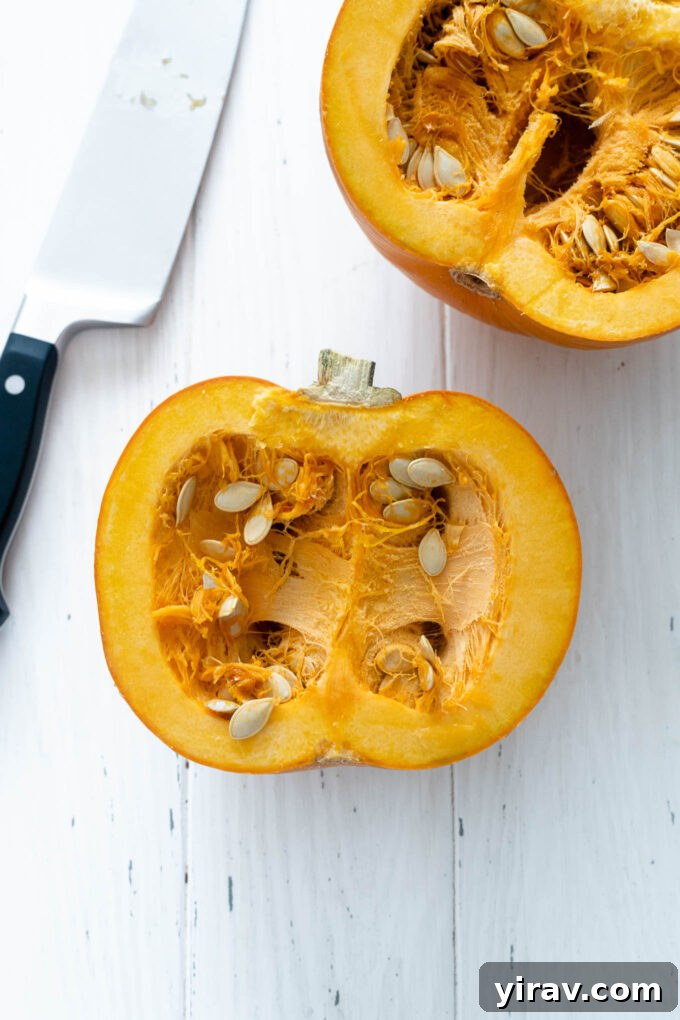
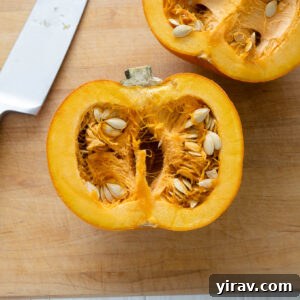
- Remove Seeds and Fibers: With your large spoon or ice cream scoop, thoroughly scrape out all the stringy pulp and seeds from both pumpkin halves. Ensure the cavity is clean. Don’t discard the seeds – they’re perfect for making delicious roasted pumpkin seeds!
- At this point, your pumpkin halves are ready for roasting if you wish to enjoy them simply cooked and possibly pureed later. If you want cubes or wedges, proceed to the next steps.
Step 3: Peel the Pumpkin Expertly
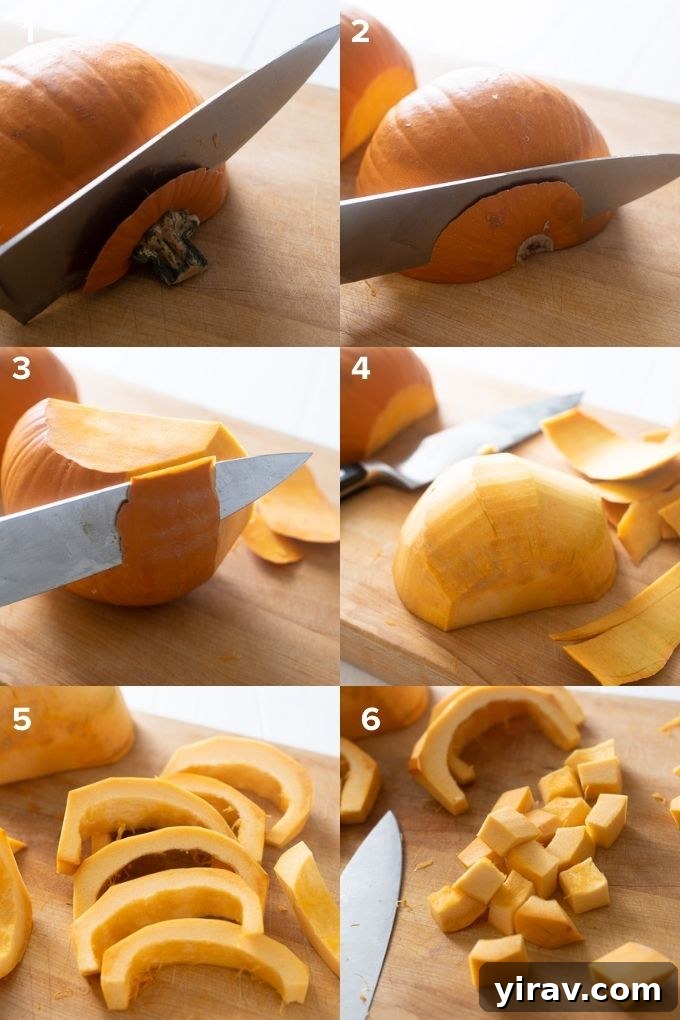
- Prepare for Peeling: Place each pumpkin half cut-side down on your cutting board. Carefully slice off the stem and the bottom ends, creating flat surfaces on both ends. This makes the pumpkin easier to handle.
- Knife Peeling (Method 1): Stand a pumpkin half upright on one of its newly flattened ends. With your sharp knife, carefully cut downwards, following the curve of the pumpkin, to remove the skin in strips. Work your way around until all the peel is removed. Always cut away from yourself and keep your fingers clear.
- Peeler Method (Method 2, Recommended): Once the stem and bottom are removed, a sturdy vegetable peeler can be a safer and faster alternative. Hold the pumpkin half firmly with one hand and use the peeler to remove the skin in strips, working from top to bottom. This method is often preferred for its ease and reduced risk of nicks.
- Alternatively, you can choose to peel the pumpkin after you’ve cut it into wedges or cubes. This might be slightly more tedious but is an option if you find peeling the large halves challenging.
Step 4: Cut into Versatile Wedges or Cubes
- Prepare for Slicing: Once peeled, place the pumpkin halves cut-side down on your cutting board once more.
- Cut into Wedges: Slice each half lengthwise into uniform wedges, similar to how you would cut an apple. Aim for wedges of roughly 1-2 inches in thickness. These are great for roasting, grilling, or adding to stews where you want larger pieces of pumpkin.
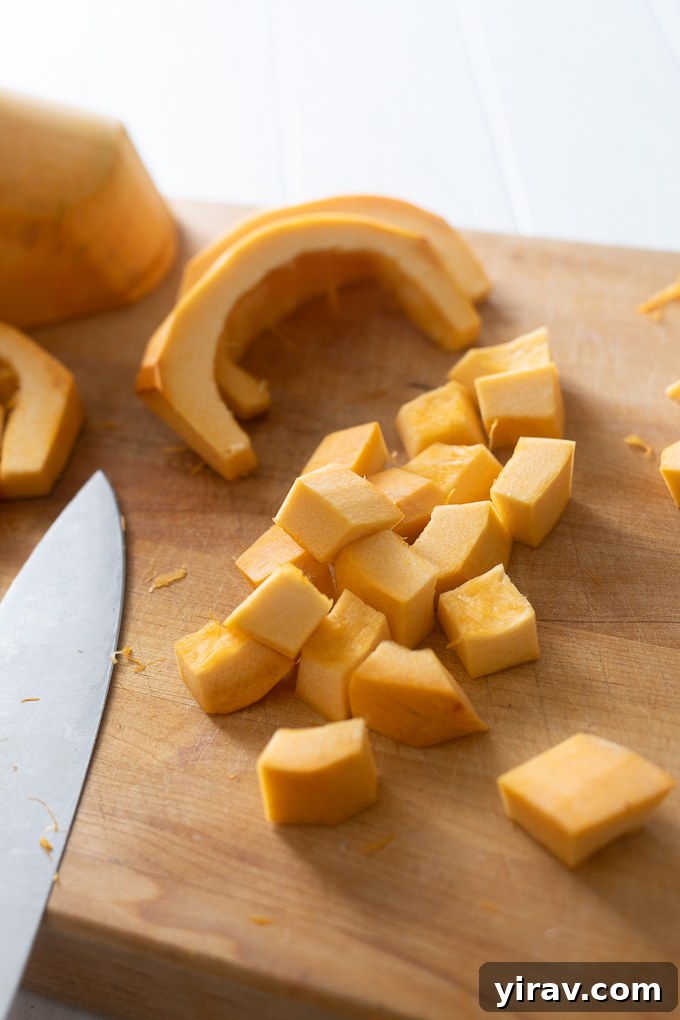
- Cut into Cubes: To create cubes, take each wedge and slice it crosswise into desired cube sizes, typically 1/2-inch to 1-inch pieces. Cubed pumpkin is excellent for soups, curries, casseroles, or mashing into puree.
- Your freshly cut pumpkin is now ready to be cooked according to your chosen recipe!
Storage and Prep-Ahead Tips
Once you’ve gone through the effort of preparing your fresh pumpkin, you’ll want to ensure it stays fresh and ready for your recipes. Proper storage can extend its life and make future meal prep even easier.
- Refrigeration: Freshly cut pumpkin wedges or cubes can be stored in an airtight container in the refrigerator for up to 3 to 5 days. This makes it convenient for quick weeknight meals or for prepping ingredients in advance.
- Freezing: For longer storage, pumpkin freezes beautifully. Spread cut pumpkin cubes or wedges in a single layer on a baking sheet and freeze until solid (this prevents them from sticking together). Once frozen, transfer them to a freezer-safe bag or container. Frozen pumpkin can be stored for up to 3 months. There’s no need to thaw before cooking; you can often add it directly to soups, stews, or roasts.
- Puree Storage: If you’ve cooked and pureed your pumpkin, let it cool completely before transferring it to airtight containers or freezer bags. Pumpkin puree can be refrigerated for up to 5-7 days or frozen for up to 6 months. For convenient portions, freeze puree in ice cube trays, then transfer the cubes to a freezer bag.
Frequently Asked Questions (FAQs)
Once a pumpkin is cut, it opens up a world of culinary possibilities! You can easily cut the halves into smaller wedges or cubes to roast, steam, or boil for various savory or sweet pumpkin recipes. Don’t forget to save the seeds to make delicious roasted pumpkin seeds, a fantastic snack!
The easiest way to peel a pumpkin is to first halve it and remove the seeds and stringy insides. Then, create flat surfaces by carefully cutting off the stem and bottom. Stand the pumpkin halves upright on a cutting board and either use a sharp knife to carefully cut the peel off in strips from top to bottom, or use a sturdy vegetable peeler for a safer and often quicker method. Microwaving the whole pumpkin for a few minutes beforehand can also significantly soften the skin, making peeling much easier.
Yes, cutting a pumpkin for cooking can be very easy with a few simple steps. Start by microwaving the whole pumpkin for 2-3 minutes to soften it. Then, stand the pumpkin upright on a cutting board and carefully slice from the stem down lengthwise on both sides. Turn it on its side to cut through the stem completely, then crack it open. Use a large spoon to scrape out the seeds and stringy bits. For peeling, place halves cut-side down, remove ends, then stand upright to slice off the peel with a sharp knife or a peeler. Finally, lay the peeled halves flat and cut into wedges, then cube if desired. Always use a sharp knife and a stable cutting surface for safety.
Delicious Ways to Use Fresh Pumpkin in Recipes
Once you’ve successfully cut and prepared your pumpkin, the culinary adventures truly begin! Fresh pumpkin can be transformed into a variety of incredible dishes. Here are some inspiring ideas:
- Savory Soups and Stews: Roasted pumpkin adds amazing depth of flavor and a silky texture to dishes like pumpkin chili or a cozy pot of roasted pumpkin apple soup, perfect for chilly fall evenings.
- Creamy Curries: Cubed pumpkin pairs beautifully with vibrant spices and coconut milk. Try it in a rich Thai pumpkin curry for an exotic twist.
- Hearty Side Dishes: Simple roasted pumpkin wedges tossed with herbs like rosemary or sage make a fantastic side dish for any autumn meal. You can also mash cooked pumpkin with butter and spices for a creamy alternative to mashed potatoes.
- Baking Delights: Fresh pumpkin puree is the star ingredient in classic baked goods. Whip up comforting pumpkin bread, fluffy pumpkin pancakes, or a timeless pumpkin pie from scratch.
- Creative Desserts: Beyond pie, pumpkin puree can be used in delightful desserts like pumpkin cheesecake, pumpkin mousse, or even pumpkin cookies. For a lighter treat, try blending it into smoothies.
- Risotto and Pasta: Incorporate roasted pumpkin cubes or puree into a creamy pumpkin risotto or add it to a savory pasta sauce for a touch of seasonal flavor.
More Pumpkin Recipes to Inspire You
Now that you’re a pumpkin-cutting pro, expand your culinary repertoire with these delicious pumpkin-focused recipes:
- Gluten-Free Pumpkin Bread
- Healthy Pumpkin Muffins
- Mini Pumpkin Cheesecake Recipe
- Pumpkin Breakfast Cookies
- Pumpkin Overnight Oats
- Pumpkin Risotto
- Pumpkin Waffles
Did you try this pumpkin prep method? If so, we’d love to hear about it! Be sure to leave a review below and tag @flavorthemoments on Facebook and Instagram with your pumpkin creations.
How to Cut a Pumpkin
Pin Recipe
Equipment
-
Boos Block Cutting Board
Ingredients
- 2 1/2 – 3 lbs. sugar pumpkin or your favorite variety
Instructions
-
Stand the pumpkin upright on a cutting board. Cut lengthwise from the stem down on one side, then repeat on the other side. Turn the pumpkin on its side and cut through the top of the stem, then crack the pumpkin open (use the knife to cut through the bottom as needed).2 1/2 – 3 lbs. sugar pumpkin
-
Use the tip of a large spoon to scrape the stringy insides out of the pumpkin and remove the seeds (be sure to save the seeds to make roasted pumpkin seeds!). You can stop here and roast the halves, or continue on to cut the pumpkin into wedges or cubes.
-
Place the pumpkin halves cut-side down on a cutting board and cut off the stems and the bottoms. Stand the pumpkin halves upright and remove the peel by carefully cutting from top to bottom. You can also choose to remove the peels once you’ve cut the pumpkin into wedges or cubes…this is just a bit more tedious. Place the pumpkin halves cut side down on a cutting board once again and cut into wedges, then cut the wedges into cubes.
-
The pumpkin is now ready to be cooked and used in your recipes. Enjoy!
Notes
- Pro tip: Microwave your whole pumpkin for 2-3 minutes at high power to soften it. This makes cutting it so much easier!
- Once cut, the pumpkin can be stored in the refrigerator for up to 3 days. Wedges and cubes can be frozen for up to 3 months.
- 2 1/2 lbs. sugar pumpkin yields roughly 4 cups cooked puree and 4 1/2 cups cubed pumpkin.
- Sub the sugar pumpkin with kabocha squash, red kuri squash or your favorite variety of pumpkin.
- Be sure to reserve the seeds for roasted pumpkin seeds!
Nutrition
Nutrition is estimated using a food database and is only intended to be used as a guideline for informational purposes.