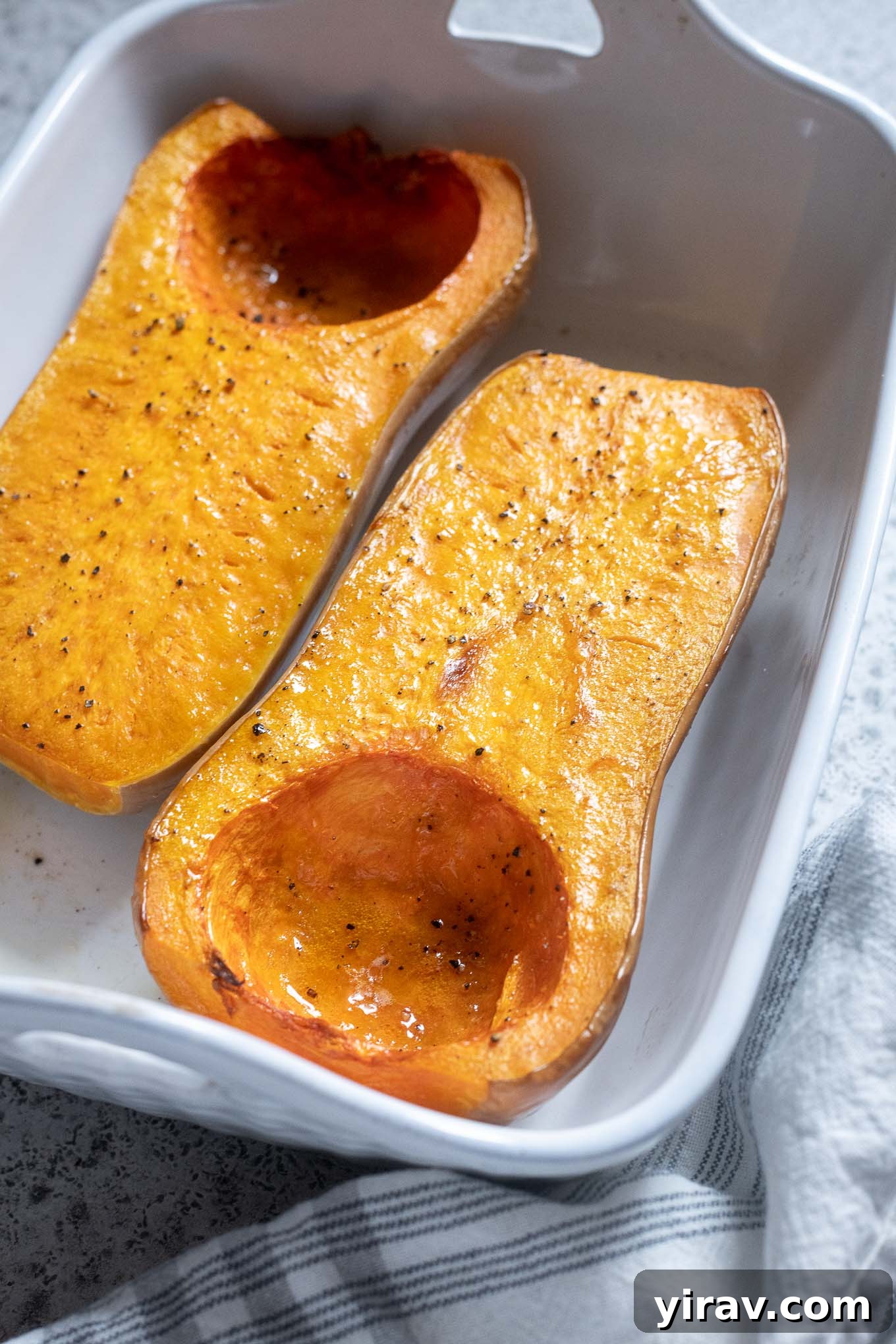
This comprehensive guide reveals the secret to effortlessly preparing Roasted Whole Butternut Squash, transforming it into a versatile ingredient ready for a myriad of delicious recipes. Say goodbye to the struggles of peeling and chopping raw butternut squash! This tutorial simplifies the process, walking you through how to halve this nutritious winter squash, roast it to tender, velvety perfection, and unleash its full culinary potential in both sweet and savory dishes.
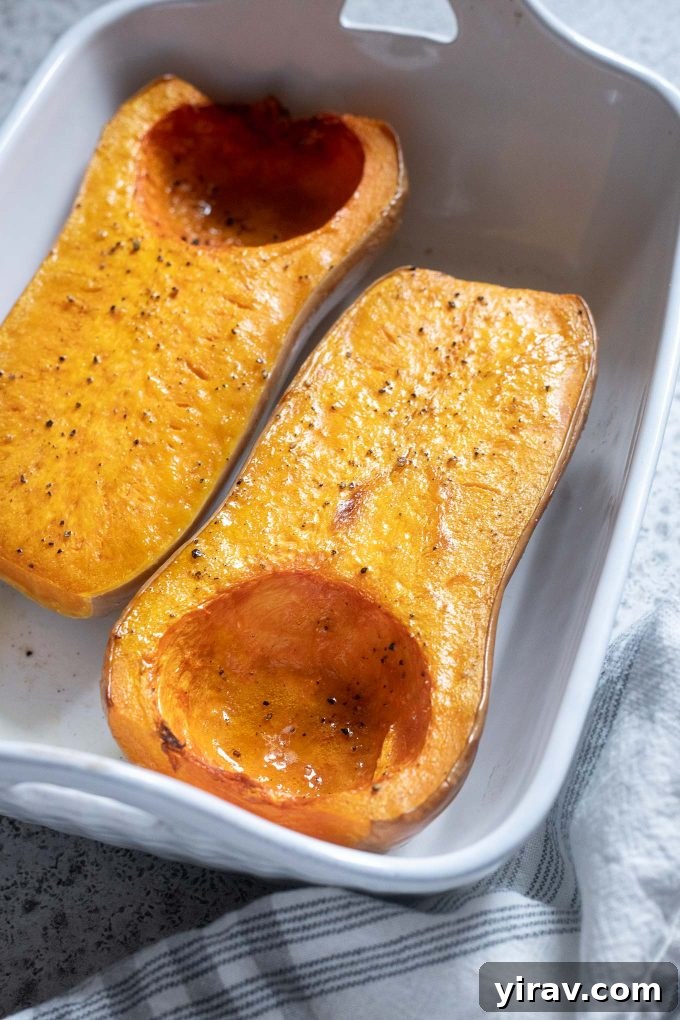
Why Roasting Butternut Squash Whole is a Game Changer
My journey with butternut squash began years ago with a luxurious bowl of creamy butternut squash soup at a charming restaurant. That first taste was truly heavenly, inspiring me to recreate its magic at home and incorporate this incredible winter squash into countless recipes ever since.
While I adore using cubed butternut squash in dishes like my vibrant Fall Harvest Salad and the comforting Cinnamon Roasted Butternut Squash, which even led me to create a detailed tutorial on how to peel and cut butternut squash, this method of roasting the squash whole has completely revolutionized my cooking.
The beauty of this Roasted Whole Butternut Squash technique lies in its incredible simplicity. There’s no need for tedious peeling or pre-chopping. Instead, the squash is simply halved and roasted, allowing its natural sugars to caramelize and its flesh to become incredibly soft and scoopable. Once roasted, the tender flesh can be easily scooped out, mashed with a potato masher for a rustic texture, or puréed until silky smooth. This opens up an entirely new realm of possibilities, from hearty stews and vibrant salads to fluffy muffins, savory pies, and much more.
The options truly are endless, and the best part is how incredibly easy and hands-off the preparation is. This method not only saves you time and effort but also yields a superior flavor and texture compared to pre-packaged or canned options, making it a must-try for any home cook looking to embrace the goodness of winter squash.
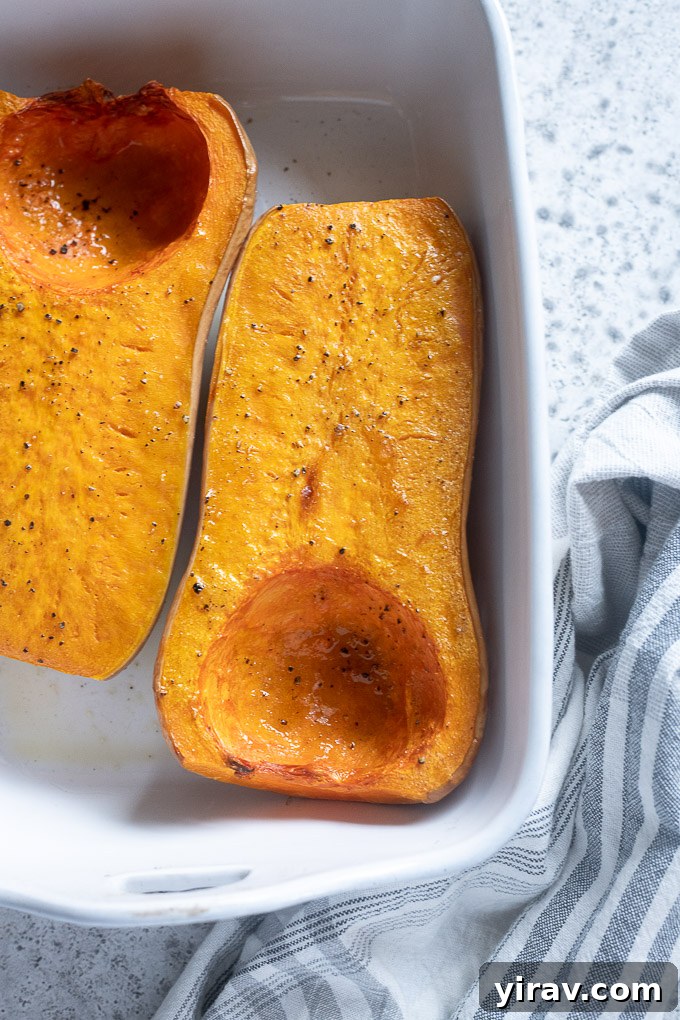
Table of Contents
Benefits of Roasting Butternut Squash Whole:
- Unmatched Flavor and Texture: Roasting whole caramelizes the squash’s natural sugars, resulting in a deeper, richer flavor and a luxuriously velvety, tender texture that far surpasses any canned purée. It’s a taste experience that truly celebrates the squash.
- Minimal Effort, Maximum Reward: With just about 10 minutes of active prep time, this method is incredibly efficient. You simply halve, season, and roast, allowing the oven to do most of the work. A typical 3 lb squash yields approximately 3 cups of delicious, ready-to-use flesh.
- Culinary Versatility at Its Best: This recipe is a foundational step for countless dishes. Whether you want a smooth purée for baking, a chunky mash for savory recipes, or simply seasoned roasted halves, this method provides the perfect base. It seamlessly integrates into everything from soups and casseroles to muffins and pies.
- Excellent for Meal Prep: Prepare a batch of roasted butternut squash at the beginning of the week, and you’ll have a healthy, flavorful ingredient ready to enhance your meals. It stores beautifully, keeping fresh in the refrigerator for up to 5 days, or it can be frozen for up to 3 months, making healthy eating convenient.
- Nutrient-Rich Goodness: Butternut squash is a powerhouse of vitamins and minerals, including high levels of Vitamin A and C, potassium, and fiber. Roasting it whole helps to preserve these vital nutrients while making it incredibly palatable.
Essential Ingredients
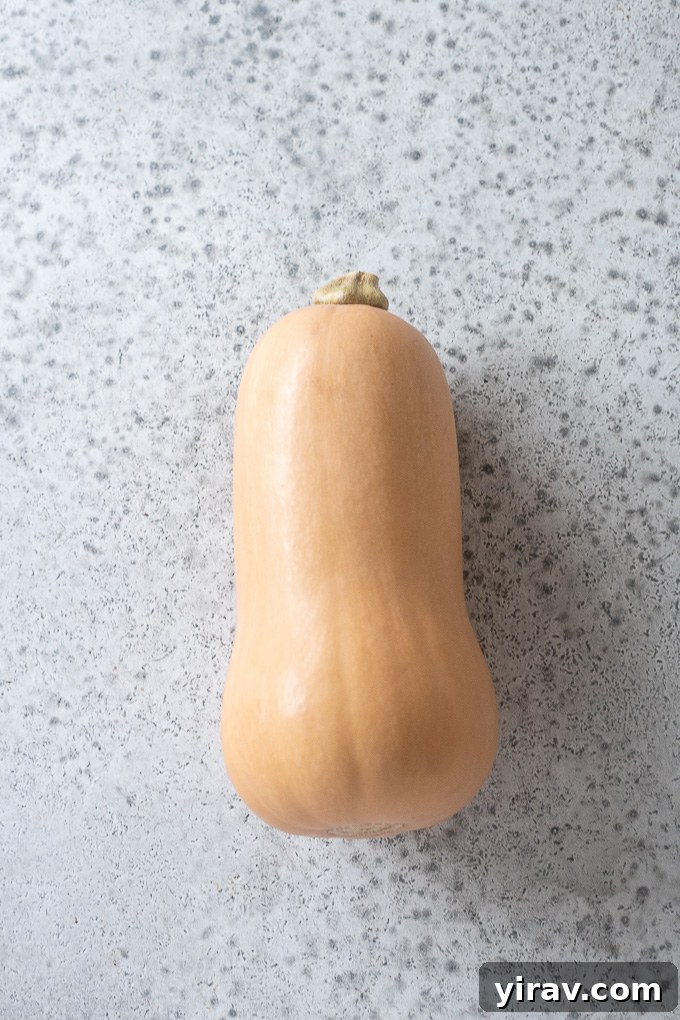
Achieving perfectly roasted butternut squash requires just a few simple ingredients, allowing the natural flavor of the squash to truly shine.
- Butternut Squash: The star of our recipe! When selecting your squash, look for one that feels firm and heavy for its size, indicating a good moisture content and dense flesh. Avoid any squash with soft spots, bruises, or significant discoloration. For this recipe, a 3 lb squash is recommended, as it typically yields about 3 cups of cooked flesh or purée, making it ideal for a variety of applications.
- Olive Oil: A light coating of olive oil helps the squash cook evenly, prevents sticking, and promotes that beautiful caramelization on the cut surfaces. While extra virgin olive oil is a great choice for its flavor, feel free to use any cooking oil you have on hand, such as avocado oil or grapeseed oil, depending on your preference.
- Seasoning: For a classic, versatile base, simple salt and black pepper are all you need to enhance the squash’s natural sweetness. However, don’t hesitate to experiment! Consider a dash of cinnamon or nutmeg for a sweeter profile, or add a pinch of smoked paprika, garlic powder, or dried sage for a savory twist. The possibilities are endless to match your desired outcome.
Step-by-Step Guide: Roasting Whole Butternut Squash
Roasting butternut squash halves is incredibly straightforward, but the initial step of cutting this sturdy squash can sometimes feel a bit challenging. Don’t worry, I’ve outlined two safe and effective methods for halving your squash, so you can choose the one that feels most comfortable and secure for you.
Pro Tip: Oven temperatures can vary significantly. While a 3 lb squash typically takes around 60 minutes, always check for doneness after 45-50 minutes. The squash is ready when its flesh is incredibly tender and a knife can be inserted with very little resistance.
For detailed measurements and full instructions, please refer to the recipe card below.
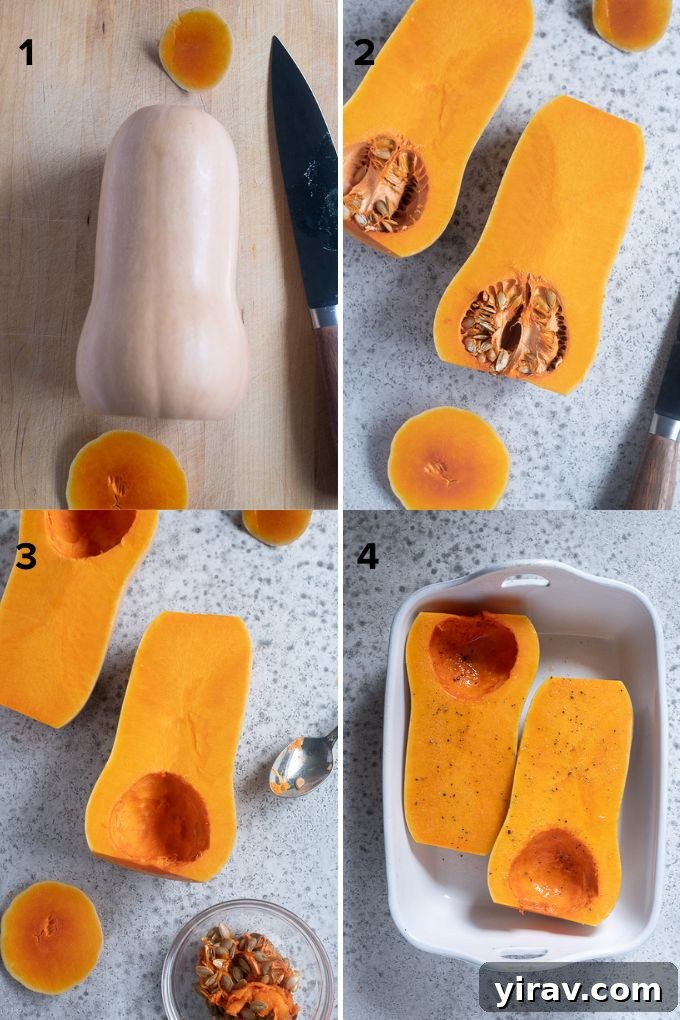
- Prepare the Squash: Begin by placing your butternut squash on a sturdy cutting board. Using a sharp, chef’s knife, carefully cut off about half an inch from both the top (stem end) and bottom (blossom end) of the squash. This creates stable, flat surfaces, making the next step much safer.
- Halve the Squash – Choose Your Method:
- Method 1 (Upright): Stand the squash upright on one of its flat ends. Carefully insert the tip of your sharp knife into the middle of the squash, pressing down firmly. Use a gentle rocking motion, pushing the blade deeper through the squash until it is completely cut in half lengthwise.
- Method 2 (Horizontal): Alternatively, lay the squash on its side on the cutting board. Starting from the longer, thinner end, carefully cut the squash in half lengthwise using a gentle sawing or rocking motion. This method can sometimes feel more secure for those less comfortable with the upright cutting technique.
- Remove Seeds and Pulp: Once the squash is halved, use the tip of a large spoon or an ice cream scoop to thoroughly scrape out the stringy pulp and seeds from the center cavity of each half. You can discard these, or save the seeds to roast separately for a crunchy snack!
- Season and Arrange: Place the squash halves, cut-side up, in a large baking dish or on a rimmed baking sheet. A rimmed sheet is helpful to catch any juices. Drizzle or brush the cut surfaces generously with olive oil. Season evenly with salt and freshly ground black pepper. Feel free to add any other desired seasonings at this stage, such as a sprinkle of garlic powder, dried herbs, or a touch of brown sugar for a sweeter profile.
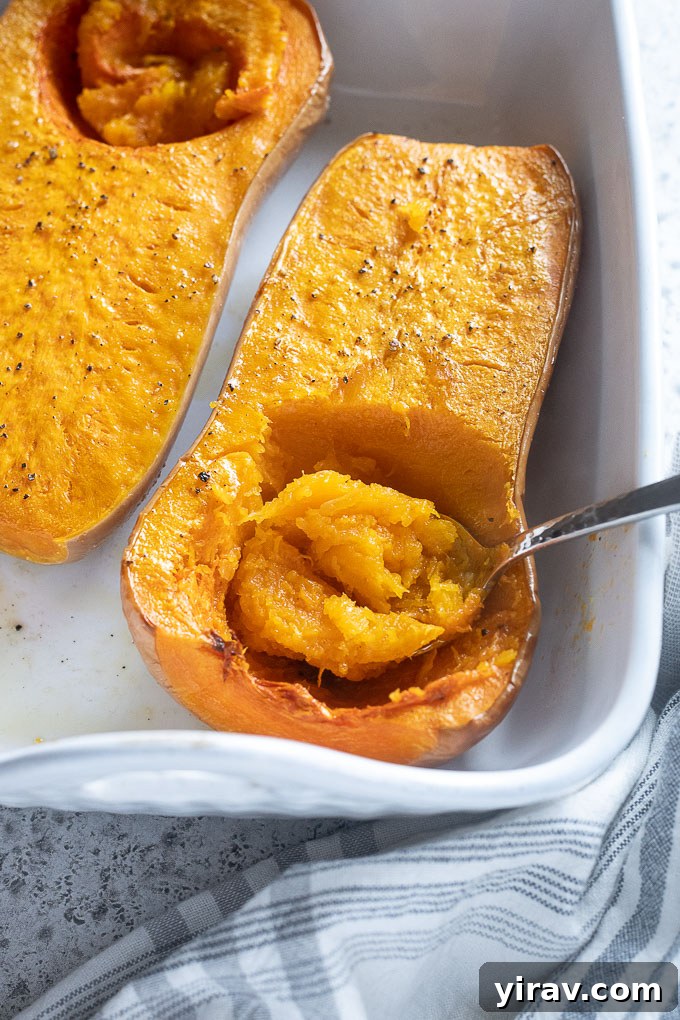
- Roast to Perfection: Bake the squash in a preheated oven at 400°F (200°C) for approximately 50-60 minutes. The exact cooking time will depend on the size of your squash. You’ll know it’s perfectly roasted when the flesh is incredibly tender and easily pierced with a fork or the tip of a knife. The edges should also be lightly caramelized and slightly browned.
- Cool and Scoop: Once tender, remove the baking dish from the oven. Allow the roasted squash halves to cool slightly so they are comfortable enough to handle. Using a large spoon, carefully scoop the tender, cooked flesh out of the skin and transfer it to a bowl. The skin will be discarded.
- Enjoy or Store: Your delicious roasted butternut squash is now ready to be used in your favorite recipes or stored for later.
Expert Tips for Perfect Roasted Squash
While roasting butternut squash is generally simple, a few expert tips can ensure your results are consistently perfect:
- Doneness is Key: The most crucial aspect of perfectly roasted squash is ensuring it’s cooked until truly tender. Test doneness by inserting the tip of a knife or a fork into the thickest part of the squash flesh. If it slides in with almost no resistance, your squash is ready. Undercooked squash will be firm and unappealing.
- Adjust Roasting Time for Size: A 3 lb squash is typically ready in 50-60 minutes at 400°F. However, smaller squash (e.g., 2 lbs) might be done in as little as 40 minutes, while larger ones (4-5 lbs) could take up to 70-80 minutes. Start checking at the lower end of the time range for your squash size.
- Season Generously: Don’t be shy with salt and pepper! These simple seasonings truly bring out the natural sweetness and depth of flavor in butternut squash. For added complexity, consider a sprinkle of cinnamon, nutmeg, sage, thyme, or even a pinch of cayenne pepper for a subtle kick.
- Prevent Sticking: Always line your baking sheet with parchment paper or use a non-stick baking dish. While olive oil helps prevent sticking, a lined surface makes cleanup significantly easier and guarantees your perfectly roasted squash won’t adhere to the pan.
- Utilize the Residual Heat: After removing the squash from the oven, let it rest in the hot baking dish for 5-10 minutes. The residual heat will continue to cook it gently, ensuring maximum tenderness and allowing the flavors to meld.
Frequently Asked Questions
For this roasted whole butternut squash recipe, there is absolutely no need to peel the squash beforehand. This is one of the biggest time-savers! The squash is simply halved, brushed with olive oil, and roasted until incredibly tender. Once cooked, the flesh can be easily scooped out with a spoon, leaving the tough skin behind. Only peel if you plan to cube the raw squash for other recipes.
A typical 3-pound butternut squash, cut in half, will generally take around 50-60 minutes to become perfectly tender when roasted at 400°F (200°C). Smaller squash may cook faster (around 40-45 minutes), while larger ones might require up to 70-80 minutes. Always check for doneness by piercing the thickest part of the flesh with a fork or knife.
Once your roasted butternut squash has cooled completely, store it in an airtight container in the refrigerator for up to 5 days. You can either store the halves whole and scoop out the flesh as needed, or scoop out all the flesh at once and store it mashed or puréed. This makes it perfect for meal prepping throughout the week.
Yes, absolutely! Roasted butternut squash freezes beautifully. To freeze, scoop out the cooled flesh, then mash or purée it. Transfer the mashed or puréed squash into freezer-safe bags or containers, leaving a little headspace. It can be stored in the freezer for up to 3 months. Thaw in the refrigerator overnight before using in your recipes.
Don’t throw away those seeds! Butternut squash seeds can be rinsed, dried, and roasted just like pumpkin seeds for a delicious and nutritious snack. Toss them with a little oil, salt, and your favorite spices, then roast at 300°F (150°C) for 15-20 minutes until golden and crispy.
Yes, this recipe is fantastic for meal prep. You can roast the butternut squash ahead of time, cool it, and store the scooped-out flesh in the refrigerator for up to 5 days. This makes it incredibly convenient to add to weeknight meals or bake into desserts without extra effort on busy days.
Creative Serving & Usage Ideas
The versatility of roasted whole butternut squash is truly remarkable. Once you have that tender, flavorful flesh, the culinary possibilities are endless!
- Savory Soups and Stews: Transform the puréed squash into a creamy, comforting Butternut Squash and Potato Leek Soup or use mashed squash to thicken and enrich hearty dishes like my Pumpkin Chili, offering a beautiful depth of flavor and vibrant color.
- Elevated Side Dishes: Prepare a truly festive and flavorful side dish with my Mashed Butternut Squash recipe, complete with warm spices and a hint of sweetness. It’s perfect for holidays or a comforting weeknight meal.
- Creamy Risotto and Pasta: Stir the mashed or puréed squash into a rich Baked Butternut Squash Risotto for an autumnal twist, or incorporate it into a creamy sauce for pasta, adding both flavor and a silky texture.
- Wholesome Baked Goods: Once puréed, this roasted squash is an ideal substitute for canned pumpkin purée in all your favorite baking recipes. Imagine moist butternut squash muffins, tender biscuits, delicate scones, or classic pies. Follow the simple purée instructions from my Butternut Squash Casserole to create a smooth, velvety purée perfect for these sweet applications.
- Healthy Spreads and Dips: Blend the roasted squash with chickpeas, tahini, lemon juice, and spices to create a unique and flavorful butternut squash hummus. It’s a delightful alternative to traditional hummus and pairs wonderfully with pita bread or fresh vegetables.
- Seasonal Salads: While this method yields soft flesh, you can gently break it into chunks and add it to warm grain bowls or autumn salads for a soft, sweet component.
Storage and Freezing Roasted Butternut Squash
- Refrigerator Storage: Once the roasted butternut squash has completely cooled, transfer the scooped-out flesh into an airtight container. It will keep fresh in the refrigerator for up to 5 days, making it perfect for preparing in advance for meal planning throughout the week.
- Freezer Storage: Butternut squash is excellent for freezing, allowing you to enjoy its flavor months later. To freeze, mash or purée the cooled squash flesh. Portion it into freezer-safe bags (laying them flat to save space) or freezer-safe containers. Leave a small amount of headspace in containers as liquids expand when frozen. It can be stored in the freezer for up to 3 months. When ready to use, simply thaw overnight in the refrigerator or gently reheat from frozen for savory dishes.
- Reheating Tips: If reheating from the refrigerator, gently warm the mashed or puréed squash in a saucepan over low heat, stirring occasionally, or microwave in short intervals until heated through. Add a splash of broth or water if it seems too thick.
More Butternut Squash Recipes:
If you’ve fallen in love with butternut squash, explore these other fantastic recipes that celebrate this versatile winter vegetable:
- 30+ Butternut Squash Recipes
- Autumn Vegetable Soup
- Butternut Squash Enchiladas by Two Peas and Their Pod
- Butternut Squash Turkey Chili
- Butternut Squash Quinoa Salad
- Mashed Butternut Squash
- Roasted Butternut Squash and Pear Soup
Did you try this recipe? If so, be sure to leave a review below and tag me @flavorthemoments on Facebook and Instagram!

Roasted Whole Butternut Squash
Pin Recipe
reviews
Leave a Review »
Ingredients
- 3 lb. butternut squash washed and dried
- 2 tablespoons olive oil
- 1/2 teaspoon salt or to taste
- 1/4 teaspoon black pepper or to taste
Instructions
-
Preheat the oven to 400 degrees F (200 degrees C). Lay the washed and dried butternut squash on a cutting board and carefully cut off the top and bottom with a sharp knife.
-
Stand the squash upright and insert the blade in the middle, using a gentle rocking motion to cut it in half lengthwise. Alternatively, lay the squash on the cutting board and cut it in half lengthwise starting at the longer end, using a gentle rocking motion for control.
-
Using the tip of a large spoon or an ice cream scoop, thoroughly scoop out the seeds and stringy pulp from each squash half. Discard the pulp and seeds.
-
Place the squash halves, cut-side up, in a large baking dish or on a rimmed baking sheet. Brush the cut surfaces generously with olive oil and season evenly with salt and black pepper to taste.
-
Bake uncovered for about 50-60 minutes, or until the squash is very tender and the tip of a knife can be inserted easily into the thickest part of the flesh. Cooking time may vary based on the size of your butternut squash.
-
Remove from the oven and allow the squash to cool slightly until it is comfortable enough to handle. Using a large spoon, scoop out the tender roasted flesh from the skin and place it in a bowl.
-
The roasted butternut squash is now ready to be used in your favorite recipes (mashed, puréed, or in chunks) or refrigerated for later use. Enjoy!
Notes
- Oven Variability: All ovens vary, so it’s always a good idea to check your squash for doneness around the 50-minute mark. If your squash is on the smaller side (e.g., 2 lbs), check even earlier, perhaps after 40 minutes.
- Yield: A 3 lb butternut squash typically yields approximately 3 cups of delicious, cooked flesh.
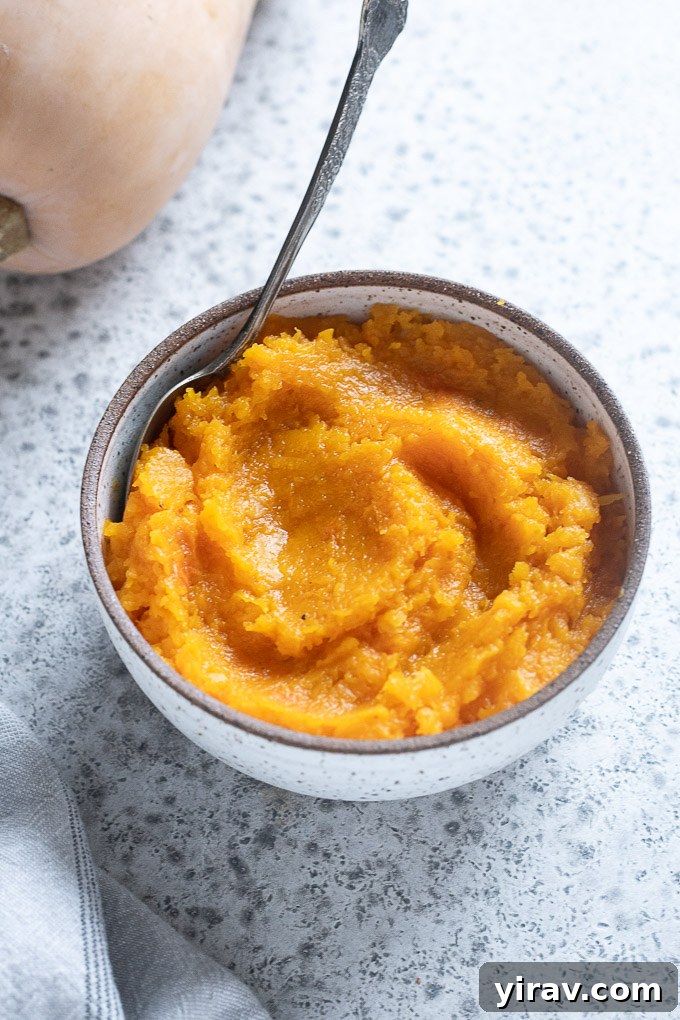
- Making Purée: To create a smooth butternut squash purée, simply follow the instructions provided in my Butternut Squash Casserole recipe. This velvety purée is excellent for use in baking recipes such as muffins, pies, cakes, and more.
- Mashed Squash Uses: For a more rustic texture, mash the roasted squash flesh with a potato masher. This mashed squash can be stirred into risotto or chili for a rich flavor boost, or it can form the base of a creamy butternut squash soup.
- Storage: Store cooled, cooked butternut squash in an airtight container in the refrigerator for up to 5 days. For longer storage, the mashed or puréed squash can be frozen for up to 3 months.
Nutrition
Nutrition is estimated using a food database and is only intended to be used as a guideline for informational purposes.