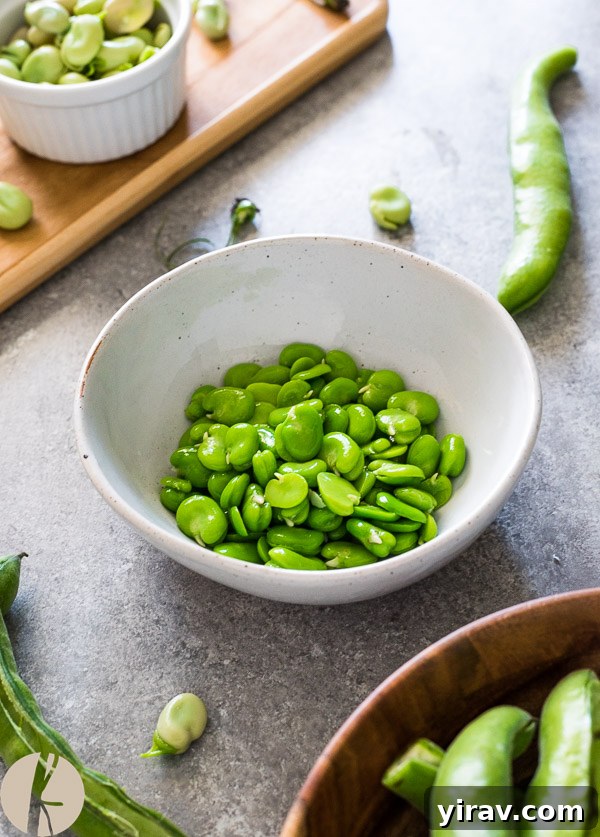
How to Cook Fava Beans: A Spring Delicacy Guide is a comprehensive, step-by-step tutorial designed to help you master the art of preparing these exquisite legumes. When cooked to perfection, fava beans are tender, creamy, and undeniably one of spring’s finest culinary offerings!
Unlocking the Potential of Fava Beans
If you’re like many home cooks, you might have often walked past fava beans at your local farmer’s market or supermarket, perhaps due to a lack of familiarity. These rustic, oversized pea pods can appear quite mysterious, leading many to wonder what they are or how to incorporate them into meals.
For years, I was one of those people, instinctively opting for more familiar English peas, completely unaware of the unparalleled culinary treat I was missing out on. Fava beans possess a unique charm and a delicate flavor that truly sets them apart.
Over time, I’d come across numerous fava bean recipes that piqued my interest. However, reading about their seemingly labor-intensive preparation always deterred me from trying them. It wasn’t until I encountered them firsthand in cooking school that I finally took the plunge and discovered their incredible potential.
Why Fava Beans Are a Culinary Delight
My very first experience with freshly prepared fava beans was nothing short of a revelation. If you’ve ever savored the sweetness of freshly shelled English peas, you understand what a special treat they are. In my personal opinion, fava beans elevate that experience by about tenfold. Their texture is incomparably delicate and creamy, and their flavor simply tastes like the essence of spring itself.
My cooking instructor once shared that whenever she spots a fava bean dish on a restaurant menu, she always orders it without hesitation, precisely because of the nuanced preparation involved. I must admit, I’ve become a copycat; I now do the very same thing! This shared sentiment among those who appreciate fine food speaks volumes about the bean’s unique appeal.
Needless to say, I now actively seek out these beautiful legumes at the farmer’s market during their brief season. Most years, I even plant them in my own garden, allowing me to harvest a generous bounty that I can then freeze and enjoy throughout the entire year. This dedication is a testament to how truly rewarding and delicious fava beans are.
The Health Benefits of Fava Beans
Beyond their delightful taste and luxurious texture, fava beans are also a nutritional powerhouse, making them a fantastic addition to any balanced diet. These humble legumes are an excellent source of plant-based protein, which is essential for muscle repair and growth, and dietary fiber, crucial for digestive health and maintaining stable blood sugar levels. Incorporating fava beans into your meals can contribute significantly to your daily fiber intake, promoting satiety and aiding in weight management.
Fava beans are also rich in an array of vital vitamins and minerals. They are particularly high in folate (Vitamin B9), which plays a critical role in cell growth and function, and manganese, an important antioxidant and enzyme co-factor. Additionally, they provide a good source of copper, phosphorus, iron, and various B vitamins, all of which contribute to overall well-being and energy metabolism. Enjoying fava beans during their peak season is a delicious way to boost your nutrient intake and support a healthy lifestyle.
Choosing and Storing Fresh Fava Beans
To ensure you get the best out of your fava beans, selection and proper storage are key. When at the market, look for pods that are firm, plump, and bright green. Avoid any pods that appear dry, shriveled, or have brown spots, as these indicate older beans. Generally, smaller pods tend to yield more tender beans, but larger pods can also be excellent if they are fresh.
Once you bring your fava beans home, store them in their pods in a paper bag or a loosely sealed plastic bag in the crisper drawer of your refrigerator. They are best consumed within three to five days of purchase for optimal flavor and texture. The longer they sit, the tougher their outer skins can become, and their delicate sweetness may diminish. Prioritizing fresh favas ensures the most rewarding cooking experience.
The Essential Guide to Cooking Fava Beans
Preparing and cooking fava beans involves a meticulous, two-part process: first, shelling them from their robust outer pods, and then, crucially, removing their waxy, sometimes tough, outer skin. While this might sound like a bit of work, the result is an incredibly delicate and creamy bean that makes every step worthwhile. Some individuals might not mind eating the waxy outer skin, but once you experience the actual bean in its purest, most tender form, you’ll likely agree that leaving that tougher layer on would be a culinary misstep.
Try them peeled, and you will undoubtedly understand the difference. The inner bean’s exquisite texture and subtle sweetness are simply unparalleled, making the effort to double-shell an essential step for an optimal dining experience. It transforms a good ingredient into an extraordinary one.
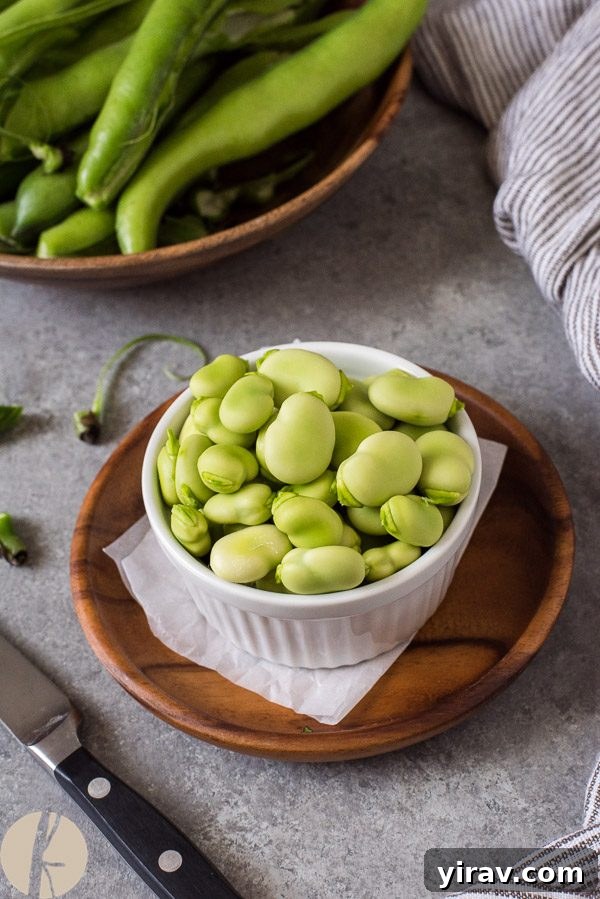
What You’ll Need:
- Fresh fava beans (1 pound in pod, yields about 1 cup shelled)
- Large pot for boiling water
- Large bowl of ice water
- Pinch of salt
- Paring knife (optional, for initial shelling)
Step-by-Step Instructions:
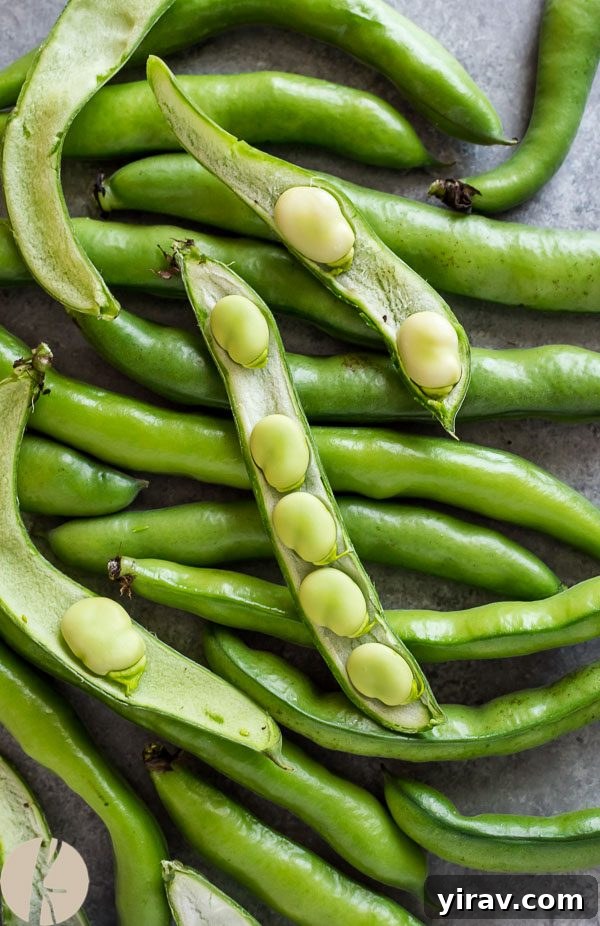
- Shelling the Beans: Begin by removing the fava beans from their pods. You can do this by either pulling back the top stem and “unzipping” the pod along its seam, much like opening a zipper, or by very gently using the tip of a small paring knife to slice along the seam and open them up. Carefully extract all the vibrant green beans. It’s important to note that one pound of fava beans in their pods typically yields only about one cup of actual, edible beans, so plan your quantities accordingly.
- Blanching: Next, bring a medium saucepan of water to a rolling boil. Add a generous pinch of salt to the boiling water. Carefully add the shelled fava beans to the boiling water. Let them simmer for precisely 1 minute. If your intention is to create a very creamy puree, you may extend the cooking time slightly to 3-4 minutes, depending on the size of the beans. This brief blanching helps to loosen the waxy outer skins, making the next step much easier.
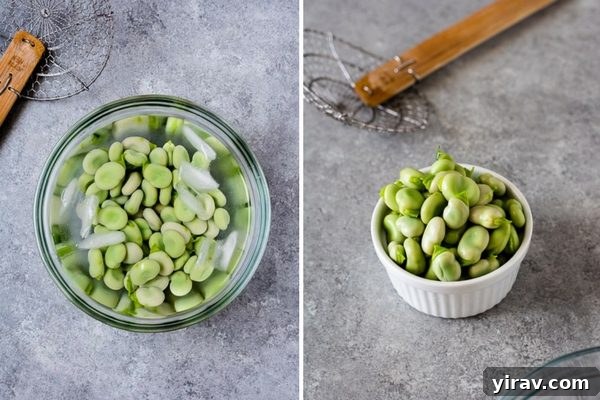
- Shocking: Immediately after the 1-minute blanching, drain the fava beans thoroughly using a colander. Without delay, transfer the hot beans into a large bowl filled with ice water. This crucial “shocking” process rapidly stops the cooking, preventing the beans from becoming overcooked and mushy. More importantly, it helps to set and preserve that beautiful, trademark bright green color that makes fava beans so visually appealing. Allow them to cool completely for a few minutes.
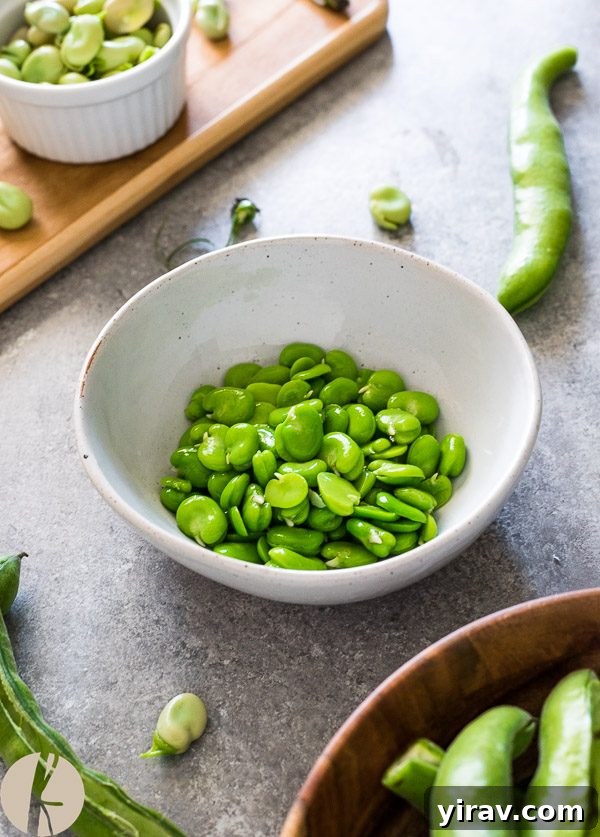
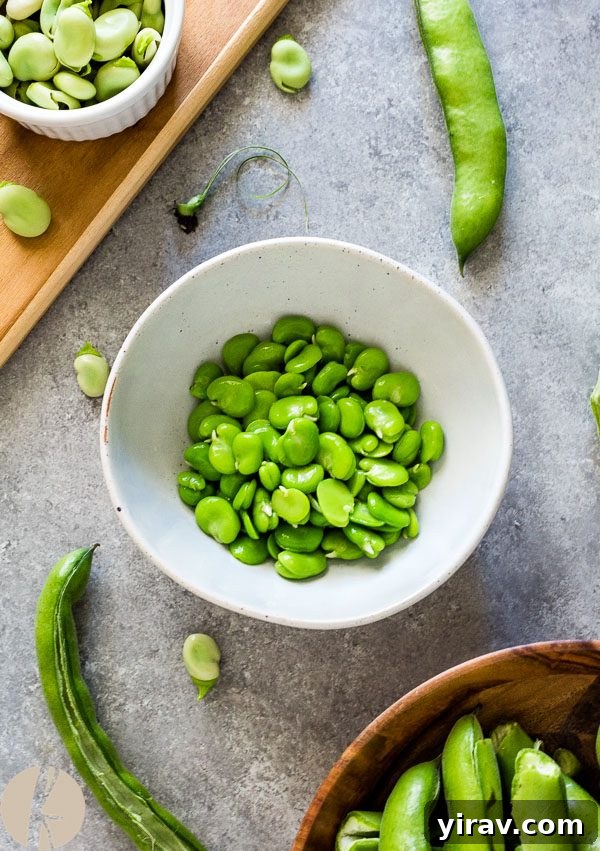
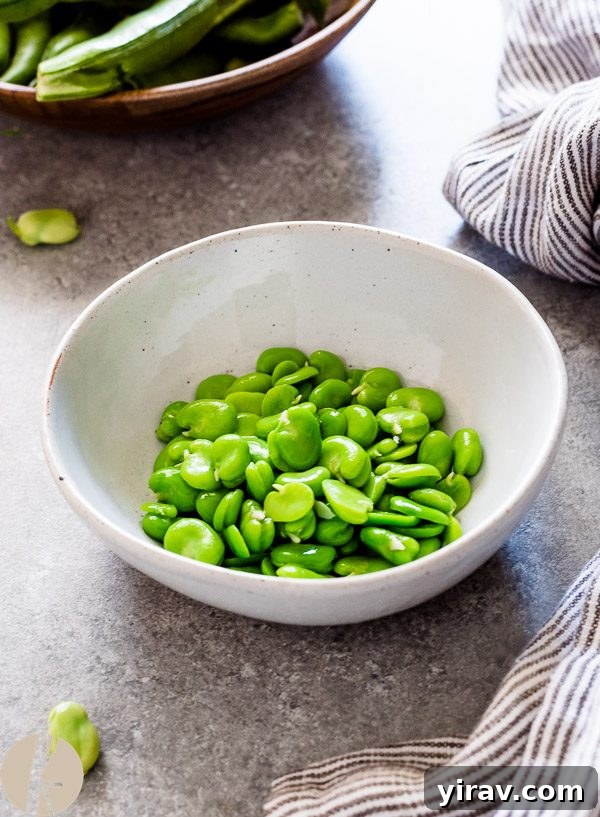
- Double Shelling (Peeling the Inner Skin): Once the beans are cool enough to handle, drain them from the ice water. Now, gently squeeze each fava bean between your thumb and forefinger. The blanched, waxy outer skin should easily slip off, revealing the tender, bright green, and intensely creamy inner bean. This “double shelling” is the final and most rewarding step in preparation.
- Ready to Use: Your perfectly prepped fava beans are now ready to be enjoyed! They can be incorporated into a wide variety of recipes.
Cooked fava beans are incredibly versatile and can be used in almost any dish where you might typically use peas. Their unique flavor and creamy texture elevate a wide array of culinary creations:
- Pastas: Stir them into a one-pot pasta primavera for an added burst of seasonal freshness.
- Risottos: Enhance the richness of spring vegetable risottos, adding a delicate sweetness and vibrant color.
- Soups and Salads: Incorporate them into light spring soups or refreshing salads for extra protein and texture. They are a staple ingredient in traditional Peruvian Solterito Salad.
- Purees and Dips: Blend them into a smooth, flavorful purée, or use them as a unique base for homemade hummus. Fava bean purees are exceptionally creamy and delicious.
- Simple Sides: Simply sauté them with a knob of butter, a touch of garlic, and fresh herbs like mint or dill for an elegant and effortless side dish.
The intoxicatingly vibrant green color of these beans makes them one of the most perfect ingredients to represent and celebrate the spring season. Their availability is often short-lived, so make sure to get them while you can!
Fava beans also freeze exceptionally well, extending their enjoyment beyond spring. I once purchased a batch and didn’t get around to using them before a trip, so I stored them in the freezer, pods and all. When I eventually cooked them, they were just as great, so keep this convenient storage tip in mind!
Frequently Asked Questions About Fava Beans
- Can you eat the fava bean skin?
- While the inner skin is technically edible, it can be tough and fibrous, detracting from the delicate flavor and creamy texture of the actual bean. Most culinary experts recommend removing it for the best eating experience.
- What’s the difference between fava beans and broad beans?
- Fava beans and broad beans are two names for the same legume, Vicia faba. The term used often depends on regional dialect or culinary tradition.
- Why is blanching important for fava beans?
- Blanching the fava beans in boiling water briefly, then shocking them in ice water, helps to loosen the tough outer skin, making it much easier to peel. It also sets their vibrant green color and stops the cooking process.
- How long do fresh fava beans last?
- In their pods, fresh fava beans can be stored in the refrigerator for about 3-5 days. Once shelled and peeled, they are best used within 1-2 days or frozen for longer preservation.
- Can fava beans be eaten raw?
- While some small, very young fava beans can be eaten raw, it’s generally recommended to cook them. Raw fava beans can be tough and may cause digestive upset in some individuals. Always peel them before consuming raw.
How To Cook Fava Beans
Servings: 4
Prep Time: 15 mins
Cook Time: 1 min
Total Time: 16 mins
This step-by-step tutorial details the simple yet crucial process involved in cooking fava beans to perfection. They’re tender, creamy, and truly one of spring’s finest offerings!
Pin Recipe
Leave a Review »
Ingredients
- 1 pound fava beans (in their pod)
- Pinch of salt
Instructions
- Shelling: Pull back on the tip of the pod to “unzip” it, opening the pod and removing the beans. Alternately, you can use the tip of a paring knife to gently open the pod along the seam, being careful not to cut the beans. You will have roughly one cup of fava beans after shelling one pound of pods.
- Blanching & Shocking: Fill a medium saucepan with water and bring it to a boil, then fill a small bowl with ice water and set aside. Add about a teaspoon of salt to the boiling water, and then add the shelled fava beans. Turn down the heat and simmer at a gentle boil for 1 minute. Drain immediately and pour the beans into the ice water to stop the cooking process and preserve their vibrant green color.
- Peeling: Drain the cooled beans from the ice water and gently squeeze each one from its waxy outer skin. The beans are now perfectly prepared and ready for your pastas, soups, salads, and purees!
Video Tutorial
Notes
- 1 pound of fava beans in the pod generally yields about 1 cup of shelled beans.
- You can shell fava beans and freeze them uncooked in their protective skin for up to 6 months. Thaw them slightly before cooking as directed. The beans might not be quite as green but will still be delicious.
- Once the skins are removed, shelled fava beans may be kept in an airtight container in the refrigerator for a few days, or frozen for longer storage.
- If you are making a puree, the fava beans may be boiled for a total of 3-4 minutes (depending on their size) before removing the skins to achieve an even creamier texture.
Nutrition
Serving: 1g, Calories: 125kcal, Carbohydrates: 22g, Protein: 9g, Fat: 1g, Saturated Fat: 1g, Sodium: 6mg, Potassium: 304mg, Fiber: 6g, Sugar: 2g, Vitamin A: 17IU, Vitamin C: 1mg, Calcium: 41mg, Iron: 2mg
Nutrition is estimated using a food database and is only intended to be used as a guideline for informational purposes.
Course: Cooking Techniques and Tips
Cuisine: American
Author: Marcie
All recipes and images © Flavor the Moments.
The preparation of fava beans is completely worth the effort – truly, the best things in life usually are. Their unique flavor and creamy texture elevate any dish they grace, making them a true seasonal treat!
Did you try this recipe? If so, be sure to leave a review below and tag me @flavorthemoments with the hashtag #flavorthemoments on Facebook and Instagram so I can see your delicious creations!