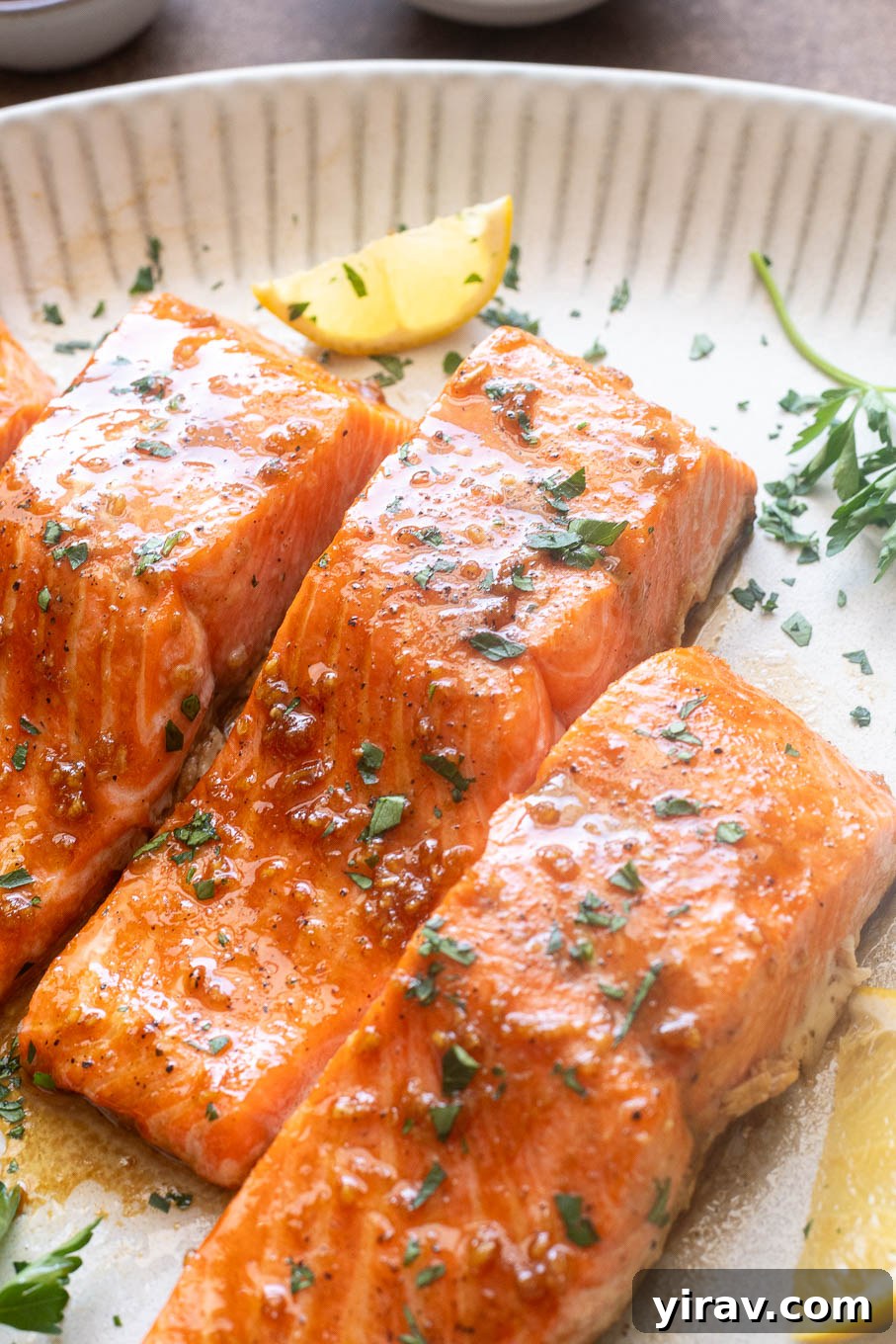
This Honey Garlic Salmon is one of my go-to recipes: few ingredients, no advance marinating, and no separate sauce to cook. The fillets bake up tender and flaky, coated in a sticky honey-garlic glaze that’s sweet, savory and ready in about 20 minutes.
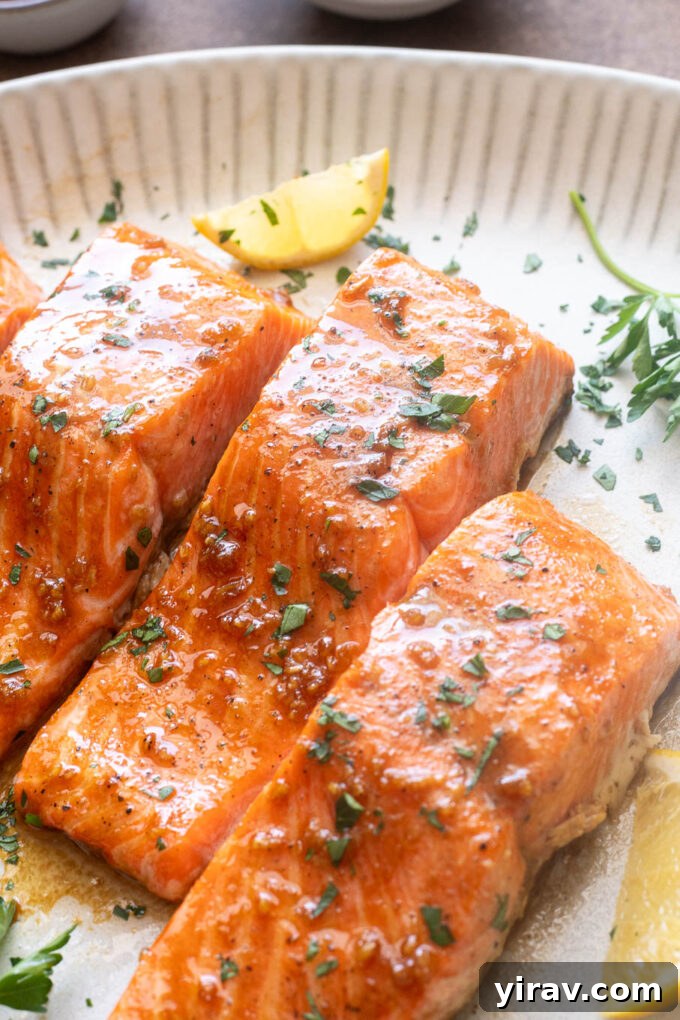
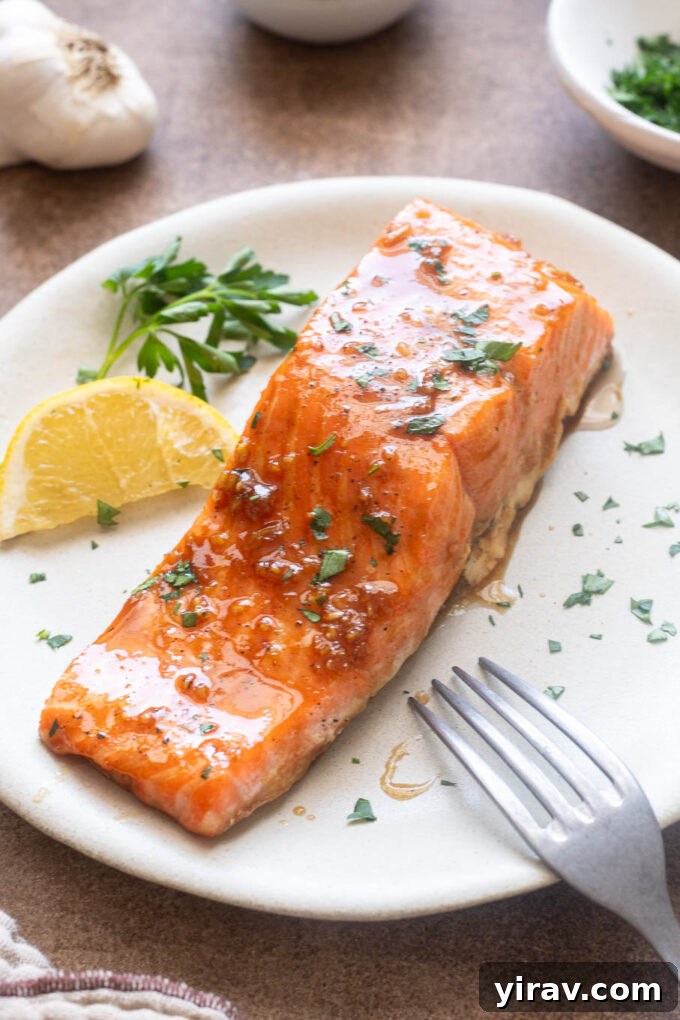
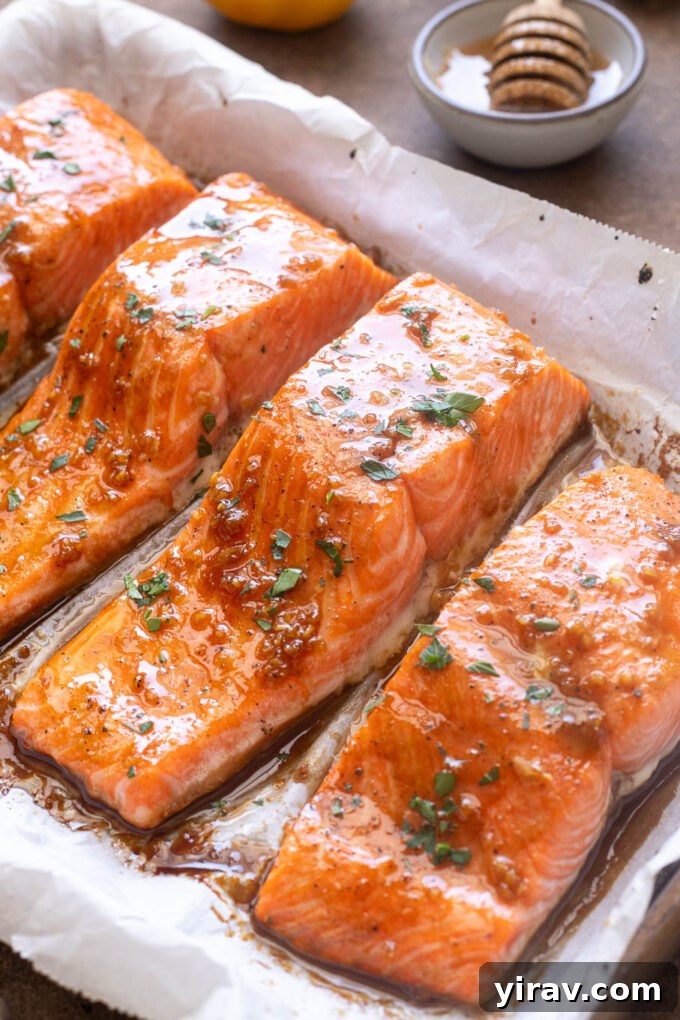
This Honey Garlic Salmon recipe gives you a fast, flavorful dinner without fuss. The glaze — made from honey, garlic, olive oil, Dijon mustard, lemon juice and coconut aminos (or soy sauce) — comes together in minutes. Half is brushed on before baking to infuse the fish with flavor, and the remaining glaze is added near the end so the surface becomes glossy and slightly caramelized.
Because there’s no marinating and no separate sauce to reduce, prep is minimal and the whole dish takes around 20 minutes from start to finish. It’s perfect for busy weeknights, yet impressive enough for guests.
If you love salmon, try other favorites like lemon-dijon baked salmon and garlic-butter salmon for more quick, delicious meals.
Why you’ll love this recipe
- Quick and easy. The salmon bakes in 11–15 minutes depending on thickness, and there’s no marinating required.
- Balanced flavor. Honey brings sweetness while Dijon, garlic, lemon and coconut aminos or soy sauce add savory depth.
- Simple ingredients. The glaze is made with pantry staples plus fresh garlic and lemon for brightness.
- Minimal cleanup. Everything cooks on one parchment-lined baking sheet.
Recipe ingredients
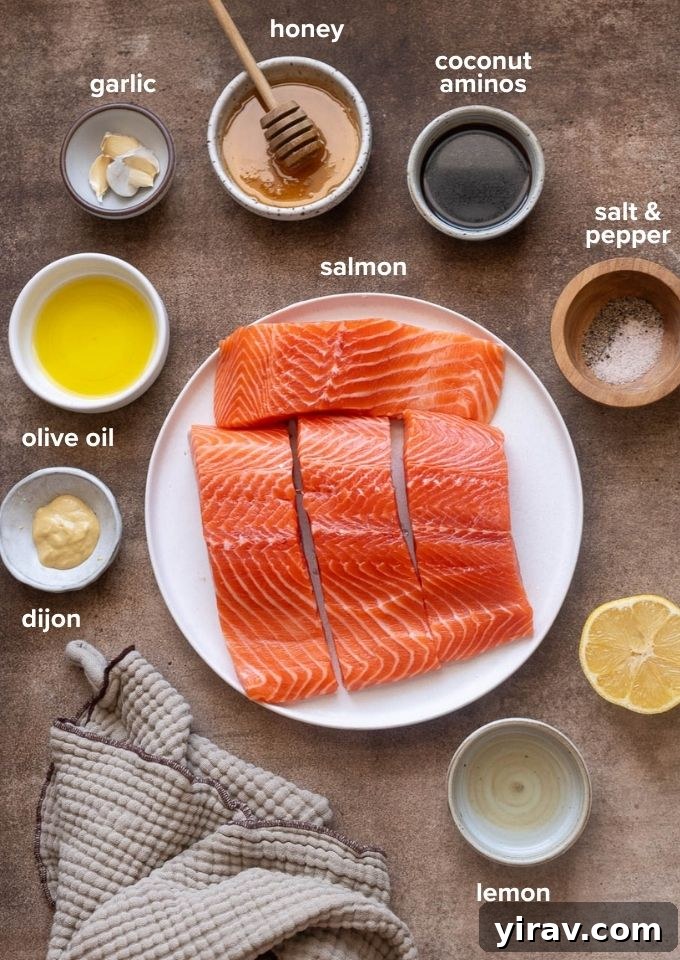
- Salmon. About 1½ pounds total (four 6-ounce fillets). Use fillets of similar thickness so they cook evenly.
- Honey. Creates the sticky, glossy finish and balances the savory elements.
- Coconut aminos or soy sauce. Adds umami; use what you have and reduce added salt if using soy sauce.
- Olive oil. Names the base of the glaze and adds richness; butter can be used instead if preferred.
- Lemon juice. Adds acidity to brighten the glaze.
- Dijon mustard. Brings tang and depth without overpowering the glaze.
- Garlic. Fresh garlic (about three cloves) gives the sauce its characteristic aroma and flavor.
- Salt and pepper. Season to taste; adjust salt based on whether you choose soy sauce or coconut aminos.
See the recipe card below for exact quantities and full instructions.
How to make this recipe
This recipe is straightforward and requires no advance marinating. The key steps are simple: bring the salmon to room temperature, whisk the glaze, brush half on and bake, then brush the remaining glaze and finish baking until the fish reaches your desired doneness.
Pro tip: Cooking time depends on fillet thickness. Start checking at 8–10 minutes and use an instant-read thermometer for best results.
Full step-by-step instructions are in the recipe card below.
Tips for success
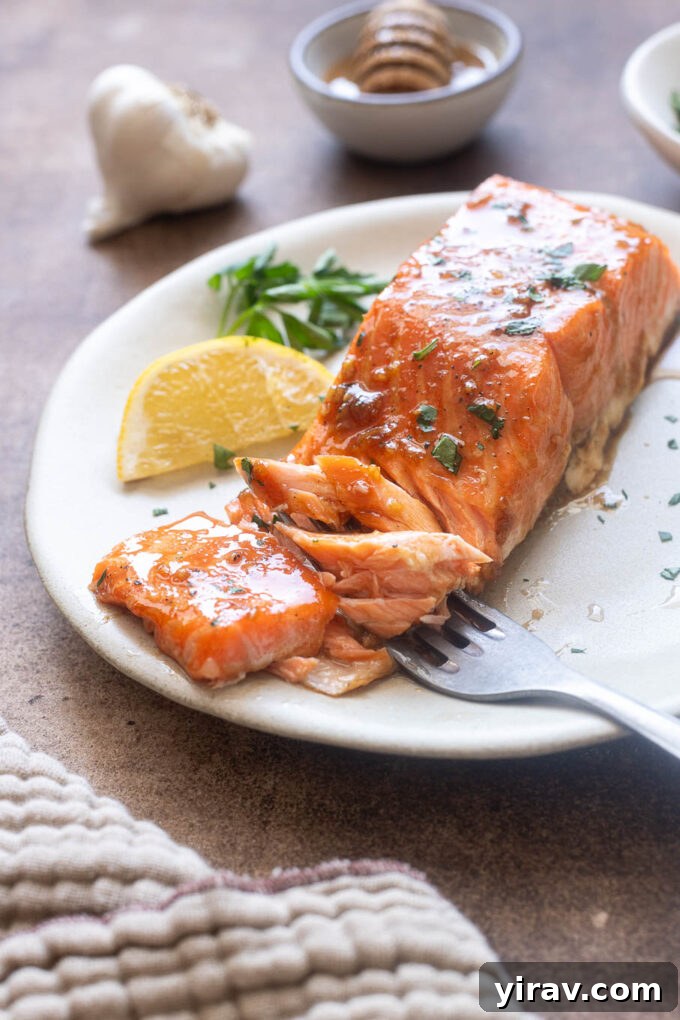
- Cook to medium for best texture. I prefer about 130°F in the thickest part for moist, tender salmon that flakes easily. The temperature rises a few degrees while resting. For a well-done fillet, follow USDA guidance of 145°F.
- Apply the glaze twice. Brushing the sauce on before and after partially baking ensures flavor absorption and a caramelized, glossy finish without burning the honey.
- Match fillet thickness. Choose pieces that are similar so they finish at the same time; thinner pieces will need less time.
- Adjust salt to the sauce you use. Soy sauce is saltier than coconut aminos, so reduce added salt if using soy.
Recipe FAQs
Yes. Place fillets skin-side down on the baking sheet and bake as directed; the skin helps protect the lower flesh from drying out.
Thaw completely and pat dry before seasoning and glazing. Removing excess moisture helps the glaze stick and reduces steaming.
Use an instant-read thermometer in the thickest part. For medium, aim for about 130°F; it will be tender and moist. The temperature rises slightly after removing from the oven.
Serving suggestions
Honey garlic salmon pairs well with many simple sides. Some great options are:
- Creamy coconut rice or quinoa to soak up extra sauce, with air-fried broccoli or a butter lettuce salad on the side.
- Yukon Gold mashed potatoes for a hearty plate, or garlic mashed cauliflower for a lighter alternative.
- Served on top of a grain or salad—such as a black rice salad—for a more substantial meal.
Storage and reheating
- Refrigerate leftovers in an airtight container for up to 3 days.
- Reheat gently in a 300°F oven until just warmed through, or microwave at reduced power in short intervals to avoid drying out.
More salmon recipes you’ll love:
- Air fryer salmon
- Blackened salmon with pineapple salsa and coconut rice
- Miso-orange salmon with coconut-mango rice
- Salmon Niçoise salad
- Slow roasted citrus salmon
Did you try this recipe? If so, leave a review below and tag @flavorthemoments on social media so I can see what you made.
Honey Garlic Salmon
reviews
Leave a Review »
Equipment
-
Rimmed baking sheet (lined with parchment or foil)
Ingredients
- 1.5 lbs. salmon fillets (4) 6 oz fillets; see notes
- 2 tablespoons olive oil or melted butter
- 2 tablespoons coconut aminos or reduced-sodium soy sauce/tamari
- 2 tablespoon honey
- 1 tablespoon fresh lemon juice
- 3 cloves garlic minced
- 2 teaspoons Dijon mustard
- 1/2 teaspoon sea salt or to taste
- 1/4 teaspoon black pepper
Instructions
-
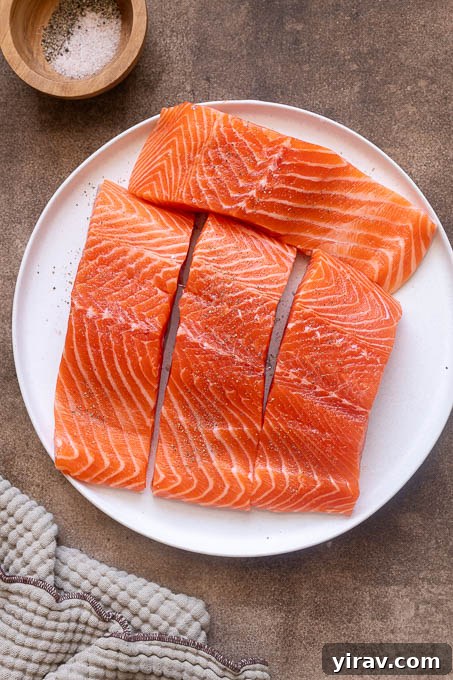
1. Let salmon rest at room temperature for 20–30 minutes before cooking so it cooks evenly. Remove any pin bones and pat the fillets dry with paper towels. Season lightly with salt and pepper.
-
2. Preheat the oven to 400°F (about 200°C).
-
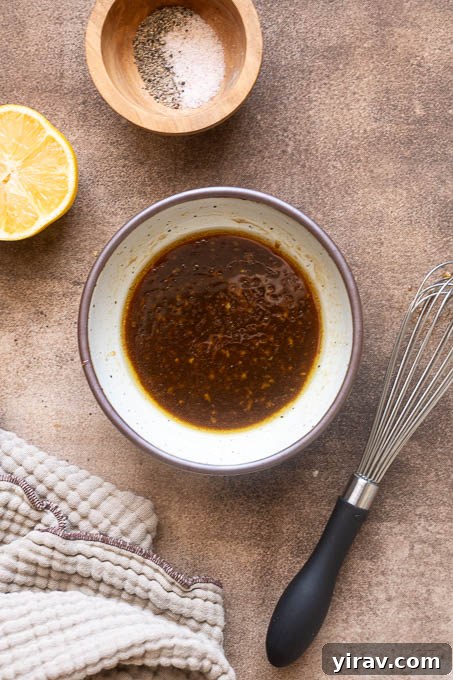
3. Whisk together olive oil, coconut aminos (or soy), honey, lemon juice, minced garlic, Dijon, salt and pepper in a medium bowl until combined.
-
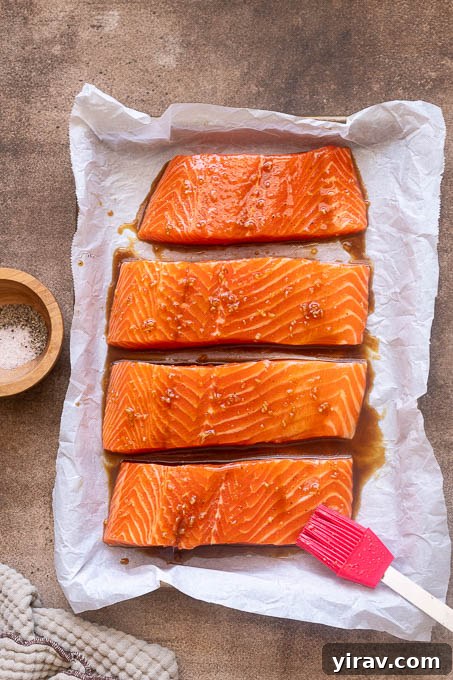
4. Place the fillets on a parchment-lined baking sheet. Brush half of the glaze over the tops. Bake for 8–10 minutes, then brush on the remaining glaze and bake 3–5 minutes more, or until the thickest part reaches about 130°F for medium doneness (or up to 145°F if you prefer well done). Check earlier if fillets are thin.
-
5. Remove from the oven, let rest briefly, then serve immediately with your favorite sides. Enjoy!
Notes
- Pro tip: Start checking doneness after 8 minutes; cooking time varies with thickness.
- Use fillets of similar thickness so they cook evenly; check thinner pieces earlier.
- Adjust salt depending on whether you use soy sauce or coconut aminos; soy is saltier.
- Leftovers keep in the refrigerator for up to 3 days in an airtight container.
Nutrition
Nutrition is estimated and provided for informational purposes only.