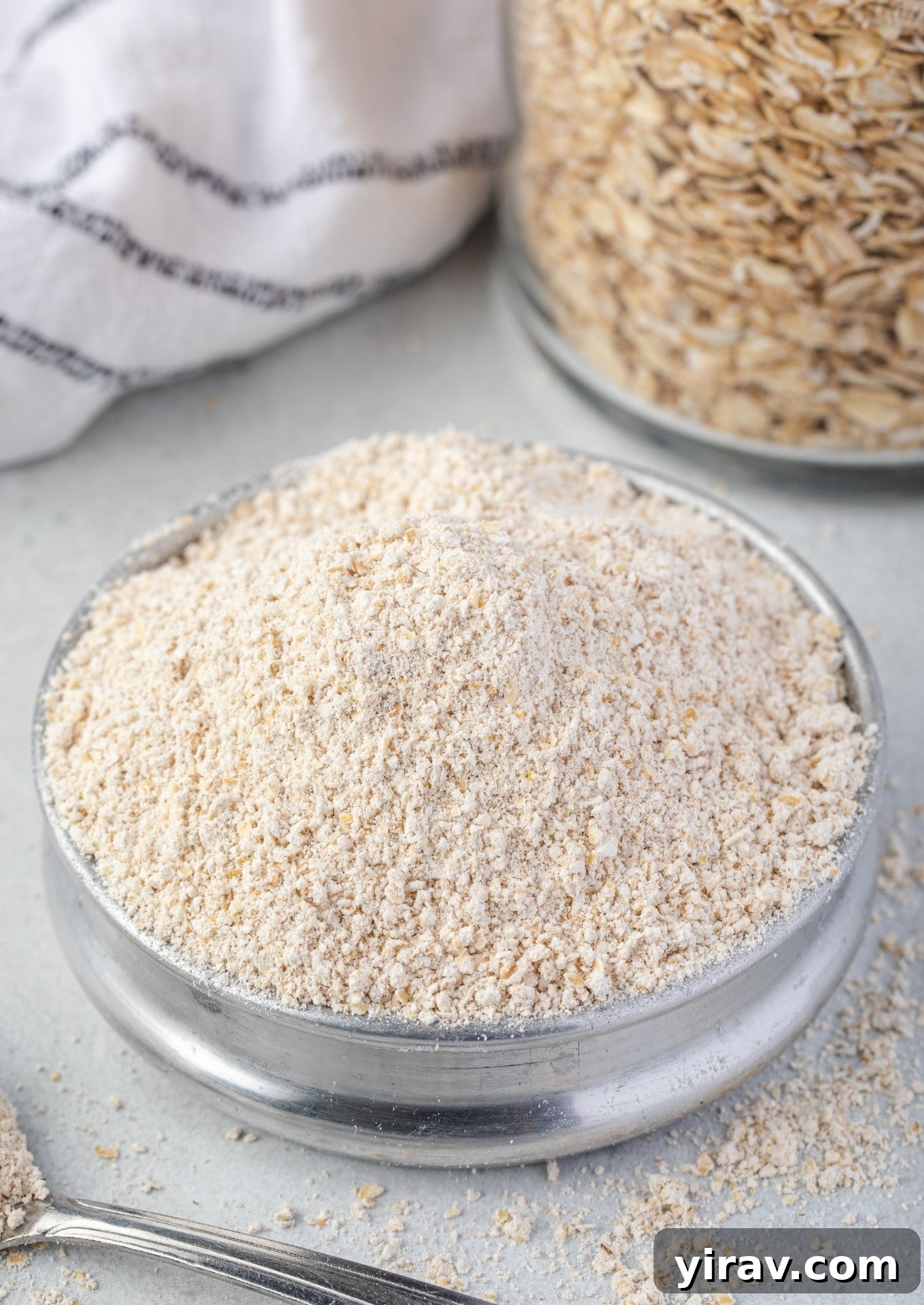
Discover how effortlessly you can transform simple rolled oats into versatile, nutritious, and gluten-free oat flour right in your own kitchen! This comprehensive guide will walk you through the quick and easy process, ensuring you'll never need to buy expensive store-bought versions again. Perfect for an array of gluten-free recipes like fluffy pancakes, crispy waffles, tender muffins, and chewy cookies, homemade oat flour is a pantry staple that offers exceptional value and freshness. Learn the simple steps to create this wholesome flour in mere minutes, and master its storage for up to three months, making healthy baking more accessible than ever before.
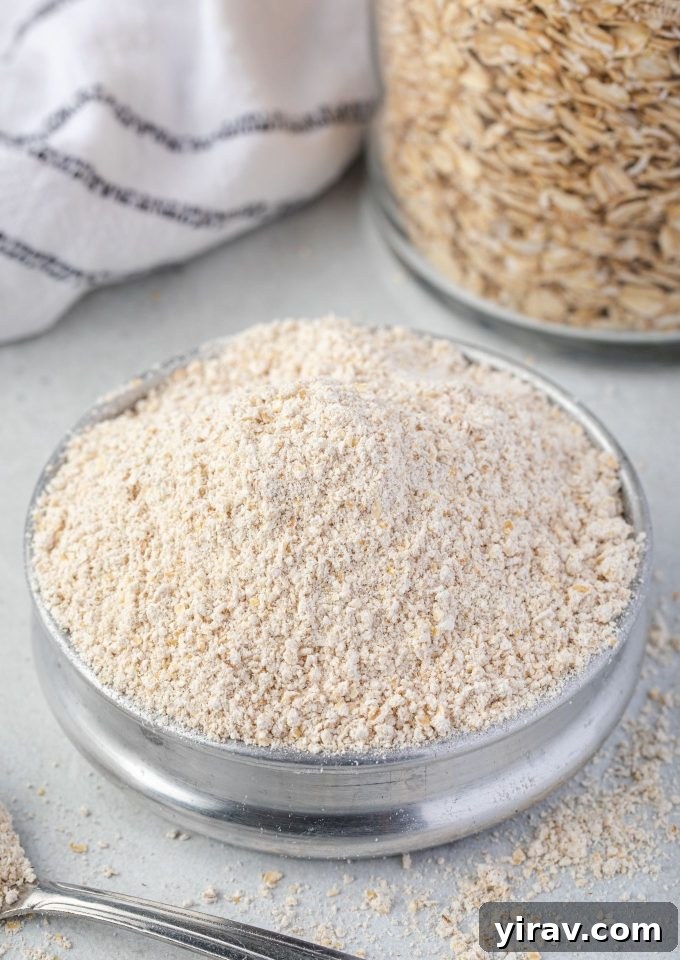
Embarking on a journey to a more gut-friendly diet led me to a wonderful culinary discovery over five years ago: oat flour. As I began to explore various gluten-free alternatives in my baking endeavors, oat flour quickly distinguished itself as an undeniable favorite. Its unique qualities offered a delightful balance of flavor and texture that instantly elevated my homemade treats.
Having always cherished the comforting taste of oats, it was no surprise that I found myself captivated by the hearty, subtly nutty essence that oat flour imparts. Beyond its appealing flavor, the soft, incredibly tender crumb it lends to recipes like my beloved oat flour pancakes and wholesome healthy zucchini muffins is truly exceptional. It creates a texture often sought after in baked goods, proving that gluten-free doesn't mean compromising on deliciousness.
While commercially produced oat flour is readily available both online and in most supermarkets, mastering the art of making it yourself offers numerous advantages. It provides a convenient solution for those moments when you suddenly run out mid-recipe. Moreover, for savvy shoppers who purchase large quantities of oats in bulk from stores like Costco, transforming them into flour at home presents a significantly more cost-effective option. This DIY approach also gives you complete control over the quality and freshness of your ingredients, ensuring your baked goods start with the very best.
No matter your motivation for making it, you'll be delighted by how incredibly simple and quick the process is. It's a culinary skill that empowers you to bake more consciously, economically, and deliciously.
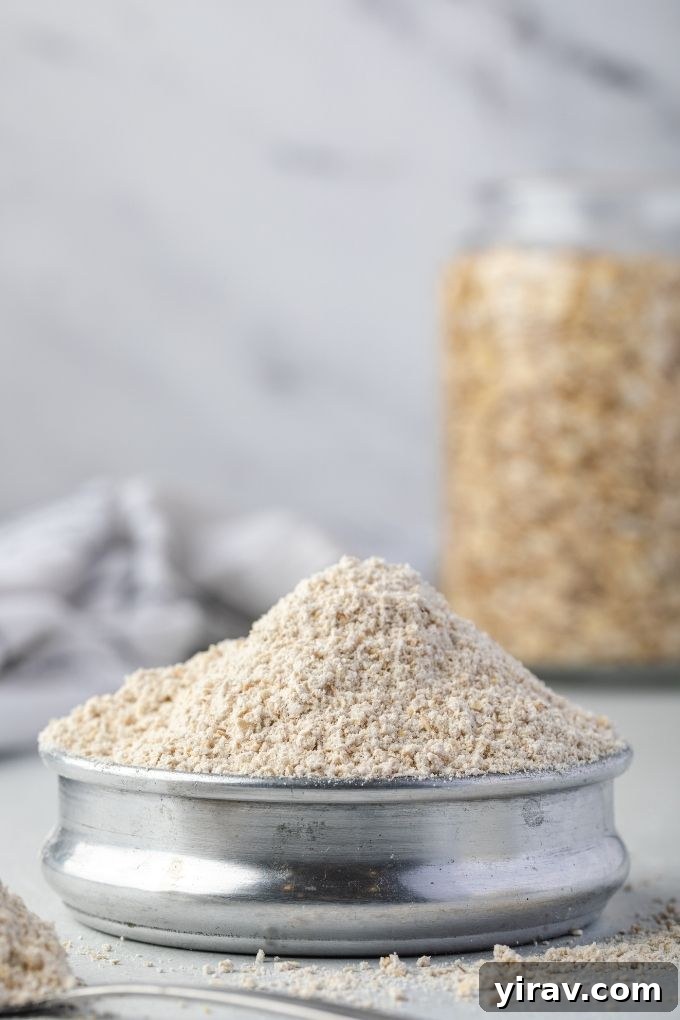
Why You'll Love This Homemade Oat Flour Recipe
Making your own oat flour is not just a practical skill; it's a rewarding experience that unlocks a world of delicious and healthier baking. Here’s why this recipe will quickly become a favorite:
- Incredibly Simple & Fast: You can create fresh oat flour in mere minutes using common kitchen appliances like a food processor or a high-speed blender, making it perfect for last-minute baking needs.
- Cost-Effective: Buying whole rolled oats in bulk is often much cheaper than purchasing pre-packaged oat flour, allowing you to save money without compromising on quality.
- Always Fresh: Enjoy the superior taste and nutritional benefits of freshly ground flour. You control when it's made, ensuring maximum freshness for your recipes.
- Pure & Wholesome: With just one ingredient – oats – you eliminate any concerns about additives, preservatives, or cross-contamination, especially crucial for those with gluten sensitivities.
- Nutritious & Gluten-Free: Oat flour is a naturally whole grain, gluten-free option packed with fiber, vitamins, and minerals. It's an excellent choice for adding a healthy boost to your baked goods.
- Versatile for Baking: This flour is ideal for a wide range of gluten-free recipes, including pancakes, waffles, muffins, cookies, quick breads, and much more, offering a delightful hearty and nutty flavor profile.
- Convenient Storage: Once made, your homemade oat flour can be stored in an airtight container in your pantry for up to three months, ready whenever inspiration strikes.
Essential Ingredient: Rolled Oats
To create your own high-quality oat flour, you only need one core ingredient: oats! These humble grains are a powerhouse of nutrition, celebrated for being an excellent source of dietary fiber, essential vitamins, and vital minerals. They stand as a fantastic whole grain, naturally gluten-free alternative that can truly transform your baking. Understanding the different types of oats and why specific ones are preferred for flour production is key to achieving optimal results.
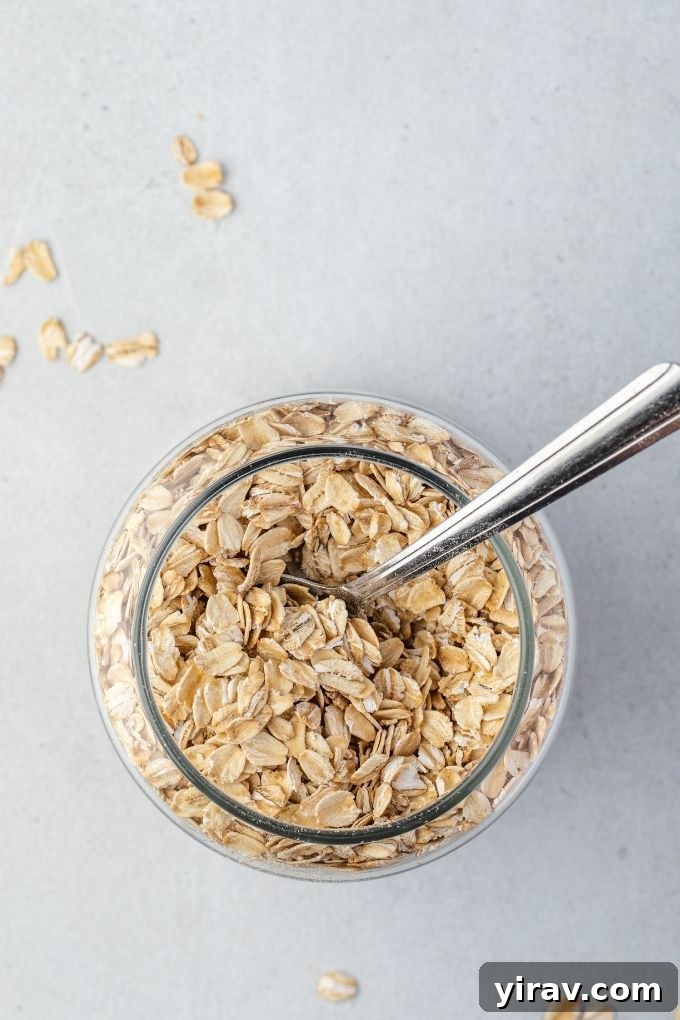
Ingredient Notes: Choosing the Right Oats
- Old Fashioned Rolled Oats: These are unequivocally the best choice for making oat flour, and for good reason. Old fashioned rolled oats undergo a specific processing method where the oat groats are steamed and then flattened into flakes. This process makes them soft and ensures they absorb liquids exceptionally well, which is crucial for baking. Their pliable nature also makes them incredibly easy to grind into a fine, consistent powder, which is the hallmark of good oat flour. Unlike quick oats, which are more heavily processed and finely cut, rolled oats retain more of their structural integrity and natural oils, contributing to better texture and flavor in your final flour. Steel-cut oats, on the other hand, are too coarse and dense to be effectively ground into a fine flour suitable for most baking applications.
- Certified Gluten-Free Oats (Important for those with Celiac Disease or Sensitivity): While oats are inherently gluten-free, they are often processed in facilities that also handle wheat, barley, and rye. This can lead to cross-contamination. If you or someone you're baking for has celiac disease or a significant gluten sensitivity, it is absolutely essential to use oats that are specifically labeled as "certified gluten-free." This certification guarantees that the oats have been harvested, processed, and packaged in a manner that prevents gluten contamination, ensuring a safe product for strict gluten-free diets.
How to Make Oat Flour: A Step-by-Step Guide
Making oat flour at home is such a remarkably simple and quick process that you might find yourself questioning why you ever bought it from the store. All you truly need are quality old fashioned rolled oats, a reliable food processor or a high-speed blender, and approximately five minutes of your time. This method ensures you have fresh, wholesome oat flour whenever your recipes call for it.
Pro Tip for Yield: It's important to understand the conversion ratio when making oat flour. One cup of old fashioned rolled oats typically yields about 3/4 cup of oat flour. This crucial detail will help you calculate how many oats you need to grind to have enough flour on hand for your specific baking recipes. Plan accordingly to avoid running short!
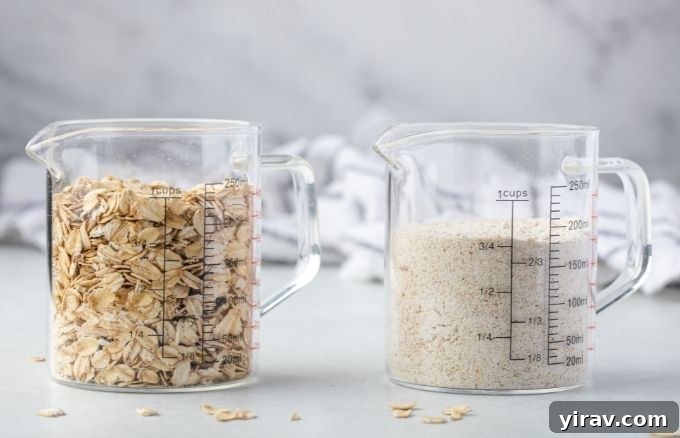
Follow these straightforward steps to create perfect oat flour every time. The full recipe details, including precise measurements, are laid out in the recipe card below for your convenience.
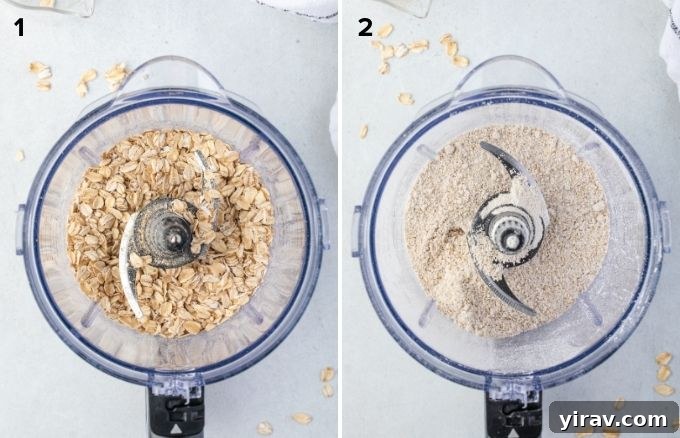
- Prepare Your Equipment: Ensure your high-speed blender or food processor is clean and dry. For best results, use the blade attachment designed for grinding or processing.
- Add Oats: Measure out the desired quantity of old fashioned rolled oats and place them directly into the blender or food processor. Make sure not to overfill, as this can lead to uneven grinding.
- Secure the Lid: Place the lid securely on your appliance to prevent any spillage during processing.
- Process to a Fine Powder: Begin processing the oats on a high setting. You'll observe the oats breaking down and gradually transforming into a fine, powdery consistency. This usually takes about 30 seconds to 1 minute, depending on the power of your appliance.
- Check Consistency: Stop the machine and carefully remove the lid. Use a spoon to stir the flour and check for any larger oat pieces. If needed, re-secure the lid and process for a few more seconds until everything is uniformly fine. Avoid over-processing, which can heat the oats and potentially affect the texture.
- Transfer and Store: Once the oat flour reaches your desired fine consistency, carefully transfer it to an airtight container. Your fresh, homemade oat flour is now ready for use or storage!
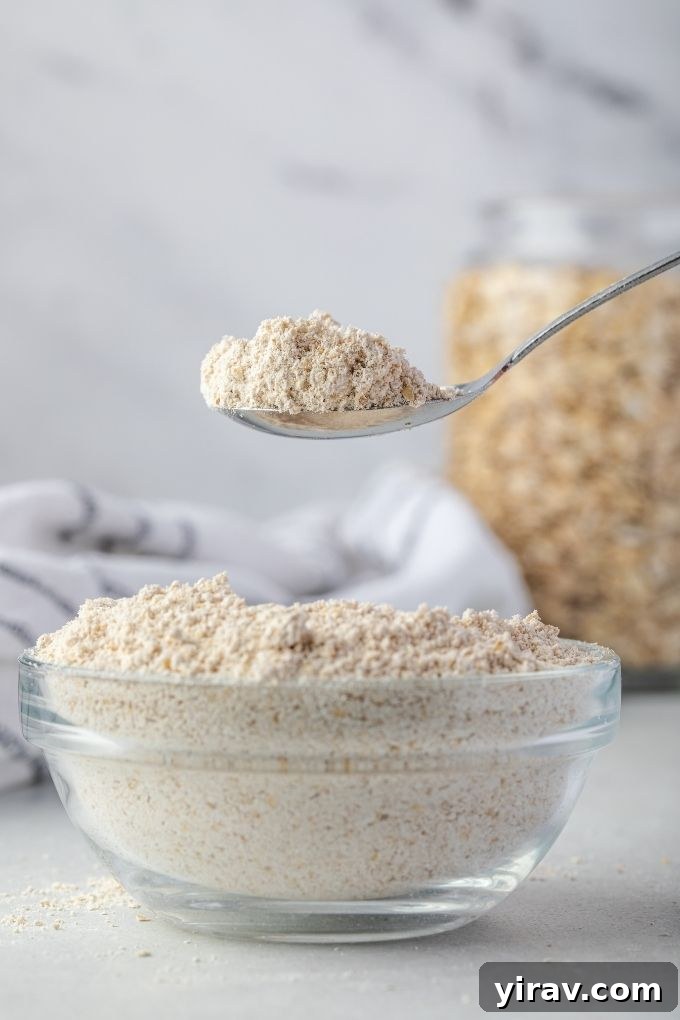
Frequently Asked Questions (FAQs) About Oat Flour
Understanding more about oat flour can help you make informed choices for your baking and dietary needs. Here are some common questions and detailed answers:
Yes, oats are naturally gluten-free grains. However, the designation of "gluten-free" for oat flour requires careful attention. Many commercial oats are processed in facilities that also handle gluten-containing grains like wheat, barley, and rye. This often leads to cross-contamination, making the product unsuitable for individuals with celiac disease or severe gluten sensitivities. Therefore, if you require a strict gluten-free diet, always look for oat flour (or oats) that explicitly state "certified gluten-free" on the label. This certification ensures that the product has met rigorous standards to prevent contamination throughout its journey from farm to package.
Absolutely! Oat flour is a wonderfully wholesome and nutritious ingredient. It is 100% whole grain, meaning it contains all parts of the oat kernel – the bran, germ, and endosperm – which are rich in nutrients. It's an excellent source of dietary fiber, particularly beta-glucan, which is known for its heart-healthy benefits, including lowering cholesterol levels. Additionally, oat flour provides a good array of vitamins (like B vitamins) and minerals (such as iron, magnesium, and zinc). While it is naturally high in carbohydrates, these are complex carbohydrates that provide sustained energy. As with any dietary change, if you have specific health concerns or conditions, it's always advisable to consult your doctor or a registered dietitian to ensure oat flour aligns with your personal health plan.
Oat flour is a fantastic ingredient for baking, celebrated for its unique flavor and the texture it imparts. It offers a distinct hearty, nutty flavor profile that enhances a variety of baked goods. When used correctly, it yields a delightfully soft and tender crumb, especially in quick breads, muffins, cookies, and cornbread. However, it's important to remember that oat flour is gluten-free, meaning it lacks the elastic proteins found in wheat flour that provide structure. For this reason, it often needs to be combined with other flours or binding agents (like eggs, flax eggs, or xanthan gum) to achieve the best structural integrity in certain recipes. Its absorbent nature can also mean recipes might require slightly more liquid. With a little understanding, oat flour can become a cornerstone of your healthy baking repertoire.
Directly substituting oat flour for wheat flour on a 1:1 basis is generally not recommended and often leads to unsatisfactory results. The key difference lies in the presence of gluten. Wheat flour contains gluten, which provides elasticity and structure to baked goods. Oat flour, being gluten-free, lacks this elasticity. This means that oat flour has a different texture and density, and it absorbs liquids differently than wheat flour. While you can successfully use oat flour in many recipes, particularly those designed for gluten-free baking, it typically requires specific adjustments to liquid content, the addition of binding agents, or a combination with other gluten-free flours. It's best to use recipes specifically formulated for oat flour or to understand how to adapt existing recipes by making necessary modifications for hydration and structure.
Recipe Tips for Perfect Homemade Oat Flour
Achieving the best results with your homemade oat flour is simple with these expert tips:
- Understand the Yield: As a reminder, one cup of old fashioned rolled oats will produce approximately 3/4 cup of oat flour. Keep this conversion in mind when planning your batch size. For instance, if you process 2 cups of oats, you'll yield about 1.5 cups of flour, which is roughly six 1/4-cup servings.
- Stick to Rolled Oats: For consistent, high-quality oat flour suitable for baking, always use old fashioned rolled oats. Quick oats are too finely cut and can produce a denser flour, while steel-cut oats are too hard and difficult to grind to a fine powder required for most baking applications.
- Ensure Gluten-Free Certification: If you or your guests have celiac disease or a gluten intolerance, it is crucial to use rolled oats that are certified gluten-free to avoid cross-contamination.
- Process Until Fine: The key to good oat flour is a fine, uniform consistency. Process the oats until they resemble a powdery flour. Avoid leaving any large flakes, as these can affect the texture of your baked goods.
- Avoid Over-Processing: While you want a fine powder, be careful not to over-process. Excessive blending can generate heat, which can start to release the oils from the oats, potentially leading to a slightly gummy texture or a shorter shelf life for your flour. Blend in short bursts if your machine tends to heat up quickly.
- Batch Size Matters: For optimal grinding, avoid processing very small amounts of oats, as they might not interact effectively with the blender blades. Conversely, do not overfill your blender or food processor; this can lead to uneven grinding. Aim for a moderate batch that allows the oats to circulate well.
- Proper Storage is Key: Store your freshly made oat flour in an airtight container. A cool, dark pantry or cupboard is ideal, where it will maintain its freshness for up to 3 months. For extended shelf life, especially in warmer climates or if making a very large batch, consider refrigerating or freezing it, which can preserve its freshness for up to 6 months or more.
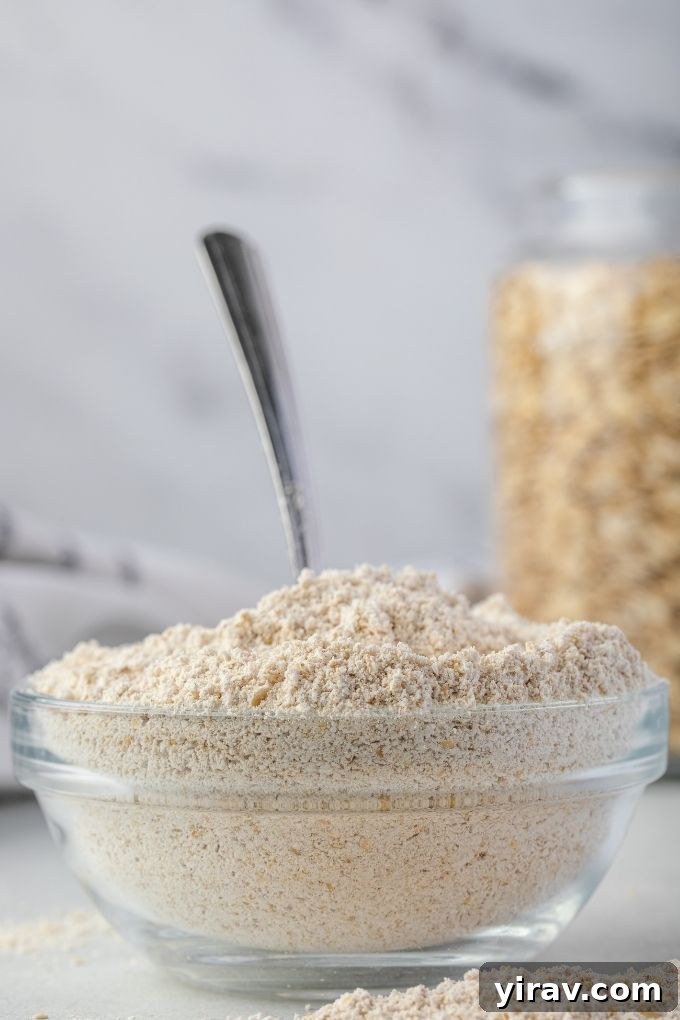
Delicious Oat Flour Recipes You'll Love
Now that you've mastered making your own oat flour, it's time to put it to good use! Oat flour adds a wonderful hearty flavor and tender texture to a wide variety of baked goods. Here are some fantastic recipes that celebrate the unique qualities of oat flour, perfect for your gluten-free baking adventures:
- Flourless Banana Muffins
- Healthy Banana Snack Cake
- Flourless Carrot Oatmeal Muffins
- Buttery Maple Skillet Cornbread
- Gluten-Free Pumpkin Bread
- Healthy Banana Waffles
- Healthy Morning Glory Muffins
- Healthy Oatmeal Chocolate Chip Cookies by Ambitious Kitchen
- Healthy Pumpkin Muffins
- Peanut Butter Banana Chocolate Chunk Muffins
- Pumpkin Oat Pecan Coffee Cake
- Gluten-Free Pumpkin Waffles
- Whole Wheat Sweet Potato Waffles
- One Bowl Blueberry Oat Flour Waffles
Did you try this amazing recipe? If so, we'd love to hear from you! Please leave a review below and share your creations by tagging us @flavorthemoments on Facebook and Instagram!
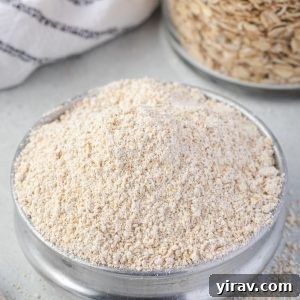
How to Make Oat Flour
Pin Recipe
Leave a Review »
Equipment
-
Kitchen Aid 7 cup Food Processor or high-speed blender
Ingredients
- 2 cups old fashioned rolled oats (certified gluten-free if needed)
Instructions
-
Place the 2 cups of old fashioned rolled oats in a high-speed blender or food processor fitted with the blade attachment and secure the lid. Ensure the appliance is clean and completely dry before adding the oats.
-
Process on high until the oats become a very fine powder, resembling conventional flour. This typically takes about 30 seconds to 1 minute, depending on your appliance's power. Stop and scrape down the sides if necessary to ensure even grinding. Avoid over-processing to prevent the oats from heating up too much.
Notes
- Yield Calculation: One cup of old fashioned rolled oats yields approximately 3/4 cup of oat flour. This recipe, using 2 cups of oats, will produce about 1 1/2 cups of oat flour, which is enough for about (6) 1/4-cup servings. Adjust oat quantity based on your recipe needs.
- Oat Type: For best results, this recipe is specifically developed for old fashioned rolled oats. Other oat types like quick oats or steel-cut oats are not recommended for making oat flour due to differences in texture and processing.
- Gluten-Free Certification: If you are baking for someone with gluten intolerance or celiac disease, always use rolled oats that are clearly labeled as "certified gluten-free" to prevent cross-contamination.
- Storage: Store your freshly made oat flour in a clean, airtight container. It will keep well in a cool, dark pantry for up to 3 months. For longer storage, you can refrigerate it for up to 6 months or freeze it for even more extended freshness.
Nutrition
Nutrition is estimated using a food database and is only intended to be used as a guideline for informational purposes.