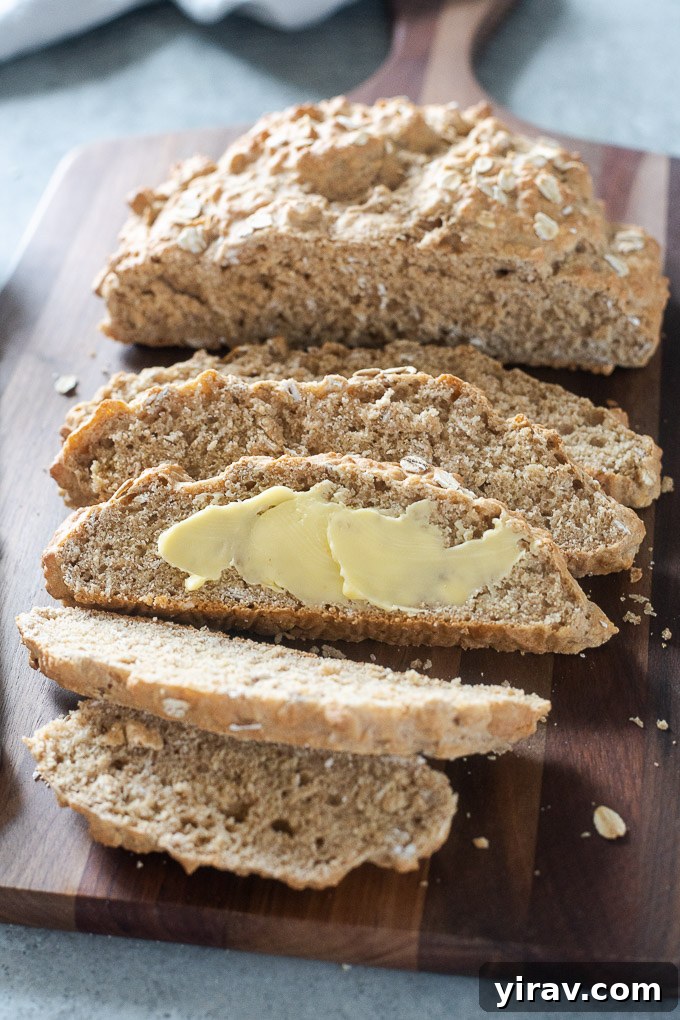
This Irish Brown Bread recipe is everything you love about traditional soda bread, elevated with the wholesome goodness of whole grains! Requiring just 5 simple ingredients and about 10 minutes of active prep time, it stands as one of the easiest and most satisfying homemade breads you’ll ever create. Forget about yeast, lengthy proofing, or intricate kneading techniques – this rustic loaf brings authentic flavor and a comforting texture to your table with minimal effort.
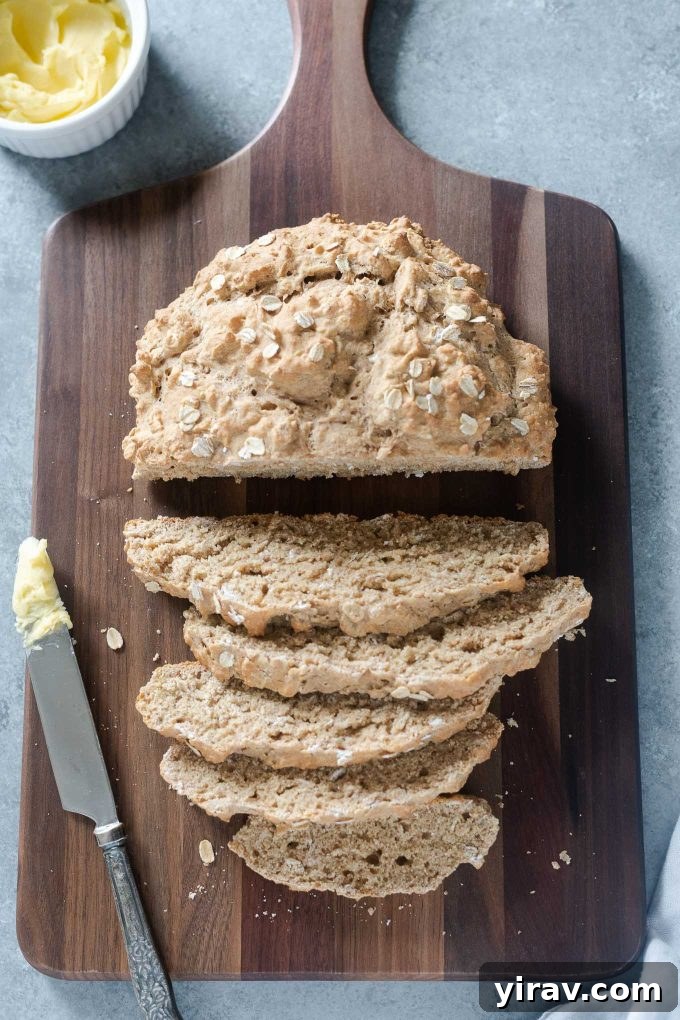
For many, the allure of fresh, warm bread is undeniable. While I generally keep gluten consumption to a minimum, there are some indulgences that are simply too good to resist, and homemade bread tops that list. The aroma filling the kitchen, the warmth in your hands, and the incredible taste of a freshly baked loaf are truly incomparable. Although delights like rosemary focaccia are wonderful, sometimes the craving calls for something even quicker and simpler.
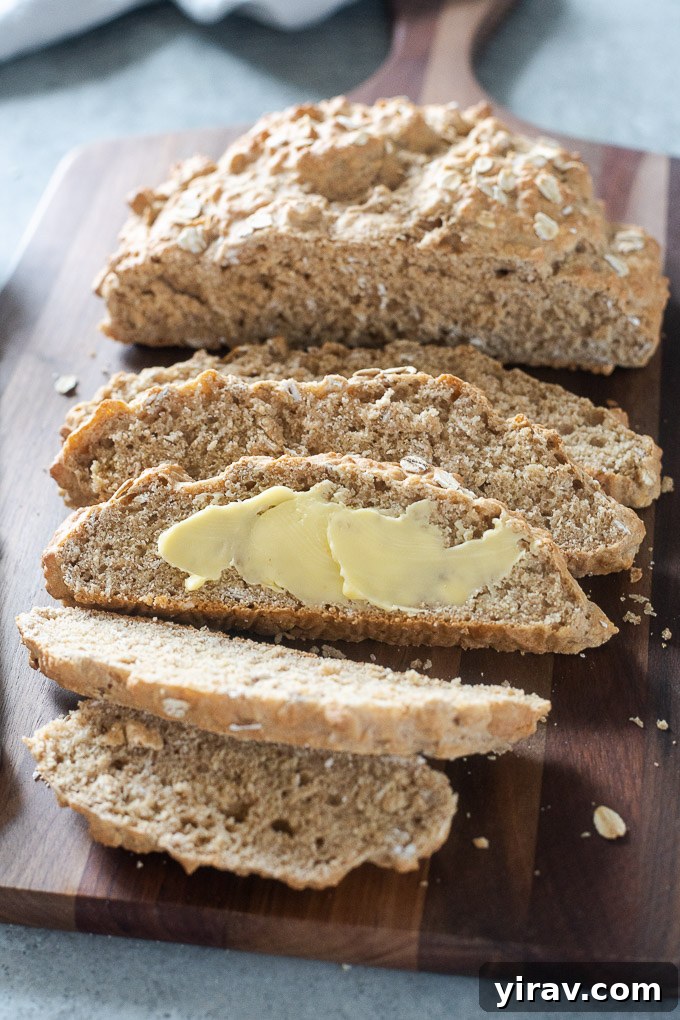
This Irish Brown Bread has become my latest culinary revelation. It offers the same comforting essence as classic Irish soda bread, but with a richer, earthier flavor profile derived from whole grains. What makes it even more appealing is its simplicity: no eggs, no added sweeteners, just pure, unadulterated goodness. It’s a blank canvas, making it incredibly versatile for any meal. Imagine dunking a thick slice into a hearty Guinness beef stew, or toasting it to perfection and slathering it with softened butter, homemade jam, or a sprinkle of sea salt. This bread is a true delight, and I find myself already looking forward to baking my next loaf!
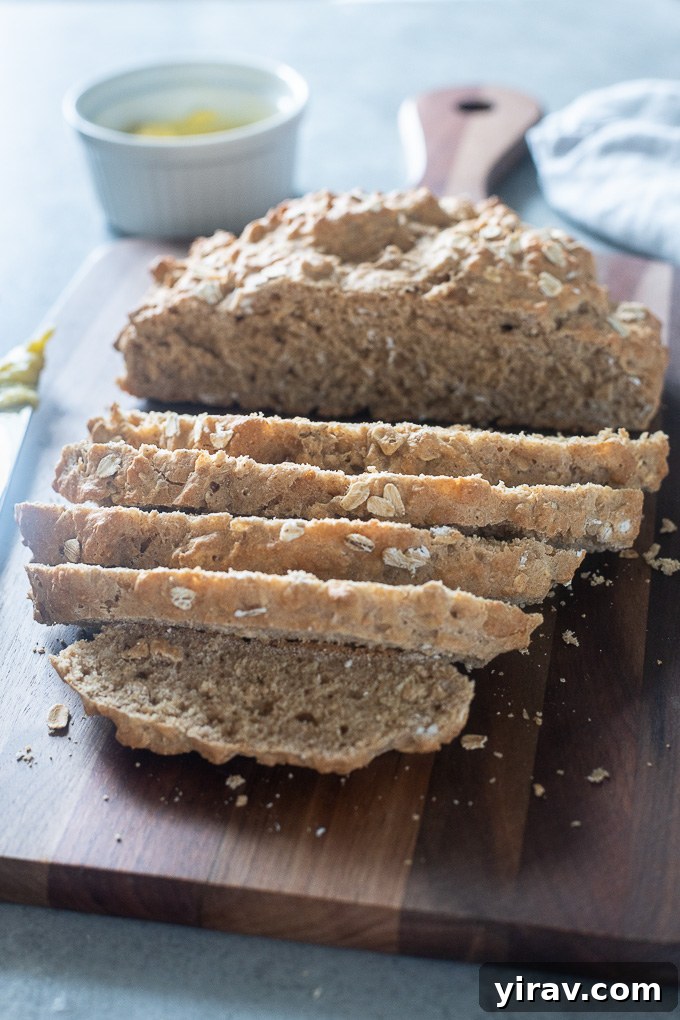
Why You’ll Love This Recipe: Simple, Wholesome & Delicious
There are countless reasons to fall in love with this particular Irish Brown Bread recipe, making it a perfect addition to your baking repertoire:
- Rustic and Wholesome Goodness: This bread is a celebration of natural flavors and hearty textures. It combines the earthy depth of whole wheat flour with the satisfying chewiness of rolled oats, all balanced by the distinctive tangy flavor of buttermilk. Every bite is packed with wholesome grains, offering both great taste and nutritional benefits.
- Incredibly Quick and Easy: Unlike traditional yeast breads that demand patience and multiple proofing stages, this brown soda bread is a true quick bread. It requires no yeast, no elaborate kneading, and is made with just 5 simple, readily available ingredients. From start to finish, you can have a warm loaf on your table in under an hour.
- Minimal Prep, Maximum Flavor: With only about 10 minutes of active preparation, you’ll be amazed at how quickly this dough comes together. It then bakes to golden perfection in roughly 30 minutes, delivering a wonderfully flavorful loaf that tastes like it took hours of effort.
- Easily Adaptable for Dietary Needs: This recipe is naturally flexible. For those avoiding dairy, it can be effortlessly transformed into a dairy-free version by simply substituting traditional buttermilk with a homemade dairy-free alternative. This ensures everyone can enjoy a slice of this delicious bread.
- Versatile Pairing Potential: Its neutral, yet rich, flavor profile makes it an ideal companion for a wide range of dishes. Whether you pair it with savory stews and soups, use it for sandwiches, or enjoy it toasted with sweet spreads, this bread complements almost any meal.
The Story of Irish Brown Bread: A Culinary Heritage
Irish Brown Bread is not just a recipe; it’s a staple deeply woven into the fabric of Irish culinary history. It represents the whole-grain counterpart to the more widely known Irish soda bread. Its prominence in Ireland dates back to the early 1800s, a pivotal period when baking soda was first introduced to the country. This simple ingredient revolutionized bread-making, eliminating the time-consuming need for yeast and allowing for much quicker production.
During times of widespread famine, brown bread became incredibly significant. It utilized basic, affordable ingredients that were often locally sourced: soft wheat flour (which was prevalent in Ireland), soured milk (which was a natural byproduct in many homes before refrigeration), and salt. The baking soda reacted with the acidity in the soured milk, acting as a natural leavening agent. This made brown bread an accessible and nourishing food source for families, providing essential sustenance when resources were scarce.
Today, Irish Brown Bread continues to be a cherished tradition. Its rustic simplicity and wholesome character make it a beloved accompaniment to many Irish meals. Whether it’s dunked into a hearty bowl of vegetable soup or beef stew, or enjoyed toasted for breakfast with a dollop of butter and a spoonful of jam, it remains a comforting and essential part of Irish food culture, cherished for its history, its taste, and its enduring practicality.
Essential Ingredients for Irish Brown Bread
One of the beauties of this Irish Brown Bread recipe lies in its minimalist ingredient list. Each component plays a crucial role in creating the bread’s unique flavor and texture:
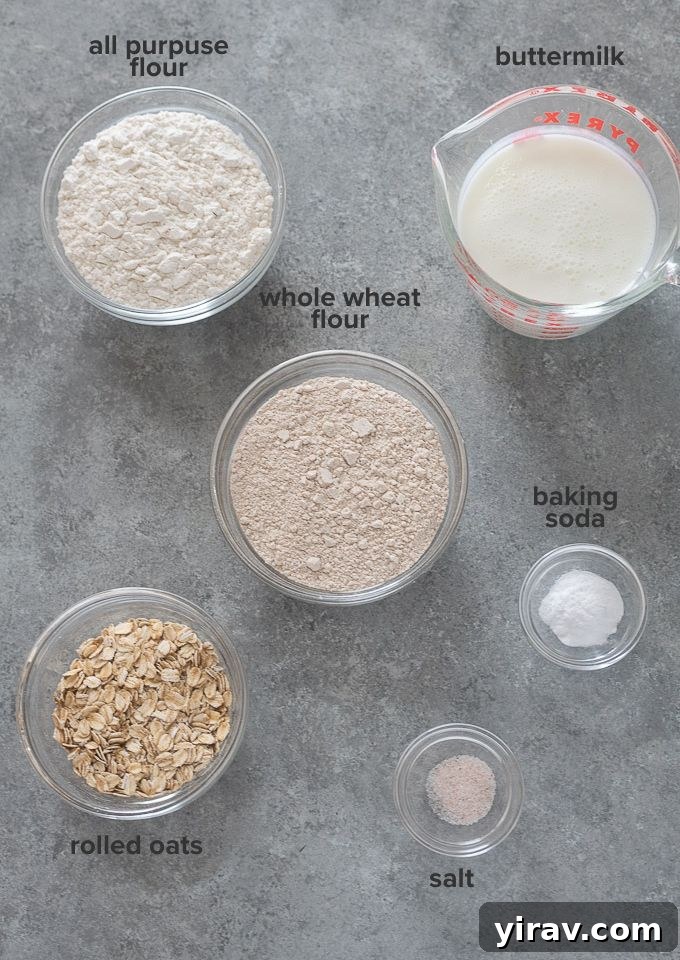
- Flour: For this recipe, I’ve opted for a balanced blend of one cup whole wheat flour and one cup all-purpose flour. This combination strikes a perfect balance, delivering the robust, nutty flavor and hearty texture of whole grains without making the bread overly dense. The all-purpose flour contributes to a slightly lighter crumb. However, for those who prefer an even more rustic and wholesome loaf, you can certainly use all whole wheat flour, or substitute with whole wheat white flour for a milder whole grain flavor.
- Rolled Oats: Old-fashioned rolled oats are key to adding a wonderful, distinct texture to the brown bread. Their flakes provide a pleasant chewiness and contribute to the bread’s rustic appeal. If you prefer a less pronounced texture, quick oats can be substituted, which will integrate more smoothly into the dough.
- Buttermilk: This ingredient is absolutely essential, both for flavor and leavening. Buttermilk imparts a characteristic tangy taste that is central to Irish soda bread. More importantly, its acidity reacts with the baking soda, creating carbon dioxide bubbles that cause the bread to rise, resulting in a tender crumb. If you need a dairy-free option, please refer to the recipe card notes for how to easily make dairy-free buttermilk at home.
- Baking Soda: As the primary leavening agent in this quick bread, baking soda is crucial. It requires an acidic component, which is provided by the buttermilk, to activate and produce the carbon dioxide gas that makes the bread light and airy. Without it, the bread would be flat and dense.
- Salt: A humble yet mighty ingredient, 1/2 teaspoon of salt is included to enhance and round out the flavors of the flour, oats, and buttermilk. It prevents the bread from tasting bland and brings out its inherent goodness. You can adjust the amount to your personal preference.
- Optional Additions: This bread is truly a blank canvas, allowing for creative customization. For a touch of subtle sweetness, consider adding a tablespoon of honey or maple syrup to the wet ingredients. To infuse a traditional Irish aroma, a teaspoon of caraway seeds can be mixed into the dry ingredients. Alternatively, for a delightful fruity twist, fold in 1/2 cup of raisins or currants. These additions transform the bread, offering new dimensions of flavor.
For the precise measurements and full list of ingredients, please refer to the comprehensive recipe card provided below.
How to Make Perfect Brown Soda Bread
When it comes to homemade bread, it truly doesn’t get much simpler than this Irish Brown Soda Bread recipe. Forget about the complexities often associated with baking yeast breads, such as proofing times, intricate kneading, or waiting for dough to rise. This recipe is designed for ease and efficiency, coming together in approximately 10 minutes of hands-on time, making it perfect for even the busiest home cooks.
One common observation you’ll make is that the dough for this bread is quite wet, almost more like a very thick batter than a traditional bread dough. Do not be alarmed by this! This higher moisture content is intentional and contributes to the bread’s tender interior. Despite its wetness, it’s surprisingly easy to form into a rustic ball directly on your prepared baking pan before it goes into the oven, requiring no special shaping skills.
Pro Tip for Texture: To achieve a lighter, more tender crumb while still benefiting from whole grains, we highly recommend using a combination of whole wheat flour and all-purpose flour as outlined in the recipe. If you’re aiming for a denser, more robust loaf with 100% whole grain integrity, feel free to substitute all the all-purpose flour with additional whole wheat flour or whole wheat white flour.
For complete step-by-step instructions and detailed guidance, please consult the recipe card further down the page.
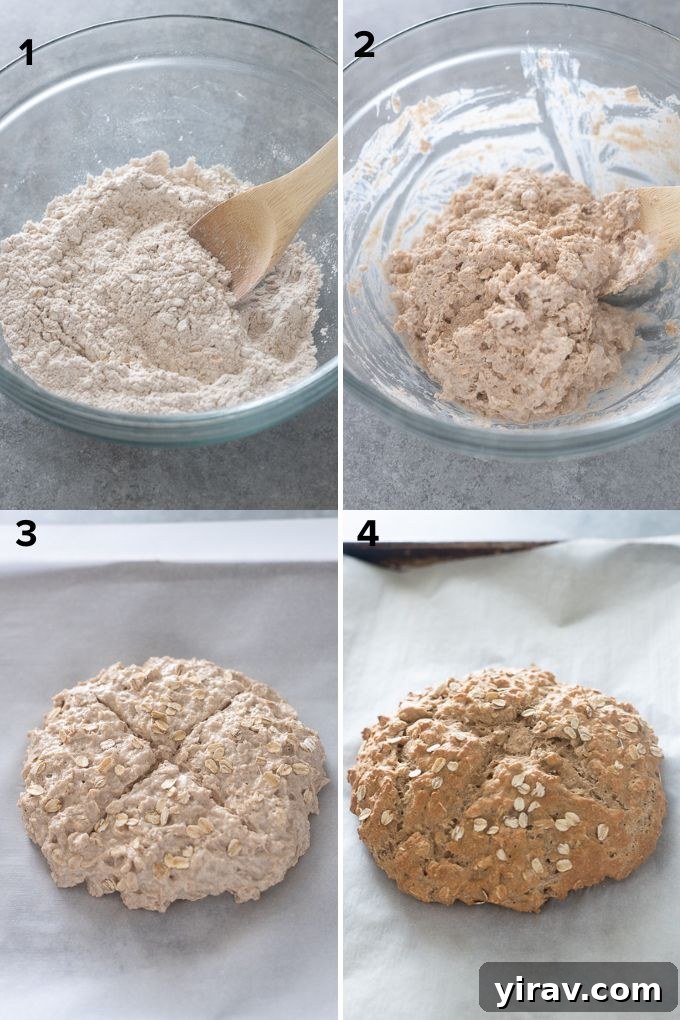
- Prepare Your Dry Ingredients: In a large mixing bowl, combine the whole wheat flour, all-purpose flour, rolled oats, baking soda, and salt. Use a whisk to thoroughly blend these dry ingredients together, ensuring the leavening agent is evenly distributed.
- Incorporate Buttermilk Gently: Gradually add 1 cup of the buttermilk to the dry mixture. Stir just until the ingredients are moistened. Avoid overmixing; a shaggy, slightly wet dough is desirable. If the mixture still appears very dry, incorporate the remaining 1/4 cup of buttermilk, stirring only until no dry flour streaks remain.
- Shape and Score the Dough: Turn the wet dough out onto a baking sheet that has been lined with parchment paper. Using lightly floured hands, gently form the dough into a round, rustic loaf. With a sharp knife, traditionally cut a deep “X” (about 1/2 inch deep) across the top of the dough. This scoring helps the bread cook evenly and gives it its iconic appearance. For an extra touch, you may sprinkle additional rolled oats over the top before baking.
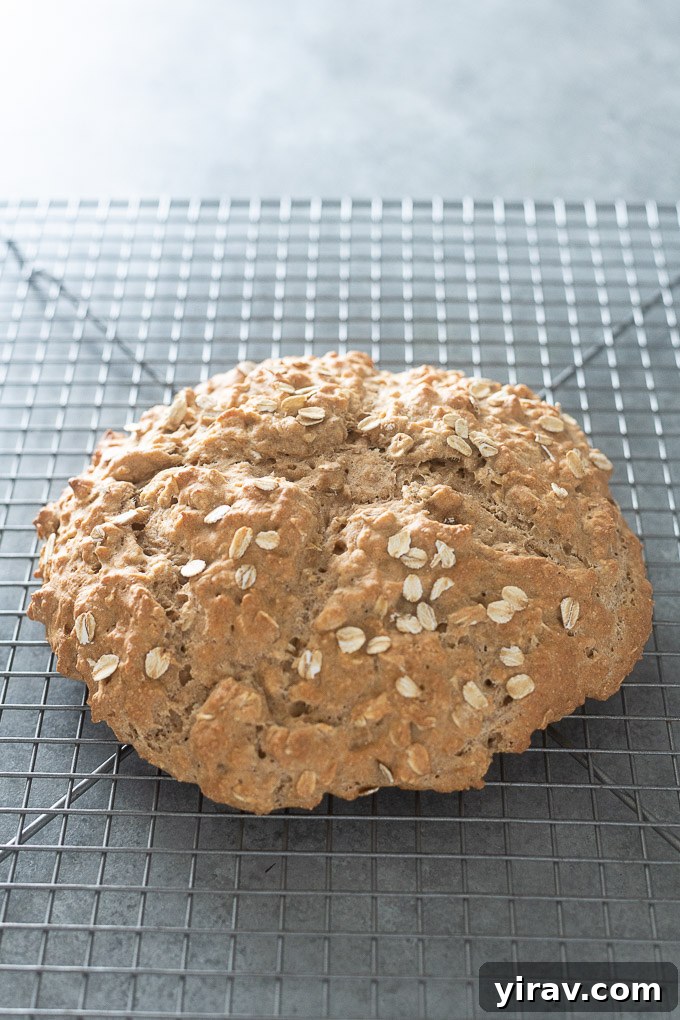
- Bake to Golden Perfection: Place the prepared loaf in your preheated oven at 400 degrees Fahrenheit (200°C) and bake for approximately 30 minutes. The bread is ready when it has achieved a beautiful golden brown color and, when tapped on the bottom, it sounds hollow. This indicates that it’s cooked through. Allow the bread to cool completely on a wire rack before slicing and enjoying to ensure the perfect texture.
Frequently Asked Questions About Irish Brown Bread
What is Irish Brown Bread Made Of?
Our Irish Brown Bread recipe typically features a simple yet robust combination of whole wheat flour, all-purpose flour, hearty rolled oats, baking soda (as the leavening agent), buttermilk for its essential tang and acidity, and a touch of salt to enhance all the flavors. The blend of whole wheat and all-purpose flour offers a balanced texture that is both wholesome and appealing. For those seeking a 100% whole wheat experience, you can certainly substitute all the all-purpose flour for more whole wheat or whole wheat white flour, though this will result in a denser loaf.
What’s the Difference Between Irish Brown Bread and Regular Soda Bread?
The primary distinction lies in the type of flour used. Traditional Irish soda bread is typically made with all-purpose or soft white flour, resulting in a lighter, softer crumb. Irish Brown Bread, on the other hand, is the whole grain version. It incorporates a significant amount of whole wheat flour and often includes oats, giving it a much heartier texture, a deeper, nutty flavor, and a more rustic appearance. Both rely on baking soda and buttermilk for their leavening, making them quick breads, but the brown bread offers a more robust and wholesome profile.
How Should I Store Leftover Irish Brown Bread?
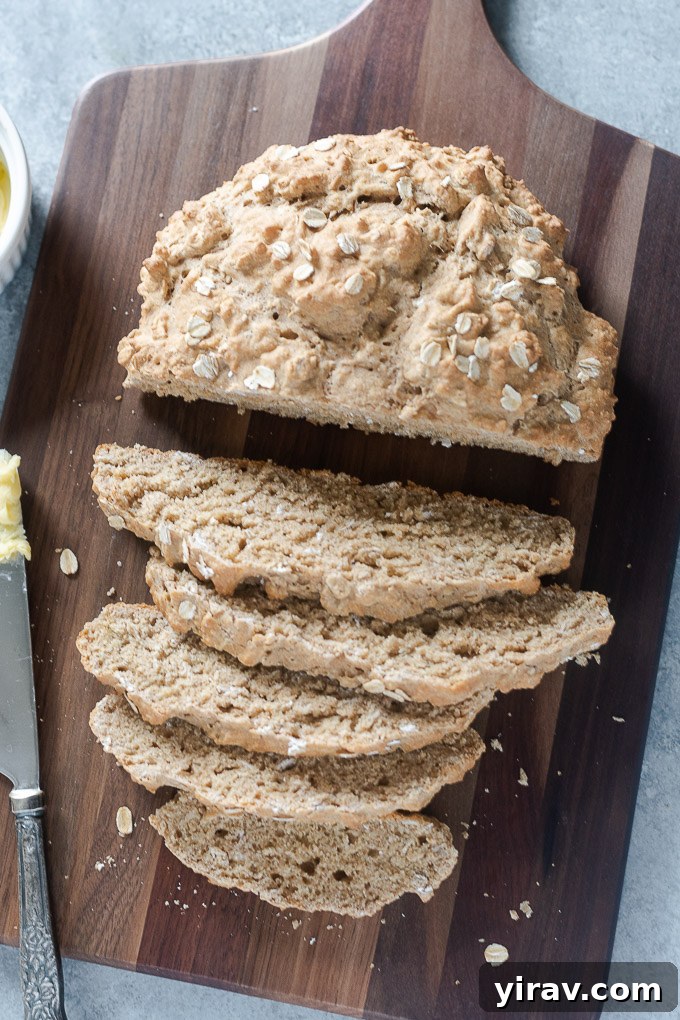
To maintain its freshness, store leftover Irish Brown Bread at room temperature. It’s best kept in an airtight container, a bread box, or wrapped tightly in plastic wrap to prevent it from drying out. Properly stored, it will remain delicious for up to 3 days. For longer preservation, brown bread freezes beautifully. Once completely cooled, slice the loaf and store the slices in a freezer-safe bag or container for up to 3 months. This way, you can easily grab a slice to toast whenever a craving strikes!
Can I Make This Recipe Gluten-Free?
While this specific recipe is not gluten-free due to the wheat flour and oats, it is possible to adapt it. You would need to use a high-quality gluten-free all-purpose flour blend (one that is specifically designed for baking and often contains xanthan gum), along with certified gluten-free oats. Keep in mind that gluten-free flours absorb liquids differently, so the amount of buttermilk might need slight adjustments. The texture will also be different from the traditional version, likely denser and less chewy, but still enjoyable.
What are the Best Ways to Serve Irish Brown Bread?
Irish Brown Bread is incredibly versatile! It’s fantastic simply sliced and served alongside savory dishes like robust stews (such as Irish beef stew), soups, or even a classic Irish breakfast. Toasted slices are superb for breakfast or a snack, slathered with butter, jam, marmalade, or honey. It also makes a wonderful base for open-faced sandwiches or can be served with cheese and chutney. Don’t be afraid to experiment; its rustic flavor complements both sweet and savory toppings.
Tips for Success and Delicious Variations
Achieving a perfect loaf of Irish Brown Bread is wonderfully straightforward, but a few key tips can elevate your baking experience. Additionally, don’t hesitate to experiment with variations to make this recipe truly your own:
- Optimal Flour Blend for Texture: For a bread that is both hearty and delightfully tender, stick with the recommended blend of half whole wheat flour and half all-purpose flour. This combination yields a satisfying crumb that isn’t overly dense. If your preference leans towards an even more wholesome loaf, using 100% whole wheat flour or whole wheat white flour will result in a bread with a firmer texture and a more pronounced nutty flavor.
- Crafting Dairy-Free Buttermilk: Making this recipe dairy-free is simple and effective. Just combine 1 cup plus 1/4 cup of your favorite non-dairy milk (such as almond, soy, or oat milk) with 1 tablespoon of fresh lemon juice or apple cider vinegar. Allow the mixture to sit at room temperature for about 10 minutes until it visibly curdles and thickens slightly. This homemade “buttermilk” will react perfectly with the baking soda.
- Creative Flavor Enhancements: While delicious on its own, Irish Brown Bread is an excellent base for various additions. To introduce a subtle sweetness, mix 1 tablespoon of honey or maple syrup into the buttermilk. For a classic Irish touch, a teaspoon of caraway seeds can be added to the dry ingredients, lending a distinctive aromatic note. If you enjoy fruit in your bread, fold in 1/2 cup of plump raisins or dried currants during the mixing stage for bursts of natural sweetness.
- Storing for Lasting Freshness: To keep your homemade brown bread fresh for longer, store any leftovers at room temperature in an airtight container or wrapped tightly in plastic wrap. It will remain delicious for up to 3 days. For extended enjoyment, this bread freezes exceptionally well. Once completely cooled, slice the loaf and place the slices in a freezer-safe bag. You can then thaw individual slices as needed, making toasted brown soda bread an easy and satisfying breakfast option for weeks to come!
More Delicious Bread Recipes You’ll Love
If you enjoyed the simplicity and deliciousness of this Irish Brown Bread, you might love exploring other homemade bread recipes from our collection:
- Brown Butter Maple Beer Bread
- Blueberry Maple Skillet Cornbread
- Homemade Soft Pretzels with Maple Mustard Sauce
- Sweet Honey Cornbread Muffins
- Buttery Maple Skillet Cornbread
- Homemade Soft Pretzel Hot Dog Buns
- Tender Buttery Sweet Potato Biscuits
Did you try this recipe? If so, be sure to leave a review below and tag me @flavorthemoments on Facebook and Instagram!
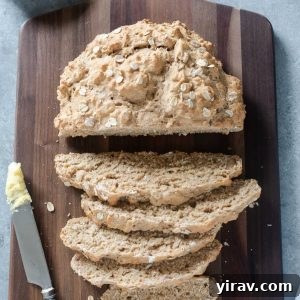
Classic Irish Brown Bread Recipe
A rustic and wholesome whole grain bread that’s incredibly easy to make with no yeast, proofing, or kneading. This traditional Irish loaf is ready in just 40 minutes, perfect for any meal!
Servings: 10 servings
Prep Time: 10 mins
Cook Time: 30 mins
Total Time: 40 mins
Pin Recipe
Equipment
- Rimmed Baking Sheets 16 3/4″ x 12″
- Parchment Paper
- Pyrex Glass Mixing Bowls
Ingredients
- 1 cup whole wheat flour
- 1 cup all purpose flour (see notes for whole wheat options)
- 1/2 cup old fashioned rolled oats (plus more for sprinkling, optional; may sub with quick oats for less texture)
- 1/2 teaspoon baking soda
- 1/2 teaspoon salt (or more to taste)
- 1 1/4 cup buttermilk (see notes for dairy-free option)
Instructions
-
Preheat your oven to 400 degrees Fahrenheit (200°C). Line a large rimmed baking sheet with parchment paper to prevent sticking and make for easy cleanup.
-
In a large mixing bowl, thoroughly whisk together the whole wheat flour, all-purpose flour, rolled oats, baking soda, and salt until they are well combined. This ensures even distribution of the leavening agent. Next, add 1 cup of the buttermilk, stirring gently with a sturdy spoon or spatula until the dry ingredients are just moistened. The mixture will be shaggy and quite wet. If it appears excessively dry, incorporate the remaining 1/4 cup of buttermilk, stirring just until no dry flour spots remain. Be cautious not to overmix, as this can lead to a tough loaf.
-
Turn the wet dough directly onto the center of your prepared baking sheet. Using lightly floured hands (as the dough is sticky), gently shape it into a round, rustic loaf. With a sharp knife, traditionally cut a deep “X” (about 1/2 inch deep) across the top of the dough. This scoring helps the bread expand evenly during baking and gives it its classic appearance. For an attractive finish and added texture, you may sprinkle a few extra rolled oats over the top of the loaf.
-
Transfer the baking sheet to your preheated oven and bake for 30 minutes, or until the Irish Brown Bread is beautifully golden brown on the outside and sounds hollow when tapped gently on the bottom. This hollowness indicates that the bread is fully cooked through. Once baked, carefully remove the bread from the oven and transfer it to a wire rack to cool completely. Cooling is a crucial step that allows the internal structure of the bread to set properly, ensuring the best texture and flavor when sliced. Enjoy warm or at room temperature!
Notes
- Flour Blend: For a slightly lighter texture that still packs a wholesome punch, we recommend the 50/50 mix of whole wheat and all-purpose flour. If you desire a completely whole wheat bread, feel free to use all whole wheat flour or whole wheat white flour for a denser result.
- Dairy-Free Version: To create a dairy-free buttermilk substitute, combine 1 1/4 cups of your preferred non-dairy milk (like almond, soy, or oat) with 1 tablespoon of lemon juice or apple cider vinegar. Let it stand for 10 minutes at room temperature until it curdles, then use as directed.
- Flavor Variations: This versatile bread is a fantastic base for customization. Consider adding a tablespoon of honey or maple syrup for sweetness, a teaspoon of caraway seeds for a traditional Irish flavor, or 1/2 cup of raisins or currants for a fruity twist.
- Storage: Store any leftover Irish Brown Bread at room temperature for up to 3 days in an airtight container. It also freezes exceptionally well for up to 3 months. Slice the cooled bread before freezing for convenience; toasted brown soda bread makes a delightful breakfast!
Nutrition
Serving: 1 slice, Calories: 120kcal, Carbohydrates: 22g, Protein: 4g, Fat: 2g, Saturated Fat: 1g, Polyunsaturated Fat: 0.3g, Monounsaturated Fat: 0.4g, Cholesterol: 3mg, Sodium: 203mg, Potassium: 112mg, Fiber: 2g, Sugar: 2g, Vitamin A: 51IU, Calcium: 43mg, Iron: 1mg
Nutrition is estimated using a food database and is intended to be used as a guideline for informational purposes only.
Course: Breads
Cuisine: Irish
Author: Marcie
All recipes and images © Flavor the Moments. Please do not republish without permission.
Did you try this recipe?
Be sure to tag @flavorthemoments with the hashtag #flavorthemoments on Instagram so I can see what you made!