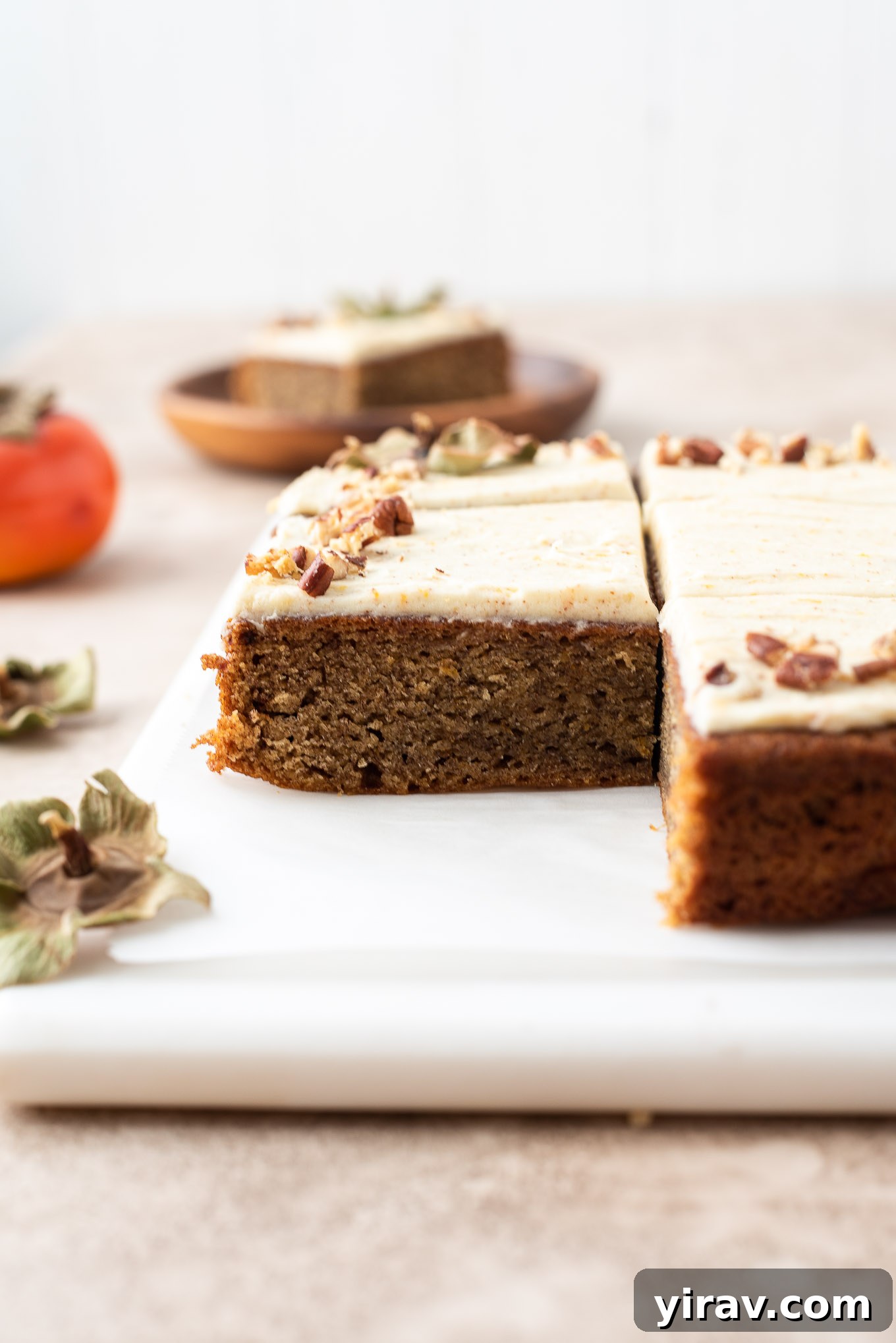
If you’re seeking a truly exceptional dessert that embodies the warmth and richness of autumn, look no further than this delightful Persimmon Cake. This recipe delivers a cake that is wonderfully dense, incredibly moist, and bursting with a unique, subtly sweet flavor from ripe persimmons. Crowned with a luxurious brown butter orange frosting, it’s an irresistible treat that will quickly become a fall baking favorite. Whether you’re an experienced baker or new to the magic of persimmons, this easy-to-follow recipe promises a heavenly experience that’s perfect for any occasion, from casual family gatherings to elegant holiday celebrations.
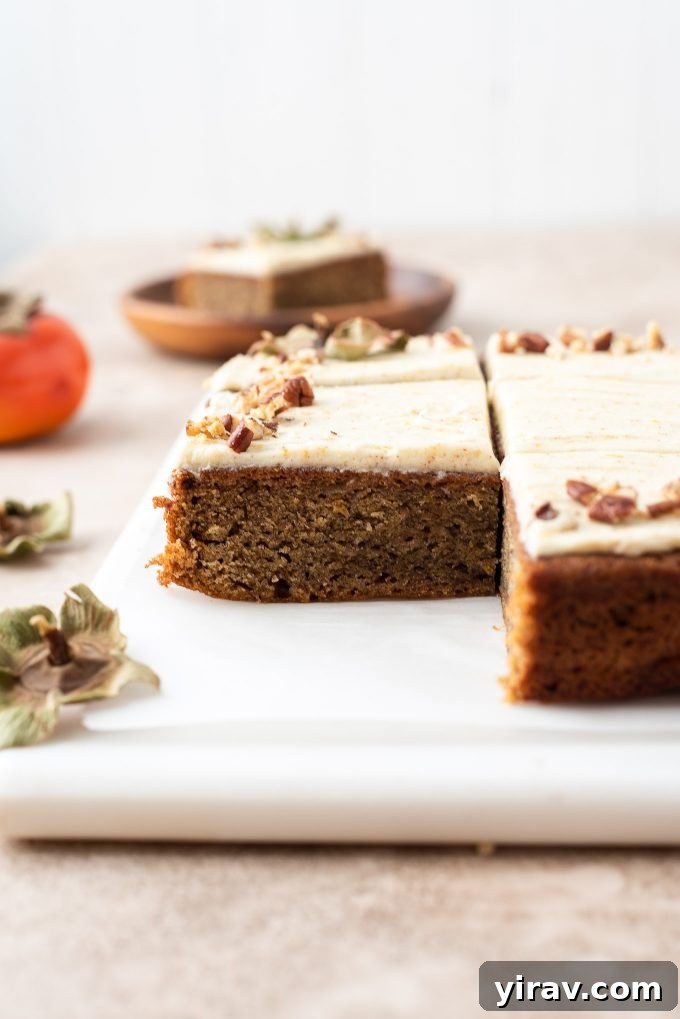
As the leaves begin to turn and the air grows crisp, persimmons become a prized staple in my kitchen. I adore their versatility, from enjoying them fresh and sliced like an apple to incorporating them into vibrant salads, much like my persimmon and spinach salad or a festive holiday salad.
The sweet, honeyed essence of persimmons translates beautifully into baked goods, adding a depth of flavor that is truly captivating. Alongside my cherished persimmon cookies, this Persimmon Cake stands out as one of my all-time favorite autumnal recipes.
This cake boasts a texture reminiscent of a classic carrot cake – moist, substantial, and incredibly satisfying. What truly elevates it is the luscious brown butter orange frosting, which perfectly complements the persimmon’s delicate sweetness with its nutty, bright citrus notes. This combination creates an utterly irresistible dessert that will have everyone asking for a second slice.
One of the best aspects of this recipe is its make-ahead potential. The persimmon puree, a key component, can be prepared up to several days in advance, streamlining your baking process and making this delightful dessert come together with remarkable ease. It’s truly a fabulous fall dessert, versatile enough for the holidays, a special brunch, or simply to enjoy with a cup of coffee on a cozy afternoon.
By signing up, you agree to receive regular emails from me. You can unsubscribe at any time.
The Joy of Persimmon Baking
Persimmons, with their vibrant color and luscious texture, are truly a gift of the autumn season. While they are often enjoyed fresh, their sweet, honey-like flavor makes them an extraordinary ingredient for baking. This Persimmon Cake harnesses that natural sweetness, transforming it into a dense, moist, and utterly satisfying dessert. The unique flavor profile of persimmons, often described as a blend of honey, apricot, and a hint of spice, shines through, creating a cake that feels both familiar and exotic.
Pairing the persimmon cake with a brown butter orange frosting is a stroke of culinary genius. Brown butter adds a depth of nutty, caramelized notes, while fresh orange zest and juice infuse the frosting with a bright, zesty tang. This harmonious blend of flavors creates a multi-layered taste experience that is sophisticated yet comforting. It’s a perfect way to celebrate the bounty of fall and bring a touch of gourmet elegance to your home baking.
Why This Persimmon Cake Will Be Your New Favorite
- Unforgettable Flavor and Texture: This cake is a triumph of flavor, offering a perfect balance of sweet, spiced persimmon notes complemented by the rich, nutty brown butter and bright orange zest in the frosting. Its dense, moist crumb ensures every bite is pure indulgence, making it incredibly satisfying and memorable.
- Remarkable Versatility: Unlike many desserts confined to specific meal times, this persimmon cake is wonderfully versatile. It’s elegant enough to serve as a show-stopping dessert at holiday gatherings, yet comforting enough for a casual breakfast or a special brunch treat. It pairs beautifully with coffee, tea, or a scoop of vanilla ice cream.
- Effortless Preparation: Don’t let its sophisticated taste fool you; this recipe is surprisingly easy to make. The most time-consuming steps, such as preparing the persimmon pulp and browning the butter, can be completed days in advance. This advance preparation allows you to assemble and bake the cake quickly when you’re ready, making it ideal for busy schedules.
- Customizable to Your Liking: While delicious as is, this cake welcomes personalization. Feel free to stir in a handful of chopped walnuts or pecans for added crunch, incorporate dried cranberries or golden raisins for extra chewiness, or even a touch more ginger for a spicier kick. It’s a canvas for your culinary creativity!
Understanding Persimmons: Types and Flavor
Before diving into the recipe, let’s talk about the star ingredient: persimmons. These unique fruits are often misunderstood, but once you know how to select and use them, they unlock a world of flavor, especially in baking.
Choosing the Right Persimmon for Baking
There are two main types of persimmons you’ll commonly find:
- Fuyu Persimmons: These are non-astringent, meaning they can be eaten firm like an apple. They are rounder and flatter, resembling a tomato. While you can use Fuyu for baking, they tend to be smaller and yield less pulp. Their flavor is mild and sweet.
- Hachiya Persimmons: These are astringent when unripe. They have a more pointed, acorn-like shape. It is absolutely crucial that Hachiya persimmons are *very* soft and ripe before consumption or use in baking. When ripe, their flesh becomes jelly-like, incredibly sweet, and loses all astringency. Unripe Hachiya persimmons are unpleasantly bitter and mouth-puckering. For this cake, I highly recommend using Hachiya persimmons as they are much larger and provide a more abundant, naturally pureed pulp with a richer flavor profile.
How to Ripen Persimmons
If your Hachiya persimmons aren’t soft enough, you can ripen them at home. Place them in a paper bag with an apple or banana, which releases ethylene gas, speeding up the ripening process. Store them at room temperature and check daily until they feel very soft to the touch, almost like a water balloon.
The Persimmon Flavor Profile
When perfectly ripe, persimmons offer a sweet, honey-like flavor that often reminds people of apricot, dates, or even brown sugar with hints of cinnamon and nutmeg. This natural sweetness and subtle spice make them a perfect fit for comforting fall desserts like this cake.
If you’re new to this delightful fruit and wish to learn more, be sure to explore my comprehensive Persimmon Recipes guide for detailed information on selecting, preparing, and enjoying persimmons in various dishes.
Key Ingredients for a Perfect Persimmon Cake
Beyond the star persimmons, this cake relies on a handful of basic pantry staples. Let’s explore some of the key components that contribute to its incredible flavor and texture.
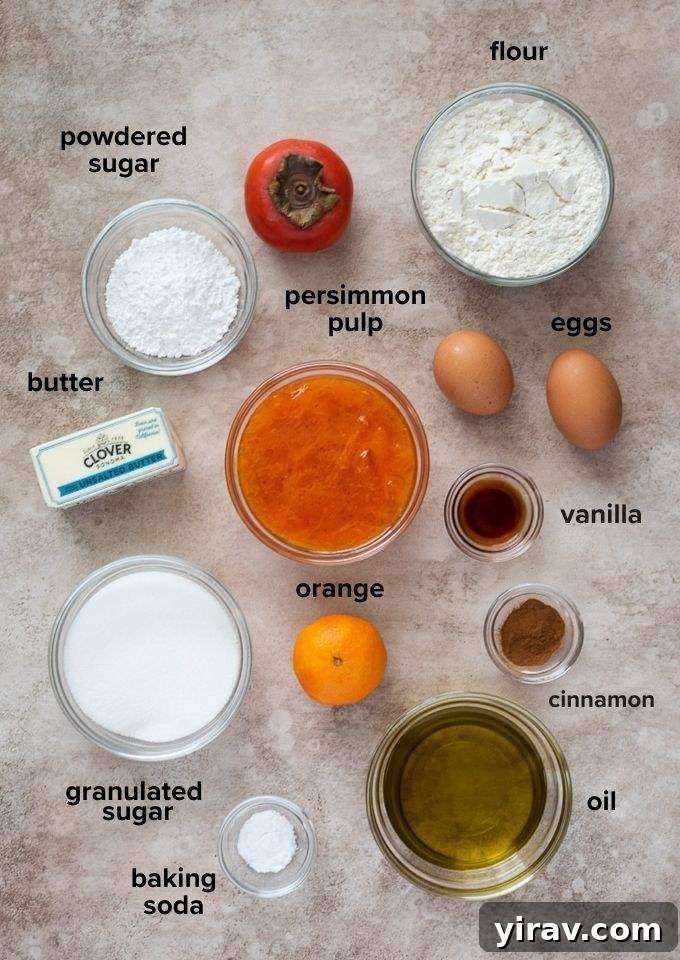
- Persimmon Puree: As mentioned, the type and ripeness of your persimmons are crucial. For best results, use very soft, ripe Hachiya persimmons. The puree adds natural sweetness, moisture, and that distinctive persimmon flavor to the cake. It’s similar to using pumpkin or applesauce in baking.
- Olive Oil: I particularly enjoy using olive oil in baking as it contributes a subtle fruitiness and helps create an incredibly moist crumb. However, any neutral-flavored oil, such as canola, vegetable, or grapeseed oil, will work beautifully in this recipe. The oil keeps the cake tender and prevents it from drying out.
- Brown Butter (for frosting): This isn’t just butter; it’s butter transformed! Browning butter involves gently cooking it until the milk solids toast, imparting a rich, nutty, and caramelized flavor. This simple step elevates the frosting from ordinary to extraordinary, adding immense depth.
- Orange Zest and Juice: The bright, citrusy notes of fresh orange zest and juice cut through the richness of the cake and brown butter, providing a refreshing counterpoint. They enhance the overall aroma and flavor profile, making the cake feel lighter and more vibrant.
- Warm Spices: Ground cinnamon is the primary spice, perfectly complementing the persimmon. You can experiment by adding a pinch of nutmeg, ginger, or cloves for an even deeper, more complex autumn spice blend.
For the precise measurements of all ingredients, please refer to the detailed recipe card at the bottom of this post.
How to Bake This Irresistible Persimmon Cake
Despite its gourmet taste and appearance, this persimmon cake recipe is one of the most straightforward you’ll encounter. While there are a few distinct steps, the process is incredibly manageable, requiring no specialized equipment beyond a food processor for achieving a silky-smooth persimmon pulp.
Pro Tip: To make your baking day even more relaxed, prepare the persimmon pulp and brown butter in advance. Both can be made a day or two ahead and stored, ready to be incorporated when you’re set to bake the cake.
Detailed step-by-step instructions can be found in the comprehensive recipe card below.
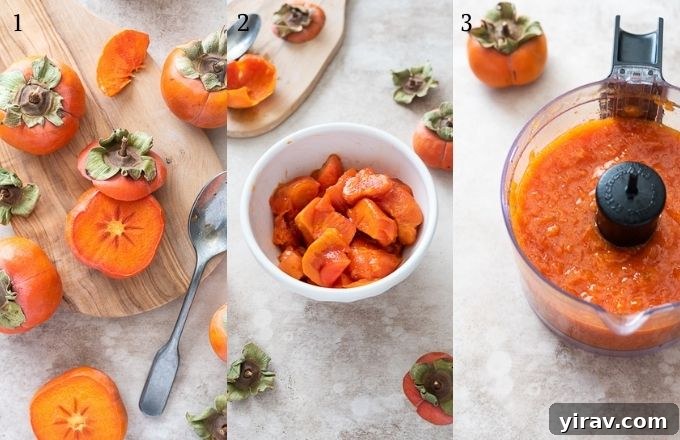
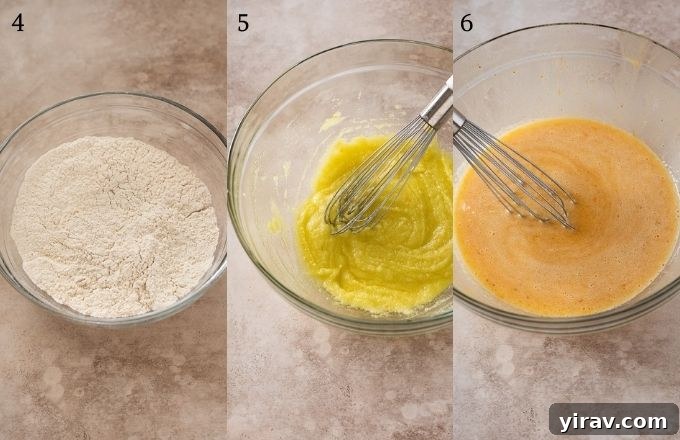
- Prepare the Persimmon Puree: Begin by washing your very ripe persimmons. Gently remove their leafy tops.
- Scoop out the soft, jelly-like pulp directly into a bowl. Ensure no hard bits remain.
- Transfer the persimmon pulp into a food processor. Process until the pulp is perfectly smooth and free of any lumps. This ensures an even texture throughout your cake.
- Prepare the Cake Batter: In a medium-sized mixing bowl, whisk together all your dry ingredients: flour, baking powder, baking soda, ground cinnamon, and salt. Make sure they are well combined to ensure even distribution in the cake.
- In a separate, larger bowl, vigorously whisk the eggs, granulated sugar, and olive oil for about 30 seconds until the mixture becomes frothy and light in color. This step incorporates air, contributing to the cake’s texture.
- Gradually whisk in the prepared persimmon pulp, milk (or your chosen non-dairy alternative), fresh orange zest, and pure vanilla extract until everything is thoroughly incorporated and smooth.
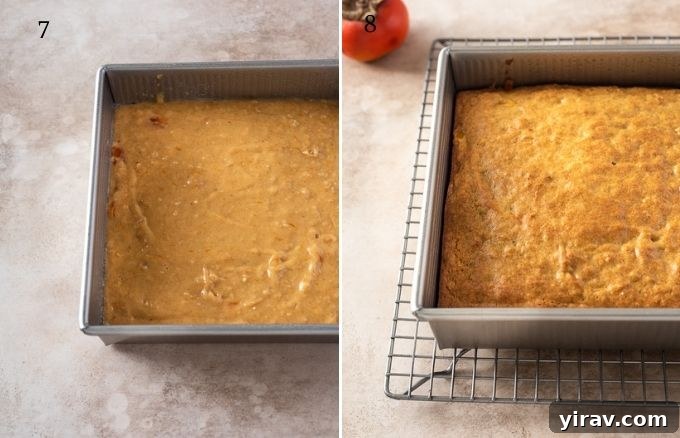
- Gently add the dry ingredients to the wet ingredients. Using a spatula or wooden spoon, stir until the ingredients are just combined. Be careful not to overmix, as this can lead to a tough cake. Pour the batter into a greased 8×8-inch square baking pan, spreading it evenly.
- Bake the cake in a preheated oven at 350°F (175°C) for 30-35 minutes. The cake is done when it’s beautifully puffed in the center and a toothpick inserted into the middle comes out clean. Once baked, transfer the pan to a wire rack and allow the cake to cool completely before frosting.
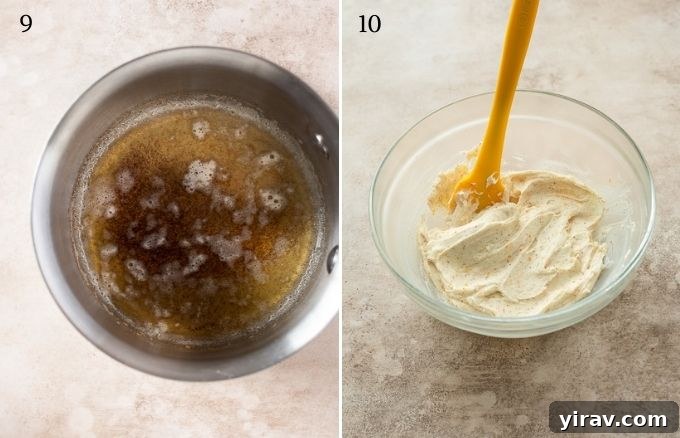
- Brown the Butter for Frosting: Place the unsalted butter in a small saucepan over low heat. Allow it to melt completely. Once melted, increase the heat to medium and continue cooking, stirring occasionally. The butter will foam, then turn a golden brown, developing a wonderful nutty aroma. Be vigilant, as it can burn quickly! Remove from heat immediately and pour the browned butter into a medium bowl to cool. It needs to solidify to the consistency of softened butter before you can make the frosting. You can speed this up by placing it in the refrigerator, stirring every 10-15 minutes.
- Once the browned butter has reached room temperature and softened, add the sifted powdered sugar, orange juice, additional orange zest, milk or cream, and vanilla extract, along with a pinch of salt. Beat on low speed until combined, then increase to medium-high and beat for 1-2 minutes until the frosting is smooth, creamy, and spreadable.
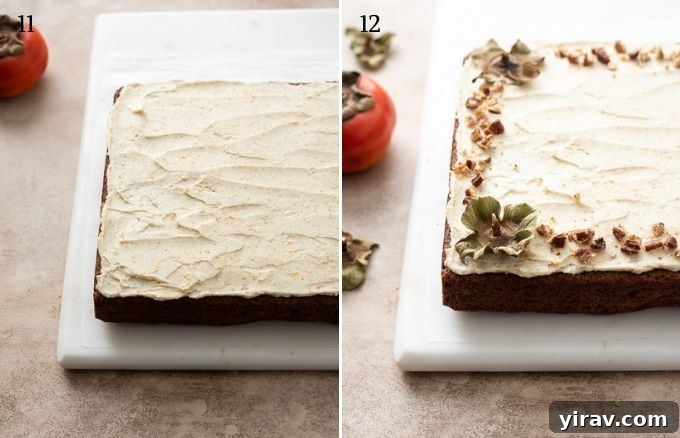
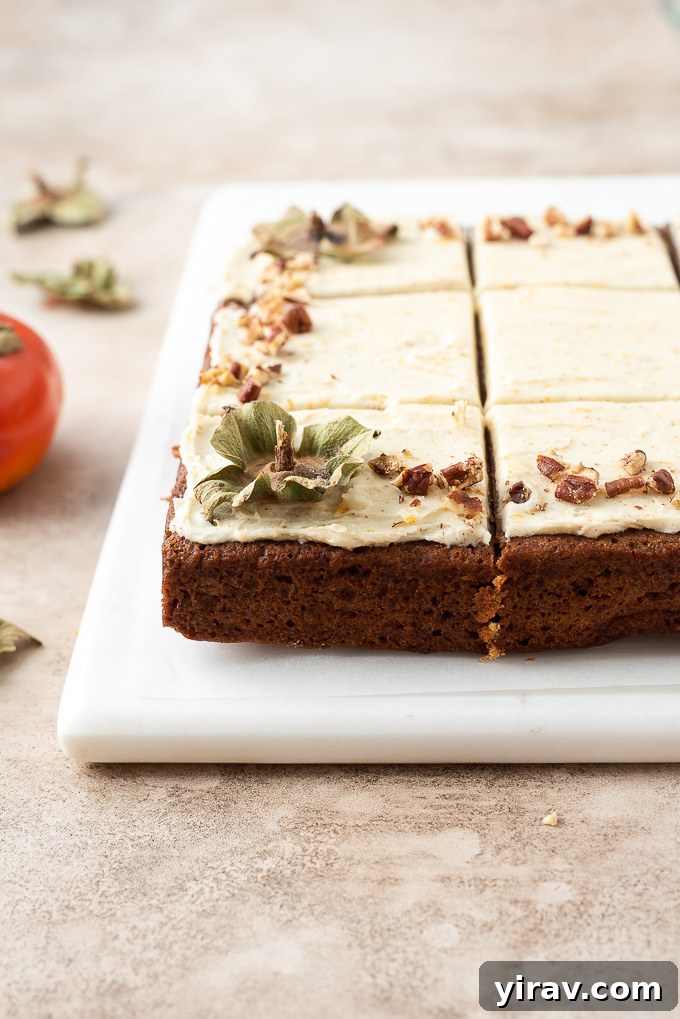
- Carefully remove the completely cooled cake from its pan and place it on a serving plate. Generously frost the cake evenly across the top.
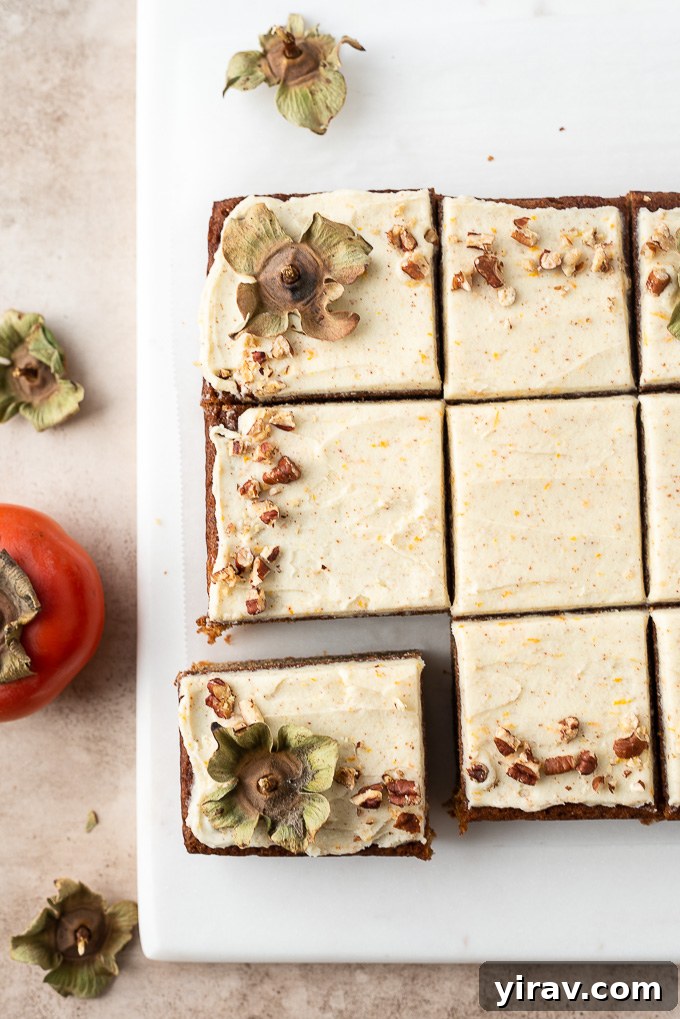
- For a beautiful presentation, decorate with thin slices of fresh persimmon (often called “collars”) and a sprinkle of chopped pecans, if desired. Slice into squares, serve, and savor every exquisite bite!
Expert Tips for Persimmon Cake Success
- Don’t Overmix: When combining the wet and dry ingredients, mix just until no streaks of flour remain. Overmixing develops the gluten in the flour, which can lead to a tough, dry cake.
- Ensure Ripe Persimmons: This cannot be stressed enough, especially for Hachiya persimmons. If they are not incredibly soft, they will be astringent and ruin the taste of your cake.
- Room Temperature Ingredients: For the best emulsion and smoothest batter, ensure your eggs and milk are at room temperature. This helps them incorporate more evenly into the other ingredients.
- Cool the Cake Completely: Resist the temptation to frost a warm cake! The frosting will melt and slide off. Allow the cake to cool fully on a wire rack before applying the brown butter orange frosting.
- Browning Butter Patience: Don’t rush the brown butter process. Keep the heat medium-low and stir frequently. Watch for the change in color and the nutty aroma, then remove it from the heat immediately.
- Adjust Frosting Consistency: If your frosting is too thick, add a tiny splash more milk or orange juice. If it’s too thin, sift in a little more powdered sugar until it reaches your desired spreadable consistency.
- Make Ahead Advantage: Utilize the “pro tip” to prepare your persimmon puree and brown butter in advance. This makes the actual cake baking process incredibly quick and enjoyable, especially for entertaining.
Frequently Asked Questions About Persimmon Cake
What can I do with persimmon fruit?
Fuyu persimmons are quite versatile—they can be enjoyed raw, sliced into salads, or incorporated into baking. Hachiya persimmons, however, must be very soft and ripe to avoid astringency. Once soft, they are perfect for smoothies, cakes, cookies, bread pudding, or even jams and sauces.
What do persimmons taste like?
When ripe, persimmons are wonderfully sweet. Their flavor is often described as a unique blend of orange and mango with delightful honey and floral undertones, sometimes with hints of cinnamon or nutmeg.
How do you puree persimmons?
Creating persimmon pulp is very simple. For Hachiya persimmons, ensure they are extremely ripe and soft. Simply cut off the top, scoop out the soft pulp, and process it in a food processor until it’s completely smooth. For Fuyu, you might need to peel and chop them before processing.
Which persimmons are best for baking?
Both Fuyu and Hachiya persimmons can be used in baking. However, Hachiya persimmons are generally preferred for baking recipes that call for pulp, as their larger size yields a greater quantity of soft, naturally pureed pulp with a richer, more intense flavor when fully ripe.
How do you store persimmon pulp?
Store fresh persimmon pulp in an airtight container in the refrigerator for up to 5-7 days. For longer storage, you can freeze the pulp in an airtight container or freezer-safe bag for up to 3 months. Thaw it in the refrigerator overnight before use.
Can I make this cake gluten-free?
While this recipe uses all-purpose flour, you can often substitute it with a 1:1 gluten-free baking flour blend that contains xanthan gum. Ensure your blend is suitable for cakes and follow package instructions, as some blends might require slight adjustments to liquid. Always check other ingredients for gluten content.
What size baking pan should I use?
This recipe is designed for an 8×8-inch square baking pan. If you use a different size, you may need to adjust the baking time. A 9-inch round cake pan could work, but the cake will be slightly thinner, so reduce baking time. For a thicker cake, you might scale up the recipe for a larger pan.
Serving and Storage Suggestions
This Persimmon Cake is a delight on its own, but here are some ways to enhance your enjoyment:
- Serve at Room Temperature: For the best flavor and texture, allow the cake to come to room temperature before serving, especially if it has been refrigerated. The frosting will be softer and the cake’s flavors more pronounced.
- Pairings: Enjoy a slice with a warm cup of coffee or spiced chai latte. It also makes a wonderful dessert alongside a scoop of vanilla bean ice cream or a dollop of freshly whipped cream.
- Storing Leftovers: Store any leftover cake in an airtight container in the refrigerator. This will keep it fresh and moist for up to 3-4 days.
- Freezing the Cake: For longer storage, the unfrosted cake can be wrapped tightly in plastic wrap and then in aluminum foil, and frozen for up to 2-3 months. Thaw overnight in the refrigerator, then bring to room temperature before frosting and serving. The persimmon puree itself can also be frozen for up to 3 months, making future baking even quicker!
More Delightful Cake Recipes to Explore
If you loved this Persimmon Cake, be sure to check out some of my other fantastic cake recipes that are perfect for any season or occasion:
- Almond Flour Cake
- Cherry Almond Cake
- French Apple Cake
- Rhubarb Cake
Did you try this recipe? If so, be sure to leave a review below and tag me @flavorthemoments on Facebook and Instagram so I can see your delicious creations!
Persimmon Cake with Brown Butter Orange Frosting
4.67 out of 5 stars (3 reviews)
Leave a Review »
Ingredients
For the cake:
- 1 3/4 cups all purpose flour
- 1 teaspoon baking powder
- 1/2 teaspoon baking soda
- 1 teaspoon ground cinnamon
- 1/2 teaspoon salt
- 2 large eggs
- ¾ cup granulated sugar
- 1/2 cup olive oil or your favorite neutral oil
- 1 cup persimmon puree about 4-6 very soft, ripe hachiya persimmons (see notes)
- ¾ cup milk or your choice of non-dairy alternative
- 1 tablespoon orange zest
- 1 teaspoon pure vanilla extract
For the frosting:
- 1 stick unsalted butter
- 1 1/2 cups powdered sugar sifted
- 1 teaspoon orange zest
- 1 tablespoon fresh orange juice
- 3 tablespoons milk or cream
- 1 teaspoon pure vanilla extract
Instructions
Prepare the cake:
-
Preheat your oven to 350°F (175°C). Lightly grease an 8×8-inch square baking pan with cooking spray or butter, and set it aside.
-
In a medium bowl, thoroughly whisk together the all-purpose flour, baking powder, baking soda, ground cinnamon, and salt until well combined. Set this dry mixture aside.1 3/4 cups all purpose flour, 1 teaspoon baking powder, 1/2 teaspoon baking soda, 1 teaspoon ground cinnamon, 1/2 teaspoon salt
-
In a large bowl, vigorously whisk the large eggs, granulated sugar, and olive oil for approximately 30 seconds, until the mixture is frothy and slightly pale.2 large eggs, ¾ cup granulated sugar, 1/2 cup olive oil
-
Add the persimmon puree, milk (or non-dairy alternative), orange zest, and pure vanilla extract to the wet ingredients. Whisk until all ingredients are well combined and the mixture is smooth.1 cup persimmon puree, ¾ cup milk, 1 tablespoon orange zest, 1 teaspoon pure vanilla extract
-
Gradually add the dry ingredients to the wet ingredients. Stir gently with a spatula or wooden spoon until just incorporated. Be careful not to overmix. Pour the batter evenly into your prepared baking pan.
-
Bake for 30-35 minutes, or until the cake is puffed in the center and a wooden toothpick inserted into the center comes out clean. Transfer the cake to a wire rack to cool completely before proceeding.
Prepare the frosting:
-
While the cake is baking or cooling, prepare the brown butter. Place the stick of unsalted butter in a small saucepan. Cook over low heat until the butter melts, then increase to medium heat. Continue to cook, stirring frequently, until the butter browns and develops a rich, nutty aroma (about 5-10 minutes). Pour the browned butter into a medium bowl and allow it to cool and solidify to the consistency of softened butter before making the frosting. This can be hastened in the refrigerator.1 stick unsalted butter
-
Once the browned butter has softened, add the sifted powdered sugar, orange zest, fresh orange juice, milk or cream, and pure vanilla extract to the bowl. Beat on low speed with a hand mixer until the ingredients are just combined. Increase the speed to medium-high and beat for 1-2 minutes until the frosting is smooth, light, and creamy.1 1/2 cups powdered sugar, 1 teaspoon orange zest, 1 tablespoon fresh orange juice, 3 tablespoons milk or cream, 1 teaspoon pure vanilla extract
-
Once the cake has completely cooled, spread the brown butter orange frosting evenly over the top. Garnish with decorative persimmon slices and toasted pecans if desired. Cut the cake into 12-16 squares and enjoy your delicious homemade treat!
Notes
- Making Persimmon Puree: To prepare persimmon puree, ensure your persimmons (especially Hachiya) are very ripe and soft. Cut off the top, scoop out the pulp, and then process it in a food processor until it’s perfectly smooth.
- Pro Tip for Efficiency: For a quicker baking experience, prepare both the persimmon pulp and brown butter in advance. Remember to allow the brown butter to soften to room temperature before using it in the frosting.
- Freezing Persimmon Puree: Persimmon puree can be frozen for up to 3 months. Simply thaw it in the refrigerator overnight when you’re ready to use it.
- The total time listed above includes approximately 30 minutes for the cake to cool before frosting.
- Storing Leftover Cake: Store any leftover cake in an airtight container in the refrigerator to maintain its freshness. For optimal flavor and texture, it’s best served at room temperature.
Nutrition
Carbohydrates: 49g,
Protein: 4g,
Fat: 18g,
Saturated Fat: 7g,
Cholesterol: 53mg,
Sodium: 152mg,
Potassium: 117mg,
Fiber: 1g,
Sugar: 28g,
Vitamin A: 311IU,
Vitamin C: 14mg,
Calcium: 58mg,
Iron: 2mg
Nutrition is estimated using a food database and is only intended to be used as a guideline for informational purposes.
Did you try this recipe?
Be sure to tag @flavorthemoments with the hashtag #flavorthemoments on Instagram so I can see what you made!