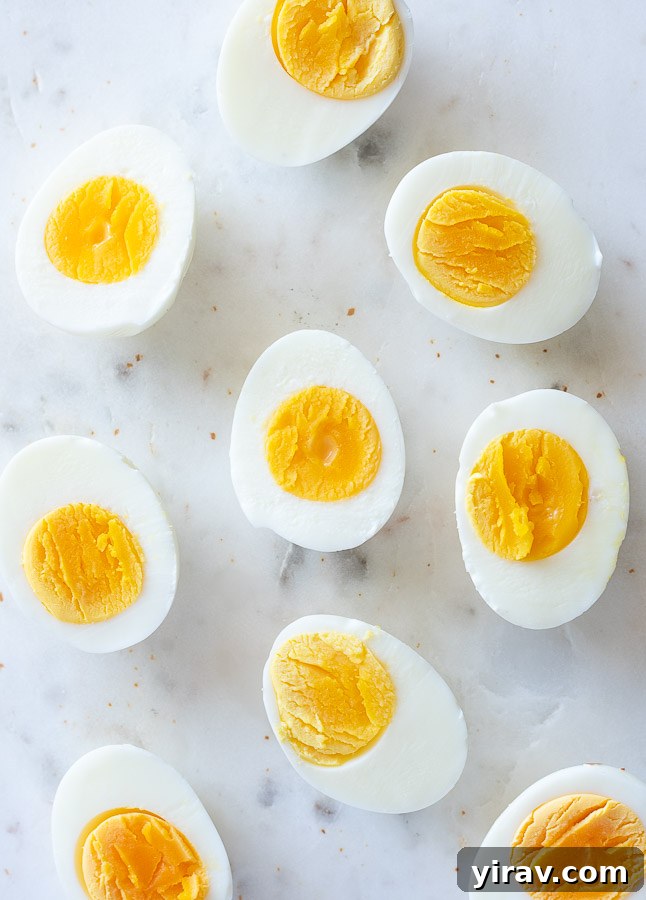
Unlock the secret to consistently flawless hard boiled eggs featuring perfectly soft, creamy, and vibrant yellow yolks. This comprehensive guide provides easy-to-follow, step-by-step instructions designed to eliminate common cooking pitfalls and guarantee delightful results every single time. Whether you’re preparing them for a quick, nutritious snack, a protein-packed breakfast, or as a versatile ingredient in your favorite recipes, mastering the art of hard boiling eggs is a fundamental skill for any home cook.
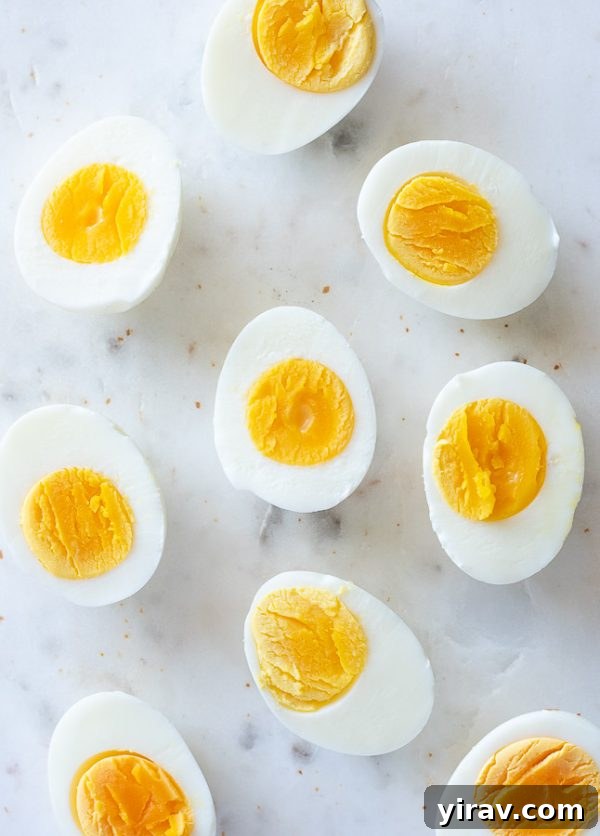
Hard boiled eggs are a culinary staple in my kitchen, a true workhorse ingredient that I rely on almost daily. Their convenience and nutritional value make them an indispensable part of my diet, whether I’m grabbing one for a quick, healthy snack, incorporating them into a hearty breakfast, or featuring them in more elaborate dishes. From classic French-style egg salad sandwiches to elegant bacon deviled eggs for appetizers, or as a robust component of a vibrant Salmon Nicoise Salad, the possibilities are endless.
Beyond their versatility, eggs stand out as an incredibly easy and healthy source of high-quality protein, essential vitamins, and beneficial fats, making them an excellent addition to any meal, at any time of day. They provide sustained energy and help with satiety, supporting a balanced diet and active lifestyle.
My journey to appreciating hard boiled eggs wasn’t always smooth. Growing up, I often encountered overcooked eggs with dry, crumbly yolks and an unappetizing grayish-green ring around them – a clear sign of sulfur formation from excessive heat. These experiences made me wary of them for years. However, once I discovered the proper technique for cooking them, my perspective completely shifted. The difference between a rubbery, sulfurous yolk and a soft, creamy, golden one is monumental. This guide is dedicated to ensuring you never suffer through an overcooked egg again, providing you with the knowledge to create delightfully tender hard boiled eggs with luscious yolks every time.
Table of Contents
- Why You’ll Love This Foolproof Method
- Essential Tips for Perfect Boiled Eggs
- How to Hard Boil Eggs: Step-by-Step Instructions
- Hard Boiled Egg Cooking Times: Achieve Your Desired Yolk
- Hard Boiled Egg FAQs
- Expert Recipe Notes for Success
- More Delicious Egg Recipes You’ll Love
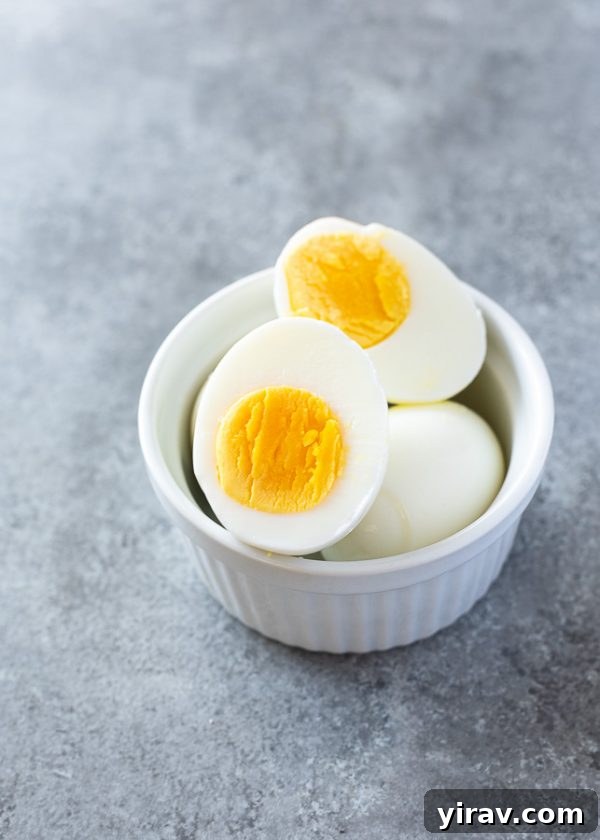
Why You’ll Love This Foolproof Method for Hard Boiled Eggs
Preparing hard boiled eggs might seem straightforward, but achieving consistent perfection often eludes many. This method isn’t just about boiling water; it’s a carefully refined technique that guarantees exceptional results, transforming a simple ingredient into a culinary delight. Here’s why this recipe will become your go-to guide:
- Consistently Perfect Every Time: Say goodbye to green rings and dry yolks. This foolproof approach ensures perfectly cooked eggs with creamy, soft yolks without fail. You’ll achieve restaurant-quality results in your own kitchen.
- Customizable Doneness: Whether you prefer a slightly jammy yolk, a soft and creamy center, or a fully cooked but still tender yolk, this guide provides precise timing to hit your desired level of doneness, putting you in complete control.
- Minimize Shell Cracks: A common frustration is eggs cracking during boiling. Our gentle cooking technique significantly reduces the likelihood of cracks, preserving the egg’s integrity and minimizing waste.
- Effortless Peeling: Peeling hard boiled eggs can be a struggle, but with our essential tips, including the critical ice bath step, you’ll find the shells practically slide off, saving you time and frustration.
- Simple & Accessible: You don’t need fancy equipment or advanced culinary skills. This method uses basic kitchen tools and straightforward instructions, making it accessible for beginners and seasoned cooks alike.
Essential Tips for Perfect Boiled Eggs
Achieving hard boiled egg perfection isn’t just about timing; it involves a few key considerations that can dramatically impact the outcome. Incorporating these simple tips will elevate your egg-boiling game from good to absolutely great.
- Opt for Older Eggs for Easier Peeling: This is perhaps the most crucial tip for hassle-free peeling. Fresh eggs have membranes that cling tightly to the shell, making them notoriously difficult to peel without tearing the whites. As eggs age (typically 1-2 weeks old), the pH level of the egg white increases, causing the membrane to naturally separate from the shell. This creates a tiny air pocket and makes peeling significantly easier. If you only have very fresh eggs on hand and struggle with peeling, alternative methods like Instant Pot Hard Boiled Eggs might be worth exploring, as pressure cooking can also aid in easier peeling of fresher eggs.
- Standardize with Large Eggs: For consistent results, always use large eggs. The cooking times provided in this recipe are calibrated for large eggs. Using different sizes will alter the internal temperature progression, leading to under or overcooked eggs if you don’t adjust the cooking time accordingly. Stick to large eggs to take the guesswork out of achieving your desired doneness.
- Employ a Gentle Cooking Method: Many recipes call for a rolling boil throughout the entire cooking process, which is a common culprit for cracked eggshells. The rapid agitation of the water can cause eggs to knock against each other or the pot, leading to cracks. Our method, detailed below, involves bringing the water to a boil and then immediately removing it from the heat to let the residual heat gently cook the eggs. This significantly minimizes shell cracks, ensuring beautifully intact eggs.
- Select the Right Pot Size: Choose a saucepan that is just large enough to hold your eggs in a single layer without overcrowding, but with enough room for them to move slightly. Overcrowding can lead to uneven cooking and increase the chance of cracking. A single layer ensures that all eggs are exposed to the heat uniformly, promoting even cooking.
- Always Use an Ice Bath: This step is non-negotiable for two critical reasons. First, immediately plunging the eggs into an ice bath halts the cooking process, preventing overcooking and the dreaded green ring around the yolk. Second, the rapid temperature change causes the egg white to contract, further separating it from the shell membrane, which makes peeling incredibly simple. Leave them in the ice bath for at least 5-10 minutes until they are thoroughly cooled.
How to Hard Boil Eggs: Step-by-Step Instructions
Making perfect hard boiled eggs doesn’t require complex techniques, but following these precise steps will guarantee consistent, delightful results every single time. Forget the days of cracked shells and dry yolks; this gentle method is a game-changer.
Pro Tip: The gentle cooking technique outlined here is key to preventing eggshells from cracking, a common issue with traditional vigorous boiling methods. By utilizing residual heat, we ensure a more controlled and protective environment for your eggs.
For a detailed breakdown of ingredients and quantities, please refer to the recipe card below.
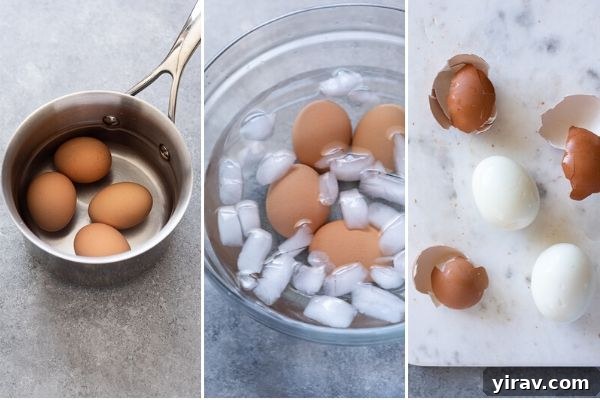
- Prepare the Pot: Carefully place your eggs in a saucepan. Ensure the pan is large enough to accommodate all the eggs in a single layer without them being tightly packed. This allows for even heat distribution. Fill the pan with cold water, ensuring the water level covers the eggs by at least 1 inch. This adequate water coverage is essential for consistent cooking.
- Bring to a Gentle Boil: Cover the saucepan with a lid and place it over medium-high heat. Monitor the pot closely. The water will begin to simmer, then transition to a rolling boil. You’ll know it’s reached a full boil when the lid starts to rattle and steam vigorously escapes from underneath. This signals the optimal point to proceed to the next step.
- Cook Off-Heat: As soon as the water reaches a robust rolling boil, immediately remove the pan from the heat source. Keep the lid securely on the pan. Let the eggs stand, covered, for 8 to 12 minutes, depending on your preferred level of yolk doneness. This period allows the trapped heat to gently cook the eggs without the harshness of continuous direct heat, preventing overcooking and cracking.
- The Essential Ice Bath: Once the cooking time is complete, use a slotted spoon to carefully transfer the eggs from the hot water directly into a large bowl filled with ice water. Allow the eggs to cool in the ice bath for 5-10 minutes. This crucial step immediately stops the cooking process and makes the eggs much easier to peel later.
- Peel or Store: Once cooled, your perfect hard boiled eggs are ready! If you plan to use them immediately, gently crack and peel the shells under cold running water or in the ice bath. If not, store the unpeeled eggs in their shells in the refrigerator for up to one week.
Hard Boiled Egg Cooking Times: Achieve Your Desired Yolk
The beauty of hard boiled eggs lies in the ability to customize the yolk’s texture to your personal preference. Whether you desire a slightly runny, jammy consistency or a fully firm, creamy center, achieving it is all about precise timing during the off-heat cooking stage. The times listed below are based on using large eggs and the gentle cooking method described in this recipe.
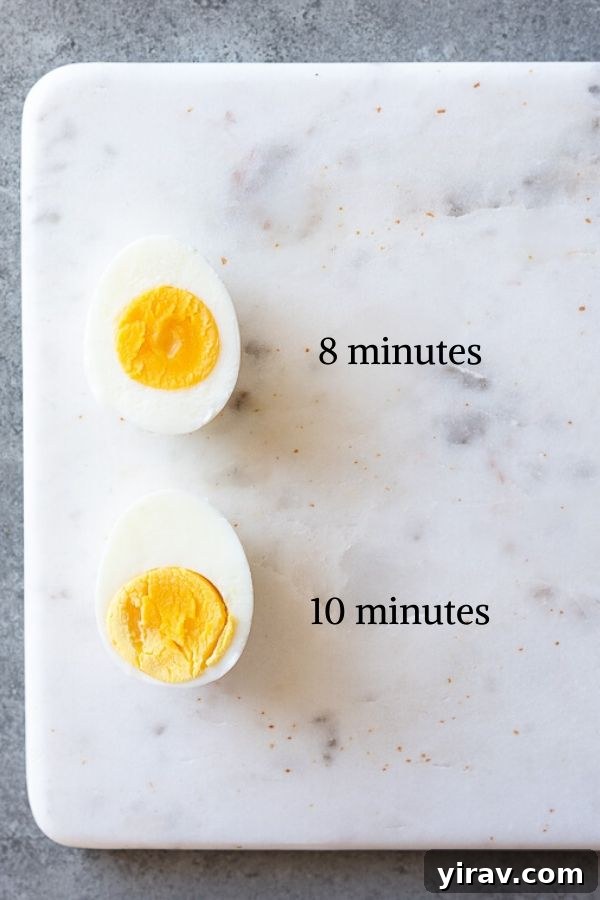
After the water comes to a rolling boil and you’ve removed the pan from the heat, let the eggs stand, covered, for the following durations:
- 8 minutes: This yields a soft, delicate yolk that is still wonderfully creamy and slightly jammy in texture, perfect for topping toast or salads. The whites will be fully set.
- 10 minutes: For a yolk that is creamy and mostly set, with just a hint of softness remaining in the very center. This is a popular choice for classic hard boiled eggs, offering a rich, satisfying mouthfeel.
- 12 minutes: This results in a fully cooked, firm yolk that is still tender and vibrant yellow, without any dryness or chalkiness. Ideal for egg salads, deviled eggs, or when a completely set yolk is preferred.
- Over 12 minutes: Cooking beyond 12 minutes can lead to overcooked eggs. These are often characterized by a dry, crumbly yolk and the appearance of a grayish-green ring around the yolk, a result of sulfur and iron reacting. While still safe to eat, the texture and flavor are significantly compromised. Aim for the 8-12 minute window for optimal results.
Experiment within this range to discover your perfect hard boiled egg! Remember that slight variations in stove intensity, pot thickness, and starting water temperature can influence outcomes, so a little practice will help you fine-tune the timing for your specific kitchen setup.
Hard Boiled Egg FAQs
It’s a common occurrence for eggs to crack while boiling, primarily due to internal pressure build-up as the egg expands rapidly with heat. If an egg cracks during boiling, it is generally still safe to eat. However, for optimal food safety and quality, it is best to consume any cracked eggs on the same day they are cooked. The crack exposes the interior, making it more susceptible to spoilage.
The secret to easy peeling lies in the ice bath! Once your eggs are cooked, transferring them immediately to an ice bath for 5-10 minutes is crucial. This rapid cooling causes the egg white to contract and pull away from the shell, making peeling much simpler. To peel, gently tap the egg on a hard surface to create small cracks all over the shell, then start peeling from the wider end, often where a small air pocket forms. Peeling under cold running water can also help dislodge stubborn shell pieces.
Properly stored, unpeeled hard boiled eggs can last for up to one week in the refrigerator. It’s best to keep them in their shells until you’re ready to eat them, as the shell provides a natural protective barrier against bacteria and odors. Peeled hard boiled eggs should also be stored in an airtight container in the refrigerator and consumed within 3-5 days for the best quality and safety.
While you can use fresh eggs, they are notoriously difficult to peel cleanly due to the membrane clinging tightly to the shell. For the easiest peeling experience, eggs that are about 1-2 weeks old are ideal. If you only have fresh eggs, consider adding a teaspoon of baking soda to the boiling water or trying an Instant Pot method, as these can sometimes help with easier peeling.
Expert Recipe Notes for Success
- Optimal Egg Age for Peeling: For the smoothest peeling experience, prioritize using eggs that are 1-2 weeks old. The slight aging process causes the egg white to shrink slightly and its pH to change, which helps the membrane detach more easily from the shell. This is a game-changer for avoiding frustrating, torn whites.
- Standardize Egg Size: The cooking times provided in this recipe are specifically calibrated for large eggs. If you use smaller or larger eggs, you will need to adjust the standing time accordingly to achieve your desired doneness. Smaller eggs will cook faster, and larger eggs will require a bit more time.
- Precision in Doneness: The stand time is critical for yolk texture.
- 8 minutes yields a lusciously soft, creamy yolk with a slightly jammy center.
- 10 minutes results in a yolk that is still creamy but mostly set, with a hint of tender softness in the middle.
- 12 minutes ensures a fully cooked yolk that remains vibrant yellow and tender, never dry or chalky.
Avoid cooking longer than 12 minutes to prevent the undesirable grayish-green ring and dry texture.
- Flexible Quantity and Pot Choice: While this recipe specifies 8 eggs in a medium pot, you can easily scale it up or down. The crucial factor is to select a pot that allows all the eggs to rest in a single layer with some space around them. Overcrowding can lead to uneven cooking and increase the risk of cracking.
- Storage Best Practices: Store unpeeled hard boiled eggs in their original carton or an airtight container in the refrigerator for up to one week. If you’ve peeled them, they should be kept in an airtight container with a damp paper towel (to prevent drying) and consumed within 3-5 days.
- Starting Water Temperature: Always start your eggs in cold water. This allows the eggs to heat up gradually with the water, promoting more even cooking and reducing the chances of the shell cracking due to sudden temperature shock.
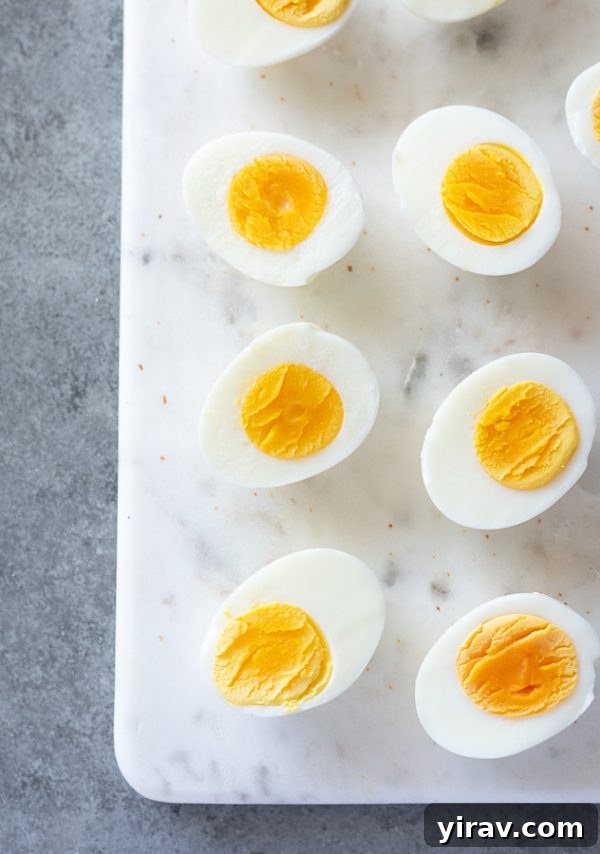
Perfect Hard Boiled Eggs
8 eggs
1 min
9 mins
10 mins (ice bath & cool down)
20 mins
Learn how to make hard boiled eggs with perfectly soft, creamy yolks every single time with these easy step by step instructions!
0 reviews
Leave a Review »
Ingredients
- 8 large eggs (preferably 1-2 weeks old for easier peeling)
- Cold water
- Ice
Instructions
-
Place the eggs in a medium saucepan in a single layer, then fill the pan with enough cold water to cover the eggs by 1 inch.8 large eggs
-
Place the lid on the saucepan and cook on medium-high heat until the water begins to boil rapidly. You’ll know the water is boiling because the lid will rattle and steam will release.
-
Remove the pot from the heat immediately. Keep the lid on and let stand covered for 8 – 12 minutes, depending on your desired level of doneness. (See Recipe Notes above for a guide).
-
Prepare a large bowl with ice water. Carefully transfer the hot eggs into the ice bath and let them cool for 5-10 minutes, or until thoroughly chilled.
-
Peel the eggs if you’re ready to use them, or store unpeeled in the refrigerator for up to 1 week.
Notes
- Older eggs (1-2 weeks old) are significantly easier to peel than fresh eggs because the egg white shrinks slightly and separates from the shell membrane over time.
- Cooking times are based on large eggs. Adjust times for smaller or larger eggs accordingly.
- For a softer, creamier yolk, let stand for 8 minutes. For a yolk that’s slightly soft in the center, aim for 10 minutes. For a fully cooked, yet tender yolk, allow 12 minutes.
- This recipe details 8 eggs, but you can cook any number you wish. Always choose a pot that allows eggs to be in a single layer with some room to move.
- Hard boiled eggs, unpeeled, can be stored in the refrigerator for up to one week. Peeled eggs should be stored in an airtight container and consumed within 3-5 days.
Nutrition
Calories: 80 kcal,
Protein: 7g,
Fat: 5g,
Saturated Fat: 2g,
Polyunsaturated Fat: 3g,
Cholesterol: 209mg,
Sodium: 80mg
Nutrition is estimated using a food database and is only intended to be used as a guideline for informational purposes.
More Delicious Egg Recipes You’ll Love:
Once you’ve mastered the perfect hard boiled egg, you’ll find countless ways to enjoy this versatile ingredient. Hard boiled eggs are not only fantastic on their own but also serve as a foundational element for many other delicious dishes. Explore these additional egg-centric recipes to further expand your culinary repertoire:
- Bacon and Egg Muffins: Perfect for meal prep and on-the-go breakfasts.
- Bacon and Egg Casserole: A hearty and comforting dish ideal for brunches or feeding a crowd.
- Crustless Broccoli Quiche: A light yet satisfying option, packed with vegetables and flavor.
- French Omelette by Food Network: Elevate your breakfast with this classic, delicate preparation.
- Ham and Cheese Frittata: An incredibly versatile and easy-to-make Italian-style omelet.
- Poached Eggs: Master another fundamental egg cooking technique for elegant breakfasts.
Did you try this recipe? If so, be sure to leave a review below and tag me @flavorthemoments on Facebook and Instagram!
Did you try this recipe?
Be sure to tag @flavorthemoments with the hashtag #flavorthemoments on Instagram so I can see what you made!