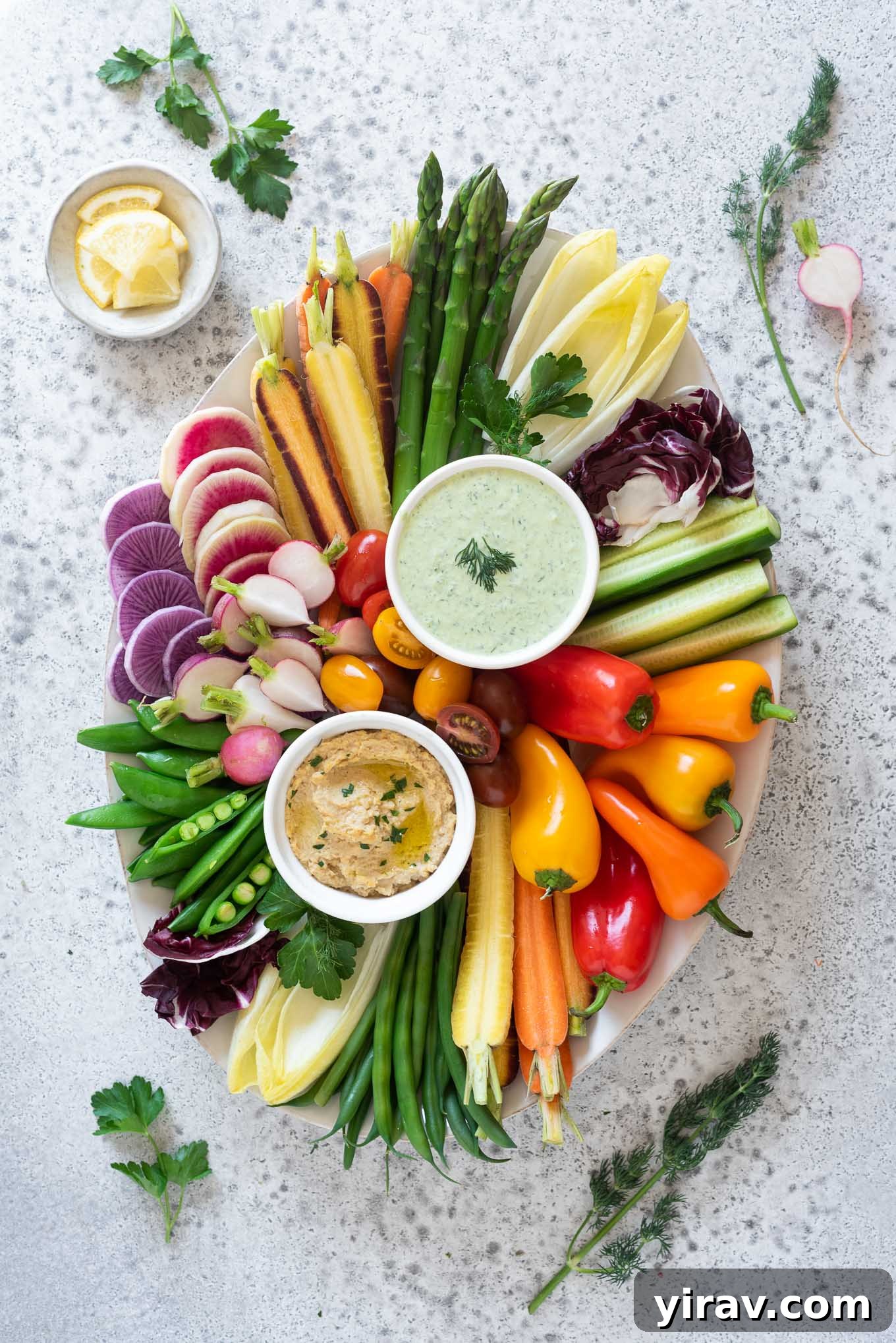
Transform your next gathering with an effortlessly elegant and vibrant crudités platter! Discover how to quickly assemble this show-stopping appetizer that’s guaranteed to impress your guests, whether for a dinner party, a festive holiday celebration, or a casual get-together. With simple tips and a focus on fresh ingredients, you can create a beautiful, healthy centerpiece that everyone will love to graze on.
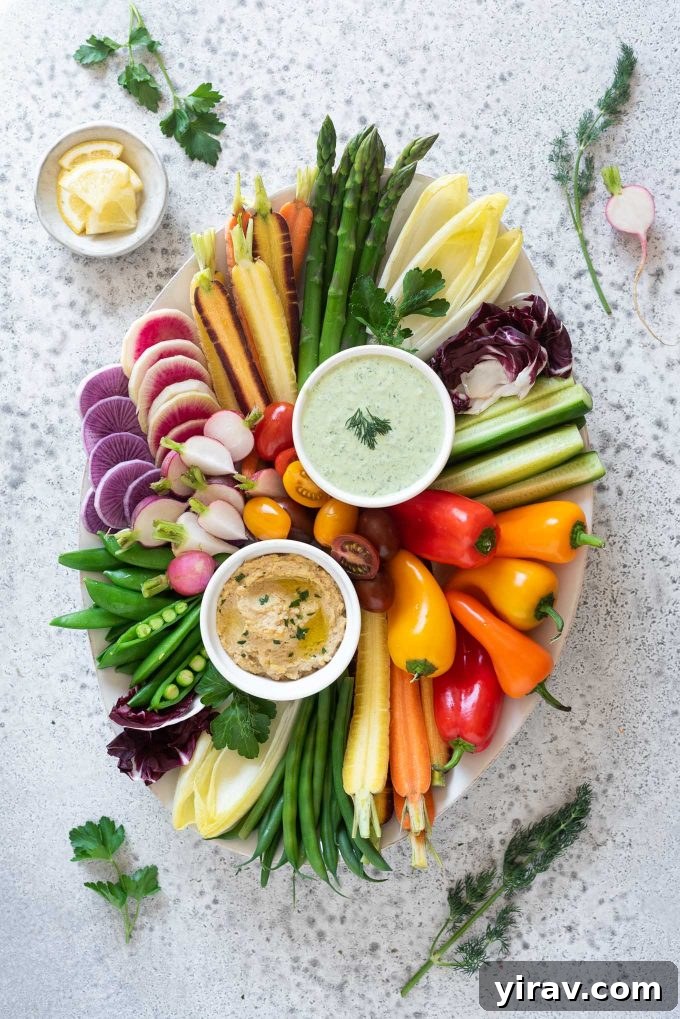
Celebrate Freshness: The Ultimate Crudités Platter Guide
There’s no better way to usher in the beauty of spring than with a colorful, fresh, and irresistibly appealing crudités platter. Bursting with vibrant produce, it perfectly embodies the season’s bounty and adds a touch of natural elegance to any table. This guide will walk you through creating a stunning vegetable board that is as delightful to look at as it is to eat.
I find immense joy in crafting impressive boards for holidays and gatherings, from my decadent cheese board and elegant smoked salmon platter to a delightful chocolate board. The reason is simple: they’re easy to assemble, consistently impress guests, and offer a fun, interactive way to enjoy food. A crudités platter follows this same philosophy, bringing a healthy, refreshing option to the mix.
Lately, I’ve been particularly inspired to create this vibrant veggie platter, especially with spring produce overflowing in local markets. Wandering through the stalls, I feel like a kid in a candy store, eagerly collecting bunches of rainbow carrots with their gorgeous leafy tops, radishes in every conceivable variety and color, crisp cucumbers, sweet bell peppers, and so much more. This abundant freshness is what spring is all about for me, making healthy eating not just easy, but truly exciting!
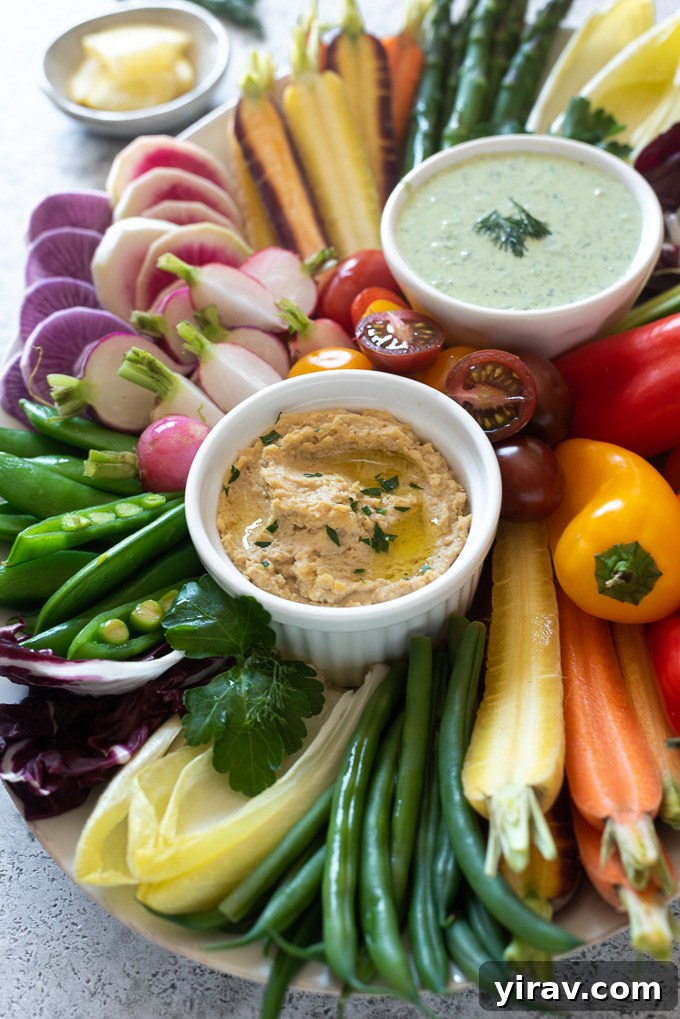
Why You’ll Adore This Crudités Platter Recipe
A crudités platter is more than just an appetizer; it’s a celebration of fresh, wholesome ingredients beautifully presented. Here’s why this recipe will become your go-to for entertaining:
- Stunning Visual Appeal: This crudités platter is inherently fresh, vibrant, and a genuine show-stopper, making it a perfect addition to parties, holidays, or any gathering. Its array of colors and textures creates an inviting and impressive centerpiece that guests gravitate towards.
- Endless Customization: You have complete freedom to tailor this platter with your favorite seasonal vegetables and an assortment of delicious dips. This flexibility ensures it always feels fresh and exciting, no matter the occasion or your guests’ preferences.
- Healthy and Diet-Friendly: Offering a healthy way to snack or graze, this platter is easily customizable for almost any special diet. It’s naturally gluten-free, often dairy-free (depending on dips), and packed with nutrients, making it a guilt-free option for everyone.
- Effortless Preparation: While it looks elaborate, this crudités platter can be prepped or even assembled entirely in advance. This makes entertaining stress-free, allowing you to enjoy your guests without last-minute kitchen rushes.
- Versatile for Any Occasion: From elegant dinner parties and festive holiday feasts to casual brunches, baby showers, or simply a healthy snack for your family, a crudités platter fits seamlessly into any event.
- Budget-Friendly Entertaining: Compared to many other appetizers, a vegetable platter can be quite economical, especially when you choose in-season produce. It’s a smart way to feed a crowd without breaking the bank.
Essential Ingredients for Your Crudités Platter
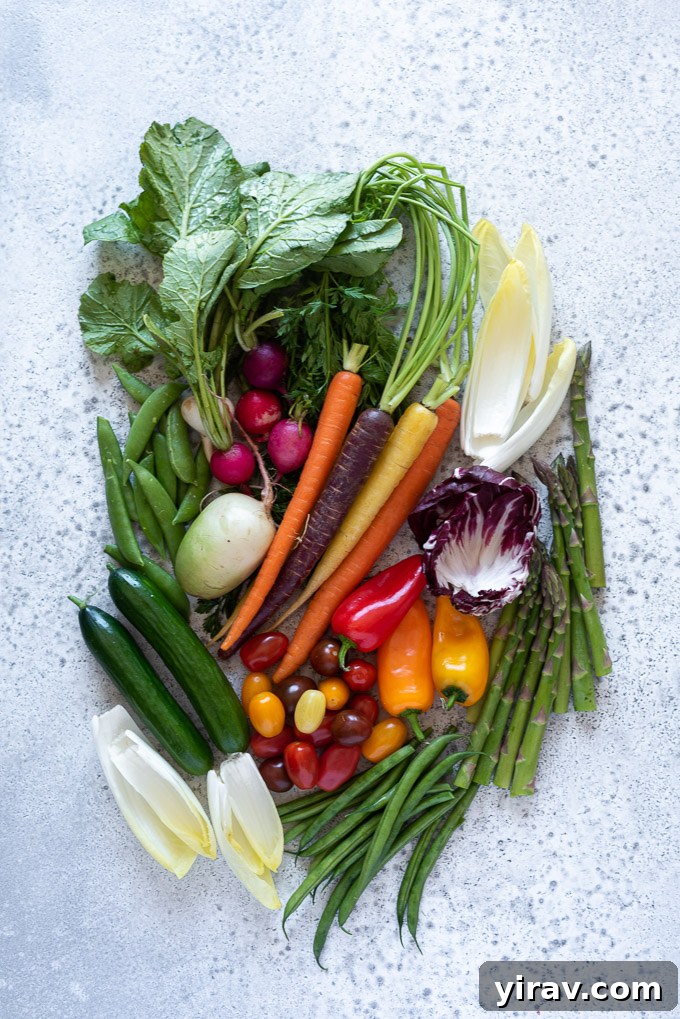
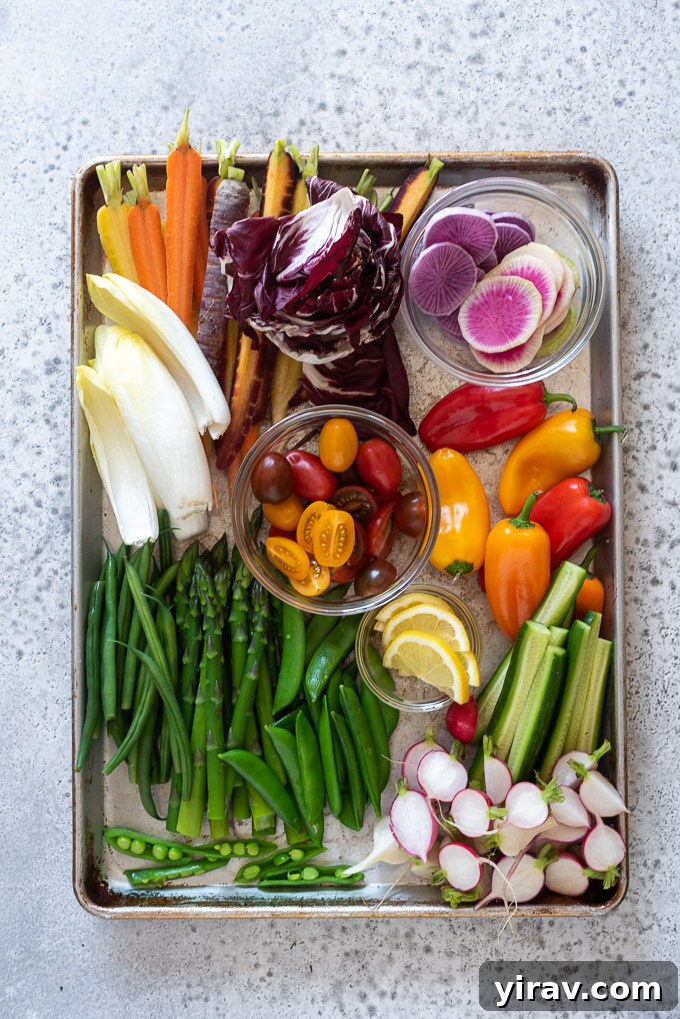
The beauty of a crudités platter lies in its flexibility. While this recipe includes a wide variety of raw and lightly cooked vegetables alongside delicious dips, remember that you can customize it to include as few or as many varieties as your heart desires.
Detailed Ingredient Notes and Selection Tips
- Choosing Your Veggies: The vegetables I’ve listed are merely suggestions. Feel free to substitute them with your personal favorites or highlight whatever seasonal vegetables are at their peak. For maximum flavor and visual appeal, always opt for the freshest vegetables available. Consider visiting a local farmer’s market for the best selection. Look for produce that is firm, brightly colored, and free from blemishes.
- — Pro Tip for Fibrous Vegetables: For harder, more fibrous vegetables like asparagus, snap peas, snow peas, or green beans, a quick blanching can make a world of difference. Submerge them in boiling water for just a few minutes until they are tender-crisp. Immediately transfer them to an ice bath (shocking) to halt the cooking process and preserve their vibrant green color. Drain them thoroughly before adding to your platter.
- Diverse Color and Texture: Aim for a wide array of colors (red, green, orange, purple, white) and textures (crisp, crunchy, tender). This not only makes your platter visually stunning but also offers a more engaging eating experience.
- Selection of Dips: This recipe features my homemade white bean hummus and a refreshing Green Goddess dressing. However, the possibilities for dips are truly endless! Other fantastic homemade options include my savory Greek yogurt ranch dressing or a cool and creamy Greek tzatziki. Don’t hesitate to use your favorite high-quality store-bought dips for convenience. Consider offering a variety of flavors – perhaps a spicy option, a creamy one, and a tangy one – to cater to all palates.
- Beyond the Basics: Don’t limit yourself to common vegetables. Experiment with less conventional crudités like thinly sliced fennel, endive spears, purple cauliflower florets, or even small bell peppers in various colors. The more variety, the more exciting your platter becomes.
Expert Tips for Crafting the Perfect Crudités Platter
Assembling a beautiful veggie platter is surprisingly easy, allowing you to make it as elaborate or as simple as your occasion demands. A bit of thoughtful planning and preparation will ensure it comes together quickly and beautifully. Follow these expert tips for a truly perfect presentation:
- Choose Your Canvas: The platter itself sets the stage. You can use one large serving platter or a rustic wooden board for a cohesive look. If you don’t have one large enough, group a few smaller platters or dishes together to create a bountiful spread. Consider different shapes – round, rectangular, or even irregularly shaped – to add visual interest.
- Gauge Your Guest List: Before you start shopping, estimate how many people your crudités platter will serve. A good rule of thumb is to allow about 4 ounces of prepared vegetables per person. Adjust this quantity based on whether the crudités will be the sole appetizer or one of many options. If it’s a lighter snack, you might need less; for a main grazing item, lean towards more.
- Prioritize Peak Freshness: The vegetables are undeniably the stars of this dish, so freshness is paramount for maximum flavor and crispness. Whenever possible, shop at your local farmer’s market, where produce is often picked just days (or even hours) before sale. Look for signs of freshness: vibrant colors, crisp leaves, and a firm texture. For example, choose a bunch of carrots with lush, leafy tops over pre-bagged carrots, as the greens are a strong indicator of recent harvest. Avoid any vegetables that appear wilted, discolored, or soft.
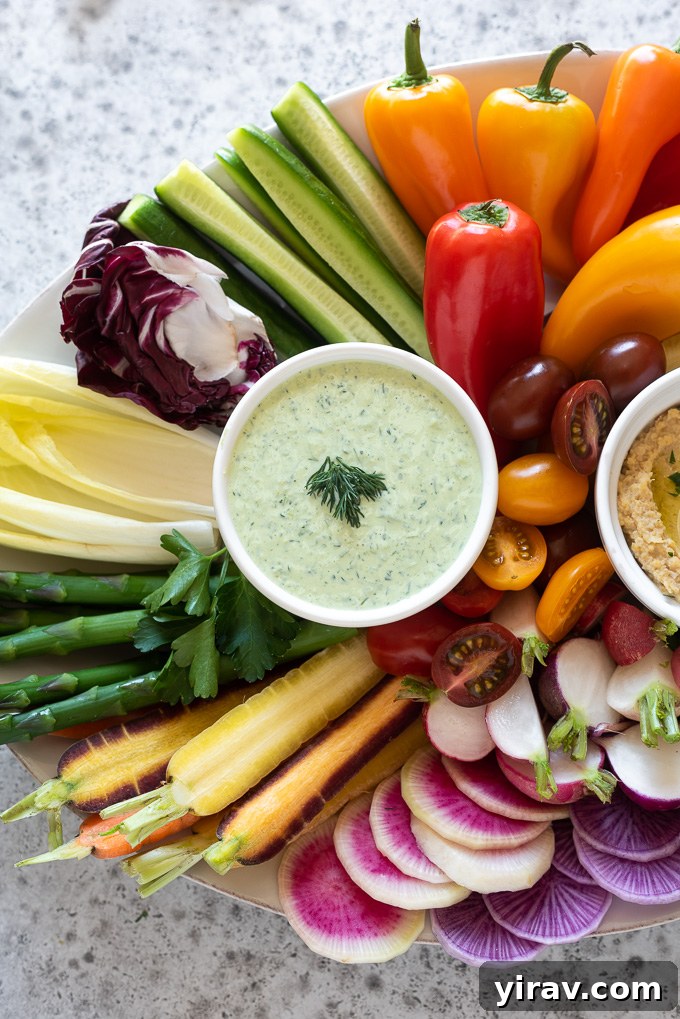
- Curate a Symphony of Colors and Textures: A truly eye-catching platter boasts a wide variety of hues and tactile experiences. Combine crunchy carrots and celery with softer cucumber slices, firm bell peppers, and tender blanched green beans. Incorporate colors from across the spectrum – deep reds of cherry tomatoes, bright greens of broccoli, vibrant purples of radicchio, and sunny yellows of bell peppers. This visual diversity makes the platter more appealing and encourages guests to try a wider selection.
- Consider a Thematic Approach: Elevate your platter by planning a theme. Highlight vegetables that are specifically in season, creating a fresh, timely display. You could also arrange vegetables of similar colors in an ombré pattern, transitioning from light green to dark green, or from pale yellow to deep orange. For special holidays, get creative with shapes – use cookie cutters for star-shaped cucumbers or carrot hearts.
- Thoughtful Dip Selection: Your dips are crucial companions to the vegetables. Choose your favorite homemade or store-bought options, but also keep in mind the dietary needs and preferences of your guests. Offer a dairy-free option like hummus, a creamy choice like ranch, and perhaps a spicy alternative. Providing small spoons or individual spreaders for each dip also promotes hygiene and ease of serving.
Detailed Vegetable Preparation
Proper preparation is key to a beautiful and delicious crudités platter. Taking the time to wash, cut, and potentially blanch your vegetables will ensure they are perfectly ready for serving.
Step-by-Step Vegetable Preparation
Begin by thoroughly washing all your vegetables under cool running water. Even if they appear clean, rinsing removes any dirt, pesticides, or contaminants. For vegetables with edible skins, a gentle scrub brush can be helpful.
- Carrots and Radishes: Trim off the ends. For carrots, peel them if desired, or simply scrub them clean, especially if they are colorful heirloom varieties. Leave a small part of the green tops on carrots and radishes for added texture and a rustic, farm-fresh aesthetic. Cut larger carrots lengthwise into sticks or coin-sized slices. Radishes can be halved, quartered, or thinly sliced.
- Cucumbers: You can peel cucumbers or leave the skin on for extra fiber and color. Slice them into rounds, spears, or half-moons. For a more elegant presentation, score the outside of the cucumber with a fork before slicing to create a decorative edge.
- Bell Peppers: Wash the peppers thoroughly, remove the core and seeds, then slice them into long, even strips. Use a mix of red, yellow, and orange bell peppers for maximum color.
- Broccoli and Cauliflower: Break or cut these into bite-sized florets. Ensure the pieces aren’t too large, making them easy to dip and eat.
- Celery: Trim the ends and cut celery stalks into manageable sticks.
- Cherry Tomatoes: These can be left whole or halved, depending on your preference.
- Fibrous Vegetables (Asparagus, Snap Peas, Snow Peas, Green Beans): As mentioned earlier, these benefit greatly from blanching. Bring a pot of salted water to a rolling boil. Add the vegetables and cook for 2-3 minutes, just until they are tender-crisp and their color intensifies. Immediately transfer them to a bowl of ice water to stop the cooking and lock in that vibrant green hue. Once completely cooled, drain them very well and pat them dry to remove excess moisture, which can dilute your dips.
- Leafy Vegetables (Endive, Radicchio): Separate the leaves and wash them carefully. Endive leaves make excellent edible scoops for dips. Radicchio can be torn into smaller, dip-friendly pieces.
Pro Tip for Advanced Preparation: Many vegetables can be prepped up to one day in advance. Wash and cut them, then store them in airtight containers lined with damp paper towels in the refrigerator. This helps maintain their crispness. Your dips can also be made in advance and stored in separate containers, ready to be placed on the platter just before serving.
Mastering the Art of Platter Assembly
Now comes the most enjoyable part: assembling your crudités platter! This is where you can let your creativity shine and transform simple vegetables into a work of edible art. Follow these step-by-step instructions to create a visually appealing and easy-to-access spread.
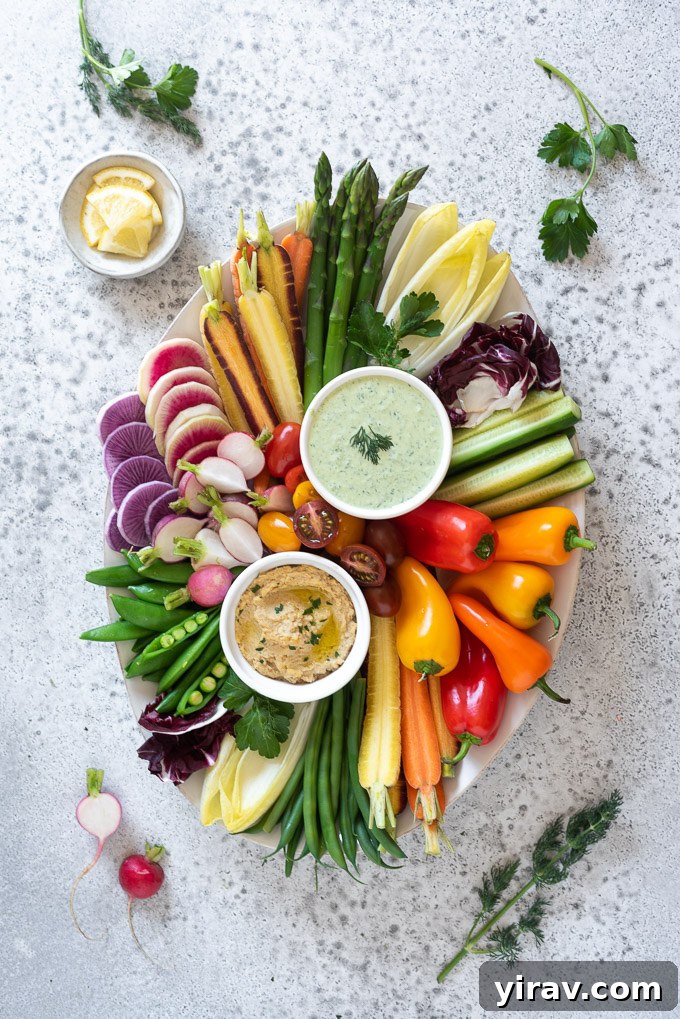
Once your platter is assembled, don’t hesitate to add special, thoughtful touches like edible flowers, fresh herbs, or thin lemon slices to elevate its beauty and freshness!
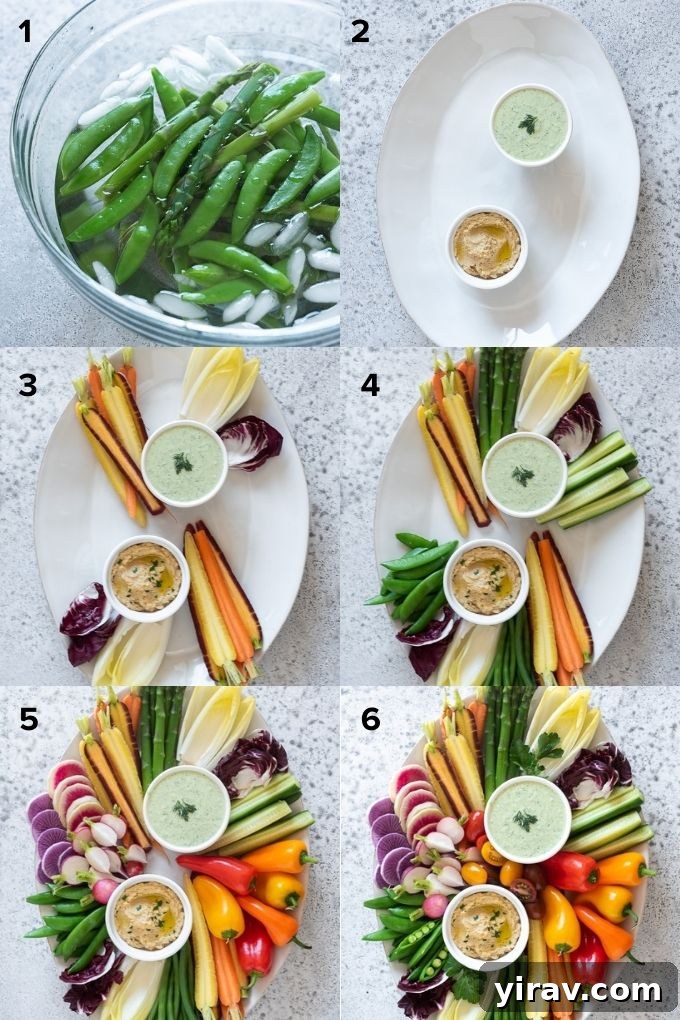
- Prepare Dips and Begin Placement: First, ensure any fibrous vegetables (like asparagus or snap peas) are blanched and thoroughly dried, if you choose to include them. Next, spoon your selected dips into attractive small bowls or ramekins. These dip bowls will be the anchors of your platter, so place them strategically. You can group them in the center, arrange them linearly, or scatter them around the board to encourage movement.
- Start with Larger Vegetables: Once the dips are in place, begin arranging some of the largest vegetable pieces around the top and bottom of the dip bowls. These larger items, such as cucumber spears, long carrot sticks, or bell pepper strips, provide structure and create natural sections on your platter.
- Introduce More Variety: Next, add more vegetables, focusing on varying colors and textures as you go. Create distinct clusters of similar vegetables, or intersperse them to create a colorful mosaic. Think about how different shapes and sizes can complement each other. For example, place rounds of radish next to spears of green beans.
- Fill in the Gaps with Remaining Veggies: Continue adding the remaining prepared vegetables, filling in any empty spaces along the sides of the platter. Aim for a full, abundant look, but avoid overcrowding the board to the point where it becomes difficult for guests to pick up items. Creating slight height variations can also add depth.
- The Finishing Touches: To complete your masterpiece, fill any small remaining empty spaces with smaller vegetables like cherry tomatoes, individual radicchio leaves, or edible garnishes. Fresh herbs such as parsley sprigs, dill, or basil leaves not only add a pop of green but also a wonderful aroma. Edible flowers (like pansies or nasturtiums) can introduce unexpected beauty, while thin slices of lemon or lime offer a refreshing citrus note. These final touches elevate your crudités platter from simple to sensational.
Serve your beautiful crudités platter immediately, or store it according to the tips below for later enjoyment.
Frequently Asked Questions About Crudités
A crudités board, or crudités platter, is a French-inspired appetizer consisting of an assortment of raw or lightly blanched fresh vegetables, typically cut into bite-sized pieces, served alongside one or more dips. It’s renowned for its fresh flavors, vibrant colors, and healthy appeal.
The primary difference lies in their main components. Crudités focus exclusively on fresh vegetables and accompanying dips, providing a lighter, often vegetarian or vegan-friendly option. Charcuterie, on the other hand, is centered around a selection of cured meats, often accompanied by cheeses, olives, crackers, fruits, nuts, and sometimes a small assortment of vegetables. Both are popular forms of appetizer boards but cater to different taste preferences.
Crudités are almost always served with a variety of dips and dressings. Popular choices include classic hummus, Greek tzatziki, creamy ranch dressing, savory olive tapenade, spinach dip, roasted red pepper dip, blue cheese dip, and even simple vinaigrettes. Offering several different dips enhances the experience and caters to diverse tastes.
Absolutely! The options are vast. Common and popular choices include broccoli florets, cauliflower florets, asparagus spears (blanched), snap peas, snow peas, cherry tomatoes, cucumber slices or sticks, radishes (various types like Easter egg or watermelon), green beans (blanched), celery sticks, bell pepper strips (red, yellow, orange), endive leaves, and even jicama or fennel slices.
Yes, absolutely! One of the best features of a crudités platter is its make-ahead potential. You can assemble your entire platter up to one day in advance. Once assembled, wrap it tightly in plastic wrap to prevent the vegetables from drying out and store it in the refrigerator until you are ready to serve. For best results, add any fresh herbs or delicate garnishes just before serving.
To keep leftover vegetables crisp, separate them from any dips. Store the vegetables in an airtight container in the refrigerator, ideally lined with a paper towel to absorb moisture. Most vegetables will stay fresh for 2-3 days. Store dips in separate airtight containers. Note that blanched vegetables may soften slightly after prolonged storage.
Important Recipe Notes and Customization Ideas
- Platter Inspiration: The beautiful platter featured in these photos is the Marin white large oval serving platter from Crate and Barrel, measuring 20″W x 14.5″D x 2″H. This is not an affiliate link, just a source for inspiration. Any large, attractive board or platter will work wonderfully.
- Vegetable Versatility: Remember, the vegetables listed in this recipe are merely suggestions. Feel free to use as few or as many different varieties as you wish. The key is to choose a nice array of colors, shapes, and textures to create an inviting and exciting display.
- Blanching for Best Texture: Certain vegetables, such as asparagus, green beans, and snap peas, are best served lightly blanched. This tenderizes their fibrous texture while maintaining a pleasant crispness and vibrant color, making them more enjoyable to eat.
- Dip Freedom: Both the white bean hummus and green goddess dressing can easily be swapped out for your favorite homemade or quality store-bought dips. Don’t hesitate to experiment with different flavors to match your preference or party theme.
- Nutrition Information: Please note that the provided nutrition information is estimated for the vegetables only and does not include the dips, as the nutritional data for those is typically included in their respective individual posts.
- Advanced Assembly: For stress-free entertaining, assemble your crudités platter up to one day in advance. Simply wrap it tightly with plastic wrap and refrigerate until you’re ready to present it. This allows you more time to enjoy your event and your guests.
More Healthy Appetizers You’ll Adore: Perfect Pairings and Alternatives
If you’re looking for more delicious and healthy appetizer ideas to complement your crudités platter or to offer different options for your guests, explore these fantastic recipes:
- Crispy Baked Zucchini Chips: A crunchy, guilt-free alternative to traditional potato chips, perfect with a creamy dip.
- Caprese Skewers by Iowa Girl Eats: A simple yet elegant classic featuring fresh mozzarella, cherry tomatoes, and basil, drizzled with balsamic glaze.
- Endive Bites with Pears, Blue Cheese, and Pecans: Sophisticated and flavorful bites that offer a wonderful contrast of textures and tastes.
- Fresh Key Lime Greek Yogurt Dip: A sweet and tangy dip that pairs wonderfully with fruit platters, offering a refreshing counterpoint to savory appetizers.
- Grilled Shishito Peppers with Lemon and Sea Salt: A quick and easy appetizer with a mild, sometimes surprising, heat that’s always a crowd-pleaser.
- 5-Minute Homemade Guacamole: Creamy, fresh, and zesty, this classic dip is perfect for serving with tortilla chips or as a spread for other appetizers.
- Spicy Maple Rosemary Roasted Nuts: A flavorful and satisfying snack with a delightful blend of sweet, savory, and spicy notes.
- Shrimp Ceviche with Mango Avocado Salsa: A light, refreshing, and vibrant seafood appetizer bursting with tropical flavors.
- Smoked Salmon Appetizer Bites: Elegant and savory bites featuring rich smoked salmon, perfect for a more sophisticated gathering.
Did you try this recipe? If so, be sure to leave a review below and tag me @flavorthemoments on Facebook and Instagram!
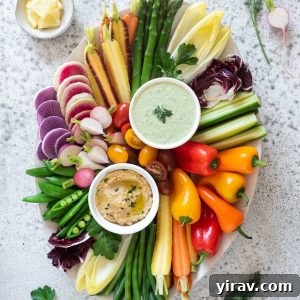
Easy Crudités Platter
Pin Recipe
reviews
Leave a Review »
Ingredients
- 8 ounces asparagus woody bottoms removed and blanched
- 8 ounces green beans trimmed and blanched
- 8 ounces snap peas blanched
- 8 ounces rainbow carrots halved or quartered lengthwise if large
- 8 ounces cherry tomatoes whole or halved
- 8 ounces baby bell peppers
- 8 ounces cucumbers quartered lengthwise or sliced
- 1 bunch Easter egg radish or your favorite, halved or sliced
- 2 watermelon radish peeled and sliced
- 1 head belgian endive leaves removed
- half head radicchio leaves torn into smaller sizes
- white bean hummus for serving
- green goddess dressing for serving
Instructions
-
Prepare dips (if not using store bought), and wash and cut the vegetables.
-
If using fibrous vegetables such as snap peas, asparagus, green beans or snow peas, blanch in a pot of boiling water for 2-3 minutes until just tender. Shock in a bowl of ice water until cool, then drain well.
-
Place the dip in small bowls or ramekins and place them on the platter. Arrange the largest veggies around the top and bottom of the bowls.
-
Add more vegetables alongside the others, varying the colors. Add the remaining vegetables where space is available, then fill in any empty spaces with smaller vegetables, fresh herbs, edible flowers or even sliced lemon. Serve and enjoy!
Notes
- The platter in this photo is the Marin white large oval serving platter from Crate and Barrel. The dimensions are 20″W x 14.5″D x 2″H. This is not an affiliate link.
- The vegetables in the recipe are suggestions only. Use as few or as many different varieties as you wish, just choose a nice variety of colors and textures.
- Vegetables such as asparagus, green beans and snap peas are best served blanched as they can be very fibrous.
- Hummus and green goddess dressing may be substituted with your favorite homemade or store bought dips!
- Nutrition information does not include the dips as it is included in separate posts.
- Assemble your platter up to one day in advance and wrap tightly in plastic wrap until you’re ready to serve it.
Nutrition
Nutrition is estimated using a food database and is only intended to be used as a guideline for informational purposes.