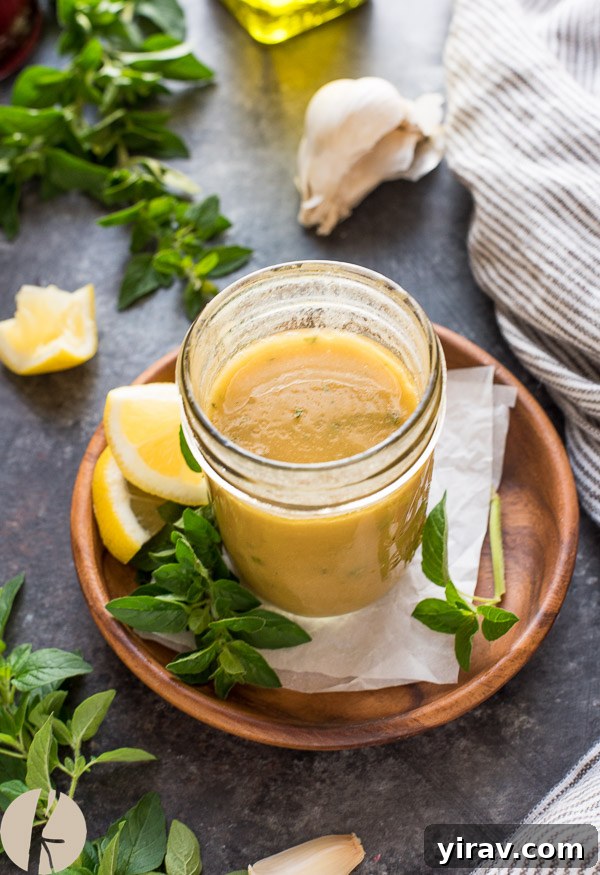
Greek Salad Dressing is a culinary delight, bursting with vibrant, fresh flavors that promise to elevate any meal. This incredibly simple recipe requires just a few pantry staples and can be whipped up in approximately 5 minutes, making it an indispensable addition to your kitchen repertoire.
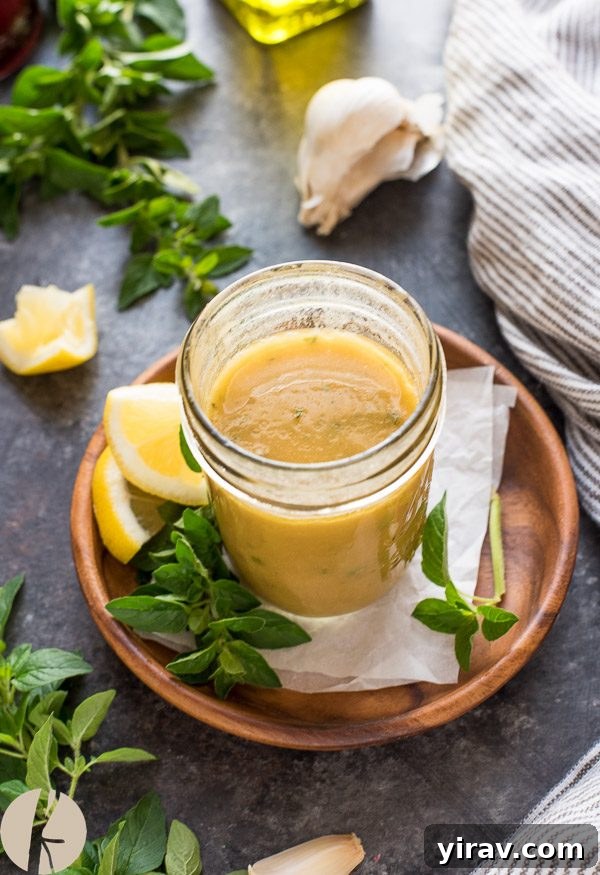
The arrival of warmer weather often signals the start of “salad season,” and for good reason! While salads are a year-round staple for many, they truly shine when fresh, seasonal produce is abundant. Embracing lighter, healthier meals during swimsuit season is an added bonus, and homemade dressings are key to making these dishes truly enjoyable and nourishing.
Being particularly discerning about the quality of ingredients in my salads, I always ensure I have a variety of homemade dressings on hand. Recipes like my balsamic vinaigrette dressing and apple cider vinegar dressing are prepared weekly. This commitment to homemade ensures that my salads are always dressed with fresh, high-quality ingredients, free from the long list of preservatives found in many store-bought alternatives. The difference in taste and quality is simply incomparable.
This particular Greek Salad Dressing recipe has rapidly become a firm favorite and a staple in my home. Its versatility knows no bounds; while it’s exceptional in my Greek quinoa salad and Greek orzo salad recipe, its bright, tangy profile makes it suitable for almost any type of green salad, grain bowl, or even as a marinade.
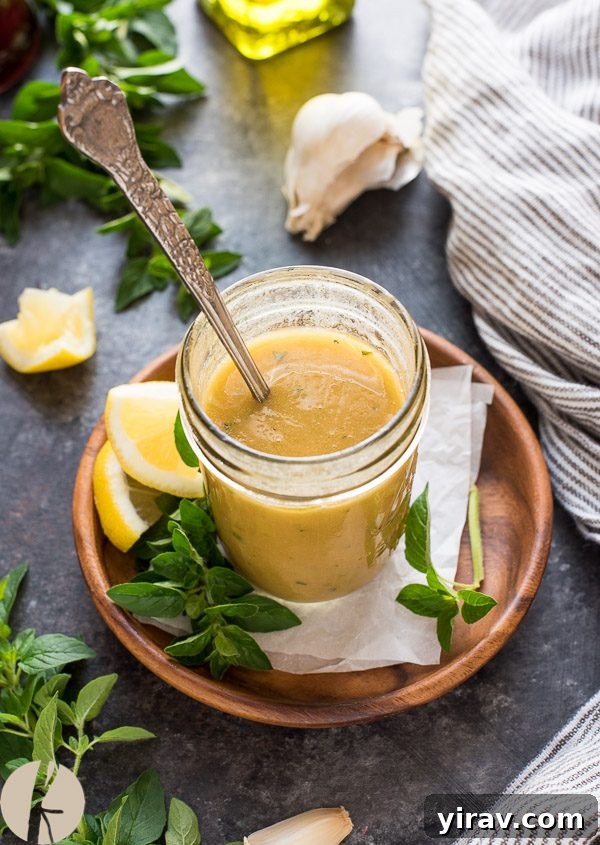
Why You’ll Love This Homemade Greek Dressing
There are countless reasons why this homemade Greek dressing is about to become your new favorite. It’s a game-changer for anyone looking to add fresh, vibrant flavor to their meals without compromising on health or convenience. Here’s why it stands out:
- Unrivaled Freshness and Flavor: This Greek dressing recipe boasts an incredibly fresh, tangy profile, absolutely brimming with authentic Mediterranean flavors. The combination of high-quality ingredients creates a harmonious taste that store-bought dressings simply can’t replicate.
- Minimal Ingredients, Maximum Impact: With only six simple ingredients, most of which you likely already have in your pantry, this recipe is incredibly accessible. Each component plays a crucial role in building a complex and satisfying flavor profile.
- Effortlessly Quick to Prepare: Forget lengthy cooking processes. This dressing comes together in less than five minutes, making it perfect for busy weeknights or impromptu meal prep sessions.
- Transforms Any Salad: Beyond just Greek salads, this versatile dressing has the power to elevate any green salad, pasta salad, grain bowl, or even roasted vegetables to an entirely new level of deliciousness. Its bright acidity and herbaceous notes complement a wide range of dishes.
- Healthier Choice: By making your dressing at home, you have complete control over the ingredients, allowing you to avoid artificial preservatives, excessive sugars, and unhealthy oils often found in commercial products. It’s a wholesome choice you can feel good about.
The Benefits of Crafting Your Own Greek Dressing
While store shelves are lined with countless dressing options, choosing to make your own Greek dressing offers significant advantages that extend beyond just taste. It’s an investment in your health, your culinary skills, and your wallet.
Firstly, the control over ingredients is paramount. Commercial dressings often contain hidden sugars, unhealthy fats, and a bewildering array of artificial preservatives and stabilizers. By contrast, a homemade dressing allows you to select premium extra virgin olive oil, fresh lemon juice, and aromatic herbs, ensuring a clean and wholesome product. This means you’re fueling your body with natural goodness, free from unnecessary additives that can detract from a healthy diet.
Secondly, the flavor profile of homemade dressing is simply superior. Freshly minced garlic, vibrant lemon juice, and aromatic oregano combine to create a much more robust and authentic taste experience. This intensity of flavor means you might even use less dressing to achieve the desired effect, further contributing to a healthier meal. The tanginess of red wine vinegar and the subtle pungency of Dijon mustard freshly emulsified create a vibrant burst of flavor that pre-made options struggle to match after sitting on a shelf for months.
Finally, making your own dressing is incredibly cost-effective in the long run. While the initial investment in high-quality pantry staples might seem a little higher, these ingredients can be used for numerous batches of dressing and other culinary creations. You’ll quickly find that the cost per serving of homemade dressing is significantly lower than continually purchasing bottles from the supermarket.
The Essential Ingredients for Authentic Greek Flavor
This Greek Salad Dressing relies on a carefully selected blend of six core ingredients, each contributing uniquely to its authentic Mediterranean taste. While the recipe is simple, the quality of these ingredients makes all the difference. I strongly recommend against substitutions unless absolutely necessary, as they can significantly alter the dressing’s characteristic flavor.
- Extra Virgin Olive Oil: This is the backbone of your Greek dressing, so opt for a good quality, cold-pressed extra virgin olive oil. Its fruity, peppery notes will form the rich foundation of your dressing, providing healthy monounsaturated fats. A higher quality oil will yield a smoother, more flavorful dressing.
- Red Wine Vinegar: Providing the essential tangy acidity, red wine vinegar is crucial for balancing the richness of the olive oil. Like the olive oil, a decent quality vinegar will impart a superior, well-rounded tartness to the dressing.
- Fresh Lemon Juice: A generous squeeze of fresh lemon juice adds a bright, citrusy “pop” of flavor that is quintessential to Greek cuisine. Always use fresh lemon juice over bottled for the best taste and aroma. It truly elevates the overall zestiness.
- Garlic: Freshly minced garlic provides a pungent, aromatic warmth that is fundamental to Mediterranean flavors. If you find fresh garlic too strong or are sensitive to it, a ¼ teaspoon of garlic powder can be used as a substitute. For those following a Low FODMAP diet, omitting garlic altogether is an option.
- Dijon Mustard: More than just a flavor enhancer, Dijon mustard plays a vital role in emulsifying the dressing, helping to bind the oil and vinegar together for a smooth, creamy consistency. It also contributes a subtle, savory depth that rounds out the other flavors.
- Fresh Chopped Oregano: Oregano is the signature herb of Greek cuisine, infusing the dressing with its distinctive earthy and slightly peppery aroma. Fresh oregano is highly recommended for its vibrant flavor; however, if unavailable, you can substitute with 1 teaspoon of dried oregano (remembering that dried herbs are more concentrated, so use less).
- Salt and Freshly Ground Black Pepper: These seasonings are added to taste, enhancing all the other flavors and bringing them into perfect harmony. Always taste and adjust as needed to ensure your dressing is perfectly seasoned.
The precise quantities for these ingredients can be found in the comprehensive recipe card below.
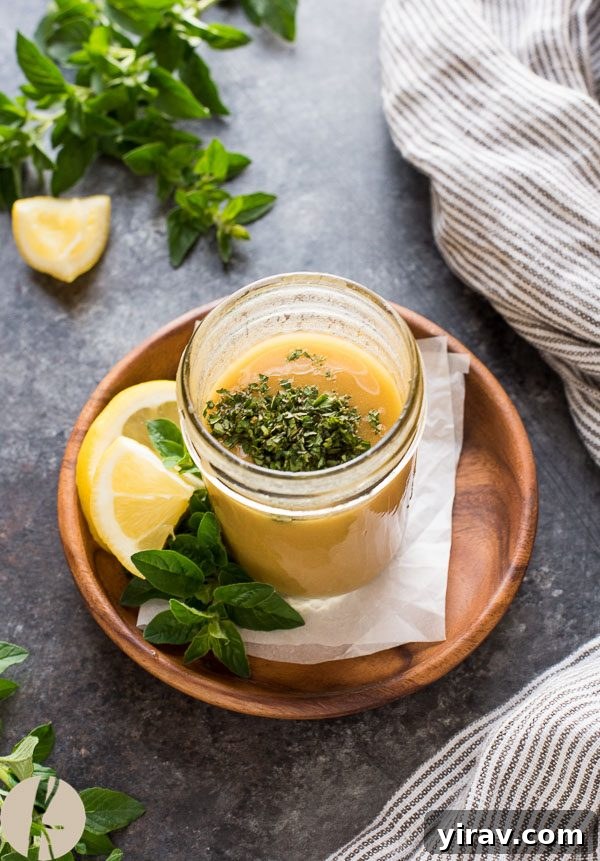
Mastering Your Homemade Greek Dressing in Minutes
Making this Greek salad dressing is incredibly straightforward, requiring minimal effort for maximum flavor. You’ll be amazed at how quickly you can have a gourmet-quality dressing ready to go. Simply gather your ingredients, and in under five minutes, you’ll have a delightful homemade dressing.
Pro Tip for Storage: It’s natural for homemade dressings, especially those rich in olive oil, to solidify when refrigerated. When you’re ready to use it, simply remove the jar from the fridge and allow it to sit at room temperature for a few minutes. This will allow the oil to soften. Then, give it a vigorous shake to thoroughly re-emulsify the ingredients before pouring and enjoying.
- Prepare Your Ingredients: Begin by mincing your garlic finely. Squeeze a fresh lemon to get the required amount of juice. If using fresh oregano, chop it thoroughly. Having all your ingredients prepped ensures a smooth and quick assembly process.
- Combine and Emulsify: Carefully pour the extra virgin olive oil, red wine vinegar, fresh lemon juice, minced garlic, Dijon mustard, and chopped oregano into a clean mason jar. Add salt and freshly ground black pepper to taste. Secure the lid tightly on the mason jar.
- Shake Vigorously: With the lid firmly in place, shake the jar vigorously for about 30-60 seconds. This action is crucial for emulsifying the ingredients, creating a smooth, cohesive dressing where the oil and vinegar are perfectly blended.
- Taste and Adjust: Once emulsified, open the jar and taste a small amount of the dressing. This is your opportunity to adjust the seasoning. You might want to add a pinch more salt, pepper, or even a tiny splash more lemon juice or vinegar, depending on your preference. Seal and shake again briefly if you make any adjustments.
Your fresh, homemade Greek salad dressing is now ready to be enjoyed! It’s a testament to how easy it is to create something truly delicious and healthy from scratch.
Beyond Salads: Creative Ways to Enjoy Your Greek Dressing
While this homemade Greek salad dressing is an absolute star on traditional Greek salads, its vibrant flavor profile makes it incredibly versatile for a multitude of culinary applications. Don’t limit its use to just a bowl of greens; unleash its full potential in various dishes:
- Marinade for Meats and Vegetables: The acidity of the lemon and red wine vinegar, combined with the herbs and oil, makes this dressing an excellent marinade. Use it to tenderize and flavor chicken, fish, shrimp, or pork before grilling, baking, or pan-searing. It’s also fantastic for marinating vegetables like bell peppers, zucchini, and eggplant before roasting.
- Grain Bowls and Buddha Bowls: Drizzle a generous amount over your favorite grain bowls featuring quinoa, farro, or brown rice, topped with roasted vegetables, chickpeas, and a protein source. It adds a refreshing zest and ties all the components together.
- Roasted Vegetables Enhancer: Toss freshly roasted vegetables (like broccoli, asparagus, potatoes, or Brussels sprouts) with this dressing while they’re still warm. The heat helps the flavors penetrate, creating an incredibly delicious side dish.
- Pasta Salads: Move beyond the traditional. This Greek dressing is perfect for cold pasta salads, especially those with Mediterranean ingredients like cherry tomatoes, cucumbers, Kalamata olives, and feta cheese. It infuses the pasta with bright, tangy flavors.
- Sandwich or Wrap Spread: Instead of mayonnaise, use a light brush of this dressing inside your pita bread or wraps. It adds a fresh, zesty layer of flavor without being heavy.
- Dipping Sauce: Serve it as a sophisticated dipping sauce for crusty bread, fresh vegetables, or even grilled halloumi cheese.
- Potato Salad Alternative: For a lighter, tangier potato salad, forgo the creamy mayo-based dressings and toss warm boiled potatoes with this Greek vinaigrette. Add fresh dill and red onion for an extra flavor boost.
Experimentation is key! You’ll quickly discover that this dressing is a secret weapon for adding a burst of Mediterranean sunshine to almost any savory dish.
Customization Tips for Your Perfect Greek Dressing
While the classic Greek dressing recipe is perfect as is, there’s always room to tailor it to your personal taste preferences or dietary needs. Here are a few ideas for customizing your homemade Greek dressing:
- Herb Variations: While oregano is classic, feel free to experiment with other fresh Mediterranean herbs. A touch of fresh dill, parsley, or even a hint of mint can add different dimensions of flavor. For a more robust profile, a pinch of dried thyme can be lovely.
- Spice It Up: If you enjoy a bit of heat, consider adding a pinch of red pepper flakes to the dressing. Start with a small amount and increase to your liking.
- Sweetness Balance: For those who prefer a slightly sweeter dressing to balance the acidity, a tiny drizzle of honey or maple syrup (about ½ teaspoon) can be added. Taste and adjust carefully, as a little goes a long way.
- Creamier Texture: To achieve a slightly creamier dressing without adding dairy, you can blend in a small piece of avocado or a tablespoon of tahini. This will also add a lovely richness.
- Garlic Intensity: As mentioned, if fresh garlic is too potent, reduce the amount, use garlic powder, or omit it entirely. Conversely, if you’re a garlic lover, feel free to add an extra clove or two!
- Citrus Boost: For an even brighter, more pronounced citrus flavor, you can add a tiny amount of lemon zest along with the lemon juice. Be sure to use organic lemons when zesting.
- Vinegar Choice: While red wine vinegar is traditional, white wine vinegar or even apple cider vinegar can be used in a pinch, though they will slightly alter the classic Greek flavor profile.
Remember, cooking is an art, and these suggestions are merely starting points. Feel empowered to adjust and experiment to create a Greek dressing that is uniquely yours!
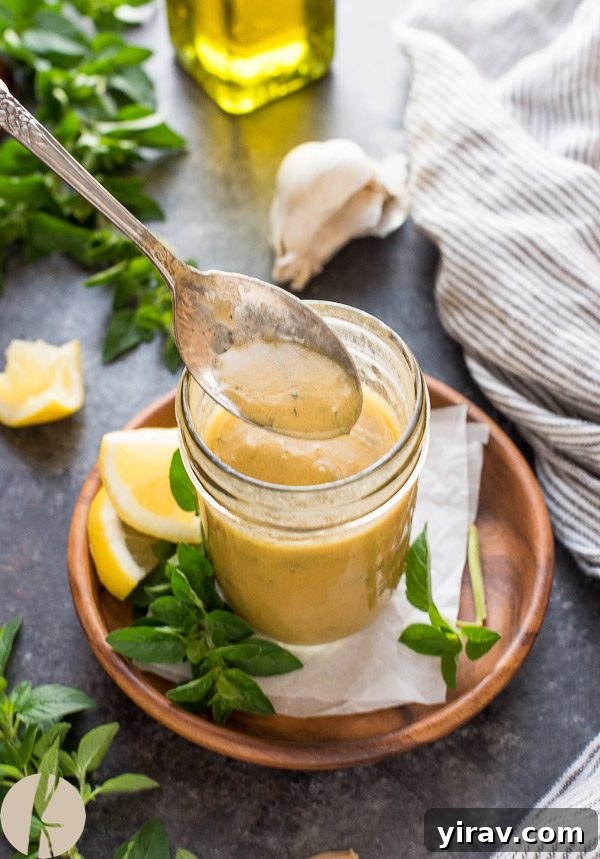
Storing Your Homemade Greek Dressing for Lasting Freshness
One of the many advantages of homemade dressings is their superior freshness, but proper storage is key to extending their shelf life and maintaining optimal flavor. This Greek dressing, when stored correctly, can be enjoyed for an extended period.
How long does homemade dressing last?
This Greek dressing will maintain its fresh quality and flavor for up to two weeks when stored in an airtight container in the refrigerator. We often consume salads regularly, so a batch rarely lasts longer than that in our household!
To ensure maximum freshness and prevent spoilage, always store your dressing in a clean, tightly sealed container, preferably a glass mason jar. The airtight seal prevents air from entering, which can oxidize the ingredients and diminish flavor. Glass also doesn’t absorb odors or flavors, keeping your dressing pure.
As mentioned in our pro tip, it’s entirely normal for dressings made with olive oil to solidify or thicken in the refrigerator due to the oil’s natural properties at colder temperatures. This is not a sign of spoilage. Simply take the dressing out of the fridge about 15-30 minutes before you plan to use it. Allow it to come to room temperature, which will soften the oil. Then, give the jar a good, vigorous shake until the ingredients are fully re-emulsified and appear homogenous once more. This ensures a consistent texture and flavor distribution.
Avoid leaving the dressing at room temperature for extended periods, especially after it has been used, as this can encourage bacterial growth and reduce its shelf life. Always return it to the refrigerator promptly after serving.
Frequently Asked Questions About Homemade Greek Dressing
What is traditional Greek salad dressing made of?
Traditional Greek salad dressing typically consists of simple, high-quality ingredients that create a balance of rich, tangy, and herbaceous flavors. Our recipe closely follows this tradition, using extra virgin olive oil, red wine vinegar, fresh lemon juice, fresh garlic, Dijon mustard, and fresh oregano. Each ingredient is crucial for that authentic Mediterranean taste, and we don’t recommend substituting any of them for the best results.
How do you make Greek dressing from scratch?
Making Greek dressing from scratch is incredibly easy! Simply combine all the ingredients—extra virgin olive oil, minced garlic, fresh lemon juice, red wine vinegar, Dijon mustard, freshly chopped oregano, and salt and pepper to taste—in a small mason jar. Secure the lid tightly and shake vigorously for 30-60 seconds until all the ingredients are well emulsified. Once blended, it’s ready to use and enjoy!
Is Greek dressing healthy?
Yes, homemade Greek dressing can be very healthy, especially when compared to many store-bought varieties. It’s primarily made with extra virgin olive oil, which is a source of healthy monounsaturated fats. The fresh lemon juice and red wine vinegar offer antioxidants and can aid digestion. Fresh garlic and oregano provide beneficial compounds and vibrant flavor without artificial additives. By making it yourself, you control the quality of ingredients and avoid added sugars or unhealthy oils, making it a wholesome choice for enhancing your salads and meals.
Can I make this dressing without fresh garlic?
Absolutely! If you find fresh garlic too strong, you can easily substitute it with 1/4 teaspoon of garlic powder. This provides a milder garlic flavor. Alternatively, for those following a Low FODMAP diet or simply preferring no garlic, you can omit it altogether. The dressing will still be incredibly flavorful thanks to the other vibrant ingredients.
What is the best way to emulsify the dressing?
The best and easiest way to emulsify this dressing is by shaking it vigorously in a mason jar with a tight-fitting lid. The force of the shaking helps to break down the oil into tiny droplets, allowing it to suspend evenly throughout the vinegar and other ingredients. If you prefer a very smooth and creamy texture, or are making a larger batch, you can also use a small food processor or an immersion blender. If using a food processor, add the oregano after processing the liquid ingredients to maintain its fresh texture and vibrant green color.
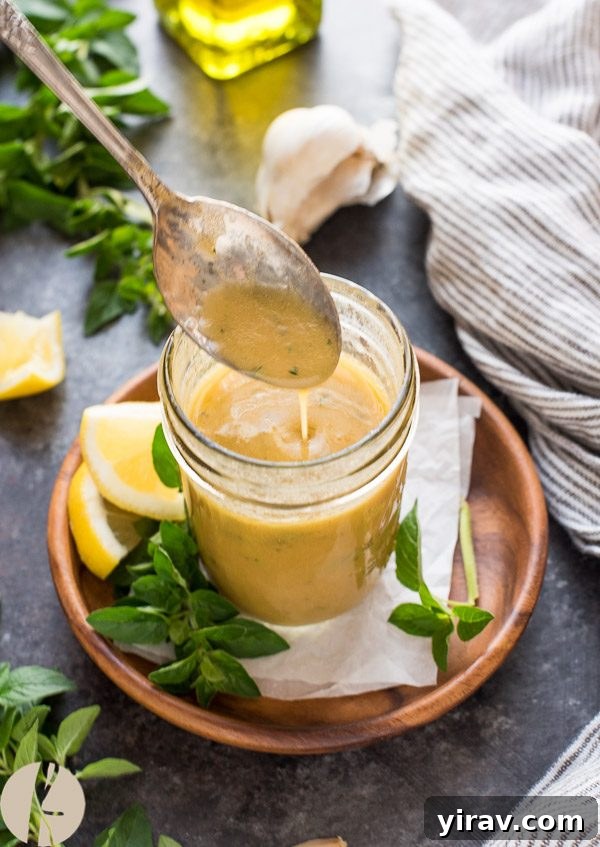
Explore More Homemade Dressing Recipes You’ll Love!
If you’ve fallen in love with the simplicity and fresh taste of this homemade Greek dressing, you’re in for a treat! There’s a whole world of homemade salad dressings waiting to be discovered, each offering unique flavors to complement various dishes. Expanding your repertoire of homemade dressings means you’ll always have a healthy, delicious option on hand. Here are some more fantastic recipes to try:
- Honey Champagne Vinaigrette
- Easy Homemade Italian Dressing
- Honey Mustard Dressing
- Fresh Raspberry Balsamic Vinaigrette
- Homemade No-Mayo Greek Yogurt Ranch Dressing
- Green Goddess Dressing
- Lemon Vinaigrette
- Homemade No-Mayo Louie Salad Dressing
Did you try this recipe? If so, we’d love to hear from you! Please leave a review below and share your culinary creations by tagging us @flavorthemoments on Facebook and Instagram using the hashtag #flavorthemoments so we can see what you made!

Easy Greek Salad Dressing
This Greek Salad Dressing is bursting with fresh flavor and will upgrade any salad! This recipe is incredibly easy to make and uses just a few simple pantry staples.
Servings: 10 servings
Prep Time: 5 mins
Cook Time: 0 mins
Total Time: 5 mins
Average Rating: 4.62 out of 5 stars (based on 36 reviews)
Ingredients
- 6 tablespoons extra virgin olive oil
- 1/4 cup red wine vinegar
- 1 tablespoon fresh lemon juice
- 1 clove garlic (minced)
- 1 teaspoon Dijon mustard
- 1 tablespoon fresh chopped oregano (or 1 teaspoon dried)
- Salt and freshly ground black pepper (to taste)
Instructions
- Place all ingredients (extra virgin olive oil, red wine vinegar, fresh lemon juice, minced garlic, Dijon mustard, fresh chopped oregano, salt, and pepper) in a mason jar. Secure the lid tightly and shake vigorously until the mixture is well emulsified. If using a food processor for a very smooth dressing, add the oregano after processing the liquid ingredients.
- Taste the dressing and adjust seasoning as necessary. Toss with your favorite salad or use as a marinade, then enjoy immediately or store for later.
Recipe Notes
- Pro Tip: Leftover dressing will solidify when refrigerated due to the olive oil. When ready to use, allow it to sit at room temperature for a few minutes to soften, then shake well to re-emulsify before serving.
- If fresh oregano is not available, use half the amount (1 teaspoon) of dried oregano.
- For a milder garlic flavor, or if following a Low FODMAP diet, substitute fresh garlic with 1/4 teaspoon of garlic powder or omit it entirely.
Nutrition (Estimated)
Nutrition is estimated using a food database and is only intended to be used as a guideline for informational purposes.
- Calories: 75 kcal
- Carbohydrates: 1g
- Fat: 8g
- Saturated Fat: 1g
- Polyunsaturated Fat: 7g
- Sodium: 44mg
Course: Condiments
Cuisine: Greek
Author: Marcie