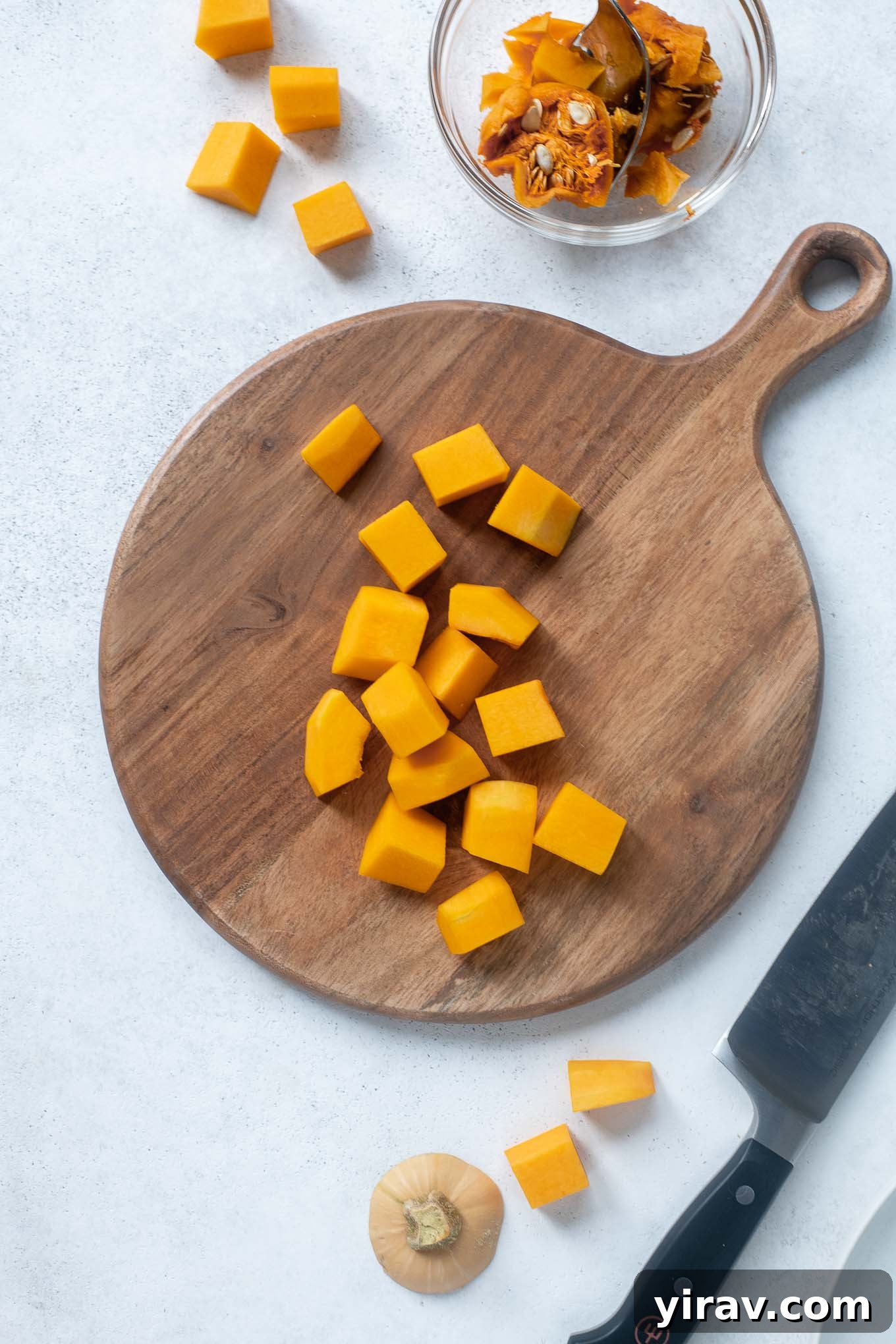
How to Effortlessly Peel and Cut Butternut Squash
Unlock the secret to easily preparing butternut squash at home with our comprehensive step-by-step guide. Learning how to peel and cut butternut squash yourself is not only a money-saving skill but also ensures you have fresh, perfectly portioned squash ready for all your culinary creations. Whether you’re adding these vibrant cubes to a hearty stew, roasting them as a side dish, or freezing them for future convenience, mastering this essential kitchen technique will elevate your cooking.
As the cooler months arrive, the bounty of winter squash varieties becomes a staple in many kitchens. Delicata, kabocha, and especially butternut squash are among my personal favorites, offering a sweet, nutty flavor and creamy texture that enhances countless dishes. Their versatility makes them ideal for everything from comforting soups to elegant side dishes.
Among these, butternut squash stands out as one of the most popular and widely available. Its widespread appeal has led to the common sight of pre-cut butternut squash cubes in most supermarkets. While purchasing pre-prepped squash offers undeniable convenience, it often comes with a higher price tag. Knowing how to peel and cut butternut squash yourself is a far more economical choice, allowing you to enjoy this nutritious vegetable more frequently without breaking the bank.
Many find the idea of tackling a whole butternut squash daunting due to its firm skin and awkward shape. However, I promise that with a few simple tools and my easy-to-follow instructions, you can confidently prep an entire squash in just minutes. This guide will walk you through every step, ensuring a safe and efficient process.
Beyond simply cubing, butternut squash can be transformed into a silky purée, perfect for enriching a variety of recipes. If you’re interested in making butternut squash purée, you can easily adapt the cooking process for the peeled and cut squash. For a delicious application, explore my recipe for Butternut Squash Casserole with Pecan Oat Streusel, which often uses puréed squash as a key ingredient.
Table of Contents
- Why You’ll Love This Guide
- Health Benefits of Butternut Squash
- Essential Tools for Butternut Squash Prep
- How to Peel Butternut Squash: Step-by-Step
- Peeling with a Y-Peeler
- Peeling with a Sharp Knife
- How to Cut Butternut Squash into Cubes
- Frequently Asked Questions About Butternut Squash
- Creative Ways to Use Butternut Squash
- Tips for Success and Storage
- Butternut Squash Recipe Inspiration
Why You’ll Love This Guide
Preparing butternut squash from scratch might seem like extra work, but the benefits are well worth the effort. This guide empowers you with the knowledge and confidence to master this kitchen skill, offering several compelling advantages:
- Effortless Preparation: You’ll learn how to peel and cube butternut squash quickly and efficiently, turning a seemingly difficult task into a simple routine that takes just a few minutes.
- Significant Cost Savings: Pre-cut squash is convenient but expensive. By purchasing whole butternut squash and prepping it yourself, you get more value for your money, making this healthy vegetable more accessible for your daily meals.
- Versatile for Many Recipes: Once cubed, butternut squash is incredibly versatile. It’s perfect for a wide array of dishes, including comforting soups and stews, vibrant roasted vegetable medleys, quick sheet pan dinners, creamy risottos, and more.
- Extended Freshness and Meal Prep: Freshly cut butternut squash can be stored in an airtight container in the refrigerator for 3-5 days. For longer storage, you can easily freeze the cubes for up to 3 months, making it an excellent option for meal prepping and enjoying squash year-round.
- Superior Flavor and Texture: Freshly cut squash often has a brighter flavor and better texture compared to its pre-packaged counterparts, ensuring your dishes taste their best.
Health Benefits of Butternut Squash
Beyond its delicious flavor and culinary versatility, butternut squash is a nutritional powerhouse. Incorporating it into your diet provides a wealth of health benefits:
- Rich in Vitamins: It’s an excellent source of Vitamin A (in the form of beta-carotene), crucial for vision, immune function, and skin health. It also provides a good amount of Vitamin C, an important antioxidant that supports the immune system.
- Packed with Minerals: Butternut squash contains essential minerals like potassium, which is vital for maintaining healthy blood pressure, and magnesium, important for muscle and nerve function.
- High in Fiber: The significant fiber content aids digestion, promotes gut health, and helps regulate blood sugar levels, contributing to a feeling of fullness that can support weight management.
- Antioxidant Properties: Beyond Vitamins A and C, butternut squash contains other antioxidants that help protect your cells from damage caused by free radicals, potentially reducing the risk of chronic diseases.
- Low in Calories: Despite its rich nutrient profile, butternut squash is relatively low in calories, making it a healthy and filling addition to almost any meal.
By learning how to prep butternut squash at home, you’re not just saving money; you’re also ensuring a steady supply of this incredibly healthy and delicious vegetable for your family’s well-being.
Essential Tools for Butternut Squash Prep
You don’t need fancy gadgets to peel and cut butternut squash. With a few basic kitchen tools, you’ll be able to prepare it safely and efficiently.
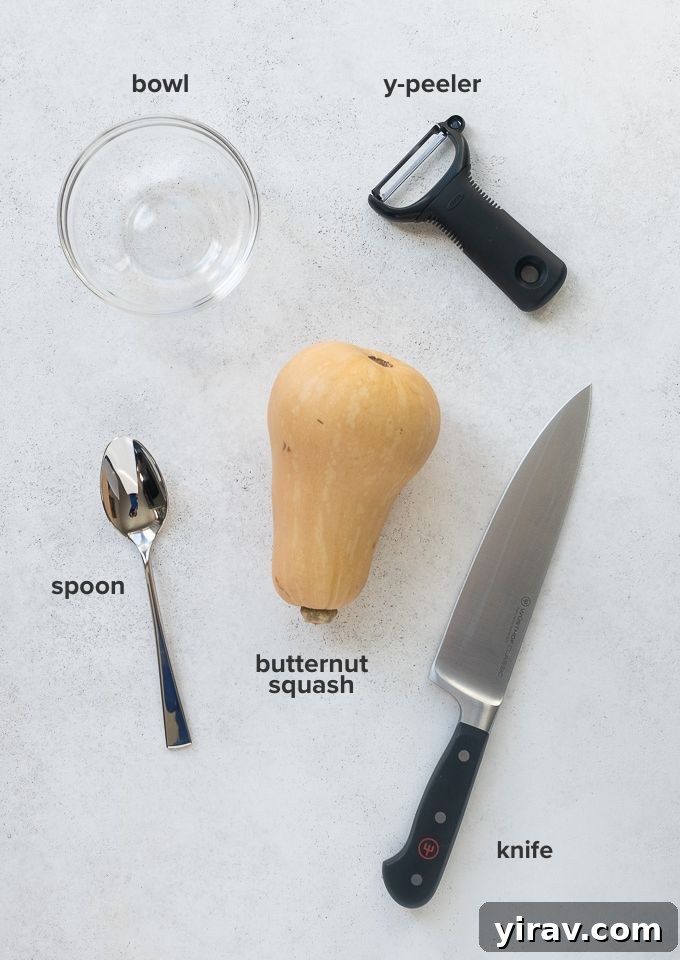
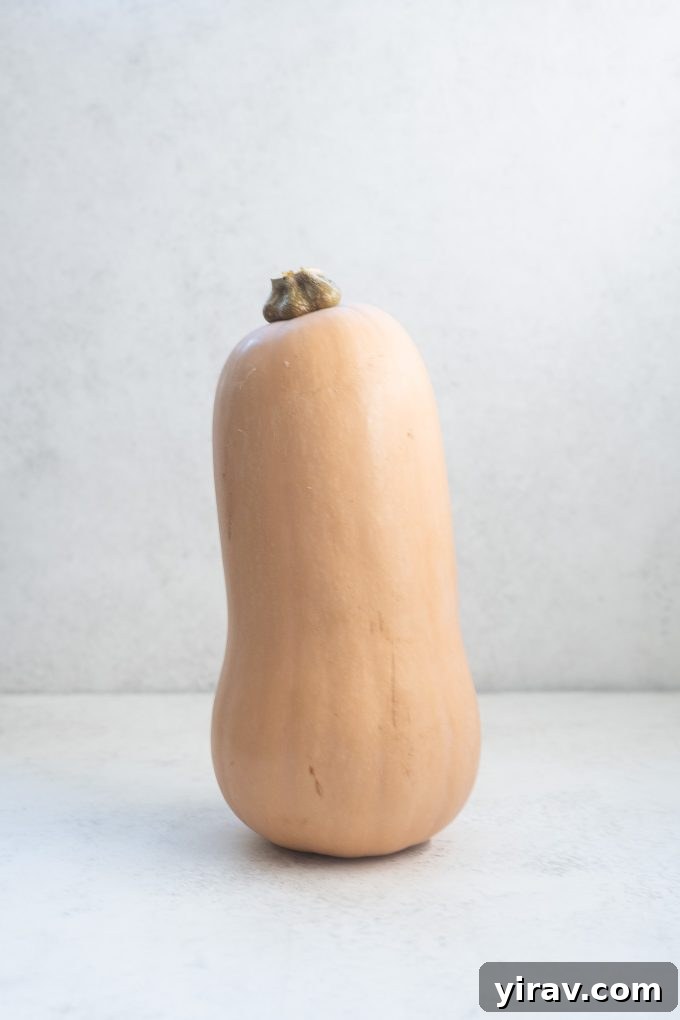
- Butternut Squash: A 3 lb. butternut squash typically yields about 4 cups of cubed squash. When selecting, look for squash that feels heavy for its size, has a uniform beige color, and is free of soft spots or green patches. Pro Tip for Easy Cutting: I always recommend purchasing butternut squash with a long neck. The long, cylindrical neck portion contains no seeds, making it significantly easier to cut into uniform, consistent cubes.
- Large Cutting Board: A sturdy and large cutting board is crucial for safety and stability. It provides ample space to handle the squash and minimizes the risk of slippage while cutting.
- Sharp Chef’s Knife: A sharp, heavy chef’s knife is your most important tool. A sharp blade requires less force, reducing the chance of the knife slipping and causing injury. It’s essential for both peeling (if you choose that method) and dicing.
- Y-Peeler or Vegetable Peeler (Optional): While I often prefer a knife for its thick skin, a Y-peeler (sometimes called a swivel peeler) can also be effective. It provides a comfortable grip and wide blade for tackling the squash’s curved surface.
- Sturdy Spoon: A regular kitchen spoon or a grapefruit spoon with serrated edges works perfectly for scooping out the seeds and fibrous strands from the bulbous portion of the squash.
- Small to Medium Bowl: Keep a bowl nearby to collect the seeds and peelings, keeping your workspace tidy.
How to Peel Butternut Squash: Step-by-Step
The firm, inedible skin of butternut squash must be removed before cooking. There are two primary methods for peeling: using a y-peeler or a sharp knife. Both are effective, but one might be quicker depending on your comfort level and the squash itself.
Expert Tip: I personally prefer using a sharp chef’s knife to peel butternut squash. Its skin is quite thick and tough, and a knife allows for deeper, more efficient cuts, often removing the entire peel in one fluid motion, which can be faster than multiple passes with a peeler.
Peeling with a Y-Peeler
If you opt for a Y-peeler, be prepared to make a few passes to ensure all the tough outer skin is removed. The goal is to reach the vibrant orange flesh underneath.
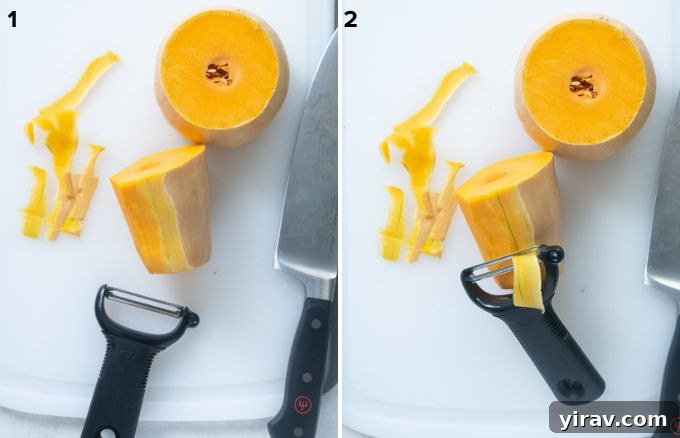
- Prepare the Squash: First, stabilize the squash. You can lay each squash portion flat on your cutting board or stand it upright at a slight angle if it feels secure.
- Peel in Strips: Apply firm, even pressure and peel from left to right, or from top to bottom. The skin is thick, so you will likely need to peel each strip at least twice to fully expose the bright orange flesh. Continue until all the green or pale beige outer skin is gone.
Peeling with a Sharp Knife
This method, while requiring more caution, can be significantly faster once you get the hang of it, as it allows you to remove larger sections of peel at once.
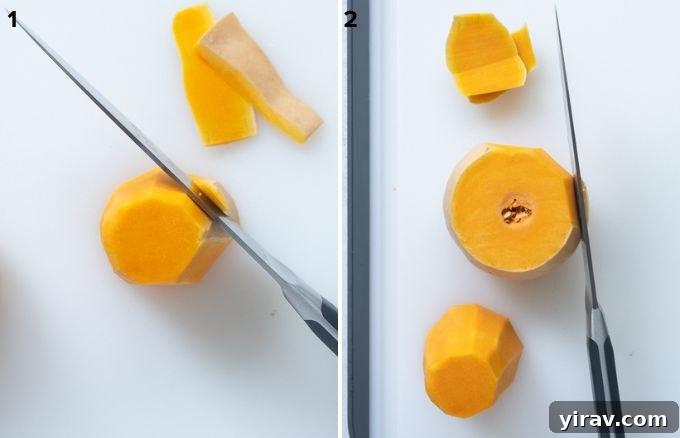
- Stabilize the Squash: Begin by cutting off the top and bottom ends of the butternut squash, creating flat surfaces. Stand each portion (the neck and bulb) upright on your cutting board. This stable base is key for safe knife handling.
- Slice the Peel: Using your sharp knife, carefully slice downwards, following the natural curve of the squash. Aim to remove the peel in long, thick strips, getting as close to the orange flesh as possible without wasting too much. Rotate the squash as you go, removing all the skin until the vibrant orange flesh is exposed.
- Safety First: Always cut away from your body and keep your fingers clear of the blade. A dry cutting board and a firm grip are essential.
How to Cut Butternut Squash into Cubes
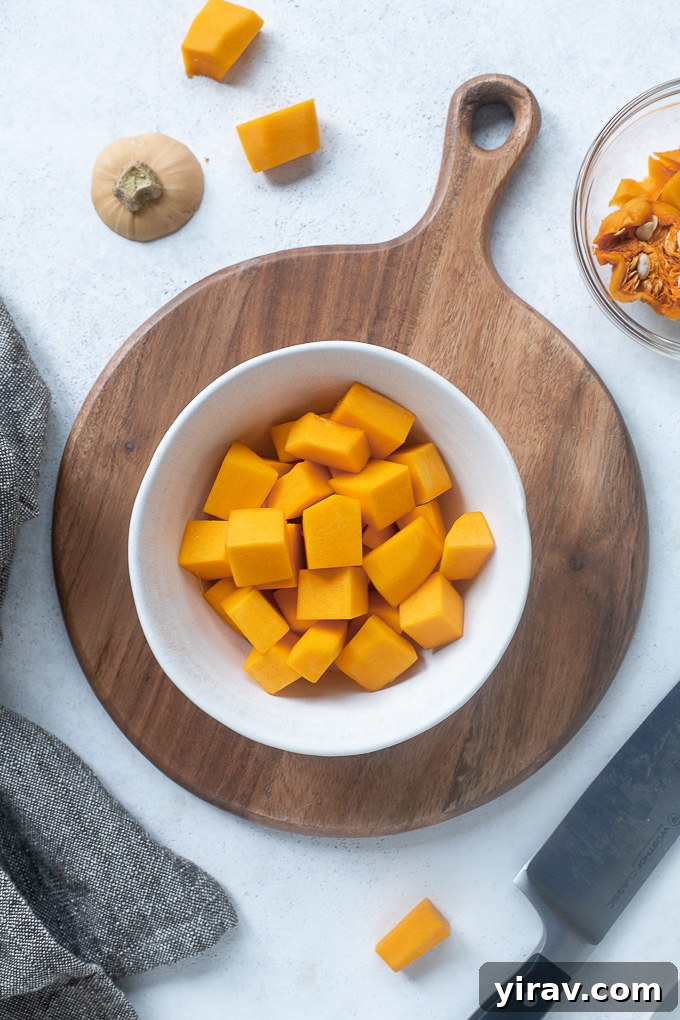
Once peeled, cutting butternut squash into uniform cubes is the next step to prepare it for cooking. This process is straightforward and quick with a sharp knife and a steady hand. Achieving uniform sizes is important for even cooking, ensuring every piece is perfectly tender.
Pro Tip for Even Cooking: Always aim to cut your butternut squash into uniform 1 to 1.5-inch cubes (or your desired size). This consistency ensures that all pieces cook evenly, preventing some from becoming mushy while others remain raw. As mentioned before, prioritize purchasing squash with a long neck; its seedless, cylindrical shape makes it much easier to achieve these consistent cubes.
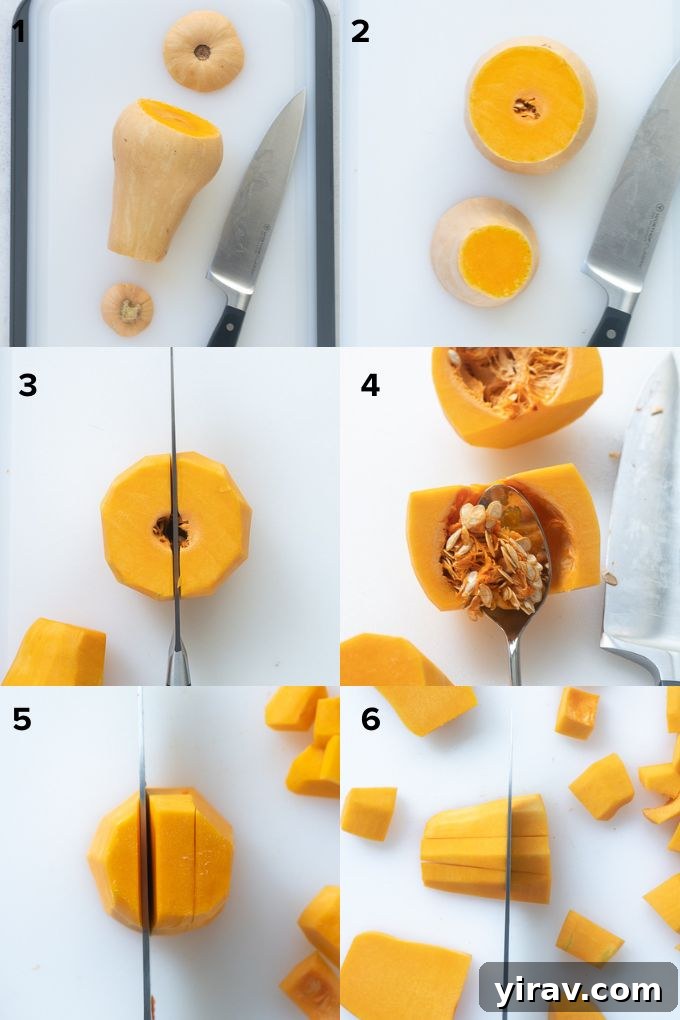
- Prepare the Squash: Place the whole butternut squash on its side on a large, stable cutting board. Using a sharp chef’s knife, carefully slice off about an inch from both the top (stem end) and the bottom (blossom end) of the squash. This creates stable, flat surfaces.
- Separate Sections: Locate where the thin neck portion meets the bulbous, wider bottom. Cut the squash into two distinct pieces at this point, separating the neck from the bulb.
- Peel and Halve: Peel both the neck and bulb portions using your preferred method (knife or Y-peeler) as described in the previous section. Once peeled, stand each section upright on its flat end and carefully cut it in half lengthwise.
- Remove Seeds: For the bulbous portion, use a sturdy spoon to scoop out all the seeds and fibrous strands from the hollow cavity. Discard these or save the seeds for roasting. The neck portion should be solid flesh and will not have seeds.
- Slice into Planks: Lay each peeled and halved squash piece (both neck and bulb) cut-side down on your cutting board for stability. Slice each half into 1 to 1.5-inch thick planks or half-moon shapes.
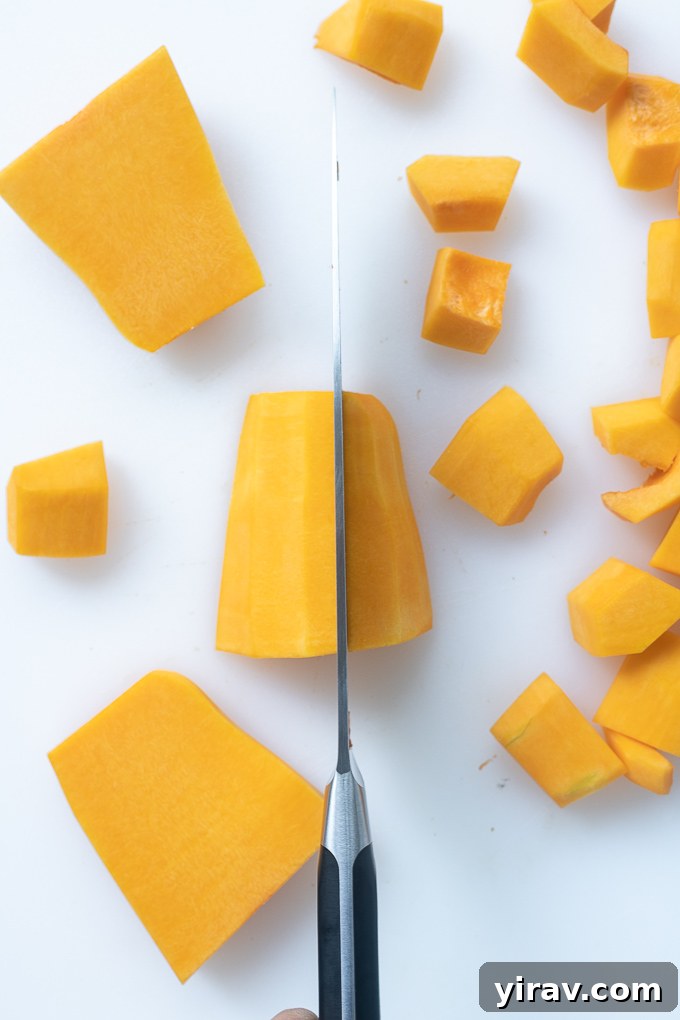
- Dice into Cubes: Take your planks or half-moon slices and stack a few together if safe to do so. Then, cut them crosswise into uniform 1 to 1.5-inch cubes. Remember, consistency is key for even cooking!
Frequently Asked Questions About Butternut Squash
Selecting a ripe and healthy butternut squash is key to delicious results. Here are a few simple tips:
- Weight and Firmness: Choose a squash that feels heavy for its size. This indicates a good moisture content and ripeness. It should also be very hard to the touch with no soft spots. If it feels light, it’s likely not ripe enough or past its prime.
- Sound Test: Give the squash a gentle tap or knock on the outside. A hollow sound suggests it’s ripe and ready to be enjoyed.
- Color: Look for a uniform, dark beige color. Avoid squash with green patches, which means it’s unripe. Similarly, steer clear of any with deep scratches, bruising, or mold.
- Stem: The stem should be dark brown, dry, and firm. A soft or missing stem can indicate that the squash is not fresh or has started to spoil.
- Neck Preference: As mentioned, prioritize butternut squash with a long, straight neck. This elongated section is solid flesh, making it much easier to peel and cut into consistent, uniform cubes compared to the bulbous seed-filled bottom.
Yes, it is essential to peel butternut squash skin before cooking and eating. Butternut squash has a thick, tough, and fibrous skin that is not palatable or easily digestible. Unlike some thinner-skinned squash varieties, butternut squash skin does not soften sufficiently during cooking to be enjoyable.
As detailed in the peeling section of this guide, I highly recommend removing the peel with a sharp, sturdy chef’s knife. This method allows you to cut off the thick skin in larger, more efficient strips, often in a single pass, making the process quicker and less tedious than using a vegetable peeler that may require multiple attempts to get through the tough exterior. However, a Y-peeler is a viable alternative if you prefer.
The easiest and safest way to cut a butternut squash involves a few strategic steps to create stable surfaces and minimize effort:
- Stabilize: Place the squash on its side on a large, stable cutting board.
- Trim Ends: Using a sharp knife, carefully slice off both the stem and blossom ends. This creates flat, stable surfaces on both ends.
- Separate: Cut the squash in half where the neck meets the bulbous base.
- Peel: Peel both sections using either a sharp knife (my preferred method) or a Y-peeler, removing all the tough outer skin until the bright orange flesh is revealed.
- Halve and Deseed: Stand each peeled section upright and cut it in half lengthwise. Use a spoon to scoop out the seeds and fibrous material from the bulb halves.
- Slice and Cube: Lay each half cut-side down for maximum stability. Slice into 1 to 1.5-inch thick planks, then cut these planks into uniform cubes of your desired size.
Following these steps ensures safety, efficiency, and consistent results, making the process much less intimidating.
Creative Ways to Use Butternut Squash
Once you’ve mastered how to cut butternut squash, a world of culinary possibilities opens up. Its naturally sweet and earthy flavor makes it a fantastic addition to both savory and sweet dishes. Here are just a few ideas for how to use your freshly prepared butternut squash:
- Roasted Butternut Squash: A simple classic! Toss cubes with olive oil, salt, pepper, and herbs like rosemary or sage. Roast until tender and caramelized. For a sweeter twist, try Cinnamon Roasted Butternut Squash, perfect as a side dish.
- Salads: Add roasted butternut squash cubes to your favorite fall and winter salads for a boost of flavor, texture, and nutrition. It’s excellent in a Fall Harvest Salad or a Butternut Squash Quinoa Salad.
- Soups and Stews: Butternut squash is a fantastic base for creamy soups or a hearty addition to vegetable or meat stews. Its natural sweetness balances rich flavors beautifully. Try it in an Autumn Vegetable Soup for a comforting meal.
- Risotto: For a decadent and satisfying meal, butternut squash is the star ingredient in my Butternut Squash Baked Risotto, a perfect vegetarian dinner for chilly evenings.
- Sheet Pan Dinners: Combine butternut squash cubes with other vegetables and your protein of choice (like chicken or sausage) on a single sheet pan for an easy and delicious one-pan meal. It pairs wonderfully with Roasted Spatchcock Chicken.
- Curries: Butternut squash adds body and sweetness to savory curries. Feel free to use it in place of pumpkin in recipes like Pumpkin Curry for a delightful twist.
- Mashed Side Dish: Boil or steam cubes until very tender, then mash with butter, milk, and seasonings for a creamy, flavorful alternative to mashed potatoes.
- Butternut Squash Fries: Cut into fry shapes, toss with oil and spices, then bake or air fry for a healthier, delicious snack or side.
Tips for Success and Storage
To ensure your butternut squash preparation goes smoothly and your efforts yield the best results, keep these additional tips in mind:
- Safety First: Always use a sharp knife for peeling and cutting. A dull knife is actually more dangerous because it requires more force, increasing the risk of slips. Keep your fingers tucked away, and ensure your cutting board is stable on a non-slip mat or damp towel.
- Microwave Trick for Hard Squash: If your butternut squash is exceptionally hard and difficult to cut, you can soften it slightly by microwaving the whole squash for 1-2 minutes. This will make it easier to cut through the tough skin and flesh.
- Uniform Cubes: Reinforcing an earlier tip, strive for 1 to 1.5-inch uniform cubes for even cooking. This prevents some pieces from becoming overcooked and mushy while others remain undercooked.
- Yield Expectation: A small butternut squash (approximately 1.5 lbs.) typically yields about 2 cups of cubed squash. A larger squash (around 3 lbs.) will yield closer to 4 cups of cubed squash. Adjust your purchase based on your recipe needs.
- Refrigeration: Freshly peeled and cubed butternut squash can be stored in an airtight container in the refrigerator for 3-5 days. This makes it perfect for meal prepping at the beginning of the week.
- Freezing for Longer Storage: For extended storage, arrange raw butternut squash cubes in a single layer on a baking sheet and freeze until solid (about 1-2 hours). Transfer the frozen cubes to a freezer-safe bag or container and store for up to 3 months. Freezing them flat first prevents them from clumping together, so you can easily grab only what you need. Thaw overnight in the refrigerator or cook directly from frozen, adjusting cooking times as necessary.
Butternut Squash Recipe Inspiration
Now that you’re an expert in prepping butternut squash, let your culinary creativity soar! Here are some additional recipes to inspire your next meal:
- 30+ Delicious Butternut Squash Recipes
- Creamy Butternut Squash Soup
- Hasselback Butternut Squash by The Healthy Foodie
- Comforting Mashed Butternut Squash
- Roasted Butternut Squash and Pear Soup
- Simple Roasted Whole Butternut Squash
Did you try this guide or make a recipe? If so, we’d love to hear from you! Please leave a review below and tag us @flavorthemoments on Facebook and Instagram to share your culinary creations!
How to Peel and Cut Butternut Squash
Servings:
8 servings
10 mins
0 mins
10 mins
Learn how to peel and cut butternut squash quickly and easily with this simple tutorial! From there, use cubed butternut squash in a multitude of recipes or freeze for a later date!
Pin Recipe
Equipment
- OXO Good Grips Y-Peeler (optional)
- Boos Block Cutting Board (or any large, sturdy cutting board)
- Sharp Chef’s Knife
- Sturdy Spoon
- Small Bowl (for seeds/peel)
Ingredients
- 3 lb. butternut squash (choose one with a long neck for easier cubing)
Instructions
Peel the Butternut Squash
- If using a Y-peeler, lay the squash portion flat or stand upright at an angle. Peel from left to right or top to bottom, making sure to remove all the thick outer peel until the bright orange flesh is exposed.
- Alternatively, for a quicker method, stand each squash portion upright after trimming the ends. Use a sharp knife to carefully slice downwards, following the curve, to remove the peel in one continuous cut.
Cut the Butternut Squash
- Place the whole butternut squash on its side on a cutting board. Using a sharp knife, remove the top and bottom ends to create flat, stable surfaces.
- Cut the squash into two pieces, separating the neck from the bulbous bottom.
- Peel both the neck and bulb sections (refer to peeling instructions above). Then, stand each peeled section upright and cut it in half lengthwise.
- From the bulb portion, use a sturdy spoon to scoop out all the seeds and fibrous strands. The neck portion will be solid.
- Place each peeled and halved squash piece cut-side down on the cutting board. Slice each half into uniform 1 to 1.5-inch thick planks.
- Take the planks and cut them crosswise into 1 to 1.5-inch cubes. Aim for consistent sizing for even cooking.
Notes
- Pro Tip for Peeling: A sharp knife is often more efficient for peeling butternut squash due to its thick skin, allowing for larger sections to be removed in one pass compared to a peeler.
- For even cooking, cut butternut squash cubes into uniform sizes, ideally 1 to 1.5 inches. Selecting a squash with a long neck greatly aids in achieving consistent cube sizes from the seedless neck portion.
- A 1.5 lb. squash yields approximately 2 cups of cubes, while a 3 lb. squash yields about 4 cups.
- Store cubed butternut squash in an airtight container in the refrigerator for 3-5 days, or freeze for up to 3 months for longer preservation.
Nutrition
Calories: 77kcal, Carbohydrates: 20g, Protein: 2g, Fat: 0.2g, Saturated Fat: 0.04g, Polyunsaturated Fat: 0.1g, Monounsaturated Fat: 0.01g, Sodium: 7mg, Potassium: 599mg, Fiber: 3g, Sugar: 4g, Vitamin A: 18081IU, Vitamin C: 36mg, Calcium: 82mg, Iron: 1mg
Nutrition is estimated using a food database and is only intended to be used as a guideline for informational purposes.
Cooking Techniques and Tips
American
Marcie
Did you try this recipe?
Be sure to tag @flavorthemoments with the hashtag #flavorthemoments on Instagram so I can see what you made!