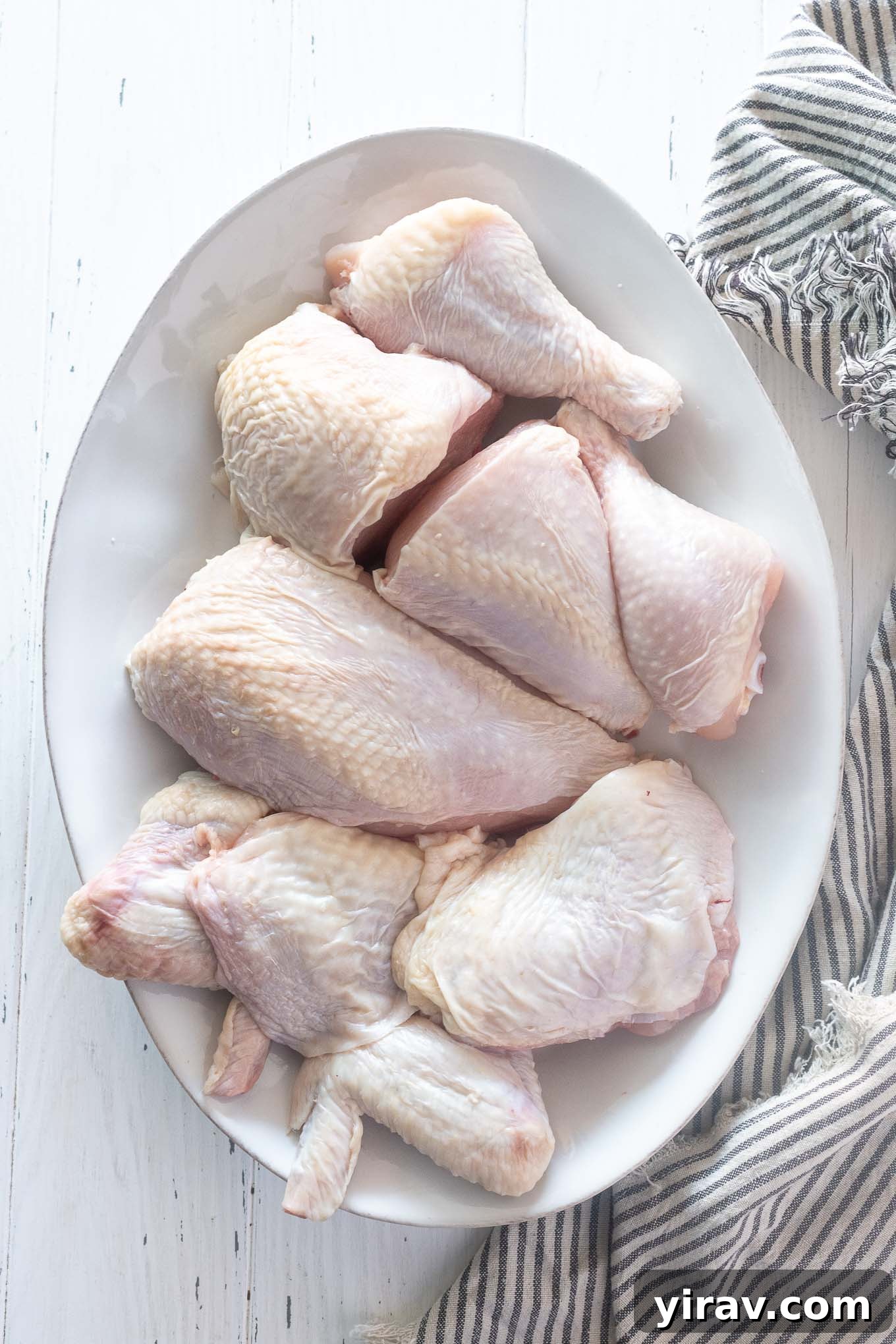
Unlock the secret to smarter cooking and significant savings by learning How to Master Butchering a Whole Chicken. With just a few essential tools like a sturdy cutting board, a sharp knife, and a reliable pair of kitchen shears, you can efficiently break down a whole chicken in under 15 minutes. This skill isn’t just about culinary prowess; it’s a highly cost-effective approach to meal preparation, allowing you to portion the chicken precisely for diverse recipes and maximize its use, from succulent breasts and thighs to flavorful bones for stock.
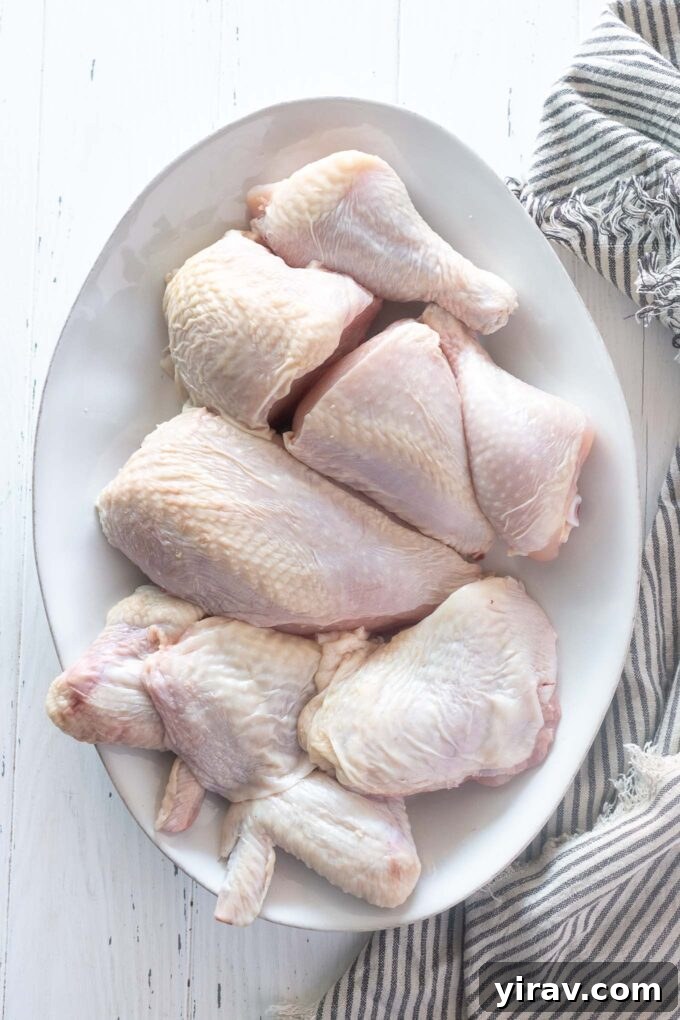
While whole roasted chickens and spatchcocked preparations offer impressive results, the versatility of a whole chicken truly shines when it’s expertly portioned. Cutting a chicken yourself opens up a world of culinary possibilities, allowing you to utilize each part in its ideal application, from grilling and frying to simmering in stews. In today’s economic climate, where grocery prices are continually rising, developing the skill to cut your own chicken is not merely convenient—it’s a valuable life hack that directly translates to substantial savings on your food budget.
The financial benefit is undeniable: whole chickens are consistently priced significantly lower per pound compared to pre-packaged individual cuts like breasts, thighs, or drumsticks. This price difference makes a compelling case for investing a little time to master the art of chicken butchery. Beyond the savings, you gain complete control over your ingredients, ensuring freshness and quality for all your delicious creations.
For many, the idea of breaking down a whole chicken can seem intimidating, a task best left to professional butchers. However, I assure you that with clear, step-by-step guidance and a bit of practice, you’ll quickly discover how straightforward and empowering this process truly is. Don’t be surprised if you find yourself confidently navigating the joints and making clean cuts in no time. What’s more, you don’t even need a large chef’s knife to get the job done efficiently; a sharp, high-quality pair of kitchen shears can be your best friend, offering precision and ease, especially for those new to the process.
Rest assured, you absolutely have the skills to conquer this culinary task!
The Unbeatable Benefits of Butchering Your Own Chicken
- Achieve Perfectly Portioned Cuts: This comprehensive tutorial will teach you how to effortlessly break down a whole chicken into 8 distinct pieces, ready for any recipe, using only a few basic kitchen tools. You’ll master the art of separating drumsticks, thighs, wings, and breasts with precision.
- Efficiency and Skill Development: The entire process of cutting a chicken takes approximately 10 to 15 minutes. With each attempt, your confidence and speed will grow, transforming this into a quick and easy part of your regular meal prep routine.
- Significant Cost Savings: Purchasing whole chickens is almost always more economical per pound than buying pre-cut chicken parts. By doing the work yourself, you’ll see a noticeable reduction in your grocery bills, making your meals more budget-friendly without sacrificing quality.
- Maximize Every Part: Beyond the primary cuts, you’ll learn to save the backbone, neck, and wing tips to create rich, homemade chicken stock. This zero-waste approach adds incredible depth of flavor to soups, sauces, and countless other dishes, elevating your cooking.
- Versatile Meal Prep: Once your chicken is expertly cut, you have a versatile array of pieces suitable for grilling, frying, baking, stewing, or roasting. This flexibility is invaluable for meal planning and adapting to various culinary inspirations.
Essential Tools and Ingredients for Chicken Butchering
To embark on your journey of cutting a whole chicken, you only need one primary ingredient and a few indispensable tools. The simplicity of the requirements makes this skill accessible to every home cook.
Ingredient Notes
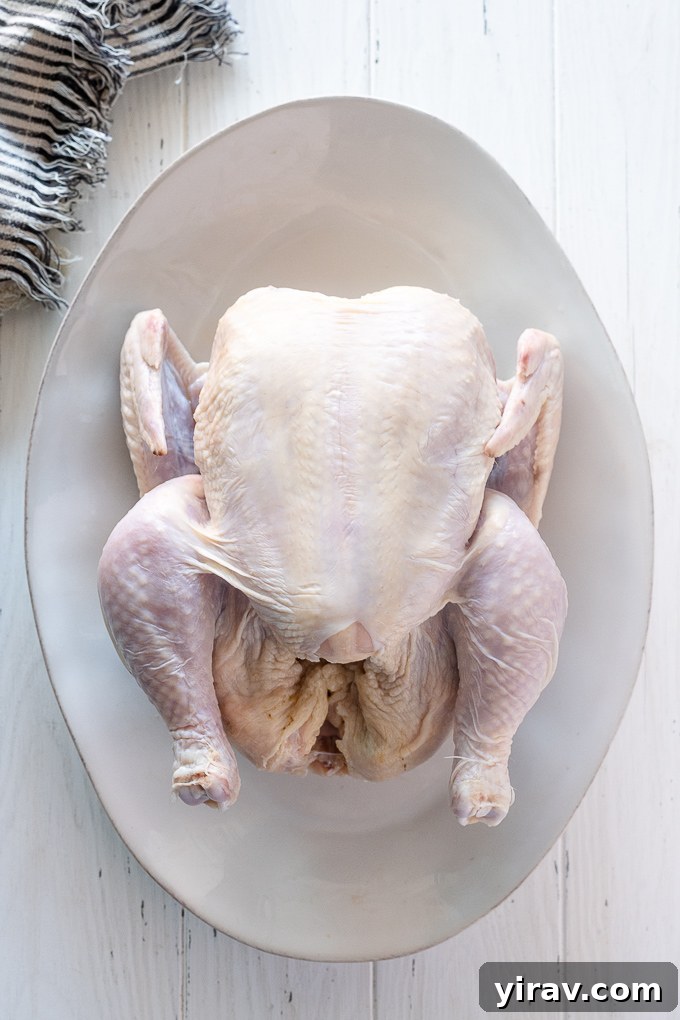
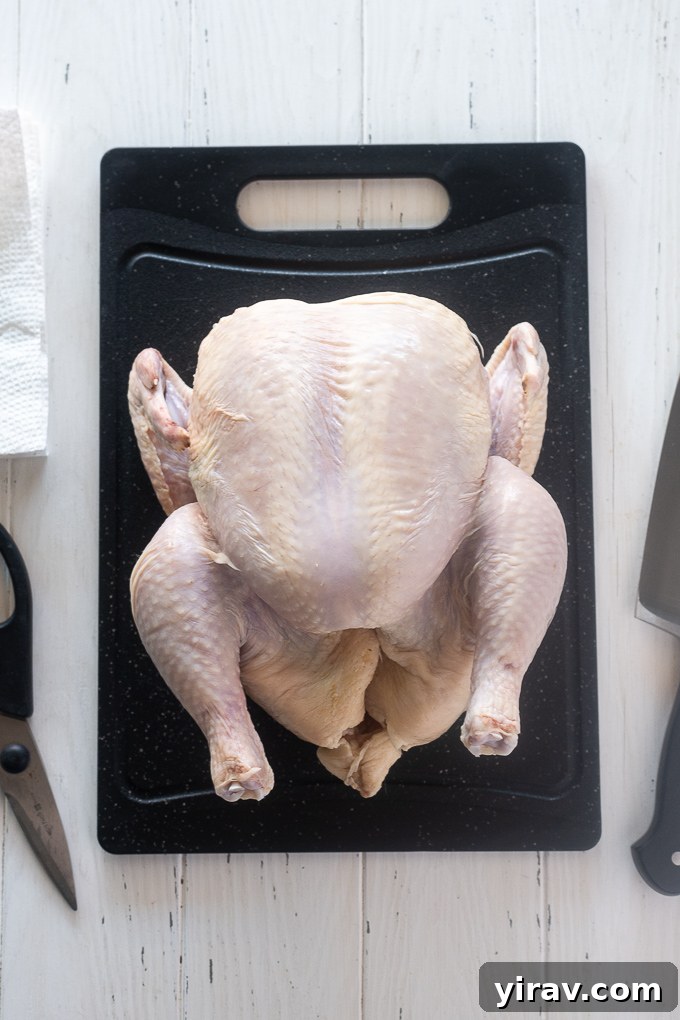
- Whole Chicken: The star of the show! Any size whole chicken is suitable for this method. Select a size that best fits your family’s needs or the specific recipes you have in mind. For maximum value and convenience, consider purchasing a double pack of organic whole chickens from a warehouse store like Costco. Breaking them down simultaneously can save you both time and money, allowing you to portion and freeze cuts for future meals.
Tool Notes
- Cutting Board: A large, non-skid cutting board is crucial for safety and stability. If your cutting board tends to slide, simply place a damp paper towel or non-slip mat underneath it to keep it firmly in place during the butchering process.
- Chef’s Knife: A good quality, sharp chef’s knife is a fundamental tool for clean and efficient cuts. Ensure your knife is sharpened before you begin; a dull knife can be more dangerous and make the task unnecessarily difficult.
- Kitchen Shears: An excellent pair of sharp, heavy-duty kitchen shears can be a game-changer, especially if you’re not entirely comfortable wielding a large chef’s knife. Many experienced home cooks find shears offer superior control and precision for navigating bones and joints, making it possible to complete the entire job with just this one tool.
Step-by-Step Guide: How to Expertly Cut a Whole Chicken
Cutting a whole chicken might appear daunting at first glance, but by following these detailed, step-by-step instructions, you’ll find it surprisingly easy. Consistent practice will not only build your confidence but also significantly enhance your speed and efficiency, leading to considerable savings over time.
The key to successful chicken butchery lies in precisely locating the natural joints. Your knife or shears will glide effortlessly through these softer connections, separating the chicken into its various parts. If you encounter resistance or find yourself struggling to cut, it’s a clear indication that you are likely attempting to cut through bone rather than a joint. Adjust your angle slightly to find the natural seam.
Pro Tip: Always use a very sharp knife or high-quality kitchen shears for the best and safest results. A dull blade requires more force, increasing the risk of slips and injury. For beginners, kitchen shears often provide more control and are highly recommended.
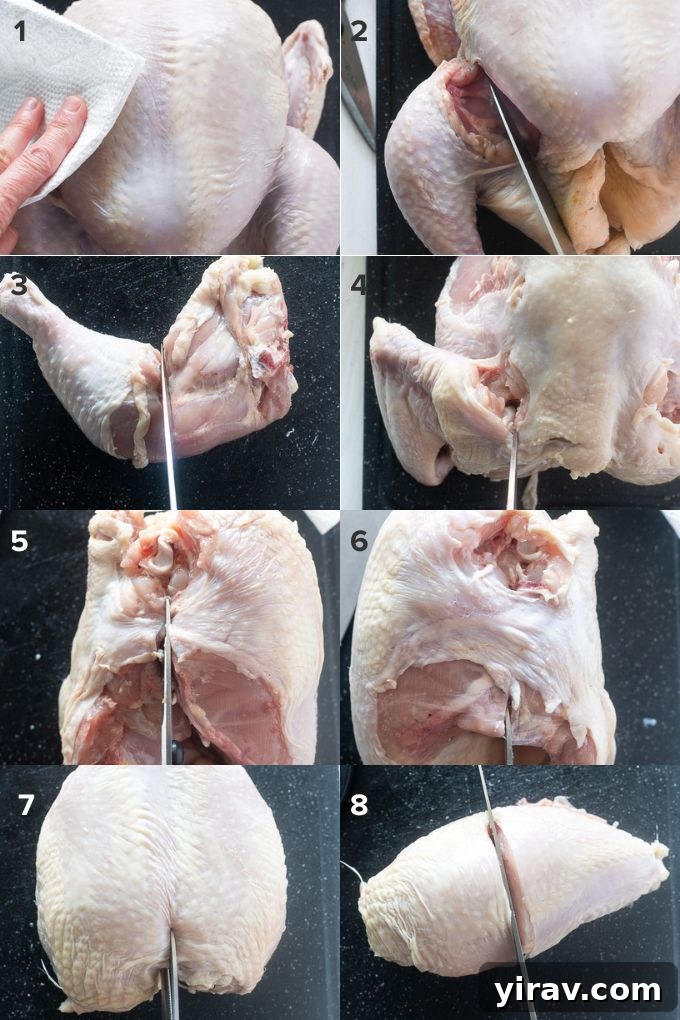
- Prepare the Chicken: Begin by patting the entire chicken dry with paper towels. This improves grip and makes handling easier. Ensure any giblets or the neck are removed from the cavity and set aside for stock, if desired. Place the chicken breast-side up on your stable cutting board.
- Remove the Legs: Start by locating the natural crease between the chicken breast and the drumstick-thigh portion. Using your knife or shears, cut through the skin in this area. Gently pull the leg away from the body to expose the ball-and-socket joint that connects it. Once the joint is visible, cut directly through it and then through the remaining skin and flesh underneath to completely release the leg. Repeat this process for the other leg.
- Separate Drumstick and Thigh: Lay the removed leg, skin-side down, on your cutting board. Feel for the joint where the drumstick meets the thigh. This is typically a hinge joint. Make a clean cut directly through this joint to separate the two pieces. Repeat for the second leg.
- Remove the Wings: Identify the joint where each wing attaches to the breast. Pull the wing outwards to stretch the skin and expose the joint. Cut through the joint with your knife or kitchen shears. For enhanced control and visibility, especially for beginners, it can be easier to turn the chicken breast-side down on the cutting board when removing the wings. Consider removing the wing tips (the outermost section) and saving them for stock to add more flavor.
- Separate the Breast and Backbone: Turn the chicken onto its side on the cutting board. Using sturdy kitchen shears, carefully cut along one side of the backbone, severing the ribs and connecting tissue from the breast section. Start from the tail end and cut all the way up to the neck cavity.
- Complete Backbone Removal: Repeat the cutting process on the other side of the backbone. Once both sides are cut, the backbone will be completely separated from the breast. Save the backbone and any other discarded bony pieces (like the neck if you haven’t already removed it) for making rich, homemade chicken stock.
- Split the Breast: Place the chicken breast section, skin-side down, on your cutting board. Using the tip of your knife or a paring knife, make a shallow score along the top and sides of the breastbone. This helps to loosen the bone. Flip the breast over so it’s skin-side up. With firm, even pressure, press down along the center of the breastbone with both hands until you hear a crack. This action flattens the breast. Then, use your chef’s knife to cut straight down through the middle of the breast, separating it into two halves. Alternatively, kitchen shears can be used to cut through the skin and meat, then use a knife to cut through the breastbone for a clean split.
- Portion the Breasts (Optional): For smaller servings or specific recipes, you can further cut each half-breast. Place the breast skin-side up on the cutting board. If desired, you can carefully remove the breastbone to create boneless, skinless chicken breasts. To make two smaller portions from each breast half, simply cut width-wise across the breast. You can also identify and remove the chicken tenders, the small, tender strips of meat located on the underside of each breast, and save them for quick cooking applications.
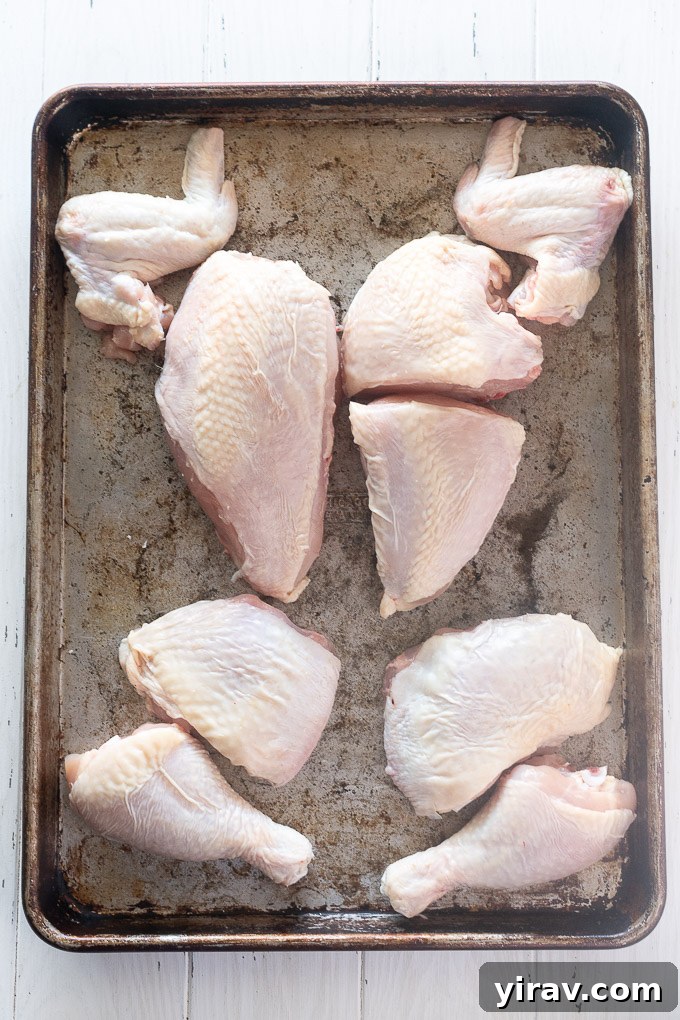
Frequently Asked Questions About Cutting a Whole Chicken
Cutting a whole chicken into individual pieces is made simple by following a methodical approach and understanding chicken anatomy. Start by ensuring your chicken is dry and placed breast-side up on a stable, non-skid cutting board. The goal is to break it down into 8 primary pieces: two drumsticks, two thighs, two breast halves, and two wings. Here’s a summarized sequence:
1. **Remove the Legs:** Slice through the skin between the breast and leg, then dislocate and cut through the hip joint.
2. **Separate Drumsticks and Thighs:** Find the knee joint of each leg and cut to separate.
3. **Remove the Wings:** Locate and cut through the shoulder joint where the wing meets the breast.
4. **Separate Breast from Backbone:** Using kitchen shears, cut along both sides of the backbone, freeing the breast cage.
5. **Prepare to Split the Breast:** Score along the breastbone with a knife.
6. **Split the Breast:** Flip the breast skin-side up, press down firmly to crack the sternum, then cut through the middle to create two halves.
For efficiently cutting a whole chicken, a very sharp chef’s knife and a high-quality pair of kitchen shears are your best allies. While a sharp chef’s knife is excellent for making precise cuts and separating larger sections, kitchen shears offer superior control and leverage, particularly when navigating tricky joints or cutting through smaller bones like ribs. Many find shears to be indispensable, especially for beginners, as they provide an added layer of safety and confidence, allowing you to cut exactly where needed with minimal effort.
Removing chicken wings can be surprisingly simple, and many find that using kitchen shears with the chicken positioned breast-side down offers the easiest approach, as it helps reveal the wing joint more clearly. This method gives you excellent visibility and control.
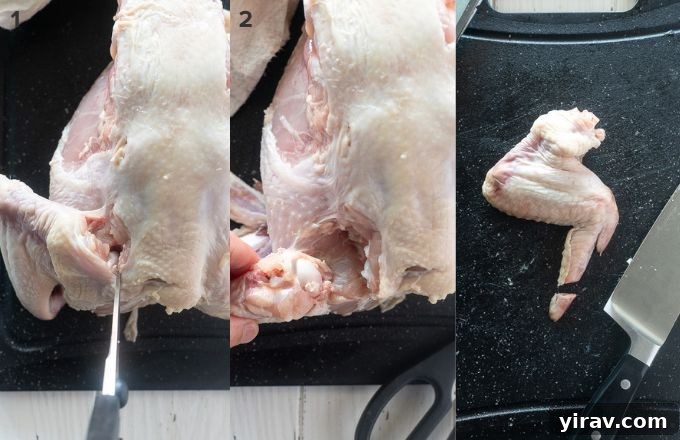
1. **Position the Chicken:** Flip the chicken breast-side down on your cutting board. This allows gravity to pull the wing slightly away from the body, making the joint more prominent.
2. **Locate and Cut the Joint:** Gently pull the wing outwards. Identify the joint connecting the wing to the breast and make a clean cut directly through it with your kitchen shears. You should feel the shears pass through easily if you’re in the right spot.
3. **Optional: Remove Wing Tips:** For a cleaner presentation or to maximize stock flavor, you can cut off the very tip of the wing and reserve it for your next batch of homemade chicken stock.
Once the chicken breast has been successfully separated from the backbone, it’s ready to be split into two individual halves. This can be achieved with ease using either a sharp knife or kitchen shears.
**Using a Knife:** Place the entire breast section, skin-side down, on your cutting board. Carefully score along the length of the breastbone with the tip of your chef’s knife or a paring knife. This helps to loosen the bone. Then, flip the breast over so it is skin-side up. Using both hands, firmly press down on the breastbone until you hear it crack, effectively flattening the breast. This technique is similar to “spatchcocking” a chicken and helps create a flat, even surface. Once cracked, use your chef’s knife to cut straight down the middle of the breast, separating it into two halves.
**Using Kitchen Shears:** For an equally effective and often easier method, especially for beginners, use kitchen shears.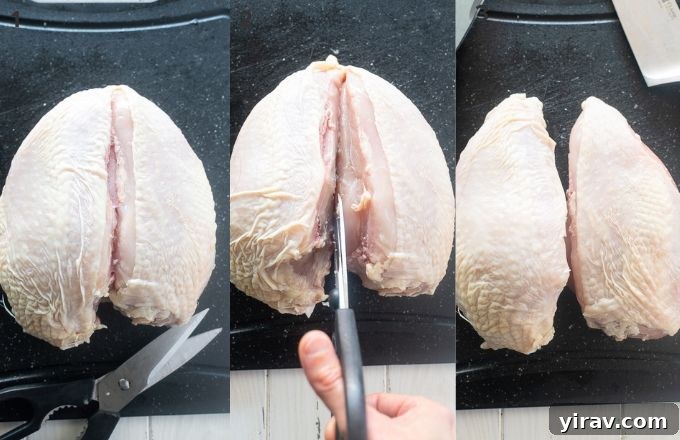
1. **Initial Cut:** Starting from one end, cut down the middle through the skin and breast meat with your shears until you reach the breastbone.
2. **Complete the Split:** Continue to cut through the breastbone with your shears, splitting the entire breast into two distinct halves.
3. **Bone-in or Boneless:** At this point, you can choose to leave the half-breasts bone-in for more flavor or carefully remove the bones to create boneless chicken breast portions.
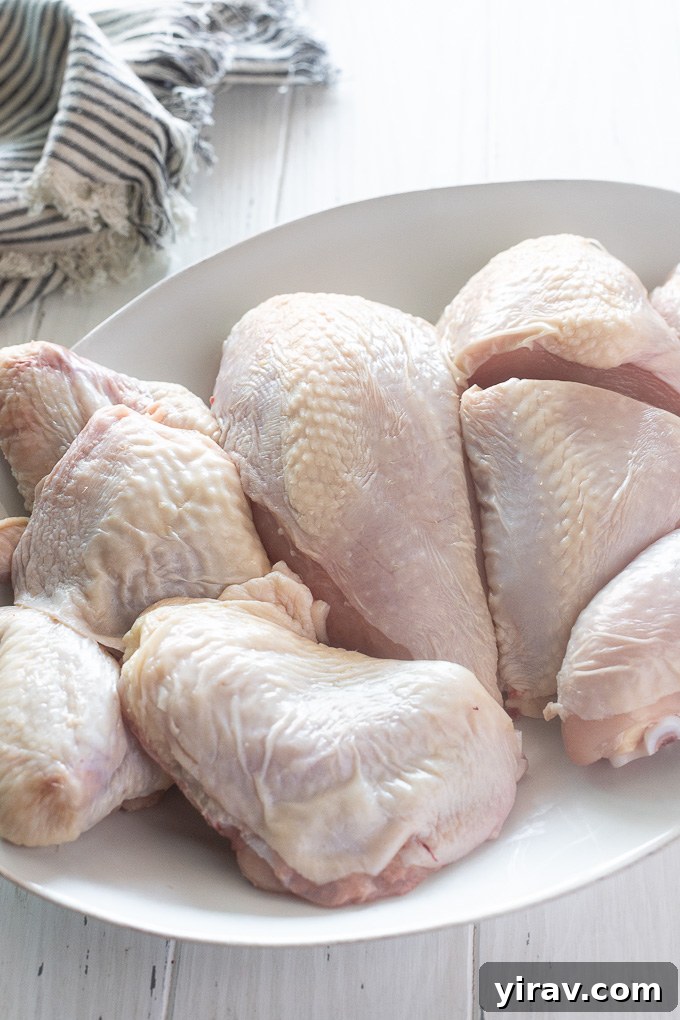
Versatile Ways to Utilize Your Freshly Cut Chicken
Once you’ve skillfully broken down your whole chicken, a world of culinary possibilities unfolds! Each carefully separated piece is now primed for a variety of cooking methods and delicious recipes.
- Classic Fried Chicken: For an indulgent treat, use a mix of your cut chicken pieces to prepare a batch of buttermilk fried chicken. If you prefer a healthier alternative without sacrificing crispiness, try this amazing oven-fried chicken recipe that delivers incredible crunch.
- Grilling Galore: Fire up the grill for your next summer gathering! All parts of your freshly cut chicken—breasts, thighs, and drumsticks—are perfect for a mouthwatering grilled BBQ chicken feast. Each piece cooks beautifully, absorbing smoky flavors.
- Hearty Thighs and Drumsticks: Chicken thighs and drumsticks, known for their rich flavor and tenderness, are excellent for robust dishes. Transform them into a comforting chicken stew or simply grill them to perfection with this grilled chicken thighs recipe. They are also the traditional choice for a classic French Coq au Vin.
- Flavorful Chicken Wings: Don’t let those wings go to waste! Collect them in freezer bags until you have enough for an irresistible batch of air fryer chicken wings. They’re perfect for game nights or a casual snack.
- Lean Chicken Breasts: The versatile chicken breasts can be used in lighter, yet equally satisfying dishes. Create a soothing Greek lemon chicken soup (Avgolemono) or a zesty baked salsa chicken. They are also ideal for making tender Instant Pot shredded chicken for tacos or salads, or a crowd-pleasing slow cooker BBQ pulled chicken.
Essential Tips for Success and Storage
- Sharp Tools are Key: Always prioritize safety and efficiency by using a very sharp knife or high-quality kitchen shears. A dull blade requires excessive force, increasing the risk of accidents. For beginners, shears often provide more controlled and safer cuts.
- Mastering the Joints: The most crucial aspect of butchering a chicken is learning to locate and cut through the natural joints. These are softer cartilage areas that separate easily. If you encounter significant resistance, reposition your blade; you’re likely trying to cut through bone.
- Bulk Buying Benefits: For optimal savings and meal prep efficiency, consider purchasing whole organic chickens in bulk, for example, a double pack from a warehouse club. Breaking them down simultaneously saves time, and you can portion the resulting cuts for various upcoming recipes.
- Proper Storage: Once cut, raw chicken pieces should be stored in airtight containers or zip-top bags in the refrigerator for up to 3 days. For longer storage, freeze the chicken parts for up to 3 months. Label bags with the date to ensure freshness.
- Don’t Waste the Bones: The neck, backbone, and any wing tips or other bony scraps are incredibly valuable. Store them in freezer bags for up to 3 months. Once you’ve accumulated enough, use them to make rich, flavorful homemade chicken stock, which is far superior to store-bought varieties.
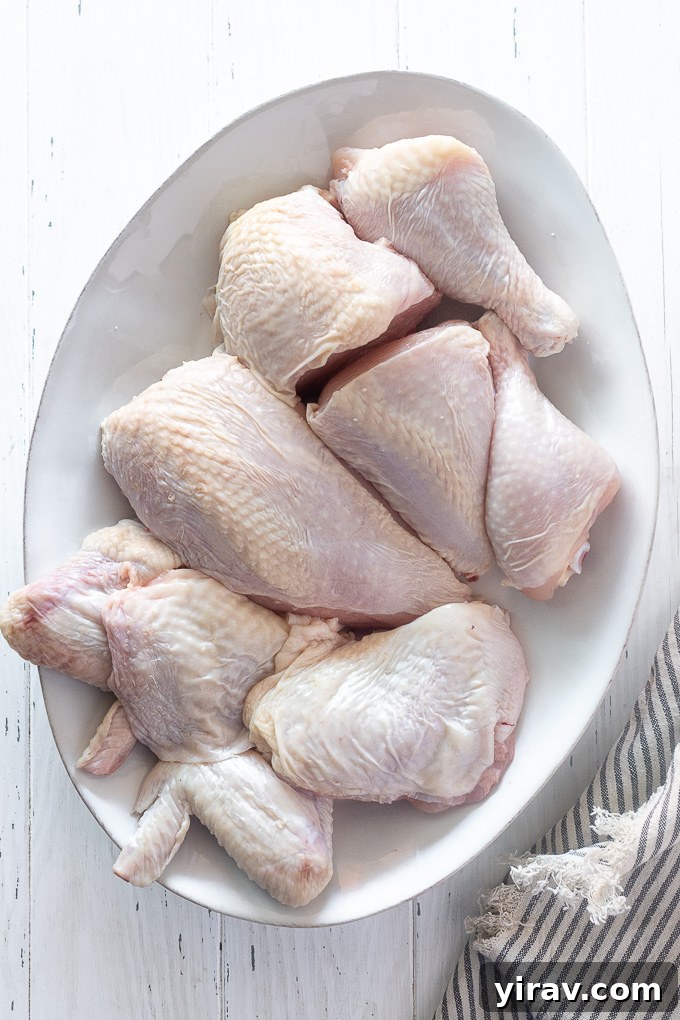
More Delicious Chicken Recipes You’ll Adore
Now that you’re a pro at cutting chicken, explore these fantastic recipes designed to make the most of your freshly portioned poultry:
- Crispy Air Fryer Chicken Breast
- Vibrant Chicken Cobb Salad
- Hearty Homemade Chicken Enchiladas
- Elegant Chicken Piccata
- Quick Chicken Vegetable Stir-Fry
- Exotic Curry Chicken Salad
- Simple Instant Pot Chicken and Rice
Did you try this method? If so, please leave a review below and tag us @flavorthemoments on Facebook and Instagram!
How to Cut a Whole Chicken
8
servings
10
mins
0
mins
10
mins
Pin Recipe
Leave a Review »
Equipment
-
Boos Block Cutting Board
-
Kitchen Shears
-
Chef Knife
Ingredients
- 1 whole chicken
Instructions
-
Place the chicken breast side up on a cutting board. Remove the giblets packet and neck inside the cavity, if applicable, and pat the chicken dry with a paper towel.1 whole chicken
-
Remove the legs. Cut through the skin between the chicken breast and drumstick and pull the leg slightly away from the body to expose the joint. Cut through the joint and through the bottom to release the leg. Repeat on the other side.
-
Separate the drumstick and thigh. Place the leg and thigh on a cutting board skin side down. Find the joint where the top of the drumstick meets the thigh and cut right through the joint to separate the drumstick and thigh. Repeat the process for the second leg.
-
Remove the wings. Locate the joint where the wing meets the breast. Pull the wing away from the body to expose the joint and cut through the joint with your knife or kitchen shears. Locating the joint is even easier if you turn the chicken breast side down on the cutting board…the entire wing can be removed using your kitchen shears, which gives you a bit more control if you lack experience. Repeat for the second wing. Remove the wing tips if desired and save for stock.
-
Separate the breast and backbone. Turn the chicken on its side and using kitchen shears, cut through the ribs to separate on one side. Repeat on the other side and save the backbone for stock.
-
Split the breast. Place the chicken breast breast side down on a cutting board and make a shallow cut along the breast bone with a knife or paring knife to help loosen it. Turn the chicken over breast side up and press down to crack it. From there, cut through the middle of the breast to separate. You can also use kitchen shears to cut through the skin and breast to separate, then use the knife to cut through the breastbone.
-
Cut the breasts in half (optional). Place the breasts skin side up on the cutting board and remove the bones if desired, then cut width-wise. You can also remove the bones for boneless chicken breasts and even remove the chicken tenders to save for another use.
-
Store your cut chicken in an air tight container in the refrigerator and use within 3 days, or freeze for up to 3 months.
Notes
- Pro tip: Use a very sharp knife for best results. If you’re not comfortable using a knife, kitchen shears are a great option as well!
- Locating the various joints are essential to cutting through the chicken parts quick and easy. If it’s difficult to cut through, you are not cutting through the joint.
- Consider purchasing a double pack of organic whole chickens at Costco and break them down at the same time. This saves money and time, and you can portion the chicken out for upcoming recipes.
- Save the neck and backbone to make homemade chicken stock. Store them in zip top bags in the freezer for up to 3 months until you’re ready to make stock!
Nutrition
Calories: 205kcal
,
Protein: 18g
,
Fat: 14g
,
Saturated Fat: 4g
,
Polyunsaturated Fat: 3g
,
Monounsaturated Fat: 6g
,
Trans Fat: 0.1g
,
Cholesterol: 71mg
,
Sodium: 67mg
,
Potassium: 180mg
,
Vitamin A: 133IU
,
Vitamin C: 2mg
,
Calcium: 10mg
,
Iron: 1mg
Nutrition is estimated using a food database and is only intended to be used as a guideline for informational purposes.
Did you try this recipe?
Be sure to tag @flavorthemoments with the hashtag #flavorthemoments on Instagram so I can see what you made!