How to Prep an Artichoke: Your Ultimate Step-by-Step Guide
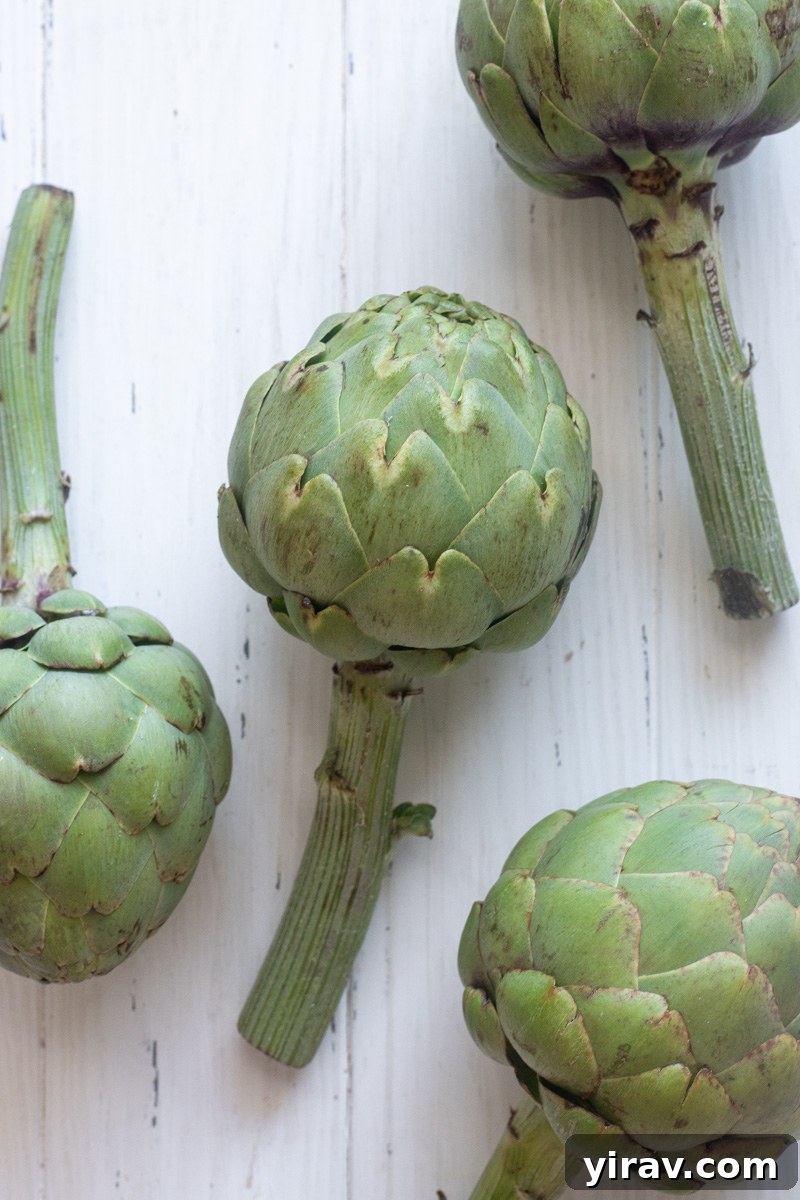
Unlocking the delicious potential of fresh artichokes is easier than you think! This comprehensive guide will teach you **how to prep an artichoke** with confidence, from selecting the freshest globe artichokes to expertly trimming their leaves and removing the inedible choke. Whether you’re planning to steam, roast, grill, or braise them, our detailed instructions and helpful tips will ensure your artichokes are perfectly prepared and ready to transform into a delightful appetizer or side dish. Enjoy the unique flavor and tender texture of fresh artichokes all season long by mastering these essential preparation techniques.
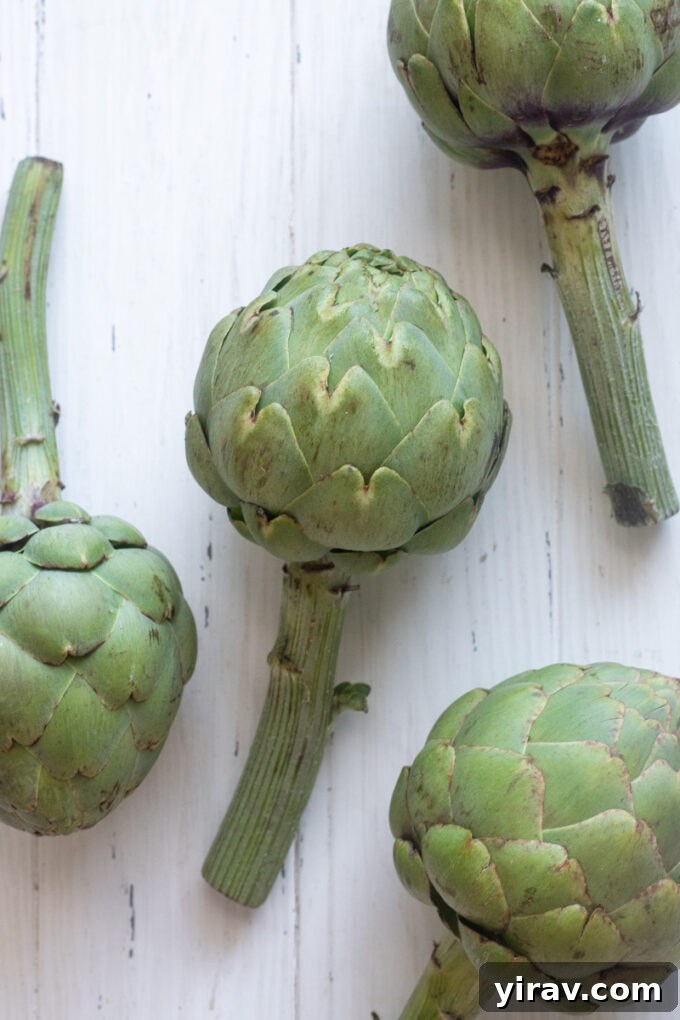
Artichokes, with their distinctive appearance and slightly intimidating tough outer leaves, might seem challenging to prepare at first glance. However, with a few simple techniques and the right tools, transforming these beautiful thistles into a culinary delight becomes surprisingly straightforward. This guide is designed to demystify the process, empowering you to confidently tackle fresh artichokes in your kitchen.
In this detailed tutorial, we’ll walk you through every crucial step of **prepping an artichoke**. You’ll learn the art of trimming the fibrous stem, safely cutting off the sharp top, expertly snipping the thorny leaf tips, and precisely removing the fuzzy choke – a vital step for certain cooking methods. Our instructions are accompanied by clear descriptions to ensure you can follow along easily. Once properly trimmed and cleaned, your artichokes will be ready for a variety of cooking applications, including steaming to perfection, roasting for a caramelized crust, grilling for a smoky flavor, or braising into tender submission, making them a fantastic addition to any meal.
For those eager to explore preparing artichokes all the way down to their succulent hearts, be sure to delve into our related guide on Roman-style artichokes, which offers advanced techniques for a truly exquisite dish.
Why Master Artichoke Preparation?
Learning **how to prep an artichoke** from scratch offers numerous benefits that extend beyond simply putting food on the table. It’s a skill that elevates your cooking, saves you money, and allows you to appreciate the full flavor profile of this unique vegetable.
- Unbeatable Freshness and Flavor: Prepping fresh artichokes ensures you’re enjoying them at their peak, delivering a superior taste and texture compared to canned or frozen alternatives.
- Cost-Effective: Whole, fresh artichokes are often more economical than pre-trimmed or jarred artichoke hearts, especially when they are in season.
- Complete Control: You dictate the level of trim, ensuring minimal waste and maximizing the edible parts, including the often-overlooked tender stem.
- Versatile Culinary Uses: A properly prepped artichoke opens up a world of culinary possibilities, from simple steamed sides to sophisticated roasted entrées.
- Sense of Accomplishment: There’s a true satisfaction in transforming a seemingly complex vegetable into a ready-to-cook delicacy.
- Health Benefits: Artichokes are packed with nutrients, fiber, and antioxidants. Fresh preparation helps retain these valuable health properties.
This tutorial simplifies the process with:
- Easy-to-follow, clear step-by-step instructions and accompanying photos.
- Detailed explanations on how to precisely trim an artichoke’s stem and outer leaves.
- A comprehensive guide to understanding the artichoke choke – its nature and why it needs removal.
- Instructions on when and how to remove the choke for various cooking methods.
- Techniques applicable for preparing delicious roasted, grilled, or steamed artichokes.
Choosing and Storing the Best Artichokes
The secret to a delicious artichoke dish begins with selecting the freshest produce. When learning **how to prep an artichoke**, knowing what to look for at the market is key.
How to Select Fresh Artichokes:
- Look for Tight Leaves: The leaves should be tightly closed, indicating freshness. If they are splayed open, the artichoke might be older and tougher.
- Feel the Weight: A fresh artichoke should feel heavy for its size, suggesting it’s full of moisture. Light artichokes can be dry.
- Squeak Test: Gently squeeze the artichoke. It should emit a slight “squeak,” another sign of freshness and moisture content.
- Check for Color: The color should be a vibrant green (or purple-tinged, depending on the variety), with minimal brown spots. Some slight browning on the outer leaves is normal, but avoid those with extensive discoloration or wilting.
- Inspect the Stem: A fresh, firm stem indicates a recently harvested artichoke. Avoid stems that appear overly dry or shriveled.
Storing Fresh Artichokes:
To keep your artichokes fresh until you’re ready to prep them:
- Refrigerate Promptly: Store them in the coolest part of your refrigerator, ideally in a plastic bag with a few drops of water, or sprinkle them lightly with water to maintain humidity.
- Avoid Washing Until Ready: Don’t wash artichokes before storing them, as excess moisture can encourage spoilage.
- Use Within a Week: Artichokes are best enjoyed within 5-7 days of purchase. The sooner you use them, the better their flavor and texture will be.
Essential Tools for Prepping Artichokes
Having the right tools on hand will make the process of **trimming artichokes** much smoother and more efficient. Gather these items before you begin:
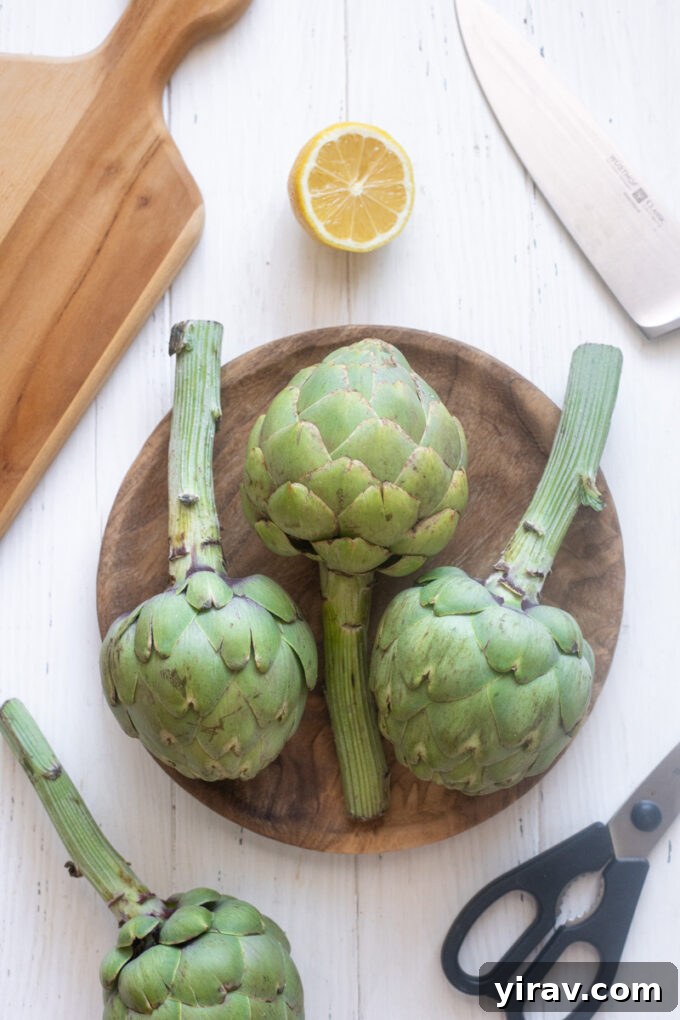
- Fresh Globe Artichokes: As discussed, select the best quality artichokes with tightly closed leaves that feel heavy for their size.
- Lemon: An indispensable aid for preventing oxidation. The citric acid in lemon juice helps keep the cut surfaces of the artichoke from turning brown, maintaining its appealing fresh look.
- Sharp Chef’s Knife: A sturdy, razor-sharp knife is crucial for cleanly slicing through the tough top of the artichoke and for trimming the stem. A dull knife can make the task more difficult, increase the risk of slippage, and result in ragged cuts.
- Kitchen Shears: These are incredibly handy for quickly and easily snipping off the sharp, thorny tips of the outer leaves. While technically optional, they significantly improve handling safety and the final presentation of the artichoke.
- Spoon or Melon Baller: This specialized tool becomes essential when you need to scoop out the fuzzy choke. A sturdy spoon can work in a pinch, but a melon baller provides more precision and ease for cleanly removing the fuzzy fibers and any small, sharp inner leaves without damaging the precious artichoke heart.
- Cutting Board: A stable, non-slip cutting board is paramount for safe and effective trimming.
- Bowl of Lemon Water (optional, but recommended for multiple artichokes): This bath helps keep prepped artichokes from browning while you work on others, especially if you’re preparing a large batch.
How to Prepare an Artichoke: A Step-by-Step Tutorial
Follow these detailed instructions to confidently prep your fresh artichokes for any cooking method, ensuring a clean and tender result.
Step 1: Rinse and Trim the Stem
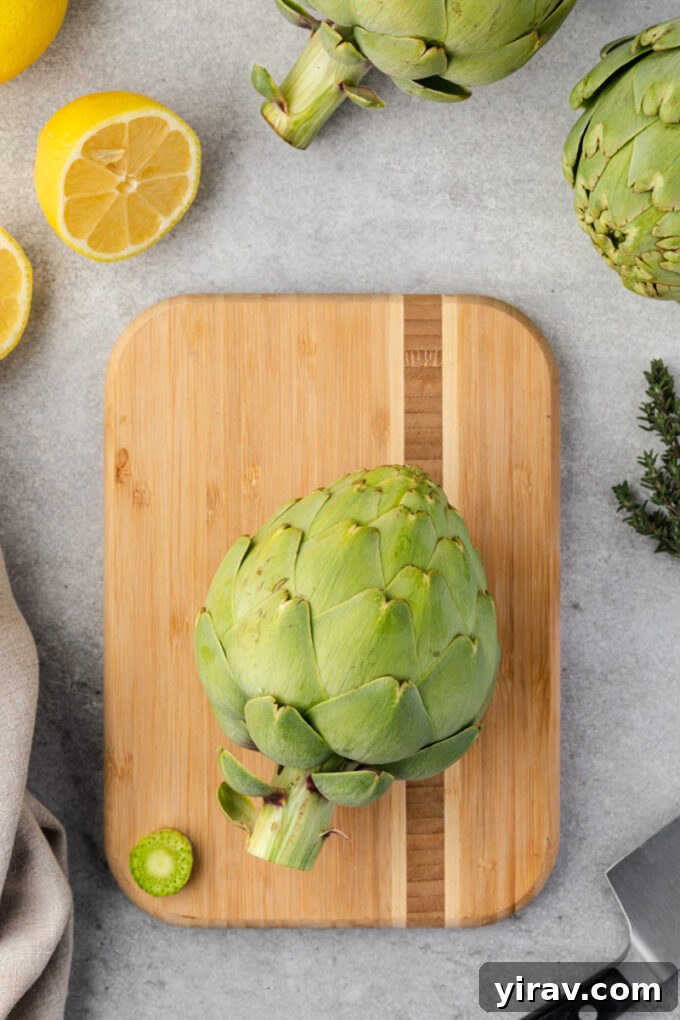
Begin by rinsing the artichoke thoroughly under cold running water. Gently pull the leaves apart slightly to dislodge any trapped dirt or debris, especially between the lower layers. Once clean, place the artichoke on a stable cutting board. Using your sharp chef’s knife, slice off about 1/2 to 1 inch from the very end of the stem. This creates a flat, stable base, allowing the artichoke to sit upright without wobbling, either on your cutting surface or in a pot. Remember, the stem is entirely edible! For a more tender eating experience, you can peel the fibrous outer layer of the stem with a vegetable peeler or small paring knife to reveal the succulent interior before cooking it along with the artichoke.
Step 2: Cut Off the Top
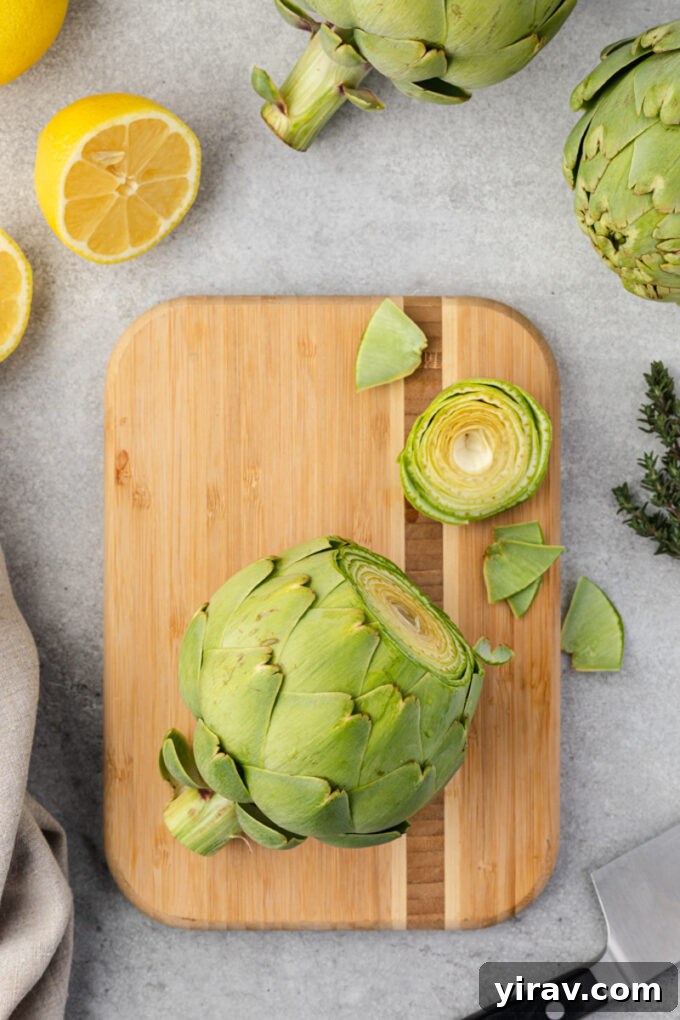
With the stem trimmed, hold the artichoke firmly on your cutting board. Using your sharp chef’s knife, carefully slice about 1/2 to 1 inch off the very top of the artichoke. This step is important for several reasons: it removes the bulk of the sharp, thorny tips from the innermost leaves, makes the artichoke much easier to handle without pricking your fingers, and creates a more aesthetically pleasing, open presentation once cooked. Don’t be afraid to cut off enough to expose some of the lighter, more tender parts of the inner leaves, as the very top is primarily tough and fibrous.
Step 3: Trim the Remaining Leaf Tips
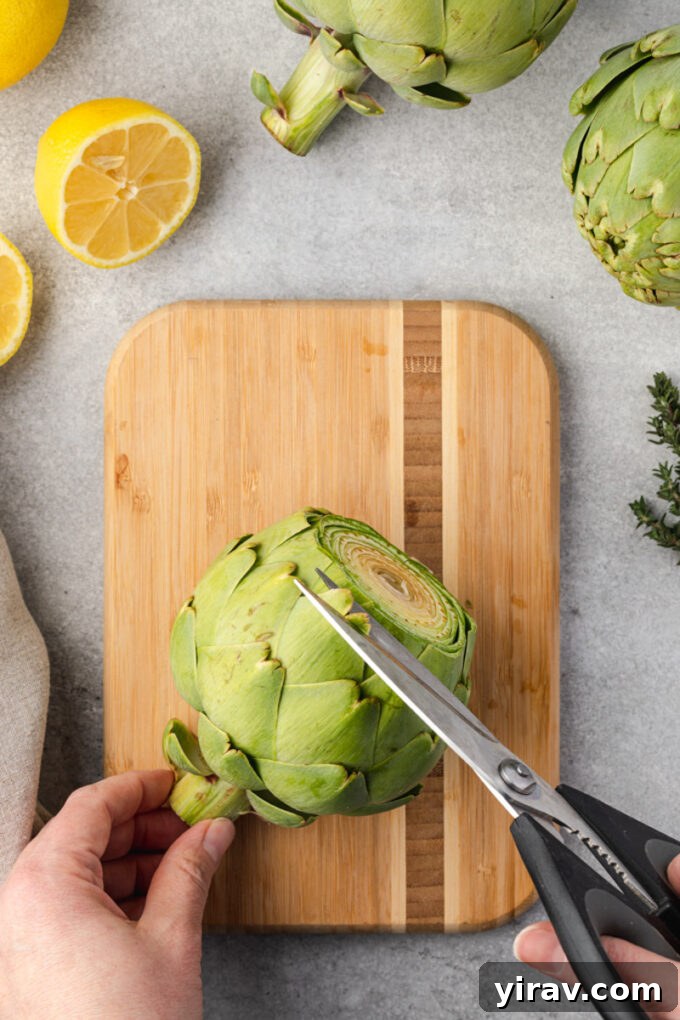
Even after cutting off the top, many of the outer leaves, especially the tougher ones, will still have small, sharp thorns at their tips. To make the artichoke more pleasant and safe to handle and eat, and to further refine its appearance, use kitchen shears to individually snip off these sharp, pointed tips from each outer leaf. Work your way around the entire artichoke, leaf by leaf. While this step is technically optional, it is highly recommended for safety and comfort, particularly if you plan to serve the artichoke whole or if you’re new to **prepping fresh artichokes**.
Step 4: Prevent Browning with Lemon
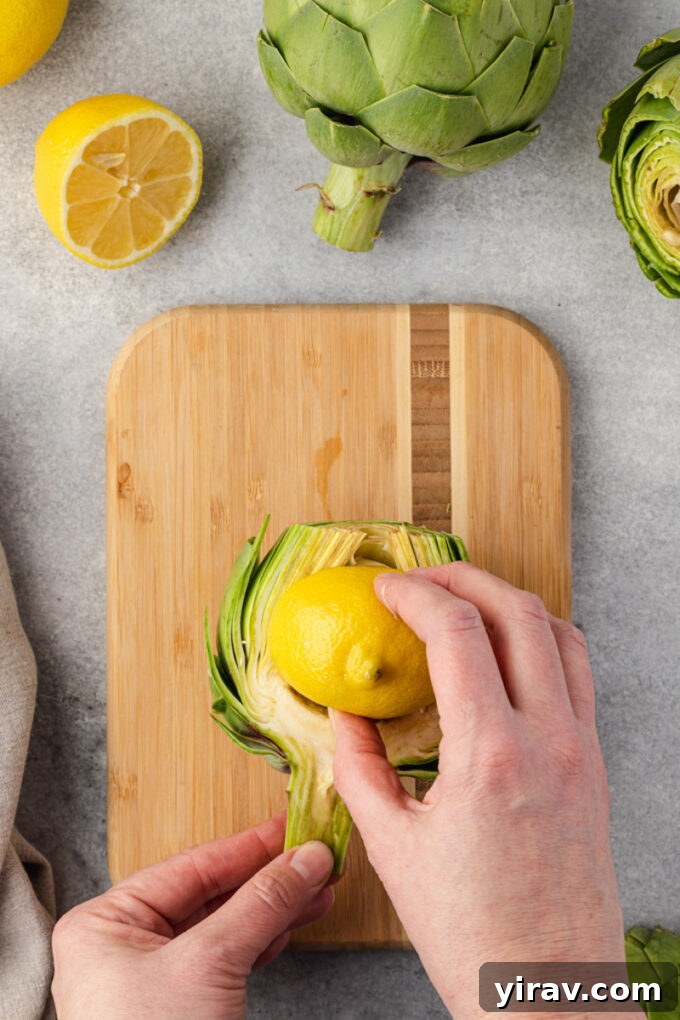
Immediately after trimming, the exposed cut surfaces of the artichoke will begin to oxidize and turn brown when exposed to air – much like an apple or avocado. To prevent this unsightly discoloration and keep your artichoke looking fresh and appealing, generously rub all cut areas (the top, the stem, and any newly exposed areas) with a cut half of a lemon. The citric acid in the lemon juice acts as a natural antioxidant, effectively preserving the vibrant green color. If you are prepping multiple artichokes, it’s an excellent practice to immerse them in a bowl of cold water with a few lemon slices (or a splash of white vinegar) until you are ready to cook. This ensures they remain pristine while you finish the rest of your preparation.
Decide How You’ll Cook Your Artichoke
Once you’ve completed the basic trimming steps – rinsing, stem trimming, cutting the top, snipping leaf tips, and applying lemon juice – the next phase of **artichoke preparation** depends entirely on your chosen cooking method. Different culinary applications require different approaches to handling the inedible choke. Making this decision early ensures your artichoke is perfectly prepared for its final dish.
For Steamed or Braised Whole Artichokes
If your culinary plans involve steaming your artichokes whole, or braising them gently as in traditional Roman-style artichokes, you can leave the choke intact for now. When artichokes are cooked whole, the fuzzy choke becomes much softer and is traditionally removed after cooking. As you eat your way to the center of the artichoke, peeling off and enjoying the tender fleshy bases of the leaves, you’ll simply scrape away the cooked choke with a spoon to reveal the succulent artichoke heart beneath. This method is common for classic preparations served with various dipping sauces.
Want a faster method for steamed artichokes? For perfectly tender results in about 20 minutes, significantly reducing traditional stovetop steaming times, try my Instant Pot artichokes recipe.
For Roman-style artichokes: These exquisite artichokes are typically cooked whole after trimming. The leaves are gently opened to create space, and the artichokes are then braised upside down in a pot with a flavorful mixture of olive oil, white wine or water, aromatic garlic, and fresh herbs like mint and parsley until incredibly tender. The choke, in this preparation, is also removed post-cooking. You can explore a detailed recipe for Roman style artichokes to master this traditional and highly flavorful Italian dish.
For Roasted, Grilled, or Stuffed Artichokes
If your culinary ambitions lean towards roasting, grilling, or stuffing artichokes, they will typically need to be cut in half and have the choke removed before cooking. This pre-cooking removal is crucial for several reasons: it allows for more even cooking of the exposed heart, provides direct access for seasoning and stuffing, and enables beautiful caramelization or charring on the cut surfaces. Halving them also creates a larger surface area, enhancing flavor absorption and presentation.
See my roasted artichokes recipe for a delicious example of halved and de-choked artichokes cooked to perfection, showcasing the tender, flavorful heart.
How to Remove the Choke (for Roasting or Grilling)
This section details the critical steps for cleanly removing the choke when preparing artichokes for halved cooking methods like roasting, grilling, or stuffing.
Step 5: Cut the Artichoke in Half
Carefully place your fully trimmed artichoke (stem trimmed, top cut, leaf tips snipped) on the cutting board. Using your sharp chef’s knife, slice the artichoke precisely in half lengthwise, right through the middle, from the trimmed top all the way down through the stem. This deliberate cut will perfectly expose the fuzzy choke and the small, often pointed and purplish inner leaves that sit directly on top of the coveted artichoke heart. Seeing the cross-section of the artichoke will help you understand its internal anatomy and make the subsequent step of removing the choke much easier and more accurate.
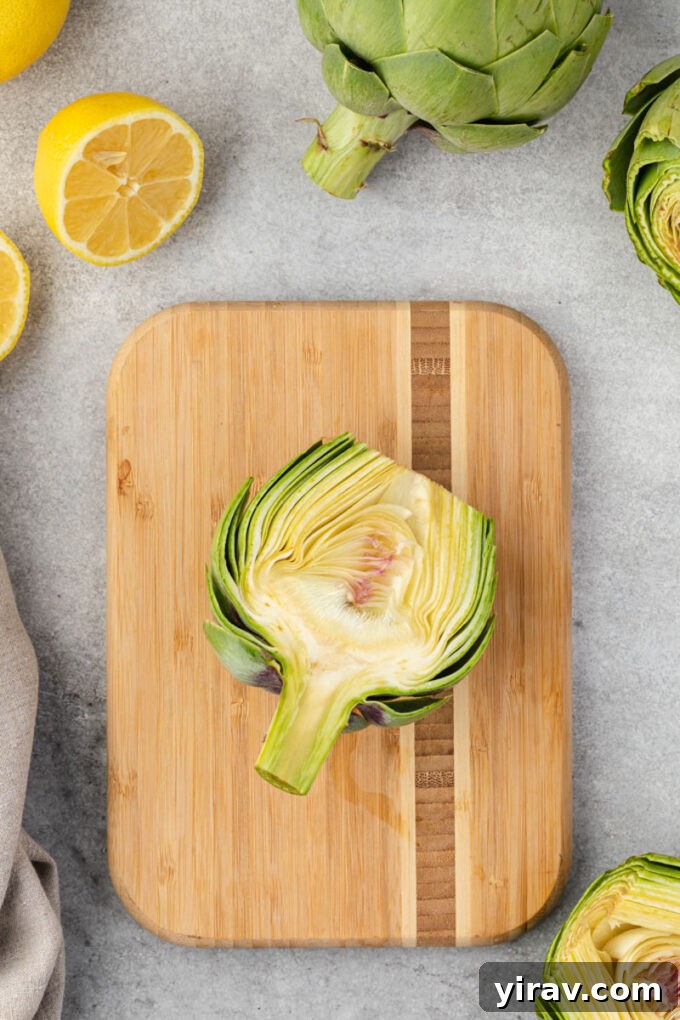
Step 6: Scoop Out the Choke
Now that the artichoke is halved, you’ll clearly see the fuzzy, hairy “choke” and any remaining small, sharp purple-tinged inner leaves situated above the tender heart. These parts are inedible and must be thoroughly removed. Take a sturdy spoon or, even better, a melon baller, and gently, but firmly, scrape out all of the fuzzy choke. Ensure you also remove any prickly purple leaves that might still be present. Be careful not to dig too deep or aggressively into the tender, pale green artichoke heart directly beneath. You want to achieve a clean, smooth, concave hollow where the choke once was. This meticulous removal ensures a pleasant eating experience without any fibrous or spiky surprises, allowing you to fully enjoy the heart.
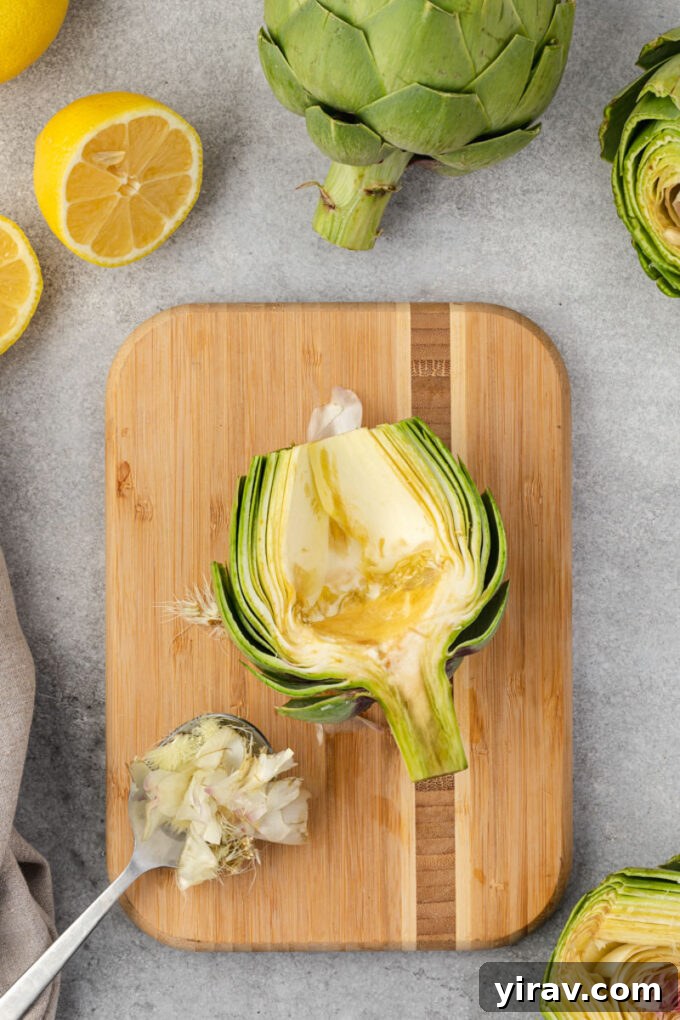
Step 7: Artichoke Ready to Cook
Congratulations! Once the fuzzy choke and any sharp inner leaves have been completely and cleanly removed, your halved artichokes are perfectly prepped and ready for their culinary journey. The exposed artichoke heart should be smooth and pristine, forming a natural cup that is now ready to hold seasonings, stuffings, or simply embrace the flavors of your chosen cooking method. Before proceeding, give the cut surfaces another quick rub with lemon juice if they’ve been sitting for a moment to prevent any last-minute browning. Your diligence in **preparing artichokes** will now be rewarded with a truly memorable and delicious dish, showcasing the best of this unique vegetable.
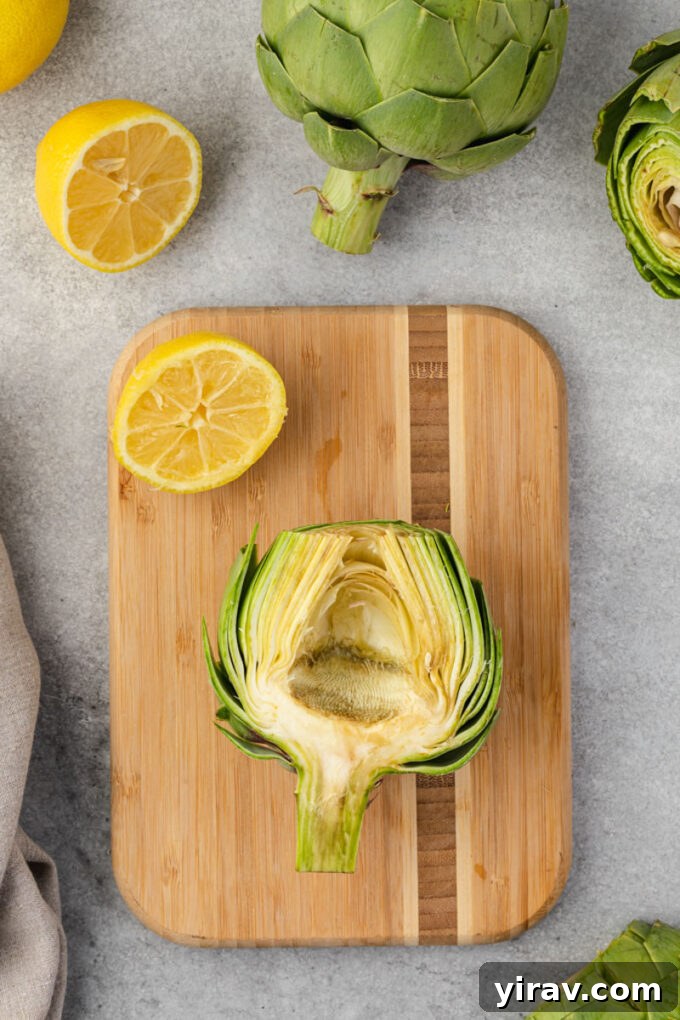
Expert Tips for Seamless Artichoke Preparation
To ensure your **artichoke preparation** is always successful and enjoyable, keep these professional tips in mind:
- Sharpness is Key: Always use a very sharp chef’s knife for clean, precise cuts through the stem and top. A sharp blade prevents crushing the delicate leaves and makes the job safer and more efficient.
- Combat Browning Immediately: Have a lemon half ready to rub on any cut surfaces instantly. For multiple artichokes, prepare a large bowl of cold water with several lemon slices (or a splash of white vinegar) to submerge them as you work, minimizing oxidation.
- Kitchen Shears are a Game-Changer: Don’t underestimate the efficiency and safety of kitchen shears for trimming leaf tips. They are far quicker and more precise than attempting this task with a knife.
- Embrace the Stem: Don’t discard the stem! Peel its fibrous outer layer to reveal the tender interior, which can be cooked and enjoyed just like the heart. It often boasts a slightly sweeter flavor and adds to the edible yield.
- Work Efficiently: Artichokes oxidize quickly. Try to work at a steady, consistent pace once you begin trimming to minimize their exposure to air and maintain their fresh appearance.
- Safety First: Artichokes can be surprisingly prickly. Handle them carefully, especially when trimming, to avoid scratches or minor punctures from their thorns.
- Practice Makes Perfect: The more you prep artichokes, the faster and more confident you’ll become. Each artichoke offers a valuable learning opportunity to refine your technique.
Delicious Ways to Cook Your Prepped Artichokes
Once you’ve expertly prepared your artichokes using the steps above, a world of culinary possibilities awaits! Here are some popular and incredibly flavorful methods for cooking your fresh artichokes, ensuring they are tender and delicious:
Steamed Artichokes: A Classic Delight
Steaming is perhaps the most traditional and simplest way to cook a whole artichoke. It yields incredibly tender leaves and a buttery heart. Simply place whole, trimmed artichokes in a steamer basket over simmering water, cover tightly, and steam for 30-45 minutes (or as quickly as 20 minutes in an Instant Pot), until a leaf can be easily pulled off. Serve these delightful whole artichokes with melted butter, creamy aioli, a zesty vinaigrette, or even a simple squeeze of lemon for dipping.
Roasted Artichokes: Caramelized Perfection
Halved, de-choked artichokes are fantastic for roasting, as the dry heat brings out their natural sweetness and creates delightful caramelized edges. Toss them generously with olive oil, minced garlic, a squeeze of fresh lemon juice, and fresh herbs like thyme or rosemary. Roast at 400°F (200°C) until tender and beautifully golden brown, usually 25-35 minutes. Roasting transforms the texture, making it slightly crisp on the outside and wonderfully tender within. Be sure to try our roasted artichokes recipe for an irresistible and easy side dish.
Grilled Artichokes: Smoky & Flavorful
Grilling imparts a wonderful smoky flavor and attractive char marks to halved artichokes. After de-choking them, brush the cut sides generously with olive oil and season with salt, freshly ground black pepper, and your favorite Mediterranean herbs. Grill cut-side down over medium heat until tender and beautifully charred, then flip and continue cooking until fully tender. Grilled artichokes are superb served with a final squeeze of lemon and a sprinkle of grated Parmesan cheese, making them a perfect addition to any barbecue.
Roman Artichokes (Carciofi alla Romana): An Italian Treasure
A true culinary masterpiece, Roman artichokes are prepared by gently opening the leaves of whole, trimmed artichokes and braising them upside down in a pot. They cook slowly in a flavorful liquid typically composed of olive oil, white wine, water, aromatic garlic, and a generous amount of fresh mint and parsley. This traditional slow-cooking method results in incredibly tender artichokes imbued with rich, herbaceous flavors, a quintessential and cherished dish of Roman cuisine.
Frequently Asked Questions About Artichoke Preparation
Absolutely. It’s crucial to rinse fresh artichokes thoroughly under cold running water. Gently pull the leaves apart to ensure you dislodge and remove any trapped dirt, sand, or small insects that might be hidden within the layers. Cleanliness is paramount for an enjoyable and hygienic eating experience.
The choke refers to the fuzzy, fibrous center of the artichoke, located just above the tender artichoke heart. It’s composed of immature florets and small, sharp purple leaves. As the artichoke matures, this part becomes tough, stringy, and entirely inedible, posing a choking hazard if consumed. It must always be removed before consumption. Understanding its location and proper removal is a key part of learning **how to prep an artichoke** correctly.
It depends on your chosen cooking method. If you plan to roast, grill, or stuff your artichokes, where they are often halved, you should remove the choke *before* cooking for easier access to the heart, more even cooking, and immediate enjoyment. However, if you are steaming or braising whole artichokes, the choke is typically removed *after* cooking, as you eat your way through the leaves to the tender center. The cooked choke is softer and easily scraped away with a spoon or fork at the table.
Yes, absolutely! The stem of a fresh artichoke is entirely edible and can be quite delicious, often sharing a similar flavor and texture profile to the heart itself. The outer layer of the stem can be fibrous and tough, so it’s recommended to peel it away with a vegetable peeler or small paring knife to reveal the tender, succulent interior. Once peeled, the stem can be cooked along with the rest of the artichoke and often offers a slightly sweeter flavor than the heart itself.
Artichokes, like many other fruits and vegetables, quickly oxidize and turn brown when their cut surfaces are exposed to air. To effectively prevent this discoloration, generously rub all cut areas with fresh lemon juice immediately after trimming. For longer holding times or when prepping multiple artichokes, submerge them in a large bowl of cold water that has been acidified with several lemon slices or a splash of white vinegar until you’re ready to cook them.
Yes, artichokes are a nutritional powerhouse and offer numerous health benefits! They are an excellent source of dietary fiber, which aids digestion, promotes gut health, and helps regulate blood sugar levels. They are also rich in antioxidants, particularly cynarin and silymarin, which are beneficial for liver health. Artichokes provide essential vitamins like C and K, and important minerals such as magnesium, potassium, and folate. Incorporating them into your diet is a delicious way to boost your overall nutrient intake and support well-being.
Did you try this recipe? If so, be sure to leave a review below and tag me @flavorthemoments on Facebook and Instagram
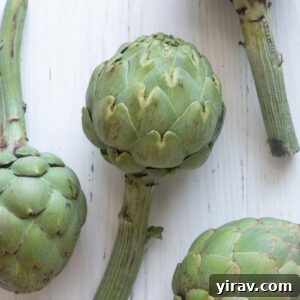
How to Prep an Artichoke
Servings:
1
artichoke
10
10
Pin Recipe
No ratings yet. Be the first to rate this recipe!
Leave a Review »
Equipment
-
Melon Baller or sturdy spoon
-
Sharp Chef Knife
-
Kitchen Shears
-
Cutting Board
Ingredients
- 1 fresh globe artichoke
- 1/2 lemon
Instructions
-
Rinse the artichoke thoroughly under cold water, gently pulling leaves apart to remove any hidden dirt.1 fresh globe artichoke
-
Place on a cutting board and slice off the end of the stem so the artichoke sits flat. Optionally, peel the outer fibrous layer of the stem if you wish to cook and eat it for added tenderness.
-
Using a sharp knife, cut approximately ¾–1 inch off the top of the artichoke to remove the majority of the thorny tips and create a flat, appealing top.
-
Utilize kitchen shears to snip off any remaining sharp tips from the outer leaves for easier handling and improved presentation, ensuring a safe eating experience.
-
Rub all cut surfaces with the half lemon to prevent browning. At this point, the artichoke is prepared for steaming or braising whole (where the choke is removed after cooking).1/2 lemon
Optional Steps (for roasting, grilling, or braising halved artichokes)
-
Slice the trimmed artichoke cleanly in half lengthwise through its center to expose the fuzzy choke and small inner leaves.
-
Using a spoon or melon baller, carefully scoop out and discard all of the fuzzy choke and any sharp, purple-tinged inner leaves. Ensure the artichoke heart is perfectly clean. Once meticulously cleaned, the halved artichoke is now ready to roast, grill, or braise.
Notes
- Pro Tip for Whole Artichokes: When steaming or braising whole artichokes, the choke is generally removed *after* cooking as you enjoy the tender leaves and reach the center. This makes the initial prep faster.
- The stem of the artichoke is edible. Just peel off the tougher outer layer with a vegetable peeler before cooking to expose the tender inner core.
- To prevent browning and maintain their fresh appearance when prepping multiple artichokes, place them in a bowl of cold water with a generous squeeze of lemon juice.
- Preparation time will vary slightly based on the size and number of artichokes you are processing.
Nutrition Facts (per 1 artichoke)
Serving: 1artichoke
,
Calories: 76kcal
,
Carbohydrates: 18g
,
Protein: 5g
,
Fat: 0.3g
,
Saturated Fat: 0.1g
,
Polyunsaturated Fat: 0.1g
,
Monounsaturated Fat: 0.02g
,
Sodium: 121mg
,
Potassium: 548mg
,
Fiber: 8g
,
Sugar: 3g
,
Vitamin A: 29IU
,
Vitamin C: 44mg
,
Calcium: 70mg
,
Iron: 2mg
Nutrition is estimated using a food database and is only intended to be used as a guideline for informational purposes.
Did you try this recipe?
Be sure to tag @flavorthemoments with the hashtag #flavorthemoments on Instagram so I can see what you made!