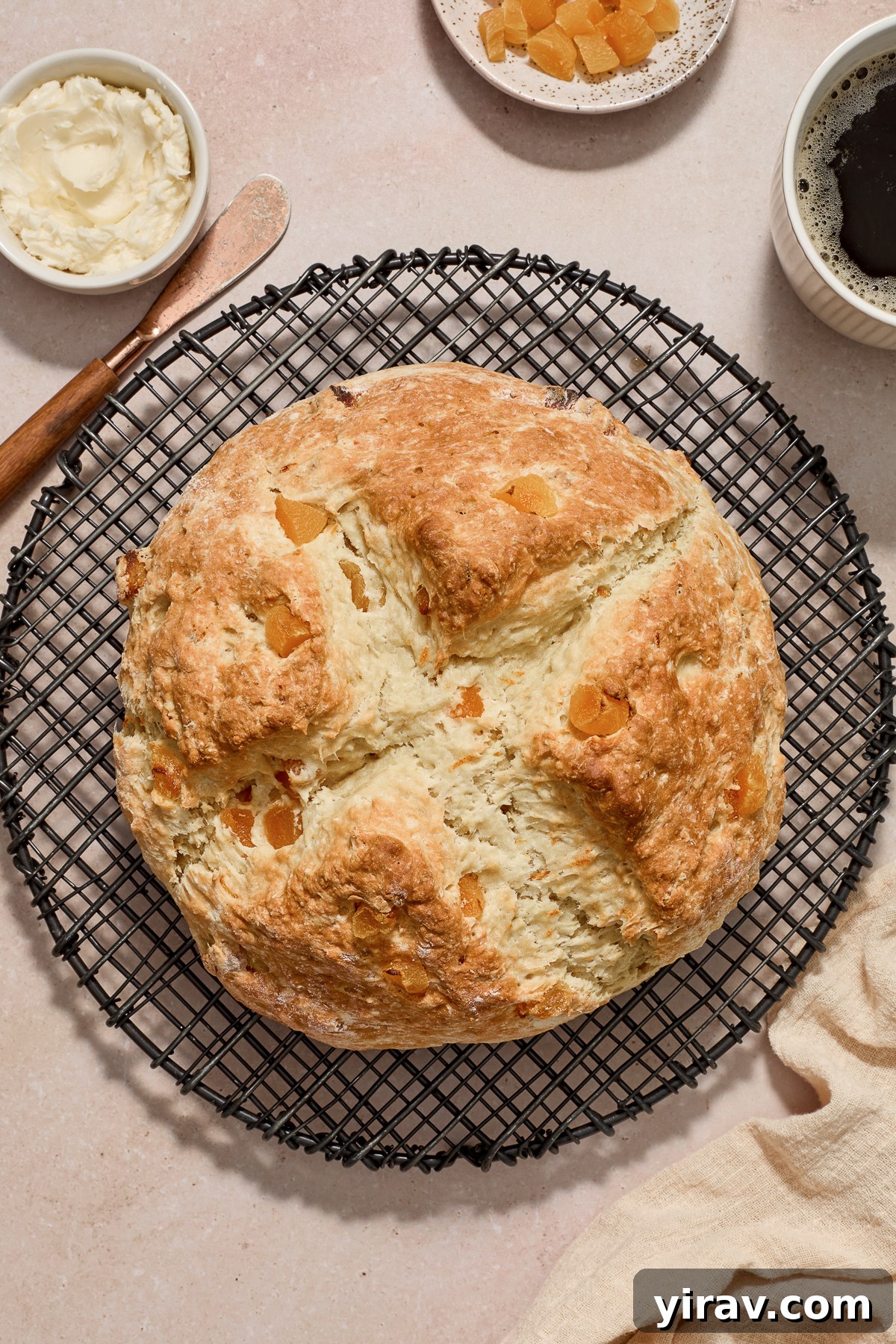
Apricot Orange Irish Soda Bread: A Zesty No-Yeast Delight
Taste the tradition with a vibrant twist! This incredible Apricot Orange Irish Soda Bread takes a classic no-yeast recipe and infuses it with sun-kissed sweetness. Imagine a loaf that’s wonderfully crusty on the outside, remarkably tender on the inside, and studded with juicy dried apricots and bright, aromatic orange zest. It’s a delightful departure from the traditional plain or raisin-filled versions, offering a refreshing citrusy brightness that’s simply irresistible. Whether you’re preparing for St. Patrick’s Day celebrations, a cozy weekend brunch, or simply craving the comfort of freshly baked bread, this homemade soda bread promises to impress with its effortless preparation and unforgettable flavor. Say goodbye to complicated yeast recipes; this quick bread comes together in minutes with just a few pantry staples, making it an ideal choice for bakers of all skill levels.
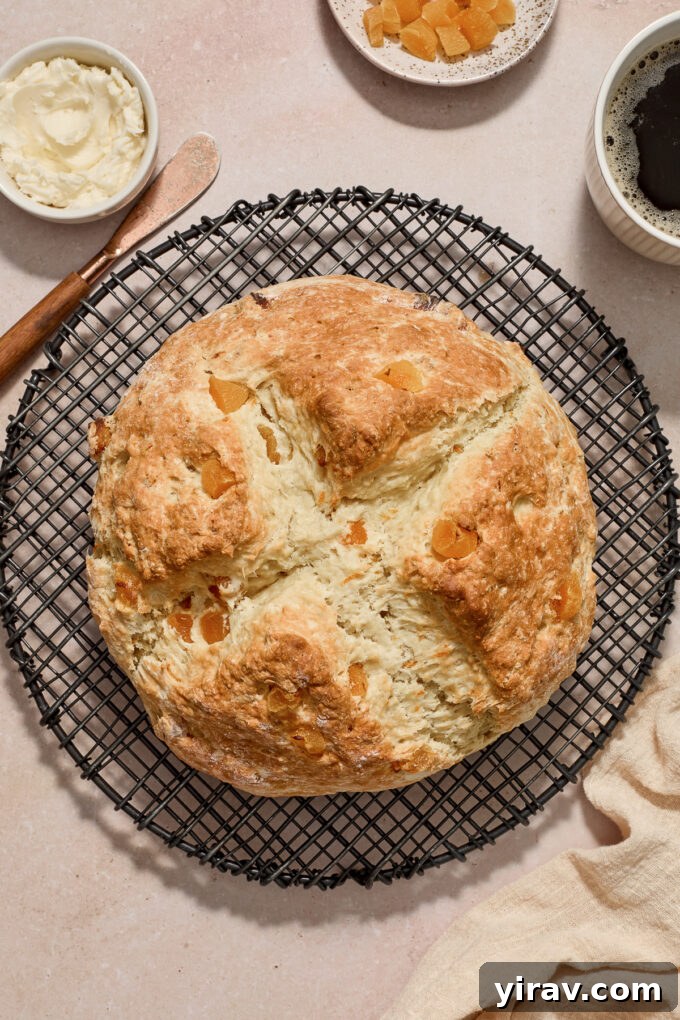
Few things compare to the comforting aroma and satisfying taste of a freshly baked loaf of homemade bread. While many assume bread making is an arduous task involving hours of kneading and waiting for dough to rise, quick breads like this Apricot Orange Irish Soda Bread defy that notion entirely. You might be familiar with delightful yeast-based recipes like my one-hour rosemary focaccia bread, which is incredibly simple in its own right. However, there are times when you simply don’t want to deal with the intricacies or time commitment that yeast can bring. That’s precisely where the magic of soda bread comes in, offering a shortcut to deliciousness without compromising on texture or flavor. This recipe specifically delivers a loaf that is beautifully crusty on the outside, incredibly tender and moist within, and bursting with vibrant fruit and citrus notes – all achieved without a single gram of yeast.
Traditional Irish soda bread is a truly rustic and straightforward quick bread, historically made with just four core ingredients: flour, buttermilk, salt, and, crucially, baking soda – which gives it its distinctive name. This recipe honors that simple tradition while elevating it with a delightful modern twist. Much like my classic Irish brown bread, this version is hearty and wholesome, though it utilizes a blend of flours rather than solely whole grain, resulting in a lighter yet satisfying crumb. What truly sets this particular recipe apart is the generous inclusion of sweet, chewy dried apricots and fragrant orange zest. These additions transform the loaf into a mildly sweet and wonderfully fruity bread, perfect for elevating any meal or snack.
The versatility of this orange-infused Irish soda bread makes it a fantastic addition to any occasion. Enjoy it for breakfast, slathered with butter and a dollop of apricot jam or orange marmalade, complementing its fruity notes. Or, for a more savory experience, dunk a hearty slice into a warm bowl of your favorite soup or stew. It’s an especially quintessential pairing for St. Patrick’s Day meals, perfectly accompanying dishes like corned beef and cabbage. No matter how you choose to serve it, this homemade bread is always a winner – a simple pleasure that never disappoints!
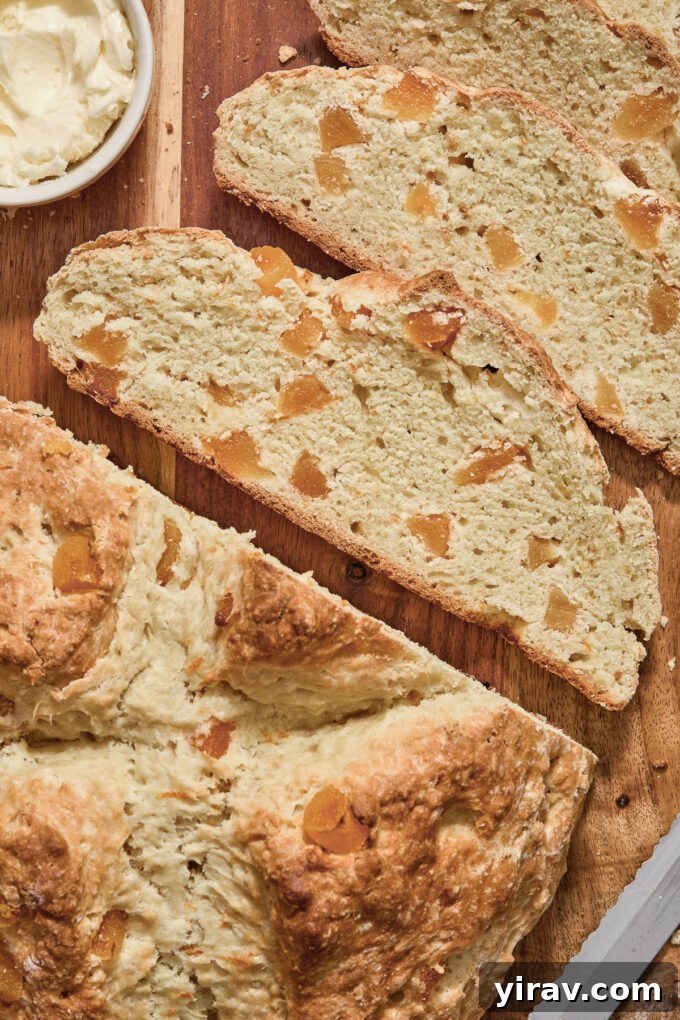
Table of Contents
Why You’ll Adore This Apricot Orange Irish Soda Bread
- Unforgettable Flavor & Texture: Experience a unique blend of rustic charm with a modern twist. This Irish soda bread boasts a beautifully crusty exterior that gives way to a soft, moist, and delightfully tangy interior. Each bite is enhanced by sweet, chewy dried apricots and the vibrant, fragrant punch of fresh orange zest.
- Effortlessly Easy & Quick: Forget the long waits associated with yeast doughs. This quick bread recipe requires minimal hands-on time, typically just about 20 minutes of active prep, and is entirely yeast-free. From mixing bowl to oven, you’re on the fast track to a delicious homemade loaf.
- Perfect for Any Occasion: While it’s an absolute must-have for St. Patrick’s Day celebrations, this versatile bread transcends seasonal boundaries. It pairs wonderfully with hearty stews and soups throughout the colder months, makes an exquisite addition to your holiday spread, or simply elevates a casual breakfast or afternoon tea.
- Simple Ingredients, Big Flavor: Made with common pantry staples, you likely have most of what you need already. The beauty lies in how these simple ingredients combine to create such complex and inviting flavors.
- Customizable to Your Liking: While we adore the apricot and orange combination, this recipe is incredibly adaptable, allowing you to easily swap fruits or even omit them if you prefer a simpler loaf.
Essential Ingredients for Your Apricot Orange Irish Soda Bread
One of the best aspects of this recipe is its reliance on readily available ingredients, making it accessible for any home baker. It’s also incredibly forgiving and adaptable. Here’s a closer look at what you’ll need, along with some helpful substitution notes:
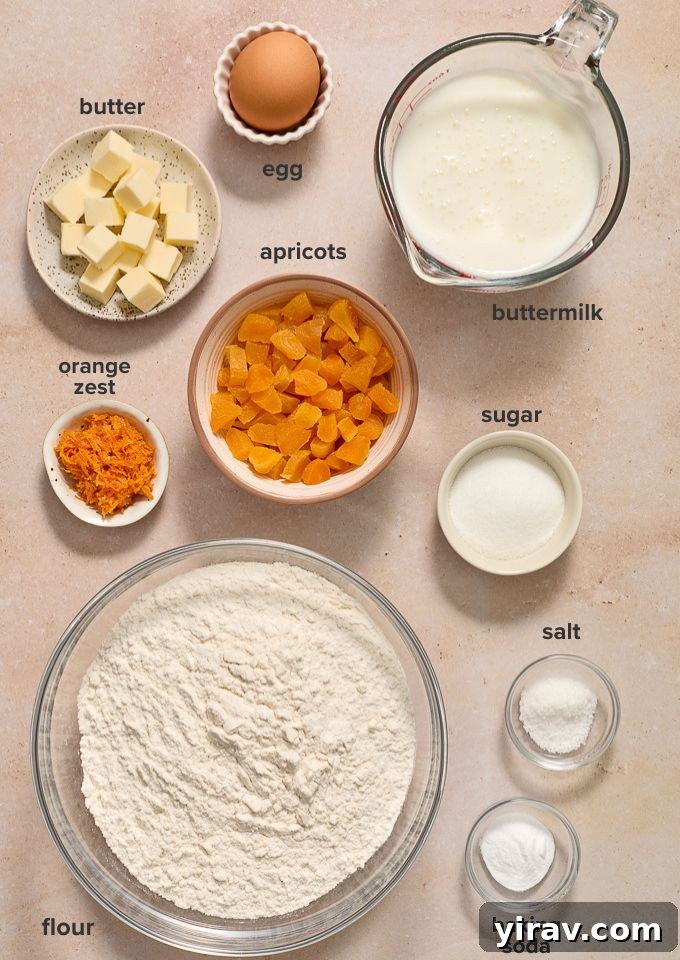
- Flour: For a perfect balance of heartiness and lightness, I recommend a blend of all-purpose flour and white whole wheat flour. The white whole wheat adds a lovely nutty depth and extra fiber without making the bread too dense. However, if you prefer, you can certainly use 100% all-purpose flour for a softer crumb.
- Granulated Sugar: Just a touch of sugar (a few tablespoons) is included to enhance the sweetness of the apricots and balance the tang of the buttermilk, providing a subtle, not overtly sweet, flavor profile.
- Baking Soda: This is the star ingredient! It’s crucial for leavening. When baking soda reacts with the acidic buttermilk, it produces carbon dioxide bubbles, causing the bread to rise beautifully without any yeast. Ensure your baking soda is fresh for the best results.
- Salt: A teaspoon and a half of salt might seem like a lot, but it’s essential. Salt doesn’t just make things taste “salty”; it truly enhances and brings out all the other flavors in the bread, making them sing.
- Unsalted Butter: Always use cold, cubed butter straight from the fridge. Incorporating cold butter into the dry ingredients creates pockets of butter that melt during baking, contributing to a flaky, tender texture. If you only have salted butter, simply omit the additional salt from the recipe.
- Buttermilk: Cold buttermilk is key for the chemical reaction with baking soda and for providing moisture and a slight tang. You can use either regular or low-fat buttermilk. No buttermilk on hand? No problem! You can easily make your own. Just measure 1 ¾ cups of your preferred dairy or non-dairy milk into a measuring cup and stir in 1 ½ tablespoons of fresh lemon juice or white vinegar. Let it sit for 10 minutes until it visibly curdles and thickens slightly – congratulations, you’ve made homemade buttermilk!
- Egg: A single large egg adds richness, helps bind the dough, and contributes to the loaf’s structure, giving it a slightly denser, yet still tender, crumb.
- Dried Apricots: These sweet, chewy morsels are a highlight, adding bursts of fruity flavor and a lovely texture. If apricots aren’t your preference, feel free to substitute them with an equal amount of raisins, golden raisins, dried cranberries, or currants. For a truly classic plain soda bread, you can also omit the fruit entirely.
- Orange Zest: The zest from one large orange (or two small ones) typically yields about 2 tablespoons, infusing the bread with a bright, aromatic citrus essence that perfectly complements the apricots. Be sure to zest only the bright orange outer layer, avoiding the bitter white pith underneath.
Refer to the full recipe card below for exact quantities.
The Magic of No-Yeast Baking: How Irish Soda Bread Rises
One of the most fascinating aspects of Irish soda bread, and indeed all quick breads, is that it achieves its delightful rise without the use of yeast. This ingenious method relies on a simple chemical reaction between two key ingredients: baking soda and an acidic component, in this case, buttermilk.
When baking soda (sodium bicarbonate), a base, comes into contact with the acid in buttermilk (lactic acid), a fizzing reaction occurs. This reaction produces carbon dioxide gas bubbles throughout the dough. As the bread bakes in the oven, these gas bubbles expand, causing the dough to lift and creating the light, airy pockets within the loaf. This means there’s no need for the time-consuming process of proofing or kneading that yeast breads require. The dough goes straight from the mixing bowl into the oven, making it an incredibly efficient and satisfying baking project. The rapid leavening action ensures a quick turnaround, so you can enjoy fresh, warm bread in a fraction of the time.
Step-by-Step Instructions for Perfect Apricot Orange Irish Soda Bread
Making this Irish soda bread is incredibly straightforward. With no yeast to worry about, the dough transitions seamlessly from mixing to baking with minimal fuss – no proofing, no extensive kneading, just simple shaping. Follow these steps for a perfect loaf:
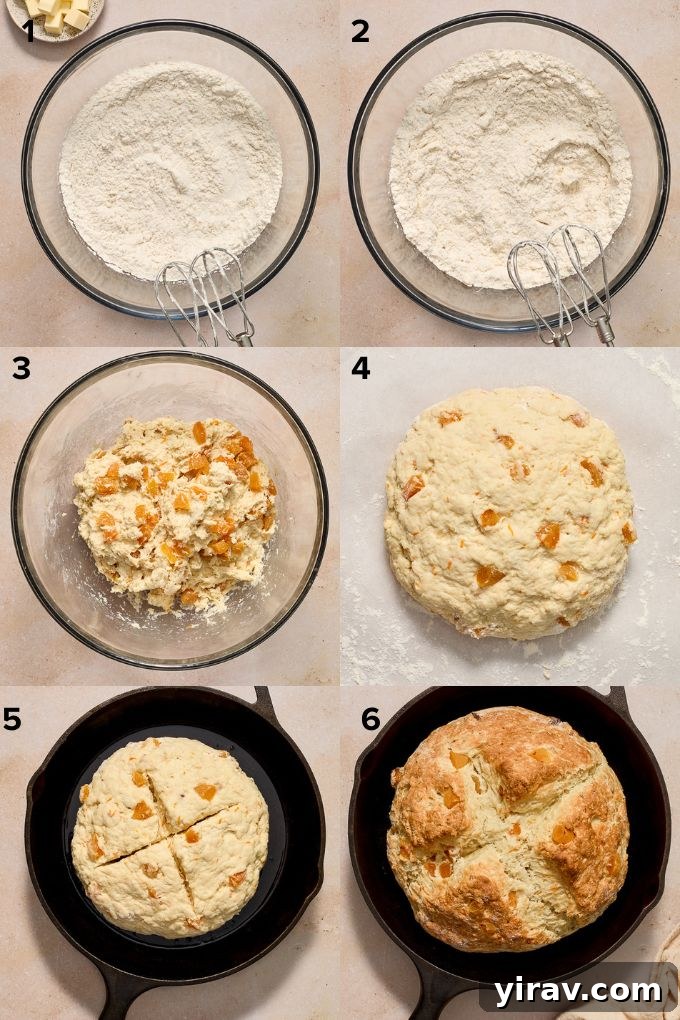
- Prepare Your Workspace & Oven: Preheat your oven to 375°F (190°C). Line a baking sheet with parchment paper, or lightly grease a cast-iron skillet. Having your equipment ready makes the process smooth.
- Combine Dry Ingredients: In the large bowl of a stand mixer fitted with a paddle attachment (or using a large mixing bowl and a handheld electric mixer), whisk together the all-purpose flour, white whole wheat flour (if using), granulated sugar, baking soda, and salt. Mix on low speed until thoroughly combined.
- Incorporate Cold Butter: Add the cold, diced unsalted butter to the dry ingredients. Mix on low speed until the butter is fully incorporated and the mixture resembles coarse crumbs. If necessary, use your fingertips to quickly work any larger butter chunks into the flour mixture, ensuring it remains cold.
- Mix Wet Ingredients: In a separate measuring cup, gently whisk together the cold buttermilk, the large egg, and the vibrant orange zest until just combined.
- Combine Wet and Dry: With the mixer on low speed, slowly pour the wet ingredients into the dry ingredients. Mix just until the flour is incorporated and a sticky dough forms. Be careful not to overmix, as this can develop the gluten too much, resulting in a tougher bread.
- Add Apricots: In a small bowl, toss the chopped dried apricots with the reserved tablespoon of all-purpose flour. This light coating helps prevent the apricots from sinking to the bottom of the loaf during baking. Gently fold the floured apricots into the dough on low speed until evenly distributed. Remember, the dough will be quite wet and shaggy – this is normal!
- Shape the Loaf: Generously flour a clean work surface. Turn the wet dough out onto the floured surface and sprinkle the top with a bit more flour. With floured hands, gently form the dough into a round loaf. Avoid over-handling.
- Score for Even Baking: Carefully transfer the shaped loaf to your prepared baking sheet or cast-iron skillet. Using a sharp, serrated knife, cut a deep “X” into the center of the loaf, about ½ to ¾ inch deep. This scoring allows steam to escape during baking, preventing cracks and ensuring the bread bakes evenly through to the center.
- Bake to Golden Perfection: Bake for 45-55 minutes, or until the loaf is golden brown and a wooden skewer or cake tester inserted into the center comes out clean. If the crust begins to brown too quickly, you can loosely tent it with aluminum foil.
- Cool Before Slicing: Once baked, transfer the bread to a wire rack and allow it to cool completely before slicing. This step is crucial for the internal structure to set, ensuring a perfect texture.
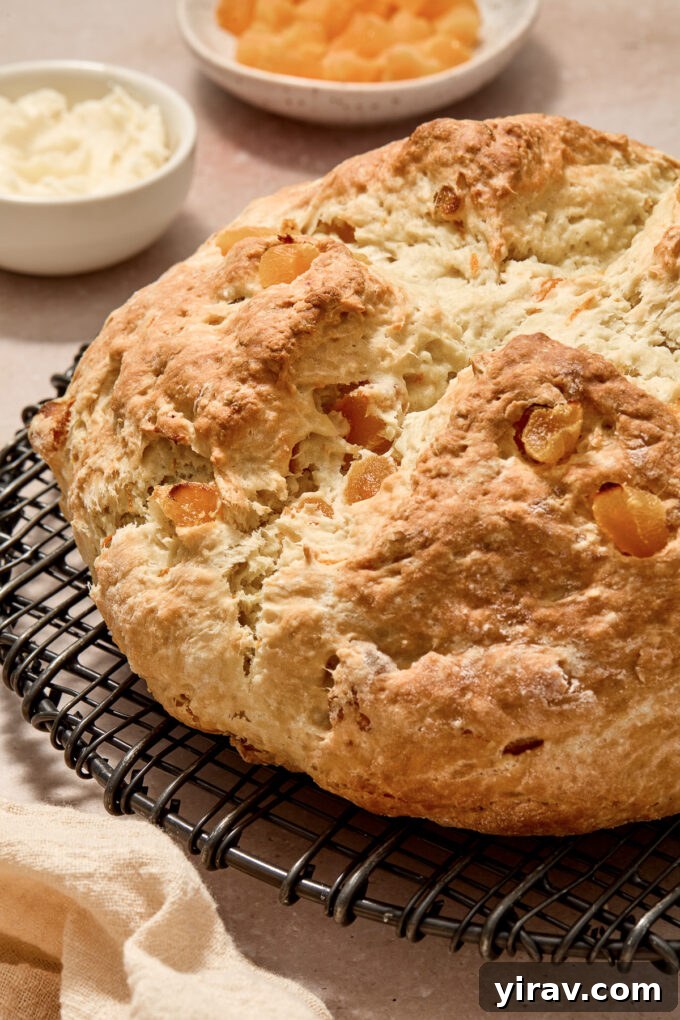
For precise measurements and detailed steps, consult the recipe card below.
Frequently Asked Questions About Apricot Orange Irish Soda Bread
- Can I make Irish soda bread without buttermilk?
- Absolutely! If you don’t have buttermilk readily available, you can easily create a homemade substitute. Simply combine 1 ¾ cups of any dairy or non-dairy milk (whole milk, 2%, almond milk, etc.) with 1 ½ tablespoons of fresh lemon juice or white vinegar. Stir gently and let the mixture sit for about 10 minutes. You’ll notice it will curdle slightly and thicken – this ‘soured milk’ is a perfect stand-in for buttermilk in this recipe, activating the baking soda just as effectively.
- Why doesn’t Irish soda bread use yeast?
- The magic of Irish soda bread lies in its classification as a “quick bread,” meaning it relies on chemical leaveners rather than yeast. Specifically, the reaction between baking soda (a base) and buttermilk (an acid) produces carbon dioxide gas bubbles. These bubbles are trapped within the dough, expanding when heated in the oven and causing the bread to rise. This eliminates the need for yeast, along with its associated proofing and rising times, making soda bread a much faster and simpler baking process.
- How deep should I score the top of the soda bread?
- When scoring your loaf, aim for an “X” cut about ½ to ¾ inch deep into the center. This crucial step serves multiple purposes: it allows steam to escape from the bread’s interior during baking, which helps prevent the crust from cracking unevenly, and it also promotes more even cooking throughout the dense loaf. Tradition also holds that scoring an “X” blesses the bread and wards off evil spirits – a charming piece of folklore!
- How long does this Irish soda bread last, and how should I store it?
- Once your loaf has completely cooled, wrap it snugly in a clean kitchen towel and store it in an airtight container at room temperature. It will remain fresh and delicious for up to 2 days. Important: Avoid refrigerating soda bread, as the cool, dry environment can quickly dry it out and make the crust soggy. For longer storage, Irish soda bread freezes beautifully. First, wrap the cooled bread tightly in plastic wrap, then follow with a layer of aluminum foil. Place the double-wrapped loaf into a freezer-safe zip-top bag, and it can be frozen for up to 3 months. Thaw at room temperature and reheat gently for best results.
- Can I use whole wheat flour for this recipe?
- Yes, you can! The recipe already suggests a blend of all-purpose and white whole wheat flour for a wholesome texture. If you prefer a heartier, denser loaf, you can increase the amount of whole wheat flour. However, keep in mind that using 100% whole wheat flour may result in a denser bread with a slightly different crumb structure. You might need a tiny bit more buttermilk to compensate for whole wheat flour’s higher absorption rate.
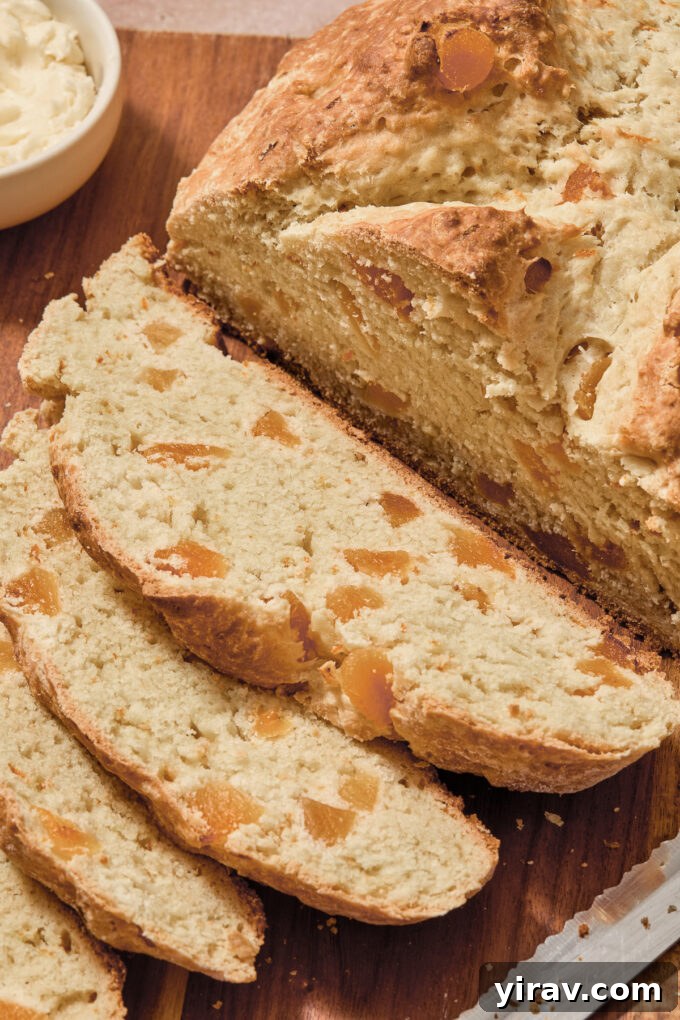
Delicious Serving Suggestions for Your Irish Soda Bread
This Apricot Orange Irish Soda Bread is incredibly versatile and can be enjoyed in countless ways, making it suitable for breakfast, brunch, or as a delightful accompaniment to main courses. Here are some of our favorite ways to serve it:
- The Classic Pairing for St. Patrick’s Day: Elevate your traditional St. Patrick’s Day feast by serving warm slices alongside a hearty plate of corned beef and cabbage. The slight sweetness and tang of the bread perfectly complement the savory meat and vegetables.
- Perfect with Soups and Stews: There’s nothing quite like dunking a thick, tender slice of soda bread into a steaming bowl of comfort. It’s an ideal companion for robust dishes such as Guinness chili, a rich Guinness beef stew, or even lighter options like roasted pumpkin apple soup or a bright lemony chicken vegetable soup. The bread’s crusty exterior holds up beautifully, soaking up all the delicious broth.
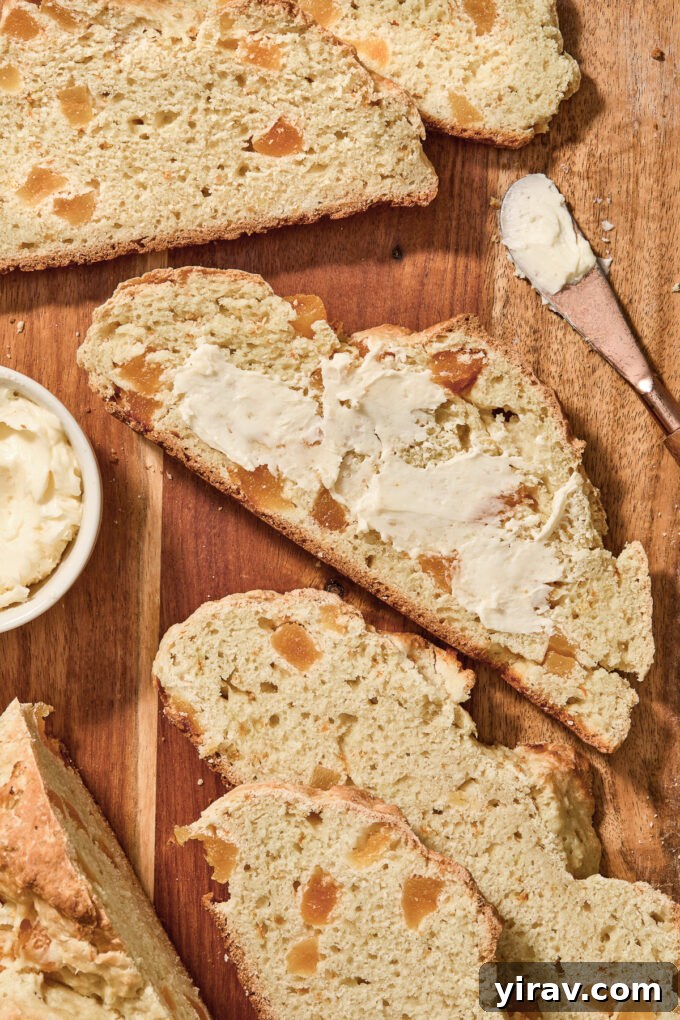
- Breakfast or Brunch Delight: For a simple yet elegant breakfast, slice the bread and serve it warm with a generous smear of softened butter. Enhance the fruity notes by adding a dollop of your favorite apricot jam, orange marmalade, or even a drizzle of honey. It’s also fantastic toasted the next day.
- Cheese Board Companion: The subtle sweetness and complex flavors of this soda bread make it an excellent addition to a cheese board. Pair it with sharp cheddar, creamy goat cheese, or a tangy blue cheese for a delightful contrast.
- With Coffee or Tea: Enjoy a slice (or two!) with your morning coffee or afternoon tea. The subtle sweetness and tender crumb make it a wonderful treat.
Expert Baking Tips for the Best Irish Soda Bread
Achieving the perfect loaf of Irish soda bread is straightforward, but a few key tips can elevate your results:
- Texture Expectation: Remember that Irish soda bread is traditionally meant to be slightly dense and wonderfully moist on the inside, encased in a firm, rustic crust. Don’t expect a light, airy yeast bread; its unique charm comes from this hearty texture.
- Keep Ingredients Cold: Ensure both your butter and buttermilk are thoroughly chilled when you start. Cold ingredients are essential for the best texture. Cold butter creates pockets in the dough that steam during baking, contributing to a lighter crumb, while cold buttermilk reacts optimally with the baking soda.
- Mindful Mixing: Avoid overworking the dough. Mixing just until the ingredients are combined is crucial. Overmixing develops gluten, which can lead to a tough, rubbery loaf, detracting from the desired tender interior.
- Customizing Fruit: While our recipe features dried apricots for a sunny twist, feel free to experiment. You can easily replace the dried apricots with an equal amount of traditional raisins, golden raisins, or even dried cranberries if you prefer.
- Zesting with Care: When zesting your orange, use a microplane zester for the finest results. Be meticulous to only remove the bright orange outer layer of the skin. The white pith directly underneath is bitter and can impart an unpleasant flavor to your bread.
- Proper Cooling: Allow the bread to cool completely on a wire rack before slicing. This allows the internal structure to set properly, ensuring a clean slice and the ideal moist, tender texture. Slicing too soon can result in a gummy texture.
More No-Yeast Bread Recipes You’ll Love
If you’ve enjoyed the simplicity and deliciousness of this yeast-free Irish soda bread, you’ll be thrilled to discover other quick bread recipes that offer similar ease and satisfaction:
- Honey Cornbread Muffins: Sweet, tender, and perfect with chili or BBQ.
- Buttery Maple Skillet Cornbread: A cozy, cast-iron baked delight with a hint of maple.
- Tender Buttery Sweet Potato Biscuits: Flaky, flavorful biscuits with a touch of sweetness.
- Brown Butter Maple Beer Bread: An incredibly simple and surprisingly flavorful bread with a unique depth.
Did you try this delightful recipe? We’d love to hear from you! Please consider leaving a review below and sharing your creation with us on social media. Tag @flavorthemoments on Facebook and Instagram so we can see your beautiful homemade bread!
Apricot Orange Irish Soda Bread
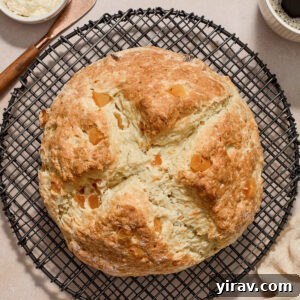
This Apricot Orange Irish Soda Bread is a true gem: wonderfully crusty on the outside, moist and tangy on the inside. It’s generously studded with sweet, chopped apricots and infused with bright orange zest, offering a delightful and sunny twist on the traditional Irish classic. Best of all, it’s a no-yeast recipe that comes together quickly and easily!
Prep Time: 20 minutes
Cook Time: 50 minutes
Total Time: 1 hour 10 minutes
Yields: 12 servings
Rating: 4.34 out of 5 stars (based on 3 reviews)
Print Recipe | Pin Recipe
Ingredients
- 2 cups all-purpose flour (plus 1 tablespoon to toss with dried apricots)
- 2 cups white whole wheat flour (or substitute with more all-purpose flour)
- 2 tablespoons granulated sugar
- 1 teaspoon baking soda
- 1 1/2 teaspoons salt
- 4 tablespoons cold unsalted butter, cut into 1/2″ dice (see note 2 in recipe notes)
- 1 3/4 cups cold buttermilk, shaken (see note 1 in recipe notes for DIY buttermilk)
- 1 large egg
- 2 tablespoons orange zest (from 1 large or 2 small oranges)
- 1 cup chopped dried apricots
Instructions
- Preheat oven to 375°F (190°C). Line a baking sheet with parchment paper or lightly grease a cast-iron skillet.
- In the bowl of a stand mixer with a paddle attachment (or a large bowl with a handheld mixer), combine all-purpose flour, whole wheat white flour, granulated sugar, baking soda, and salt. Mix on low speed until combined.
- Add the cold butter cubes. Mix on low speed until the butter is fully incorporated into the dry ingredients, resembling coarse crumbs. Use fingers if needed to break up large chunks.
- In a measuring cup, beat the egg, buttermilk, and orange zest with a fork until just combined.
- With the mixer on low speed, slowly add the wet ingredients to the dry. Mix just until combined; do not overmix, as this can make the bread tough.
- Toss the chopped dried apricots with the reserved 1 tablespoon of flour (this prevents them from sinking). Gently mix into the dough on low speed until just combined. The dough will be very wet.
- Turn the dough out onto a well-floured surface and sprinkle with flour. With floured hands, gently knead a few times to form a round loaf. Place on the prepared baking sheet or skillet.
- Using a serrated knife, score a deep “X” (about 1/2 – 3/4″ deep) into the center of the loaf. This allows steam to escape and ensures even baking.
- Bake for 45-55 minutes, or until golden brown and a cake tester inserted into the center comes out clean.
- Cool completely on a wire rack before slicing and serving. Enjoy!
Notes
- DIY Buttermilk: If you don’t have buttermilk, combine 1 ¾ cups of any milk (dairy or non-dairy) with 1 ½ tablespoons of lemon juice or white vinegar. Let sit for 10 minutes to curdle before use.
- Salted Butter: If using salted butter, omit the 1 ½ teaspoons of added salt from the dry ingredients.
- This bread is wonderful with butter or orange marmalade for breakfast, or as a savory side with dishes like corned beef and cabbage!
- Storage: Store cooled Irish soda bread wrapped in a clean kitchen towel in an airtight container at room temperature for up to 2 days. Do not refrigerate, as it can dry out and make the crust soggy.
- Freezing: For longer storage, wrap cooled bread tightly in plastic wrap, then foil, and place in a zip-top bag. Freeze for up to 3 months. Thaw at room temperature.
Nutrition Information (Per Serving)
- Serving: 1 slice
- Calories: 231 kcal
- Carbohydrates: 41g
- Protein: 7g
- Fat: 5g
- Saturated Fat: 3g
- Cholesterol: 27mg
- Sodium: 459mg
- Potassium: 229mg
- Fiber: 3g
- Sugar: 10g
- Vitamin A: 550 IU
- Vitamin C: 2mg
- Calcium: 68mg
- Iron: 2mg
Nutrition is an estimate based on a food database and is provided for informational purposes only.
Course: Breads
Cuisine: Irish
Author: Marcie
All recipes and images © Flavor the Moments.
Share Your Creation! Did you try this recipe? Be sure to tag @flavorthemoments with the hashtag #flavorthemoments on Instagram so we can see what you made!