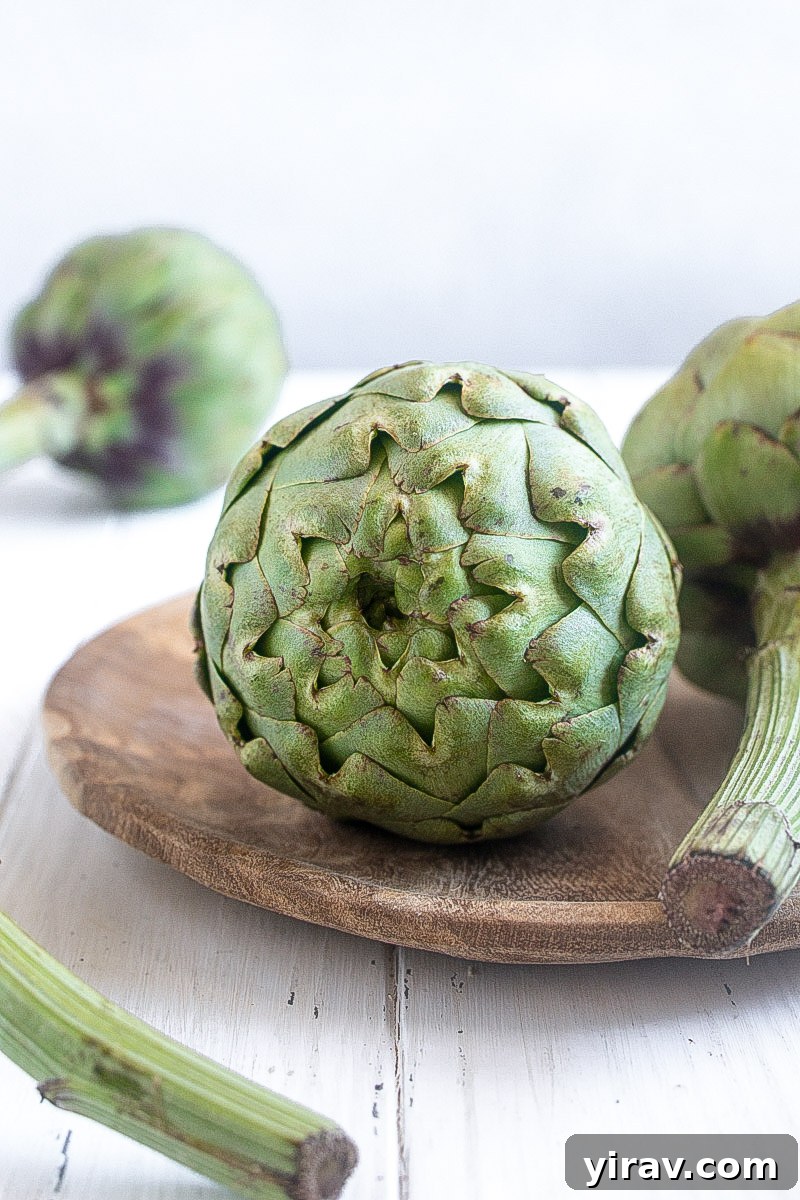
Fresh artichokes, with their majestic appearance and unique flavor, might seem daunting at first glance. Yet, beneath their intriguing layers lies a culinary gem that is surprisingly simple to prepare and incredibly rewarding to eat. This comprehensive guide is designed to demystify the artichoke, transforming any hesitation into confidence. We’ll navigate everything from selecting the freshest globe artichokes at the market to storing them optimally, mastering the step-by-step preparation, and cooking them to perfection using various effortless methods.
Beyond the basics, you’ll discover a collection of delightful recipes that invite you to explore the full potential of this magnificent vegetable. Whether your preference is for the rich, caramelized notes of roasting, the tender, herb-infused embrace of braising, or the lightning-fast efficiency of your Instant Pot, you’ll learn precisely how to turn fresh artichokes into an extraordinary culinary experience. Prepare to impress your taste buds and your guests with truly special artichoke dishes!
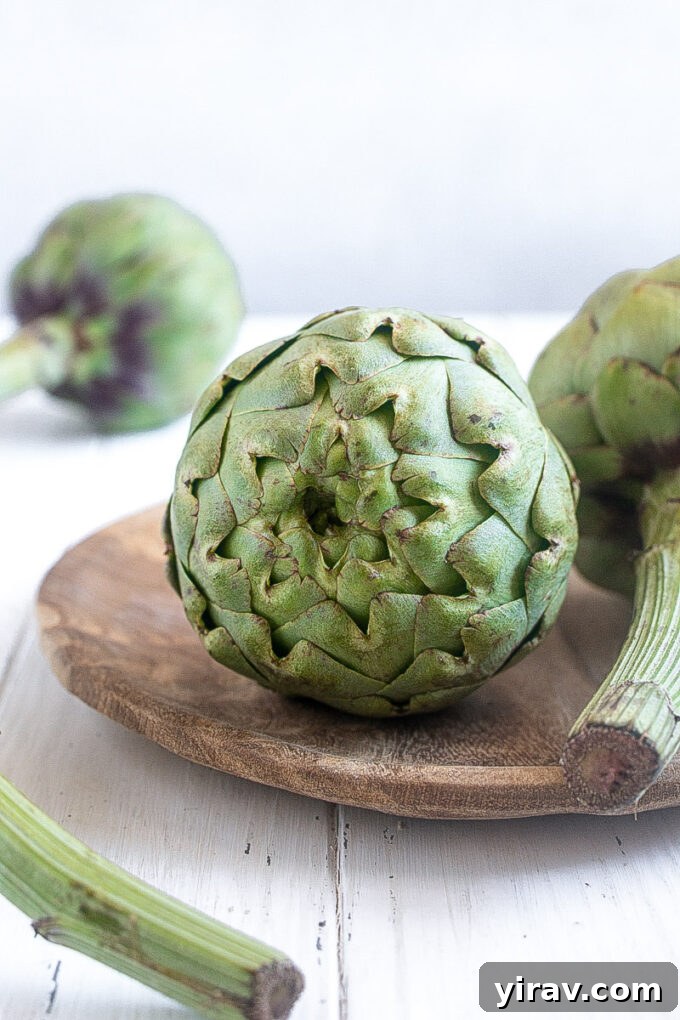
If you’ve ever found yourself admiring fresh artichokes at the grocery store or a bustling farmer’s market, wondering how to bring their deliciousness into your kitchen, rest assured, you’re not alone. Many home cooks initially perceive them as a challenging ingredient. However, with just a few straightforward techniques and a little practice, you’ll uncover that working with artichokes is incredibly easy – and the exquisite, earthy flavor is unequivocally worth every moment of effort.
Boasting a distinct nutty, subtly sweet, and wonderfully earthy flavor profile, complemented by a remarkably tender and almost buttery texture, artichokes are a fantastic ingredient for elevating your everyday meals. They bring a touch of gourmet sophistication to any plate, making them a versatile addition to a wide range of cuisines and dishes.
In this ultimate Fresh Artichokes Guide, we will meticulously walk you through every essential step: from how to meticulously select the very best artichokes, to their optimal storage for maximum freshness, and a detailed breakdown of preparation. We’ll also dive into various simple cooking methods and share a curated list of mouth-watering recipes to inspire your culinary journey with artichokes.
Craving delicious artichoke recipes? Get our best tips and recipes delivered straight to your inbox! Sign up now to receive exclusive content and never miss a savory moment.
By signing up, you agree to receive regular emails from us. You can unsubscribe at any time.
Table of Contents
What are artichokes?
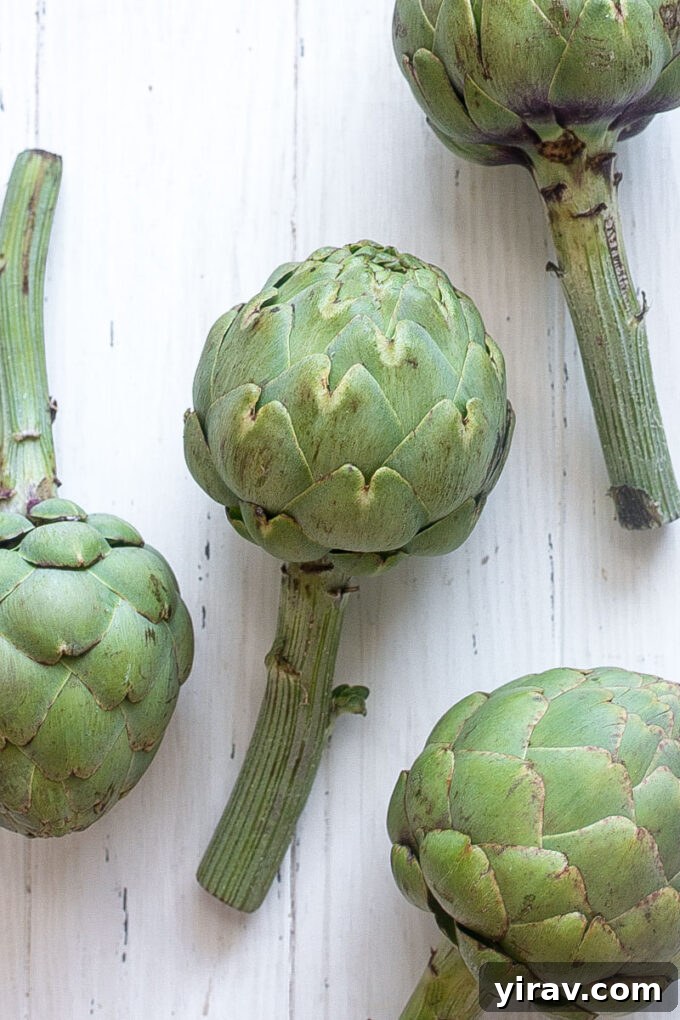
Despite their somewhat thorny exterior, artichokes are actually the unopened flower buds of a large thistle plant, scientifically known as Cynara scolymus. Originating in the Mediterranean region, they have been cherished for centuries not only for their distinctive flavor but also for their impressive health benefits. When left to bloom, the artichoke transforms into a beautiful, large, purple flower, but it’s the tender bud we seek for culinary purposes.
The edible parts of a fresh artichoke are truly delightful. You can enjoy the fleshy, tender base of each outer leaf, which offers a subtle crunch and a burst of flavor. As you work your way towards the center, the inner leaves become increasingly delicate and palatable. The true prize, however, is the “artichoke heart,” a wonderfully tender and meaty core nestled at the base of the choke. This highly sought-after part is celebrated for its rich, buttery texture and concentrated flavor.
The fuzzy center, known as the “choke,” is composed of immature thistle florets and small, spiky inner leaves. This part is fibrous and indigestible, so it must always be removed before consumption. Depending on your cooking method and personal preference, the choke can be removed either before or after the artichoke is cooked.
Artichoke Health Benefits
Beyond their delicious taste, artichokes are packed with an array of health benefits, making them a smart and flavorful addition to any diet. They are considered a superfood by many nutritionists for good reason:
- Rich in Nutrients: Artichokes are an excellent source of dietary fiber, vitamins C and K, folate, and essential minerals like magnesium, phosphorus, potassium, and iron. These nutrients play vital roles in supporting overall health, from bone density to nerve function.
- High in Antioxidants: They are loaded with antioxidants, particularly cynarin and silymarin, which help protect your cells from damage caused by free radicals, potentially reducing the risk of chronic diseases.
- Aids Digestion: The high fiber content in artichokes promotes healthy digestion, helping to prevent constipation and support a thriving gut microbiome. The unique compound cynarin can also stimulate bile production, which aids in fat digestion.
- Supports Liver Health: Artichokes are traditionally recognized for their liver-protective properties. Compounds within them may help detoxify the liver and promote its regeneration.
- Heart Healthy: Regular consumption of artichokes may contribute to heart health by helping to lower bad cholesterol levels and regulate blood pressure, thanks to their potassium content.
Incorporating fresh artichokes into your meals is not just a treat for your palate, but a boon for your well-being.
When are artichokes in season?
Artichokes typically enjoy two main seasons for peak freshness and availability. The primary season runs from March through May, making spring an ideal time to find the freshest, most succulent artichokes. A secondary, smaller season often occurs in the fall, usually around October to November, offering another opportunity to enjoy these wonderful vegetables.
During these peak seasons, artichokes are not only at their best quality but also often more affordably priced. While you might find artichokes available year-round in some regions, they are generally imported or grown in controlled environments outside of their natural season, which can affect their freshness, flavor, and cost. For the most vibrant flavor and tender texture, always aim to purchase artichokes during their natural peak seasons.
For more seasonal culinary inspiration, be sure to explore my March produce guide and other seasonal ingredient articles.
How to choose fresh artichokes
Selecting the best fresh artichokes is key to enjoying their full flavor and texture. A little discernment at the market can make all the difference. When you’re browsing, keep the following characteristics in mind to ensure you pick the highest quality globe artichokes:
- Look for tightly packed leaves: The leaves should be firm and compact, not loose or splayed open. Tightly closed leaves indicate a younger, fresher artichoke. As an artichoke ages, its leaves tend to spread.
- Feel their weight: A fresh artichoke should feel surprisingly heavy for its size. This weight is a sign of good moisture content, indicating it’s juicy and hasn’t dried out. Lighter artichokes are typically older and drier.
- Observe the color: Seek out artichokes with a deep, vibrant green color. Avoid those with significant brown spots, bruising, or a dull, yellowish hue, as these are signs of age or damage. Some minor brown spots at the very tip of the leaves are usually harmless and can be trimmed away.
- Listen for a squeak: A clever trick to test freshness is to gently squeeze the artichoke. If the leaves produce a slight “squeaking” sound, it means they are fresh, plump, and full of moisture. This sound is a reliable indicator of optimal quality.
Conversely, avoid artichokes that have leaves that are dry, noticeably split, browning extensively, or those that feel unusually light and airy. These are clear indicators that the artichoke is past its prime and will not yield the tender, flavorful results you desire.
How to store artichokes
Proper storage is crucial for maintaining the freshness and quality of your artichokes once you bring them home. Here’s how to keep them at their best:
- Keep them unwashed: It’s best not to wash artichokes before storing them, as excess moisture can accelerate spoilage. Wash them only when you are ready to prepare them.
- Refrigerate promptly: Artichokes thrive in a cool, humid environment, making the refrigerator your best option. Store them in the crisper drawer, which is designed to help maintain humidity.
- Use a loosely sealed bag: To prevent them from drying out while allowing for some air circulation, place your unwashed artichokes in a plastic bag. You can poke a few small holes in the bag or leave it slightly open. Some prefer to lightly mist the artichokes with water before bagging them, but be careful not to make them too wet.
- Optimal shelf life: When stored correctly, fresh artichokes can last for about 4 to 5 days in the refrigerator. For the best flavor and texture, aim to use them as soon as possible after purchase.
How to prep fresh artichokes
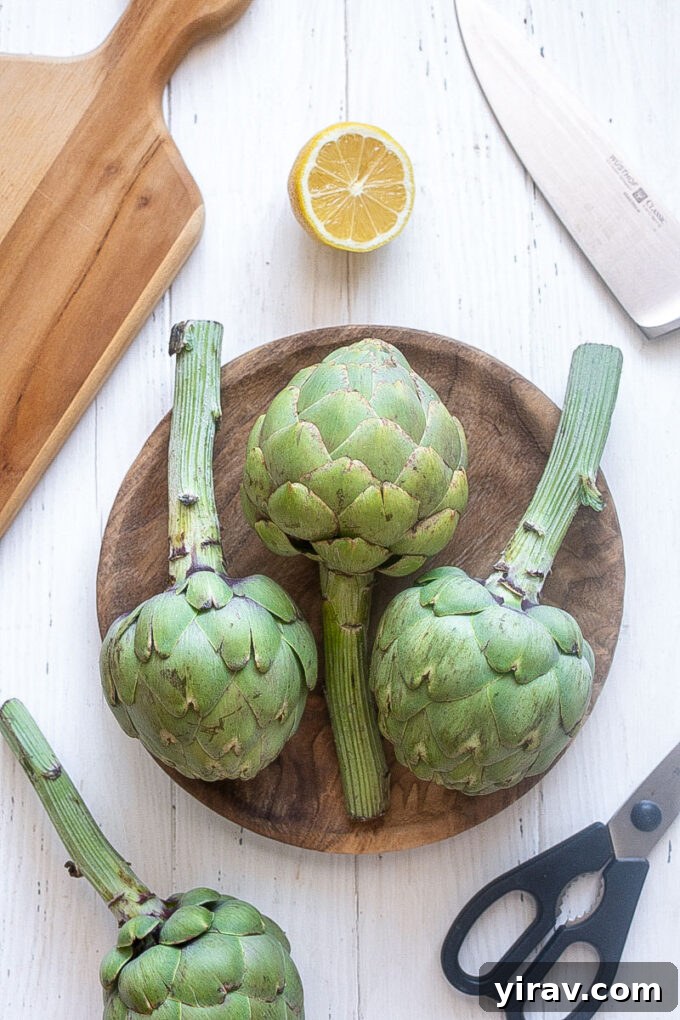
Prepping fresh artichokes might initially appear intricate due to their many layers and thorns, but it’s a process that is far simpler than it looks. With a sharp knife, a pair of kitchen shears, and a lemon, you’ll be prepping artichokes like a pro in no time. The exact method may vary slightly depending on your intended cooking method and whether you want to enjoy the whole artichoke or just the tender heart.
For a detailed, step-by-step visual and textual tutorial, be sure to refer to my dedicated post on how to prep an artichoke. It covers every nuance to ensure you get it right.
Preparing Artichokes: Step-by-Step Overview
Here’s a quick visual and textual overview of the fundamental steps involved in preparing a whole globe artichoke:
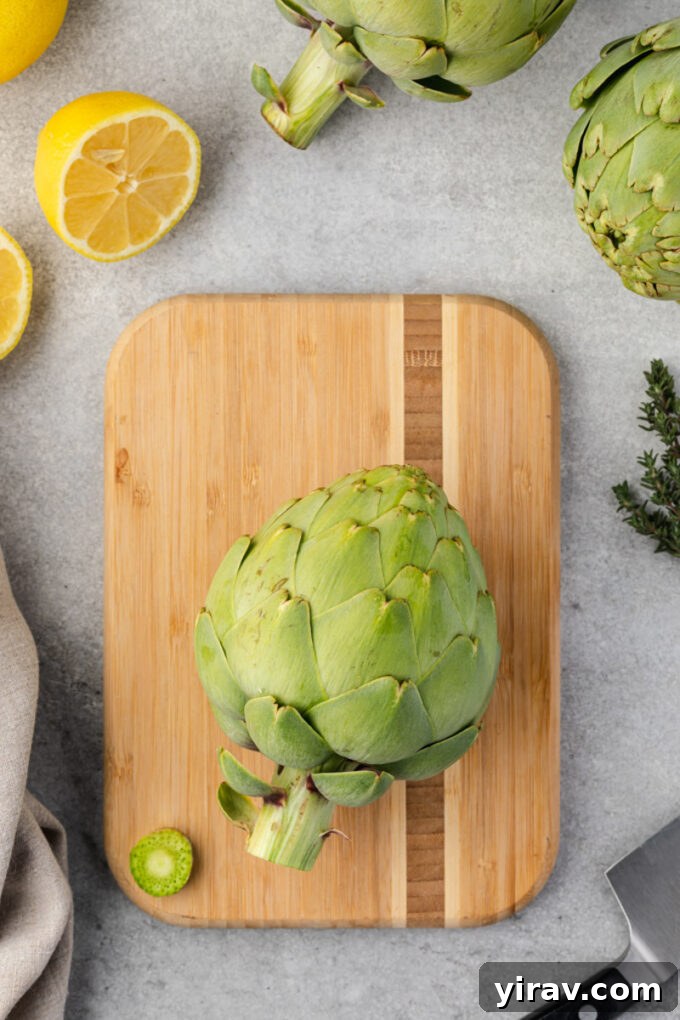
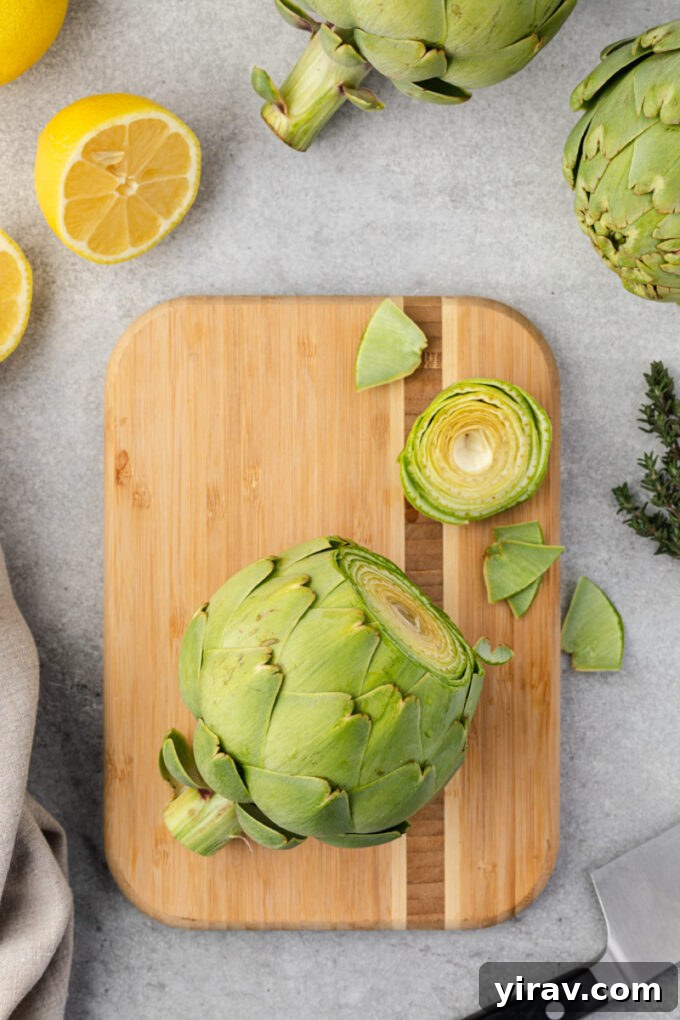
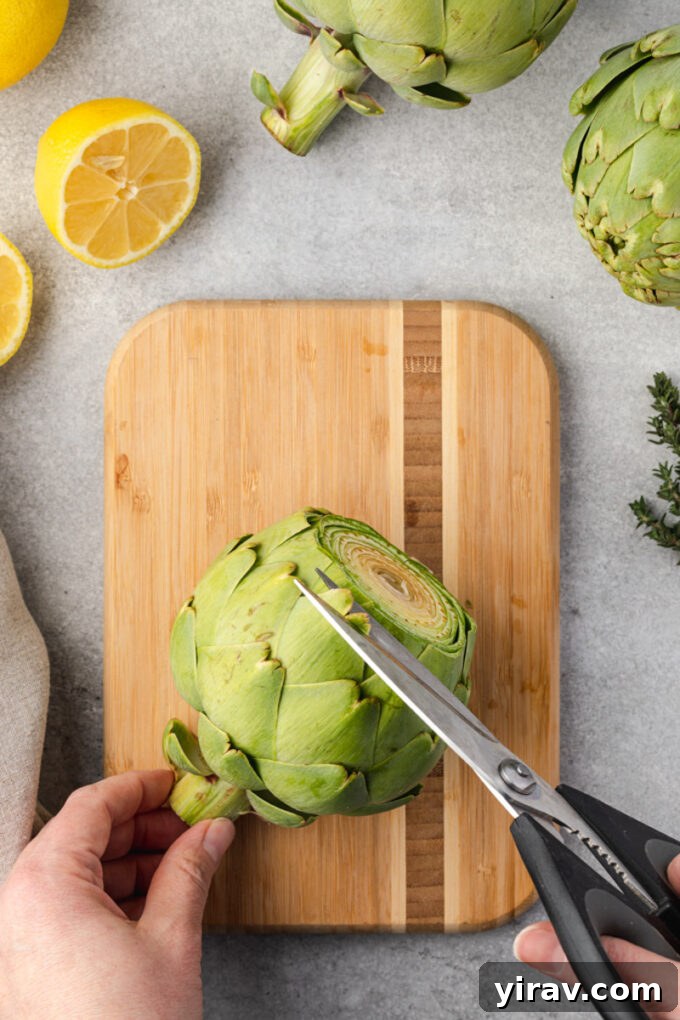
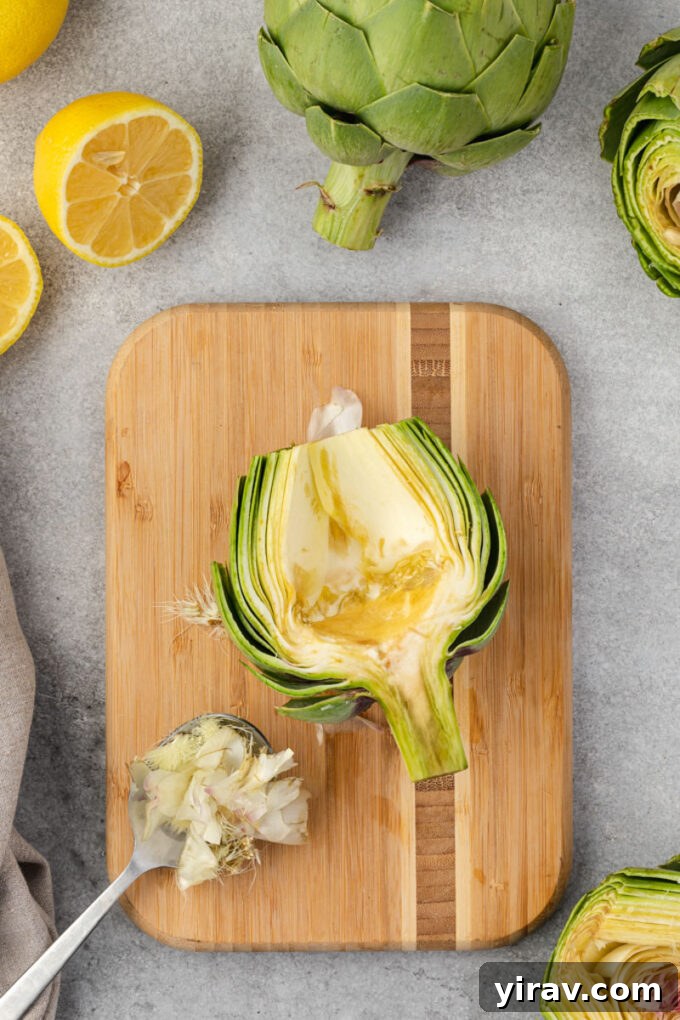
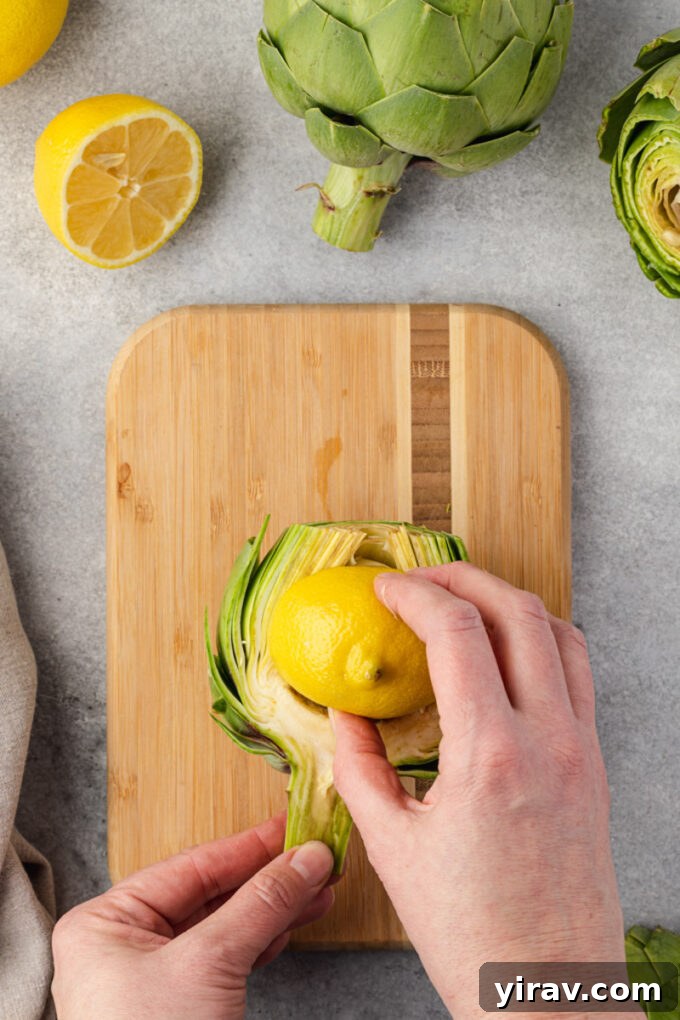
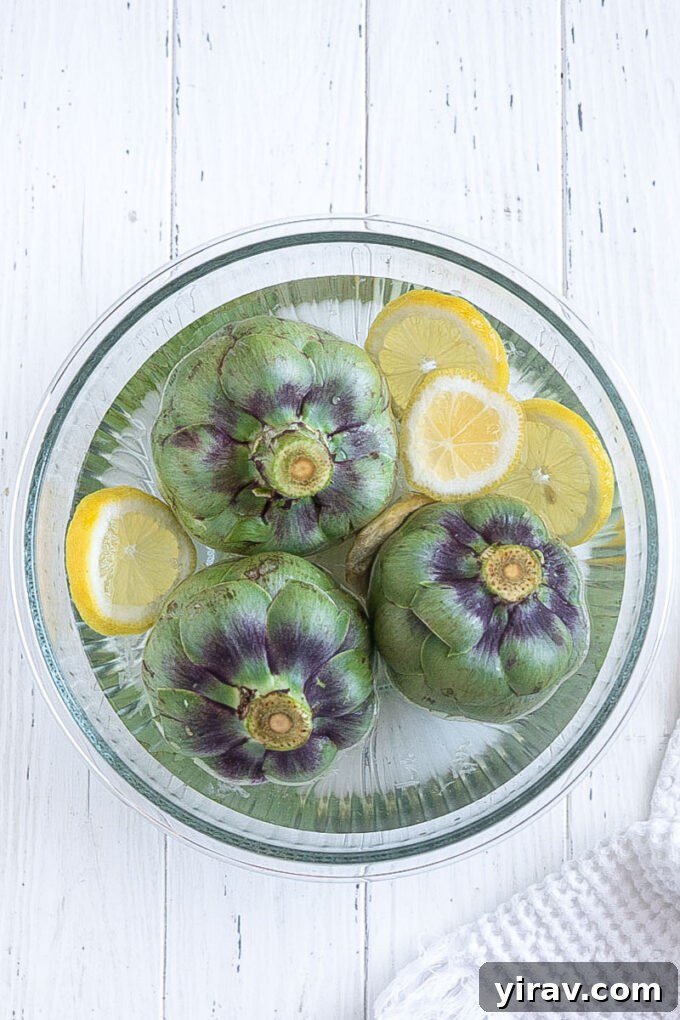
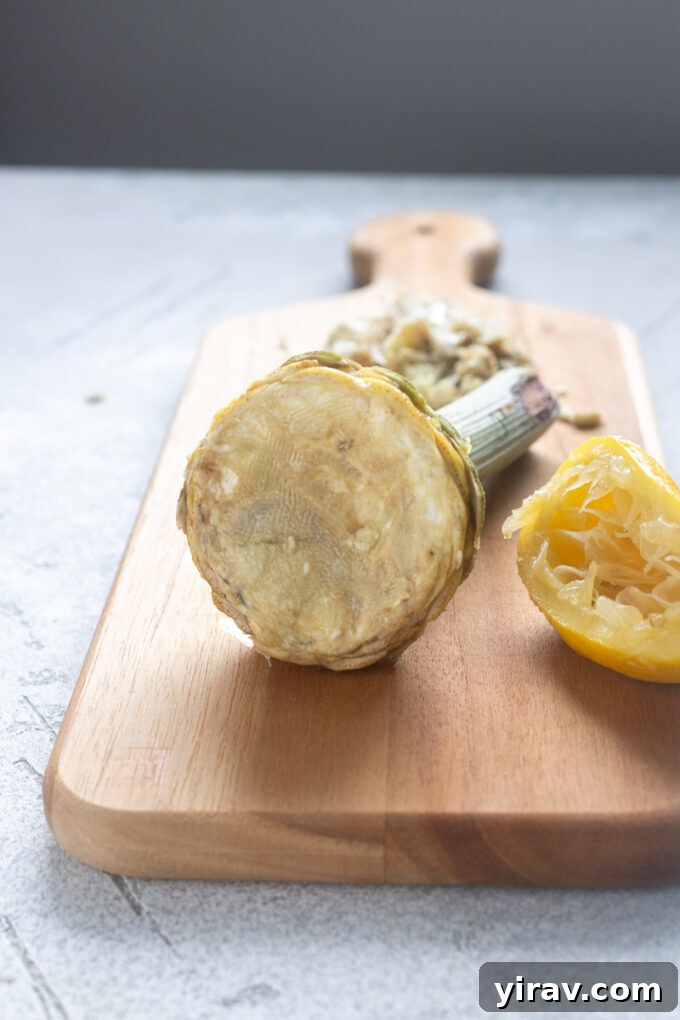
For dishes where you primarily want the tender artichoke heart, such as in salads, sautés, or braises, you’ll want to pare the artichoke down even further. This involves carefully removing all tough outer leaves and meticulously scooping out the fuzzy choke, leaving only the pale, tender heart and the most delicate inner leaves. This is the goal when creating dishes like the exquisite Roman artichokes, where the hearts are braised until perfectly meltingly tender. The image below shows a fully prepped artichoke heart, ready for cooking.
How to cook artichokes
Once your fresh artichokes are meticulously prepped, a world of culinary possibilities opens up. Artichokes can be cooked in several simple yet distinct ways, each method imparting a unique flavor and texture that caters to different preferences and recipes. Choose the method that best suits your desired outcome:
- Roasted Artichokes: Roasting brings out a wonderfully rich, concentrated flavor in artichokes, and can create delightfully crispy, slightly charred edges on the leaves. The dry heat caramelizes the natural sugars, adding depth. Try my simple and incredibly flavorful roasted artichokes with lemon and thyme for an easy side dish or appetizer. Roasting works beautifully for both whole artichokes and prepped hearts.
- Roman-Style (Braised) Artichokes: Braising artichokes, especially in the classic “Carciofi alla Romana” style, results in an incredibly tender, succulent texture infused with aromatic herbs and savory liquids. This slow, gentle cooking method yields artichokes that are meltingly soft, making them an unforgettable appetizer or elegant side. My Roman artichokes recipe delivers a truly show-stopping dish that is both rustic and refined.
- Instant Pot or Steamed Artichokes: Steaming is one of the most classic and straightforward ways to cook whole artichokes. It results in beautifully tender leaves and a creamy heart, preserving their delicate flavor. For the fastest cooking time, the Instant Pot is a game-changer! These Instant Pot artichokes are ready in a fraction of the time compared to stovetop steaming, offering a convenient, hands-off approach. The linked recipe also includes traditional stovetop steaming instructions if you don’t have a pressure cooker.
- Grilled Artichokes: Grilling imparts a fantastic smoky flavor and beautiful char marks, making artichokes a perfect addition to your summer barbecue. After steaming or blanching them slightly to tenderize, slice them in half and finish on the grill with a simple marinade.
- Boiled Artichokes: While less common than steaming, boiling is another simple method, though it can sometimes dilute the flavor if not done carefully. It’s often used when cooking many artichokes at once or as a preliminary step before grilling or frying.
Serving Artichokes and Dipping Sauces
Once your artichokes are cooked to perfection, the way you serve and enjoy them can further enhance the experience. Whole steamed or Instant Pot artichokes are typically eaten by pulling off individual leaves, scraping the tender flesh from the base with your teeth, and discarding the fibrous top. The heart is saved for last, often considered the best part!
To elevate your artichoke experience, consider pairing them with a delicious dipping sauce:
- Melted Butter: A classic for a reason! Simple melted butter, perhaps infused with a touch of garlic or lemon, perfectly complements the artichoke’s natural flavor.
- Lemon Garlic Aioli: A rich, creamy, and flavorful aioli made with fresh lemon juice, minced garlic, and mayonnaise (or homemade aioli) is an incredibly popular choice. Its tangy, savory notes cut through the richness of the artichoke beautifully.
- Vinaigrette: A light and zesty vinaigrette, made with olive oil, vinegar (like red wine or apple cider), Dijon mustard, and herbs, offers a refreshing contrast.
- Mayonnaise-Based Dips: Beyond aioli, consider mixing mayonnaise with herbs like dill or chives, a dash of hot sauce, or a touch of smoked paprika for a unique dip.
- Herb-Infused Olive Oil: For braised or roasted artichoke hearts, a drizzle of high-quality extra virgin olive oil infused with fresh herbs like parsley, mint, or basil, and a squeeze of lemon, is often all you need.
Don’t be afraid to experiment with your favorite flavors to find your ideal artichoke companion!
Artichoke recipes to try (easy, delicious ways to cook them)
Ready to put your newfound artichoke knowledge to the test? Explore these fantastic artichoke recipes, ranging from quick weeknight options to timeless classic preparations. Each recipe offers a unique and delicious way to enjoy this versatile vegetable:
How to Prep an Artichoke
Get the Recipe
Easy Roasted Artichokes
Get the Recipe
Roman Artichokes (Carciofi alla Romana)
Get the Recipe
Instant Pot Artichokes (+ Stove Top Method!)
Get the Recipe
Stuffed Artichokes (The Best!)
Get the Recipe
Pasta with Artichokes
Get the Recipe
Mediterranean Style Steamed Artichokes
Get the Recipe
Artichoke Carpaccio
Get the Recipe
Italian Stuffed Artichokes
Get the Recipe
Grilled Baby Artichokes with Lemon | Good Life Eats®
Get the Recipe
Sausage Stuffed Artichokes
Get the Recipe
Super-Easy, Pan-Roasted Baby Artichokes | Alexandra’s Kitchen
Get the Recipe
Slow Cooker Garlic Lemon Butter Artichokes
Get the Recipe
Zeytinyagli Enginar Dolmasi – Stuffed Artichokes
Get the Recipe
Grilled Artichoke Recipe
Get the Recipe
Frequently Asked Questions About Artichokes
Here are answers to some common questions about fresh artichokes:
Q: Can you eat raw artichokes?
A: While most recipes call for cooked artichokes, baby artichokes or very fresh, tender globe artichokes can be thinly sliced and eaten raw, often dressed in a vinaigrette, like in an artichoke carpaccio. The flavor is slightly more bitter and herbaceous when raw.
Q: What does an artichoke taste like?
A: Artichokes have a unique flavor often described as nutty, slightly sweet, earthy, and sometimes likened to asparagus or Brussels sprouts. The heart is particularly tender and has a mild, buttery taste.
Q: How do I know when an artichoke is cooked?
A: A cooked artichoke is ready when a leaf from the center can be easily pulled off, and the base of the leaf is tender enough to scrape off with your teeth. You can also test the bottom of the artichoke with a knife; if it’s tender and yields easily, it’s done.
Q: Are baby artichokes different from regular artichokes?
A: Baby artichokes are simply smaller, immature versions of the same globe artichoke plant. They have fewer tough outer leaves and a much smaller, sometimes non-existent, choke. This makes them quicker to prep and cook, and often more tender overall. They are excellent for pan-roasting or grilling.
Q: What part of the artichoke do you eat?
A: The edible parts are the fleshy base of the leaves and the prized artichoke heart. The tough, fibrous outer parts of the leaves and the fuzzy “choke” must be discarded.
Fresh artichokes might appear intricate on the surface, but as this guide illustrates, once you grasp the simple techniques for prepping and cooking them, they unveil themselves as one of the most rewarding ingredients in the culinary world. With just a little practice and patience, you’ll soon be confidently transforming them into a variety of simple, delicious, and impressive dishes.
I sincerely hope that this comprehensive guide to fresh artichokes has ignited your inspiration and encouraged you to incorporate them into your cooking repertoire much more frequently. Enjoy the journey of discovering this magnificent vegetable!
Did you find this guide helpful or try one of these recipes? If so, please consider leaving a review below and don’t forget to tag me @flavorthemoments on Facebook and Instagram with your culinary creations!