Slow Roasted Citrus Salmon: Your Guide to Perfectly Tender and Flavorful Fish
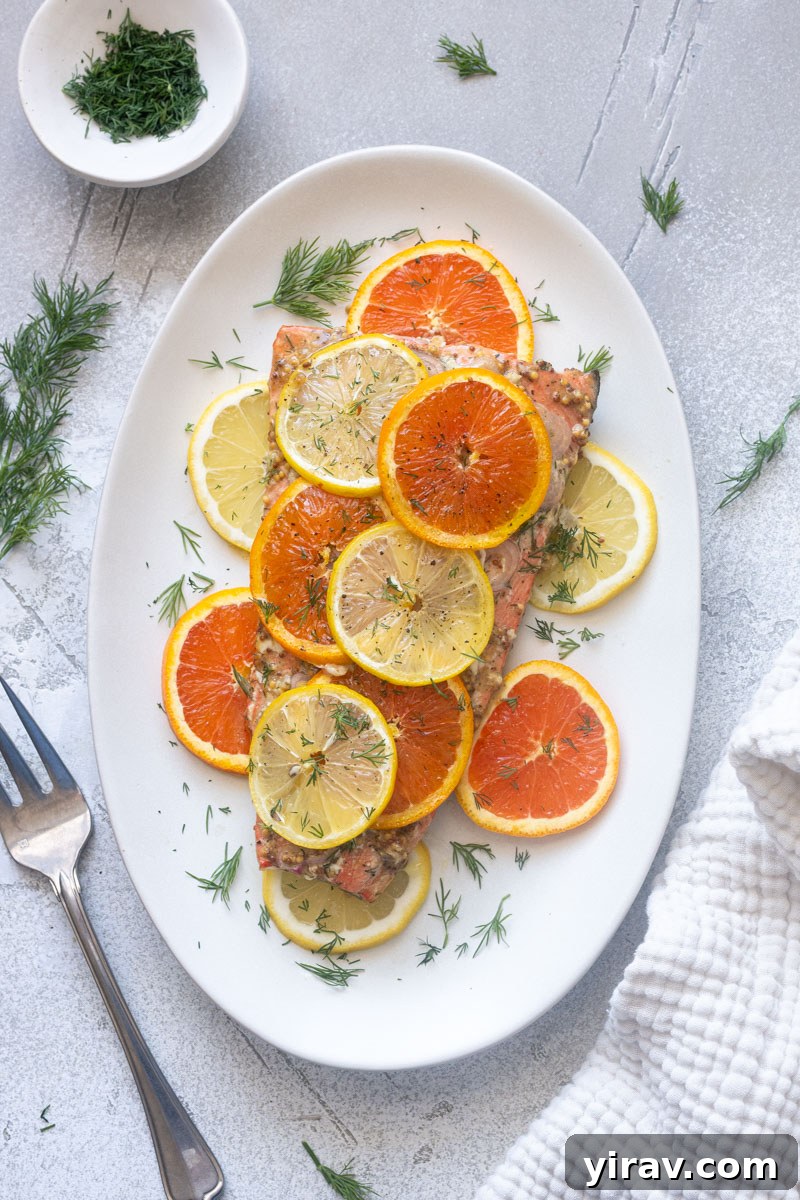
Discover the ultimate method for achieving melt-in-your-mouth salmon every time with this incredible Slow Roasted Citrus Salmon recipe. Gently baked at a low temperature alongside a vibrant blend of olive oil, whole grain Dijon mustard, fresh garlic, zesty citrus, and aromatic dill, this dish ensures your salmon remains unbelievably moist, flaky, and silky. The resulting flavor profile is brilliantly bright, wonderfully fresh, and perfectly balanced – an absolute delight for any meal.
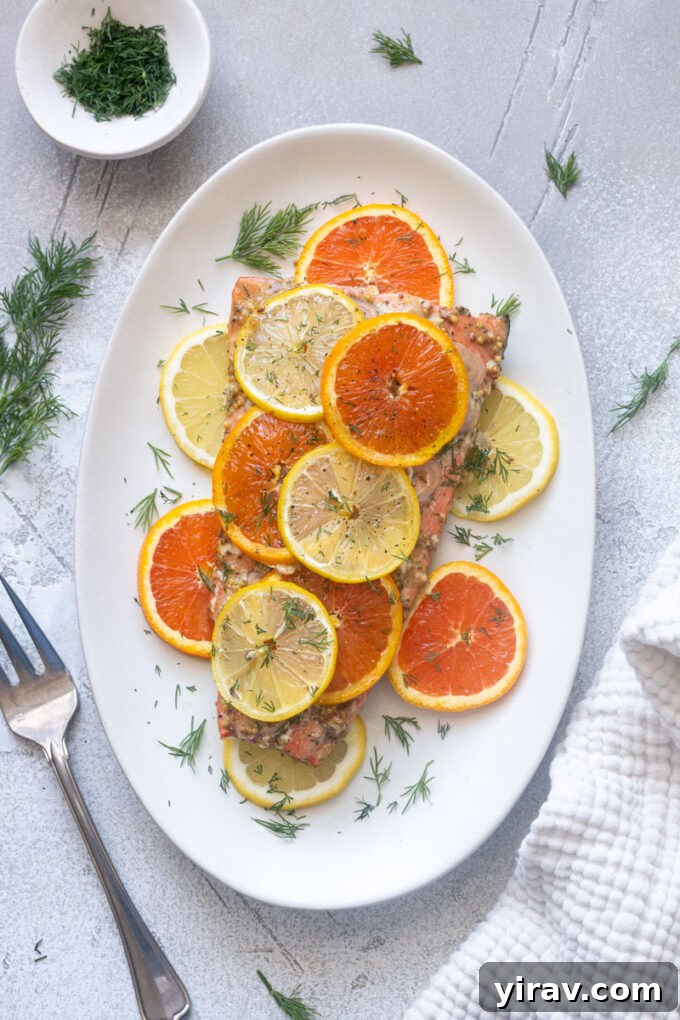
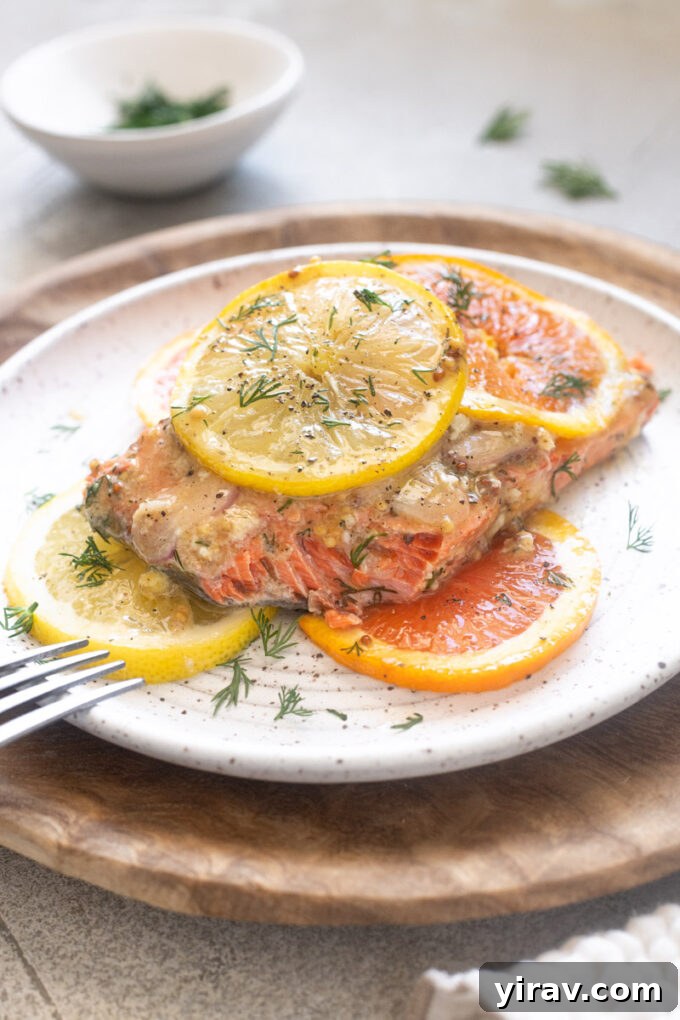
Salmon has long been a staple in my kitchen, celebrated for its incredible versatility, rapid preparation, and undeniable health benefits. It’s a cherished family favorite, which naturally encourages me to continuously explore new and exciting ways to prepare this magnificent fish. This particular recipe for Slow Roasted Citrus Salmon stands out as a true gem, delivering a tender, silky texture infused with an explosion of fresh flavors from the classic combination of Dijon, garlic, bright lemon and orange, and fragrant dill. The secret lies in roasting the salmon at a gentle, low temperature, a technique that locks in moisture and butteriness, transforming an otherwise simple dinner into an effortlessly impressive meal perfect for spring gatherings or elegant summer entertaining.
Not only is this dish remarkably flavorful and satisfying, but it also requires minimal effort to prepare, making it an ideal choice for busy weeknights or when you want to impress without spending hours in the kitchen. It’s also an excellent source of high-quality protein, contributing to a healthy and wholesome diet. For a complete and balanced meal, consider serving this exquisite salmon alongside a crisp arugula and fennel salad, where its peppery notes complement the salmon’s richness beautifully, or with a comforting side of my grandmother’s savory almond rice pilaf, which offers a delightful textural contrast. If your schedule demands a quicker approach without compromising on that beloved citrus-Dijon flavor, my oven baked Dijon salmon recipe provides a fantastic, faster alternative.
Why You’ll Love This Slow Roasted Citrus Salmon Recipe
This isn’t just another salmon recipe; it’s a culinary experience designed for ease, flavor, and consistent perfection. Here’s why this slow-roasted citrus salmon will quickly become a favorite in your cooking repertoire:
- Perfectly Tender Every Time: The gentle, low-temperature roasting method is the secret weapon against dry, overcooked fish. It allows the heat to penetrate slowly and evenly, ensuring that every bite of salmon is incredibly moist, buttery, and melts in your mouth. Say goodbye to guesswork and hello to consistently perfect salmon!
- Fresh, Vibrant Flavor Profile: The harmonious blend of tangy whole grain Dijon, pungent fresh garlic, bright and zesty lemon and orange, and herbaceous dill creates a sophisticated flavor that’s both invigorating and utterly delicious. These ingredients complement the natural richness of the salmon without overpowering it, resulting in a beautifully balanced taste.
- Effortlessly Easy, Impressively Elegant: Despite its gourmet taste and appearance, this recipe requires minimal hands-on preparation. Most of the magic happens in the oven, making it an ideal choice for busy weeknights or when you’re hosting guests and want to serve something special without the stress. It looks stunning on any platter, making it perfect for spring and summer entertaining.
- Healthy and Wholesome: Salmon is renowned for being a powerhouse of nutrition, packed with lean protein and beneficial omega-3 fatty acids. Combined with fresh citrus and healthy olive oil, this recipe offers a truly wholesome meal option that nourishes your body while delighting your taste buds. It’s guilt-free indulgence at its best.
- Remarkably Versatile: This slow-roasted salmon is delicious served warm straight from the oven, but its fantastic flavor holds up beautifully at room temperature or even chilled. This makes it an excellent candidate for meal prep, lunchboxes, or flaked over a vibrant salad the next day. Its adaptability ensures you can enjoy it in multiple ways throughout the week.
Essential Ingredients for Slow Roasted Citrus Salmon
Crafting this succulent salmon dish starts with selecting quality ingredients. Each component plays a vital role in creating the signature tender texture and bright, balanced flavor:
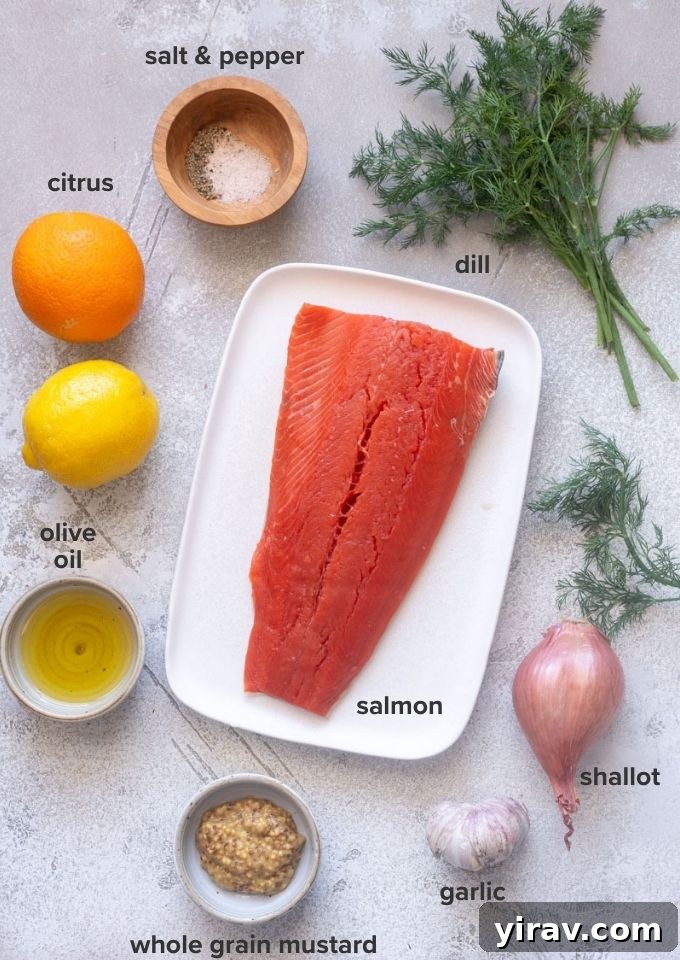
- Salmon Fillet (1 1/2 lbs.): The star of our dish! Opt for a center-cut side of salmon, as its uniform thickness ensures more even cooking. Skin-on salmon is highly recommended; the skin acts as a protective layer during the slow roasting process, helping to retain moisture and contribute to a richer, crispier texture. You can easily remove it after cooking if preferred. When choosing salmon, look for vibrant color, firmness, and a fresh, mild aroma.
- Whole Grain Dijon Mustard (2 tablespoons): This isn’t just for flavor; it’s a key ingredient that provides a pleasant tangy depth and helps emulsify the marinade, ensuring it adheres beautifully to the fish. The whole grains add a subtle texture and visual appeal. If whole grain Dijon isn’t available, regular Dijon mustard can be substituted without compromising the core flavor.
- Olive Oil (4 tablespoons + more for drizzling): A good quality extra virgin olive oil is crucial here. It contributes richness, healthy fats, and helps keep the salmon incredibly moist throughout the slow roasting process, preventing any dryness.
- Fresh Garlic (2 cloves, minced): Freshly minced garlic delivers an irreplaceable savory aroma and flavor that infuses deeply into the salmon. If fresh garlic isn’t handy, you can substitute with about ½ teaspoon of garlic powder, adjusting to your taste preferences.
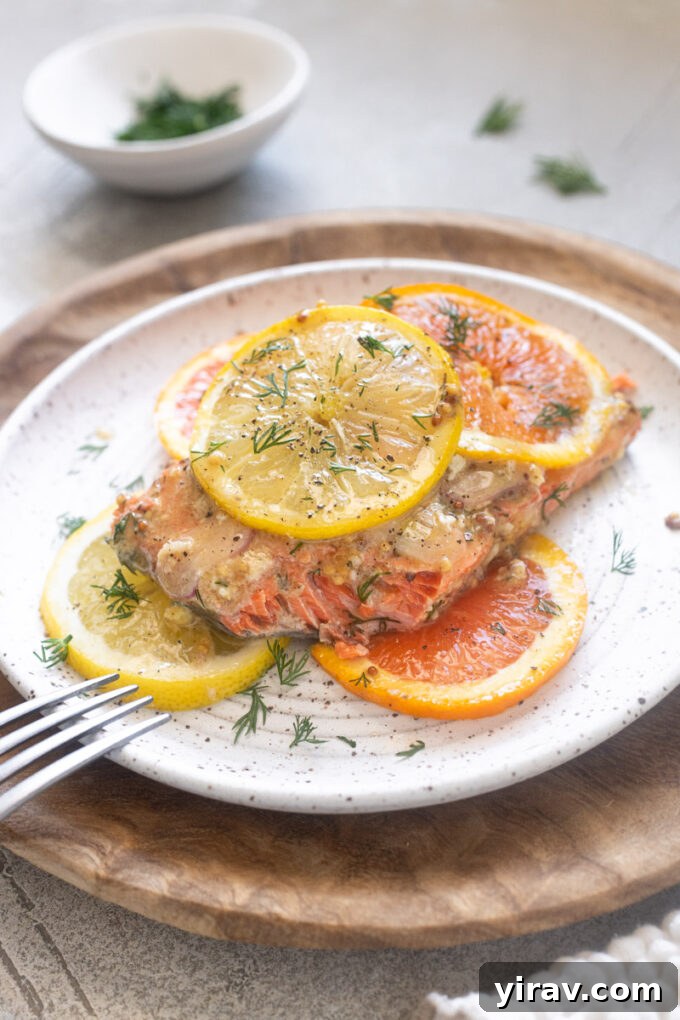
- Fresh Citrus (1 tablespoon lemon juice, 1 tablespoon orange juice + slices): This recipe truly celebrates citrus! I particularly love the combination of zesty lemon and sweet Cara Cara orange for a perfect sweet-tart balance. However, don’t limit yourself – feel free to use any variety of your favorite citrus, such as mandarin, grapefruit, or lime, to customize the flavor. The citrus slices placed on top not only add beauty but also gently steam the fish, enhancing its juiciness and infusing it with aromatic oils. For more insights on various citrus types, refer to my comprehensive citrus guide.
- Fresh Dill (2 teaspoons, chopped): Dill is the quintessential herb for salmon, offering a bright, herbaceous, and slightly anisy finish that pairs exquisitely with citrus. Its fresh aroma elevates the entire dish. While fresh is best, you can substitute with about ½ to ¾ teaspoon of dried dill if needed. Explore other complementary herbs like parsley or chives by checking out my fresh herbs produce guide.
- Shallot (1, peeled and thinly sliced, optional): A wonderful optional addition! Thinly sliced shallot adds a mild, delicate onion flavor and a slight textural contrast without being overpowering. Its gentle sweetness harmonizes beautifully with the other ingredients.
- Sea Salt and Freshly Ground Black Pepper: Essential seasonings to enhance all the natural flavors. Season generously!
For the precise quantities and full ingredient list, please refer to the recipe card conveniently located below.
Step-by-Step: How to Make Perfectly Slow Roasted Salmon
The magic of this recipe lies in its gentle cooking technique. Roasting salmon at a consistent low temperature of 250°F (120°C) is key. This method allows the heat to gradually permeate the fish, preventing the proteins from seizing up and resulting in an exceptionally buttery, flaky, and tender texture without any risk of drying it out. Follow these simple steps for a flawless slow-roasted salmon:
Pro Tip: Cooking time is highly dependent on the thickness of your salmon fillet. A thicker, center-cut piece of salmon will naturally require closer to the 25-minute mark. For absolute precision and the best results, always use an instant-read thermometer. Aim to remove your salmon from the oven when its internal temperature reaches 135°F (57°C) for that coveted moist, tender, medium-rare doneness. The temperature will continue to rise slightly as it rests.
You’ll find detailed, full instructions within the recipe card provided below.
Expert Tips for the Best Slow Roasted Salmon
Achieving culinary perfection with salmon doesn’t have to be complicated. These insider tips will help you create a show-stopping dish every single time:
- Invest in an Instant-Read Thermometer: This is arguably the most valuable tool in your kitchen, especially when cooking fish. It eliminates all guesswork, allowing you to confidently pull your salmon from the oven at precisely the right moment, ensuring it’s never undercooked or overcooked. For moist, tender salmon, aim for 135°F (57°C) internal temperature.
- Embrace the Low Temperature: Resist the urge to crank up the heat! The 250°F (120°C) oven temperature is the cornerstone of this recipe’s success. This slow and gentle cooking prevents the delicate salmon proteins from tightening up, resulting in a supremely silky, buttery, and moist texture that high heat methods simply cannot replicate.
- Always Use Skin-On Salmon: The skin plays a crucial role in protecting the fish. During roasting, it insulates the flesh, helping to lock in precious moisture and preventing it from drying out. Plus, it can get wonderfully crispy if you give it a little extra blast of heat at the end (though not necessary for this low-roast method). The skin is also much easier to remove after cooking, if you prefer to serve without it.
- Slice Citrus Paper-Thin: For the best flavor infusion and presentation, slice your lemons and oranges as thinly as possible. This allows their vibrant oils and juices to gently permeate the salmon without overwhelming its delicate flavor. Thicker slices might steam the salmon too intensely or create too much moisture.
- Don’t Skip the Resting Period: Once your salmon is out of the oven, cover it lightly with foil and let it rest for at least 5 minutes. Just like meat, fish benefits from resting. This crucial step allows the internal temperature to carry over (rising a few degrees) and, more importantly, permits the juices to redistribute throughout the fillet, resulting in a juicier, more flavorful piece of fish.
- Line Your Baking Sheet: For effortless cleanup and to prevent sticking, always line your rimmed baking sheet with parchment paper. This also helps in transferring the delicate cooked salmon without breakage.
- Pat Salmon Dry: Before applying the marinade, ensure your salmon fillet is thoroughly patted dry with paper towels. A dry surface allows the marinade to adhere better and can contribute to a slightly firmer, more pleasant texture.
Common Questions About Slow Roasted Citrus Salmon
Here are answers to some frequently asked questions about this delicious and easy salmon recipe:
Absolutely! Frozen salmon is a convenient and often more affordable option. Just ensure you thaw it completely in the refrigerator overnight or under cold running water before you begin. Once thawed, it’s crucial to pat the salmon dry very thoroughly with paper towels to remove any excess moisture, which helps the marinade adhere and prevents a watery texture during cooking.
For the most wonderfully moist, tender, and medium-rare salmon, aim for an internal temperature of 135°F (57°C) when measured at the thickest part of the fillet with an instant-read thermometer. If you prefer your salmon cooked to a medium or medium-well doneness, continue cooking until it reaches between 140°F (60°C) and 145°F (63°C). Remember that the salmon will continue to cook slightly as it rests after being removed from the oven.
Yes, one of the many fantastic qualities of this slow-roasted citrus salmon is its versatility for meal prep! This salmon is incredibly delicious served warm right out of the oven, but it also maintains its exquisite flavor and moist texture beautifully at room temperature or even chilled directly from the refrigerator. This makes it a perfect candidate for preparing in advance for lunches, picnics, or as part of a larger meal prep plan. Store leftovers in an airtight container for up to 3 days.
Store any leftover slow-roasted salmon in an airtight container in the refrigerator for up to 3 days. To reheat, gently warm the salmon in a preheated oven at 275°F (135°C) for about 10-15 minutes, or until just heated through, to prevent it from drying out. You can also flake it cold over salads or incorporate it into other dishes.
While fresh dill pairs perfectly with salmon and citrus, you can certainly experiment with other fresh herbs. Fresh parsley, chives, or even a touch of tarragon would offer delightful variations. Adjust quantities to your taste, keeping in mind that some herbs have stronger flavors than others.
Delicious Serving Suggestions for Citrus Salmon
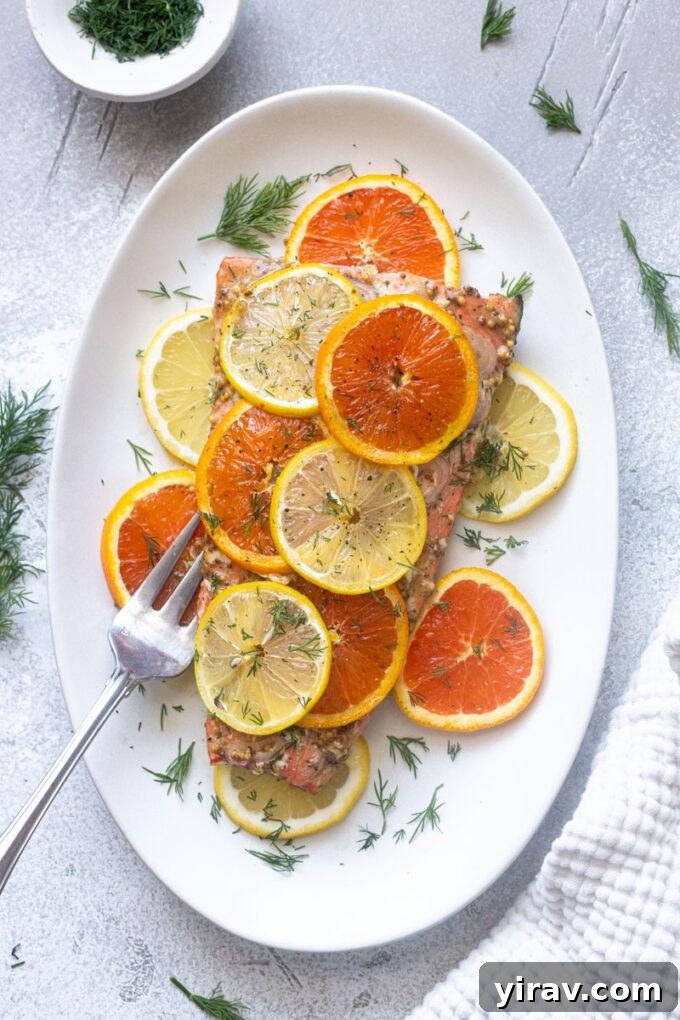
This flavorful citrus salmon is incredibly versatile and pairs beautifully with a wide array of side dishes. Here are some fantastic ideas to complete your meal:
- Roasted or Grilled Vegetables: Enhance the healthy aspect of your meal by serving with vibrant vegetables. Try air fryer roasted vegetables for a quick option, or light and smoky easy grilled vegetables like asparagus, bell peppers, or zucchini. Their natural sweetness and char complement the salmon’s brightness.
- Flavorful Grains and Potatoes: For a more substantial side, consider a zesty cilantro lime rice, fluffy couscous, or a hearty quinoa salad. Creamy Yukon Gold garlic mashed potatoes or roasted new potatoes also make excellent accompaniments, soaking up the delicious pan juices.
- Fresh Salads: A crisp, light salad can cut through the richness of the salmon beautifully. A delicate butter lettuce salad with a simple vinaigrette or a more robust Italian tricolore salad (radicchio, endive, arugula) would be superb choices.
- Crusty Bread: Don’t forget a warm, crusty loaf of bread! It’s perfect for soaking up any leftover savory and citrusy pan juices, ensuring no drop of flavor goes to waste.
- Legumes: A simple side of steamed green beans, snap peas, or a light lentil salad can add texture and nutritional balance.
- Fruit Salsa: For an extra burst of freshness and a touch of sweetness, a homemade mango or pineapple salsa would be a delightful pairing, particularly in warmer months.
Explore More Delicious Salmon Recipes
If you’re a fan of salmon, you’re in luck! There are countless ways to prepare this versatile fish. Here are some other fantastic salmon recipes from my kitchen you might enjoy:
- Quick & Easy Air Fryer Salmon
- Spicy Blackened Salmon with Pineapple Salsa
- Simple & Healthy Canned Salmon Salad
- Crispy Salmon Patties with Lemon-Dill Sauce
- Irresistible Garlic Butter Baked Salmon
- Elegant Salmon Niçoise Salad
- Sweet & Savory Teriyaki Salmon Bowls
Did you try this recipe? If so, be sure to leave a review below and tag me @flavorthemoments on Facebook and Instagram so I can see your delicious creation!
Slow Roasted Citrus Salmon Recipe Card
Recipe Overview
Slow Roasted Citrus Salmon is an incredibly easy and healthy dinner, cooked at a low temperature with vibrant citrus and fresh dill. This method guarantees a tender, flaky texture and a burst of fresh flavor, ready in about 30 minutes!
- Servings: 4 servings
- Prep Time: 10 mins
- Cook Time: 20 mins
- Total Time: 30 mins
Equipment
- Rimmed Baking Sheets (16 3/4″ x 12″)
- Small mixing bowl
- Instant-read thermometer (optional, but highly recommended)
Ingredients
- 1.5 lbs. salmon fillet (center-cut, skin-on recommended)
- 4 tablespoons olive oil (plus more for drizzling)
- 2 tablespoons whole grain Dijon mustard (or regular Dijon)
- 2 cloves garlic, minced
- 1 tablespoon fresh lemon juice (plus extra lemon slices for topping)
- 1 tablespoon fresh orange juice (plus extra orange slices for topping)
- 2 teaspoons chopped fresh dill
- 1/4 teaspoon sea salt (plus more for seasoning)
- Freshly ground black pepper, to taste
- 1 shallot, peeled and thinly sliced (optional)
Instructions
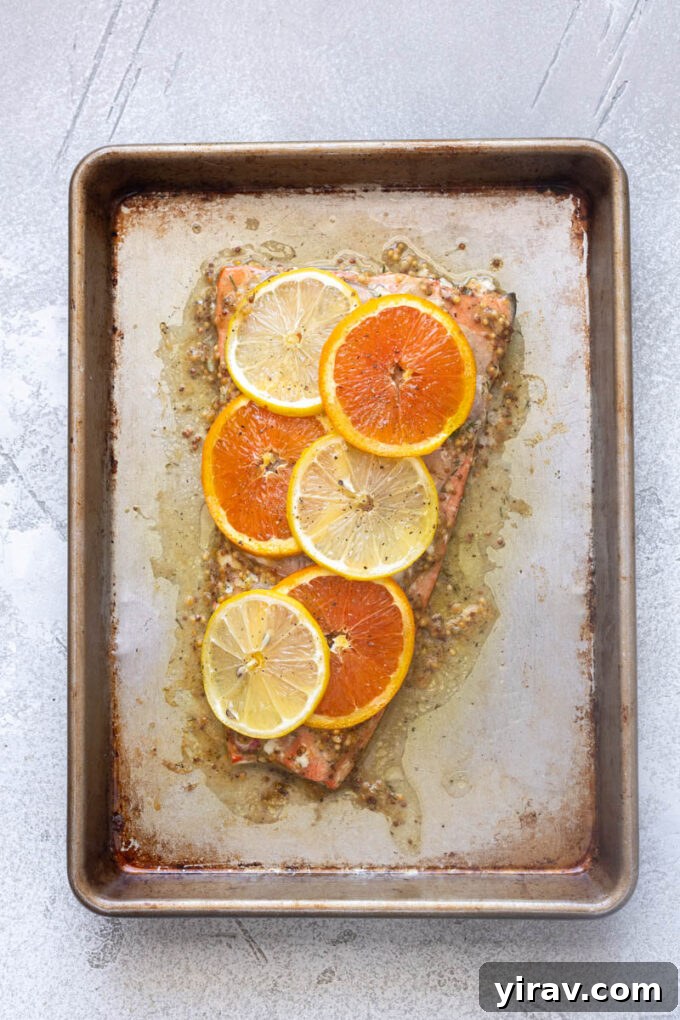
- Preheat your oven to 250°F (120°C). Prepare a rimmed baking sheet by lining it with parchment paper for easy cleanup. Place the salmon fillet on the prepared baking sheet and blot it thoroughly dry with paper towels. Season both sides generously with salt and freshly ground black pepper.
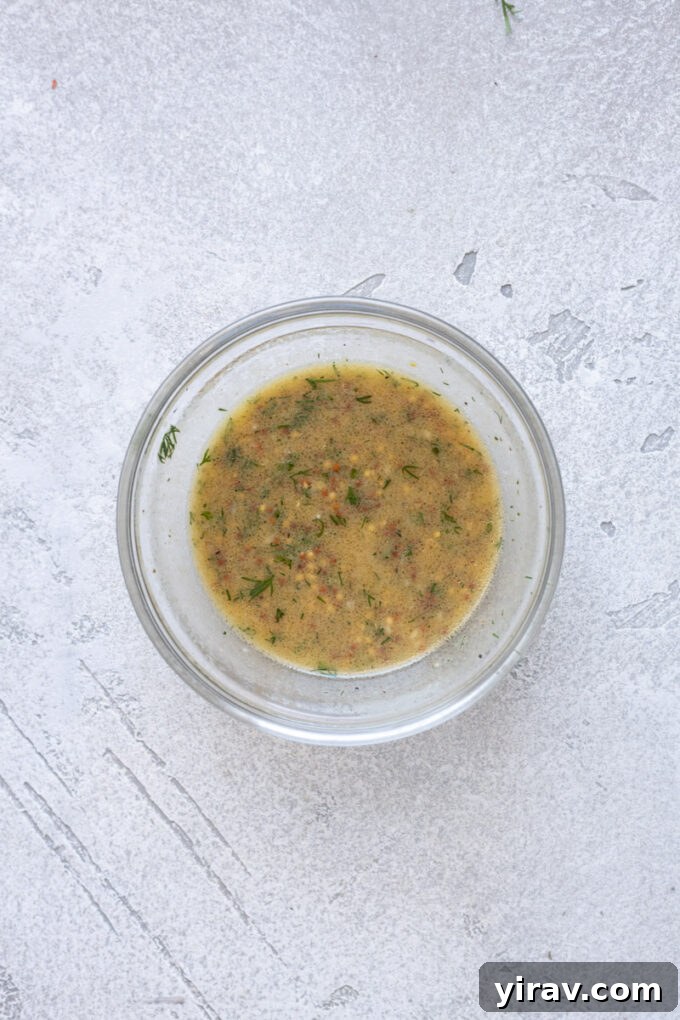
- In a small bowl, combine the 4 tablespoons of olive oil, whole grain Dijon mustard, minced garlic, fresh lemon juice, fresh orange juice, and chopped fresh dill. Whisk well until all ingredients are thoroughly combined to form a flavorful marinade.
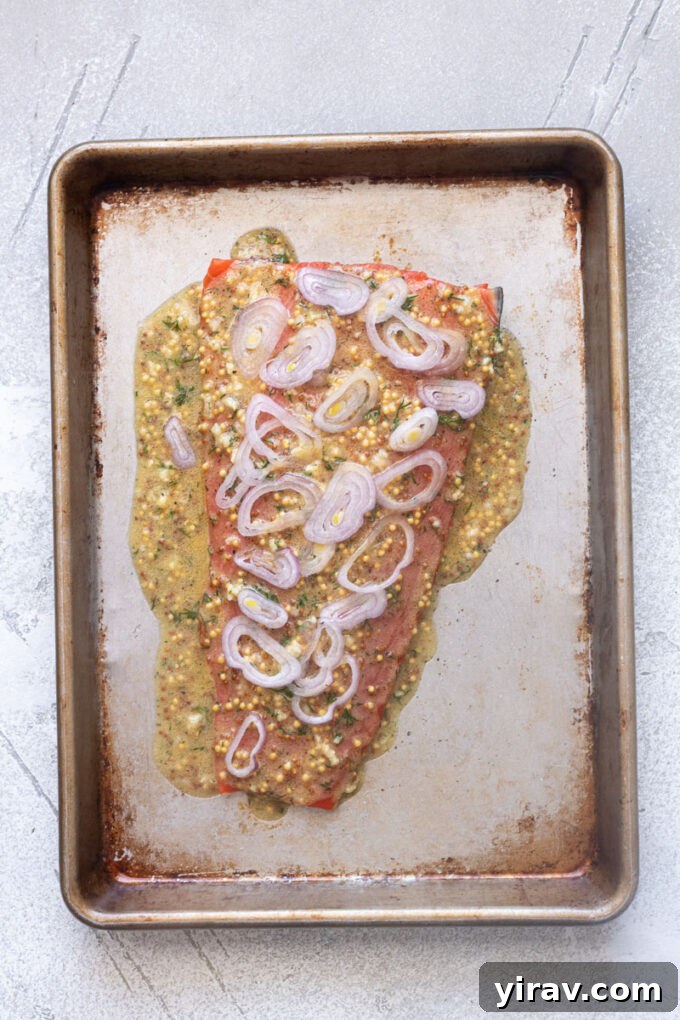
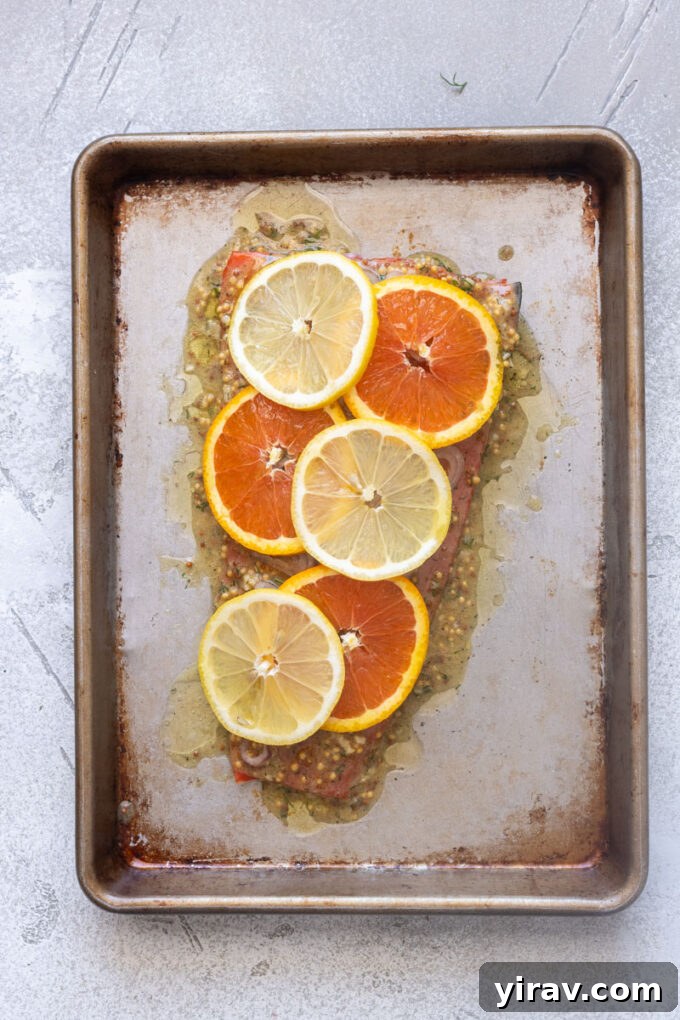
- Evenly brush the citrus Dijon marinade over the top of the salmon fillet, ensuring it’s well coated. If you’re using it, sprinkle the thinly sliced shallot over the marinated salmon. Then, artfully arrange the lemon and orange slices on top of the salmon. Finish with a light drizzle of additional olive oil over the citrus.
- Transfer the baking sheet to the preheated oven. Roast the salmon for approximately 20-25 minutes. Begin checking the internal temperature around 18 minutes. For a moist, tender, medium-rare texture, remove the salmon when an instant-read thermometer inserted into the thickest part reads 135°F (57°C). If you prefer your salmon medium-well, continue cooking until it reaches 140-145°F (60-63°C).
- Once removed from the oven, let the salmon rest on the baking sheet for 5 minutes. This allows the juices to redistribute, resulting in a more succulent fish. Serve immediately and enjoy your perfectly slow-roasted citrus salmon!
Notes
- Precision Cooking: The exact cooking time can vary based on the thickness of your salmon. A thicker, center-cut fillet will likely need closer to the 25-minute mark. An instant-read thermometer is your best friend for achieving perfect doneness.
- Skin-On Advantage: Using skin-on salmon helps maintain moisture during the slow roasting process. The skin acts as a natural barrier, keeping the flesh juicy. You can easily remove the skin after cooking if preferred.
- Citrus Variations: Feel free to get creative with your citrus choices! Lemon, orange, mandarin, grapefruit, or lime would all work wonderfully and add their unique aromatic notes to the dish.
- Storing Leftovers: Any leftover slow-roasted salmon can be stored in an airtight container in the refrigerator for up to 3 days. It’s delicious warm, at room temperature, or even chilled.
Nutrition Information (Estimated)
Calories: 379kcal,
Carbohydrates: 3g,
Protein: 34g,
Fat: 25g,
Saturated Fat: 4g,
Polyunsaturated Fat: 6g,
Monounsaturated Fat: 14g,
Cholesterol: 94mg,
Sodium: 304mg,
Potassium: 885mg,
Fiber: 1g,
Sugar: 1g,
Vitamin A: 86IU,
Vitamin C: 5mg,
Calcium: 31mg,
Iron: 2mg
Nutrition is estimated using a food database and is intended to be used as a guideline for informational purposes only. Individual results may vary.
Recipe Details
- Course: Main Dishes
- Cuisine: American
- Author: Marcie
All recipes and images © Flavor the Moments.