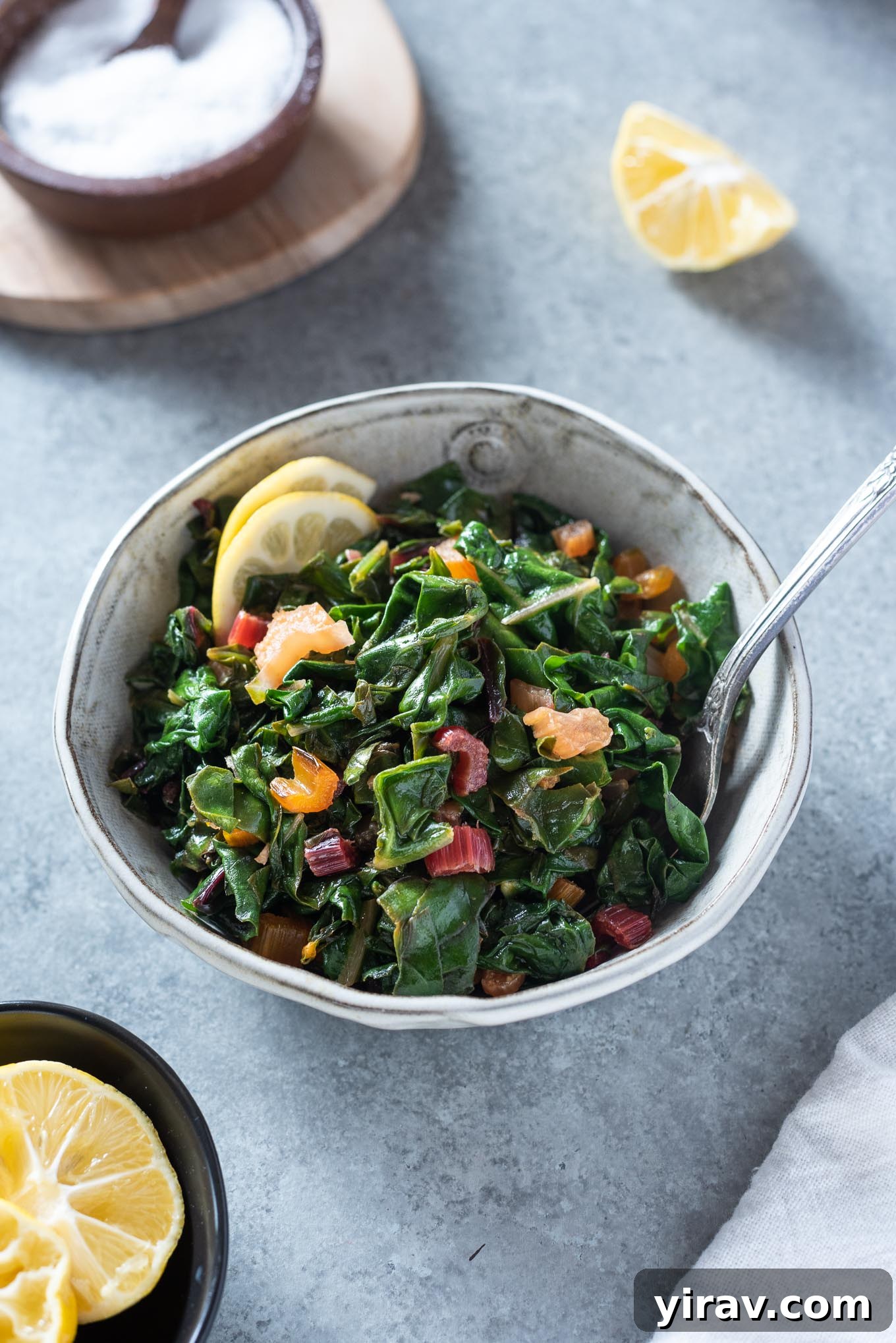
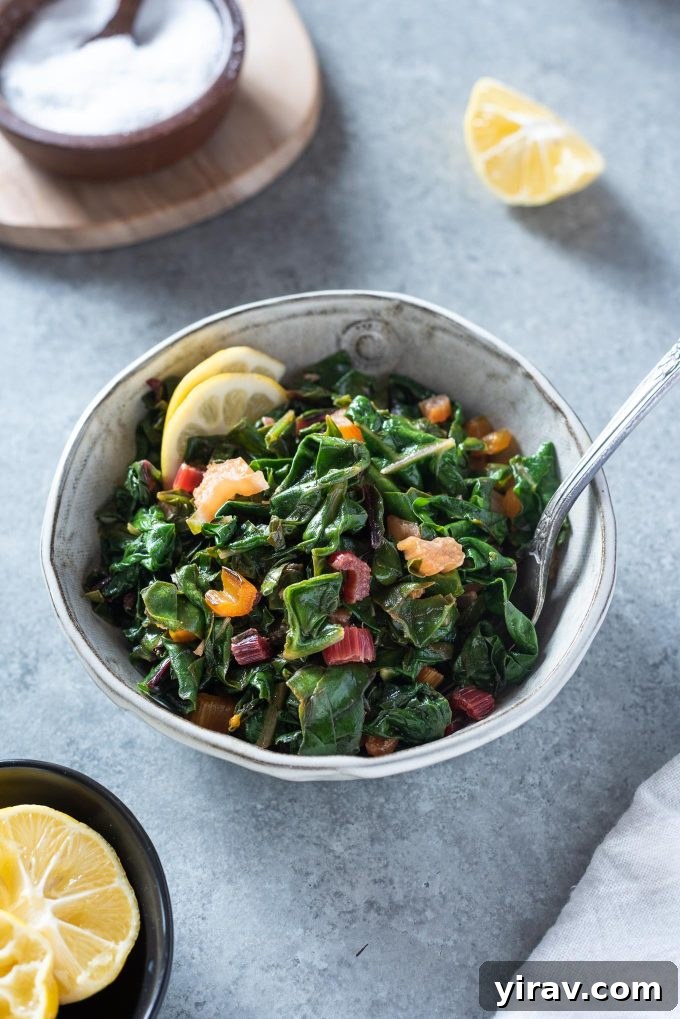
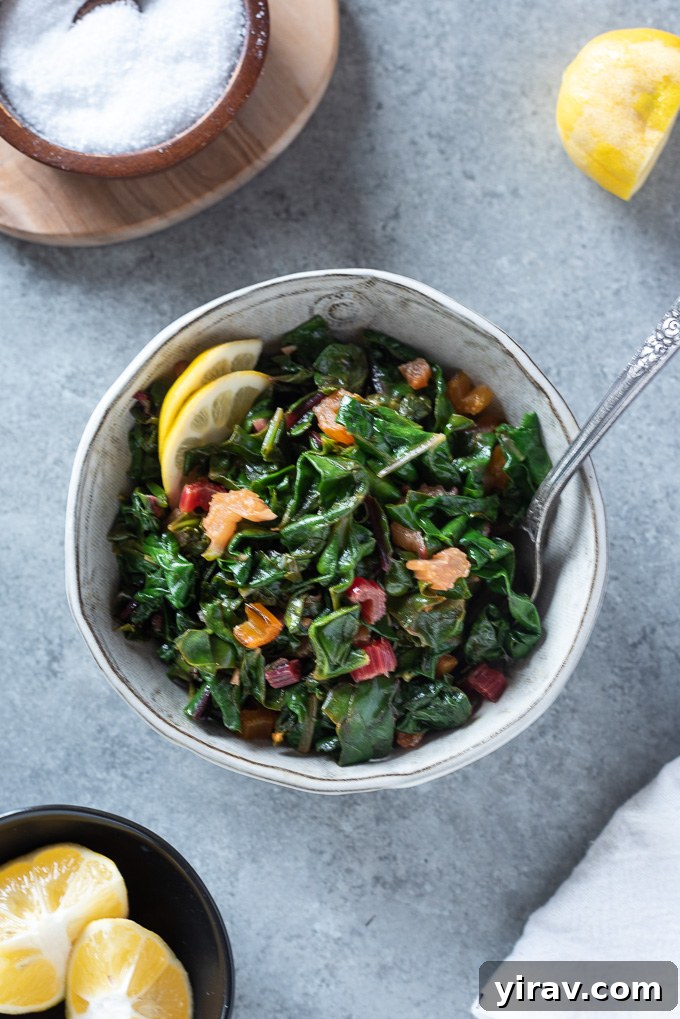
Discover an effortless way to boost your daily intake of greens with this vibrant and incredibly simple Sautéed Swiss Chard recipe! Featuring tender ribbons of colorful rainbow chard, perfectly cooked with aromatic garlic, a subtle kick of cayenne pepper, and a bright finish of fresh lemon, this dish transforms into a healthy, flavorful, and incredibly versatile side. It’s naturally gluten-free, vegan, and incredibly quick to prepare, making it an ideal addition to any meal.
Embrace Healthy Eating with Flavorful Greens
As we navigate our wellness journeys, especially after periods of indulgence, finding delicious and nourishing foods becomes a top priority. The start of a new year often brings a renewed commitment to healthy eating, and incorporating more greens into your diet is one of the most impactful changes you can make. While kale often takes the spotlight in dishes like massaged kale salad and hearty white bean kale soup, there’s another leafy green that deserves your full attention: Swiss chard.
Swiss chard is an unsung hero in the world of nutritious vegetables, offering a unique flavor profile and a wealth of health benefits. I’ve personally enjoyed growing it in my garden and incorporating its earthy goodness into various recipes, from a comforting white bean stew to a surprisingly delicious pesto sauce. This sautéed Swiss chard recipe stands out as one of my absolute favorite ways to enjoy this remarkable vegetable. It’s not just a side; it’s a celebration of simple ingredients creating profound flavor.
If you’re eager to explore more ways to integrate these often-underutilized greens into your culinary repertoire, be sure to delve into a wider collection of Swiss chard recipes. Beyond inspiration, these resources often provide invaluable information on how to choose the freshest chard, optimal storage techniques, and detailed nutritional breakdowns.
Why You’ll Adore This Easy Sautéed Swiss Chard Recipe
This Sautéed Swiss Chard recipe isn’t just another side dish; it’s a culinary gem that you’ll want to add to your weekly rotation. Here’s why:
- A Symphony of Flavors and Textures: Imagine tender ribbons of rainbow chard – or your favorite Swiss chard variety – infused with the pungent warmth of fresh garlic, a subtle yet invigorating kick from cayenne pepper, and a bright, zesty finish from fresh lemon. This combination creates a truly harmonious flavor profile that is both comforting and exciting. The stems, often discarded, are ingeniously incorporated, adding a delightful textural contrast and an extra layer of nutritional goodness.
- Lightning-Fast Preparation: In today’s busy world, quick and healthy meal options are invaluable. This recipe comes together in a mere matter of minutes, proving that nutritious eating doesn’t have to be time-consuming. From prep to plate, you’re looking at about 15 minutes, making it perfect for weeknight dinners or last-minute additions to any meal.
- Exceptional Versatility: One of the greatest attributes of sautéed chard is its adaptability. It serves as an outstanding partner to a wide array of main dishes, from roasted chicken and pan-seared fish to grilled steak. Beyond that, it shines when incorporated into grain bowls, pasta dishes, or even as a flavorful component in breakfast scrambles. Its vibrant taste and flexible nature mean it truly complements almost anything.
- Diet-Friendly and Wholesome: For those adhering to specific dietary preferences, this recipe is a dream come true. It’s naturally low-carb, making it suitable for ketogenic lifestyles. Furthermore, it’s entirely gluten-free and vegan, catering to a broad spectrum of dietary needs without compromising on flavor or satisfaction. This dish is pure, unadulterated goodness in every bite.
The Nutritional Powerhouse: Why Swiss Chard is a Superfood
Beyond its delicious taste and vibrant appearance, Swiss chard is a nutritional superstar, packed with vitamins, minerals, and potent antioxidants that contribute to overall health and well-being. Incorporating this leafy green into your diet is a simple yet effective way to nourish your body.
- Rich in Vitamins: Swiss chard is an excellent source of Vitamin K, crucial for blood clotting and bone health. It also provides a significant amount of Vitamin A, vital for vision, immune function, and skin health, and Vitamin C, a powerful antioxidant that supports the immune system and collagen production.
- Mineral Abundance: This green leafy vegetable is loaded with essential minerals such as magnesium, important for muscle and nerve function, blood sugar control, and blood pressure regulation. It also contains potassium, which helps maintain fluid balance and blood pressure, and iron, necessary for oxygen transport in the blood.
- Antioxidant Powerhouse: Swiss chard boasts a variety of antioxidants, including beta-carotene, lutein, and zeaxanthin, which help protect cells from damage caused by free radicals, potentially reducing the risk of chronic diseases. The vibrant colors of rainbow chard, in particular, are indicators of its rich phytonutrient content.
- Fiber for Digestive Health: Like many greens, chard is a good source of dietary fiber, which aids in digestion, promotes regularity, and can help in maintaining a healthy weight by promoting satiety.
- Anti-inflammatory Properties: The unique compounds found in Swiss chard have been studied for their anti-inflammatory properties, which can be beneficial in managing various inflammatory conditions.
Choosing and Storing Your Swiss Chard for Peak Freshness
To ensure the best flavor and texture in your sautéed Swiss chard, starting with fresh, high-quality greens is key. Here’s how to select and store it properly:
How to Choose the Freshest Swiss Chard:
- Look at the Leaves: The leaves should be vibrant in color (green, red, yellow, etc., depending on the variety), crisp, and firm. Avoid any bunches with yellowing, wilted, or bruised leaves, or those with small holes.
- Inspect the Stems: The stems should be firm and snap easily. For rainbow chard, the stems should display bright, distinct colors.
- Check for Moisture: While you want the chard to be fresh, avoid bunches that appear overly wet or slimy, as this can indicate spoilage.
Optimal Storage for Longevity:
- Do Not Wash Before Storing: Moisture can cause chard to spoil more quickly. Wait to wash your chard until just before you’re ready to use it.
- Wrap in Paper Towels: Loosely wrap the unwashed chard leaves in a paper towel. This helps absorb any excess moisture and keeps the leaves from becoming soggy.
- Store in a Plastic Bag or Container: Place the paper towel-wrapped chard in a plastic bag (like a produce bag) or an airtight container. Don’t seal it too tightly; a little air circulation is good.
- Refrigerate: Store the wrapped chard in the crisper drawer of your refrigerator. When stored correctly, Swiss chard can last for 3-5 days, sometimes even up to a week.
Essential Ingredients for Sautéed Swiss Chard
This delightful rainbow chard recipe relies on just a handful of simple ingredients, proving that minimal components can yield maximum flavor. It’s also incredibly forgiving, allowing for easy substitutions based on what you have in your pantry.
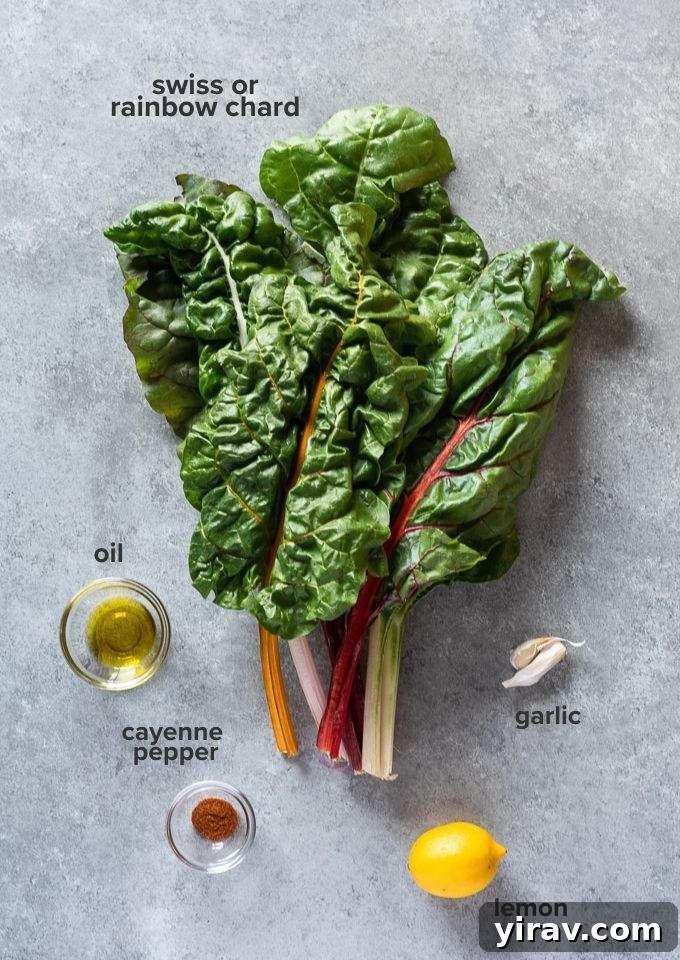
Ingredient Spotlight & Smart Substitutions:
- Swiss Chard: While this recipe beautifully showcases rainbow chard for its vibrant colors and textural contribution from the stems, any variety of Swiss chard will work wonderfully. The key is to include the stems, as they add a pleasant crunch and an extra boost of nutrition that shouldn’t be overlooked.
- Oil: A tablespoon of olive oil or avocado oil is perfect for sautéing, providing a healthy fat base and helping to soften the chard. For an extra layer of flavor, consider using garlic-infused olive oil, especially if you plan to omit fresh garlic.
- Garlic: Freshly minced garlic is a fundamental flavor enhancer in this dish, adding an undeniable depth and aromatic sweetness that complements the chard beautifully. If you need to make this recipe Low FODMAP, simply omit the garlic without sacrificing too much flavor, or use garlic-infused oil.
- Cayenne Pepper: For those who appreciate a touch of heat, a pinch of cayenne pepper truly elevates this dish. It provides a warm undertone without overpowering the natural flavors of the chard. Alternatively, you can substitute it with a dash of red pepper flakes for a similar effect or omit it entirely if you prefer no spice.
- Fresh Lemon Juice: The squeeze of fresh lemon juice at the end is a crucial step. It brightens all the flavors, adds a delightful tang, and provides a crucial acidic balance that cuts through any subtle bitterness from the chard. If fresh lemon isn’t available, a splash of high-quality balsamic vinegar can offer a similar acidic finish.
- Kosher Salt & Freshly Ground Black Pepper: These staple seasonings are essential for bringing out the best in your sautéed chard. Adjust quantities to your personal taste, always tasting as you go.
How to Make Sautéed Swiss Chard: A Simple Guide
Preparing this delightful sautéed Swiss chard is incredibly straightforward. With just a minimal amount of prep work, the entire dish comes together in approximately 10-15 minutes, making it an ideal choice for a quick and nutritious meal.
Pro Tip: To save time on busy days, you can prep the Swiss chard a few days in advance. Simply wash, dry, and chop the leaves and stems, then store them separately in airtight containers in the refrigerator until you’re ready to cook.
Step 1: Preparing Your Swiss Chard for Sautéing
One of the beauties of this recipe is its zero-waste approach; both the vibrant greens and the colorful, crunchy stems are utilized. The stems not only contribute to the dish’s visual appeal but also add a wonderful texture and additional nutrients.
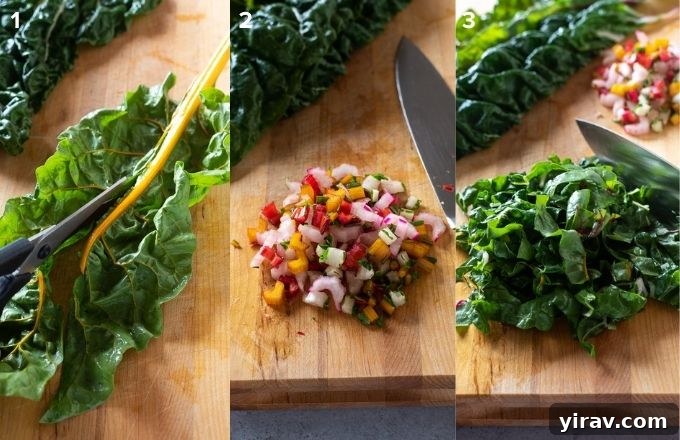
- Wash and Dry the Chard: Begin by thoroughly washing the Swiss chard leaves under cool running water. Gently blot them dry with a clean kitchen towel or use a salad spinner to remove excess moisture. This is important to prevent steaming instead of sautéing.
- Separate Stems from Leaves: Lay one chard leaf upside down on your cutting board. Using a sharp knife or kitchen shears, carefully cut along both sides of the stem, separating the leafy green part from the tougher stem. It’s perfectly fine to leave about 1-2 inches of the stem attached to the top of the leaf, as this part is typically more tender. Repeat this process for all remaining chard leaves.
- Slice the Stems: Gather all the separated chard stems and slice them thinly into small pieces. These will cook slightly longer than the leaves to ensure they become tender.
- Cut the Leaves into Ribbons: Stack the chard leaves on top of each other. Roll them tightly, then cut them crosswise into approximately ½-inch ribbons. This creates a uniform size that cooks evenly and is easy to eat.
Step 2: Sautéing for Perfection
Once your chard is prepped and ready, the cooking process is quick and simple. Have your other ingredients measured out and ready to go.
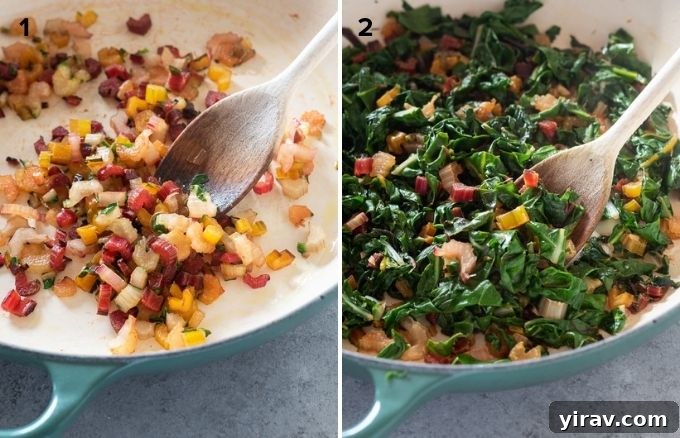
- Sauté the Stems: Heat the oil in a large skillet or Dutch oven over medium heat. Once shimmering, add the thinly sliced chard stems. Cook them for 4-5 minutes, stirring occasionally, until they begin to soften and become slightly tender-crisp.
- Add Aromatics and Spice: Stir in the minced garlic and a pinch of cayenne pepper (if using). Continue to cook for another 30 seconds, just until the garlic becomes fragrant. Be careful not to burn the garlic, as this can turn bitter.
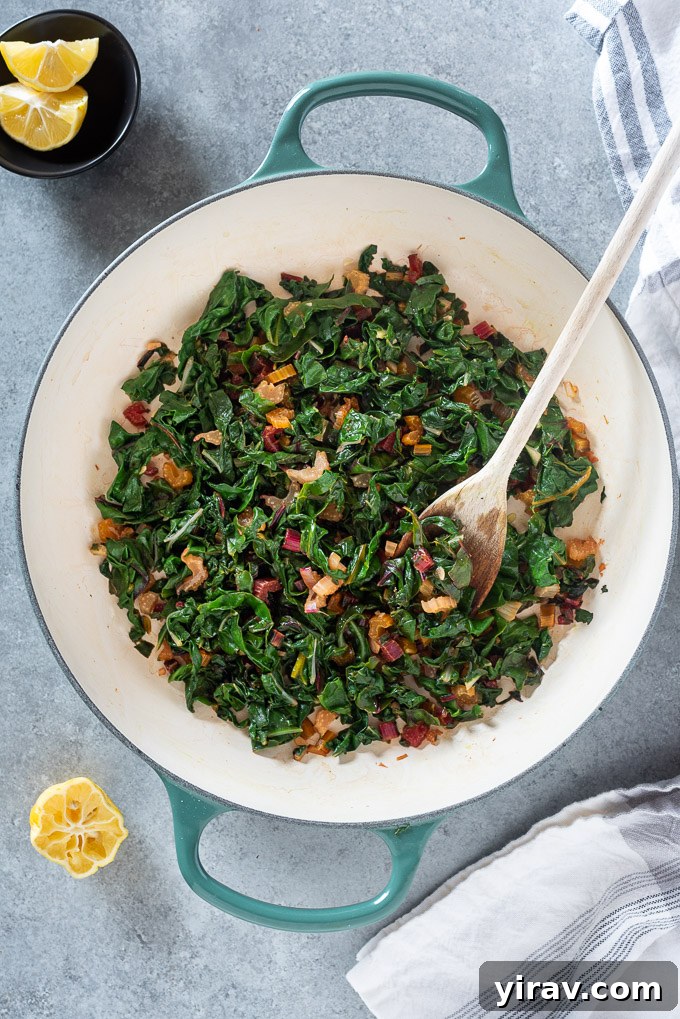
- Cook the Chard Leaves: Add the prepared chard ribbons and 1 tablespoon of water to the pot. Stir everything well to combine, ensuring the leaves are evenly coated. Cover the skillet and cook for 3-4 minutes, or until the chard leaves have significantly wilted and their vibrant green color has intensified.
- Tenderize and Finish: Remove the lid and continue to cook for about 1 minute longer, stirring occasionally, until the chard is nice and tender but still retains a slight bite. Remove the skillet from the heat.
- Season and Serve: Stir in the fresh lemon juice, kosher salt, and freshly ground black pepper. Taste and adjust the seasoning as necessary. Serve your delicious Sautéed Swiss Chard immediately and enjoy its fresh, vibrant flavors!
Your Sautéed Swiss Chard Questions Answered (FAQs)
Swiss chard naturally has a mild, earthy bitterness, but this mellows significantly once it’s cooked. To further reduce bitterness and enhance flavor, pair it with sweet aromatics like sautéed onions or garlic, as done in this recipe. Acids like lemon juice or balsamic vinegar also help balance the flavor. Additionally, rich or salty ingredients such as bacon, white beans, or creamy cheeses (like feta or goat cheese) can beautifully offset any lingering bitterness, making it more palatable.
Absolutely. Like many delicate greens, Swiss chard can easily be overcooked. Overcooked chard will lose its vibrant color, becoming dull and olive-green. Texturally, it will turn limp, mushy, and soggy, losing its appealing bite. The key is to cook it just until it’s tender and wilted, which typically only takes a few minutes, as outlined in this recipe.
Yes, essentially. “Swiss chard” is the general term for this leafy green. “Rainbow chard” is simply a specific type or mixture of Swiss chard varieties that are known for their brightly colored stems, such as red, yellow, orange, or pink. All rainbow chard is Swiss chard, but not all Swiss chard is rainbow chard (some varieties only have white stems).
Rainbow chard offers a nuanced flavor profile that is often described as a delightful cross between spinach and kale, with subtle earthy undertones reminiscent of beets. It’s characteristically sweet, earthy, and mildly bitter when raw. However, cooking it significantly intensifies its sweetness, making it a more mellow and approachable green.
Swiss chard is a nutritional powerhouse! It’s rich in vitamins K, A, and C, crucial for bone health, vision, and immunity. It’s also packed with minerals like magnesium, potassium, and iron, supporting various bodily functions. High in fiber, it aids digestion, and its abundance of antioxidants helps protect against cellular damage. It’s truly a superfood for overall well-being.
To clean, rinse under cold water, paying attention to the stems and undersides of leaves to remove any dirt. Dry thoroughly with a clean towel or salad spinner. For storage, do not wash before refrigerating. Wrap the unwashed chard in a damp paper towel and place it in an open plastic bag in the crisper drawer of your refrigerator. It typically stays fresh for 3-5 days.
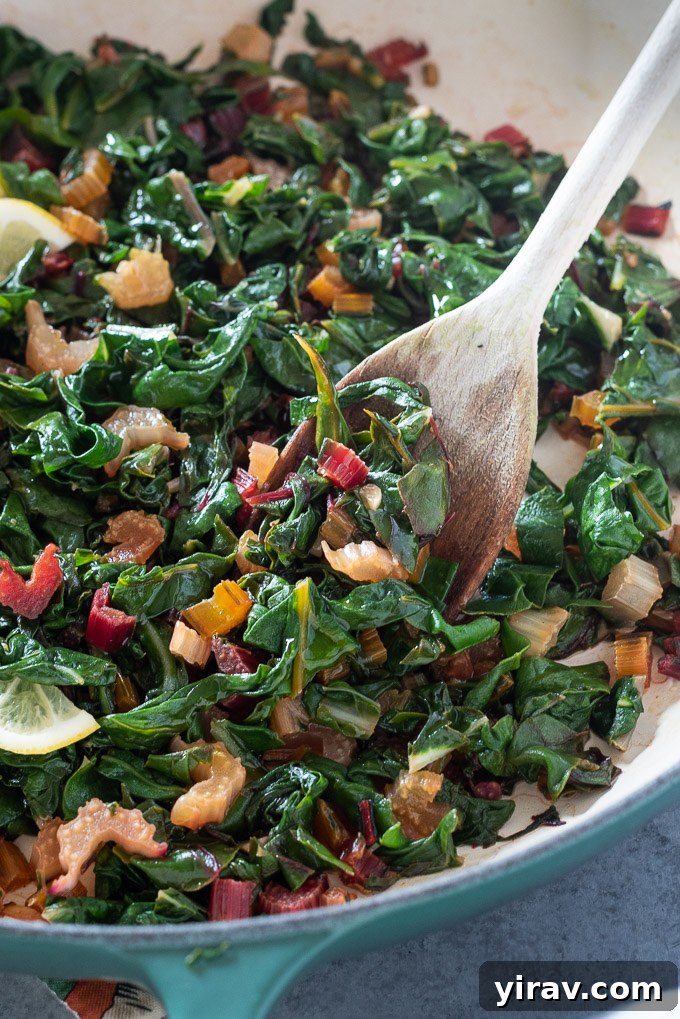
Perfect Pairings: Serving Suggestions for Sautéed Swiss Chard
The versatility of this rainbow Swiss chard dish makes it an incredible companion to a multitude of meals. Its bright, earthy, and slightly spicy notes can elevate almost any plate.
- Breakfast Power-Up: For a nutrient-dense start to your day, serve this chard alongside savory breakfast options such as bacon egg cups or a fluffy ham and asparagus frittata. It adds a fresh, low-carb vegetable component that feels both indulgent and healthy.
- Enhanced Side Dish: While fantastic on its own, you can customize this side dish by combining it with other vegetables. Sauté it with sliced onions, mushrooms, bell peppers, or even cherry tomatoes for an even more complex and flavorful vegetable medley.
- Grain Bowl Staple: Transform it into a satisfying and complete meal by stirring the sautéed chard into cooked grains like farro, quinoa, brown rice, or couscous. Add some roasted chickpeas, a drizzle of tahini dressing, and perhaps some toasted nuts for a wholesome and hearty grain bowl.
- Any Main Dish Companion: This simple chard side effortlessly complements a wide range of proteins. Serve it with juicy spatchcock chicken, a perfectly seared pan-seared steak, baked salmon, or any other main course you can imagine. Its fresh taste acts as a palate cleanser and a vibrant contrast.
- Pasta or Risotto Boost: Stir the cooked chard into your favorite pasta dish or creamy risotto during the last few minutes of cooking. It adds color, texture, and a healthy dose of greens to carb-heavy meals.
Chef’s Corner: Expert Tips & Recipe Notes for Success
Mastering this simple Sautéed Swiss Chard recipe is easy with a few key insights and creative variations:
- Yield and Shrinkage: Keep in mind that one standard bunch of Swiss or rainbow chard typically yields about 4 cups of raw, chopped greens. During cooking, this quantity will significantly reduce, yielding approximately 2 cups of deliciously sautéed chard. Don’t be alarmed by the initial volume!
- Storage and Reheating: Leftover Sautéed Swiss Chard stores beautifully. Simply place it in an airtight container and refrigerate for up to 3 days. To reheat, gently warm it in a skillet over medium-low heat or in the microwave until just heated through. Avoid overcooking during reheating to maintain its tender texture.
- Low FODMAP Option: If you are following a Low FODMAP diet, you can easily adapt this recipe by omitting the fresh garlic. The lemon and cayenne will still provide ample flavor, or you can use a garlic-infused olive oil, as the FODMAPs in garlic are oil-soluble.
- Recipe Variations to Explore:
- Aromatic Additions: For deeper flavor, consider adding finely chopped onion, shallots, or leeks to the skillet along with the chard stems. Sauté them until softened before proceeding with the garlic and chard.
- Acidic Alternatives: If you don’t have fresh lemon on hand, finishing the dish with a splash of good quality balsamic vinegar can provide a lovely tangy counterpoint. Red wine vinegar is another excellent option.
- Creaminess and Richness: Elevate the dish by topping it with a sprinkle of freshly grated Parmesan cheese, crumbled feta, or a dollop of soft goat cheese just before serving. The creamy, salty notes perfectly complement the chard.
- Crunchy Texture: Add a delightful textural contrast and nutty flavor by sprinkling toasted pine nuts, chopped walnuts, or slivered almonds over the finished dish.
- Herbal Freshness: Fresh herbs like thyme, oregano, or a touch of rosemary can be added with the garlic for an extra layer of complexity. Fresh parsley or dill makes a wonderful garnish.
- Seasoning to Taste: Always taste your chard before serving and adjust the salt and pepper as needed. The bitterness of chard can vary, so a little extra seasoning or a final squeeze of lemon can make a big difference.
More Delicious Vegetable Side Dishes You’ll Love:
If you enjoy this simple and healthy vegetable preparation, you might also like these other fantastic side dishes:
- Crispy Air Fryer Brussels Sprouts
- Sweet and Savory Glazed Carrots
- Easy Grilled Vegetables Medley
- Hearty Roasted Carrots and Parsnips
- Flavorful Roasted Cauliflower with Garlic and Shallots
- Rustic Roasted Root Vegetables
- Simple Sautéed Cabbage
Did you try this recipe? If so, be sure to leave a review below and tag me @flavorthemoments on Facebook and Instagram!
Sautéed Swiss Chard
4 servings
5 mins
10 mins
15 mins
Pin Recipe
Leave a Review »
Equipment
-
Lodge 12″ Cast Iron Skillet
Ingredients
- 1 bunch swiss or rainbow chard
- 1 tablespoon oil
- 2 cloves garlic minced
- 1 pinch cayenne pepper sub with red pepper flakes or omit
- 1 tablespoon fresh lemon juice
- 1/4 teaspoon kosher salt
- 1/8 teaspoon freshly ground black pepper
Instructions
Prep the Swiss chard:
-
Wash the Swiss chard and blot dry. Place one of the chard leaves upside down and cut alongside both sides of the stem with a knife or kitchen shears (it’s ok to leave 1-2″ at the top as the top of the stem is much more tender). Repeat with the remaining leaves.
-
Slice the stems thinly and place in a bowl, then stack the chard leaves and cut into 1/2″ ribbons.
Sauté the Swiss chard:
-
Heat the oil in a large skillet over medium heat. Add the stems and cook for 4-5 minutes until softened. Add the garlic and pinch of cayenne pepper and cook for 30 seconds longer.
-
Add the chard ribbons and 1 tablespoon of water to the pot and stir well. Cover and cook for 3-4 minutes or until the chard has wilted. Remove the lid and cook until the chard is nice and tender, about 1 minute longer.
-
Remove from heat and add the lemon juice, salt and pepper, and stir well to combine. Adjust the seasoning as necessary, serve and enjoy!
Notes
- One bunch of Swiss or rainbow chard will yield about 4 cups of raw greens, which will cook down to about 2 cups.
- Sautéed Swiss chard will keep for up to 3 days in the refrigerator.
- Omit the garlic to make this recipe Low FODMAP.
- Recipe variations: add chopped onion, shallot or leeks to the skillet with the stems, or finish with balsamic vinegar instead of lemon juice. Top with parmesan, feta or goat cheese for flavor and creaminess, and pine nuts, walnut or almonds add a nice crunchy texture!
Nutrition
Nutrition is estimated using a food database and is only intended to be used as a guideline for informational purposes.
Did you try this recipe?
Be sure to tag @flavorthemoments with the hashtag #flavorthemoments on Instagram so I can see what you made!