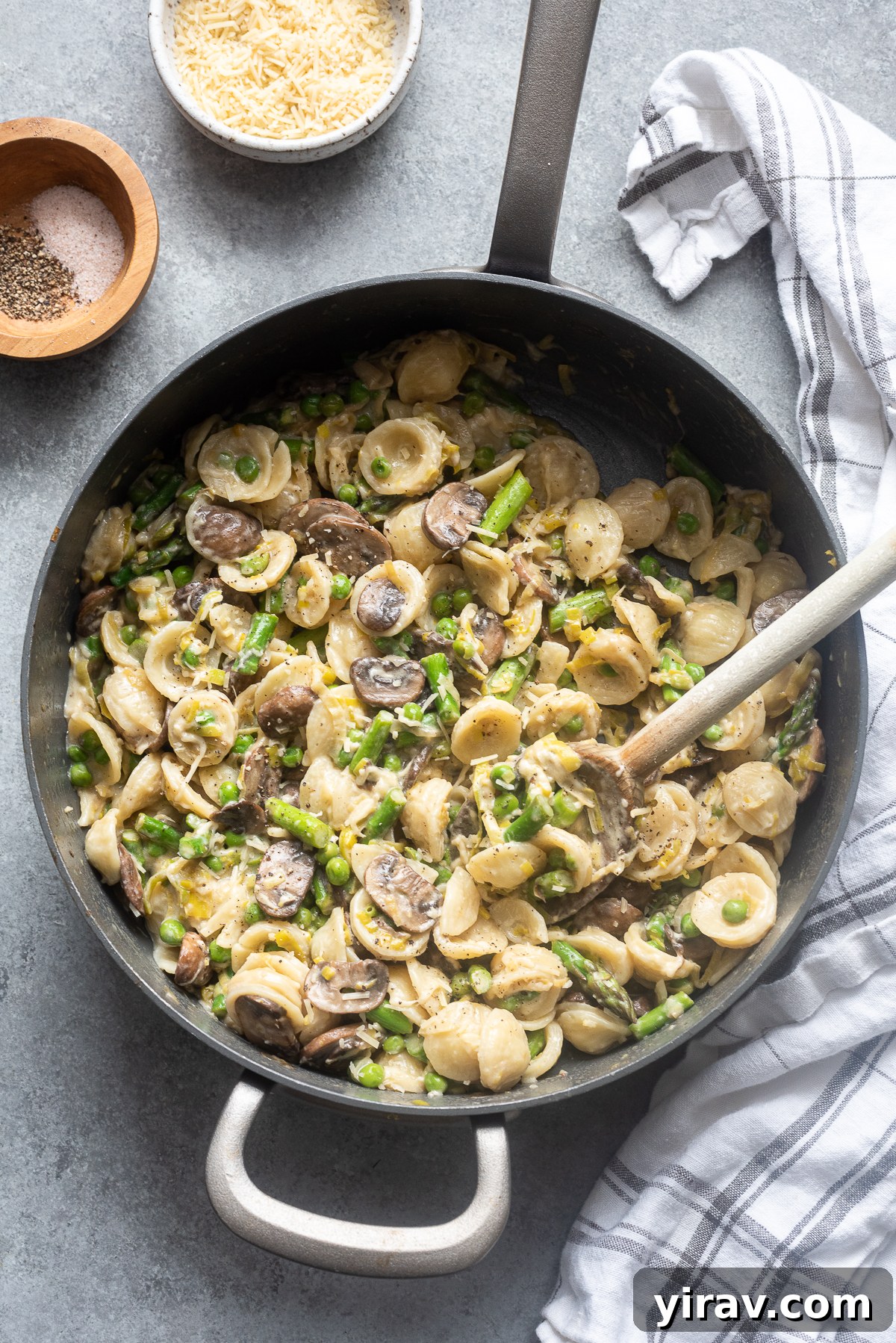
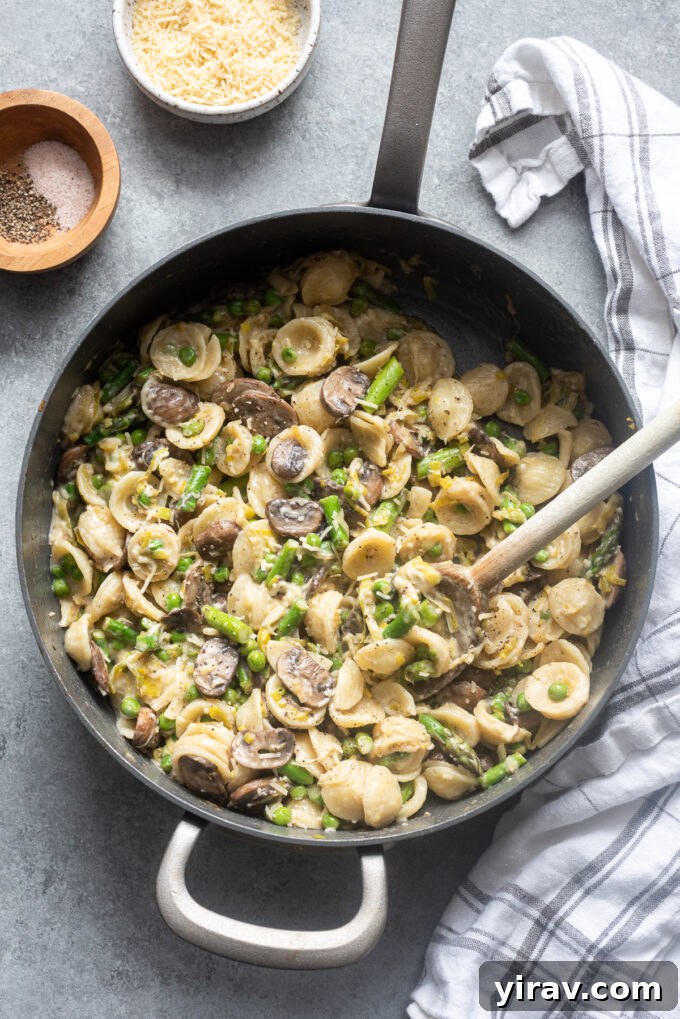
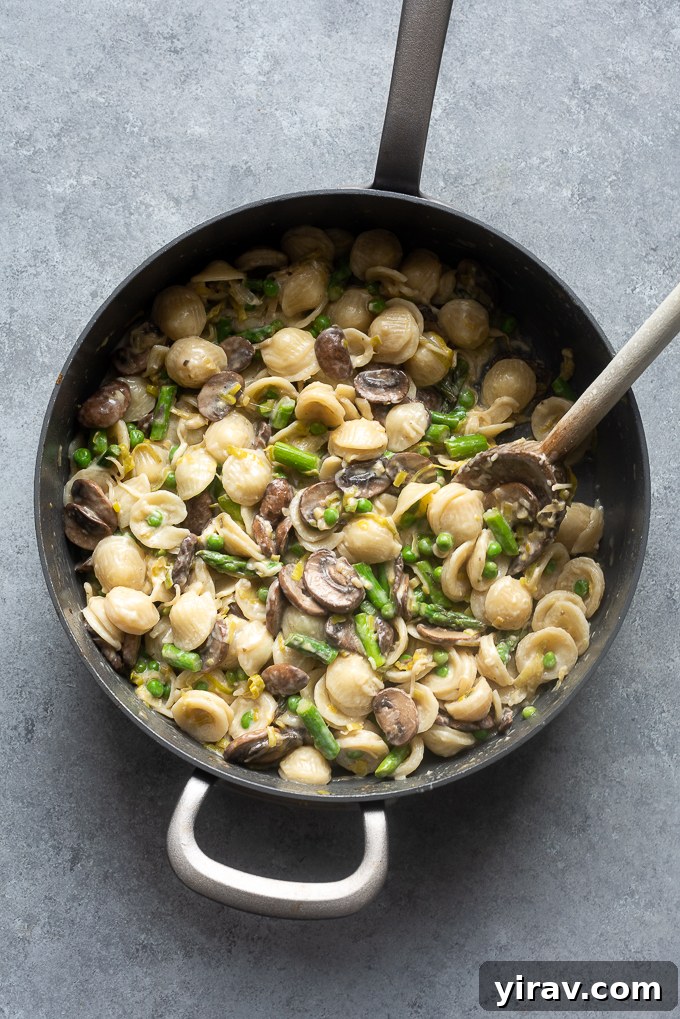
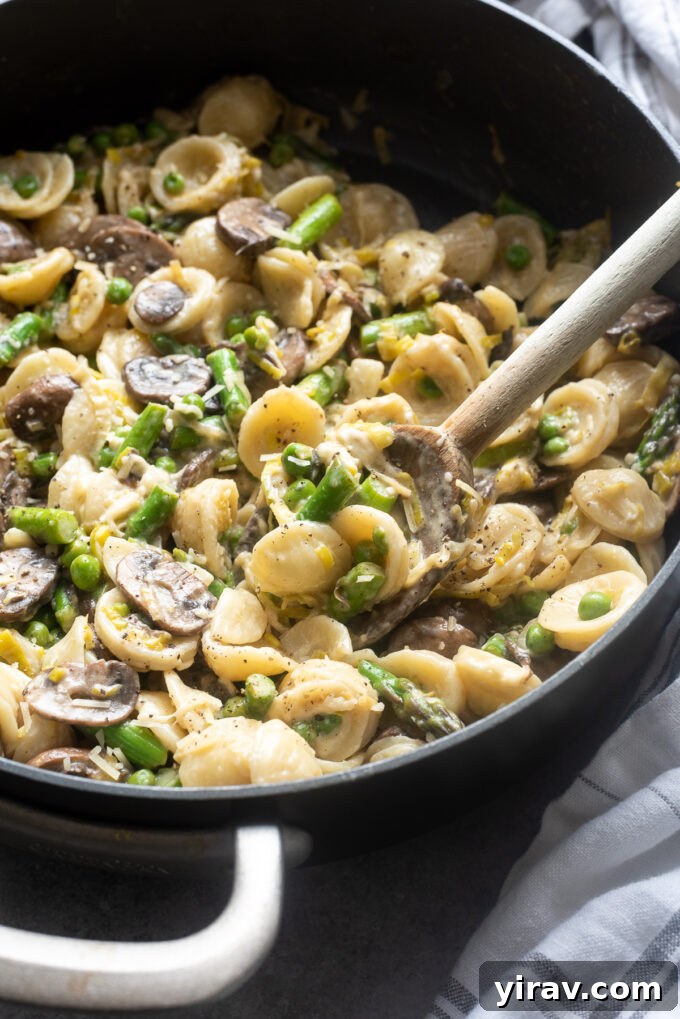
Life doesn’t get much simpler, or more delicious, than a one-pot pasta meal. And this One Pot Spring Pasta Primavera is the ultimate testament to that truth! Imagine tender orecchiette pasta, generously loaded with the vibrant colors and fresh flavors of spring vegetables, all luxuriating in a bright, zesty lemony parmesan cream sauce. It’s not just a dish; it’s an effortless vegetarian dinner solution that promises gourmet taste in just 30 minutes, with minimal fuss and even less cleanup.
When my oldest son was a baby, and I had just transitioned into the rewarding, albeit sometimes overwhelming, role of a stay-at-home mom, Food Network was hitting its peak. Rachel Ray’s 30 Minute Meals show was an absolute favorite. I’d watch in awe as she whipped up seemingly complex dishes in record time, often wondering if I could ever achieve such culinary speed.
While I’ve certainly become more efficient in the kitchen over the years, one thing hasn’t changed: my profound dislike for doing dishes. I recall Rachel Ray’s whirlwind cooking often leaving behind a towering stack of dirty pots and pans. It always seemed like it would take an entire cleanup crew another 30 minutes just to tackle the aftermath!
Since I don’t have a personal cleanup crew on standby, I’ve become an enthusiastic advocate for meals that magically come together in a single pot. This approach to cooking isn’t just about reducing dishes; it’s a lifestyle choice that prioritizes flavor, convenience, and precious time.
This Creamy Pasta Primavera perfectly embodies that philosophy. It features delightful orecchiette pasta, a colorful medley of fresh spring vegetables, and a luscious lemon parmesan sauce that elevates it to the ideal spring dinner. Beyond the sheer convenience of not having to boil and drain pasta in a separate pot, there are tangible culinary benefits to cooking all ingredients together.
You’ve likely encountered recipes that instruct you to reserve a portion of the starchy pasta water to thicken and emulsify sauces once the pasta has been drained. This culinary secret is the very essence of one-pot pasta recipes. As the pasta cooks directly in the sauce with the other ingredients, it steadily releases its starches directly into the liquid. This natural release acts as a built-in thickener, creating a beautifully silky, cohesive sauce without the need for additional flour or cornstarch.
This inherent creaminess is precisely what lends such rich texture to many of my other one-pot creations, such as my One Pot Thai Peanut Veggie Pasta and One Pot Italian Sausage Farfalle Pasta, often achieving a luxurious feel without any added cream at all.
However, this particular spring vegetable pasta, honoring the tradition of classic pasta primavera, includes a touch of heavy cream. This addition takes the dish completely over the top, transforming it into an indulgent yet surprisingly easy meal. It’s a truly delicious and comforting spring dinner that the entire family will undoubtedly adore!
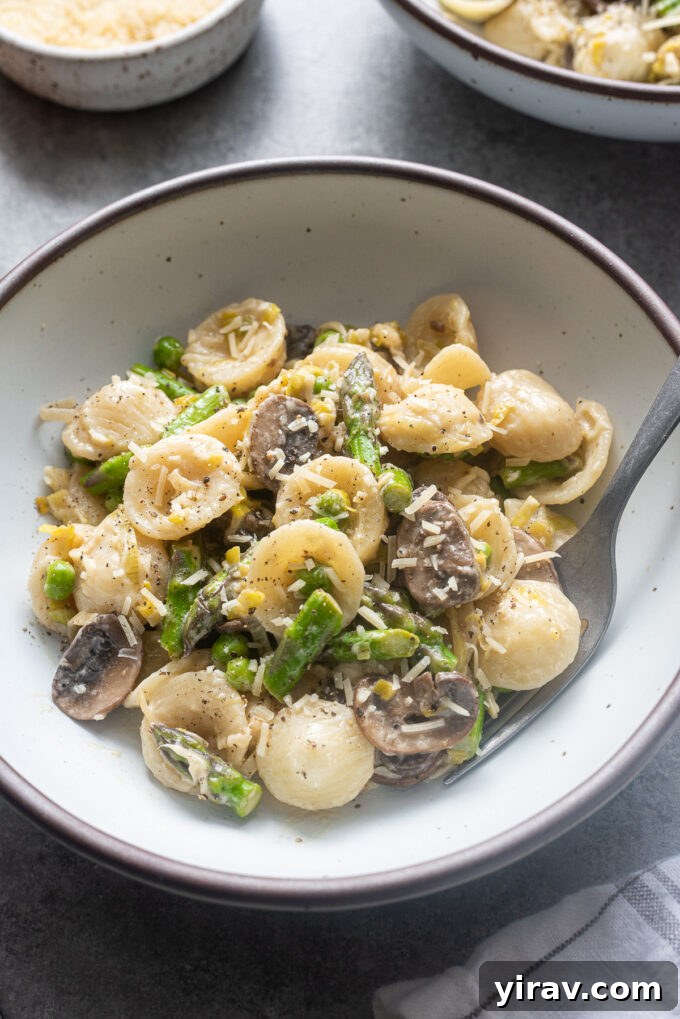
Discover the ultimate in kitchen convenience and vibrant flavors with this exceptional One Pot Spring Pasta Primavera. It’s designed to bring joy to your table and ease to your busy weeknights. Below, you’ll find everything you need to know about this fantastic recipe, from its delightful benefits to detailed cooking instructions and helpful tips.
Why You’ll Love This Recipe:
- This incredibly fresh and flavorful spring vegetable pasta is brimming with seasonal vegetables, brightened by the zest of lemon, and enveloped in a rich, creamy lemon parmesan sauce that’s simply irresistible.
- It demands minimal prep time and is astonishingly quick to prepare, reaching your table in just 30 minutes. This makes it an absolutely perfect choice for hectic weeknights when you crave something wholesome and homemade but are short on time.
- The magic of this dish lies in its one-pot preparation: everything cooks together in a single skillet, which not only infuses maximum flavor into every bite but also ensures remarkably easy cleanup. Say goodbye to separate pots for boiling and draining pasta!
- It’s wonderfully versatile and can be effortlessly customized with your preferred seasonal vegetables or whatever you happen to have on hand in your fridge. You can also easily boost its protein content by adding your favorite source, making it a complete meal tailored to your needs.
- The creamy, starchy sauce developed during the one-pot cooking process is velvety smooth, providing a restaurant-quality texture that will impress without any advanced culinary skills.
Recipe Ingredients
This vibrant vegetable pasta primavera is generously packed with the best of spring’s bounty. The beauty of this dish is its flexibility, allowing you to easily customize the vegetables based on what’s freshest in season or what you already have in your kitchen.
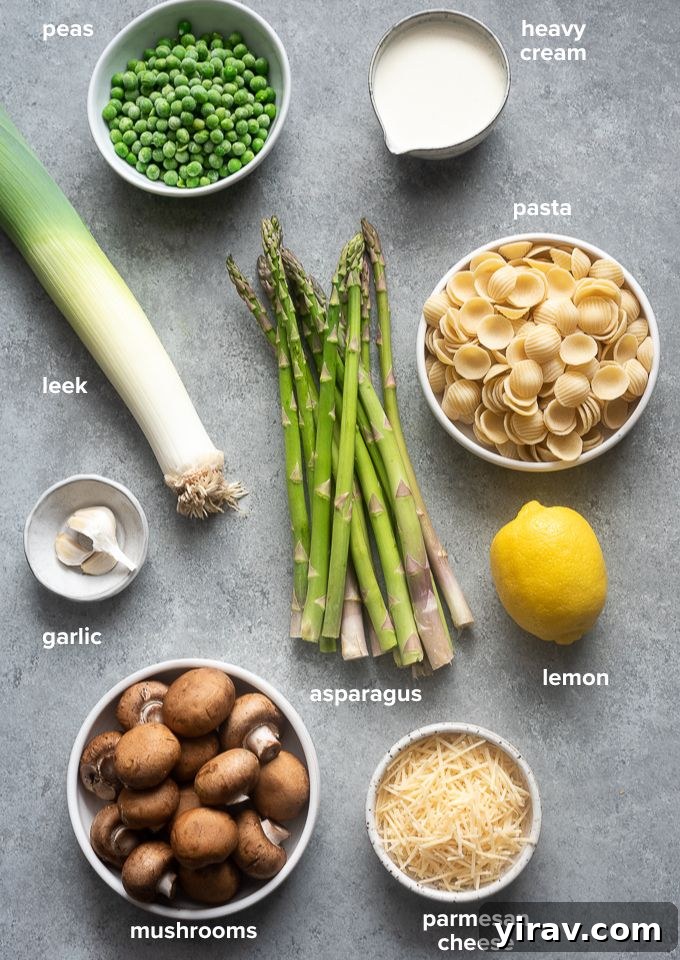
- Pasta: Orecchiette pasta, which translates charmingly to “little ears” in Italian, is my top choice for this dish due to its perfect size and ability to cup the sauce beautifully. However, any short, sturdy pasta shape will work wonderfully in this creamy pasta primavera. Excellent alternatives include rotini, penne, elbow macaroni, bow tie (farfalle) pasta, and even small shells. For an added nutritional boost and fiber, consider using whole wheat versions of these pastas.
- Asparagus: A true herald of spring, asparagus adds a delicate crispness and earthy flavor. Remember to snap or cut off the tough, woody ends before chopping them into bite-sized pieces.
- Leeks: If you’re new to cooking with leeks, you’re in for a treat. They offer a wonderfully mild, sweet onion flavor that’s more subtle than a traditional onion, lending a gourmet touch to any dish. Ensure you clean them thoroughly to remove any grit trapped between their layers.
- Garlic: An absolute essential in Italian-inspired cooking, minced garlic provides a foundational layer of savory, aromatic flavor that truly enriches the entire dish. Don’t skip it!
- Mushrooms: Sliced mushrooms, such as baby bella (cremini), white button, or your favorite variety, contribute a delightful “meaty” texture and umami depth. If mushrooms aren’t your preference, feel free to omit them entirely.
- Peas: Sweet and tender peas are another classic spring vegetable. Both fresh or thawed frozen peas work perfectly here, adding a pop of color and natural sweetness.
- Heavy Cream: This is where the luxurious creaminess comes from. Heavy cream is a must for achieving that rich, decadent texture characteristic of classic pasta primavera recipes, truly taking this dish to the next level of indulgence.
- Lemon: Fresh lemon is crucial for balancing the richness of the cream sauce. Both the zest and the juice are used to provide a bright, tangy lift that accentuates all the other ingredients and keeps the dish feeling fresh and vibrant.
- Parmesan Cheese: Freshly grated Parmesan cheese is indispensable for adding savory depth and a salty tang that beautifully complements the lemon and cream. It melts into the sauce, boosting its flavor and adding to its overall richness.
- Fresh Basil: While not shown in all images, a generous amount of fresh chopped basil is highly recommended. It adds a wonderfully aromatic, peppery, and sweet herbaceous note that perfectly rounds out the flavors of spring. If fresh basil isn’t available, a teaspoon of dried basil or your other favorite Italian herbs can be added when you incorporate the cream.
How to Make This Recipe
This vegetarian one-pot pasta is designed for maximum flavor with minimum effort. It comes together quickly, requiring just about 10 minutes of active prep time and approximately 20 minutes to cook. The best part? Cleanup is an absolute breeze!
Pro tip: To make this meal come together even faster on a busy weeknight, take a few minutes to prep all your vegetables in advance. Chop the asparagus, slice the leeks and mushrooms, and mince the garlic earlier in the day or even the night before.
Recipe FAQs
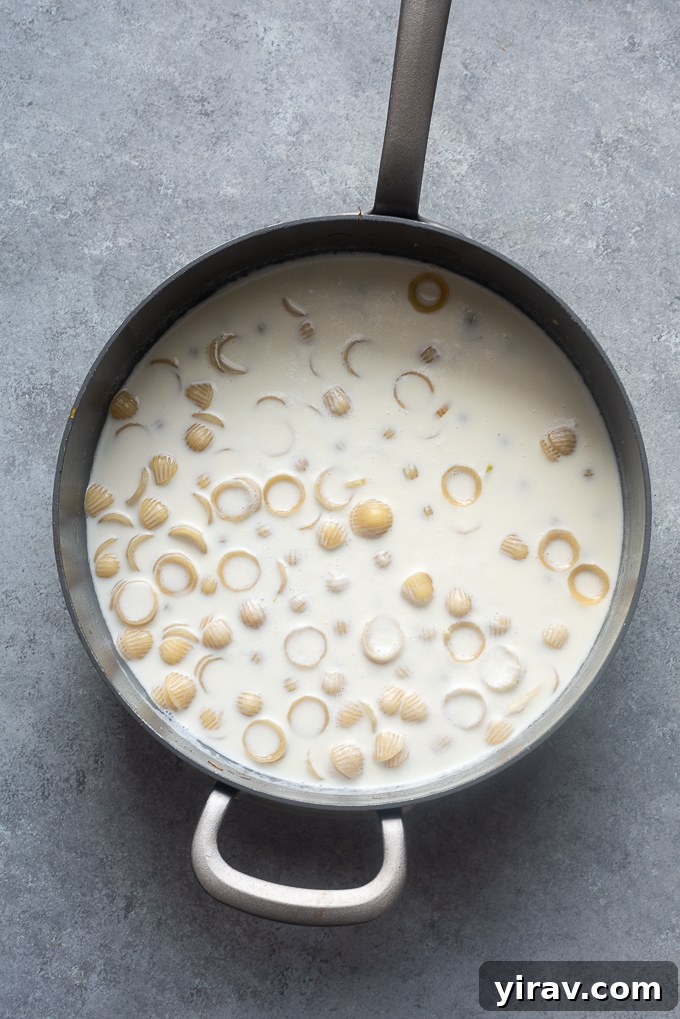
Absolutely! While orecchiette is fantastic for capturing the creamy sauce, this recipe is quite forgiving. Any short-cut pasta variety will work beautifully. I’ve used orecchiette here, and while I adore it, it can sometimes be prone to sticking together in little stacks as it cooks. To ensure even cooking, it’s really important to stir frequently and try to separate the pasta pieces. Great alternative options for this dish include rotini, penne, elbows, small shells, or even bow tie pasta. Choose one that you love and that holds up well to a creamy sauce.
This recipe is incredibly versatile when it comes to vegetables! You can easily use any type of vegetables you have on hand or that are currently in season. Small broccoli florets, zucchini, yellow squash, diced bell peppers, halved cherry tomatoes, grated carrot, and fresh spinach are all excellent options. Just keep in mind that softer vegetables, like spinach or cherry tomatoes, should be added towards the very end of the cooking time to prevent them from becoming overcooked and mushy, ensuring they retain their fresh texture and vibrant color.
Yes, you can certainly adapt this recipe to be dairy-free. The heavy cream can be replaced with an equal amount of full-fat or light coconut milk for a creamy alternative. If using coconut milk, ensure you omit the Parmesan cheese entirely. Alternatively, you may choose to omit the cream altogether and simply add extra vegetable stock or water to achieve the desired consistency, making it a lighter, broth-based pasta primavera.
Leftover One Pot Spring Pasta Primavera makes for a delightful meal the next day! It will keep well in the fridge for up to 3 days when stored in an airtight container. When reheating, you might want to add a splash of vegetable stock or water to loosen the sauce, as it can thicken quite a bit upon cooling.
This pasta is fantastic as a vegetarian main, but it’s also incredibly adaptable for adding protein. Cooked chicken breast (shredded or diced), air-fried shrimp, crumbled Italian sausage, or even plant-based options like white beans or chickpeas can be stirred in at the very end of cooking to create a more substantial meal.
Serving Suggestions
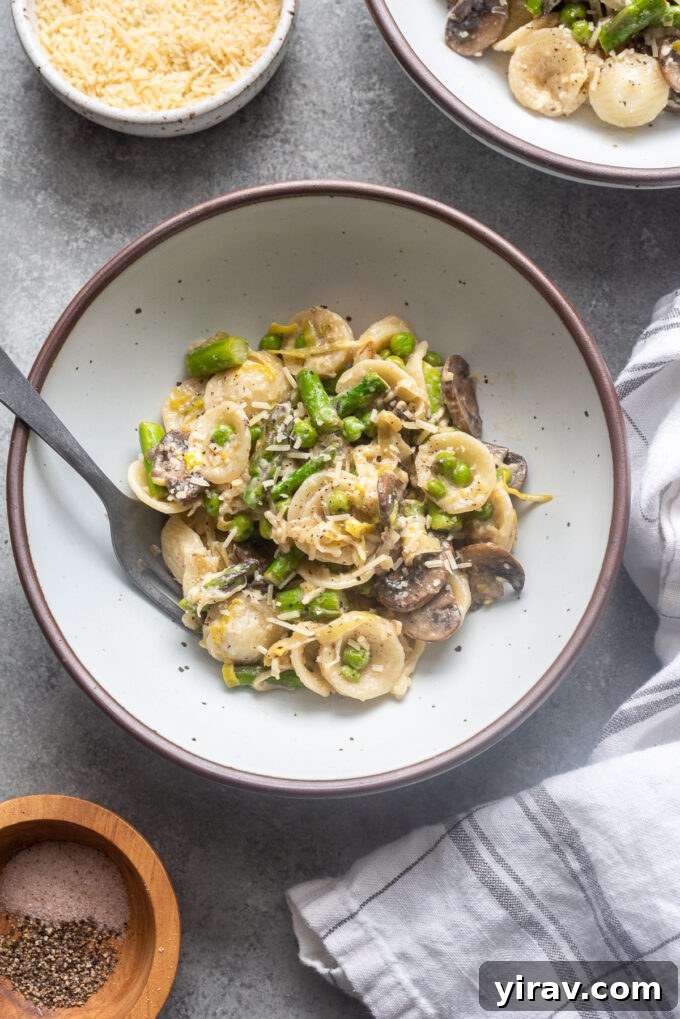
This creamy vegetable pasta primavera is a satisfying and complete meal on its own, perfect for a vegetarian dinner. However, if you’re looking to round out your meal or add some delightful accompaniments, here are even more delicious ideas to explore:
- A fresh side salad is always a fantastic pairing. Consider a crisp Italian tricolore salad with its peppery arugula, radicchio, and endive, or a refreshing berry arugula salad with goat cheese for a sweet and tangy contrast.
- Serve this pasta with a side of warm, crusty bread to soak up every last drop of the exquisite sauce. A homemade one-hour rosemary focaccia bread or classic garlic bread would be an ideal choice.
- To boost the protein content and make it an even heartier meal, you can easily add cooked chicken directly to the creamy pasta primavera. Alternatively, serve it alongside perfectly cooked air fryer chicken breast or succulent air fryer shrimp. For a plant-based protein addition, stir in a can of drained and rinsed cannellini beans or chickpeas during the last few minutes of cooking.
- Feel free to customize the spring vegetables I’ve used with other seasonal favorites or whatever your family enjoys most. Broccoli florets, tender zucchini, yellow squash, colorful bell peppers, finely grated carrots, or a handful of baby spinach are all excellent and delicious options that integrate seamlessly into this one-pot wonder.
Recipe Notes
- Pro Tip for Efficiency: To ensure this meal comes together even faster, save time by prepping all your vegetables in advance. Chop your asparagus, slice your leeks and mushrooms, and mince your garlic ahead of time. This will make assembly a breeze when dinner time rolls around.
- Liquid Adjustment: The amount of liquid required for the pasta can vary based on several factors, including the type of pasta, the exact dimensions of your skillet, and how quickly liquid evaporates. You may find that you need to add an additional ½ cup or more of vegetable stock or water as the pasta cooks. Simply monitor the dish, and if the liquid has almost entirely evaporated but the pasta isn’t quite tender, add more liquid, a quarter cup at a time, until the pasta reaches perfect al dente doneness.
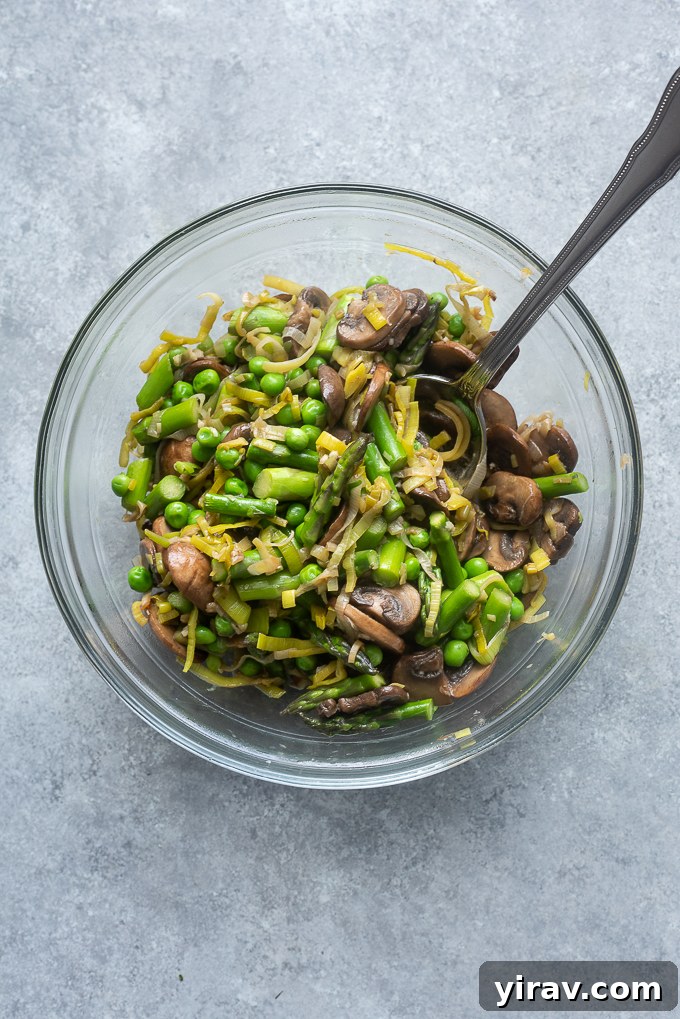
- Preventing Overcooked Vegetables: To ensure your delicate spring vegetables like asparagus and peas retain their crisp-tender texture and vibrant green color, I recommend removing them from the pot after their initial sauté, before adding the liquid and pasta. Reintroduce them to the pot only during the last 30 seconds to 1 minute of the pasta’s cooking time, just long enough to warm them through without overcooking. This simple step makes a big difference!
- Customization is Key: Don’t hesitate to swap out the specific pasta and vegetables I’ve used for your personal favorites or whatever you have on hand. This recipe is wonderfully flexible. For an extra protein boost, consider stirring in some white beans, cooked chicken, or shrimp.
- Storage: Leftover One Pot Spring Pasta Primavera is excellent for meal prep! Store any remaining pasta in an airtight container in the refrigerator for up to 3 days. When reheating, a splash of water or stock can help revive the sauce and pasta texture.
More One Pot Pasta Recipes You’ll Love
- One Pot Stovetop Mac and Cheese
- One Pot Chicken Pesto Pasta
- One Pot Creamy Sausage Red Pepper Pasta
- Skillet Lasagna
Did you try this recipe? If so, be sure to leave a review below and tag me @flavorthemoments on Facebook and Instagram!
One Pot Spring Pasta Primavera
Leave a Review »
Ingredients
- 2 tablespoons extra virgin olive oil
- 8 ounces mushrooms stems removed and sliced
- 8 ounces asparagus tough stems removed, cut into 1″ pieces on the bias
- 1 leek white and light green parts only, sliced into half moons
- 1 cup fresh or frozen peas thawed if frozen
- 3 cloves garlic minced
- 2.5 cups low sodium vegetable stock sub with water; see note 2
- 8 ounces uncooked short cut pasta I used orecchiette; see note 3 for more options
- 3/4 cup heavy cream
- 1 lemon zested and juiced
- 1/2 cup freshly grated parmesan cheese
- 1/3 cup chopped fresh basil sub with 1 teaspoon dried basil (dried herbs should be added in step 3 with the cream)
- salt and pepper to taste
Instructions
-
Heat a large skillet with 1 tablespoon of olive oil over medium heat. Add the sliced mushrooms and pinch of salt and sauté until browned and somewhat softened, about 5 minutes.2 tablespoons extra virgin olive oil, 8 ounces mushrooms
-
Add the remaining tablespoon of oil to the pan, and add the asparagus and leek. Cook for 2-3 minutes until the asparagus is crisp tender, then add the peas and garlic and cook 30 seconds longer. Place the cooked vegetables in a bowl and set aside.8 ounces asparagus, 1 leek, 1 cup fresh or frozen peas, 3 cloves garlic
-
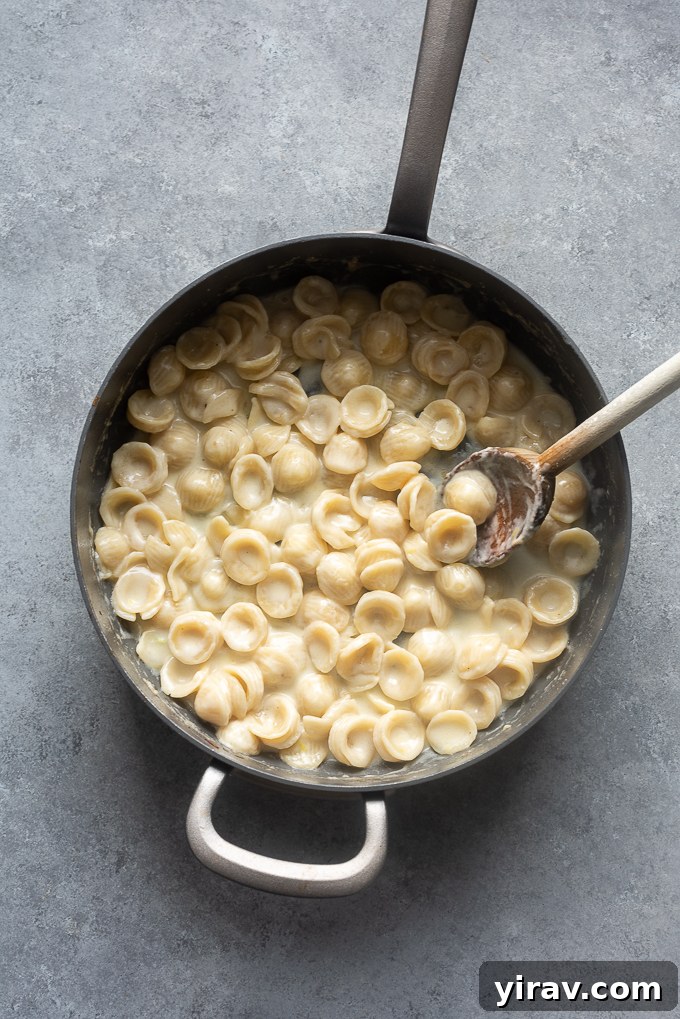
Add the stock or water to the pot and scrape any bits from the bottom of the pan. Add the pasta and stir. Bring to a boil, then add the cream. Reduce the heat to medium low and cook at a high simmer until the pasta is tender, about 10-12 minutes depending on the type of pasta used. If the liquid has evaporated and the pasta is not done yet, add up to a 1/2 cup more liquid and continue cooking. Add the vegetables back to pot during the last 30 seconds of cooking to warm them through.2.5 cups low sodium vegetable stock, 8 ounces uncooked short cut pasta, 3/4 cup heavy cream
-
When the pasta is done, remove from heat and stir in the lemon zest, juice, parmesan cheese and fresh basil. Taste and add salt and pepper, to taste. Serve with additional parmesan cheese as desired and enjoy!1 lemon, 1/2 cup freshly grated parmesan cheese, 1/3 cup chopped fresh basil, salt and pepper
Notes
- Pro tip: Prep the veggies beforehand to make this meal go even more quickly!
- You may need an additional 1/2 cup or more liquid depending on how quickly the liquid evaporates while the pasta is cooking. Simply add additional liquid as needed and continue cooking until the pasta is tender.
- I separated the veggies from the dish until the end of cooking time to prevent them from being overcooked. They retain their green color this way as well!
- You can swap out the pasta and veggies I’ve used for your favorite. For a protein boost, add white beans or your favorite protein source.
- Leftover one pot pasta primavera will keep in an air tight container in the fridge for 3 days.
Nutrition
Nutrition is estimated using a food database and is only intended to be used as a guideline for informational purposes.