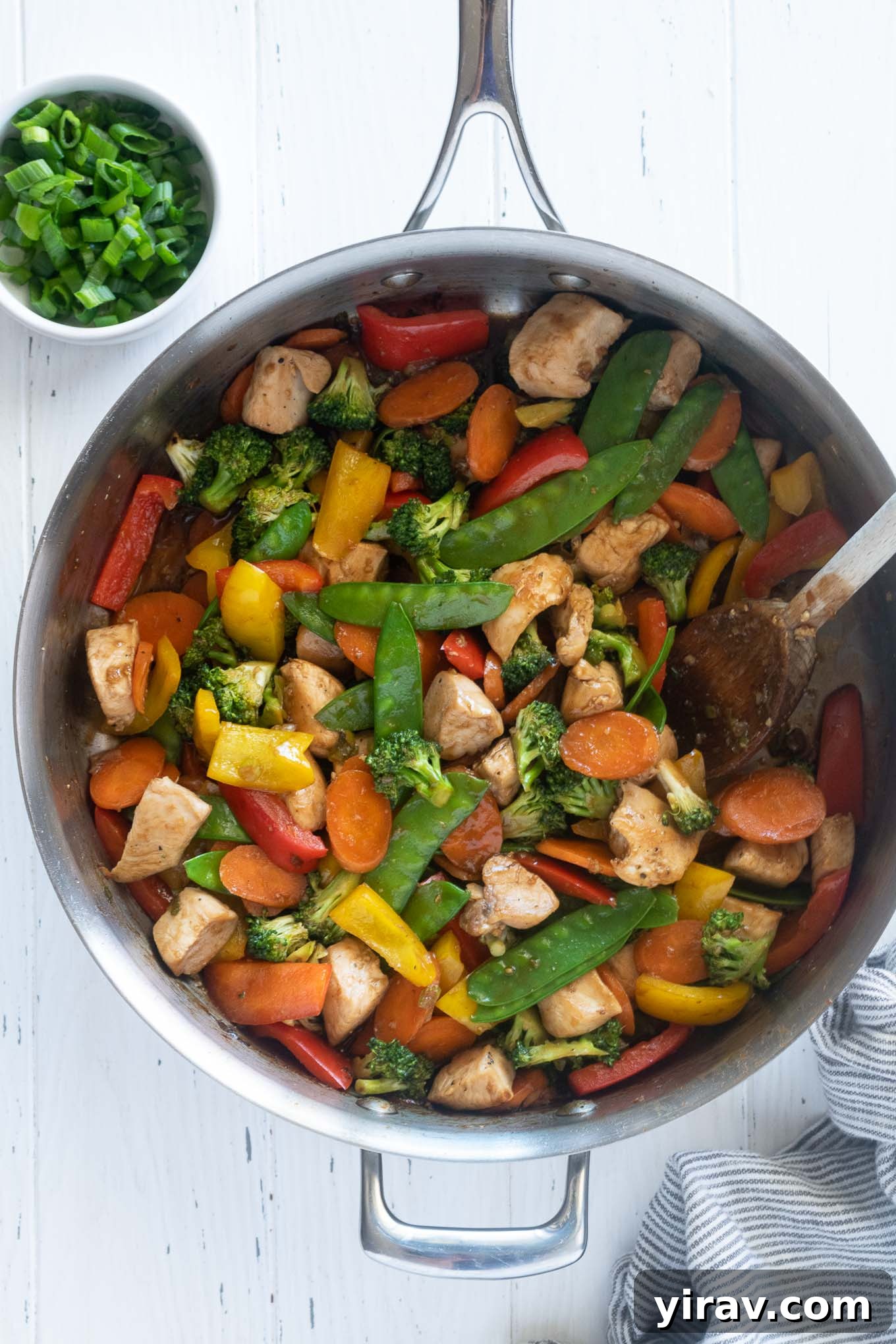
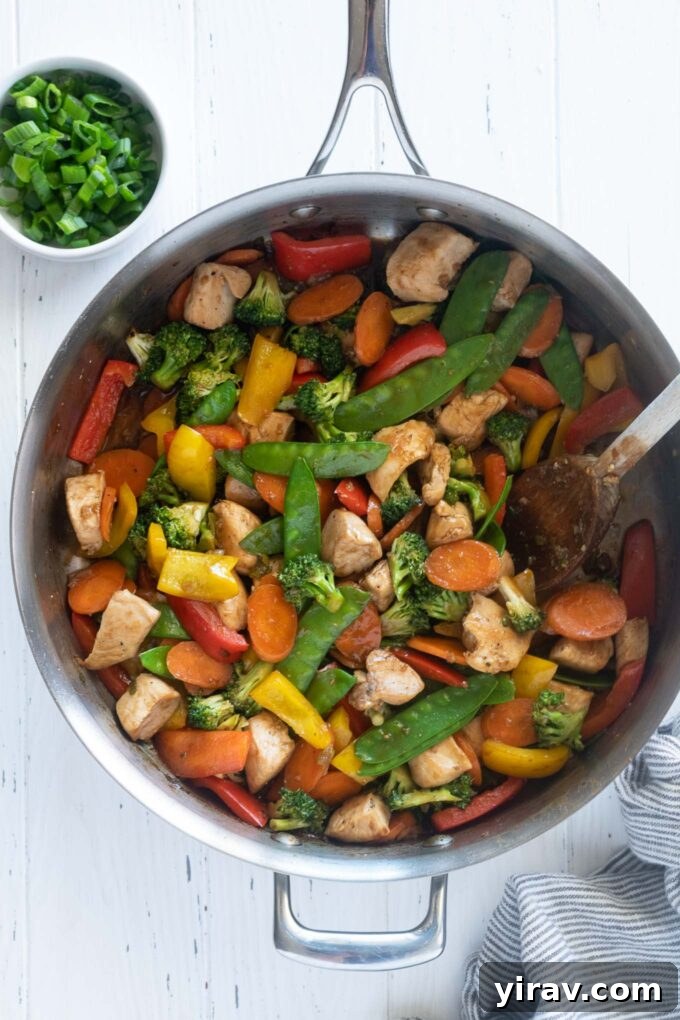
Tired of expensive and often unhealthy takeout? It’s time to create culinary magic in your own kitchen with this incredible Chicken Vegetable Stir Fry! This recipe is a vibrant symphony of flavors and textures, featuring succulent, tender chicken breast paired with a colorful array of fresh, crisp-tender vegetables, all coated in an effortlessly easy and utterly delicious homemade stir fry sauce. What makes it even better? It’s incredibly versatile, allowing you to customize it with your favorite proteins and seasonal vegetables, and the best part is, it goes from pan to plate in just about 30 minutes. Say goodbye to greasy takeout and embrace a healthier, fresher, and more satisfying meal that’s perfect for any weeknight!
Why Homemade Stir Fry is Always the Best Choice
There’s nothing quite like the convenience of takeout, but what if you could whip up a meal that’s not only faster but also significantly healthier and more delicious right in your own kitchen? This Chicken Vegetable Stir Fry recipe is a quick and easy dinner that comes together in less time than it takes for delivery to arrive. While I appreciate a good takeout meal now and then, I find immense satisfaction in recreating takeout-inspired recipes at home. Dishes like Honey Pineapple Teriyaki Chicken and Ground Pork Ramen are fantastic, but preparing them myself allows me to take full control over the ingredients.
One of the biggest advantages of cooking at home is the ability to steer clear of unwanted additives. I make a conscious effort to avoid refined oils, minimize processed sugars, and prioritize sustainable, seasonal ingredients whenever possible. This commitment to quality ingredients not only enhances the flavor of the dish but also contributes to a healthier, more nourishing meal for my family and me. You know exactly what’s going into your body, making this a superior choice to most restaurant options.
The true beauty of stir fries lies in their incredible versatility. They are a blank canvas for customization, allowing you to incorporate whatever type of vegetables are in season, or simply utilize what you already have on hand in your fridge. This flexibility means you can enjoy a fresh, exciting meal every time, adapting it to your preferences or current dietary needs. Whether you’re aiming for a hearty meal or a lighter option, this stir fry can be easily adjusted.
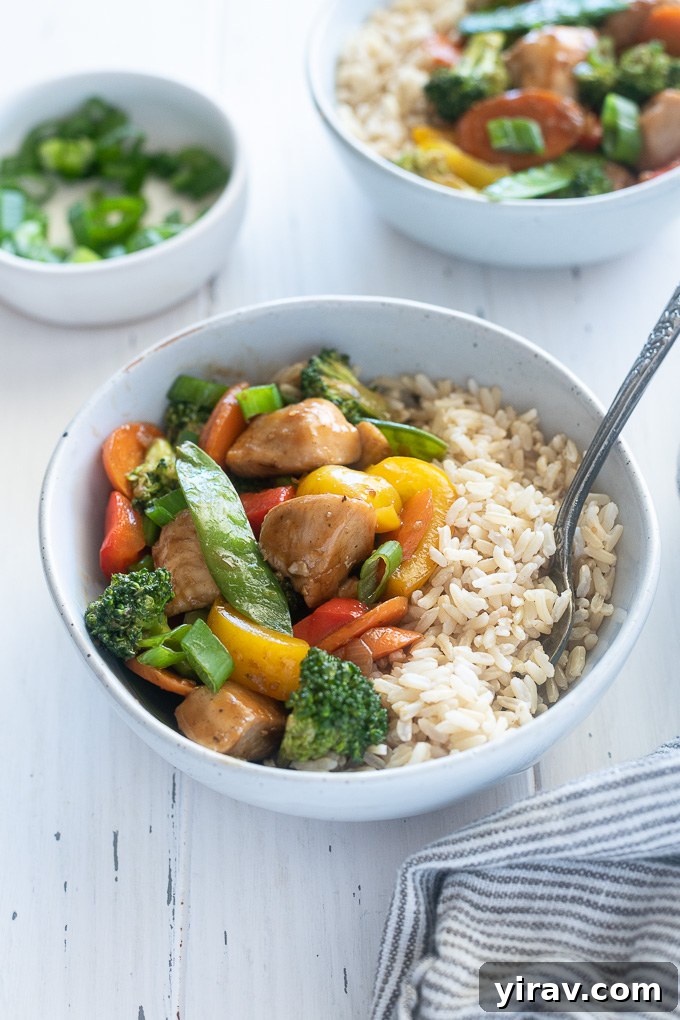
For a complete and satisfying meal, you can serve this delicious stir fry with my Instant Pot brown rice, which adds a wonderful nutty flavor and wholesome fiber. Alternatively, if you’re following a lower-carb diet, it’s equally delightful served as-is. There’s truly no wrong way to enjoy this meal, and with its simple preparation and robust flavors, you really can’t go wrong. It’s a guaranteed crowd-pleaser that fits seamlessly into a busy lifestyle.
Why You’ll Adore This Chicken Vegetable Stir Fry Recipe
This recipe isn’t just another dinner idea; it’s a go-to solution for busy evenings that doesn’t compromise on flavor or health. Here’s why this Chicken Vegetable Stir Fry will quickly become a cherished favorite in your recipe rotation:
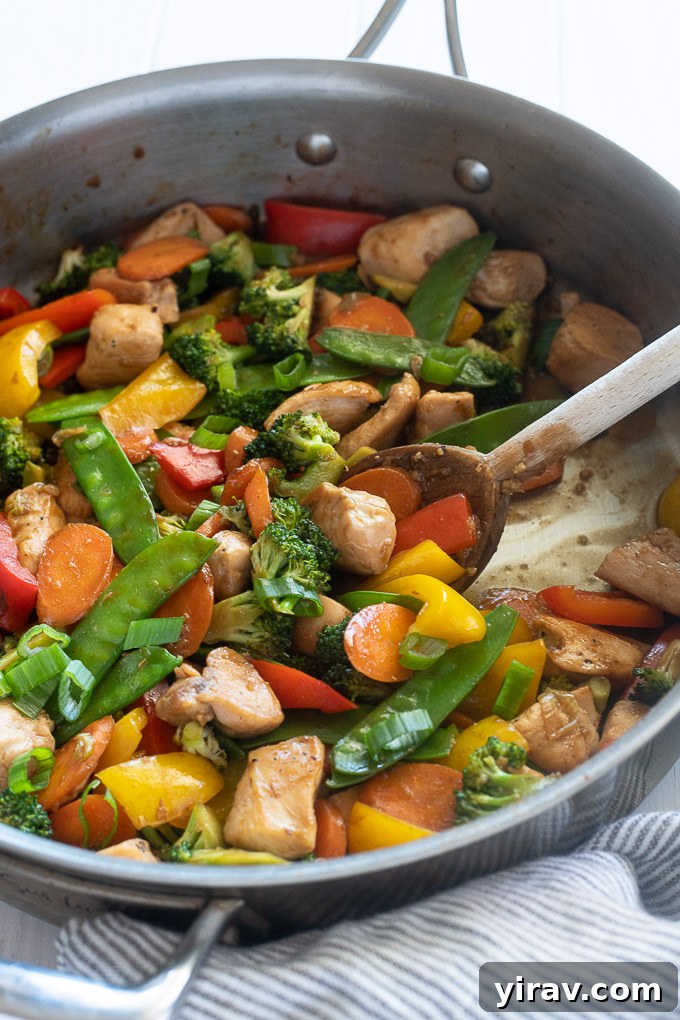
- Flavor-Packed & Wholesome: This chicken and vegetable stir fry recipe is bursting with tender, perfectly cooked chunks of lean chicken breast, a generous medley of colorful, nutrient-rich vegetables, and a truly exceptional homemade stir fry sauce that ties all the flavors together beautifully.
- Lightning-Fast Dinner: In a world where time is a precious commodity, this recipe is a lifesaver. It’s a quick and easy dinner that can be on your table in approximately 30 minutes, making it ideal for those hectic weeknights when you crave something wholesome without the long wait.
- Endlessly Customizable: The beauty of stir fry lies in its adaptability. This recipe is easily customizable with your favorite protein or veggies, allowing you to tailor it to whatever you have on hand or what’s in season. Plus, most of the prep work can even be done in advance to save you even more time!
- Dietary-Friendly: Looking for a meal that fits specific dietary needs? Served as-is, this is a naturally lower-carb dinner. It’s also completely dairy-free and gluten-free, making it a fantastic option for those with sensitivities or who simply prefer these dietary choices.
Key Ingredients for an Unforgettable Stir Fry
The secret to a truly great stir fry lies in selecting fresh, high-quality ingredients. While the full list is in the recipe card below, let’s highlight some of the stars of this dish and why they matter:
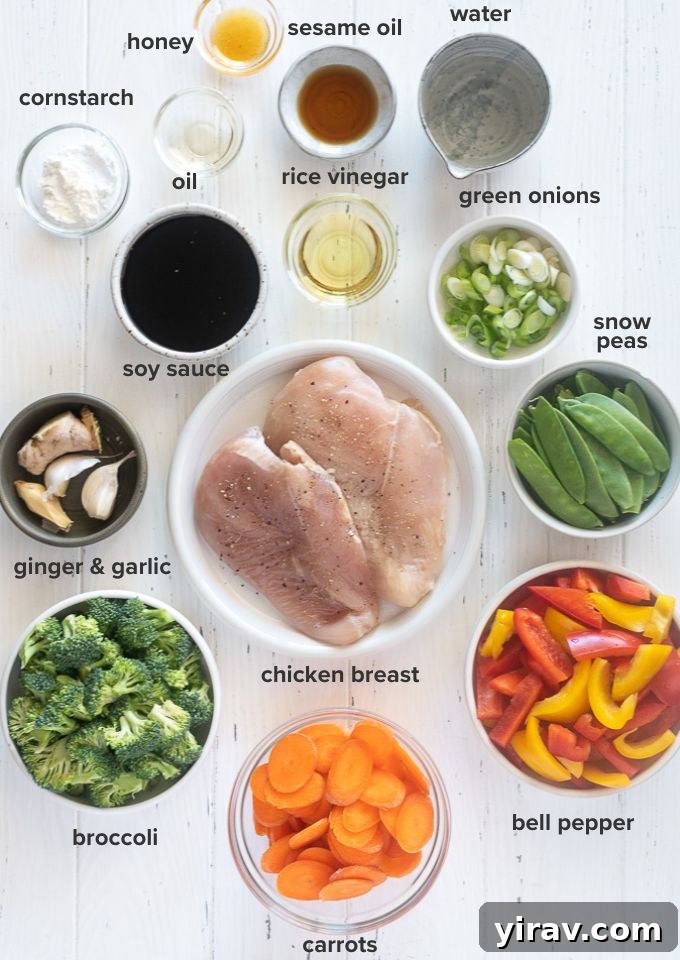
- Chicken: For the most tender and juicy results, boneless, skinless chicken breasts are highly recommended. They cook quickly and absorb the flavors of the sauce beautifully. If you prefer a richer flavor and slightly more forgiving texture, skinless boneless chicken thighs make an excellent substitute and hold up well to stir-frying. Just be sure to cut your chicken into uniform 1-inch cubes for even cooking.
- A Bounty of Vegetables: It might seem like a lot of vegetables are called for in this recipe, but fear not! They cook down significantly, contributing incredible texture, vibrant color, and essential nutrients to the dish. I’ve chosen a wide variety for a visually appealing and nutrient-dense meal, but the beauty of stir fry is its flexibility. You can absolutely use whatever fresh, crisp vegetables you have on hand. For specific recommendations, check out the FAQs section below for a comprehensive list of the best stir fry vegetables to inspire your next creation.
- Aromatics – Garlic and Ginger: These two ingredients are non-negotiable for a truly authentic and flavorful stir fry. Fresh garlic and ginger are the heart of the dish, providing a pungent, spicy, and warming base that really makes all the other flavors sing. Don’t be tempted to use powders here – the fresh versions make an incomparable difference. Pro-Tip for Fresh Ginger: To make grating ginger a breeze, freeze the ginger root in a zip-top bag. When ready to use, simply grate it, peel and all, with a Microplane zester. It’s easier to handle when frozen, and you avoid the hassle of peeling!
- Coconut Aminos: This fantastic ingredient is a gluten-free and paleo-friendly alternative to soy sauce, offering a similar umami depth with a slightly sweeter, milder flavor. It’s an excellent choice for those with soy allergies or looking to reduce sodium. Feel free to substitute with low-sodium soy sauce or tamari if coconut aminos aren’t available or preferred.
- Rice Wine Vinegar: This adds a crucial tang and brightness to the sauce, balancing the savory and sweet notes. You can use either seasoned or unseasoned rice wine vinegar based on your preference; seasoned varieties will add a touch more sweetness. In a pinch, white vinegar or apple cider vinegar can be substituted, though they may alter the flavor profile slightly.
- Sesame Oil: Do not underestimate the power of sesame oil! Its distinctive, nutty aroma and flavor are absolutely essential to an authentic stir fry experience. I highly recommend not omitting it, as it contributes a ton of unique flavor that’s hard to replicate. A small bottle goes a long way and keeps for months when stored in the refrigerator. If you must substitute, use your favorite neutral cooking oil, but be aware the flavor will change.
- Honey: A touch of honey is vital for balancing out the savory umami notes from the coconut aminos and the acidity of the vinegar, creating a perfectly rounded sauce. It provides a natural sweetness that enhances the overall flavor profile. You can substitute it with your preferred natural sweetener, such as maple syrup or agave, if desired.
For exact ingredient quantities, please refer to the comprehensive recipe card provided below.
How to Master the Art of Chicken Veggie Stir Fry
This chicken veggie stir fry recipe comes together remarkably quickly, but a little strategic preparation goes a long way. The overall process involves a bit of upfront prep, including cutting the chicken breast into uniform cubes, chopping your chosen vegetables, and whisking together the homemade stir fry sauce. Once the prep is done, the actual cooking is a whirlwind of high-heat magic, and it truly goes very quickly!
Pro Tip: To make this recipe even more of a breeze on a busy night, prepare the stir fry sauce and chop all your vegetables up to a few days in advance. Store the sauce in an airtight container in the fridge and the prepped veggies in separate containers. This way, dinner is just minutes away when you’re ready to cook!
See the full, detailed instructions in the recipe card below for all the specifics.
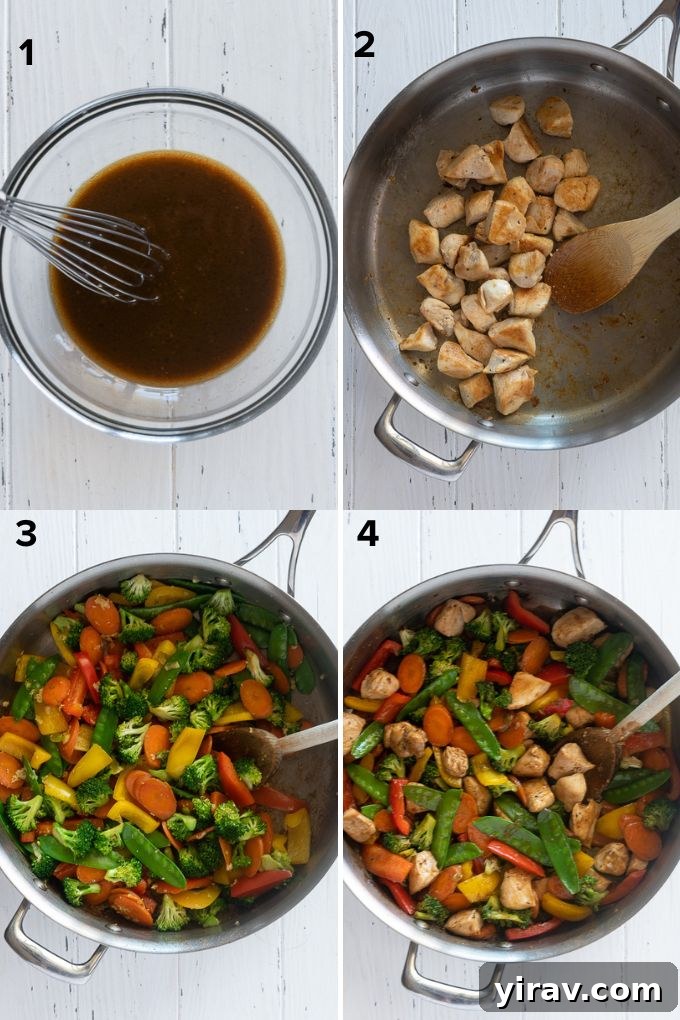
- Prepare the Sauce: In a small bowl, start by placing the cornstarch. Add one tablespoon of the coconut aminos to the cornstarch and stir vigorously until it forms a smooth slurry with no lumps remaining. This prevents the cornstarch from clumping when added to the liquid. Then, add the remaining coconut aminos, water, rice wine vinegar, sesame oil, and honey. Whisk all the ingredients together thoroughly until well combined. Set this flavorful sauce aside.
- Cook the Chicken: Heat one tablespoon of your preferred cooking oil in a large skillet or wok over medium-high heat. Once shimmering, add the cubed chicken. Cook for approximately 6 minutes, turning occasionally, until the chicken is no longer pink in the center and an internal meat thermometer inserted into the thickest part registers 160 degrees F (71 degrees C). Remove the cooked chicken from the skillet and place it on a clean plate; set aside.
- Sauté the Vegetables: Add the remaining tablespoon of oil to the same skillet. First, add the harder, longer-cooking vegetables like broccoli florets and thinly sliced carrots. Sauté for about 3 minutes until they begin to soften slightly. Next, introduce the quicker-cooking vegetables: sliced bell peppers, snow peas, and the white and light green parts of the green onion. Continue to cook for another 3 minutes, or until all the vegetables reach your desired crisp-tender doneness. Finally, add the minced garlic and fresh ginger to the pan and cook for just 30 seconds more, until fragrant. Be careful not to burn the garlic and ginger!
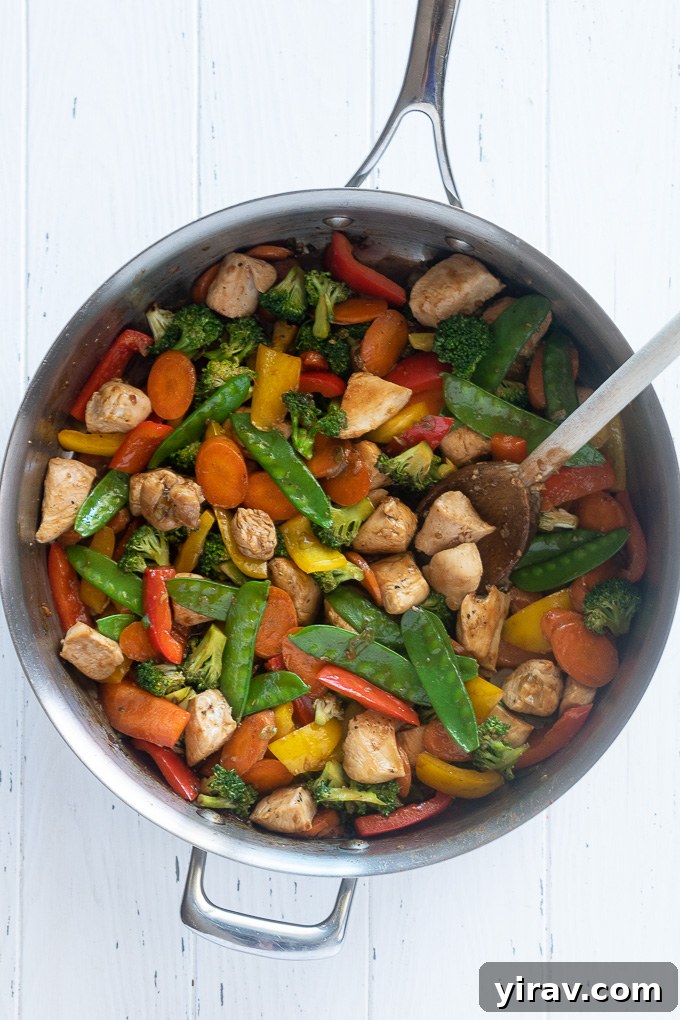
- Combine and Thicken: Return the cooked chicken to the pan with the sautéed vegetables. Give the prepared stir fry sauce a quick whisk again (as cornstarch can settle) and then pour it evenly over the chicken and vegetables. Stir everything well to ensure the sauce coats all the ingredients. Cook for about 2 minutes, stirring constantly, until the sauce has visibly thickened to your liking and is glossy. Remove the pan from the heat, taste, and adjust seasoning with salt and freshly ground pepper if necessary. Stir in the dark green scallion tops for a fresh finish, serve immediately, and enjoy your homemade masterpiece!
Recipe FAQs: Your Stir Fry Questions Answered
Here are some commonly asked questions to help you perfect your Chicken Vegetable Stir Fry:
The beauty of stir fry is its adaptability, allowing you to use a wide variety of vegetables. You can choose just 2-3 of your favorites or combine several to add more color, flavor, and nutritional diversity. Aim for a mix of textures and cooking times. Some excellent choices include:
– Asparagus: Adds a fresh, slightly bitter note and tender crunch.
– Bell Peppers (Red, Yellow, Orange): Provide sweetness, vibrant color, and a good source of Vitamin C. Slice them into thick strips.
– Bok Choy: A leafy green that wilts beautifully and adds an earthy flavor.
– Broccoli Florets: Hearty and nutritious, offering a satisfying crunch. Cut into small, uniform florets.
– Cabbage (Napa or Green): Adds bulk and a subtle sweetness when stir-fried.
– Carrots: Offer natural sweetness and a firm texture. Slice thinly or julienne.
– Green Beans: Crisp and fresh, a classic stir fry addition.
– Green Onions (Scallions): Used for both flavor in cooking (white parts) and garnish (green parts).
– Mushrooms (Button, Cremini, Shiitake): Add an earthy, umami depth. Slice them or leave smaller ones whole.
– Snow Peas or Snap Peas: Provide a delightful sweet crunch and vibrant green color.
– Summer Squash & Zucchini: Milder flavors that absorb the sauce well. Cut into half-moons or sticks.
Mastering stir fry is all about technique and timing. Follow these four basic steps for perfectly cooked, flavorful stir fry every time:
(1) Prepare Your Sauce First: Always mix your stir fry sauce in advance. This ensures it’s ready to be added to the hot pan at the very end, preventing you from scrambling and potentially overcooking your ingredients.
(2) Cook Protein Separately: Cook your chicken (or other protein) first until it’s just cooked through. Then, remove it from the pan and set it aside. This prevents the chicken from becoming tough or rubbery while you cook the vegetables.
(3) Sauté Vegetables in Order: Begin by cooking harder, denser vegetables like carrots and broccoli for about 3 minutes. These require a longer cooking time to reach crisp-tender perfection. After 3 minutes, add softer, quicker-cooking vegetables such as bell peppers, snow peas, and leafy greens. Continue cooking for another 3-5 minutes until all vegetables are crisp-tender and brightly colored. Don’t forget to add your aromatics (garlic and ginger) in the last 30-60 seconds to prevent them from burning.
(4) Combine and Thicken: Return the cooked chicken to the pan with the sautéed vegetables. Give your prepared stir fry sauce another quick whisk and pour it over everything. Stir well to coat all the ingredients. Cook for just 1-2 minutes, stirring continuously, until the sauce thickens to a glossy consistency and is warmed through. Serve immediately!
This particular homemade stir fry sauce recipe focuses on a balanced blend of sweet, savory, and tangy notes, and it’s incredibly simple to make with just a few key ingredients:
– Coconut Aminos: The primary savory base, offering a gluten-free and soy-free alternative to traditional soy sauce. (Can be substituted with low-sodium soy sauce or tamari)
– Water: To thin the sauce slightly and ensure a good consistency.
– Rice Wine Vinegar: Provides essential acidity and tanginess.
– Honey: Adds natural sweetness to balance the savory and sour elements.
– Sesame Oil: Crucial for its distinctive nutty aroma and deep flavor.
– Cornstarch: Acts as a thickening agent, giving the sauce its signature glossy texture.
While a wok is the traditional vessel for stir-frying and excels at distributing heat evenly for quick cooking, the good news is that it is absolutely not necessary to make a fantastic stir fry at home! Any large, heavy-bottomed skillet with high sides will work perfectly. Cast iron skillets, stainless steel skillets, or even a deep sauté pan are excellent alternatives. The key is to ensure your pan is large enough to avoid overcrowding the ingredients, which can lead to steaming instead of stir-frying. The recipe card below specifically outlines how to achieve a perfect chicken stir-fry using a standard pan or skillet.
Top Tips for Stir Fry Success and Perfect Meal Prep
Elevate your stir fry game with these essential tips:
- Smart Prep is Key (Mise en Place): As mentioned earlier, prep the stir fry sauce and chop all your vegetables up to a few days in advance. This ‘mise en place’ approach means all your ingredients are ready before you even turn on the heat, making the cooking process incredibly fast and stress-free.
- Customization is Your Superpower: This chicken vegetable stir fry recipe is incredibly flexible. Feel free to swap out the chicken for other proteins like shrimp, beef, pork, or even tofu for a vegetarian option. Experiment with your favorite vegetables or whatever is seasonal at the market. Refer to the FAQs section above for an extensive list of the best stir fry vegetables to get creative!
- High Heat is Your Friend: Stir-frying relies on high heat to cook ingredients quickly while maintaining their crispness. Ensure your pan or wok is properly preheated and hot before adding ingredients. Don’t overcrowd the pan; cook in batches if necessary to maintain high heat and achieve that perfect stir-fried texture.
- Serve it Your Way: This recipe is fantastic served as-is for a lighter, lower-carb option. For a more traditional and hearty meal, pair it with fluffy white rice, wholesome brown rice, nutritious quinoa, or even noodles. The choice is yours!
- Storage and Reheating: Leftovers are just as delicious! Store any cooled chicken vegetable stir fry in an airtight container in the refrigerator for up to 3 days. For longer storage, it freezes beautifully for up to 3 months. To reheat, gently warm on the stovetop or in the microwave until heated through, adding a splash of water or broth if needed to loosen the sauce.
More Delicious 30-Minute Dinners You’ll Love:
If you enjoy quick, flavorful, and easy meals like this stir fry, be sure to explore some of these other fantastic 30-minute dinner ideas:
- Baked Lemon Dijon Salmon
- Easy Ground Beef Tacos
- One Pot Mexican Rice Casserole
- Oven Baked Turkey Tacos
- Pork Chops with Creamy Mushroom Sauce
- Quick Shrimp Fried Rice
Loved this recipe? If so, be sure to leave a review below and tag me @flavorthemoments on Facebook and Instagram! Your feedback truly helps!
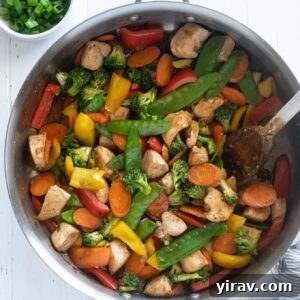
Chicken Vegetable Stir Fry
Leave a Review »
Ingredients
For the Stir Fry Sauce:
- 1 tablespoon cornstarch (sub with arrowroot starch)
- 1/4 cup coconut aminos (sub with low sodium soy sauce or tamari)
- 1/4 cup water (sub with vegetable stock for added flavor)
- 1 tablespoon rice wine vinegar (seasoned or unseasoned)
- 1 tablespoon sesame oil (see notes)
- 1 tablespoon honey
For the Stir Fry:
- 2 tablespoons oil (divided)
- 1 lb. boneless skinless chicken breasts (cut into 1″ cubes)
- salt and freshly ground pepper (to taste)
- 2 1/2 cups broccoli florets (cut into small florets)
- 2 large carrots (about 2 cups, sliced thinly)
- 1 small red bell pepper (sliced into thick strips)
- 1 small yellow bell pepper (sliced into thick strips)
- 1 1/2 cups snow peas (trimmed)
- 3 large green onions (sliced thinly on the bias; reserve the dark green scallions for garnish)
- 3 cloves garlic (minced)
- 1 1/2 tablespoons fresh ginger (minced; you can also freeze the ginger root and grate it peel and all)
Instructions
Prepare the Stir Fry Sauce:
-
Place the cornstarch in a small bowl. Add one tablespoon of the coconut aminos to the cornstarch and stir until well combined and no lumps remain. Add the remaining coconut aminos, water, vinegar, sesame oil, and honey, then whisk well to combine. Set aside.
Prepare the Stir Fry:
-
Heat 1 tablespoon of the oil in a large skillet over medium-high heat. Add the chicken and cook for about 6 minutes, turning occasionally, until no longer pink and an internal thermometer inserted into the center registers 160 degrees F (71 degrees C). Place the chicken on a plate and set aside.
-
Add the remaining tablespoon of oil to the pan, followed by the broccoli and carrots. Cook for 3 minutes, then add the bell pepper, snow peas, and the white and light green parts of the green onion. Cook for another 3 minutes or until the vegetables reach the desired crisp-tender doneness. Add the garlic and ginger and cook for 30 seconds more until fragrant.
-
Add the chicken back to the pan, then pour in the prepared sauce and stir well to coat all ingredients. Cook for about 2 minutes, stirring constantly, or until the sauce has thickened and is glossy. Remove from heat and adjust the seasoning as necessary with salt and freshly ground pepper. Stir in the dark green scallions for garnish, serve immediately, and enjoy!
Notes
- Pro Tip: Prep the stir fry sauce and chop all veggies up to a few days in advance for an even quicker meal.
- Customize this chicken vegetable stir fry recipe endlessly with your favorite vegetables. See the FAQs section above for a list of the best stir fry vegetables.
- I strongly recommend against substituting sesame oil with another oil, as its distinctive nutty flavor is crucial to the authentic taste of this stir fry. A bottle keeps for months when stored in the refrigerator, making it a great pantry staple.
- Serve this recipe as-is for a lower-carb option, or pair it with brown rice, white rice, quinoa, or your favorite grain for a more complete meal.
- Store any cooled leftovers in an airtight container in the refrigerator for up to 3 days. This stir fry also freezes well for up to 3 months; simply thaw and reheat gently.
Nutrition
Nutrition is estimated using a food database and is only intended to be used as a guideline for informational purposes.