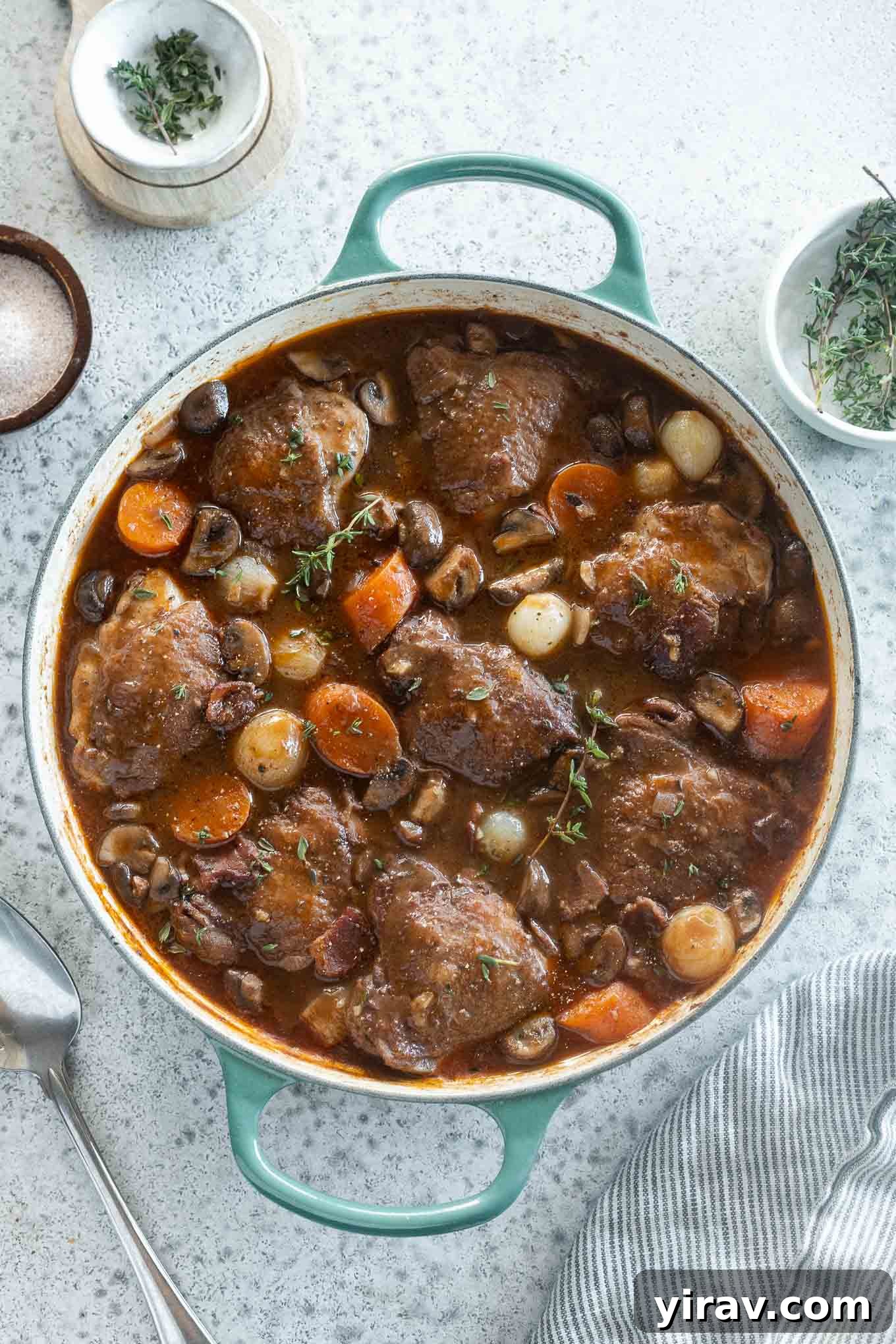
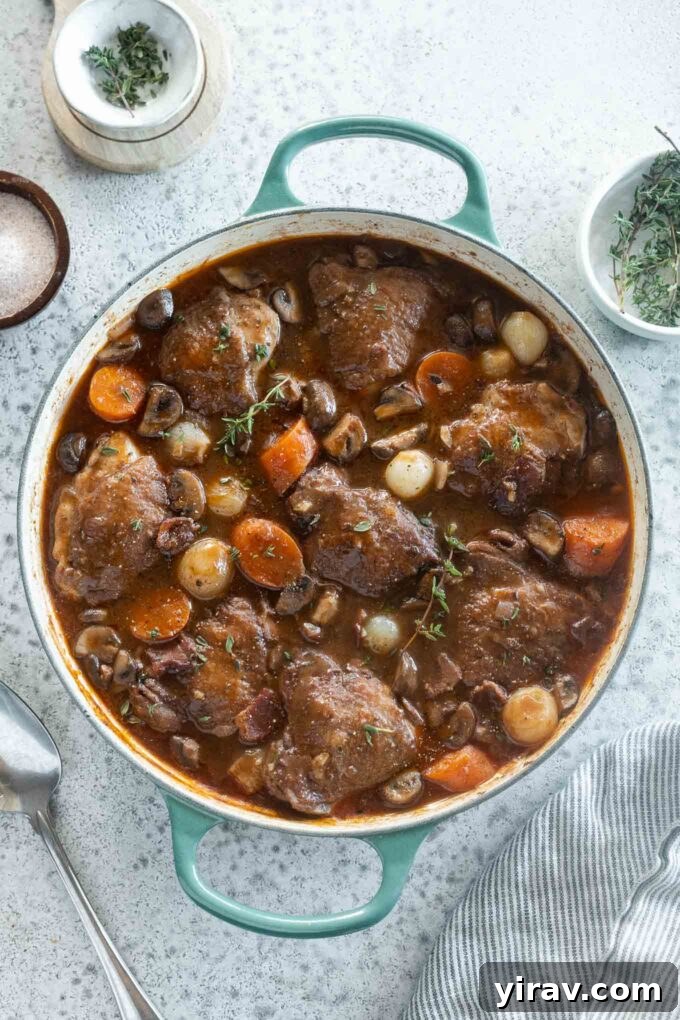
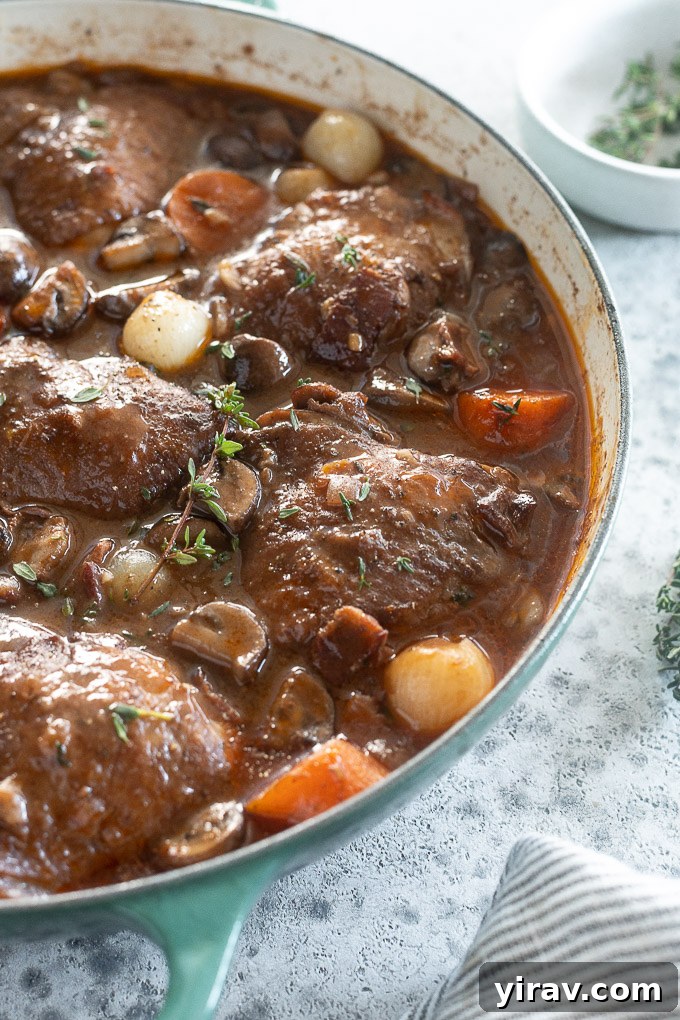
There are few dishes as exquisitely comforting and deeply satisfying as a classic Coq au Vin. This iconic French stew, known for its rich flavors and rustic elegance, features tender chicken pieces braised in red wine, harmoniously blended with crispy bacon, earthy mushrooms, and sweet pearl onions. It’s a meal that not only nourishes the body but also evokes the warmth and charm of French culinary traditions. While it appears sophisticated, this one-pot wonder is surprisingly approachable for home cooks, and we’ve even included a fantastic gluten-free option so everyone can enjoy this timeless delight.
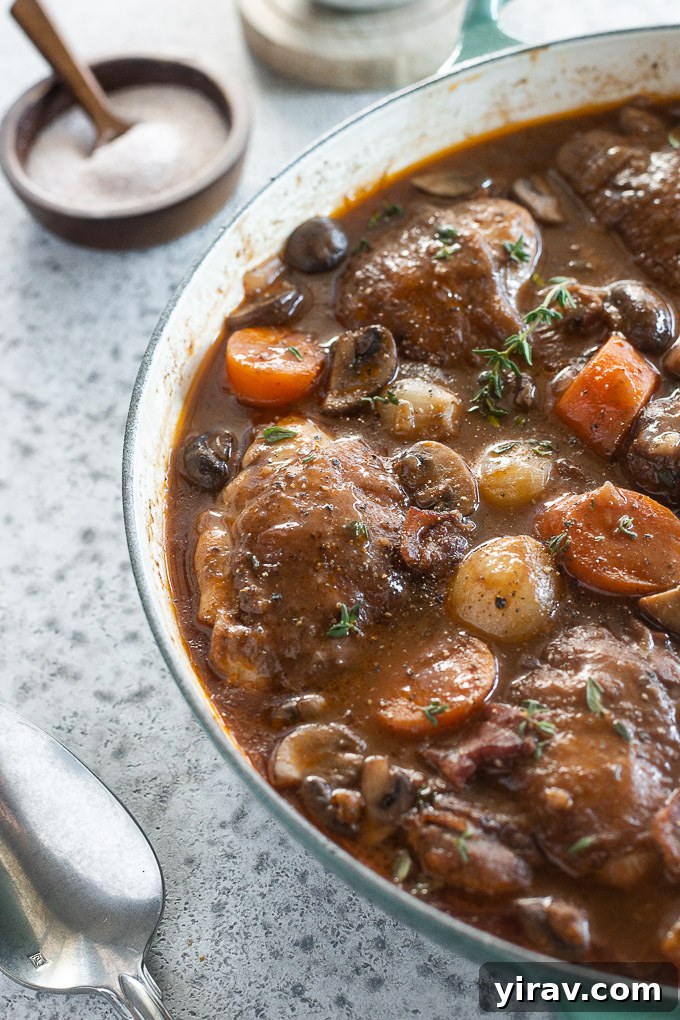
Coq au Vin holds a special place in my heart, often transporting me back to my unforgettable travels through the charming streets of Paris many years ago. Before that trip, I hadn’t truly experienced the magic of this traditional French stew. But with the very first bite, a deep appreciation blossomed, and I instantly fell in love with its complex yet comforting flavors.
This dish shares a wonderful similarity with another one of my cherished recipes, Instant Pot Beef Bourguignon. Both celebrate the robust flavors of red wine, crispy bacon, savory mushrooms, and delicate pearl onions. The key distinction, of course, lies in the star protein: Coq au Vin highlights succulent chicken, while its beef counterpart features tender cuts of beef. The name “Coq au Vin” itself translates simply to “rooster in wine,” a nod to its origins where rooster was the traditional fowl used. However, modern interpretations, including this recipe, commonly use more readily available chicken, allowing for a consistently tender and delicious result.
Far from being just a simple stew, this Coq au Vin recipe delivers a rustic yet undeniably elegant dining experience that is guaranteed to impress. It’s the kind of dish you’d expect to find in a quaint French bistro, yet it can be recreated with ease in your own kitchen. One of its most appealing qualities, especially for entertaining or meal planning, is that it can be prepared entirely in advance. The flavors only deepen and meld beautifully with time, making it an ideal choice for those looking for a stress-free yet gourmet meal. I’ve savored this dish in countless French restaurants, and now, being able to bring that authentic, comforting experience into my own home is truly a joy.
Table of Contents
- Why You’ll Love This Recipe
- Recipe Ingredients
- Ingredient Notes
- How to Make Coq au Vin
- Frequently Asked Questions
- Serving Suggestions
- Recipe Notes
- More Stew Recipes You’ll Love
Why You’ll Love This Classic Coq au Vin Recipe
- Unparalleled Comfort Food: When it comes to soul-warming meals, Coq au Vin is a top contender. The exquisite combination of fork-tender chicken, enveloped in a rich, savory red wine sauce, alongside crispy bacon, earthy mushrooms, and sweet, succulent pearl onions, creates a symphony of flavors and textures that simply melts in your mouth. It’s the ultimate culinary hug on a chilly evening.
- A Timeless Culinary Classic: There’s a reason certain recipes endure through generations, and Coq au Vin is undoubtedly one of them. This traditional French stew is a testament to the power of simple, quality ingredients expertly combined. We honor the original essence of this dish, ensuring every bite delivers that authentic, beloved taste without unnecessary deviations.
- Effortless Entertaining with Make-Ahead Magic: Imagine hosting a dinner party with a gourmet French meal that feels utterly effortless. Coq au Vin shines as a make-ahead masterpiece. Its flavors deepen and improve overnight, making it perfect for entertaining, holiday gatherings, or simply simplifying your weekly meal prep. Plus, the entire dish comes together beautifully in a single pot, minimizing cleanup.
- Freezer-Friendly Flavor Enhancement: Not only is this stew ideal for making in advance, but it’s also wonderfully freezer-friendly. The complex flavors continue to develop and meld even further after being frozen and reheated, making it an excellent option for stocking your freezer with delicious, ready-to-eat gourmet meals for those busy weeknights or unexpected cravings.
Essential Ingredients for Coq au Vin
Our Coq au Vin recipe stays true to the revered traditions, much like the methods popularized by culinary icons such as Julia Child. We’ve introduced a few simple, thoughtful variations, which we’ll detail in the ingredient notes below, to ensure both authenticity and accessibility for the home cook.
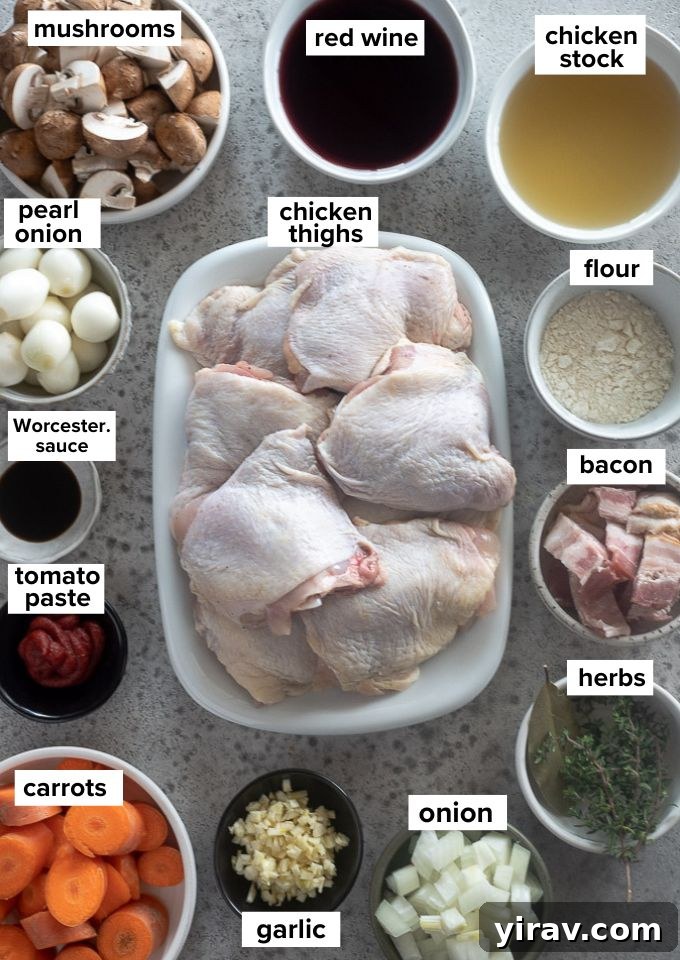
Detailed Ingredient Notes and Substitutions
- Chicken: Traditionally, Coq au Vin uses chicken leg quarters, or a combination of bone-in, skin-on chicken thighs and drumsticks. For this recipe, we’ve opted for chicken thighs due to their consistent tenderness and popularity, but feel free to use your preferred bone-in chicken cuts. Bone-in chicken breasts can also work beautifully; simply cut them in half to yield eight pieces in total (excluding wings) if you’re using a whole chicken. For guidance on preparing a whole chicken, refer to my guide on how to cut a whole chicken. The skin adds flavor during browning, but you can trim excess fat.
- Bacon: Bacon, or classic thick-cut French lardons, is an indispensable component, lending a smoky depth and delicious rendered fat that forms the base of the stew. If bacon isn’t available or you prefer an alternative, pancetta makes an excellent substitute, and even finely diced prosciutto can be used for a slightly different, equally delightful flavor profile.
- Mushrooms: We’ve generously included one pound of mushrooms in this recipe, as their earthy flavor and meaty texture greatly enhance the stew. However, if you prefer a lighter mushroom presence, half a pound will suffice. Baby bella (cremini) or white button mushrooms are ideal. Remember to trim the tough ends of the stems and either halve or quarter them, depending on their size, for optimal texture in the finished dish.
- Onions (Yellow & Pearl): This recipe utilizes two distinct types of onions. A standard yellow onion is chopped and sautéed early in the process, building a foundational aromatic layer for the stew. Pearl onions, while optional, are highly recommended for their delicate sweetness and signature texture, which truly elevate the dish. You can use fresh pearl onions, which require a bit of peeling, or opt for thawed frozen pearl onions as a convenient time-saver.
- Carrots: While not strictly traditional in all Coq au Vin recipes, hearty chunks of carrots add a wonderful sweetness, vibrant color, and an extra layer of flavor that, in my opinion, makes any stew even better. They absorb the rich wine sauce beautifully and become wonderfully tender. Feel free to include them or omit them based on your preference.
- Red Wine: The soul of Coq au Vin is, of course, the red wine. It’s crucial to use a good quality, drinkable red wine—something you’d enjoy sipping on its own. Pinot Noir is a classic choice for its bright fruit and earthy notes, but a good Cabernet Sauvignon or a medium-bodied Merlot would also work well. For an extra boost of flavor, consider marinating your chicken in the red wine while you prepare your other ingredients, or even for a few hours, or overnight, for deeper infusion.
- Chicken Stock: Chicken stock provides essential liquid for the luxurious red wine sauce and contributes savory depth. For the best flavor, I recommend using my homemade chicken stock, but your favorite high-quality store-bought brand will also work perfectly.
- Flour: A quarter cup of all-purpose flour is used to thicken the braising liquid, creating a wonderfully rich and velvety sauce. For those with gluten intolerance, simply omit the flour. Instead, you can thicken the sauce with two tablespoons of cornstarch slurry (mixed with a bit of water) at the end of the cooking process. Full instructions for the gluten-free option are provided in the recipe notes.
- Tomato Paste: A small amount of tomato paste adds a concentrated umami flavor and a subtle sweetness, contributing significantly to the depth and complexity of the sauce. It’s a secret weapon for building rich, layered flavors.
- Worcestershire Sauce: This versatile sauce introduces another layer of umami and a hint of tang, balancing the richness of the stew. If you’re looking for an alternative, soy sauce, tamari (for gluten-free), or coconut aminos can be used to achieve a similar savory effect.
- Fresh Herbs: Fresh thyme and a bay leaf are indispensable for their aromatic contributions. They infuse the stew with classic herbal notes, adding freshness and complexity. If fresh thyme isn’t available, you can substitute with 1 ½ teaspoons of dried thyme.
How to Craft the Perfect Coq au Vin
While this Coq au Vin recipe involves a few distinct steps, each one is incredibly straightforward and contributes to the dish’s remarkable depth of flavor. Think of it as building layers of deliciousness.
For an even richer and more profound flavor, the chicken can be marinated in a blend of red wine and chicken stock while you prepare the remaining ingredients, or for a more extended period of a few hours, or even overnight. This step is optional, but highly recommended if time allows, as it significantly enhances the final taste profile.
Pro Tip: Always select a good, drinkable quality red wine, such as Pinot Noir, for your braising liquid. The wine forms the very foundation of your sauce, and its quality will directly impact the depth and deliciousness of your Coq au Vin.
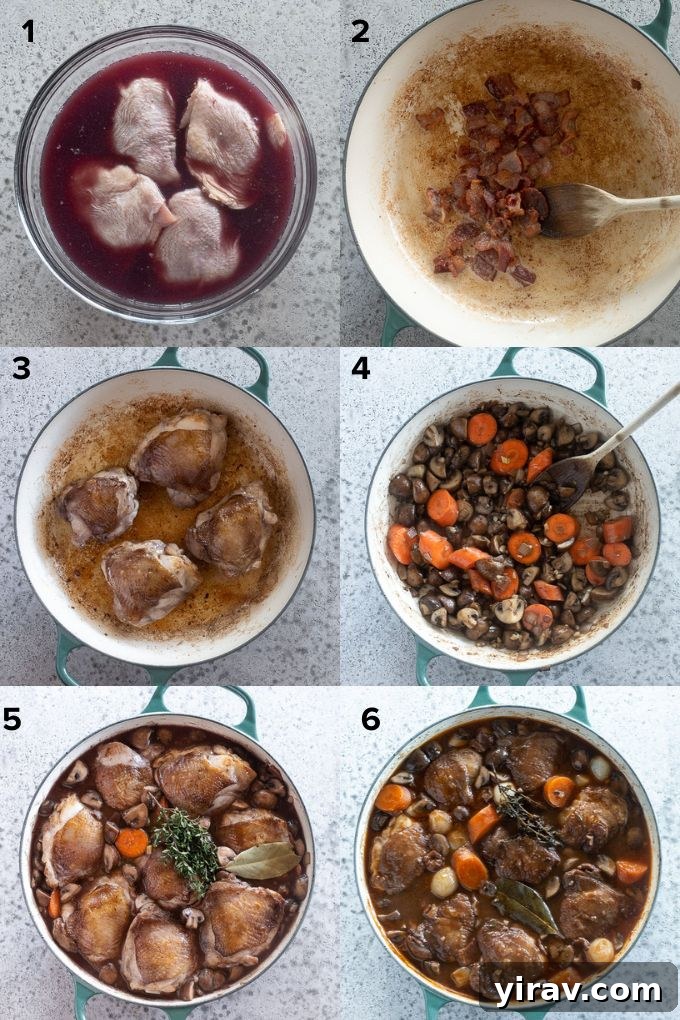
Step-by-Step Instructions
- Marinate the Chicken (Optional but Recommended): Begin by seasoning your chicken pieces generously with salt and pepper. Place them in a large bowl, then pour in the red wine and chicken stock, ensuring the chicken is mostly submerged. Allow it to marinate while you meticulously prep your vegetables. For a deeper flavor infusion, marinate for a few hours, or ideally, overnight in the refrigerator. If you’re pressed for time, this step can be skipped, but the marination truly enhances the final dish.
- Render the Bacon: In a large Dutch oven or a heavy-bottomed pot, cook the diced bacon over medium heat until it becomes beautifully crisp and golden. Carefully remove the cooked bacon with a slotted spoon and transfer it to a paper towel-lined plate to drain, reserving the rendered bacon grease in the pot. This flavorful fat is essential for browning the chicken and sautéing the vegetables.
- Brown the Chicken: Remove the chicken from its marinade (remember, do NOT discard the marinade – it’s going into the pot later!) and pat the pieces thoroughly dry with paper towels. This crucial step ensures a golden-brown, crispy skin. Heat the pot with the reserved bacon grease over medium-high heat until it shimmers. Add the chicken, skin-side down, in batches if necessary to avoid overcrowding the pan. Cook until the skin is deeply golden brown and releases easily, then flip and cook for another 2 minutes on the other side. Transfer the browned chicken to a plate and set aside. Browning creates a delicious “fond” – those flavorful brown bits stuck to the bottom of the pan – which will add immense depth to your sauce.
- Sauté Aromatics and Vegetables: Carefully pour off all but about 2 tablespoons of the rendered fat from the pot and reduce the heat to medium. Add the chopped yellow onion and sauté for 4-5 minutes until it softens and becomes translucent. If you notice the fond starting to burn, add a tablespoon or two of water and scrape up the flavorful bits, then continue cooking. Stir in the mushrooms and cook for another 5 minutes, allowing their liquid to evaporate and scraping any bits from the bottom of the pan as you go. Finally, add the minced garlic and carrots, cooking for just 1 minute more until fragrant.
- Build the Flavorful Sauce: Sprinkle the flour over the sautéed vegetables and stir constantly for about 1 minute until it’s fragrant and coats everything evenly. This creates a roux that will thicken the sauce. Pour in the reserved wine marinade and chicken broth, scraping the bottom of the pan vigorously to deglaze and incorporate all those delicious browned bits. Stir in the tomato paste and Worcestershire sauce until well combined. Bring the mixture to a boil, then reduce the heat to medium-low. Stir in the crispy bacon and fresh pearl onions (if using frozen, add them during the last 15 minutes of cooking). Nestle the browned chicken pieces back into the pot, spooning the liquid over them. Add the bay leaf and fresh thyme sprig, then cover the pot.
- Simmer to Perfection: Allow the stew to gently simmer for 45-50 minutes, or until the chicken is incredibly tender and reaches an internal temperature of 175 degrees Fahrenheit when a meat thermometer is inserted into the thickest part of the thighs (without touching bone). The vegetables should also be tender at this point.
- Finish and Serve: If your sauce appears too thin, simply continue cooking for a few extra minutes with the lid off to allow it to reduce and thicken to your desired consistency. Remove and discard the bay leaf and thyme sprig. Taste and adjust the seasoning with salt and pepper as needed. Your magnificent Coq au Vin is now ready to be savored!
Frequently Asked Questions About Coq au Vin
Coq au Vin is a robust and classic French stew, celebrated for its rich and savory flavor profile. It traditionally features tender pieces of chicken (historically rooster, as its name suggests) slowly braised in a luxurious red wine sauce, accompanied by delectable additions like crispy bacon, savory mushrooms, and sweet pearl onions. Originating from the Burgundy region of France, Coq au Vin typically calls for a Pinot Noir. There are also delightful variations, such as Coq au Vin Blanc, which substitutes red wine for white wine or champagne, offering a lighter yet equally flavorful experience.
Mastering the pronunciation of “Coq au Vin” is simpler than it might seem! “Coq” is pronounced like “coke” (as in the soda). “Au” is pronounced like “oh.” And “Vin” is pronounced like “vahn,” with a soft ‘ah’ sound, similar to the French pronunciation of ‘wine.’ Putting it all together, you get “coke-oh-vahn.”
While marinating the chicken in red wine is highly recommended to infuse it with deeper flavor and ensure maximum tenderness, it is an optional step. If you find yourself short on time or prefer a quicker preparation, you can certainly skip the marination without compromising too much on the overall deliciousness of the dish. However, for the most authentic and robust flavor, planning for a few hours or even overnight marination is a worthwhile investment.
The best wine for Coq au Vin is a good quality, dry red wine that you would genuinely enjoy drinking. Pinot Noir is the classic and preferred choice, especially given the dish’s Burgundian origins, as it offers a balanced acidity and fruitiness. Other excellent choices include a medium-bodied Syrah (or Shiraz) or a full-bodied Merlot or Cabernet Sauvignon. Avoid anything overly sweet or with very high tannins. For Coq au Vin Blanc, a dry white wine like Chardonnay or a sparkling wine such as Champagne would be ideal.
Absolutely! Bacon or traditional French lardons are key for their smoky, savory flavor and the fat they render. However, if you’re looking for an alternative, pancetta is an excellent substitute, offering a similar cured pork flavor. For a different twist, finely diced prosciutto can also be used, though it’s leaner and might require a bit more oil for browning.
The most accurate way to determine if your chicken is fully cooked is by using a meat thermometer. Insert the thermometer into the thickest part of the chicken, being careful not to touch any bone. Chicken thighs and drumsticks are safely cooked when they register 175 degrees Fahrenheit (79 degrees Celsius). If you’re using bone-in chicken breasts, they should reach 165 degrees Fahrenheit (74 degrees Celsius) for optimal safety and juiciness.
Achieving the perfect sauce consistency is simple! If your sauce is too thin, remove the lid from the pot and allow the stew to simmer for a few extra minutes. This will encourage evaporation, reducing the sauce to your desired thickness. Conversely, if your sauce turns out too thick, simply stir in a small amount of additional chicken stock, a tablespoon at a time, until you reach the ideal consistency. Always taste and adjust seasonings after making adjustments.
One of the many beauties of Coq au Vin is that it’s an ideal make-ahead meal. In fact, many believe its flavors deepen and become even more harmonious after a day or two in the refrigerator, making it perfect for preparing ahead of time for special occasions or entertaining. It also freezes exceptionally well; once cooled completely, you can store it in an airtight container in the freezer for up to three months, ensuring you always have a gourmet meal ready when you need it.
Leftover Coq au Vin can be stored in an airtight container in the refrigerator for up to 3 days. To reheat, gently warm it on the stovetop over medium-low heat until heated through, adding a splash of chicken stock or wine if the sauce has thickened too much. For frozen stew, thaw overnight in the refrigerator before reheating. The flavors truly develop beautifully, making leftovers a real treat!
While boneless, skinless chicken can be used for convenience, bone-in, skin-on chicken is highly recommended for Coq au Vin. The bone adds significant flavor to the stew as it simmers, and the skin, when properly browned, contributes richness and helps create that desirable “fond” at the bottom of the pan, which is crucial for a deeply flavored sauce. If using boneless, skinless, be mindful that cooking times might be slightly shorter to prevent drying out.
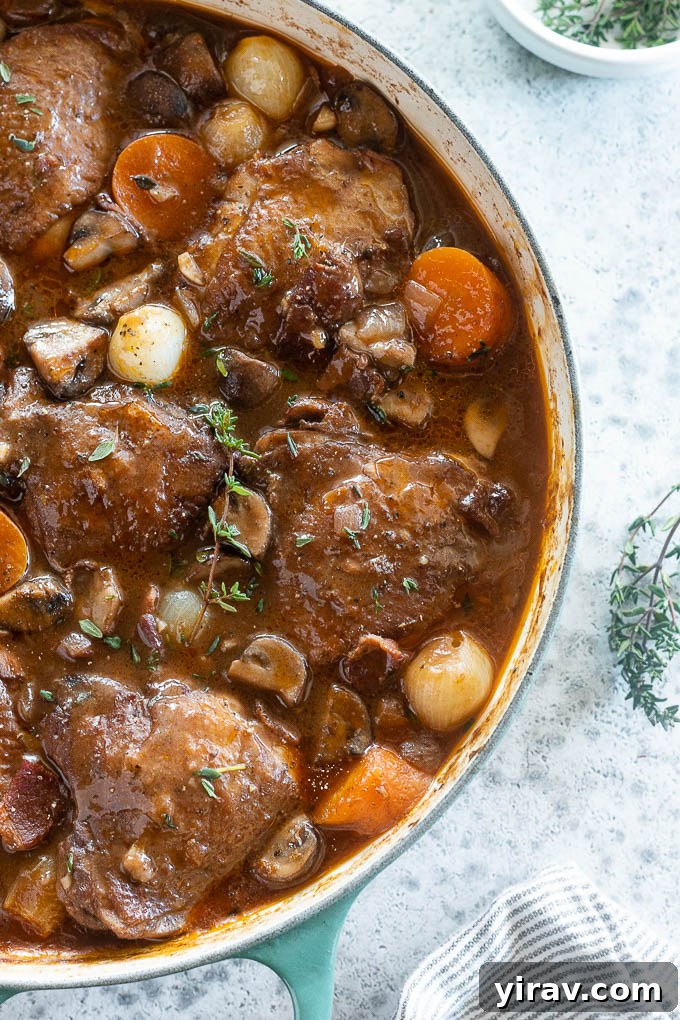
Delightful Serving Suggestions for Coq au Vin
Coq au Vin is a remarkably hearty and complete meal on its own, but pairing it with the right side dishes can elevate your dining experience to new heights. If you’re wondering what to serve alongside this magnificent French stew, you’re in luck! Here are some delectable ideas to complement its rich flavors:
- Since Coq au Vin is so substantial, serving it with a crisp, fresh butter lettuce salad or a simple side of vibrant air fryer broccoli offers a refreshing contrast and lightness to the meal.
- There’s nothing quite like warm, crusty bread to accompany a stew. It’s absolutely perfect for soaking up every last drop of that incredible, flavorful red wine sauce, ensuring no deliciousness goes to waste.
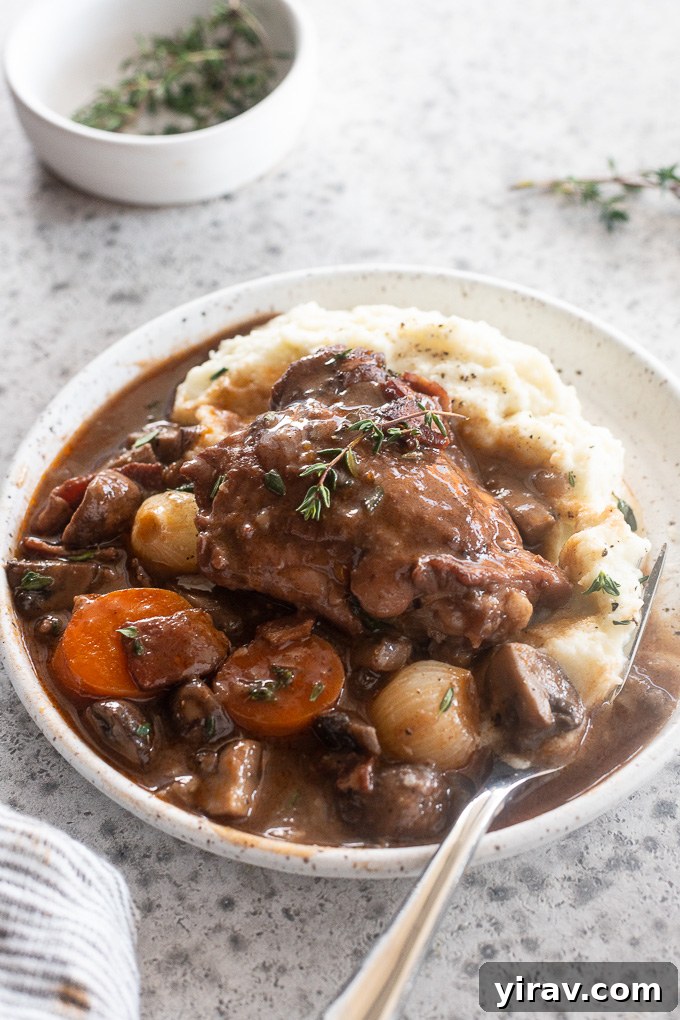
- For a truly classic and comforting pairing, serve your Coq au Vin over a bed of creamy mashed potatoes. The potatoes absorb the sauce beautifully, making each spoonful a delight. For a delicious low-carb alternative, consider serving it with mashed cauliflower.
- Alternatively, this rich stew is wonderfully complemented by creamy Instant Pot polenta, which offers a soft, comforting base. You can also serve it over your favorite pasta, such as wide egg noodles, for a heartier, Italian-inspired twist.
Important Recipe Notes and Tips
- Choosing Your Wine: As a fundamental rule for Coq au Vin, always use a good, drinkable quality red wine like Pinot Noir for the braising liquid. The wine is the foundation of your sauce, and its quality significantly influences the depth and complexity of the final dish.
- Handling Pearl Onions: If you’re using frozen pearl onions, ensure they are completely thawed before adding them to the stew. You have two options for incorporating them: either add them to the pot during the last 15 minutes of the stew’s simmering time so they can cook directly in the sauce, or microwave them separately until tender and stir them in just before serving.
- Skimming Excess Fat: For a slightly lighter sauce, allow the finished stew to stand at room temperature for a short period before serving. This pause allows any excess fat to rise to the surface, which you can then easily skim off with a spoon or blot away with paper towels.
- Storage and Freezing: Coq au Vin is a fantastic dish for meal planning. Store any leftovers in an airtight container in the refrigerator for up to 3 days. For longer storage, cool the stew completely, then transfer it to freezer-safe containers and freeze for up to 3 months. Thaw overnight in the refrigerator before reheating gently.
- Gluten-Free Adaptation: To make this Coq au Vin recipe entirely gluten-free, simply omit the all-purpose flour from the ingredients list. In place of Worcestershire sauce, use coconut aminos or a certified gluten-free Worcestershire sauce. Once the chicken is fully cooked, carefully remove it from the pan. In a small bowl, combine 2 tablespoons of cornstarch with 2 tablespoons of cold water, stirring until you have a smooth slurry. With the heat on medium-low, slowly pour the cornstarch slurry into the simmering sauce in a steady stream, stirring constantly. Continue stirring and cooking for about 2-3 minutes, or until the sauce has thickened to your desired consistency.
More Hearty Stew Recipes You’ll Adore
- Instant Pot Guinness Beef Stew
- Pork Stew by Gonna Want Seconds
- Classic Ratatouille
Did you try this recipe? If so, be sure to leave a review below and tag me @flavorthemoments on Facebook and Instagram so I can see your delicious creations!
Coq au Vin Recipe
Equipment
-
Le Creuset 5 1/2 Quart Dutch Oven
Ingredients
- 8 chicken thighs skin trimmed; season with salt and pepper. sub half with chicken drumsticks if desired
- 2 cups dry red wine such as pinot noir; drinkable quality
- 1 cup chicken stock
- 4 slices thick cut bacon cut into large pieces
- 1 medium onion chopped
- 16 ounces mushrooms halved or quartered, depending on size
- 6 cloves garlic minced
- 2 medium carrots cut into 1″ pieces
- 1/4 cup all purpose flour see recipe notes for gluten-free option
- 2 tablespoons tomato paste
- 1 tablespoon Worcestershire sauce sub with soy sauce, tamari or coconut aminos
- 1 bay leaf
- 1 large sprig thyme or 1 1/2 teaspoons dried
- 1 cup pearl onions peeled if fresh, thawed completely if frozen
- salt and pepper, to taste
Instructions
-
Place the seasoned chicken thighs in a large bowl. Add the wine and chicken stock, making sure that the chicken is submerged in the liquid. Marinate while you prep the vegetables or up to overnight. This step is optional but recommended!8 chicken thighs, 2 cups dry red wine, 1 cup chicken stock
-
In a large Dutch oven or pan, cook the bacon over medium heat until crisp. Remove it from the pan using a slotted spoon and place on a paper towel lined plate. Do not discard the bacon grease as you will use it to brown the chicken.4 slices thick cut bacon
-
Remove the chicken from the wine marinade and pat completely dry with paper towels (do not discard the wine!). Heat the pan with the bacon grease to medium high and once sizzling, add the chicken skin side down (you may need to do this in 2 batches as you don’t want to crowd the pan). Flip the chicken when the skin is golden brown and it releases easily from the pan, and cook 2 more minutes on the other side. Transfer to a plate and set aside. This step renders the fat from the skin and creates a fond, or flavorful brown bits at the bottom of the pan.
-
Remove all but 2 tablespoons of the fat from the pan and reduce the heat to medium. Add the onion and cook for 4-5 minutes until softened. If at any time the fond on the bottom of the pan looks like it’s starting to burn, add a tablespoon or so of water and scrape the bits off the bottom and resume cooking. Add the mushrooms and cook 5 minutes until the liquid has evaporated, scraping the bits from the bottom of the pan, then add the garlic and carrots and cook 1 minute more.1 medium onion, 16 ounces mushrooms, 6 cloves garlic, 2 medium carrots
-
Add the flour and stir to coat the vegetables. Cook for 1 minute or so until fragrant, stirring constantly. Add the wine and chicken broth to the pot and scrape the bottom of the pan well. Add the tomato paste and Worcestershire and stir well to combine. Bring to a boil, then reduce the heat to medium low and stir in the bacon and fresh pearl onions (if using frozen, add them during the last 15 minutes of cooking time). Nestle the chicken in the pot and spoon the liquid over the top. Add the bay leaf and thyme and cover. Simmer for 45-50 minutes or until the vegetables are tender and a meat thermometer inserted into the thickest part of the thighs registers 175 degrees.1/4 cup all purpose flour, 2 tablespoons tomato paste, 1 tablespoon Worcestershire sauce, 1 bay leaf, 1 large sprig thyme, 1 cup pearl onions
-
If the liquid is a bit thin, continue cooking for a few minutes longer with the lid off to reduce the sauce to the desired consistency. Remove the bay leaf and thyme sprig and adjust the seasoning as needed. Enjoy!salt and pepper, to taste
Notes
- Pro tip: Use a good, drinkable quality of red wine such as Pinot Noir for the braising liquid as it is the foundation of the sauce.
- If using frozen pearl onions, either add them to the pot during the last 15 minutes of cooking time, or microwave them until tender and add them at the end.
- Let the stew stand at room temperature for a bit before serving if desired as this will allow excess fat to rise to the top. You can either skim it off with a spoon or blot it with paper towels.
- Store for up to 3 days in the refrigerator, or cool it completely and freeze for up to 3 months.
- Gluten-free option: Omit the flour and use coconut aminos in place of Worcestershire sauce. When the chicken is done, remove it from the pan. Combine 2 tablespoons cornstarch with 2 tablespoons of water and stir until combined. With the heat on medium low, stir the cornstarch slurry in a steady stream. Stirring constantly, cook until thickened, about 2-3 minutes.
Nutrition
Nutrition is estimated using a food database and is only intended to be used as a guideline for informational purposes.