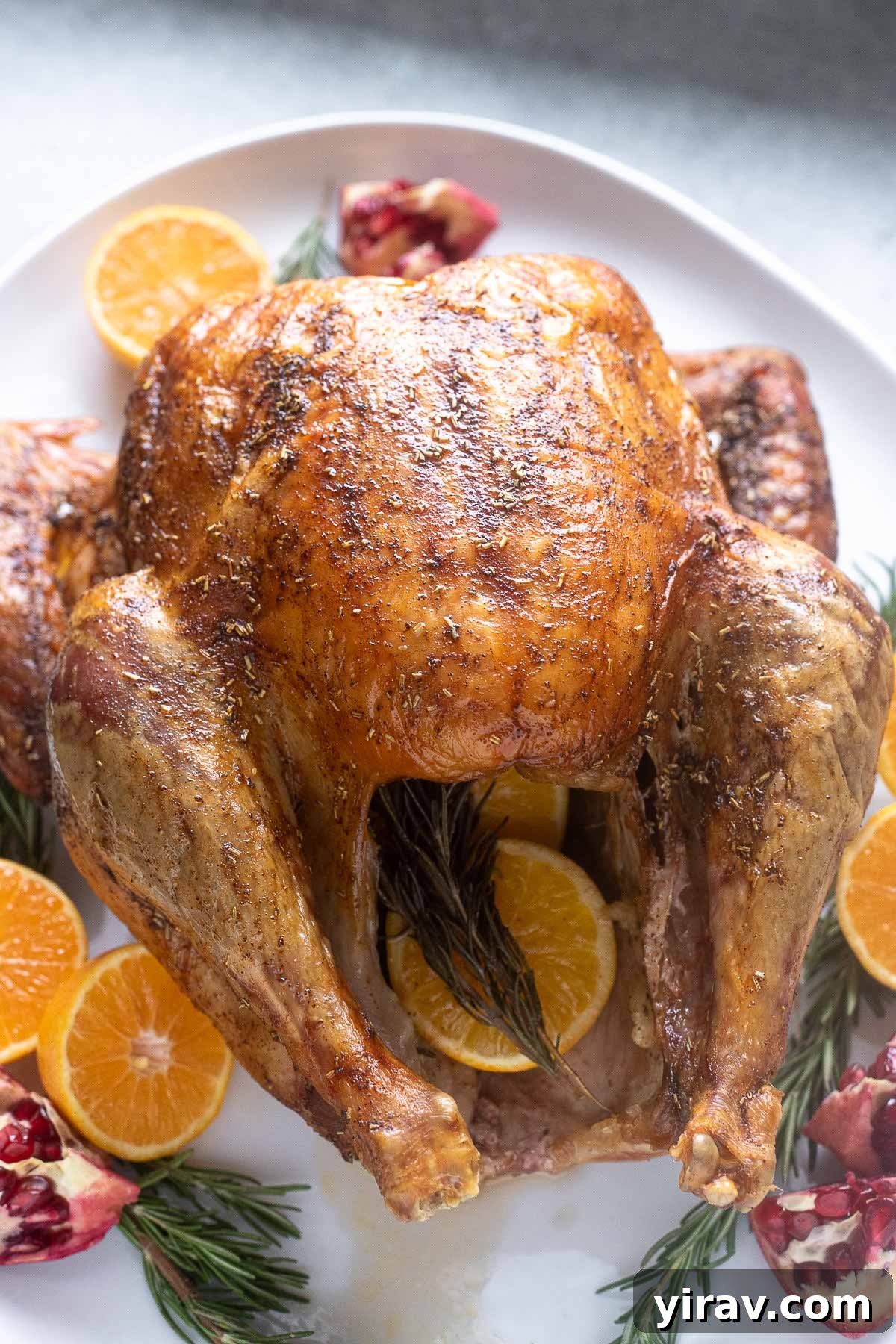
The Ultimate Dry Brine Roast Turkey Recipe: Juicy, Crispy, and Stress-Free
Transform your holiday dinner with this incredibly simple yet spectacular Dry Brine Roast Turkey Recipe. Forget the fuss and mess of traditional wet brining; our method guarantees an exceptionally juicy, deeply flavorful turkey with a perfectly golden-brown, irresistibly crispy skin. It’s a show-stopping centerpiece that promises to impress every guest, and the best part? You can prep it up to three days in advance, freeing up precious time on Thanksgiving Day!
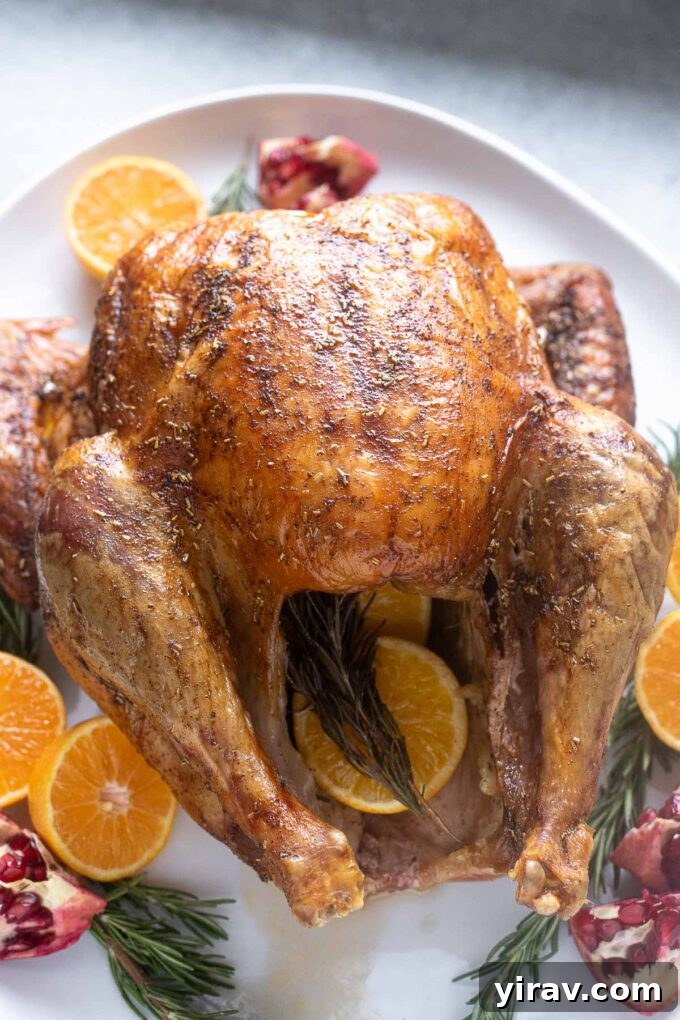
Thanksgiving is a time for gratitude, family, and, of course, incredible food. For many, the thought of roasting a turkey can be daunting, often leading to dry meat or a frantic kitchen. However, this recipe changes everything. Over the years, I’ve honed my holiday preparations, simplifying complex dishes and embracing make-ahead strategies. While I often opt for a spatchcock turkey for its speed and even cooking, there’s something truly special about presenting a beautifully intact, traditionally roasted turkey on your holiday table.
This dry brine method is my secret for achieving that picture-perfect roast. It delivers a turkey that is not only tender and moist but also infused with the vibrant, aromatic flavors of orange and rosemary, complemented by a subtle hint of smoked paprika. The skin, a highly coveted part of any roast, becomes delightfully crispy and golden brown, making it a true showstopper. Whether you’re a seasoned holiday host or tackling your first Thanksgiving meal, this recipe is designed to make your turkey experience effortless and unforgettable.
Why This Dry Brine Roast Turkey Will Be Your New Holiday Favorite
This recipe isn’t just about roasting a turkey; it’s about simplifying your holiday cooking while elevating the flavors and texture to gourmet levels. Here’s why you’ll absolutely love making this dry-brined bird:
- Unmatched Juiciness & Flavor: The dry brine technique penetrates the meat deeply, resulting in a turkey that is incredibly moist and tender from the inside out. Coupled with fresh orange zest, aromatic rosemary, and a touch of smoked paprika, every bite is bursting with festive flavors.
- Crispy, Golden-Brown Skin: Say goodbye to rubbery turkey skin! Dry brining draws out moisture from the skin, ensuring it crisps up beautifully in the oven, achieving that coveted golden-brown hue and satisfying crunch that everyone craves.
- Stress-Free Prep: Unlike messy wet brines that require large containers and careful handling of liquid, dry brining is clean and simple. You apply the salt directly to the turkey and let it work its magic in the refrigerator.
- Superior Make-Ahead Convenience: The turkey can be dry brined up to three days before you plan to roast it. This crucial step can be done well in advance, significantly reducing your kitchen workload on the busy holiday cooking day.
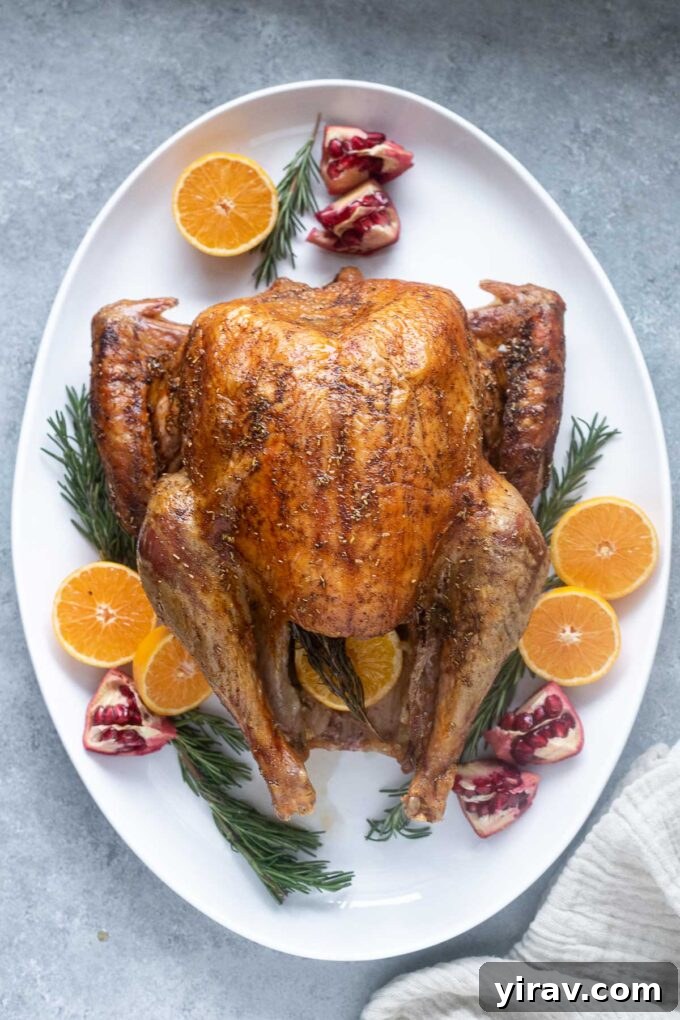
- Impressive Presentation: This recipe yields a magnificent roast turkey that looks as incredible as it tastes. It’s truly a centerpiece worthy of your most festive holiday table, guaranteeing gasps of delight from your guests.
Essential Ingredients for a Perfect Roast
Crafting the perfect roast turkey begins with a selection of quality ingredients. This recipe keeps things simple yet impactful, ensuring maximum flavor with minimal effort:
- Whole Turkey: For optimal results with this recipe, we recommend a 12-15 lb. turkey. This size cooks more evenly and is easier to handle than larger birds. Remember to remove the giblet package from the cavity before you begin the dry brining process.
- Kosher Salt: This is the star of our dry brine. Its coarse texture and lack of iodine make it ideal for drawing out moisture and tenderizing the meat without imparting a metallic taste. If you’re substituting with regular table salt or fine sea salt, reduce the quantity by half (approximately 1 tablespoon), as they are denser and saltier by volume.
- Extra Virgin Olive Oil: Applied before roasting, the olive oil helps the skin achieve that beautiful golden-brown color and irresistible crispiness while also adhering the seasonings to the bird.
- Smoked Paprika: More than just a spice, smoked paprika contributes a lovely reddish hue to the turkey skin and infuses it with a warm, subtly smoky flavor that complements the other aromatics beautifully.
- Fresh Orange: Both the zest and juice of an orange are used. The bright, citrusy notes of orange pair wonderfully with rosemary, adding a refreshing counterpoint to the rich turkey flavor. A navel orange or two clementines work perfectly. Lemon can be used as a substitute, or you can omit the citrus entirely if preferred.
- Fresh Rosemary: This woody herb is a classic partner for poultry. Its pungent, piney aroma permeates the turkey, creating an inviting fragrance and a delicious flavor profile. Fresh thyme or a blend of your favorite fresh herbs can also be used.
- Aromatics (Onion & Garlic): Placed inside the turkey cavity, these simple aromatics release their flavors and moisture during roasting, subtly perfuming the meat from the inside out. They contribute to the overall savory depth of the dish.
For precise measurements and quantities, please refer to the detailed recipe card below.
Step-by-Step Guide: Crafting Your Dry Brine Roast Turkey
Preparing a turkey has never been easier or more rewarding. This dry brine method simplifies the process, making it accessible even for novice cooks. Follow these steps for a perfectly roasted bird every time:
The Dry Brining Process (1-3 Days in Advance)
- Prepare the Turkey: Begin by removing the turkey from its packaging. Locate and remove the giblet pouch and neck from the main cavity and the neck cavity (if present). Pat the entire turkey, inside and out, thoroughly dry with paper towels. This crucial step ensures the skin will crisp up beautifully.
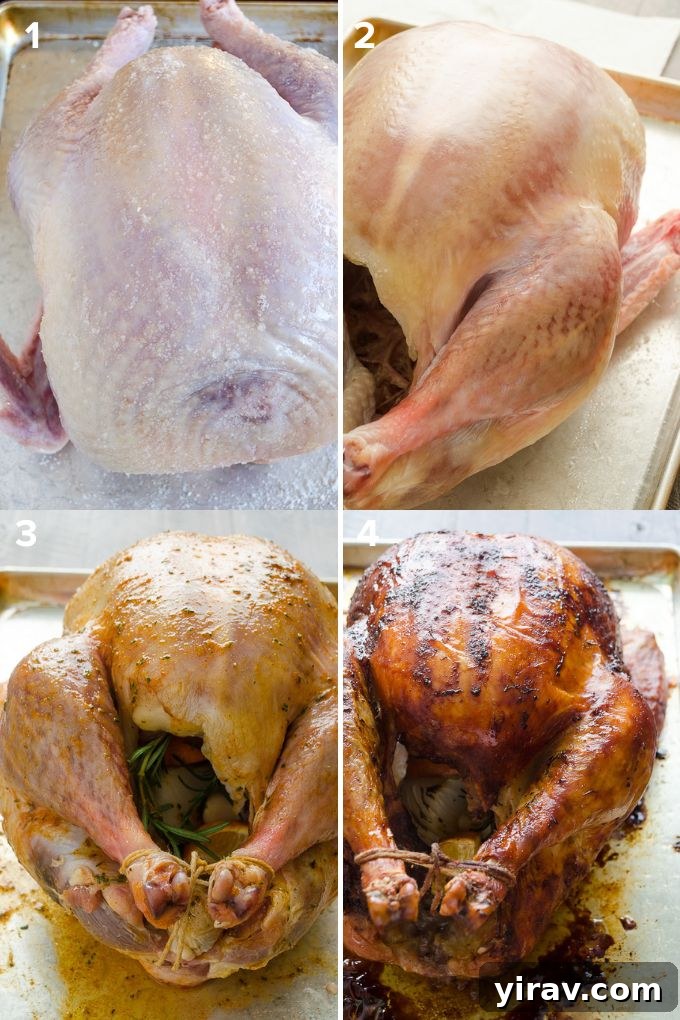
- Apply the Dry Brine: Generously sprinkle the kosher salt all over the turkey. Be sure to apply it evenly to the outside skin, inside the main cavity, and most importantly, gently lift the skin over the breast meat and rub salt directly onto the breast flesh. This direct application is key for optimal flavor and moisture.
- Refrigerate Uncovered: Place the salted turkey on a rimmed baking sheet (to catch any drips) and transfer it to the refrigerator, uncovered. Allow it to dry brine for 1 to 3 days. During this time, the salt will work its magic, drawing out moisture from the skin and tenderizing the meat. Don’t be alarmed if the skin appears drier and tighter; this is completely normal and a sign that it’s ready for roasting and will become wonderfully crispy.
Roasting Day Preparation
- Bring to Room Temperature: On the day you plan to roast the turkey, remove it from the refrigerator 1 to 2 hours before cooking. Allowing it to come closer to room temperature promotes more even cooking.
- Preheat Oven & Prepare Herb Rub: Preheat your oven to 350°F (175°C). In a small bowl, whisk together the extra virgin olive oil, finely chopped fresh rosemary, smoked paprika, and freshly ground black pepper until well combined.
- Season the Turkey: Generously coat the entire outside of the turkey with the olive oil mixture. Ensure it’s spread evenly over the breast, legs, and wings. This rub will enhance flavor and contribute to the stunning golden-brown crust.
- Stuff with Aromatics & Truss: Place the quartered orange (or clementines), smashed and peeled garlic cloves, and the remaining two large sprigs of rosemary inside the turkey cavity. Use kitchen twine to truss the turkey legs together. Tuck the wing tips underneath the turkey body; this prevents them from burning and helps the turkey cook more uniformly.
Roasting & Resting
- Roast to Perfection: Place the prepared turkey in the preheated oven. Roast for approximately 2 1/2 to 3 hours for a 12-15 lb. turkey. Cooking times can vary between ovens, so it’s essential to check for doneness after 2 1/2 hours. The turkey is done when a meat thermometer inserted into the thickest part of the breast (without touching bone) registers 160°F (71°C). The temperature will rise to the safe 165°F (74°C) mark during resting.
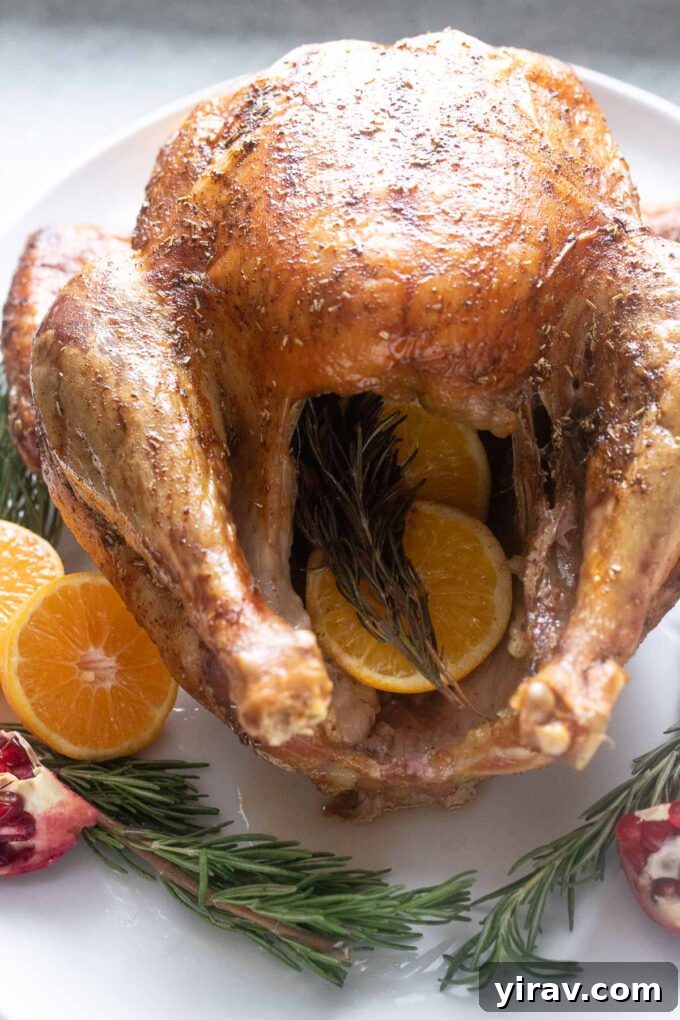
- Rest the Turkey: Once the turkey reaches the desired internal temperature, carefully remove it from the oven. Loosely tent it with foil and let it rest for a minimum of 20-30 minutes before carving. This resting period is critical; it allows the juices to redistribute throughout the meat, ensuring every slice is incredibly moist and tender. Do not skip this step!
Expert Tips for Success
- Oven Calibration Varies: While a 12-15 lb. turkey generally takes about 2 1/2 to 3 hours at 350°F (175°C), every oven is different. Always use a reliable meat thermometer and start checking for doneness after 2 hours and 30 minutes to avoid overcooking.
- Don’t Rinse the Dry Brine: After the turkey has been dry brined, do not rinse off the salt. The salt has already absorbed into the meat, and any excess moisture will hinder the crisping of the skin. Simply pat dry any surface condensation before applying the oil rub.
- Prioritize a Meat Thermometer: This is your most valuable tool for roasting a perfect turkey. Relying on visual cues or pop-up timers can lead to overcooked, dry meat. Aim for 160°F (71°C) in the breast, knowing it will carry over to 165°F (74°C) during resting.
- Uncovered Roasting is Key for Crispy Skin: For that desirable golden-brown and crispy skin, roast the turkey uncovered for the majority of the cooking time. If the skin begins to brown too quickly, you can loosely tent it with aluminum foil for the remainder of the cooking.
- Avoid Basting: Basting is a common turkey myth. It’s largely unnecessary and can actually hinder the roasting process by repeatedly opening the oven, which drops the internal temperature and extends cooking time. A dry brine and proper cooking temperature are far more effective for moist results.
- Thawing Frozen Turkey: If using a frozen turkey, ensure it is completely thawed before beginning the dry brining process. A general rule is 24 hours of thawing in the refrigerator for every 4-5 pounds of turkey.
- Embrace the “Dried Out” Skin: It’s normal for the turkey’s skin to look dry after the dry brining period. This is exactly what you want! That dryness is the foundation for an incredibly crispy skin once roasted.
Frequently Asked Questions About Roast Turkey
No, there’s no need to rinse your turkey before roasting. Any bacteria present on the surface will be destroyed during the cooking process. Rinsing raw poultry in the sink actually increases the risk of spreading bacteria through splashing water, contaminating your sink area, countertops, and nearby utensils. Patting it thoroughly dry with paper towels is sufficient and preferred.
Absolutely not. Do not rinse off the turkey after it has been dry brined. Rinsing would add excess moisture, which is the enemy of crispy skin. The salt has already permeated and worked its magic into the turkey meat. There’s no need to season the turkey with any more salt; simply apply the olive oil and herb rub to the outside before roasting.
Roast turkey can be successfully cooked at either 325°F (160°C) or 350°F (175°C). We prefer roasting at 350°F (175°C) as it cooks a bit more quickly and contributes to a crispier skin. However, 325°F (160°C) is also a viable option if you prefer a slower roast, just be prepared for a slightly longer cooking time.
For golden-brown, crispy skin, it is essential to roast the turkey uncovered for the majority of the cooking time. If you notice the skin is browning too quickly before the turkey is fully cooked, you can loosely tent it with aluminum foil. This protects the skin while allowing the internal temperature to continue rising.
Basting is generally not necessary to ensure a moist and juicy turkey, especially when using a dry brine. Each time you open the oven door to baste, the oven temperature drops significantly, which prolongs the overall cooking time and can even contribute to dryness. Your best strategy for a moist turkey is a proper dry brine and carefully monitoring the internal temperature with a thermometer to avoid overcooking.
The only reliable way to tell if your turkey is done is by using an instant-read meat thermometer. Insert it into the thickest part of the breast, avoiding the bone. The turkey is safe to eat when it reaches 165°F (74°C). For ultimate juiciness, remove it from the oven when the breast reaches 160°F (71°C), as it will continue to cook and rise to 165°F (74°C) during the resting period.
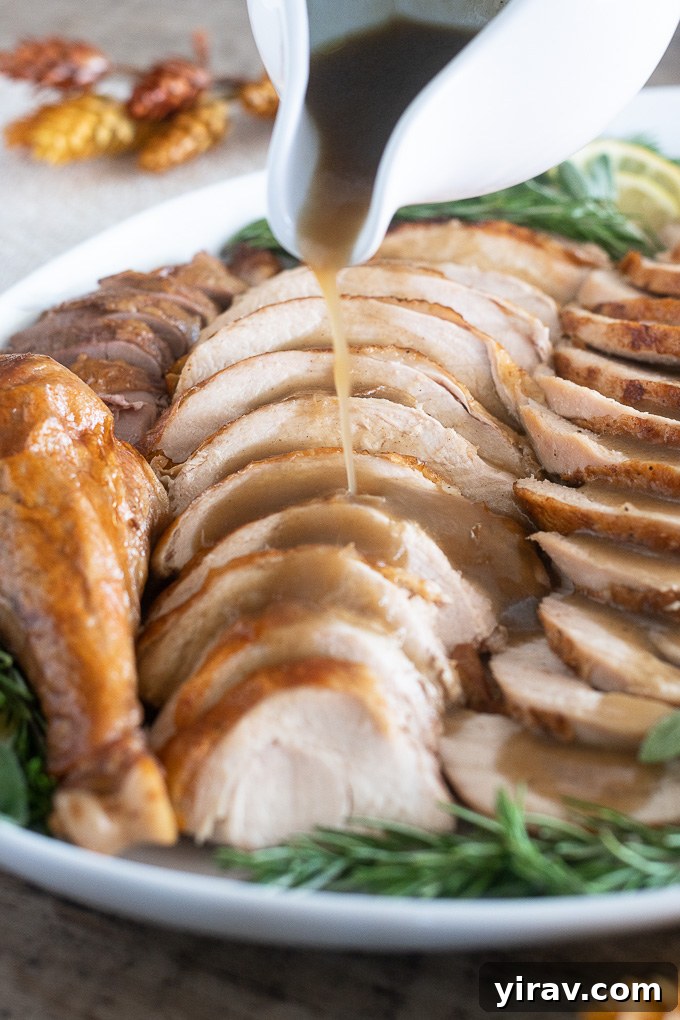
Don’t let those flavorful pan drippings go to waste! They are the perfect base for a rich, homemade turkey gravy. After removing the turkey, deglaze the pan with some broth or wine, scrape up all the browned bits, and then use this liquid, along with a roux, to create a delicious gravy to complement your roast.
Serving Your Masterpiece and Leftover Ideas
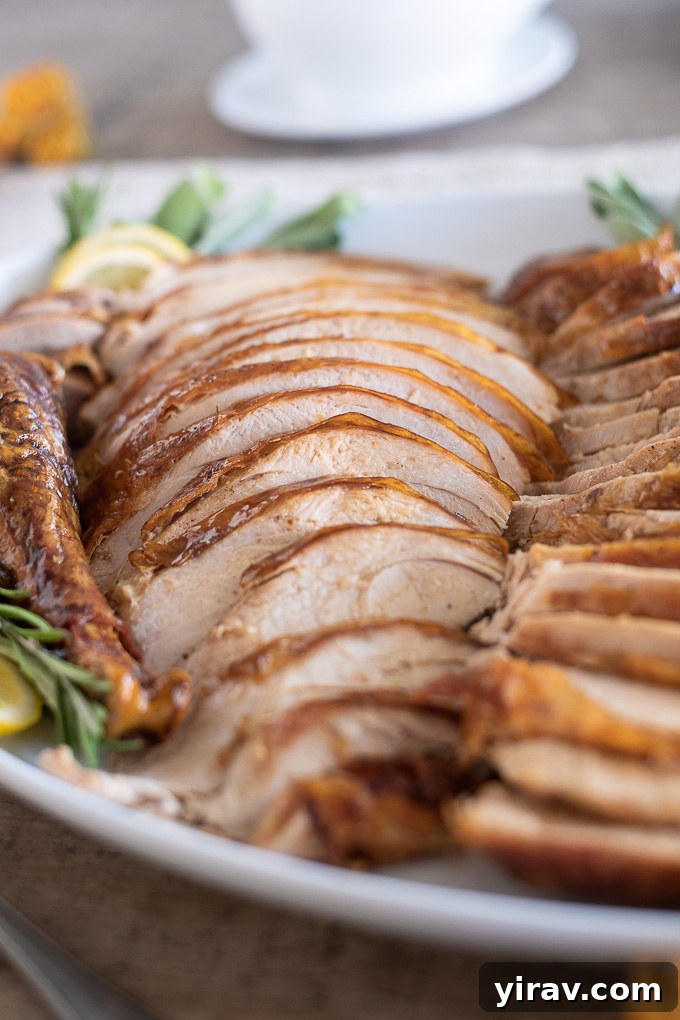
Once your beautifully roasted turkey has rested, it’s time to carve and enjoy! Resting allows the juices to redistribute, ensuring every slice is as succulent as possible. Use a sharp carving knife and aim for even slices of breast meat and carefully separate the leg and thigh quarters. Arrange the carved turkey on a large platter, perhaps garnished with extra fresh rosemary and orange slices for a final elegant touch.
This dry-brined turkey pairs wonderfully with classic Thanksgiving side dishes. Imagine it alongside fluffy Yukon Gold Mashed Potatoes, vibrant Green Bean Casserole, and a tangy Cranberry Orange Sauce. Don’t forget the homemade gravy made from the flavorful pan drippings – a must-have for any turkey feast.
Creative Leftover Turkey Ideas:
One of the best parts of roasting a whole turkey is the promise of delicious leftovers. Here are a few ideas to extend the enjoyment:
- Classic Turkey Sandwiches: Layer sliced turkey with your favorite fixings, a dollop of cranberry sauce, and maybe a slice of cheese.
- Hearty Turkey Wild Rice Soup: A comforting and flavorful soup that makes excellent use of leftover turkey and can be made in a slow cooker.
- Turkey Pot Pie: Combine diced turkey with vegetables in a creamy sauce, topped with a flaky pastry crust.
- Turkey Tacos or Enchiladas: Shredded turkey works beautifully in Mexican-inspired dishes.
- Turkey Salad: Mix chopped turkey with mayonnaise, celery, and herbs for a refreshing salad.
Leftover roast turkey will keep for up to 3-5 days in an airtight container in the refrigerator, ready to be repurposed into delicious meals.
More Thanksgiving Recipes You’ll Love
Complete your holiday feast with these delectable side dishes and desserts that perfectly complement our Dry Brine Roast Turkey:
- Cranberry Orange Sauce: A bright and tangy homemade sauce.
- Easy Slow Cooker Stuffing: Free up oven space with this convenient stuffing recipe.
- Homemade Green Bean Casserole: A classic side elevated with crispy fried shallots.
- Pumpkin Pie Bars: A delightful twist on traditional pumpkin pie.
- Pumpkin Pie from Scratch: The ultimate classic for your dessert table.
- Roasted Boneless Turkey Breast: An alternative for smaller gatherings or extra white meat.
- Sweet Potato Casserole: A comforting dish with a delectable oat pecan streusel.
- Yukon Gold Mashed Potatoes: Creamy, garlicky, and utterly irresistible.
Did you try this recipe? If so, we’d love to hear from you! Please leave a review below and share your creation by tagging @flavorthemoments on Facebook and Instagram!
Dry Brine Roast Turkey Recipe
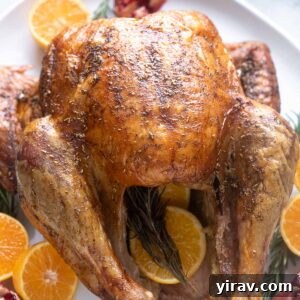
This Dry Brine Roast Turkey Recipe is a show stopping addition to your Thanksgiving table! It’s golden brown and juicy with the flavors of orange and rosemary, and it’s dry brined so there’s no messy wet brine to deal with!
Servings: 20 servings
Prep Time: 15 mins
Cook Time: 3 hrs
Additional Time (Brining): 1-3 days
Total Time: 1 day 3 hours 15 mins (includes minimum 1 day brine)
Rating: 5 out of 5 stars (based on 1 review)
Leave a Review »
Equipment
- Rimmed Baking Sheets 16 3/4″ x 12″
Ingredients
- 13 lb. turkey (whole)
- 2 tablespoons kosher salt
- 2 tablespoons extra virgin olive oil
- 1 tablespoon chopped fresh rosemary, plus two large sprigs (divided)
- 2 teaspoons smoked paprika
- 1/2 teaspoon freshly ground black pepper
- 1 small navel orange or two clementines, quartered
- 6 cloves garlic, smashed and peeled
Instructions
- 1-3 days prior to cooking, remove the giblet pouch from the turkey and pat it dry with paper towels. Place it on a rimmed baking sheet and sprinkle it evenly with the kosher salt on the outside, inside the cavity, and under the skin over the breast meat. Refrigerate uncovered for up to 3 days.
- When you’re ready to cook the turkey, remove it from the refrigerator and let stand at room temperature for 1-2 hours.
- Preheat the oven to 350 degrees F (175 C). Place the olive oil, chopped rosemary, smoked paprika, and black pepper in a small bowl and whisk until combined. Coat the outside of the turkey evenly with the olive oil mixture.
- Place the orange, garlic cloves, and remaining 2 sprigs of rosemary inside the cavity of the turkey. Truss the turkey legs using kitchen twine, and tuck the wing tips underneath the turkey.
- Place the turkey in the oven and cook for 2 1/2 – 3 hours, depending on the size, or until a thermometer inserted into the thickest part of the breast registers 160 degrees F (71 C).
- Let the turkey stand for a minimum of 20-30 minutes covered loosely with foil, then place on a cutting board. Carve and enjoy!
Notes
- Pro tip: Turkey cook time will vary, but a 12-15 lb. turkey generally takes around 2 1/2 – 3 hours to cook. All ovens vary, so I suggest checking for doneness after 2 1/2 hours of cooking time.
- Total time includes 1 day to dry brine the turkey, but the turkey may be dry brined for a total of 3 days before you plan to cook it.
- The skin will look dried out after dry brining which is normal — that’s what makes the skin so crispy.
- If using a frozen turkey, make sure to thaw completely and pat dry before dry brining.
- Leftover roast turkey will keep for 3-5 days in the refrigerator in an airtight container.
Nutrition
Nutrition is estimated using a food database and is only intended to be used as a guideline for informational purposes.
Calories: 434kcal, Carbohydrates: 1g, Protein: 64g, Fat: 18g, Saturated Fat: 5g, Cholesterol: 212mg, Sodium: 1028mg, Potassium: 682mg, Fiber: 1g, Sugar: 1g, Vitamin A: 232IU, Vitamin C: 4mg, Calcium: 38mg, Iron: 3mg
Course: Main Dishes
Cuisine: American
Author: Marcie
All recipes and images © Flavor the Moments.
Did you try this recipe?
Be sure to tag @flavorthemoments with the hashtag #flavorthemoments on Instagram so I can see what you made!