
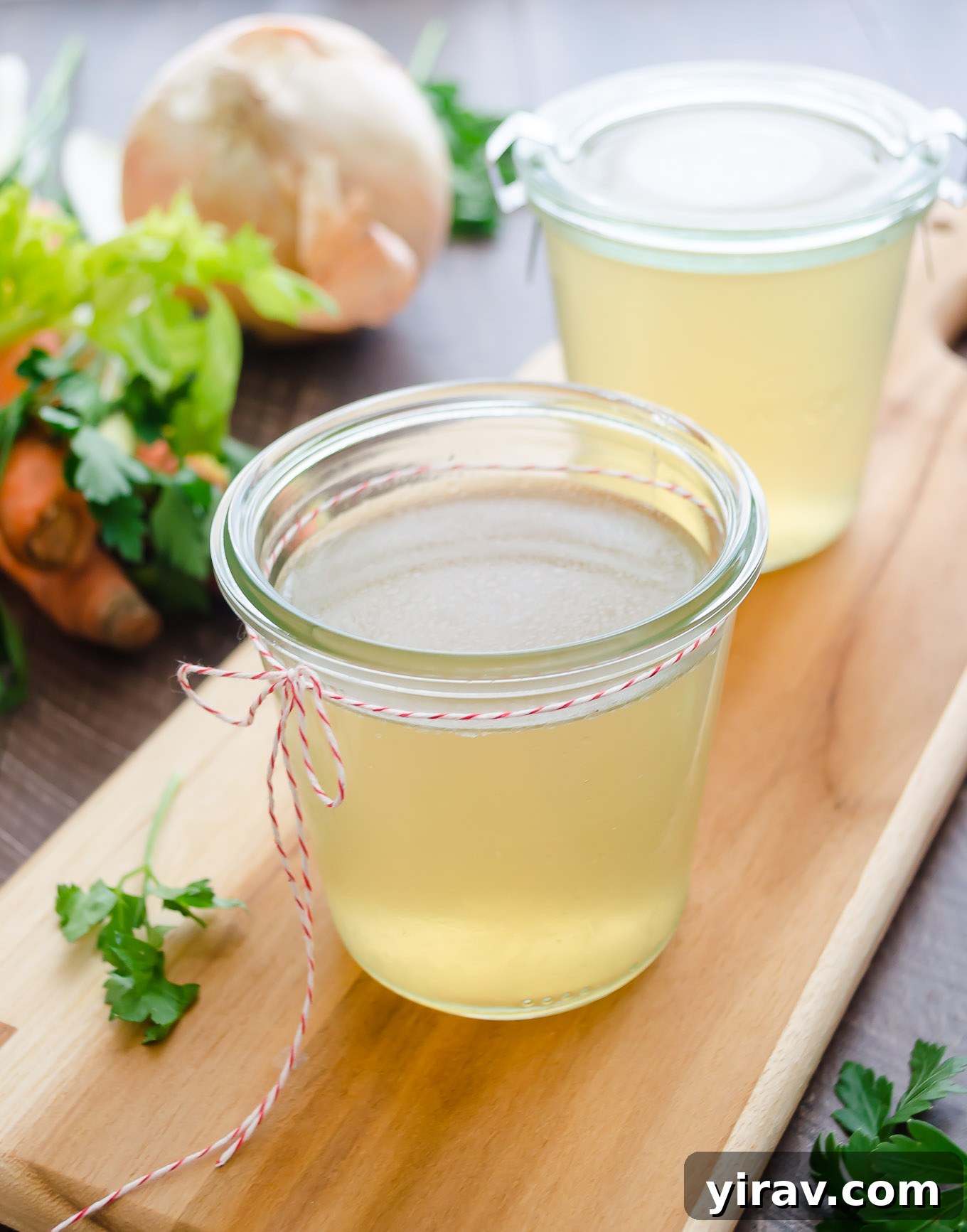
Elevate Your Culinary Creations with Easy Homemade Turkey Stock (Stove Top & Instant Pot!)
Transform your gravies, soups, and stews from ordinary to extraordinary with this incredibly simple and intensely flavorful Easy Homemade Turkey Stock Recipe! Crafted with just a few basic ingredients, this versatile recipe provides clear, step-by-step instructions for both stove top simmering and the convenience of your Instant Pot, ensuring a rich, gelatinous stock every time. Whether you’re preparing for a holiday feast or simply looking to add depth to your everyday meals, this homemade turkey stock is an essential building block for any home cook.
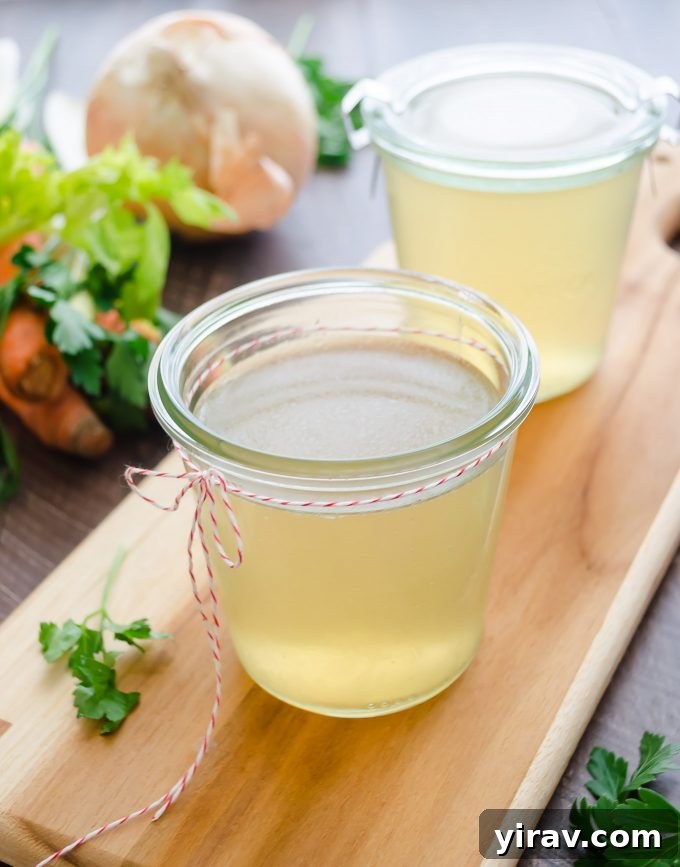
Thanksgiving holds a special place in my heart; it’s truly my favorite holiday, and I’ve had the pleasure of hosting it for over 15 years. Over these years, I’ve refined my approach to holiday meal preparation, turning it into a well-oiled machine where efficiency and advanced planning are key. Getting ahead of the game allows me to enjoy the festivities without the last-minute stress.
One of my most cherished traditions, and a cornerstone of my Thanksgiving strategy, is preparing a turkey a few weeks in advance. The reason? To utilize every part, especially the carcass, for this very Homemade Turkey Stock recipe. This rich, homemade stock is absolutely essential for creating my legendary turkey gravy, which I masterfully freeze and reheat on Thanksgiving Day, saving precious time while delivering unparalleled flavor.
Beyond gravy, this stock is also indispensable for my beloved Turkey Wild Rice Soup. A hearty, comforting dish that I adore almost as much as the Thanksgiving dinner itself! The depth and richness that homemade stock brings to these dishes simply cannot be replicated with store-bought alternatives, making it a worthwhile endeavor for any culinary enthusiast.
Why You’ll Love This Easy Homemade Turkey Stock Recipe
Making your own turkey stock is a rewarding experience that pays dividends in flavor and quality for all your cooking. Here’s why this recipe will become a staple in your kitchen:
- Unbeatable Flavor and Silky Texture: The magic of homemade turkey stock lies in the gelatin extracted from the bones during the simmering process. This gelatin creates a luscious, silky mouthfeel that translates directly into your sauces, soups, and gravies, elevating their texture and richness beyond what any store-bought broth can offer. The depth of flavor from slowly cooked bones and aromatics is simply unmatched.
- Remarkably Easy to Make: Despite its gourmet results, this turkey stock is incredibly straightforward to prepare. With just a handful of common ingredients and minimal active prep time, you can create a culinary powerhouse that will boost the taste of countless dishes. The process is forgiving and yields impressive results even for novice cooks.
- Incredibly Versatile for Any Turkey Parts: This recipe is designed to be highly adaptable, allowing you to use a variety of turkey parts. Whether you have uncooked turkey wings, legs, necks, giblets, the backbone from a spatchcocked turkey, or the entire carcass from a roasted bird, this recipe accommodates them all. It’s an excellent way to utilize leftovers and reduce food waste, transforming what might otherwise be discarded into liquid gold.
- Perfect for Meal Prep and Freezer-Friendly: Homemade turkey stock is a fantastic item for meal prepping. Once made, it can be stored in an airtight container in the refrigerator for up to 5 days, ready for immediate use. For longer storage, it freezes beautifully for up to 3 months, allowing you to have rich, flavorful stock on hand whenever inspiration strikes, or for those busy weeknights when you need a quick flavor boost.
Essential Turkey Stock Ingredients
Creating a robust and flavorful turkey stock doesn’t require an extensive shopping list. Aside from your turkey parts, this recipe calls for just a few simple, fresh ingredients that you likely already have in your pantry or can easily find at any grocery store. The key is quality and freshness to achieve the best flavor.
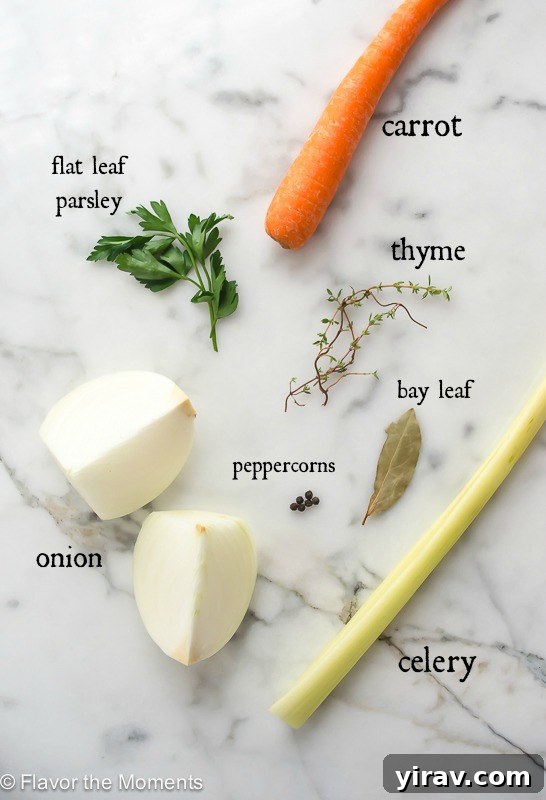
- Turkey Parts: This is the star of your stock. You can use a variety of uncooked turkey parts such as wings, necks, backbones (especially from a spatchcock turkey), and giblets (excluding the liver, which can make the stock bitter). For an even deeper, richer flavor, a roasted turkey carcass is ideal. The roasting process caramelizes the bones and any residual meat, adding unparalleled complexity. Don’t throw out that post-holiday carcass – it’s a treasure trove for stock! You can freeze it until you’re ready to make your stock. Trim any excess fat to prevent a greasy stock.
- Vegetables (Mirepoix): Like virtually every great soup or stock, this recipe relies on the classic French aromatic base known as mirepoix. This consists of humble yet powerful ingredients: onion, carrot, and celery. These vegetables provide a sweet, earthy foundation that builds incredible flavor in your stock. I strongly recommend against omitting them, as they are truly the building blocks of deliciousness. Cut them into large chunks, as they will be strained out later.
- Fresh Herbs: Fresh parsley and thyme are classic additions to stock, revered for their subtle yet aromatic contributions. Their gentle herbaceous notes infuse the liquid without overpowering it. It’s highly recommended to use fresh herbs over dried for stock, as dried herbs have a much more concentrated and sometimes intense flavor that can be less nuanced in a long simmer.
- Bay Leaf: One dried bay leaf is plenty to impart a delicate, almost floral, slightly bitter note that rounds out the savory flavors. Dried bay leaves are preferred over fresh for stock, as fresh bay leaves can have a much stronger, almost medicinal flavor.
- Whole Peppercorns: Whole peppercorns are a traditional and excellent addition to homemade stock. They contribute a mild, earthy warmth without making the stock spicy. You can use black, green, or even multi-colored peppercorns; any variety will work beautifully to add a subtle peppery nuance.
- Cold Water: While not listed as an ingredient, fresh, cold water is crucial for making clear stock. Starting with cold water allows impurities to slowly rise to the surface, where they can be easily skimmed off, resulting in a cleaner, more appealing final product.
For the precise quantities and full recipe details, please refer to the comprehensive recipe card located further down this page.
How to Make Homemade Turkey Stock
Making turkey stock is a surprisingly simple process that requires minimal active cooking time. With just a few minutes of initial preparation, you’ll be well on your way to a rich, flavorful homemade stock. This recipe offers flexible instructions for both traditional stove top simmering and the speed and efficiency of an Instant Pot.
Step 1: Prepare the Bouquet Garni
A bouquet garni is a French culinary term for a bundle of herbs and aromatics, typically tied together, used to infuse flavor into stocks, soups, and sauces. It makes for easy removal of the ingredients once the cooking is complete. For this recipe, it includes fresh thyme, parsley, a bay leaf, and whole peppercorns.
You have a few options for your bouquet garni: you can wrap the ingredients in a piece of cheesecloth, use a large, sturdy green top from a leek, or simply toss them directly into the pot and strain them out at the end. Using cheesecloth or a leek tie makes the straining process even simpler.
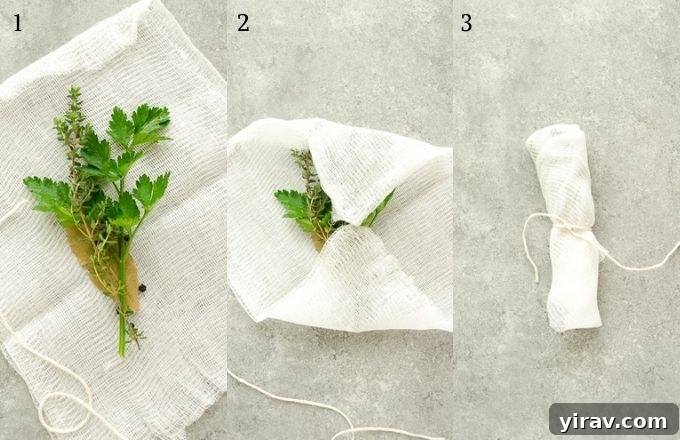
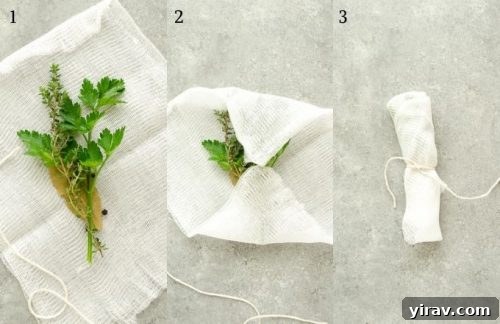
- Begin by gathering your fresh herbs (thyme and parsley), dried bay leaf, and whole peppercorns.
- Lay them out neatly on a small piece of cheesecloth (about 6×6 inches) or on a large, clean, dark green leaf from a leek.
- Carefully fold up the sides of the cheesecloth or leek leaf around the ingredients, creating a compact bundle.
- Secure the bundle tightly with kitchen twine, ensuring no ingredients can escape during the simmering process. This bundle will be easily removed after cooking.
Step 2: Prepare and Cook the Stock
Once your bouquet garni is ready, the next step involves combining all the ingredients and beginning the cooking process. The method will vary slightly depending on whether you’re using a stove top or an Instant Pot, but the goal remains the same: to slowly extract maximum flavor and nutrients from the turkey bones and aromatics.
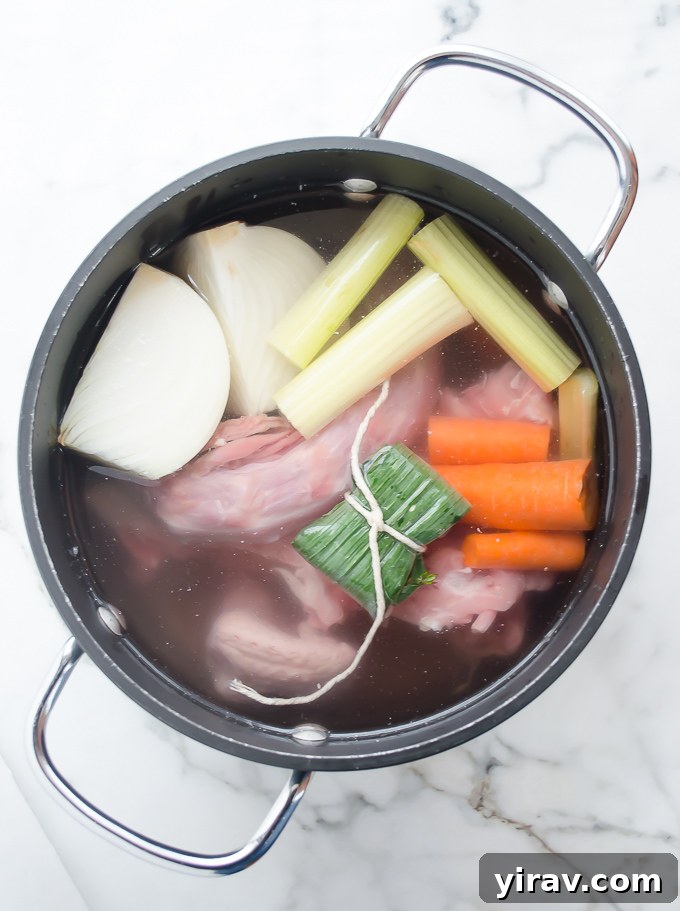
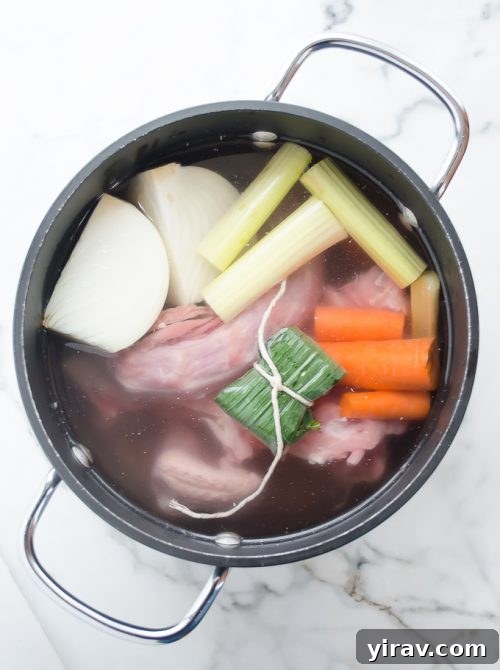
- Combine Ingredients: Place your chosen turkey parts, the quartered onion, large pieces of carrot, sliced celery, and your prepared bouquet garni into a very large stock pot or your Instant Pot. Fill the pot with cold water until all ingredients are submerged by approximately 2 inches. If using an Instant Pot, be mindful not to exceed its maximum fill line to ensure safe operation.
- Cooking Method – Stove Top: Bring the contents of the pot to a gentle boil over medium-high heat. As soon as it reaches a boil, immediately reduce the heat to a low simmer. The water should barely bubble. Skim off any foam or impurities that rise to the surface during the initial stages of simmering; this helps ensure a clear stock. Continue to simmer the stock gently for 3 to 3 1/2 hours, skimming any accumulating fat from the top occasionally. A long, slow simmer is key to extracting maximum flavor.
- Cooking Method – Instant Pot: For a faster approach, seal your Instant Pot and cook the stock at high pressure for 1 to 1 1/2 hours. Once the cooking cycle is complete, carefully perform a quick release of the pressure according to your Instant Pot’s instructions.
- Strain and Cool: Once cooked, carefully remove the turkey carcass, cooked vegetables, and the bouquet garni from the pot and discard them. The flavor and nutrients have now transferred to your stock. Place a fine mesh sieve over a large, heat-proof bowl or another clean pot. Slowly pour the stock through the sieve to filter out any small solids, resulting in a clear liquid. Allow the strained stock to cool completely at room temperature before storing.
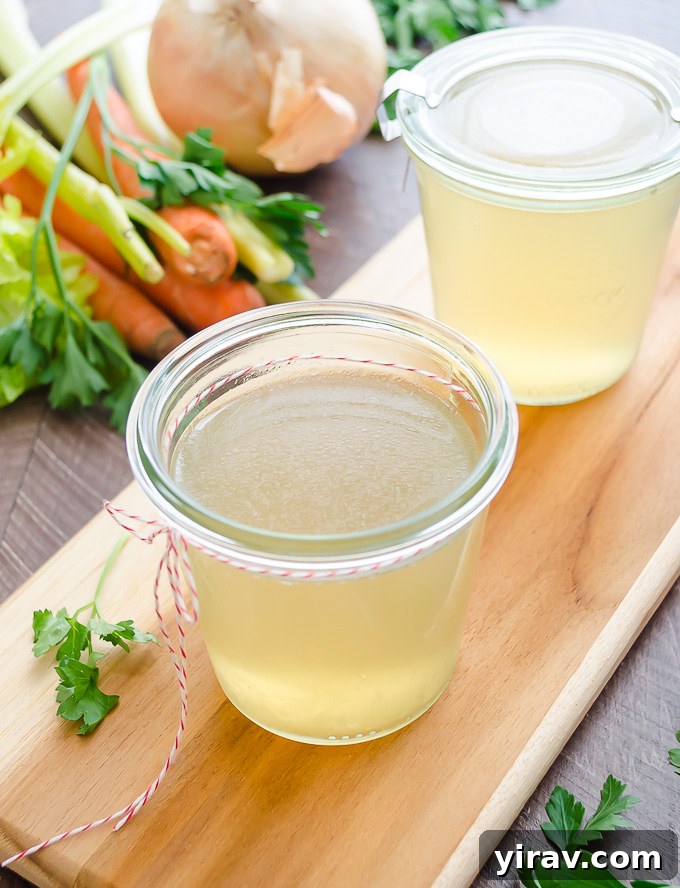
- Store: Once fully cooled, skim any remaining fat off the top of the stock. Transfer the clear turkey stock to airtight containers. It can be stored in the refrigerator for up to 5 days or frozen for up to 3 months, making it a convenient staple for future culinary endeavors.
Frequently Asked Questions About Turkey Stock
While the terms “stock” and “broth” are often used interchangeably in everyday conversation, there is a subtle but important culinary distinction. Both are flavorful liquids made with vegetables and sometimes meat. However, stock is traditionally made primarily from bones, which contribute gelatin and a richer body. Broth, on the other hand, is generally made from meat and vegetables, resulting in a lighter, more savory flavor that is often seasoned and consumed on its own.
Yes, turkey bone broth, especially homemade varieties, is widely considered to be very beneficial for health. The long simmering process extracts collagen from the bones, which is thought to support joint health, improve skin elasticity, and aid in digestive system function. It’s also rich in amino acids and minerals, making it a nourishing addition to your diet.
Homemade turkey stock is incredibly versatile and can be used in a myriad of dishes. It’s fantastic as a base for rich turkey gravy, hearty soups (like classic turkey noodle or creamy wild rice soup), comforting stews, and flavorful risottos. You can also use it to braise meats, deglaze pans, or as a flavorful liquid for cooking grains like rice or quinoa. Essentially, anywhere you would typically use chicken stock, you can substitute turkey stock for a unique and delicious flavor profile.
It’s crucial to simmer stock gently rather than boiling it vigorously. Boiling causes the fat and proteins to emulsify into the liquid, making your stock cloudy and greasy. When simmered at a low temperature, impurities and fat slowly rise to the surface, allowing you to easily skim them off, resulting in a clear, clean-tasting stock with a pleasant consistency. A rolling boil can also break down the gelatin, reducing the desirable body and silky texture of the stock.
Properly cooling homemade stock is important to prevent bacterial growth. The quickest and safest way to cool a large batch of stock is using an ice bath. Fill a large bowl or your sink with ice and a generous amount of rock salt, then add some cold water. Place the pot or bowl of hot turkey stock into this ice water bath, ensuring the water level doesn’t reach the rim of your stock container. Stir the stock occasionally to help it cool evenly and efficiently. Once it reaches a safe temperature (below 40°F / 4°C), it can be transferred to the refrigerator.
Once your homemade turkey stock has been properly cooled, it should be stored in airtight containers. It can be kept in the refrigerator for up to 5 days. For longer storage, freeze the stock in freezer-safe containers, zip-top bags (laid flat), or even ice cube trays for smaller portions. Frozen turkey stock will maintain its quality for up to 3 months, providing you with a convenient flavor enhancer whenever you need it.
Recipe Notes and Expert Tips for Perfect Turkey Stock
- Maximize Flavor with Roasted Bones: For the absolute richest, most deeply flavored stock, always prioritize using a roasted turkey carcass. The caramelization that occurs during roasting adds incredible depth and umami that raw bones simply can’t provide. Don’t discard that post-holiday carcass – it’s culinary gold! You can place the entire carcass in a zip-top bag and freeze it for up to 3 months until you’re ready to make your stock.
- Adaptable to Any Turkey Parts: This recipe is incredibly flexible. While an entire carcass yields about 8 cups, you can use any amount of uncooked turkey parts you have on hand, such as wings, necks, giblets (remember to omit the liver), or the backbone from a spatchcocked turkey. Simply fill your stock pot or Instant Pot with your chosen turkey parts and aromatics, ensuring they are covered by about 2 inches of cold water.
- The Fresh vs. Dried Herb Dilemma: For stock, fresh thyme and parsley are highly recommended. Their subtle, delicate flavors are perfect for a long simmer, infusing the stock with a nuanced herbaceousness. Dried herbs, being more concentrated, can sometimes impart an overly intense or even bitter flavor. However, for bay leaf, dried is actually preferred as fresh bay leaves possess a significantly stronger, almost medicinal taste that can overpower the stock.
- Optimal Storage for Longevity: Ensure your homemade stock is completely cooled before storing it. Transfer it to clean, airtight containers. It will last in the refrigerator for up to 5 days. For extended freshness, freeze the stock for up to 3 months. Freezing in smaller portions (e.g., in ice cube trays or 1-2 cup containers) makes it easy to thaw just what you need for various recipes.
- Clarifying Your Stock: For an exceptionally clear stock, beyond skimming foam during simmering, you can use a straining method with cheesecloth. After straining through a fine-mesh sieve, line the sieve with a few layers of damp cheesecloth and strain the cooled stock again. This will catch any remaining fine particles, resulting in a beautifully clear liquid.
More Homemade Stock Recipes to Explore
If you’ve enjoyed making this turkey stock, you might be interested in trying other homemade stock recipes to further enhance your cooking repertoire:
- Slow Cooker Chicken Stock: A hands-off method for a rich and versatile chicken stock.
- Easy Homemade Vegetable Stock: A flavorful plant-based option for vegetarian dishes.
Loved this recipe? We’d love to hear from you! Please consider leaving a review below and sharing your culinary creations. Don’t forget to tag us @flavorthemoments on Facebook and Instagram so we can see what you made!
Easy Homemade Turkey Stock
Pin Recipe
Leave a rating!
0 reviews
Leave a Review »
Ingredients
Turkey parts:
- Cooked or raw turkey parts such as wings, necks, backbone (if butterflied), and giblets (excluding liver), trimmed of excess fat. Cut into smaller pieces if needed to fit your pot. Using a roasted turkey carcass will yield the deepest flavor.
Aromatics (Mirepoix):
- 1 large onion peeled and quartered for maximum flavor extraction.
- 1 large carrot scrubbed and cut into large, roughly chopped pieces.
- 1 large stalk celery washed and cut into large, coarse pieces.
Bouquet Garni:
- Small piece of cheesecloth or the dark green top of a leek (optional, but helps with easy removal of herbs)
- Kitchen twine (optional, for tying the bouquet garni)
- 1 sprig fresh thyme (fresh is best for subtle flavor)
- 1 sprig Italian flat leaf parsley (adds fresh, green notes)
- 1 dried bay leaf (dried preferred over fresh for milder flavor)
- 6 whole peppercorns (black, green, or multi-colored are all fine for subtle warmth)
Instructions
Part 1: Prepare the Bouquet Garni
-
On a small piece of cheesecloth or the large, dark green top of a leek, arrange the fresh thyme, parsley, dried bay leaf, and whole peppercorns. This bundle will infuse flavor into your stock.
-
Carefully fold the sides of the cheesecloth or leek leaf around the ingredients to create a small, neat bundle.
-
Securely tie the bundle with kitchen twine. This ensures that the herbs and peppercorns remain contained, making them easy to remove once the stock is finished cooking.

Part 2: Prepare and Cook the Stock
-
Place your turkey bones or parts, along with the quartered onion, large pieces of carrot, sliced celery, and the prepared bouquet garni into a large stock pot or your Instant Pot. Fill with cold water until the ingredients are covered by approximately 2 inches. If using an Instant Pot, ensure the contents do not exceed the ‘Max Fill’ line.
-
For Stove Top Cooking: Bring the stock to a gentle boil over medium-high heat. Immediately reduce the heat to a low simmer, where the liquid barely bubbles. Cook for 3 to 3 1/2 hours, skimming off any foam or fat that rises to the surface periodically to ensure a clear stock.
For Instant Pot Cooking: Seal the Instant Pot and cook at high pressure for 1 to 1 1/2 hours. Once the cooking time is complete, carefully perform a quick release of the pressure valve according to your appliance’s safety instructions. -
Once cooked, carefully remove and discard the turkey carcass and any remaining meat, the spent vegetables, and the bouquet garni. Strain the hot stock through a fine-mesh sieve into a large, clean bowl or pot to remove any small particles. Allow the stock to cool completely at room temperature before proceeding. After it cools, skim any solidified fat from the top. Store the finished stock in an airtight container in the refrigerator for up to 5 days, or freeze it for up to 3 months for long-term use.
Notes
- This recipe is designed to yield approximately 8 cups of rich, flavorful stock, typically from an entire turkey carcass. However, you can easily adjust the quantity based on the turkey parts you have available. Feel free to use any combination of uncooked turkey parts such as wings, neck, giblets, or the backbone from a spatchcocked turkey. Simply place as much as will comfortably fit into your stock pot or Instant Pot, ensure it’s covered by about 2 inches of cold water, and add the recommended aromatics.
- Pro tip for enhanced flavor: Do not discard the carcass from your roasted turkey! Roasted bones impart a significantly deeper and more complex flavor to your stock compared to raw bones. You can freeze the entire roasted carcass in a zip-top bag for up to 3 months, making it readily available for your next stock or soup-making session.
- The choice between fresh and dried herbs makes a difference. Fresh thyme and parsley are highly recommended for this recipe because they lend a subtle, nuanced flavor to the stock without being overwhelming. Dried herbs have a more concentrated and intense flavor, which can sometimes be too strong after a long simmering period. Conversely, always opt for a dried bay leaf over a fresh one, as fresh bay leaves possess a much more potent and sometimes bitter flavor.
- Proper storage is key to enjoying your homemade stock for longer. Always ensure the stock is completely cooled before storing. Transfer it to clean, airtight containers. It can be safely kept in the refrigerator for up to 5 days. For longer storage, freeze the stock in freezer-safe containers for up to 3 months. Portioning it into smaller containers or ice cube trays before freezing makes it convenient for future use.
Nutrition Information (Estimated)
Nutrition is estimated using a food database and is only intended to be used as a guideline for informational purposes. Individual results may vary.