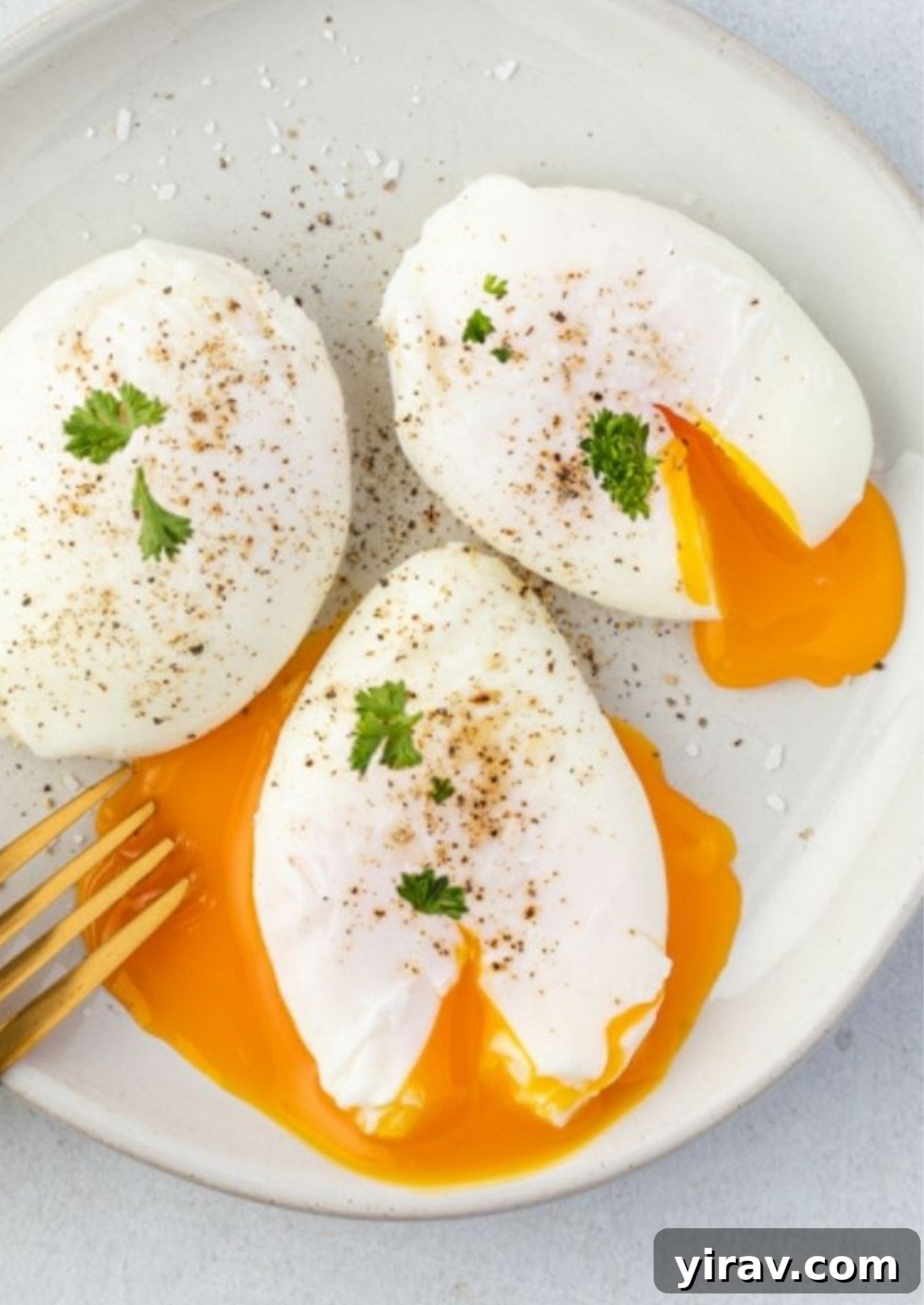
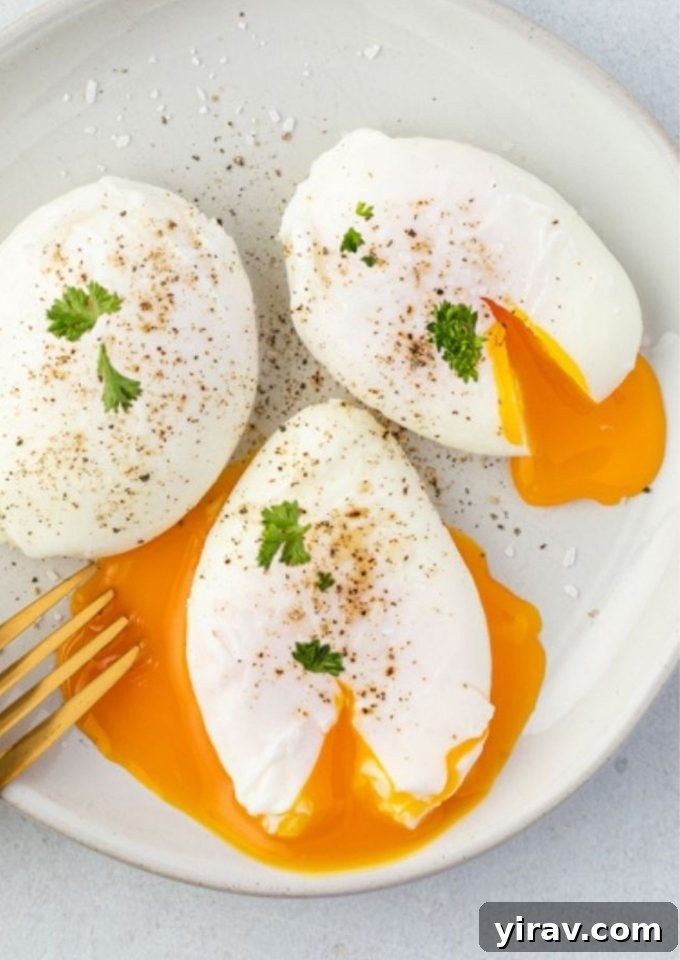
Unlock the secret to flawlessly poached eggs every single time with our comprehensive guide. Far from being an intimidating culinary feat, poaching eggs is a simple technique that elevates any meal, transforming an ordinary breakfast into a gourmet experience. This easy-to-follow recipe provides precise cooking times for soft, medium, and hard poached eggs, ensuring there’s a perfect yolk consistency for everyone at your table.
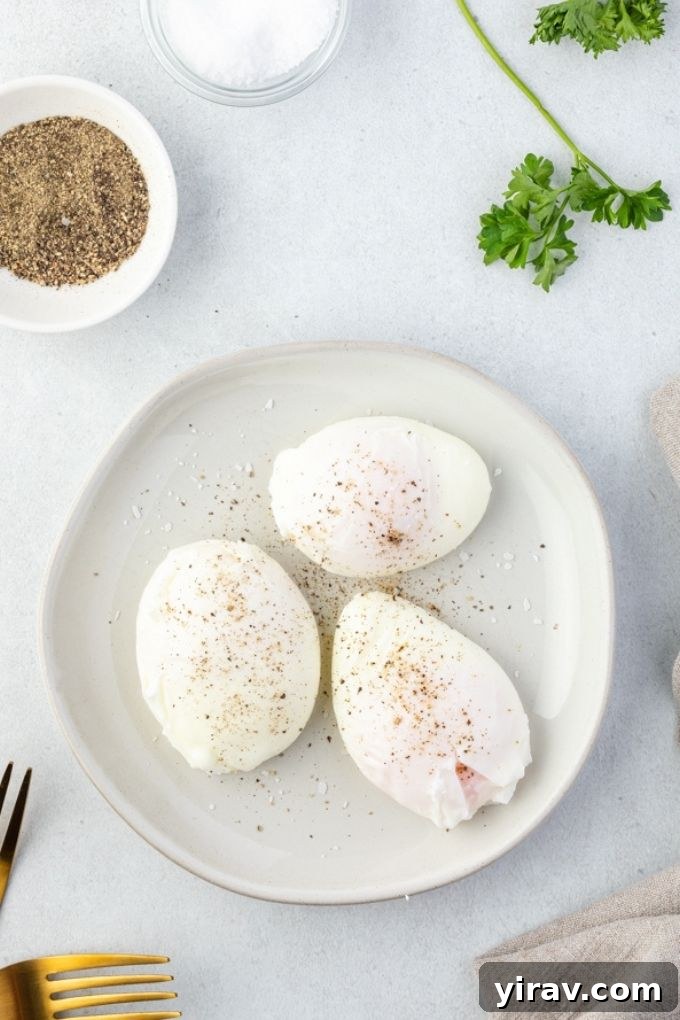
For many, poached eggs evoke a sense of comforting nostalgia. I remember my mother making them during my childhood, especially when I needed a little pick-me-up. There was a unique joy in gently slicing into the delicate white and watching the rich, golden yolk flow out, ready to be soaked up by a piece of warm, buttery toast. While my mom often relied on a specialized egg poacher for perfectly symmetrical results, this recipe proves that no fancy equipment is necessary to achieve culinary perfection.
The idea of poaching an egg can seem daunting to beginners, often conjuring images of messy, wispy whites in boiling water. However, this guide demystifies the process, making it as straightforward, if not simpler, than preparing hard-boiled eggs. Prepare to be amazed by how easily you can create a dish that feels undeniably fancy and elegant, adding a touch of sophistication to your daily routine or special brunches.
Why You’ll Love This Perfect Poached Eggs Recipe
Discover why mastering poached eggs with our recipe will become your new favorite kitchen skill:
- Foolproof Perfection: This method ensures beautifully formed poached eggs with firm whites and creamy yolks every single time, eliminating guesswork and frustration.
- Effortless Elegance: Despite their sophisticated appearance, poached eggs are surprisingly easy to make, adding a touch of gourmet flair to any meal without extra effort.
- Customizable Doneness: Whether you prefer a perfectly runny yolk, a slightly jammy center, or a fully set yolk, our recipe includes precise cooking times for soft, medium, and hard poached eggs to satisfy every preference.
- Incredibly Versatile: Poached eggs are a culinary chameleon, serving as a star ingredient in classic dishes like Eggs Benedict, a protein-packed addition to avocado toast, a nourishing topper for grain bowls, or a simple yet satisfying breakfast with greens.
- Healthy & Delicious: As a lean protein source, poached eggs are a nutritious choice, perfect for a low-carb diet or anyone seeking a wholesome, flavorful meal.
Essential Poached Egg Ingredients
Crafting the perfect poached egg requires just a few simple ingredients, but understanding their role is key to success:
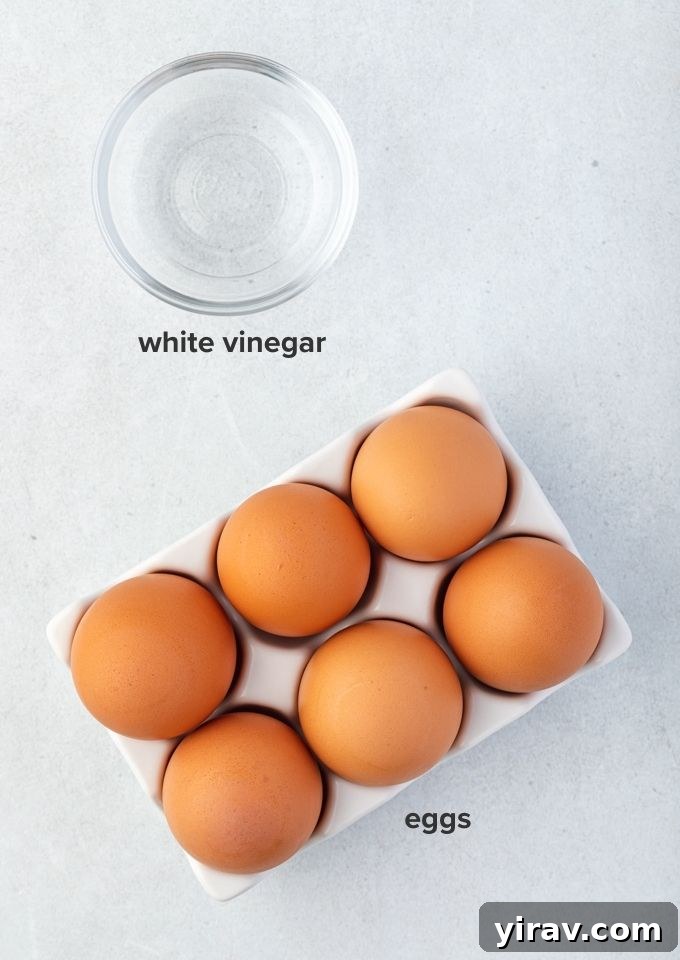
- Fresh Eggs: The quality of your eggs significantly impacts the outcome. Fresher eggs have tighter whites that hold their shape better, resulting in a more cohesive poached egg. This recipe’s cooking times are based on large eggs. If you opt for smaller or larger eggs, remember to adjust your cooking time accordingly – slightly less for smaller eggs, a bit more for larger ones.
- White Distilled Vinegar: This is a crucial, non-negotiable ingredient for perfect poaching. Vinegar helps the egg white coagulate quickly upon hitting the hot water, preventing it from spreading and forming those undesirable “wisps.” White distilled vinegar is preferred because it won’t discolour your egg and has a subtle flavor that completely dissipates during cooking, leaving no vinegary taste behind.
- Water: The foundation of poaching. Use enough water to comfortably submerge your eggs, allowing them ample space to cook without crowding.
- Salt (Optional, for serving): While you might be tempted to add salt to the poaching water, it can actually cause the egg whites to break apart. It’s best to season your poached eggs with salt and freshly ground black pepper immediately after removing them from the water, just before serving.
The Science Behind Perfect Poaching: Why it Works
Understanding the science makes the process even easier. When an egg is cracked into hot water, the proteins in the egg white begin to coagulate, or set. The challenge is to get them to set quickly and evenly before they disperse into the water. This is where our key ingredients and techniques come into play:
- Vinegar’s Role: Vinegar is acidic. When added to water, it lowers the pH, which in turn speeds up the coagulation of the egg white proteins. This rapid setting action is what prevents the white from spreading out into a feathery mess and helps it cling tightly to the yolk, creating that desirable compact shape.
- The Importance of Freshness: As eggs age, their whites become thinner and more watery, making them prone to feathering in the poaching water. Fresh eggs have thicker whites with a higher protein content, making them naturally better at holding their form.
- Straining the Egg: Even fresh eggs have a very thin, watery outer layer of egg white. By gently straining the egg through a fine-mesh sieve, you remove this thin part, leaving only the thicker, more cohesive white. This simple step is a game-changer for achieving beautifully compact poached eggs with minimal wisps.
How to Poach an Egg: A Simple Step-by-Step Guide
Making a perfectly poached egg is far simpler than you might imagine. This straightforward process requires no special equipment beyond what you likely already have in your kitchen. Follow these steps, and you’ll be poaching like a pro in no time.
For detailed instructions, including exact measurements and cooking times for different doneness levels, please refer to the recipe card below.
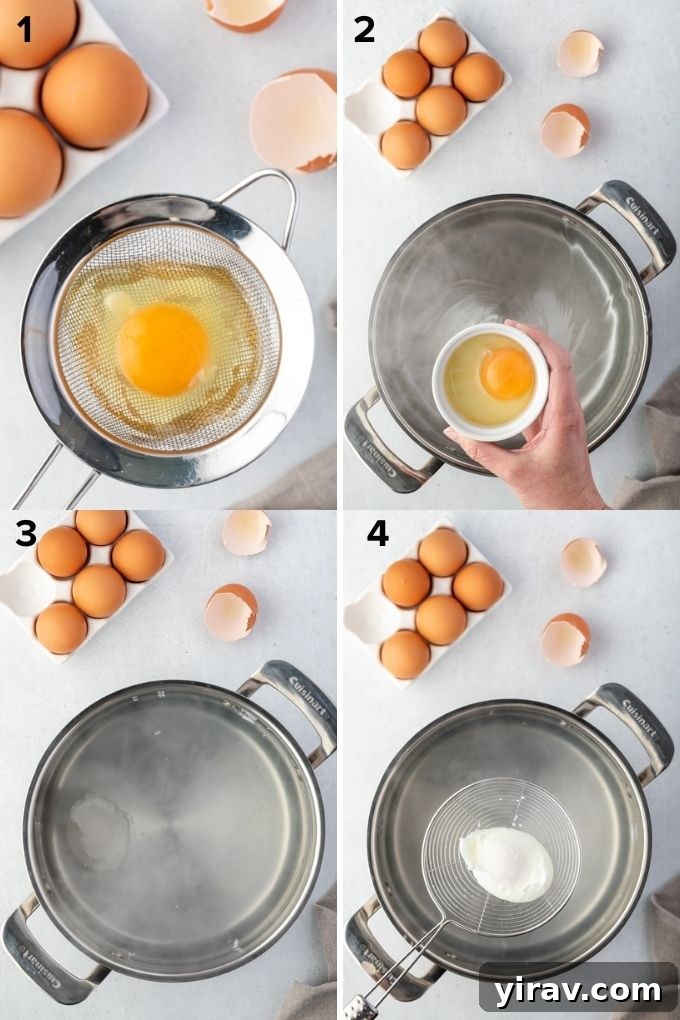
- Prepare Your Eggs: Gently crack one egg at a time into a fine-mesh strainer. Allow it to sit for about 30 seconds to a minute to drain off the thinnest, most watery part of the egg white. This crucial step significantly reduces those pesky wispy whites. Transfer the strained egg carefully into a small ramekin or bowl.
- Prepare the Poaching Water: Fill a medium-sized pot with about 2-3 inches of water. Bring it to a gentle simmer over medium heat. Look for small, continuous bubbles forming at the bottom of the pot, but avoid a rolling boil, which can jostle the egg too much. Add 1 tablespoon of white distilled vinegar to the water.
- Create the Vortex: Once the water is gently simmering and you’ve added the vinegar, use a spoon to stir the water in a circular motion, creating a gentle vortex in the center of the pot. This swirling motion helps to cup the egg white around the yolk as it cooks.
- Add the Egg: Carefully and gently lower the ramekin or bowl and pour the strained egg into the center of the swirling water. Stir very gently once more to ensure the egg is fully submerged and begins to set.
- Cook to Perfection: Cook the egg for your desired doneness. For a soft poached egg with a wonderfully runny yolk, cook for 3 minutes. (See the section below and the recipe card for medium and hard poached cooking times).
- Remove and Serve: Once cooked, carefully remove the poached egg from the pot using a slotted spoon. Gently dab any excess water with a paper towel. Season immediately with salt and freshly ground black pepper, and serve warm.
How Long to Poach an Egg: Achieving Your Desired Doneness
Now that you’ve mastered the technique of poaching an egg, the next step is perfecting the cooking time to achieve your ideal yolk consistency. Whether you crave a velvety, flowing yolk or a firmer, jammy center, precision is key.
If you’re a fan of the classic runny yolk, like myself, then soft poached is undoubtedly your go-to. Medium poached offers a delightful middle ground – a yolk that’s jammy and gooey but not fully liquid. For those who prefer their yolks completely set and firm, hard poached is the way to ensure no “runneth over” situations. The beauty of this recipe lies in its adaptability to your personal preference.
The photo below illustrates the distinct differences between soft, medium, and hard poached eggs, from left to right. Refer to these visual cues and the timing guide to achieve your perfect poached egg every time.
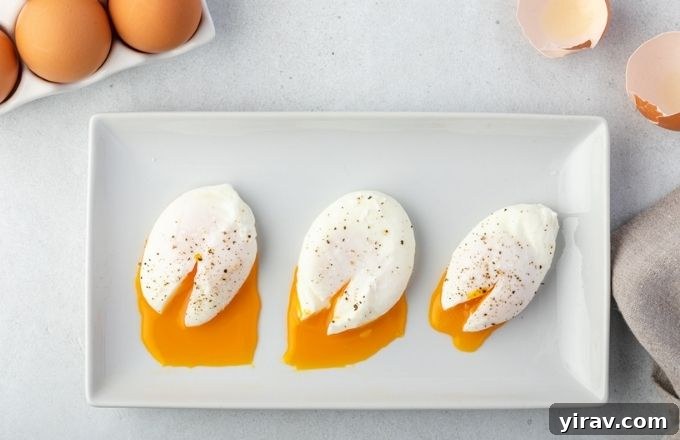
- Soft Poached Eggs: Cook for 3 minutes. The whites will be fully set and tender, while the yolk remains completely liquid and gloriously runny.
- Medium Poached Eggs: Cook for 4 minutes. The whites are firm, and the yolk will be semi-liquid, offering a thick, jammy consistency that’s still wonderfully rich.
- Hard Poached Eggs: Cook for 5 minutes. Both the whites and the yolk will be fully set and firm, similar to a hard-boiled egg in texture but with the unique delicate quality of a poached egg.
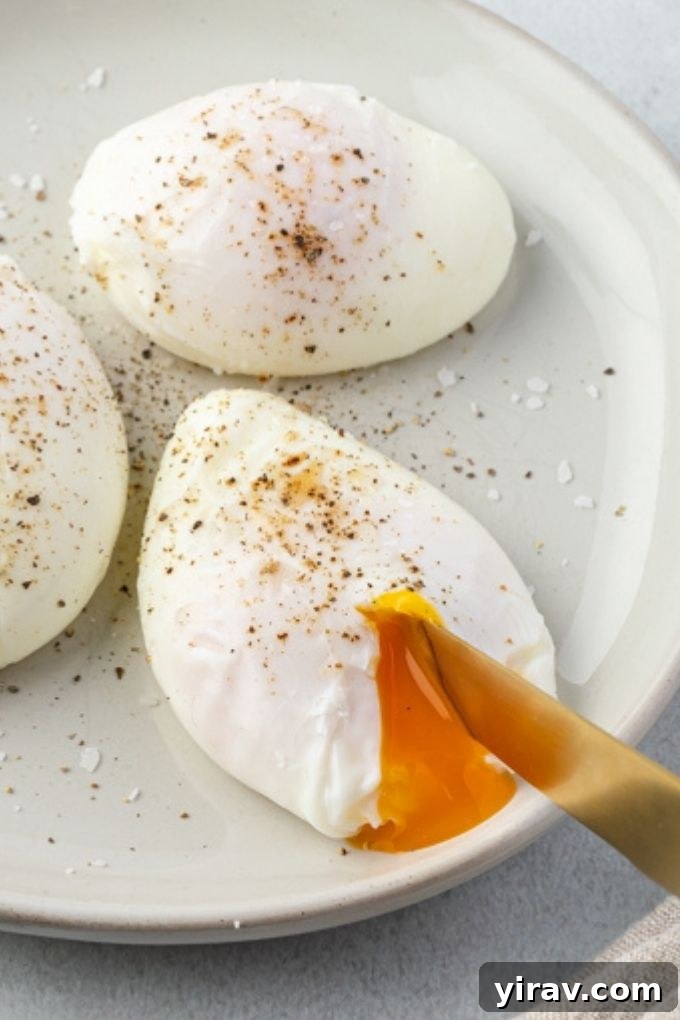
Frequently Asked Questions About Poached Eggs
Absolutely! Adding distilled white vinegar to the simmering water is essential for successful egg poaching. The acidity in the vinegar helps the egg white proteins to coagulate quickly and efficiently, forming a compact shape and significantly reducing the amount of wispy egg white that typically scatters in the water. Without it, your eggs are much more likely to break apart and lose their elegant form.
Straining your eggs is a pro tip that makes a huge difference in the final appearance of your poached eggs. Eggs, even fresh ones, have a very thin, watery outermost layer of egg white. This is the part that tends to separate and create those unattractive wispy strands in the poaching water. By straining the egg through a fine-mesh sieve for 30-60 seconds, you remove this thin liquid, leaving only the thicker, more cohesive egg white. This results in a beautifully shaped poached egg with minimal wisps.
The photos below highlight the difference: Figure 1 shows the distinct, firm white of a fresh, strained egg, while Figure 2 illustrates the more fluid, spreading white of an older or unstrained egg. For the best results and a perfectly shaped poached egg, we highly recommend using the freshest eggs available and always straining them.
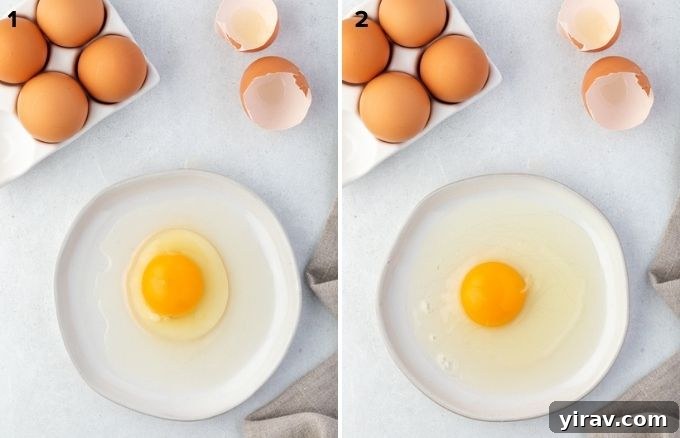
While it’s ideal to poach one egg at a time for the most pristine results, especially when you’re starting out, you can successfully poach up to two eggs simultaneously in a medium-sized pot. The key is to avoid overcrowding, as this can lower the water temperature and cause the eggs to stick together or cook unevenly. If poaching two, ensure you crack each egg into its own small bowl first. Gently pour them into the center of the swirling water one after the other, giving each egg enough space to set without touching.
Yes, absolutely! Poached eggs are surprisingly versatile and can be prepared ahead of time, making them excellent for meal prep or entertaining. Once cooked to your desired doneness, gently remove them from the hot water and immediately transfer them to an ice bath or a bowl of cold water to stop the cooking process. Once cooled, store them in a container filled with fresh, cold water in the refrigerator for up to 2 days. To reheat, simply place the eggs in a bowl of warm (not boiling) water and let them sit for a few minutes until heated through. Remove with a slotted spoon, season, and serve.
The ideal water temperature for poaching is a gentle simmer, not a rolling boil. Look for small, consistent bubbles forming at the bottom of the pot, with very little surface movement. If the water is boiling too vigorously, it can break the delicate egg white apart. If it’s not hot enough, the egg white won’t set quickly enough and will spread too much. Maintaining a temperature around 175-185°F (80-85°C) is perfect.
It is generally recommended NOT to add salt to the poaching water. While salt helps season the egg, it can also interfere with the coagulation of egg white proteins, potentially leading to more wispy whites or causing the egg to spread more. It’s best to season your poached eggs generously with salt and pepper immediately after you’ve removed them from the water and before serving.
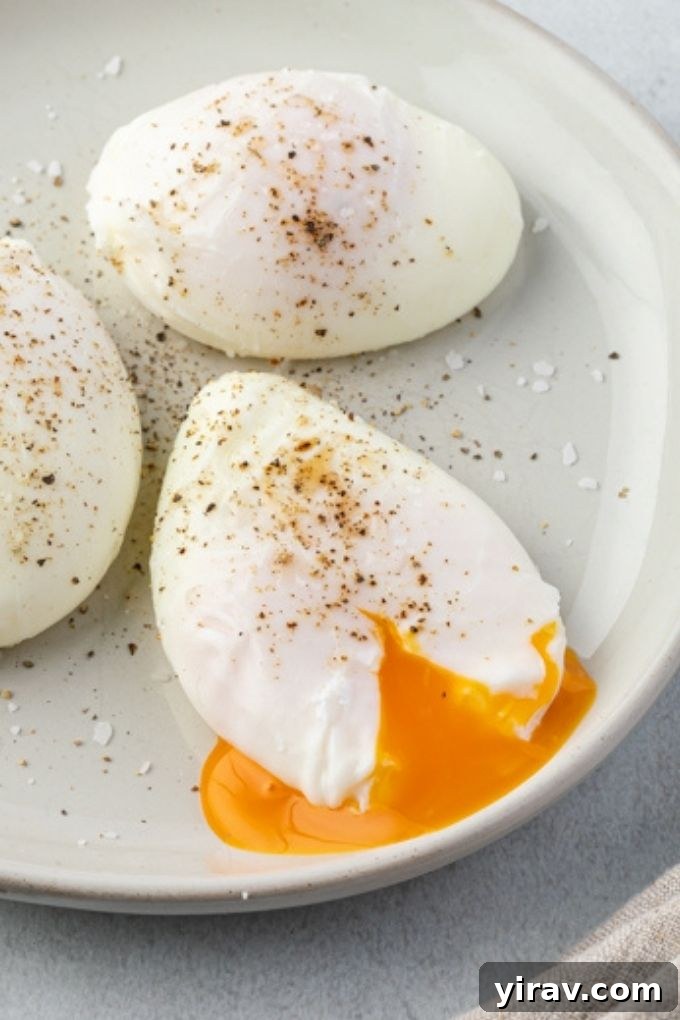
Creative Serving Suggestions for Poached Eggs
The delightful versatility of poached eggs allows them to grace almost any meal, effortlessly imparting a touch of elegance and sophistication. Beyond the traditional breakfast plate, these delicate eggs can elevate a wide array of dishes.
- Classic Brunch Indulgence: Serve a perfectly poached egg atop a toasted English muffin with Canadian bacon and hollandaise sauce for a timeless Eggs Benedict. Or simply enjoy it over a slice of crusty artisan toast with a sprinkle of fresh herbs for a comforting start to your day.
- Nutrient-Packed Lunch: Boost the protein content and creaminess of your grain bowls. Poached eggs are exceptional served over hearty bowls like a spring farro salad with feta and lemon mint or a vibrant butternut squash quinoa salad. The runny yolk acts as a natural, luscious dressing.
- Elegant Vegetarian Dinner: Transform simple roasted vegetables into a satisfying meal. Pair poached eggs with rosemary parmesan roasted sweet potatoes or crispy air fryer potatoes alongside your favorite seasonal greens for an effortless and delicious vegetarian dinner.
- Healthy Low-Carb Breakfast: For a nutritious and fulfilling low-carb option, serve poached eggs with crispy air fryer bacon and a side of garlicky sautéed Swiss chard or any other leafy greens. This combination offers a balanced meal rich in protein and healthy fats.
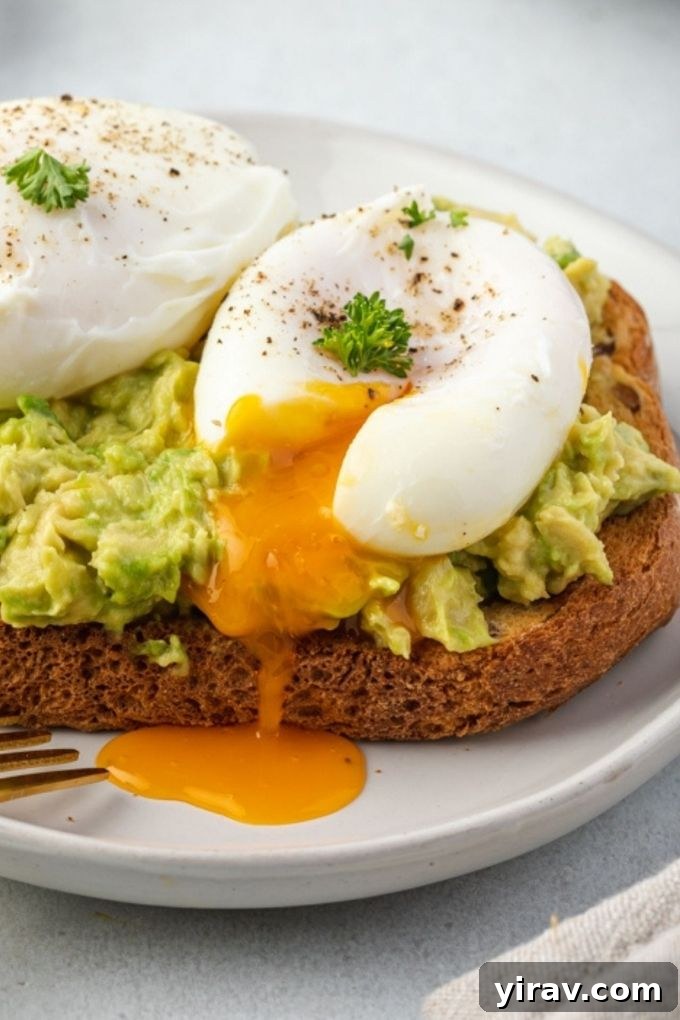
- Avocado Toast Upgrade: Take your avocado toast to the next level by crowning it with a perfectly poached egg. The creamy avocado, crunchy toast, and rich, runny yolk create an irresistible texture and flavor combination.
- Hearty Soups and Salads: Add a poached egg to a bowl of warm lentil soup or a fresh green salad for an extra layer of richness and protein, turning a light dish into a more substantial offering.
Expert Tips for Poaching Eggs Like a Pro
Achieving consistently perfect poached eggs is within your reach. Incorporate these expert tips into your technique for superior results every time:
- The Straining Advantage: This is arguably the most impactful pro tip. Straining the egg in a fine-mesh strainer for 30-60 seconds before poaching removes the thin, watery outer layer of the egg white. This significantly reduces the amount of unsightly wispy whites, helping your egg maintain a beautiful, compact shape.
- Vinegar is Your Friend: Always add a tablespoon of white distilled vinegar to your poaching water. The acidity helps the egg white coagulate faster, ensuring it sets neatly around the yolk. Crucially, use *white* vinegar; colored vinegars like balsamic or red wine vinegar can stain your eggs. Don’t worry, the subtle flavor of the vinegar completely cooks out, leaving no lingering taste.
- Freshness Matters Most: The fresher your eggs, the better they will poach. Fresh eggs have a thicker, more viscous white that holds its shape much better in hot water, leading to fewer wisps and a more aesthetically pleasing result. Older eggs tend to have runnier whites that are more likely to scatter.
- Mind the Temperature: Maintain a gentle simmer, not a rolling boil. Vigorous boiling water can break up the delicate egg white. Look for small, consistent bubbles at the bottom of the pot, indicating the perfect poaching temperature.
- Cook Time Adjustments: The cooking times provided (3 minutes for soft, 4 for medium, 5 for hard) are calibrated for large eggs. If you’re using medium or extra-large eggs, remember to adjust your cooking time accordingly. Medium eggs may need about 30 seconds less, while extra-large eggs might require an additional 30 seconds to a minute.
- One at a Time (Initially): While you can poach two eggs at once with practice, starting with one egg at a time allows you to perfect your technique and ensure each egg cooks perfectly without overcrowding the pot or lowering the water temperature too much.
- Prep Ahead for Convenience: Poached eggs are fantastic for meal prep! Once cooked, gently cool them in an ice bath to stop the cooking process. Then, store them in a container submerged in cold water in the refrigerator for up to 2 days. Reheat by placing them in a bowl of warm water until heated through, then remove with a slotted spoon, season, and serve.
- Handle with Care: Eggs are delicate, especially when uncooked. Handle them gently when cracking, straining, and lowering into the water to prevent the yolk from breaking.
More Delicious Egg Recipes to Explore
If you love the versatility and nutrition of eggs, here are some other fantastic recipes to add to your culinary repertoire:
- Bacon and Egg Cups: Perfect for grab-and-go breakfasts or meal prep.
- Deviled Eggs with Bacon: A classic appetizer with a savory twist.
- Easy French-Style Egg Salad: A simple yet elegant twist on a lunch favorite.
- Eggs Benedict by Cooking Classy: Master this iconic brunch dish.
- Spinach Feta Frittata: A healthy and flavorful option for any meal.
Did you try this recipe? If so, be sure to leave a review below and tag me @flavorthemoments on Facebook and Instagram
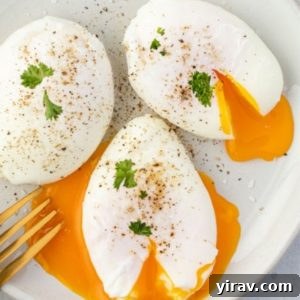
Poached Eggs Recipe
Servings: 1 serving
Making Poached Eggs is so easy that you’ll never order them out again! Recipe includes cooking times for soft, medium and hard poached eggs, so they come out perfectly every single time!
Pin Recipe
0 reviews
Leave a Review »
Ingredients
- 1 large egg
- 1 tablespoon white vinegar
Instructions
- Strain the egg in a mesh strainer to remove the liquid part of the egg white, then place in a ramekin or small bowl. This helps create a compact, beautiful egg.
- Bring a medium pot of water to a gentle simmer over medium heat. Add the vinegar to the water. Do not let it boil vigorously.
- Reduce the heat to low to maintain a gentle simmer. Using a spoon, stir the water in a circular motion to create a soft vortex in the center. Gently pour the prepared egg into the center of the vortex and stir gently once more to encourage the white to cup around the yolk.
- Cook the egg for your desired doneness: 3 minutes for soft poached (liquid yolk), 4 minutes for medium poached (jammy yolk), or 5 minutes for hard poached (firm yolk). Remove the egg from the pot with a slotted spoon. Gently dab off any excess water, then place on a plate. Season immediately with salt, pepper, and garnish with fresh parsley if desired. Enjoy your perfectly poached egg!
Notes
- Pro tip: Straining the egg in a mesh strainer removes the liquid part of the egg white, which decreases the amount of wispy egg white and helps form a beautiful, compact shape.
- Vinegar is crucial; it helps the egg retain its shape (less wispy whites) and does not flavor the eggs. Always use white distilled vinegar, as colored vinegar will dye the egg.
- Cold eggs generally hold their shape much better than room temperature eggs, leading to a neater poached result.
- Cooking times listed are for large eggs. If you’re using medium or extra-large eggs, be sure to adjust the cooking time accordingly (shorter for medium, longer for extra-large).
- Poached eggs can be made in advance. Once cooked, cool them completely in an ice bath, then store in a bowl of cold water in the refrigerator for up to 2 days. Reheat by placing them in a bowl of warm water and let stand until heated through. Remove with a slotted spoon, season with salt and pepper, and serve.
Nutrition
Calories: 74kcal,
Carbohydrates: 1g,
Protein: 6g,
Fat: 5g,
Saturated Fat: 2g,
Polyunsaturated Fat: 1g,
Monounsaturated Fat: 2g,
Trans Fat: 1g,
Cholesterol: 186mg,
Sodium: 71mg,
Potassium: 69mg,
Sugar: 1g,
Vitamin A: 270IU,
Calcium: 29mg,
Iron: 1mg
Nutrition is estimated using a food database and is only intended to be used as a guideline for informational purposes.
Did you try this recipe?Be sure to tag @flavorthemoments with the hashtag #flavorthemoments on Instagram so I can see what you made!